Yuan Dynasty
Original
Chinese History
Dec 05 • 2026 read
Yuan dynasty (1271-1368) was the first unified dynasty established by ethnic minorities in Chinese history.
/fit-in/0x0/img/201912/Yuan_dynasty-article-1575538169.jpg)
Yuan Dynasty was fund by Kublai Khan in 1271 that ruled China from 1279 to 1368. The Song dynasty preceded it from 960 to 1279 and followed by the Ming dynasty, which ruled from 1368 to 1644. Kublai Khan belonged to the Mongolian clan, but after invaded China, he adopted the Chinese lifestyle. Before the establishment of the Yuan dynasty, the Mongols had ruled the north area of China for decades, and later in 1271, they officially created the Yuan dynasty in traditional Chinese style. By this point, the Kublai Khan Empire was isolated from the other khanates, and he occupied most of the present China and its surrounding areas such as Korea and modern Mongolia.
The Yuan dynasty was the foreign dynasty that ruled China, and later its rulers went back to Mongolia and continued to rule the Northern Yuan dynasty. Some of the Mongolian rulers of the Yuan Dynasty learned the Chinese language very well while others were speaking their native Mongolian language. According to the official's Chinese history, the Yuan dynasty bore the Mandate of Heaven. Kublai Khan found the Yuan dynasty, but he put his grandfather Genghis Khan as an official founder in the imperial records. The Kublai Khan also claimed the title of Great Khan, supreme over the other successor khanates; the Llkhanate, the Golden Horde, and the Chagatai. The Yuan was also referred to as the Empire of the Great Khan. However, the Wester Khans accept the claim of supremacy by the Yuan emperors, their subservience was nominal, and each continued his separate development.
The Rise of Kublai Khan
In 1206, Genghis Khan united the Turkic and Mongol tribes, and he became Great Khan and expanded the Mongol Empire across Asia. Under the empire of Ogedei Khan; the third son of Genghis Khan, the Mongols destroyed the Jin Empire in 1234 and occupied most of northern China. Ogedei Khan offered the position to his nephew Kublai Khan in Xingzhou, Hebei. In 1251, the Mongke Khan replaced by the son of Ogedei Khan named Guyuk, and he granted his brother Kublai Khan control of Mongol-held territories in China. Kublai Khan issued paper money, built schools for Confucian scholars, revived Chinese rituals, and enforced policies that helped commercial and agriculture growth. He established his Kaiping (later renamed Shangdu) city in Inner Mongolia as his capital. Against the Song dynasty in southern China, Mongke Khan began a military campaign. The Mongols had high forces, and in 1256 they sent a far greater force to invade the Middle East than they sent to invaded southern China. In 1259 Mongke died without a successor, and in 1260 Kublai Khan returned from the war against the Song dynasty and found that his brother Ariq Boke was challenging his claim to the throne. Kublai Khan convened a kurultai in Kaiping that elected him Great Khan, but a rival kurultai in Mongolia proclaimed Ariq Boke as Great Khan, beginning a civil war. Kublai Khan relied on the aim of his Chinese subjects to ensure that his army received plenty of resources.
Kublai Khan boosted his popularity among his people by adopting the Chinese Chinese era name of Zhongtong and following the traditional bureaucracy model of traditional Chinese dynasties. There was not sufficient supply to the Ariq Boke army, and therefore he surrendered in 1264. All of the three western khanates; Llkhanate, Chagatai Khanate, and Golden Horde, became functionally autonomous, and only the Llkhans truly recognized Kublai Khan as Great Khan.
The Rule of Kublai Khan
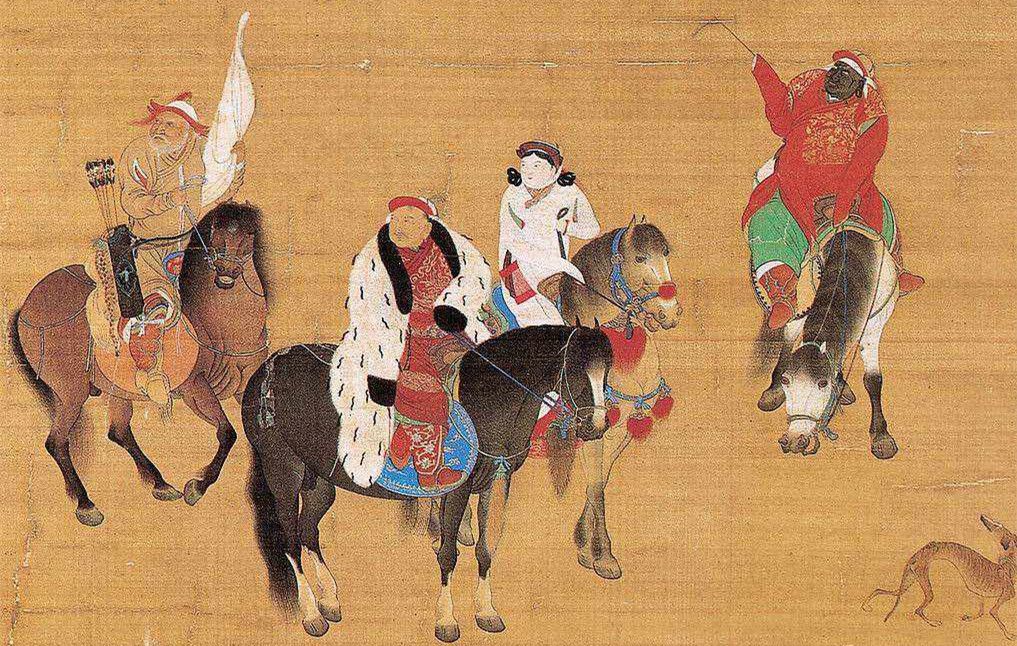
There was instability in the early years of the Kublai Khan Empire. Kaidu, the grandson of Ogedei’s refused to submit to Kublai Khan and threatened the western domain of Kublai Khan. Also, the hostile and weakened Song dynasty remained an obstacle in the South. In 1259, Kublai Khan installed prince Wonjong as the ruler of Korea and secured the northeast border. In 1262, Li Tan, who was the son-in-law of a powerful official, started a revolt against Mongol. However, He successfully suppressed the revolt and controlled the influence of Han Chinese advisers in his court. Kublai Khan feared that his dependence on Chinese officials would make him vulnerable to future revolts and defections to the Song dynasty. Kublai Khan established the reforms proposed by his Chinese advisers; centralized the bureaucracy, he spread the circulation of paper money and maintained the traditional monopolies on salt and iron. He maintained the local administrative structure of past Chinese dynasties and restored the Imperial Secretariat. He divided Yuan society into four classes in which Han Chinese occupied the lowest rank, also Kublai Khan rejected to revive the Confucian imperial examinations.
The founding of the Yuan dynasty
In 1264, Kublai Khan observed the move of the Mongol capital from the Karakorum to Khanbaliq in Mongolia, constructing a capital Zhongdu (present-day Beijing) in 1266. Kublai Khan officially claimed the Mandate of Heaven in 1271 and declared that 1272 was the first year of the Great Yuan. The word ‘Yuan’ originated from the I Ching, which means ‘the origin of the universe.’ Kublai Khan established Khanbaliq as the capital of the dynasty. The Era's name was changed to Zhiyuan to herald a new era of Chinese history. The adaptation of dynastic names helped in legitimized Mongol rule by integrating the government into the narrative of traditional Chinese political succession. Kublai Khan boosted his image among the public as a wise emperor by following the rituals of Confucian propriety and ancestor veneration. The Yuan dynasty is credit for reuniting China after several hundreds of years of disintegration that followed the fall of the Tang dynasty.
Trade and Currency under the Yuan dynasty
Kublai Khan promoted scientific, cultural, and commercial growth. He supported the trade of Silk Road and constructed infrastructure and provided loans that financed trade caravans and encouraged the circulation of paper banknotes. Pax Mongolica, Mongol peace helped to spread commodities, technologies, and culture between China and the west. Kublai Khan expanded the Grand Canal system from Southern China to Daidu in the north. He opens his court doors to foreign visitors such as merchant Marco Polo, who wrote the most influential European account about the Yuan dynasty. Many other merchants were inspired by the visit of Marco Polo, such as Christopher Columbus, who planned to visit the East for accumulating wealth.
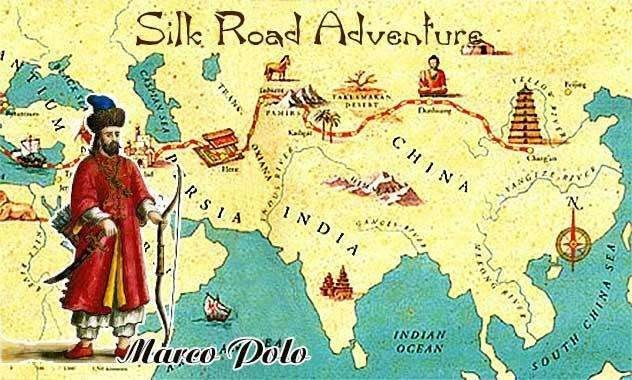
The term Pax Mongolica is a historical term which was modeled after the original phrase Pax Romana, which illustrate the stabilizing effects of the conquests of the Mongol Empire on the cultural, economic and social life of the residents of the Eurasian territory and the Yuan dynasty conquered by Mongols in the 13th and 14th centuries. The term helped to describe the development in commerce and communication, and the period of peace that followed the Mongols vast conquests. The Mongol empire combined the old isolated system and civilization into a new continental system and reestablished the Silk Road as the primary method of transportation. The amalgamation of Eurasia under the Mongols greatly helped in trade and assured greater security in travel. During the Mongol peace period, European merchants such as Marco Polo made his way from Europe to China on well-maintained roads that linked China and Anatolia.
On the Silk Road, caravans with Chinese silk, ginger, pepper, and cinnamon from the Spice Islands came to the west through the transcontinental trade routes, and that is why the Eastern diets were introduced to Europeans. Indian were exporting cotton, muslins, precious stones, and pearls to Europe, while Iranian were exporting leather goods to Europe. On the opposite side, European were export fine cloth, silver, linen, horses, and other goods to the near and far east. Development in trade and commerce introduce these respective nations and societies involved in the trade to new goods markets and helped them in boosting their GDP. There was a fast development in the size of those cities that participated in the 13th-century world trade system.
Along with the Silk Road, a Maritime Silk Road significantly helped in the flow of goods and the establishment of a Pax Mongolica. The Maritime Silk road began with short coastal routes in Southern China, while after the development in technology and navigation, these routes developed into high-seas way into the Indian Ocean. Eventually, these routes further developed to cover the Arabian Sea, the Red Sea, the Persian Gulf, and the sea off East Africa. Besides the material goods, for the first time, people, techniques, information, and ideas moved across the Eurasian landmass. For example, John of Montecorvino founded Roman Catholic missions in China and India, and also translated the New Testament into the Mongolian language. The new trade system introduced new methods of doing business from the Far East to Europe; the insurance system, deposit banking, and bills of exchange were introduced to Europe during the Pax Mongolica. Bills of exchange made the long-distance travel more comfortable in the sense that the weight of metal coins would not burden travelers.
One of the most important developments in printing technology was the Chao, the use of paper money, prepared from the bark of mulberry trees. The Yuan dynasty used woodblocks to print paper money but switched to bronze plates in 1275. Initially, the Yuan dynasty was using woodblocks to print paper money; later, in 1275 switched to bronze plates. The Mongols established the Chinese style paper monetary system in Mongol-controlled territories outside of China. The Yuan government sent a minister to Iran, where he explained Yuan paper money to the Llkhanate court of Gaykhatu. In 1294, the Llkhanate introduced paper money, but public distrust of the exotic new currency doomed the experiment.
Marco Polo took note of the printing technology of the Yuan dynasty, such as paper money and almanac pamphlets called ‘Tacuini.’ Rashid-Al-Din noted that the printing technology of Yuan dynasty was an important innovation, and expressed regret that the Muslim world did not benefit from it. Mongke, established a department of Monetary affairs in 1253 to control the issuance of paper money in order to eliminate the over the issue of currency by Mongol and non-Mongol nobles since the rule of Ogedei. His government established a united measure based on silver ingot; however, the Mongols permitted their foreign subjects to mint coins in the values and weight they traditionally used. During the rule of Mongke, Guyuk, and Ogedei, Mongol coinage increased with gold and silver coinage in Central Asia and silver and copper coins in the Caucasus, southern Russia, and Iran. Under the rule of Kublai Khan, Yuan dynasty issued paper money backed by silver, and again banknotes supplemented by copper cash. Chagatai Khan Kebek reformed the coinage backed by silver reserves and established a unified monetary system throughout the empire.
Fall of the Yuan dynasty
In the last years of the Yuan dynasty, there was an internal struggle, severe famine, and anger among its people. The rulers of the Yuan dynasty lost all influence and control on the Mongol territory across Asia because the Mongols beyond the Middle Kingdom saw them as too Chinese. Also, they lost their influence in China. The rulers of the later Yuan dynasty were uninterested in administration, and they took distance from its people and army, which caused dissension and unrest in China. After the 1340s, in the countryside, people were suffered from floods, droughts, and famines, because of the lack of adequate policy of the government. The Red Turban rebellion started in 1351 and spread throughout China. In 1354, Toghtogha planned to suppress the Red Turban rebellion through the vast army, but Toghun Temur dismissed him because he feared betrayal. Eventually, the power of Toghun Temur was restored, but it has weakened the central government. He depended on the power of the local warlord’s military, and slowly lost interest in politics, which caused the official end of the Yuan dynasty in China. He died in 1370, and the Ming seized Yingchang after his death. Prince Basalawarmi of Liang started a separate rebellion against Ming in Guizhou and Yunnan, but the Ming dynasty badly defeated his forces in 1381. The remaining forces of the Yuan dynasty in Manchuria under the control of Naghachu also surrendered to the Ming dynasty in 1387.
Culture of Yuan dynasty
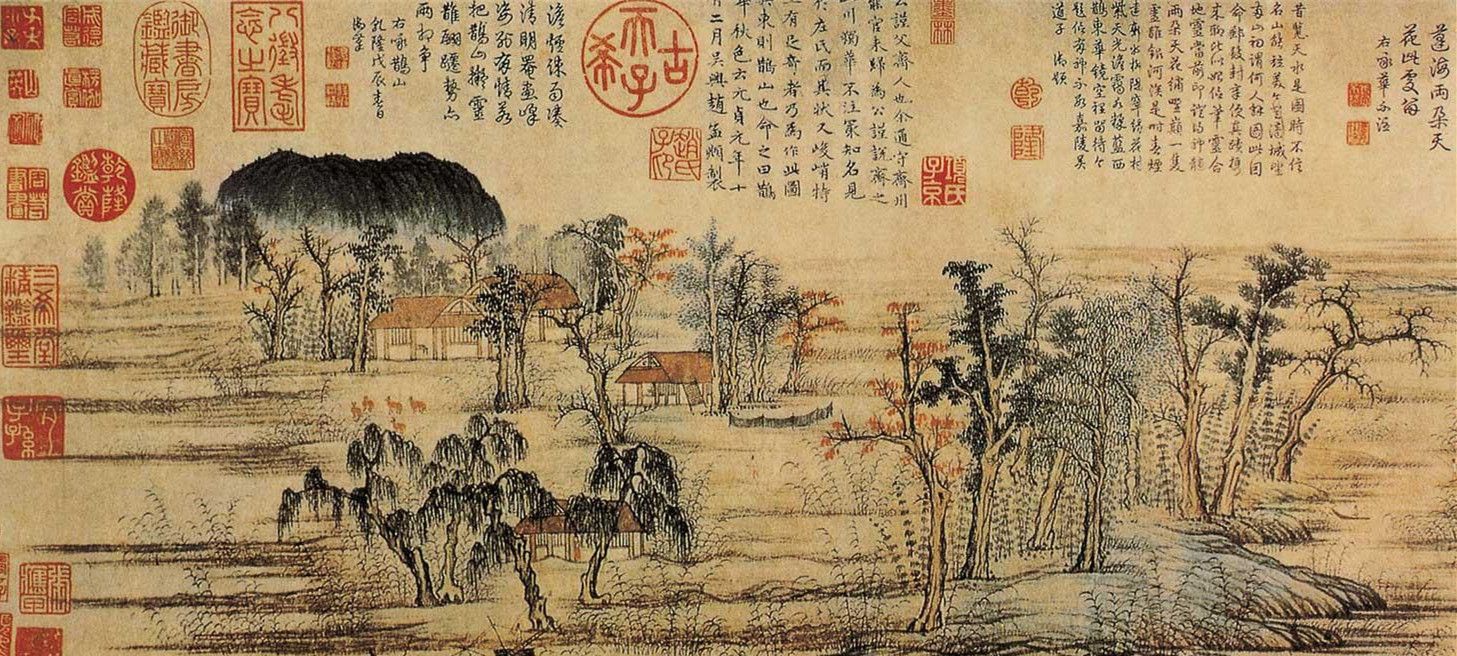
Yuan dynasty culture and art reflect the ethnic, artistic, and cultural plurality of China. Beautiful paintings and ceramics were shaped that continued trends that began in the Song and Tang dynasties. There were developments in geography, cartography, literature, and scientific education. Some of the vital Chinese innovations, such as porcelain production, printing techniques, and the medical literature were diffused to Europe, while the production of thin glass and cloisonne, and art forms that were developed in Europe became popular in China. The Mongol leaders were fond of the theater, and the Yuan dynasty witnessed a golden age of Chinese theater. The Mongol court established a grand theater in the palace compound in Daidu (Beijing) and supported a number of writers. The art of painting also developed during the Yuan dynasty. Zhao Mengfu was one of the greatest painters of the Yuan dynasty; he received a court position from Kublai Khan and much support and encouragement from the Mongols. It is said that the status of artisans in China was improved during the Mongols reign. Many Mongols sustained the practice to wear their native costumes of leather and fur, and when the Mongol princess entered her 8th or 9th months of pregnancy, she continued the custom of moving to the traditional Mongol home called ‘ger’ to give birth.
Chinese and Mongol Ritual culture in Yuan dynasty
The Mongols occupied China by force, but the advice of Chin, Liao, and Sung Confucian officials influenced them to build religious and Confucian temples, established schools, and reformed the civil service examination. Eventually, the Mongols adopted systems of ritual and music to create a dynastic system for the Mongols in their Yuan dynasty. The Mongol nobility had their traditional rites, dynastic ceremonies followed in the Chinese were often formed in imitation of ancient bronze ones to propose the continuity of Confucian traditions. Though Chinese culture was respected and supported in many ways, this support was not at the expense of Mongols own native culture. The Mongols did not abandon their tradition, even though they adopted many of the values and political structures of the people they captured and governed. The Mongols leaders took many steps to preserve the rituals, ceremonies, and their traditional Mongol life.
Merging of Cultures
In 1206, Genghis Khan unified the Mongol tribes of the steppes, and he and his descendants would thereupon create one of the greatest empires in world history. The imperial group of Mongol leaders belonged to the ‘Altan Urug, ’ which means Golden clan. This word became a term for the imperial Mongol clan in general. The system of rules that were created by the Golden clan spread throughout Asia and into Europe. In the Mongol defeats, many artisans in foreign lands were caught and moved along with the armies. Artistic traditions from distinct cultures and geographic areas eventually experienced interaction and innovation within this open system of rule by the Great Khans. Traditional painting subjects in China also found new life and inspiration because of the Mongol rulers, who valued horsemanship, hunt, and army expertise in their prairie land heritage. Thus, an imperial way of the Khans was created in art through foreign influence and native re-interpretations. At the same time, people from the Golden Clan were actively forming their image as the new imperial elite class of China. In painting and calligraphy, the Yuan ruler clan slowly embraced the ideology and activities associated with upper-class Chinese society. The Golden clan people created a court culture that reflected the encounter and synthesis of horseback people from the steppes with the brush-wielding Chinese from the Central Plains.
Artisans in Yuan dynasty
Traditionally, the Chinese loved and prized the products created by artisans; bronzes, jades, porcelains, ceramics, but did not assign the artisans themselves a high social status. On the other hand, the Mongol valued artisanship and implemented many policies that favored artisans. The artisans gain freedom, tax remissions, and higher social status from Mongol rule. Thus, artists reached new heights in the Yuan dynasty. Textiles and porcelains were produced, and white and blue porcelains were developed during the Mongol period. They provided higher status to the artists than any other societies. The traditional Chinese prized the goods made by artists but assign them low status. The Mongols offered them special concessions and privileges and established government offices to supervise the production of craft articles. The Mongols did not have their art class because of their migration from place to place due to which they were unable to carry with them the supplies needed by the artists, and that is why they were relied upon the sedentary world for crafts and prized the artists highly. On the attack on Samarkand, Genghis Khan instructed his army not to haram any artisans and craftsmen. Craftsmen were offered tax benefits and were free from unpaid labor, and the Mongol elite highly valued their products. The Mongol construction projects required the services of artisans, technocrats, and architects. When Kublai Khan directed the building of his capital in Shangdu, and the building of the Daidu city, all needed the recruitment of foreign artisans and craftsmen.
Literature Yuan dynasty
The Mongols kept history alive through oral epics, performed by nomadic bards until writing was introduced in the Genghis Khan time in the 12th century. Because the Mongol realm was so vast, the Mongols were written about in many languages by many chroniclers of different conquered societies, who provided a wide of perspectives, legends, and myths. What has been written about the Mongols were written by those who came in contact with the Mongols. The famous Mongolian work is “The Secret History of the Mongols,” a Chinese copy was found in 1866 by a Russian diplomat in Beijing, but an original Mongolian copy has never been found. provides a complete general record introducing the history, geography, sites, Yuan dynastic statutes, and figures of each area under Mongol administration in China. During the Yuan dynasty, there were multiple ethnic groups in China. Mongols and Central Asians moved into China, learned Chinese culture, and became students and friends of Chinese scholars.
The cultural and social interaction created literary and artistic exchange between members of different ethnic groups. As a result, non-native Chinese left behind many works written in Chinese during the Mongol period. For example, the Khitan Yeh lu Ch’u-ts’ai was learned in the Chinese classics, history, and Buddhism. His works are found in ‘collection of writings by the Pure hermit.’ The Uighur Turk Sa Tu la was a famous poet of the Yuan, and his fluent and elegant poetry is found in his ‘Yen men Collection of poetry.’ The literary Mongol Tai Puhua, who participated in writing the histories of the Liao, Sung, and chin dynasties, left behind his Nostalgia for the North collection of poetry.
Responses • 0
0/2000
ID: 322
Matthias
Offline
3 day
Visited
From
Orlando, United States
Send Message