Zhou Dynasty
Original
Chinese History
Dec 02 • 3346 read
Zhou dynasty is divided into two different periods; Western Zhou from 1046 to 771 BCE and Eastern Zhou from 770 to 256 BCE.
/fit-in/0x0/img/201912/Zhou_dynasty_-_hello-article-1575278951.jpg)
In the 10th century BCE the Zhou, a small clan of formerly nomadic people were living in the western part of the kingdom who swept through China and began a war against its ruling family, the Shang dynasty. This was a war between Zhou and Shang clans over the Shang expansion led by King Wen. The Zhou had the support of the Chinese people and quickly gained a foothold against the Shang dynasty because its final king the Di Xin had become cruel, spent government money on gambling and drinks while ignored the state. After the death of King Wen, his son Wu appointed as a king who finally overthrew the Shang dynasty in 1046 BCE and established Zhou authority as the rulers of China and founded their new Dynasty with its capital at Fenghao which was located in the present-day Xi’an Province. The Zhou dynasty governed China for approximately eight centuries which is consider lasted longer than any other Chinese Dynasty. In this long period, they established distinctive political and cultural characteristics and economic expansion.
The Zhou established a new mechanism for legitimizing China’s rulers that would play a significant role in the future dynasties and developed the feudal system, a revolutionary method of government. The started date of the Zhou has long been debated. Traditionally, it is has been given as 1122 BCE but the scholars have revised it as they found more archaeological records. The most recent pieces of evidence had placed the outright began of the dynasty at 1046 BCE while the Dynasty finished when the army of Qin state captured the city of Chengzhou in 256 BCE. The history of the Zhou dynasty is divided into two different periods; Western Zhou from 1046 to 771 BCE and Eastern Zhou from 770 to 256 BCE, following the movement of the Zhou capital eastwards where it was considered safer from invasion.
The use of iron began during Zhou time. The most influential minds flourished under the Zhou, particularly in the last period of the Zhou dynasty, which is considered the time of intellectual and artistic awakening. The ideas like Mencius, Confucius, Mozi, and Laozi, developed their views during the Eastern Zhou period, which would shape the characters of Chinese civilization up to the present day. Major religions and philosophies emerged that was the basis of Chinese belief in later eras. The dynasty also spans the periods in which the written script evolved from the ancient stage as seen in early Western Zhou bronze inscriptions, to the beginning of the modern stage, in the form of the archaic clerical script of the late Warring States period.
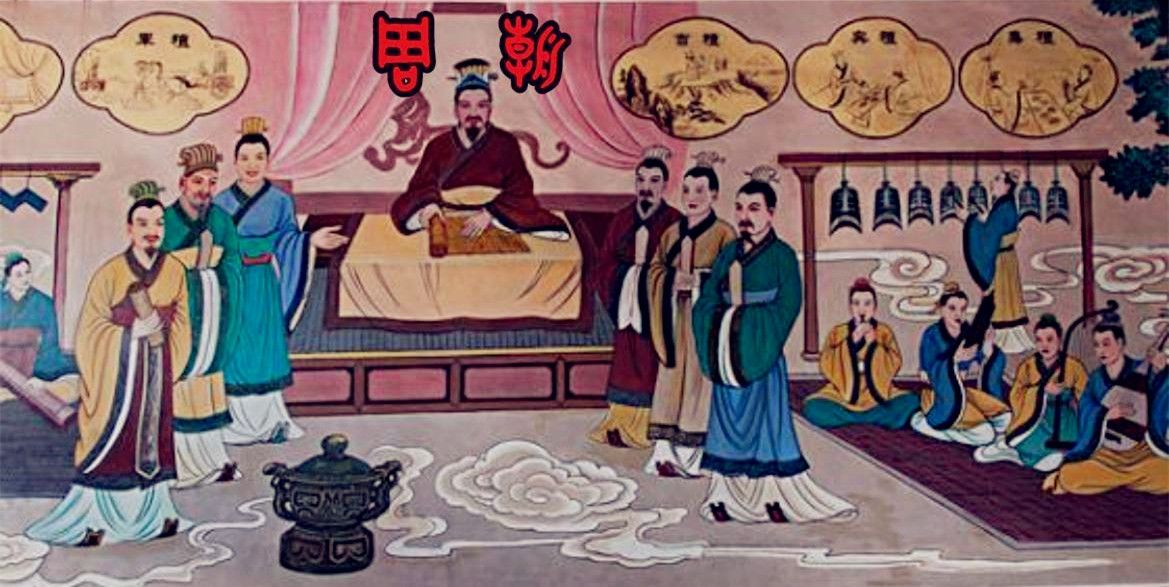
The Mandate of Heaven
Under the ruling of the Zhou dynasty, the Chinese people moved from the worshipping of Shangdi (Celestial Lord) to the worshipping of Tian (heaven), and they established the Mandate of heaven. According to this notion, there could be only one legitimate ruler of China at a time, and this ruler reigned as the son of Heaven with the approval of the gods. If a king ruled unjustly, he could lose this approval of the gods, which would result in his decline. Famine and natural disasters were considered as a notion that the King had lost the Mandate of Heaven.
The Mandate of Heaven did not require a King to be noble at birth and had no time limitations. Instead, Kings were supposed to be good and just to keep the Mandate in order. The Zhou believed that the Mandate of Heaven justified their rule. They believed that the Shang kings had ruled unethically, became cruel and immoral with excessive drinking, so they had lost the mandate. The mandate required Kings to govern justly, and each succeeding generation needed to justify the dynasty’s continued claim to hold the mandate. Abuse and negligence could invalidate the mandate. The god’s blessing was given instead to the new ruler under the Zhou dynasty, which ruled China for the next 800 years. The need for the Zhou to generate a history of a unified China is also why some scholars think the Xia dynasty may have been mythology created by the Zhou. The Zhou needed to remove a number of small states of prehistoric China from history and replace them with the monocratic Xia dynasty in order for their Mandate of Heaven to seem valid, for insistence on supporting the claim that there always would be and always had been only one ruler of China. The Zhou dynasty ended in 256 BCE; however, the notion of Mandate of Heaven carried on throughout ancient China.
Society Under the ruling of the Zhou Dynasty
Under the Western Zhou period which was the initial period, many innovations were made such as Kings were legitimized under the Mandate of Heaven, they developed feudal system and created new forms of irrigation which helped them to expand their population. The Zhou held undisputed power over China during their first period of rule. The first period ended when they moved their capital to eastward. Several significant innovations took place during this period, such as the Zhou moved away from the worship of Shangdi, which was the supreme god under Shang, in favor of Tian. They sted to legitimize their Kings through the Mandate of Heaven. They developed Chinese philosophy and a feudal system. They improved the irrigation system that helped more intensive farming and made it possible for the lands of China to sustain a larger population.
A significant amount of literature was created during the Zhou dynasty, which included writing on history, cultural and religious practices, and philosophy. Most of the Zhou writing have been destroyed over time; their lasting impression on history is evidence of the strength of Zhou culture. The people of the Zhou dynasty followed patriarchal roles. The households consisted of the head male, his wife, and unmarried children. Men were deciding the future of their children, such as who would be educated and to whom their daughters would marry.
Agriculture in Zhou society was intensive and in many cases, directed by the government. The nobles owned almost all of the farming lands and then gave their land to their serfs. The feudal system at the time of Zhou was structurally similar to the ones that followed, such as pre-imperial Macedon, Japan, and Europe. For example, the feudal system controlled the peasants who farmed the land. A piece of land was divided into nine squares, the government would take the grain from the middle square, and the farmers would keep the grain from the surrounding squares. This way helped the government to store food and distribute them in the time of famine or poor harvest. At the beginning of the Zhou dynasty rule, the Duke of Zhou held much power, and the king rewarded the loyalty of generals and nobles with large pieces of land. Giving regional control in this way helped the Zhou to get control over a large area of land. Under the feudalism system, the property could be passed to the next generation or would be divided between family members. At the time of the Shang dynasty, slavery was common but finally disappeared under the Zhou dynasty, as social status became more fluid and transitory.
After the Duke of Zhou stepped down, China was united and at peace, leading to years of prosperity, but this lasted for about 75 years. When the central power of the Zhou dynasty gradually weakened, and the lords of the fiefs initially bestowed by the Zhou came to equal the kings in wealth and influence. They stated competition with them for power, and the fiefs gained independence as individual states. In 711 BCE, one rebellious named Marquess of Shen joined forces with invading barbarians, the Quanrong to defeat the ruler You. The barbarians killed the King and sacked the capital of Zhou, and eventually, the Western Zhou period came to an end.
The Art under the Zhou Dynasty
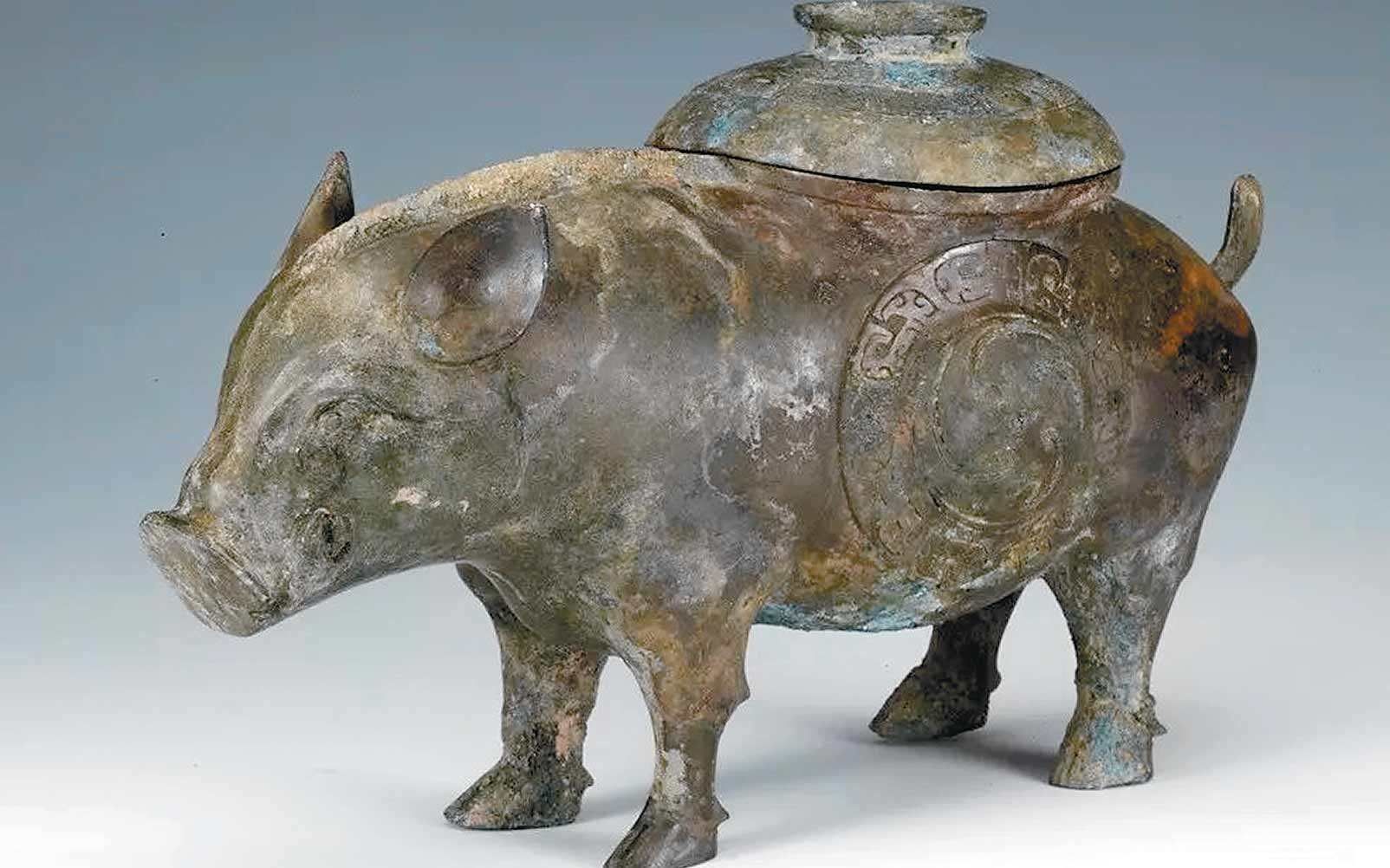
Many forms were developed and became more detailed under the ruling of the Zhou dynasty, including paintings, bronze inscriptions, bronze, and lacquerware. Chinese script cast onto bronze ware such as bells and cauldrons carried over from the Shang dynasty into the Zhou which showed changes in their style by region and over time. Under the Zhou dynasty, the expansion of this form of writing continued with the inclusion of patrons and ancestors. Other advancements to bronze objects under the Eastern Zhou included more significant care to detail and aesthetics. The casting process itself was enhanced by a new practice called the lost wax method of production. Jade and ceramic art was continued from the Shang dynasty and was refined during the Warring States period.
Very few paintings from the Zhou dynasty have survived, however, written descriptions of the paints have remained. Demonstrations of the real world, in the form of paintings of figures, portraits and historical scenes were frequent during the time, which was a new advance. Paintings were also made on tomb walls, pottery, and silk. Lacquerware was a method through which objects were decoratively covered by wood finish and cured to a hard, durable finish. The Zhou continuously improved lacquer work during the Zhou dynasty. At the time of the Eastern Zhou ruling, a large quantity of lacquerware began to be produced.
The Eastern Zhou Period 770-256 BCE
After the invasion of the barbarian, the Zhou kings forced to move towards eastwards, where the government of Qin became responsible for safeguarding the western borders, and they slowly moved towards eastward and finally occupied the original Zhou domains. The Qin became a close friend to the Zhou, and they also had marriage relations with the Zhou imperial family. The city-states slowly appeared as powerful independent fiefs and the real Zhou power break down. The states which were located on the borders grew into major territorial authorities and its kings who had more wealth and military power than the Zhou king, who was now relied on a small imperial domain. By 700 BCE, the state of Qi in the east, Qin in the west, the Chu in the south and Jin in the north were the main centers of political power in ancient China. The Zhou domain on the yellow river was weak in comparison to the peripheric realms.
In Chinese history, the period from 772 to 476 BCE is known as the spring and Autumn period. During this period, military wars gradually increased. There was war after war, there were around 100 states in China around 770 BCE, but only 40 were left at the end of the Spring and Autumn Period. This was a time of intense social conflict and violence, and there were civil wars, battles, the killing of the rulers, and intrigues among royal families. Wars gradually shifted from being short to large scale slaughters. Because of growing conflict, the kings were no longer able to hire their ministers based on birth because the talent was important than hiring someone based on their clan. Trade was expanded, goods and money circulated mostly through commerce, and wealthy merchant’s occupied high offices. Intellectuals thinkers competed for the king’s patronage, they were moving from one court to another explaining their political, social, military, and economic views in search of employment. The main intellectual concern was on political and social problems while metaphysical speculations were secondary.
Philosophy and s grew in China like never before; rational thinkers belonging to different schools of thought developed many different ideological traditions. This was the time in which most of the important schools of thought such as Confucianism, legalism, and Daoism were born. While the chariot remained in use, the military shifted to infantry in this period possibly because of the invention of the crossbow. The significant of aristocracy decrease as the rulers became stronger, and strong central bureaucracies took place. The book “Art of war” attributed to Sun Tzu was written in this period which is still considered a very influential book on war strategy; also the history of the Spring and Autumn Period which is known by Zuo commentary on the Spring and Autumn Annals was published in this era. The iron metal replaced the bronze in warfare and large scale projects such as the Dujiangyan irrigation system and the Zhengguo Canal were completed.
The growing conflict and war situation caused the Warring States Period, which lasted from 476 to 221 BCE. Seven warring states in this period fought for the ruling and unification of China. For many centuries China lived in a situation of war and disorder in which there was not enough powerful state to defeat all others, but many of them were strong enough to break that order.
The Warring States Period and philosophical development
As noted in the previous section, technological and philosophical advancement and the Qin dynasty emerged during Warring states. Regional feudal rulers absorbed smaller states, and seven prominent states lead by individual rulers to fight for the unification of China. None of these states wanted any other to become too powerful, and if one state became too strong, the others would stand united against it, so none of them achieved dominance on others. This took around 250 years of inconclusive warfare, and the war became larger and larger in scale. At this point, the concept of a Chinese emperor emerged who would rule over all the various kings, though the first Chinese emperors did not rule until China was unified under the Qin dynasty. The crossbow was invented which easied in use as compared to the expensive chariot and resulted in the increased conscription of peasants as expandable infantry. During the Warring States, China saw widespread adaption of iron tools and weapons that were significantly stronger than bronze counterps. Further development happened in philosophical schools of thought such as Mencius further developed Confucian philosophy, expanding upon its doctrines and asserting the innate goodness of the individual and the importance of destiny. Legalism, Mohism, and Daoism became more advance.
Confucius was one of the foremost Chinese philosophers at that time who lived during the Zhou dynasty and laid the foundations of Confucianism. Confucius was mainly concerned about the balance of society, and he sought to reform the existing government system and had encouraged a system of reasonability between superiors and inferiors. Confucius believed that everyone should strive to be virtuous and good in every situation. In Confucius's philosophy, virtue is called ‘Jen’ and humans were seen as good by nature. After the death of Confucius, his students wrote his ethics and moral teaching in Lun-yu. The concept in the teaching of Confucious was ‘Chun-Tzu’ who has cultivated Chi (wisdom), ren (love of humanity), Yung (courage) and Yi (righteousness). Confucius supported the idea that education can improve the individual life; therefore if we educated all the people, then the universal peace would become a reality. Confucius was a Shih, a type of servant who was hired based on talent rather than their birth. From the Han dynasty until the end of dynastic rule in China, the Confucianism philosophy remained dominated throughout China. However, it was reformulated during the Tang dynasty from 618 to 907.
During the same period as Confucius, another influential philosopher was Laozi who developed Daoism. However, it is not sure Laozi was real, or it is just a myth. According to the tale, he was possibly born around 604 BCE, and he wrote his teachings and thoughts in the book called Tao Te Ching and was never seen after that. Laozi is famous for his concept of Wu-Wei, which means do not try to conquer nature but ride nature. He taught that reality is two-sided, one side he called Yin that is dark, moist and feminine, and another side is Yang which is bright, dry, and masculine. These both are necessary and equal and need to be kept in balance to avoid chaos. Laozi believed that humans should follow the mysterious force of the universe and should act following nature. Daoism was individualistic and emphasized the oneness of all things and had opposed the philosophy of Confucianism. Daoism religion emerged over time which involved the worship of god and ancestors.
Legalism philosophy also emerged at the same time, which is less known as compared to Confucianism and Daoism. The legalism philosophy held that humans are inherently bad by nature; therefore, the state needs to keep them in line. The state was more important than individuals; everyone was expected to be subject to the law in legalism philosophy. Mohism had also emerged under the philosopher Mozi at the same time as other philosophies discussed here. The vital concept was ‘impial care’ or also called as ‘universal love’ which meant that people should care equally of other people and protect them from harm, no matter what is their relationship with each other. Mohism also stressed the ideas of self-reflection and authenticity. They believed, society is like an organism; if people help each other, it would be improved and would work smoothly.
The fall of the Zhou dynasty
At the time of the Warring States period in 256 BCE, the Zhou dynasty came to an end. The military of the Qin state killed the last ruler of Zhou King Nan and captured the City of Chengzhou. In power, the Zhou was weaker than the Qin state, and thus the state of Qin absorbed the Zhou state. The superiority of the States, Qi, Qin, and Chu were vast that it seemed for a time that China would be divided into three sections, one section for each state. However, disorder and war prevailed, and the battles continued till the Qin state conquered the other States and unified China once again in 221 BCE and there the ruling of Qin dynasty Begun which lasted between 221 and 206 BCE.
Responses • 0
0/2000
ID: 322
Matthias
Offline
1 day
Visited
From
Orlando, United States
Send Message