Tang Dynasty
Original
Chinese History
Dec 04 • 1985 read
Tang dynasty (618 – 907 AD) was one of the most powerful countries in the world at that time. After the Tang dynasty, overseas Chinese are often called Tang people.
/fit-in/0x0/img/201912/Sui_Dynasty-article-1575446253.jpg)
Early Tang (618-626)
After Gaozu (618 to 626) became emperor, it took many years to claim the whole empire. The Tang competed with major rebellion forces; the rebel Dou Jiande in Hebei, the rebel Li Mi in Henan, Yuwen Huaji who had assassinated the previous Sui emperor Yangdi, and the Sui remnants commanded by Wang Shichong at Luoyang. The grandson of Yangdi was set up by Wang Shichong as a new Sui ruler. Yuwen Huaji attacked Luoyang, and Wang Shichong convinced Li Mi to come back and help to fight against Yuwen Huaji. Li Mi beaten Yuwen Huaji military and seriously tired his army. During that time Wang Shichong defeated the Li Mi army and also the Sui prince in 619 and declared himself as an emperor.
By 621 Li Shimin the son of the Gaozu’s defeated his two most potent rivals Wang Shichong and Dou Jiande and extended his control of the eastern plain, which was the most crowded and prosperous region of China. This was not the end of confrontation to the Tang conquest because the surrendered rebel Wang and Duo were there and they were treated leniently and were given offices in the Tang administration. However, Dou was executed and was killed on his way to exile. At the end of 621, Dou followers rebelled under Liu Heita and recaptured the northeast area. Liu Heita was finally defeated by Tang emperor Jiancheng in 623. The lengthy resistance in Hebei and the relatively harsh Tang conquest of the region were the start of resistance and hostility in the northeast that continued to some degree throughout the Tang dynasty.
Hostility and resistance and hostility were not confined to the northeast. Liu Wuzhou was a constant threat to the empire who was living in far northern Shanxi and was killed and defeated by his former Turkish partner in 622. In the South, Xiao Xian was an emperor of Liang and was ruling in Guangdong, Jiangxi, and Yangtze region. The Tang military defeated Xiao Xian forces in battle, he surrendered, and Tang gained control on the South and the central Yangtze. The south-east was controlled by Li Zitong, a rebellion that was based on Zhejiang. In 621, he has defeated in present-day Nanjing, and southeast came under the control of the Tang Empire. Like others, the last rebellion was Fu Gongtuo defeated too in 624. Moreover, after a decade of disorder and war, the empire was unified entirely under the rule of the Tang Empire.
Administration under the Tang Dynasty
The Tang unification was bloody and took more time than the Sui conquest. The empire lasted for three centuries rather than three decades, as with the Sui, that was because the administration system implemented on the conquered area. The ruler Gaozu’s role in the Tang conquest is understood in the traditional histories compiled under his successor Taizong who ruled from 626 to 649, in which the Taizong as portrayed as the main mover in the establishment of the dynasty. Taizong played a vital role in campaigns, but Gaozu also directs the many complex military operations, established primary institutions of the Tang state which played a significant role in the development of Chinese society. The structure of the Tang central administration resembled Wendi’s time, with its courts, ministries, boards, and directorates. Former experienced Sui officials filled most of the highest ranks in the bureaucracy.
Marriage relations linked the Tang to the Sui royal house, and most of the chief ministers were related by marriage to either the Sui or Tang imperial family. The emperor’s court has mainly consisted of men of similar social origins. At the beginning of the Tang Empire, they continued the pattern of the predominantly aristocratic rule that had controlled the history of the northern courts. Tang continued the pattern of local administration established under the Sui dynasty and maintained the strict control of the central government over provincial appointments. At the beginning of the Tang empire, offices were given to the surrendered Sui officials, rebel leaders and followers of the emperor. However, these new local districts were gradually merged and reduced in number, and by the 630s the pattern of local administration closely look like that under the Sui dynasty.
Fiscal and Legal System under Tang dynasty
Most of the measures of Gaozu had aimed at cheap and straightforward administration. His bureaucracy was small at both local and central levels. The expenses of the government were mainly coming from the land that was attached to each office. The land distribution followed an equal allocation system that was followed under the Sui dynasty. The land was given to every taxable male, part of which was to be returned when he crosses the age 60 and part of which was hereditary. Great landed estates were confined to powerful officials, members of the imperial class, Buddhist foundations and various state institutions. The legal system that governed the registration of land property and restricting its disposal remained in practice until An Lushan’s rebellion in the 8th century.
The tax system under the Tang dynasty was also much the same as under Sui and preceding dynasties. Every adult male member of the society paid tax annually on cloth, grain and was liable to work 20 days for the central government and had a further period of work for the local authorities. The sector and urban communities were exempt from revenues, but it was collected from the rural population. The Sui had made a somewhat aimless attempt for producing China unified currency. However, Gaozu established mints and started the production of a sound copper currency that remained standard throughout the Tang period. However, throughout 7th-century cash was in short supply and had to be supplemented by standard-sized lengths of silk. In 624, Gaozu also established a new codification of all centralized law. It was comprised of a code that embodied what was considered fundamental, unchanging normative rules, prescribing fixed penalties for defined offenses. Under the Tang period, the codes of law were used to revise every 20 years. The systemic effort to maintain codification of law and administrative practice was necessary to the administration that the Tang succeeded in implementing throughout its rule. The Tang code demonstrated remarkably durable; even in the late 14th century during the Ming period, it was considered authoritative and was used as a model. In the early 8th century, it was also adopted in Japan and much later in Vietnam and Korea. In the 7th century, Gaozu laid the foundation of institutions that survived until the mid-8th century, which provided robust central control, highly economical administration and administrative standardization.
The Period of Tang Power (626-755)
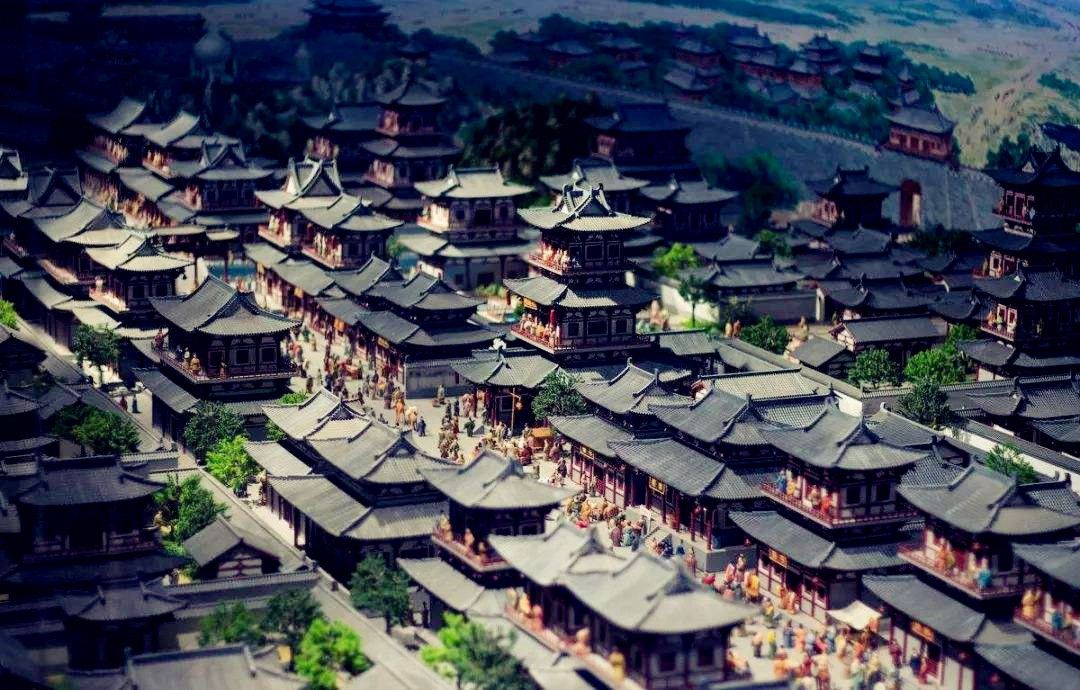
The two Sons of Gaozu; Jiancheng and Li Shimin were rivals for the succession. From 625 to 626, when it appeared that Jiancheng was likely to succeed, Li Shimin killed him and another of his brothers and forced his father to resign. Li Shimin, which is known by his temple name ‘Taizong’ succeeded to the throne in 626. The Taizong period of the ruling (626-649) is traditionally known as the ‘era of good government of Zhenguan’. He developed and refined his father's policies. He approached Confucian ideal, wise and capable ministers for ethical advice. Some significant changes appeared in the political organization during his reign that was continued throughout the 7th century. Taizong tried to balance the regional groups among the aristocracy to prevent any single region from becoming dominant. The most potent Hebei clans were excluded from high offices, and Taizong employed members of each of the other groups and the lesser northern aristocracy in high administrative offices.
Taizong changes the examination system on a large scale. The Sui examination system had already been reestablished under Gaozu, who had also revived the Sui system of high schools at the capital. The school was further expanded, measurements were taken to standardize their curriculum. The schools in the capital were confined to the sons of nobility and high ranking officials. The primary purpose of the examination system in Tang times was to recruit bring into being a highly educated people to the bureaucracy, and to give access to the members of locally prominent clans to the upper levels of the bureaucracy, and to break the control of political power held by the upper aristocracy in the long run. Taizong eventually settled on a centralized form of government through prefectures and counties staffed by members of a centralized bureaucracy.
Taizong continued his father's economic policies, and the government remained comparatively cheap and straightforward. He reduced the number of local governments by cutting down the bureaucratic establishment at the capital. The country was split into 10 provinces, which were not permanent administrative units but circuits for occasional regional inspections of the local administration. This helped the central government to maintain standardized and efficient local administration. Measures such as tax relief for areas hit by natural disasters helped to ensure the prosperity of the countryside. Taizong's ruling period was of low prices and general prosperity. The eastern Turks were split in 630 by opposition among their leadership and by the rebellion of their subject’s people. Chinese forces invaded their territories, and Taizong was recognized as their supreme sovereign. The only failure of Taizong’s foreign policy was in Korea. The northern state of Koguryo had sent tribute regularly, but in 642 there was internal coupe in which new ruler attacked Silla; Tang vassal state in southern Korea. Against the advice of most of his minters, Taizong decided to invade Koguryo but was forced to withdraw his armies with heavy losses in 645. Taizong's last years were also marked by a decline in politics at his court.
The Rise of the Empress Wuhou
Gaozong was 21 years old when he became emperor; however, real power soon passed from him to the hands of Empress Wuhou; one of the most remarkable women in Chinese history. She came from a family of lower standing from Taiyuan, her father was the supporter of Gaozu, and her mother was a member of the Sui royal family. She was supported by the eastern aristocracy and by the lower ranking echelons of the bureaucracy. However, her success was mainly because of her dominant personality, her skill in intrigue, and her utter ruthlessness. Though she was politically dishonest, she backed up her intrigues with policies designed to consolidate her position. Loyang was made second capital in 657, and the court and administration were shifted there from the northwestern aristocracy. Luoyang had equipped with the costly public buildings needed for capital.
Wuhou and Gaozong were obsessed with religion and symbolism, and they were following one favorite magician, monk or holy man after another. Under the Wouhou reign, the Bureaucracy was extended to a greater size, and new officials were recruited based on the examination system. Throughout the Gaozong period, the Chinese were engaged in foreign wars; however, in 657 during Wuhou ruling finally defeated the western Turks and extended their territories. In 668 the Tang army took Pyongyang capital, and Koguryo was also placed under their rules. However, in 676 rebellions had forced the Chinese to remove to southern Manchuria, and all of Korea became increasingly dominated by the speedily expanding power of the southern Korean state of Silla. Zhongzong succeeded after Gaozong died in 683, but Wuhou was made empress dowager and directly took control over the central administration. Within less than a year she had overthrown Zhongzong and replaced him with another son, Ruizong, who was kept quiet in the inner Palace while Wuhou held court and exercised the duties of the sovereign. In 684, a serious rebellion broke out under Xu Jingye in the south, but it was speedily put down. The empress established a reign of terror among the officials and members of the Tang royal family and informers.
In the years after she had announced herself, empress, she retained the services and loyalty of several distinguished officials. The court was still unstable, however, with constant changes of ministers, and the empress remained vulnerable to the influence of a series of insignificant favorites. After 700, she slowly began to lose her grip on affairs. In 705 the empress, who was now 80 years old, had allowed control of events to slip from her fingers. The bureaucratic fraction at court forced her to abdicate in favor of Zhongzong.
Prosperity and Progress
The peak point of the Tang dynasty was the period of Xuanzong’s era (712-756) which was an era of prosperity and wealth accompanied by institutional progress. Initially, political life was dominated those officials who were hired based on examination but slowly the aristocratic clan’s polarised politics, who reformed the empire finances from 720 onward. The re-registration of large scale population increased the taxpayers, and the land taxes were expended. The canal system which was in decline during the Wuhou period was repaired in the 730s, which helped the empire to transport large stocks of grain from the Yangtze to the army in the north and the capital. The government accumulated considerable scale wealth and grain by 740s. The accounting and tax system was simplified. The institutional set up was reformed; coinage, transport, and registration of land reform were administered by specially appointed commissions, who were having the authority to recruit their staff. The political dominance of the aristocracy was reestablished after 736. Li Linfu who was a chief minister became a virtual dictator withdrew Xuanzong from active affairs into the pleasures of palace life.
Re-organization of military
The development in the power of the military commanders was one of the most crucial developments in the Xuanzong era. The old militia system during the Gaozong period was proved insufficient for frontier defense, which was later supported by the permanent armies’ institutions. However, the armies were adequate for small scale operations, but the central government organized army and headquarters for significant operations. At the beginning of the Xuanzong period, the Turks again tried to become the dominant power. The Turkish Khan ‘Kapghan’ who had invaded Hebei at the time of Wuhou, turned his attention to the northward area. He controlled the steppe from the Chinese frontier to Transoxiana by 711 and was trying to establish the Turkish Empire. However, he was killed, and his empire was collapsed. His successor, Bilge death in 734 was the fall of Turkish power. In 744, the Uighurs emerged from Turkish tribes and established a powerful empire that lasted a dominant force until 840. On several occasions, Uighur helped on harsh terms and saved the Tang dynasty from disaster.
During the Xuanzong era, the Tibetans were the most dangerous enemy, who invaded the northwest in 714. From 727 t0 729 Chinese went to war against them and took control of the area. However, the Tibetans turn their attention to the Tang territories in the Tarim Basin. The fight was continued on the border of Gansu until the end of the Xuanzong Empire. By 752, the Tibetans took control of the Nanzhao state in Yunnan, which helped them to put a continuous threat to the entire western frontier. In the wake of these threats, Xuanzong organized the northern and northwestern frontiers under the military governors and commanders who controlled an enormous number of troops. The military governor soon began to exercise civil government functions. In the 740s, An Lushan became the governor who commands 160000 troops under his control and established his forces in the northeast. The armed hostility that followed nearly destroyed the dynasty. The end of the Xuanzong Empire was a time of unstable conditions. The central government relied on a small number of men who were operating outside the regular institutional framework, and the power of the military was in the hand of potentially rebellious commanders on the frontiers.
The Late Tang Period (755-907)
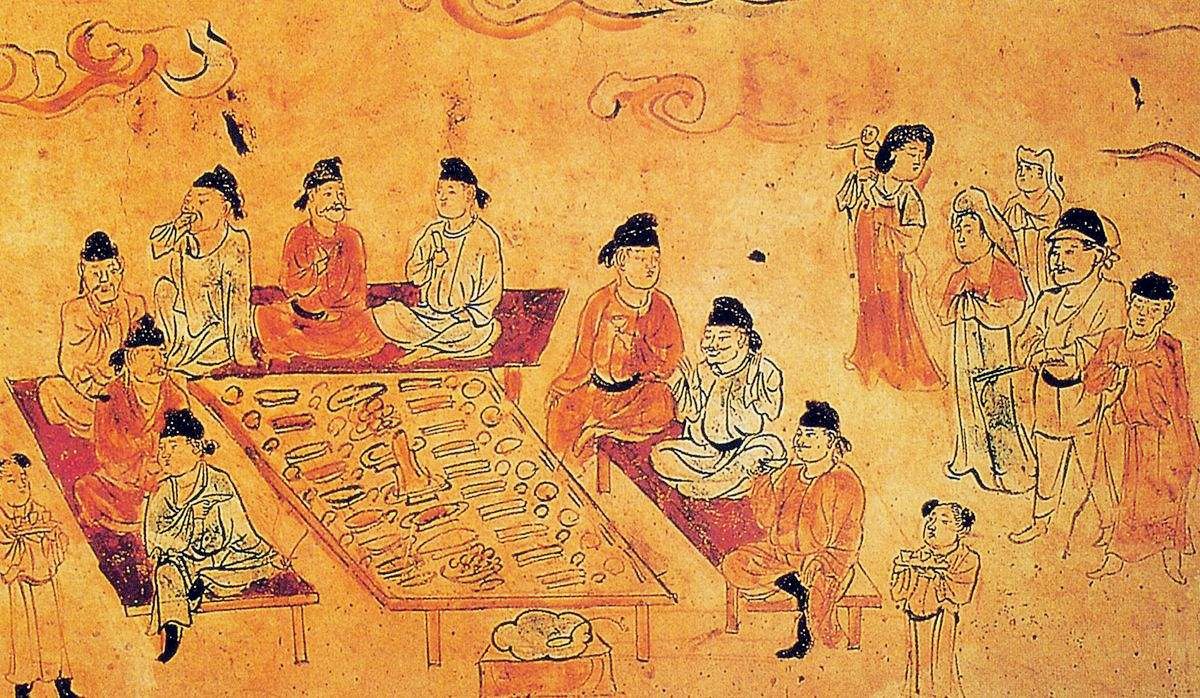
In 755, the rebellion of An Lushan marked the start of a new period. Initially, the rebellion has success and swept through Hebei province, took control of Luoyang capital and the principal Tang capital in Chang’an. The emperor and other members who had dominated the court were killed. In the last days of the Xuanzong period, he split the empire into five main areas, each of which was given to the imperial princes. Southeast was controlled by prince Yong, who later attempted to set himself as the independent ruler of the economically important area in the Huai and Yangtze valleys but was killed by one of his generals. In 757, An Lushan was also killed by a subordinate, but the rebellion was continued by his son Shi Chaoyi and later by his general Shi Siming. The rebellion had severely affected people and caused hardship, especially in Henan. The final victory over rebellion was in the 770s.
Provincial separation under late Tang dynasty period
After post rebellion, the Hebei province was divided into four parts, and each part was given to the surrendered rebels. Shandong province was given to the An Lushans’s former garrison army from Pinglu in Manchuria which had held an ambivalent potion under the fighting. Throughout the latter part of the Tang period, the northeastern provinces which were most populous and productive parts of the empire remained semi-independent. It was a massive loss of revenue and a potential workforce to the central government and was also considered a threat to the central government. In northern China most provincial governments were military. Their presence was strong over small provinces that protected Chang’an capital from the Tibetans, while Henan province protected the canal on which the central government relied for its supplies from the semiautonomous provinces. The provincial government developed a new organ of the civil bureaucracy in central and southern China. Governors of southern provinces were hired from the bureaucracy, and it became customary to appoint to these posts high-ranking court officials.
The struggle for a central authority
Under the rule of Xianzong (805 to 850), the Tang dynasty regained a great deal of its power. Xianzong was a tough and ruthless king who kept a strict hand on affairs. During his era rebellions in Yangtze delta in 807 and Sichuan in 806 were quickly put down. In 814 a rebellion broke out in Huaixi which threatened the canal route was crushed, and the province divided up among its neighbors. Also, he defeated the Pinglu army in Shandong in 818. Throughout Xianzong Empire he restored the authority of the central government. However, in the second half of the 9th century, the central government of the Tang dynasty became weaker. During the ruling of the Yizong empire (859-873) there was the renaissance of the eunuch’s power and constant fratricidal strife between officials and eunuchs. Yizong who was 11 years old and was the choice of the palace eunuchs, ruled from 873 to 888 overthrow Xizong. Also at that time, Henan was suffered from severely flood followed by a terrible drought. Huang Chao, marched south in 878 and dismissed Guangzhou, then marched to the north and took control of Luoyang in late 880 and Chang’an in 881. He tried to establish an empire in the capital, but he was proved cruel, and then he was forced to leave Chang’an and withdraw to Shandong where he died in 884. Huang Chao's army was defeated with the help of Shatu Turks. The Tang dynasty lasted until 907, but its last quarter-century was under the control of generals and provincial warlords. In which China fell apart into a number of independent kingdoms because of the decline in the central government. However, China's unity was restored in the Song dynasty.
The influence of Buddhism during Tang dynasty
The Tang claimed to be the descended from Laozi, and that is why they officially supported Daoism, Buddhism continued to enjoy great favor lavish imperial support through most of the period. Xuanzang, who is a famous pilgrim, went to in 629 and back to China 645 and introduced new standards of correctness in his many translations from Sanskrit. The establishment of indigenous schools was the most important development that adopted Buddhism in Chinese ways of thinking. The Tiantai schools were prominent which sought to embrace all other schools in a single hierarchical system, and the radically anti-textual southern Chan School, which had strong roots in Daoism. After An Lushan rebellion, a movement appeared that support Confucianism, which lay the ground for Neo-Confucianism of the Song period. From 843 to 845, the emperor Wuzong, who was Daoist tried to suppress Buddhism. At that time China was in a severe financial crisis, while the Wuzong and his advisers hoped to solve by seizing the wealth and lands of the monasteries. The suppression was for a short period but caused irreparable damaged to the Buddhist institutions. There were monastic communities in the Tang period, who were free of all the obligations of the state. They were able to hold property without the process of division by inheritance, which made the preservation of family fortunes almost impossible in the Tang dynasty. Monasteries were also controlling mills and oil presses, which were essential credit institutions. They provided accommodations for travelers, operated hospitals, and maintained the aged. Their most important function was providing primary education. There schools in temples for training a large proportion of the male population, which were not educated to the standards of the Confucian clergy or elite.
Responses • 0
0/2000
ID: 322
Matthias
Offline
1 day
Visited
From
Orlando, United States
Send Message