Han Dynasty
Original
Chinese History
Dec 03 • 2333 read
Han dynasty is the second great imperial dynasty in Chinese history which ruled China from 202 BC to 220 AD. The Silk Road and Invention of Paper are the most important thing in this period.
/fit-in/0x0/img/201912/Han_dynasty-article-1575341294.jpg)
Han dynasty is the second great imperial dynasty in Chinese history which ruled China from 202 BC to 220 AD. The Han dynasty succeeded in the Qin dynasty and ushered in a golden age of prosperity, peace, and development.
The established Chinese Han culture, today both the majority ethnic group in China and Chinese script are called Han, the word ‘Han’ became the Chinese word denoting to someone who is ethnically Chinese. During their four hundred year ruling, the Han dynasty expanded the Chinese empire westward. The Han dynasty was mainly divided into two periods; One the Western Han period (202 BC - 8 AD) and Eastern Han period (25 AD to 220 AD). After the collapsed of the Western Han dynasty, the same family members reunited and created a new dynasty called the Eastern Han dynasty. The Han dynasty is believed to be the most influential and successful dynasty in Chinese history. The Han emperors ruled with an emphasis on law and order, tradition and set the tone for more than 2000 years of imperial rule. The Han rulers ruled with a lighter touch than heavy-handed rulers like Qin Emperors. The Chinese people call themselves Han in honor of the Han dynasty, which in turn is named after the river. The Han Empire was robust, powerful and as large as the Roman Empire. The world population at that time was 180 million, while four-fifths of the world’s people were living under the Han, Roman and Indian Gupta empires.
The Han dynasty reserved much of the Qin administrative structure but changed a little bit from centralized rule by creating vassal principles in some areas for the sake of political convenience. The Han rulers changed some of the strict aspects of the Qin dynasty, Confucian scholars gained prominent status as the core of the civil services. A public service examination system was introduced, intellectual, and artistic work were revived and flourished. The most famous historian Sima Qian (145-87 BC) was produced in the Han period, technological development such as the invention of paper and porcelain dates back to the Han period. The Han dynasty is also famous for its military skills and competency. However, after two hundred’s years of government, Wang Man, a reformer in 9-24 AD disturbed Han rule, but that was restored for another 200 years. However, Han emperors were unable to adjust themselves with problems such as growing population, wealth and financial difficulties and ever more complex political institutions and corruption issues, due to which the Han empire collapsed.
The Western Han Period
Initially, the capital of the Han dynasty was Chang’an in Western China. The Western period lasted from 202 BCE to 8 AD, at that time the dynasty rule was interrupted for a short time by rebellion and Xin dynasty. During the Western period, the Han dynasty used the Qin government policies and expanded its bureaucracy and centralized state. Differences were there between Qin and Han dynasties, perhaps because of those differences, the Han rule lasted for longer than Qin. The Han was more emphasizing on the lives and well-being of their citizens, and that is why the changed some of the stricter aspects of the earlier dynasty rules with Confucian ideals of government. Writing and freedom of speech were restored, and the more light government established prosperity and harmony.
The four-class hierarchy emerged, which known as the ‘four occupations’ that gave scholars the highest social status, and farmers stood second following by craftsmen and artisans, and merchants in the bottom. During this period, the family institution was patrilineal, and there were norms of arranged monogamous marriages. Sons would live separately after marriage and would get equal shares of family property. Rituals were included the sacrifices of animals and the distribution of foods to spirits, deities, and ancestors at temples and shrines. Each individual was seen as having two souls; one the spirit-souls which go to paradise after death and is immortals and the other one is body soul that remained on the earth in the tomb. Other innovations of that time included the first use of negative numbers in mathematics, the recording of stars and comets, and the armillary sphere, which represented star movements in three dimensions, the waterwheel, and other engineering feats.
Emperors Han Jing Di and Wu Di
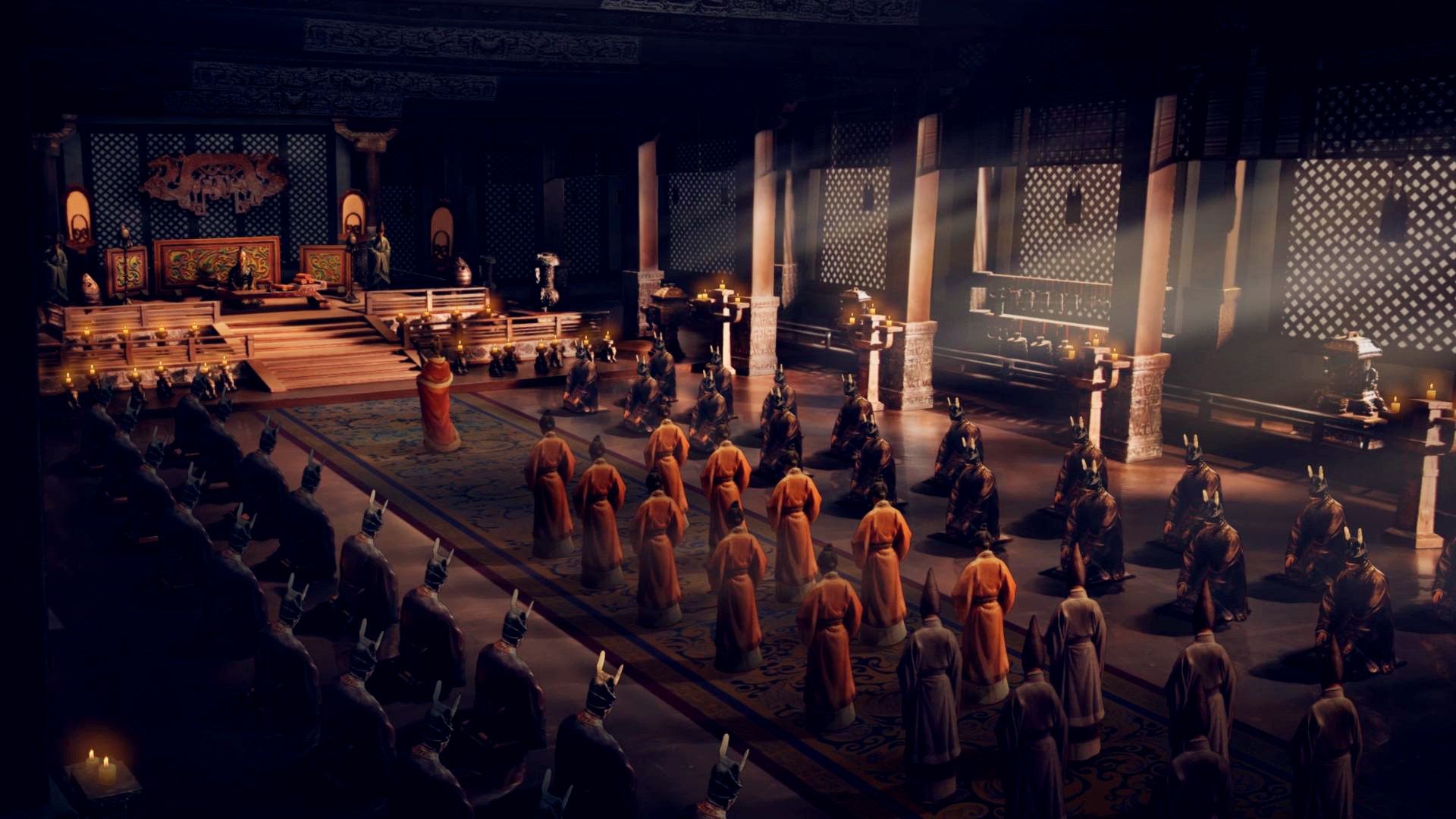
Han Jing Di was the fourth emperor of the Western Han dynasty who ruled from 157 to 141 BC. He was one of the influential early Chinese rulers who cautiously ruled and depended on Taoist discretion to solidify his power and paved the way for a glorious rule by his son Wu, and the domination of his clan, who reigned for more than four centuries. Han governed based on the Taoist saying; Do nothing in order to regulate. Under his rule, mandatory service was significantly reduced, and peasants were only charged with three percent text in their harvest as compared to 50 percent under Emperor Qin.
Emperor Wu Di was one of the great emperors who started ruling at the age of 15 years and ruled from 141 to 87 BC. He produced a significant number of innovations, political and military feats. He elevated Confucianism to a single official philosophy, royal religion, and state cult. He was also famous for his bad temper; it is said that he once killed his cousin with a board game after a quarrel. Under his government, China was stable and secure state, the harvest was good, Confucian academies were created all over China, and the treasury was full. The agriculture estate was prosperous, which determined the property of the Han government.
Emperor Wu established government industries, transportation, delivered services, controlled profit, and imposed a five percent income tax. He introduced a civil-service examination system for hiring potential government officials based on the knowledge of Confucian classics. Bureaucrats were hired based on their knowledge rather than social connections. He reformed the Chinese economy and nationalized iron and salt industries, and made agriculture more productive. Under Emperor Wu's government, the Han dynasty established a relationship with Indian culture.
Challenges faced during the Western Han Period
Emperor Gaozu rewarded his supports with a piece of land, which caused the same problems that threw the Zhou dynasty. A number of rebellions broke out, but the Han emperors stopped them gradually reduced the power of the small kingdoms though never abolished them altogether. Another challenge to the Han was the external threat of barbarians; the most dangerous of whom were the Huns and Xiongnu, a Mangol like nomadic people in the northwest of the Han Empire. However, the Han dynasty was strong enough to face these external and internal threats and survived because of the powerful state.
The Silk Road
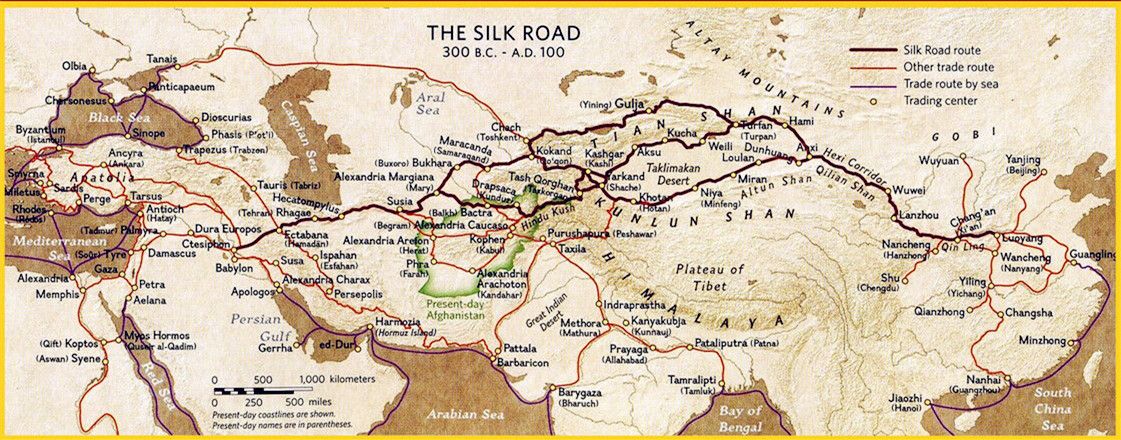
The Han dynasty established the Silk Road, which led to the cultural integration across a vast area of Asia. Through western and southern conquests, the Han dynasty of China made contact with Indian culture. Emperor Wu resisted the Xiongnu, the invading barbarians and doubled the size of his empire and expanded the boundaries of China into Mongolia, west into Turkestan, south into Indochina, and east into Korea. As he pushed the Chinese borders further, trade contacts were established through the west, most significantly through the Silk Road. Emperor Wu sent his representative Zhang Qian towards the westward journey along the Silk Road to establish military and diplomatic relations in central Asia. Expansion to the West and South helped establish sea and land trade routes to Southeast Asia, India, and the Middle East.
The Silk Road was a series of cultural transmission and trade through routes that were central to cultural interaction between the East and West. The primary business from China was Silk, but also many other goods were traded through Silk Road. These routes helped in strong trade relationships with India, the Roman Empire, and Persia. Because of the Silk Road, the western expanded territory was vital for China. Chinese citizens were actively engaged in the Silk trade under the provided protection of the Han government from nomad pirates. The Great Wall of China was expanded in order to provide extra protection. In 639 AD, the Tang Dynasty reopened the route but then lost it to the Tibetans in 678 AD. The control of the Silk Road was a shuttle between Tibet until 737 AD. China opened its doors to foreign cultures, and its cities were quite cosmopolitan. Silk Road helped China to integrate cultures and expose its tribal societies to new developments. However, as the Mongol Empire disintegrated, so the Silk Road.
The Establishment of the Eastern Han Period
After the decline of the Western Han period in 9 ADE, the regent to the prior emperor, Wang Mang, proclaimed his new dynasty, the Xin dynasty. He attempted several radical reforms, such as a ban on slavery, new forms of currency, and return to old models of land distribution. A severe Yellow River flood caused famine and mass migration. A rebel army called the ‘Chimei’ developed out of the proletariat, and they defeated Wang Mang’s armies and stormed the capital of Chang’an and Killed Wang Mang. By 25 AD descendants of Western Han established the Eastern Han Dynasty which ruled for the next two hundred years. At the end of the Wu Empire, the treasury was running low because of the corrupt officials, resources spent on expansion and military campaigns. This situation created conditions for revolt and chaos.
Emperor Guangwu, a new Han emperor, took control and ruled from Luoyang, in eastern China which marked the start of the Han period. He defeated the Chimei rebels and rival warlords, and unified China again the rule of the Han Dynasty. Under king Guangwu, the empire became stronger. The Chinese land, which was occupied by Korea and Vietnam, was reconquered. The Hun Confederation was pacified. King Ming, followed by king Zhang, succeeded King Guangwu. During the rule of Zhang and Ming remembered as an era of prosperity. Confucian ideas were encouraged, taxes were reduced, and the emperors appointed talented officials. Also, the most important invention of China ‘the invention of paper’ was emerged in this period. Though the first form of paper was there, they produced a perfect paper. The invention of paper helped them to circulate Chinese texts in an inexpensive way instead of on silk, clay or bamboo. This helped Chinese texts to be readily available and encouraged learning. Porcelain was another essential innovation at that time. It existed in the previous time, but during the Eastern Han period, a more perfected form of porcelain was invented. The advancement of porcelain helped for durable, high quality and attractive ceramic ware.
A serious of rebellions in 184 AD caused the fall of the Eastern Han period. Even after the defeat of the rebels, the Military generals were trying to keep the military forces integral. General He Jin plotted to overthrow palace eunuchs. The generals attempted several times to control the young emperor; Sun Quan ruled the south, Cao Cao governed north, and Liu Bei ruled the west. After the death of Cao Cao, his son Cao Pi forced King Xian to give up his throne to him. This was the end of the Han dynasty in which three states, Shu Han, Eastern Wu, and Cao Wei, fought.
Religion and Bureaucracy during Han dynasty
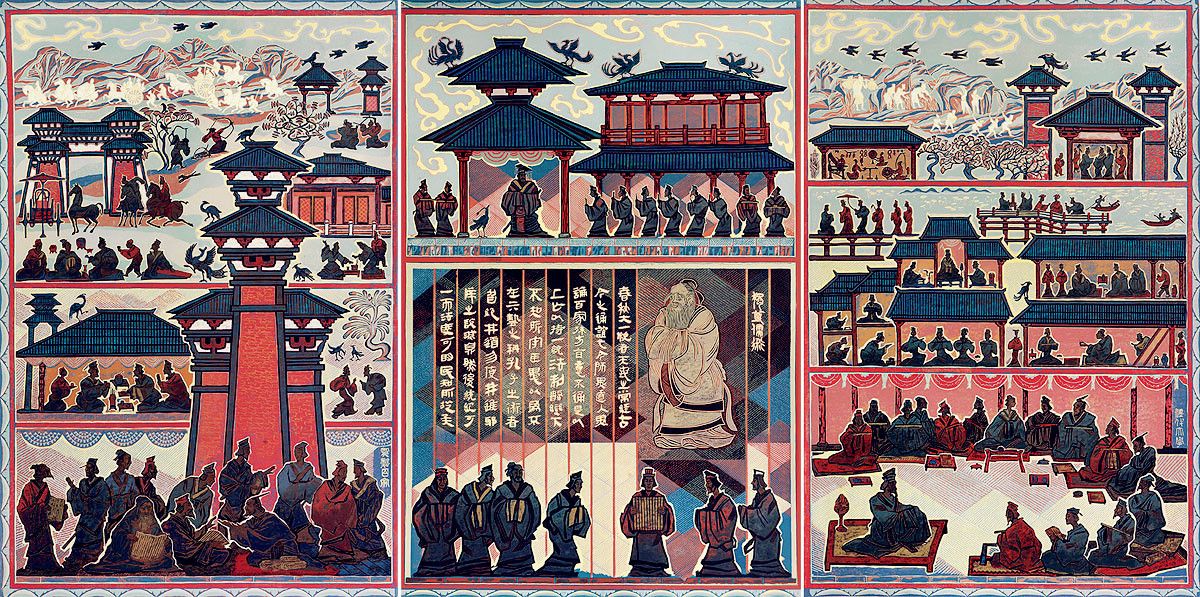
During the Han dynasty period, Confucianism was established as the state belief while monks who were traveling from India introduced Buddhism, and Taoism was popular because of its popular superstitions and increased followers. Buddhists and Taoists multiplied in the turbulent centuries after the collapse of the Han dynasty. Confucians were introduced by the Han court to solve matters related to ceremonies and rites. Later they started to educate their children in royal families and imperial universities. It was King Wu who elevated Confucianism to a cultural philosophy, state cult, and ruling religion. The Mandate of Heaven became the state ideology at the time of the Han dynasty.
The Han government was more centralized; they established a vast bureaucracy with a strict hierarchy. Officials and administrators were hired based on the exams that measure their knowledge of Confucian classics and then trained at imperial university and provincial schools. The Han dynasty launched the Chinese imperial bureaucracy, which remained virtually intact as an institution until the 19th century. The local officials were accountable and reported to central officials in the capital, and they, in turn, reported to the rulers. A network of roads and a postal system was established, which helped in communication and tax collections. The invention of paper helped the bureaucratic system to develop more. During the Han dynasty, the world's first census was conducted in China, which counted 57,671,400 people. The censuses helped ancient Chinese to access military power in each reign and determine revenues.
The Invention of Paper
During the Han dynasty, it was Cai Lun invented paper in ancient China. Writing and wrapping were the purposes of paper at that time; later, it spread throughout the world. The word ‘paper’ is derived from papyrus which was referring to thick writing sheets in early Egyptian time. During Zhou and Shang dynasties, bamboo, silk, and bone were used for writing. While during the Han dynasty, Cai Lun (202 to 220 AD) who was working in the imperial court invented paper. Legends state that he just improved the paper because the nests of paper wasps inspired him. He made paper by using mulberry along with fishnets, old rags, and hemp waste. Paper was used primarily for wrapping purposes; to wrap bronze mirrors has been dated back to the time of Emperor Wu in the second century BC. It was also used for wrapping poisonous medicines. People started to commonly use paper for writing during the third century AD while in 875 AD it is used as toilet paper. During the Tang dynasty, the paper was folded and sewn into tea bags and used to make napkins and paper cups. While the world first paper money was introduced during the Song dynasty and was often presented in special paper envelopes.
The Tombs of Han
It was common during the Han dynasty for rulers and noblemen to decorate their tombs with pottery replicas of warriors, servants, concubines, domestic animals, trees, models of towers, stoves, granaries, and almost anything in the real world so that the people could have them after death. It was not only the imperial class who decorated their tombs, but also the ordinary people outside the imperial court decorated tombs. A modest tomb was discovered by archaeologists which probably belonged to a high military officer that yielded two thousand figures. In 2002 terracotta army comprised of hundreds of foot tall soldiers was founded near the Weishan mountains Shandong province. The soldiers were part of a great tomb believed to belong to a nobleman closely connected to the imperial family during the Han dynasty. The figures were well organized, at the front were cavalrymen on red horses, followed by infantrymen. Archaeologists discovered only a small portion of the site, and they believe there could be more soldiers at the site.
Art during the Han Dynasty
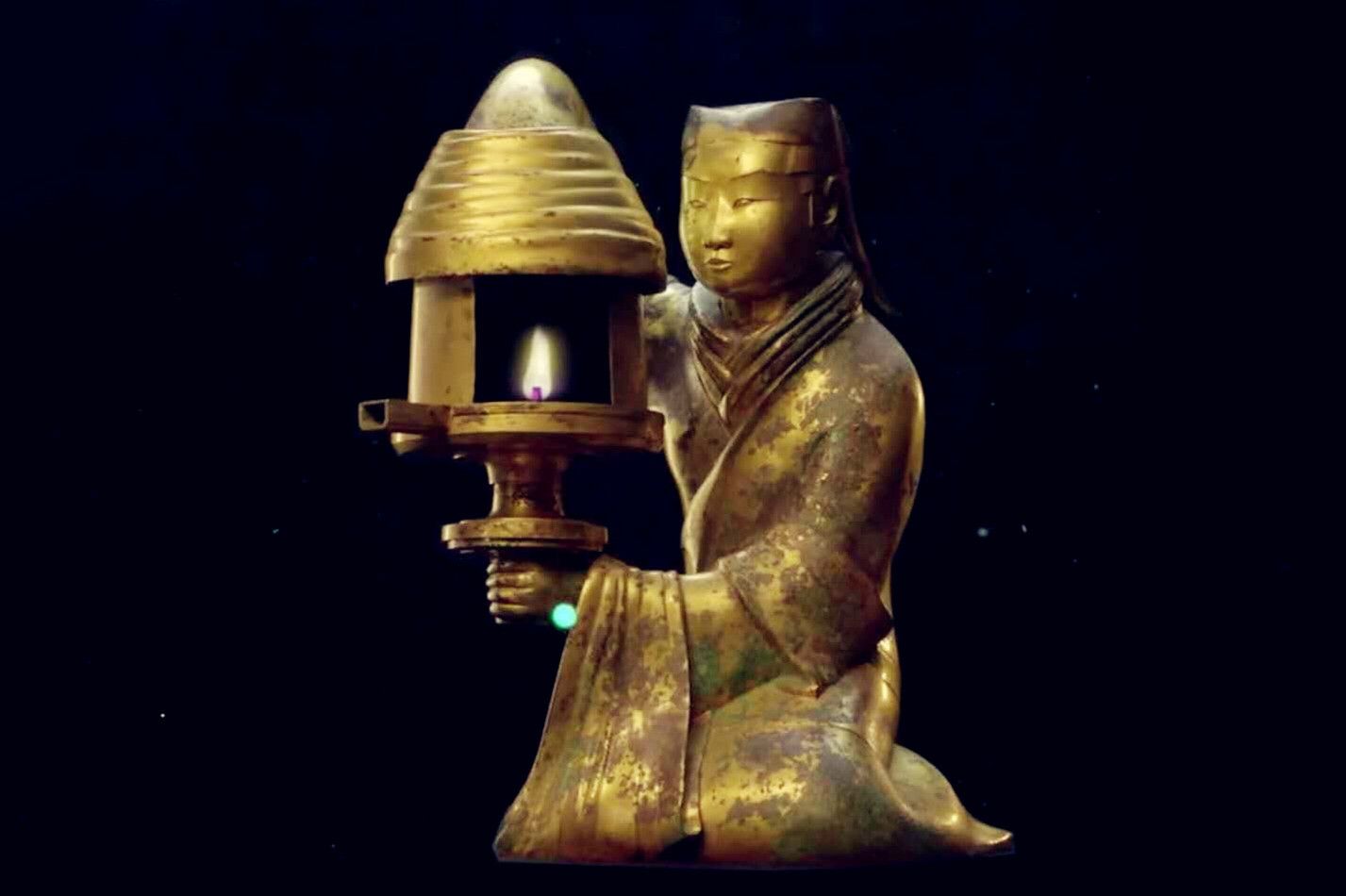
The Han period is famous for its cultural, intellectual and political achievements. Some Chinese people believe that modern history starts with the Han dynasty. Musicians composed of lyres and flutes and landscape painters polished their skills. The book of Ode was a collection of poems and songs imprinted on lapis lazuli. Objects discovered from Han tombs such as stones with human battling bears, gilded silkworms, bronze incense burners held by an image of an immortal, horned terracotta head used to ward off evil, and pear ornaments with girls holding lamps that would show the way to the afterlife. The flying horse was one of the greatest achievements of Han dynasty artistic skills. In the second century, the bronze sculpture of an entire horse supported on the hoof of one leg found on the grave of Han general. A famous gilded bronze horse is another treasure, which is thought to have been given as a gift from Emperor Wu to his sister.
Horses were highly valued because of practical and spiritual values; the horse carried the Han to Central Asia and was believed to take rulers to heaven. Art in a great amount from central Asia and India made its way into China in the first and fifth centuries. During this era, Buddhist art was introduced on the walls of Yangang, and many scriptures of Buddhists were translated into Chinese. The Calligrapher Wang Xizhi, poet Tao Yuanmung, and painter Gu Kazhi created great works. Many great works of ceramic and pottery came from the Han dynasty. Lovely objects and vessels were buried with the dead, which is discovered by looters and archaeologists. The emperors and other people in the Han dynasty were decorating their tombs with models of towers, furniture, plants, tree, horses, servants, concubines, and other things in the real world, so they deceased would have everything he needed in life after death. During the Han Dynasty, pictorial art took the form of stone engraving, paintings on silk and wall paintings. Han paintings are believed to have had an educational function and solemn style. To educate people was the primary purpose of paintings during the Han period.
The Scholarship, Technology, and Economy during the Han dynasty
The Chinese people give credit to Qin Shihuang for unifying the Chinese writing system, but a close look reveals that the system was mainly standardized in the Han dynasty. The Han produced the first official history, the first Chinese dictionary, gave names to the dynasties that preceded them and made an effort to unify China’s diverse ethnic groups with a single writing system. Paper was invented, water clocks and sundials were used, complex mathematical problems were solved, and astronomy flourished. The Han were using wheelbarrows and pulleys to transport goods. Water-powered trip hammers were used for crushing ores and grain.
There was an economic expansion in the Han period; irrigation and agriculture were improved. Strong tools and weapons were created from iron, and they built the economy on the labor of free farmers that were forced to give up their surpluses as taxes. The trade of silk was essential to the economy. Garments made from silk, damasks, brocades, and gauze discovered from tombs shows that Han weaving was done with elaborate looms. The Silk Road opened up under the Han dynasty, and they were traded with Rome through Central Asian mediators.
The Fall of Han dynasty
Han dynasty collapsed after four centuries of the ruling. From outside, The Xiongnu people who were living in the North area established a tribal federation, after continues attack they weakened the power Han dynasty. From within, competition and corruption destroyed the Han court system. The Xianbei group in the first century AD was replaced by the Xiongnu, which was a group of horsemen in Mongolia. The origin of the Xianbei is not known but it is known that they raided and intermixed with the Han Chinese in China. It is believed that the roots of Xianbei belong to a mix of Iranian and Turks clans. At the end of the first century AD, the Liu rulers died continuously without leaving young male heirs. That is why the power was passed to child cousins, and corrupt regents pulled strings behind the scene. Eunuchs became too strong and corrupt.
Confucian intellectuals and their students started a demonstration on stages, farmers started rebellions and threatened the capital. In AD 197, a seized power executed the eunuchs and placed a child named Liu Xie, on the throne. Warlords started battling with each other; Luoyang was burned to the ground. In AD 220, generals clashed with each other, Liu Xie abdicated, and the Han dynasty came to an end. Chinese was divided into three kingdoms, which rule separately for the next three and half-centuries. However, the Han dynasty did not vanish entirely; it lived in the legacy of its government, art, and idea.
Responses • 0
0/2000
ID: 322
Matthias
Offline
2 day
Visited
From
Orlando, United States
Send Message