Song Dynasty
Original
Chinese History
Dec 05 • 2569 read
Song dynasty (960-1279) was an era of high prosperity in a commodity economy, culture, education and scientific innovation in Chinese history.
/fit-in/0x0/img/201912/Song_dynasty-article-1575534872.jpg)
Song dynasty (960-1279) as the ‘medieval’ period of China. The Song dynasty civilizations were among the most advanced civilizations in the world at a time. The Song Empire was prosperous, scientifically, economically, and militarily wise was powerful. Discoveries in the realms of technology, science, philosophy and art, combined with a curiosity about the world around them, provided people of the Song period with a worldview and level of sophistication that in many ways were unrivaled until many later times, even in China itself. Historians divide Song dynasty into two eras; one the northern Song Empire which lasted from 960 to 1127 and was based on north of the Yangtze River; its capital was Kaifeng. The second era was the Southern Song Empire from 1127 to 1279, while its capital was at Hangzhou, and occupied south of the Yangtze, and flourished both in population growth and economic development. Between these two periods, there was a short period of invasion and war among competitors.
The formation of the Northern Song Dynasty (906-960)
After the collapsed of the Tang Empire in 906 AD, for 54 years the invading tribes divided the Tang territory among newly established kingdoms. This era is known as the Five Dynasties and Ten Kingdoms period (906-960). The nomadic tribes and other empires took most of the west and north of the former Tang territory. There were eight small kingdoms by the end of 923 AD, and it was a time of chaos and warfare. In 960, Zhao Kuangyin, who was a general of one of Northern Zhou (one of the kingdoms among eight kingdoms) started a rebellion against the ruler and the court officials and established the Song dynasty. The name knows Zhao Kuangyin of Emperor Taizu who ruled from 927 to 976, and in the next twenty years, he and his son overthrew the other kingdoms and established the Song Empire.
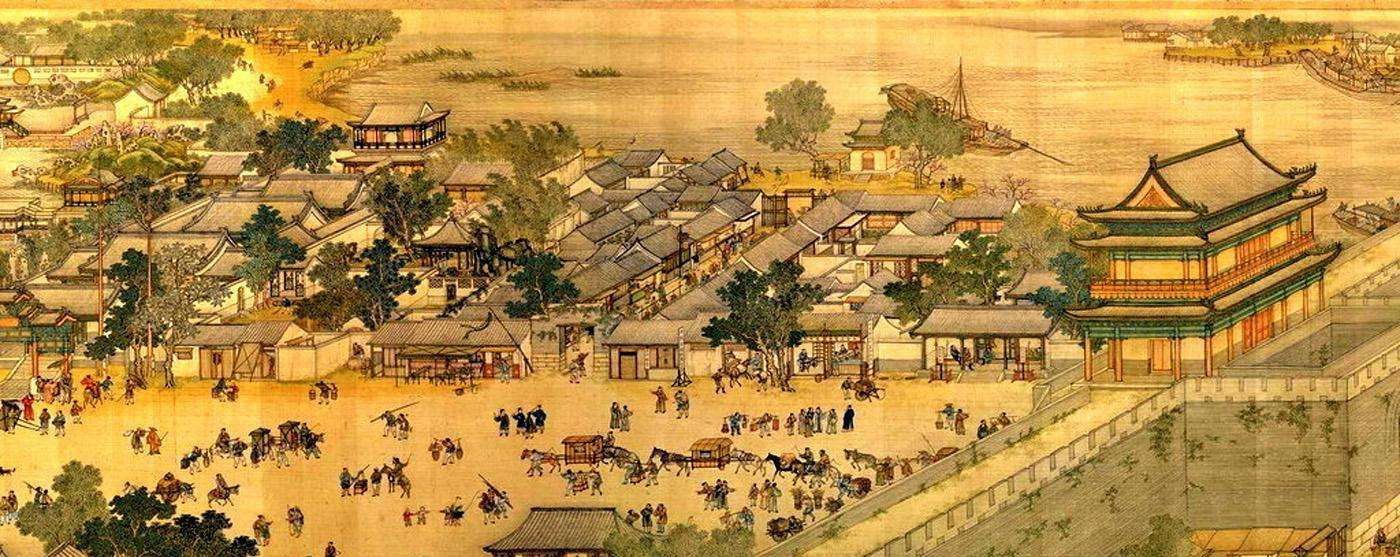
In 1960, Emperor Taizu began ruling in his capital named Kaifeng. Taizu was famous for his successful and daring military leadership and as a great man who laid down the strong foundations and traditions for the Song dynasty Empire to become one of the dominant reign on earth in that era. His government model was continued by the empires that follow the Song dynasty. During his period of the ruling, he laid the foundation of crucial successful institutions and policies and won his wars of expansion. Taizu's policies for education were successful, and he stands out as an emperor who flourished science and education in his period. He nurtured and promoted the educational system and scientific research in his empire. He established the educational and administrative system not only for the Song Empire, but his government and educational policies were maintained in the later dynasties.
The Song government was more centralized; Taizu established the policy that the officials and administrators of his empire should know Confucian, and they were hired based on the exams called imperial Exam which measure their knowledge of Confucian classics and other ancient literature. He hired well-educated people, who proved that they could rule. He ensured that his officials in the administration had more power than the rich lords and military generals. This policy of imperial exam stabilized the process of dynastic succession by ensuring that after the death of the ruler, the empire administrative officials could carry on their duties. The policy greatly benefited and strengthened the empire so that it could endure. His policies helped to guarantee that the officials were loyal and intelligent enough to run the administration smoothly. Taizu established scientific academies that allowed scholars to express their thoughts freely and discuss them. These academies successfully polished and produced scientists, scholars, and officials who were excellent in science, literature, and arts. The high level of academies education helped the government to formulate beneficial trade policies with foreign countries, and invented the most advanced weapons in the world such as rockets and mortars that that was efficient in warfare.
The Northern Song Wars (960 - 1127)
During the northern song period, there were continues wars for about 150 years, in which the Song dynasty was not powerful enough to conquer their neighbors, but also they did not lose their important territory to the other kingdoms either. They maintained their territorial integrity and were able to flourish within their boundaries until 1127. In the northeast, the Liao Empire was a potential threat to the empire of Taizu during 960. The Song dynasty court was also desired for the territory under the control of Western Xia in the northwest. In the south, there were conflicts with Viets. The ruler Taizu and later his descendants address these issues, instead of just trying to live at peace with these powerful and hostile neighbors, the Taizu choose to invade them with disastrous results.
The Western Xia kingdom (1038-1227) was established by the Tangu people in the northwest area and occupied the area which had access to the strategic Gansu land, that permitted travel and trade on the Silk Road. The people of Tangut were associated to the Tang Empire, but after the collapsed of the Tang Empire, they established their kingdom. When the Song Empire expanded its boundaries in 900s, the Tangu people rose out and started resistance to them. The Song dynasty was trying to overthrow the Xia kingdom and take control of the area so they would be able to reestablish the lucrative Silk Road trade that highly benefited the Tang and Han dynasties. However, in the 11th century, the Song dynasty managed to win several military victories over the Xia kingdom. Then Shen Kuo (1031-1095) a leading scientist and writer who wrote the scientific book called ‘the Dream Pool Essays’ lead the army against Tanguts in which Tanguts defeated the Song dynasty and regained their territory they had lost earlier.
After the defeat of the Tanguts people, the Song dynasty turned their attention towards the south and wanted to expand south to annex the Viet territory. The Viet people behaved as vassals, but the Song court thought that they are weak enough to conquer. However, the Ly dynasty sent an army of 100000 soldiers to Nanning and defeated the Song dynasty army. The Ly dynasty fought with the Song dynasty from 1075 to 1077, and the war ended in a stalemate; the land they captured was distributed with each other. Invasions on Tangu people and the Ly dynasty weakened the military strength and court finances of the Song dynasty, which was perhaps the critical factor in the decline of their dynasty.
In the northeast, the Liao Empire (907-1125) was another enemy of the Song dynasty. In 1005, the Liao Empire forced the North Song Dynasty to give some tribute. The north Song dynasty along with Jin started a war against the Liao Empire which was in ended in 1125. Both armies of the Song and Jin defeated the Liao Empire. Then later Jin turned against the Song Empire and occupied the capital Kaifeng of the Song dynasty, 40 percent of the northern Song territory and captured the imperial clan in 1129. Imperial Gaozong, who was a member of the imperial family and also evaded capture, became the first emperor of the Southern Song dynasty. Jin established the Jin Empire (1115-1234) and made Kaifeng their capital.
The Sothern Song Era (1127-1279)
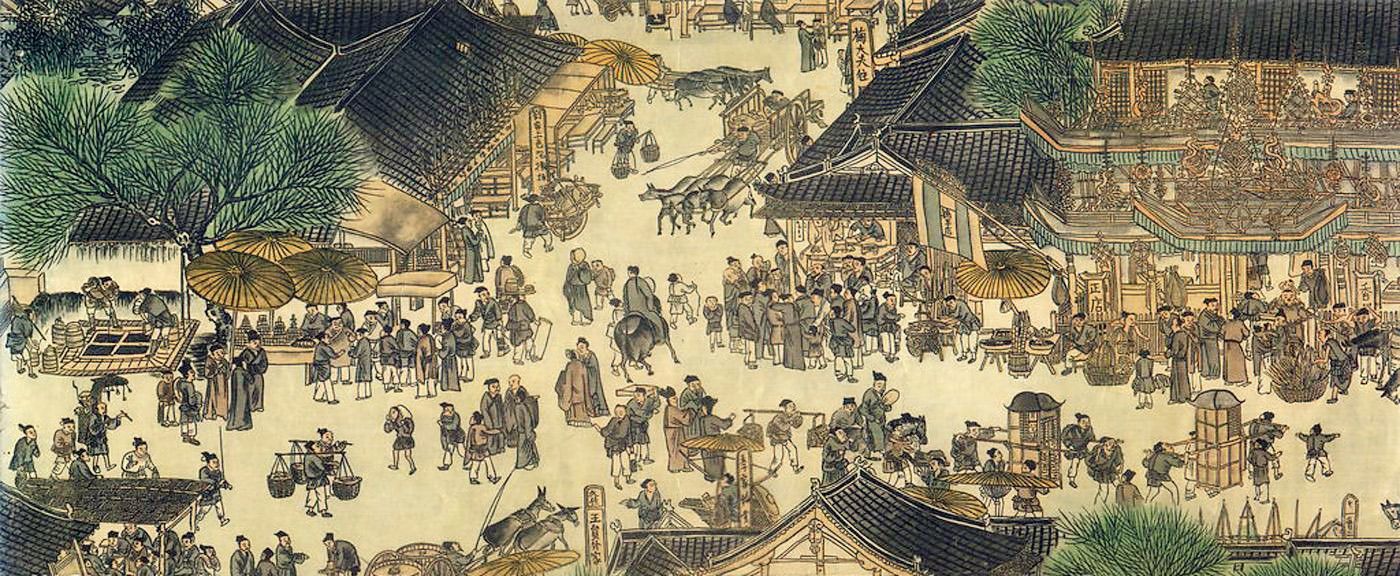
At the beginning of the Southern Song dynasty, they were ruling on 60 percent of the territory, and most of the population and wealthy southern trading cities were under their control. After a short period of war among rivals, they arose again in the south, where the new emperor Gaozong established Hangzhou as a capital in the year 1132. The Song dynasty maintained its power on the south of the Huai River and the Yangtze along with most of the population. The Han ethnic people migrated to a new empire in the northern domains. The new empire quickly strengths and flourished because of maritime trade and built a powerful navy.
The focused of foreign trade was mainly on the Southern Song dynasty. Their government established large and advanced merchants, military ships, and improved harbor facilities. Along with Hangzhou, other huge seaport merchant cities were Quanzhou, Guangzhou, and Xiamen, and these were the wealthiest and most significant cities in the world at that time. The merchant ships of the Song dynasty sailed as far westwards as India and Arab. The trade helped and developed the southern Empire to be prosperous, even though they had lost a significant part of the land in the North area of Yangtze. To protect the merchant ships, the Song government built an advanced and large scale navy. The government introduce paddle-wheel ships, which were faster than boats in the rivers, and were carrying bombs that were made from gunpowder that could blow up enemy boats. Because of the better and efficient navy, they defeated Jin attacks, and controlled navigation on the vast Yangtze River so it was their defensive boundary.
Economic and Agriculture developments during Southern Song dynasty
For 300 years, both the Northern and Southern periods of the Song dynasty were prosperous. However, there more wealth and development during the Southern Song era. In the 10th and 11th centuries, the population grew into double, and science and technology get advanced. The Song created the world's most prominent cities that had ever existed before. The Song era was the era of peace and prosperity; there was development in agriculture, trade, urbanization and advancement in industrialization. International trade played a significant role in their economy, and they enjoyed unprecedented economic growth. The Hangzhou, which is a commercial city, grew so large and became wealthy that it inspired the Italian merchant and government officer Marco Polo (1254-1324). He thought Hanzhou was one of the grandest and most beautiful cities in the world.
In the big merchant cities, there were trading companies that exported silk, Chinese tea, and manufactured steel products. Porcelain and silk were the most valuable products for exports. The price of Song porcelain was high in the west. Very high firing temperature was used to shape their ceramics accurately and applied such beautiful artwork that it was the most elegant ceramic made in the world up to that time. They also acquired the skills to produce large scale fine porcelain by using huge bellows and kilns, in which they could bake at extremely high temperatures as many as 25 thousand pieces at one time. Iron factories were established in many places during the Song dynasty, and by using both charcoal and coal, the Song produced about 200 million pounds of steel and iron a year for weapons and tools. Some of the economists believe that the Song period was a time of economic and technological revolution.
During the Northern Song dynasty, the farmers were mainly cultivated millet and wheat. While in the Southern Song era, in which most of the people were living in the South where they developed techniques and tools for cultivating rice. Eventually, the rice becomes the major food crop, and their increased output helped the Song dynasty to export. The government introduced new varieties of rice from Vietnam. According to a Buddhist Monk ‘Shu Wenying’, the Song ruler Zhengzhong, who ruled from 998 to 1022, sent special envoys to Vietnam to bring the different varieties of rice. The new verity of rice has more drought resistance and was growing much faster than the traditional varieties of rice. So in a year, instead of one crop rice, farmers were able to harvest two to three times per year. The farmers were educated and wealthier than earlier eras, and agricultural manuals helped to spread the best techniques for rice cultivation. Also, soon, the varieties of rice from Southeast Asia grow at higher elevations and spread into more areas of the Song Empire.
There were favorable rules for farmers and peasants; the Song dynasty had a law that any farmer who planted on fallow land paid taxes could own the land. This law encouraged farmers to plants more and become landowners. That is why the Song had more geographically cultivated land due to which peasants became wealthier. By using advanced engineering techniques, the Song improved the irrigation and canal system, which improved agriculture, transportation, and trade. There was plentiful food in the urban area; it was surprising for the Marco Polo that in the biggest city like Hangzhou people ate large quantities of fresh meat and fish.
The Growth of Population and Urbanization under Song dynasty
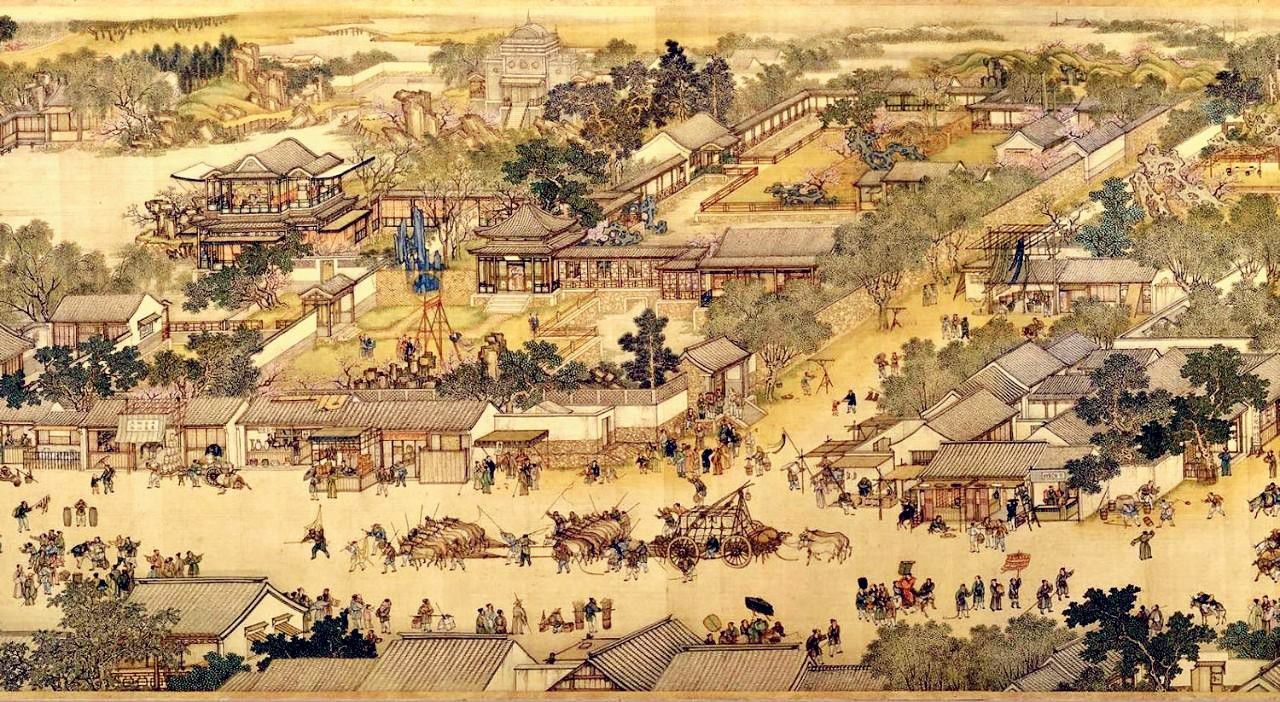
At the time of the Western Han dynasty (202 BC-9 AD) and the Tang Dynasty (618-907) census were conducted and it is said that the population of both empires was about 50 to 60 million. At that time, there were many wars, famines, and disasters due to which the population could not grow. Scholars believe that it was the beginning of the Southern Song dynasty era in which the China population exceeded 100 million for the first time. At the beginning of the Northern Song dynasty, the population was 50 million, but after 167 years in 1127 it grew to 118 million, and it kept growing after that. Because of the small geographic, the population density of the Southern empire was the highest at that time. The Song dynasty, therefore, built the world's most significant urban centers at that time. There were 1.2 million people in Hanzhou city alone, which was like modern cities without protection walls around them.
The population education and literacy rate were high than before dynasties. The people were using print technology, and the scholars were producing books and literature for widespread consumption and education. Several schools improved urban dweller's education; people were wealthy and had time to study, read artistic pursuits and travel. Books circulation among people became standard for the first time in China, ordinary people, and even farmers enjoyed reading fictional novels. Also, theatres and teahouses with musical entertainment became common. Their wealth allowed them to enjoy recreational activities and arts. The theatre and arts grew increasingly learned and refined. In the ordinary population, classical opera became popular, and the actors were able to speak classical Chinese instead of the dialect language. Song established huge opera houses in early history. The four largest operatic drama theatres in Kaifeng could adjust several thousands of people each.
Religion and Philosophy during Song dynasty
Daoism and Buddhism became less popular among the imperial class during the Song dynasty. Their dominant philosophy of life and religion was Neo-Confucian. The Song scholars developed Neo- Confucianism, which was religious belief and political philosophy. The rulers were obliged to follow the ancient teaching of the Mandate of Heaven. The court officials were hired based on the imperial exam. It was necessary to learn the four books of the Neo-Confucian classics to pass the imperial examination. Only those could do the best in the exam who memorized the entire texts of the books.
There were four books and five classics of Neo-Confucian. During the Song era, these nine books were standardized and compiled. The five classics were believed to have been penned by Confucius himself, while it is said that the four books maintained Confucian school-related material but were confined during the Song era. Among Chinese and East Asian countries, the Neo-Confucian doctrines were influential. The Neo-Confucian was the philosophy of bureaucrats from the Song Empire until the end of the Qin Era in 1912. This philosophy ensured the loyalty of bureaucrats towards dynasties. The disadvantage of New-Confucian political philosophy was that the rulers restricted political criticism and innovative reform.
Cultural Traditions of Song dynasty
The tradition of eating rice dishes began from the Song dynasty. Before that time, in the Tang era, the Han Chinese people mainly ate millet and wheat as their staple food. Those empires settled around the Yellow River in the north, which was colder and drier could not grow rice well there. However, during the Song Empire, new verities of rice were introduced, which increase its production, and it became the favorite staple food. Female foot binding was another Song custom which became the traditional and normative lifestyle of Han. Initially, the elite classes and wealthier people were binding the feet of girls. It was believed that this made the girls more submissive and signified their family status. This custom spread the elite classes to lower classes, and by the Qing era, the majority of women except ethnic minority groups had bound feet. The Han people believe that the binding feet made the women more beautiful.
Science and Technology during Song dynasty
Scientists during the Song era excelled in scientific innovation. However, some of the Song dynasty scientific innovations were forgotten and lost in the following dynasties. The era of the Song and Han dynasties was the period of technical and scientific progress in China's history. Song dynasty scientists developed knowledge about the geography of the world, architecture, chemistry, astronomy, and many other subjects. The most famous scientist in the Song dynasty was Shen Kuo (1031-1095). Based on his research in various fields he wrote advanced scientific treatises. Shen Kuo was well aware of the scientific progress made by the scientist in his time and was able to describe it well. He was not only a scientist but also a general and a court official. As a general, he failed in his campaign against the Western Xia, but as a scientist, he was very successful. In 1088, Shen Kuo wrote ‘Dream Pool Essays’ which was a sizeable scientific composition and that contain knowledge about magnetism, astronomy, and other fields. He discovered the notion of true north and magnetic declination towards the North Pole.
The innovation of movable printing was one of the important innovations of the Song dynasty; however, it was not as important for the Song Empire as it turned out to be in Europe. It is believed that in Europe, the introduction of movable printers developed literary, political and religious revolution and caused cultural change. The moveable printer helped to advance European culture, but it did not significantly affect the Song culture, although it was the invention of the Song dynasty. The Song scientists also invented varieties of gunpowder products for the use of different purposes. The gunpowder was used in rockets, bombs, and chemical warfare weapons. A treatise called ‘Wujing Zongyao’ written by Yang Weide and Gongliang in 1044, illustrate several formulas for making the quality of gunpowder with a large percentage of nitrate. In 1277 the Mongols defeated the Song army and the gunpowder weapons defused to Mongol, which they were using against other countries.
Development in Architecture during the Song era
Building tall towers and vast monumental were the specialties of the Song dynasty. The Song built the tallest wooden pagoda in Baianjing, which was 110 meters tall. They also built most of the tall towers in their capital city Kaifeng in Hangzhou. Japanese architects adopted the Song style of architecture. Some of the Song octagonal pagodas built from wood and brick still exists in China, such as Iron pagoda located in Kaifeng, which was built from brick and wood in 1049, almost 1000 years ago. The Iron pagoda which is 57 meters high, is still standing despite six major floods, 38 earthquakes and many wars over the millennium. The other significant Song development in architecture was wooden architecture techniques and building substantial wooden structures in the earthquake vulnerable areas.
The decline of Song dynasty
Song army along with the Mongol army in 1234, attacked on the Jin Empire that had been fending off the Mongols for the last two decades. The Jin Empire had also been shielding the Song from the Mongol invasion. However, the army of Song and Mongol easily defeated the Jin army and the Song army in 1234 tried to reclaim the capital of Kaifeng and Beijing, but the Kublai Khan; the Mongol leader attacked them. The Song fight for about two decades against Mongols; the Mongols captured the Song capital in 1279, and the Song dynasty came to an end.
Responses • 0
0/2000
ID: 322
Matthias
Offline
1 day
Visited
From
Orlando, United States
Send Message