Qing Dynasty
Original
Chinese History
Dec 06 • 2804 read
Qing dynasty (1644-1912, Manchu) was the last feudal dynasty. In the early Qing dynasty, agriculture and commerce developed, and the population exceeded 400 million.
/fit-in/0x0/img/201912/Qing_dynasty-article-1575609189.jpg)
The Qing (Manchu) dynasty ruled from 1944 to 1912, and it was China’s last dynasty. The Manchu rulers were not Han Chinese, and that is why they were unpopular, they descended from riders to the north and opened up China to exploitation from the West. They made numerous advancements in the lives of Chinese citizens and expanded China to its present size. In 1644, which was the first year of the Shunzhi period, the Qing military attacked Shanhaiguan and took the power of China. They made Beijing as their capital city.
The Qing dynasty was established by the ruling class of Manchus that ruled China for 260 years. During this era, Kangxi, Yongzhen, and Qianlong were the most outstanding emperors who contributed the most to history. In 1644, the Manchus conquered the Ming state and established their own Qing dynasty. During this period, the Manchus extended their rule over a massive empire that grew to cover new territories in central Asia, Siberia, and Tibet. The Manchus also established their domination over Chinese cultural traditions as an essential means of demonstrating their legitimacy as Confucian style rulers. The Qing dynasty prolonged China’s borders to their farthest reach, conquering Taiwan, Tibet, and the Uighur Empire. The Qing then turned inward and refused to accept Western ambassadors because they were unwilling to declare the Qing dynasty as supreme above their own heads of state.
Manchu’s Rise to Power
The success of Manchu against their Asian adversaries was because of their ability to marry Mongol military technique with the Chinese central government. They were not very successful against European invaders. In the 19th century, Manchu archers were cut down by European guns and canons. In 1618, the Manchu started invading China from the northeast. Initially, they were held back by the Great Wall of China. The rebels hit Beijing in 1644, and the Ming ruler committed suicide, Ming generals saw their only way of survival by allying with the Manchus. An army commander opened a significant gate in the Great Wall to Manchus in the hope that they would help restore the royal family. After defeating the peasant, the Manchus turned their attention on the Ming and marched into Beijing in June 1644 and declared the establishment of the Qing dynasty. After the establishment of the Qing dynasty, Ming loyalists fled to Japan, where the Tokugawa Shogunate gave them refuge in Nagasaki. Both loyalists and Shogunate convinced that China was in the corrupting hands of foreigners, saw Japan as the potential successor of Chinese Confucian civilization. Indeed, Japan Until the modern era, China had always personified the highest values of civilization.
Decline and fall of the Ming dynasty
Wars with the Mongols, invasions by the Japanese into Korea, and harassment of Chinese seaside towns by the Japanese in the 16th century damaged the Ming Empire, which became ripe for an alien takeover. In 1644, the Manchus took Beijing and established the last imperial dynasty (1644-1911). The court of Ming was corrupt; some civil servants and court eunuchs collected a small amount of money by setting fires and getting kickbacks from the contractors who restored the damage. Others stole money that was supposed to buy food for the court elephants. The Ming dynasty was weakened by corruption and political trouble on its border. The decline was faster after a costly was against Japan over Korea. The 16th-century historian Zhang Dai wrote that after Manchu invasions from the north, Beijing was overrun with unemployed clerks and soldiers, laid off couriers, landless laborers, refugees from the Manchu dominated areas, Muslim and traders who had lost their money as the Silk Road trade faltered.
Peasant Rebellions and Manchu Invasion
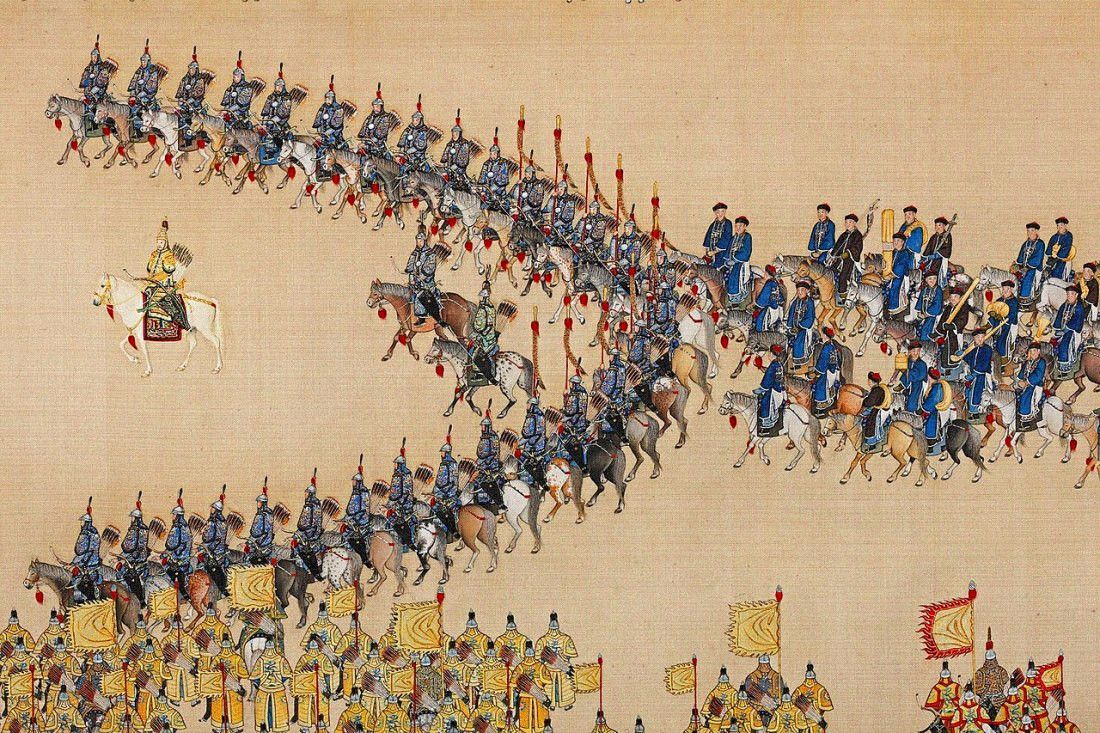
The devastating famine and an invasion of Manchus from the north caused peasant rebellion in the Shaanxi province, which finally collapsed the Ming dynasty. In the early 17th century, drought and famine fasten the collapse of the Ming dynasty. Zhang Xianzhong and Li Zicheng, who belonged to the areas in Shaanxi that were hit by famine, led the peasant rebellion. At the same time, the Ming military was busy in defense of the northerner border against the Manchu ruler Huangtaiji, whose father, named Nurhaci, had united the Manchu tribes into a unified force. In 1636, Huangtaiji declared himself emperor of the Qing dynasty. The peasant rebellion spread from Shaanxi to Huguang and Henan in the 1630s. In 1641, Luoyang fell to Li Zicheng and Xiangyang to Xianzhong. In 1642s, Li Zicheng occupied Kaifeng, and the next year, Zhang Xianzhong captured Wuchang and established himself as the ruler of his Xi kingdom.
In 1643, Li Zicheng captured Xi’an, renamed it Chang’an. He declared himself of the Shun dynasty in 1644 and prepared to capture Beijing. For the Chongzhen Emperor, the situation became critical by this point, who rejected the proposal to recruit new militias from the Beijing area and to recall General Wu Sangui, the protector of Shanhai Pass on the Great Wall. The Chongzhen Emperor posted a new field commander, Yu Yinggui, who failed to stop the army forces of Li Zicheng’s as they crossed the Yellow River in December 1643. In Beijing, the capital defense forces were starving because of the corrupt eunuchs who were responsible for their supplies; also, the troops had not been paid for nearly a year. Meanwhile, Li Zicheng forces occupied Taiyuan, which gave his additional campaign momentum; garrisons began to surrender to him without a fight. In early 1644, the Chongzhen Emperor rejected proposals to move the court south to Nanjing, and in early April, he declined the suggestion to transfer the crown prince to the south.
Fall of the Ming Dynasty and it’s Displacement by the Manchus
The last Ming ruler killed himself rather than being captured. The Manchus defeated the rebel group that overthrew the Ming dynasty in 1644. In 1644, the Ming dynasty was overthrown by the Manchus. In April 1644, when the rebels were at its peak in Beijing, Li Zicheng, the rebellion leader, offered the emperor an opportunity to surrender, but the negotiations produced no results. Rather than to capture by the rebels, the Chongzhen ruler gathered all members of the imperial household except his sons. By his sword, he killed Princess Kunyi and Consort Yuan and severed the arm of Princess Changping. The empress hanged herself, and the Chongzhen hanged himself or strangled himself with a sash. He was buried in the Ming Tombs. The Manchus were fast to exploit the death of the Chongzhen by claiming to ‘avenge the emperor.’ They united support from the loyalist civilians and Ming forces. The Shun dynasty lasted for a year with Li Zicheng’s overthrow at the Battle of Shanhai Pass.
The victorious Manchus created the Shunzhi Emperor of the Qing dynasty as ruler of all China. Because the Chongzhen Emperor had rejected to move the court south to Nanjing, the new Qing government took over a vast intact Beijing bureaucracy, aiding their efforts to displace the Ming. After the death of Chongzhen Emperor, loyalist forces announced a Southern Ming dynasty in Nanjing, naming Zhu Yousong as the Hongguang Ruler. However, in 1645, the Qing military started to move against the Ming remnants. The Southern Ming was unable to hold back the Qing attack, and Nanjing surrendered in June 1645. Zhu Yousong was caught and brought to Beijing, where he died the following year. The Southern Ming were frequently pushed farther south, and the last ruler of the Southern Ming, Zhu Youlang, was finally captured in Burma, transported to Yunnan, and executed in 1662 by Wu Sangui.
Manchu Rules
The Manchurian Qing were not as sophisticated as the Mings, but they speedily adopted Chinese culture and the Ming form of government and reserved Ming officials, but most of the important positions were given to the Manchus. The Qing dynasty had no clear line of succession; Emperors chose their successors based on merit, and daughters had imperial status. They continued the Confucian civil service system. Though Chinese were barred from the highest positions, Chinese officials predominated over Manchu officeholders outside the capital, except in army positions.
The Neo-Confucian philosophy, stressing the obedience of the subject to ruler, was imposed as the state creed. The Manchu rulers also supported Chinese literary and historical projects of high valued and scope. The Qing rulers were ever suspicious of Han Chinese; they put into effect measures intended to stop the absorption of the Manchus into the dominant Han Chinese population. Han Chinese were restricted from migrating into the Manchu homeland, and Manchus were prohibited from engaging in trade or manual labor. Also, intermarriages between the two groups were forbidden. In many administration positions, a system of dual appointments was used, the Chinese appointee was needed to do the essential work and the Manchu to make sure Han loyalty to Qing rule.
Qing Emperors
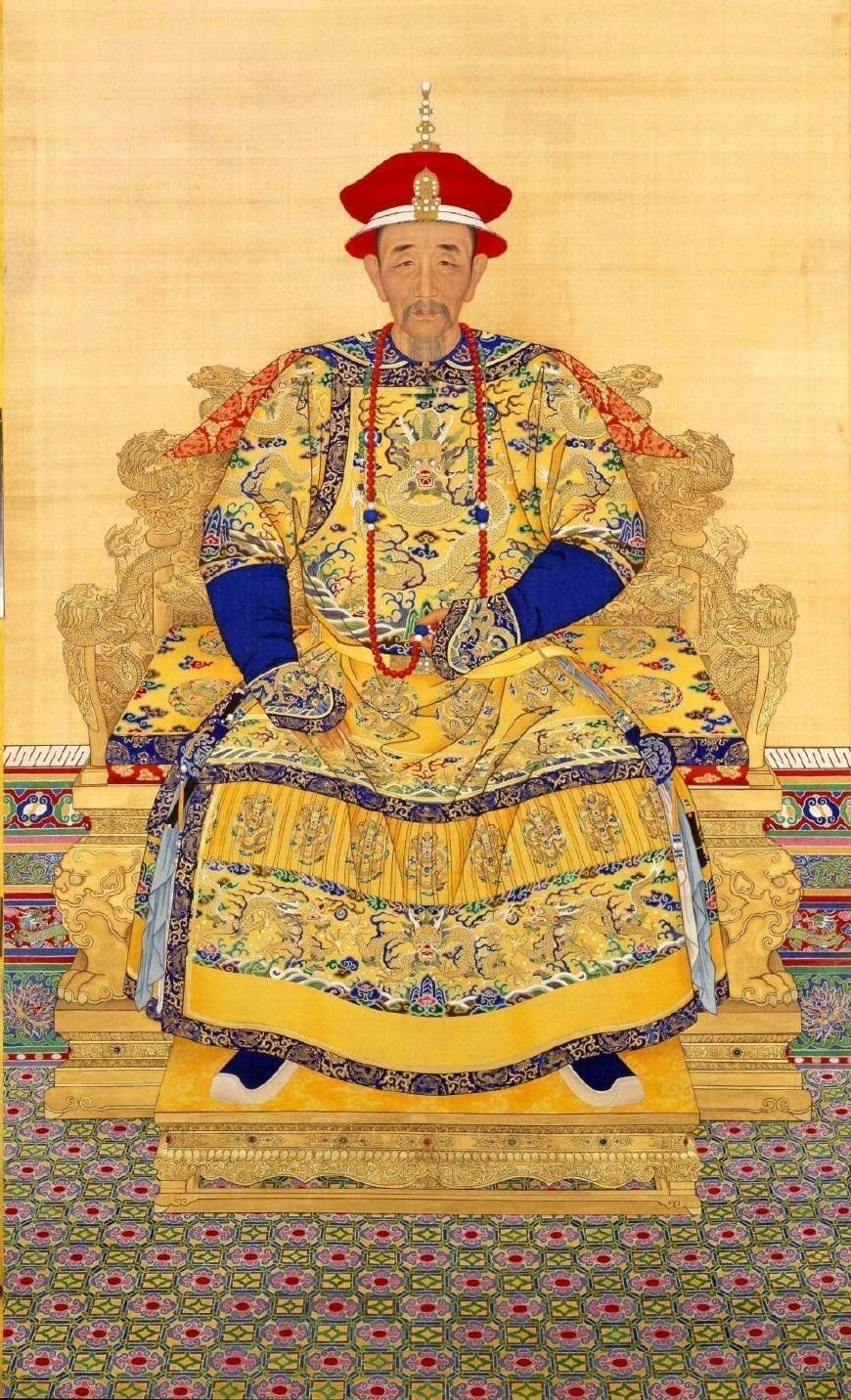
The Qing Emperors ruled for 268 years, and these years were dominated by two monarchs; the Kangxi Emperor, who ruled from 1662 to 1722, and his grandson, the Qianlong Emperor, who ruled from 1736 to 1796. These two rulers, each of whom ruled for about 60 years, set the Qing history and establish the economic, political, and cultural legacy inherited by modern China. During the Qing government, the heart of China was a walled city within a city in Beijing, Forbidden City, which was not only the private residence of the ruler and his family but also a center of scholarship, culture, politics, and religion. The Forbidden City is surrounded by a broad moat and high wall, covering 178 acres, and only official imperial was able to enter it. The Emperor Shun-Chih (1644-1661) was the first Manchu Emperor had his body dry out and lacquered in gold. His body is still kept there at the monastery of Tien Taisu, where he spent the last days of his life. Emperor Yongzheng (1732-1735) was famous for his cruelty.
Qing dynasty Emperors, their name, ruling title, and ruling dates.
1.Taizong/Huang Taiji, ruled from 1626年 to 1643年.
2.Shizu; Shunzhi, ruled from 1644 to 1661.
3.Xuanye; Shengzu ruled from ruled as the Kangxi Emperor from 1661 to 1722.
4.Yinzhen, the son of Xuanye, ruled as the Yongzheng Emperor from 1723 to 1735.
5.Hongli, the son of Yinzhen, and grandson of Xuanye ruled as the Qianlong Emperor from 1736 to 1796.
6.Renzong ruled from 1796 to 1820.
7.Xuanzong reigned from 1820 to 1850.
8.Wenzong/Xianfeng reigned from 1850 to 1861.
9.Muzong/Dongzhi reigned from 1861 to 1875.
10.Tezong/Guangxu reigned from 1875 to 1908.
11.Xuantong was the last ruler of the Qing dynasty who reigned from 1909 to 1911.
Southern Inspection Tours by the Qing Emperors
The inspection tours of the Qianlong and Kangxi emperors were unique in Chinese history. Other rulers from other periods and dynasties completed a single inspection tour of the empire, but the Qing rulers were the first to undertake multiple tours of inspection to the entire empire. These tours were part of a strategy for extending the Manchu rule throughout the empire. The Kangxi Emperor finished six southern inspection tours during his 60 years of ruling. The grandson of Kangxi Emperor’s, the Qianlong Emperor, followed his example and also made six southern tours. These tours were recorded on large documents and were never intended for a general audience. They were created as historical documents for the future and not intended to set stylistic precedents or to persuade viewers of the time. These scrolls were not put on public display; only a few members of the court had access to them. The scrolls were kept in a special storeroom for imperial portraits and maps. In the present time, these scrolls used as a testimony to the political ambitions of the Qing rulers to preside over a prosperous, unified, and also provide invaluable documentary evidence about daily life in traditional China.
Manchu Conquests and Expansion
The Manchus expanded Chinese control into central and Southeast Asia and also brought Mongolia and Tibet under Chinese control. The Manchus conquests in the 18th century in southern and western China nearly doubled China's size. In 1760, they started expansion into the West, and less than 70 years, the population of China increased from 200 million to 395 million people. The empire was expanded to the south and west by granting trade discounts to Islamic Emperors in Central Asia and royals in Southeast Asia.
The Qing government aimed to protect themselves from internal rebellion and external invasion. In the 17th century, the Manchus conquered Outer Mongolia, and in the 18th century, they gained control of Central Asia and established a colony in Tibet. The Qing dynasty became the first dynasty that eliminates all danger from its land. During the Qing rule, they occupied a larger area than before; Taiwan was incorporated into China for the first time. Also, the Qing rulers received tribute from the various neighbor states. The main threat to China’s integrity did not come overland, like in the past, but by sea, reaching the southern coastal area first. Western missionaries, traders, and soldiers of fortune started to arrive in large numbers even before the Qing dynasty rule in the 16th century. The Qing Empire was not able to correctly evaluate the nature of new challenges or to respond flexibly to it caused the demise of the Qing and the collapse of dynastic rule.
Improvements during Qing dynasty
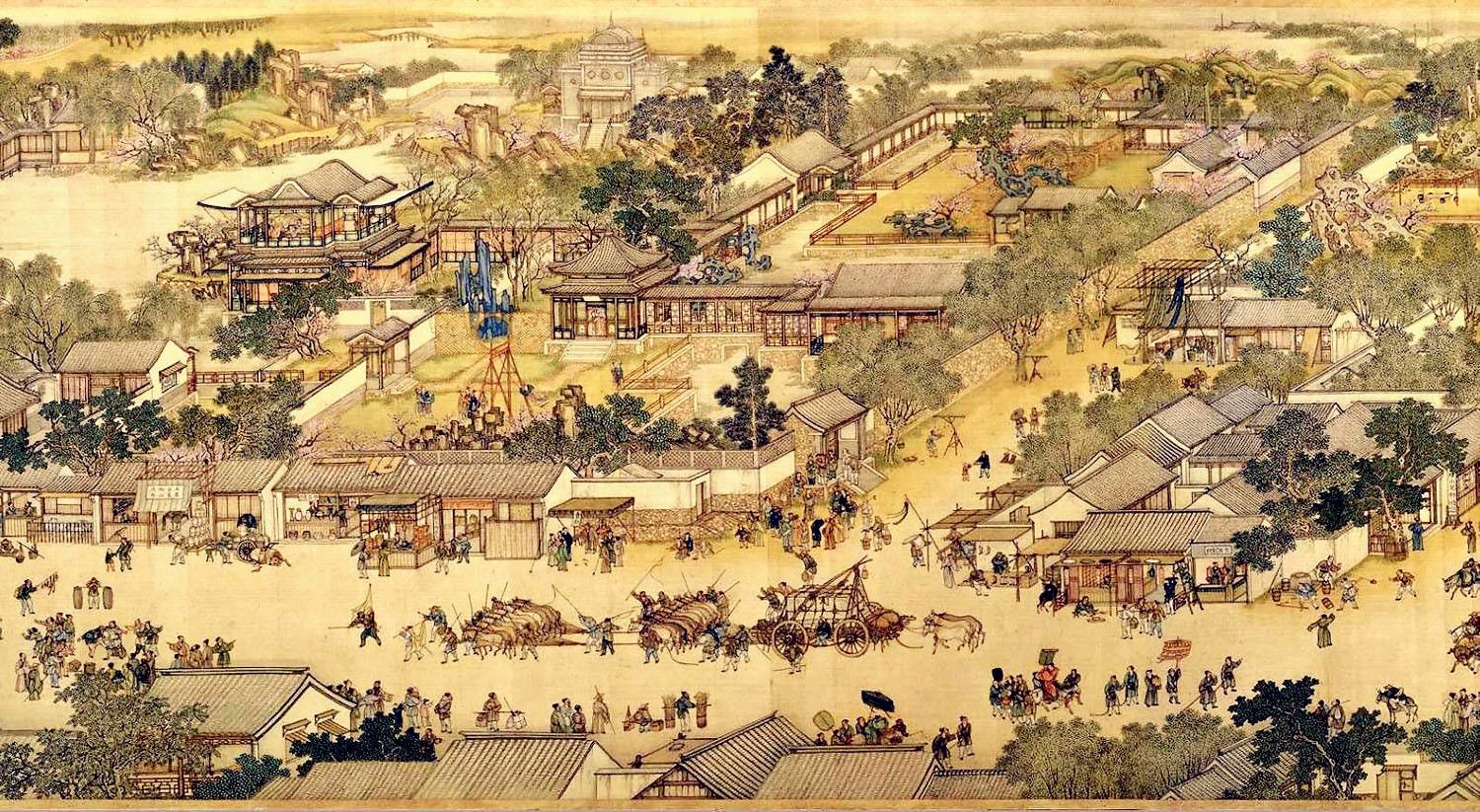
There were peace and prosperity during the early years of the Qing rule. The art flourished, and the National strength was at its peak. The rulers collected calligraphy, painting, ancient bronze vessels, and artisans carved decorative pieces from wood, gold, bamboo jade, and ivory. The Manchu rulers introduced new crops such as maize, peanuts, and sweet potato; they reduced taxes, developed better flood control, and allowed political and economic growth. Traditional literature and arts became more sophisticated. The Qings improved the rights of women; women participated in hunts and even fought beside men on the battlefield; they were allowed to walk freely in public, practice archery, ride horses. The women were forbidden from having their feet bound. In the late seventeenth and early eighteenth century, China produced a third of the world’s total value of goods and services. China produced 29 percent of the world’s gross domestic products in the 1820s.
Qing Military
From the establishment of Manchu state to the downfall of the Qing dynasty in the early 20th century, there was hardly a few days in which Qing armed forces were not engaged in internal parts of the empire or its on borderlands. Among the campaigns were the conciliation of the Zunghars, Muslims, Chin-Chuan, the Lin Shuang-wen Rebellion, Annam, Nepal, and the Taiping Rebellion. Before the establishment of the Qing, the Manchus were engaged the forces of the Ming dynasty in a long war. This war demonstrated the field and siege capabilities of the Manchu bannermen. After seizing Peking, the Qing organized the Army of the Green Standard consisted of native Chinese soldiers, which helped them in the conquest of central and southern China. During the rule of Qianlong Emperor, the army expended further, and during the middle years, the rulers denote the high watermark of the Qing army. At the beginning of the Tao Kuang rule, military violation by Western imperial powers led to a long series of Qing conquests and the eventual collapse of the dynasty.
The Qing had a significant and elite cavalry force during the early years of the dynasty. These troops were using a diverse and spirited array of assault and flanking maneuvers and powerful mounted archery. The powerful combinations of cavalry and firearms were practiced until the late 18th century. It was only with Opium War in 1840, and the conflicts of the following decades that the power of the Qing army failed in the face of advanced firearms, and modern strategies of the Western imperial powers. The failure and success of the Qing military depended on various factors such as strategy, technology, military power, and the quality of its officer corps. In the early years of the dynasty, the success of the Manchu bannermen was mainly because of the skill of their cavalry and their possession of firearms.
The western technology-infused during the rule of Shun-Chih and Kang-hsi that helped the Qing to develop their firearms technology further. However, in the 18th century, the Qing government turned its attention to defensive military policy that hailed an end to advances in military strategy, though, and weaponry. This shift was terrible for Chinese with the scientific and technological surge of Western civilization. The Wars and conflicts in the mid-19th century forced the Qing government to place the army on balance with that of the Western powers, the Qing established the Huai and Hsiang armies, founded naval facilities and built the Northern and Southern navies. Though Qing suppressed the Taiping Rebellion in 1850 and 60s, they were defeated by the Japanese army in the Sino-Japanese War of 1894-95. There were several reasons for the fall of Qing, but from a military perspective, they failed because of the failure in weaponry, preparation, and leadership.
Qing military organization and defense
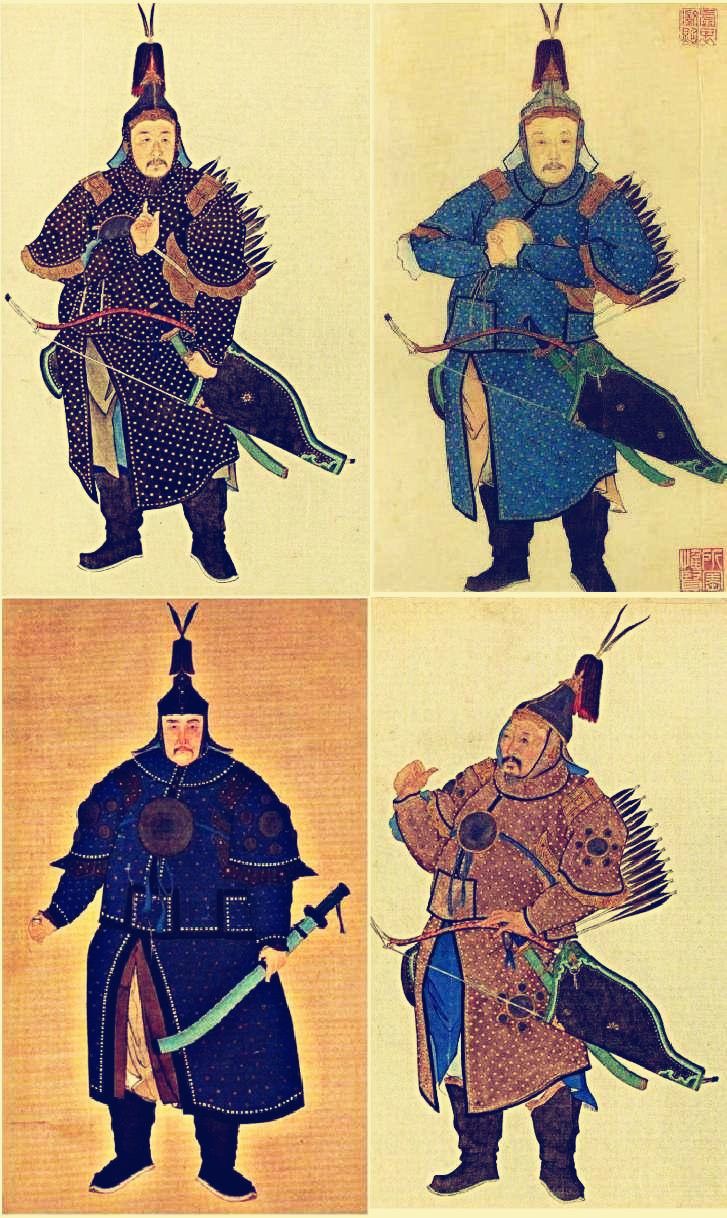
At the beginning of the Qing dynasty, the Manchu army was composed of eight individual armies, each distinct by a colored banner. These were the 8 banners, and the solider in them called bannermen. After crossing the Great Wall and taking the capital, the Qing rearranged the surrendered soldiers of the Ming army into the army of the green standard. These two armies, the Banner and Green standard, reunited China and expanded the borders of the empire. Initially, the Banner army was armed with spears, bows, and knives. During the government of Tai-Tsung (1627-1643), the army starts to incorporate artillery units. The Kang-his government (1662-1722) enhanced the military imperial forced. However, during the rule of Yung-Cheng and Qianlong, Chinese weapons technology fell far behind the West. At the same time, Banner armies were slowly losing their traditions of martial prowess, while corrupt military officials were taking its toll on the quality of training received by the Green Standard forces.
In both cases, these armies suffered frequent losses in the Opium War and Taiping rebellion. Eventually, the Qing government was forced to depend on the Hsiang and Huai armies to defeat Taipings and bring order and stability to the state. Against the attack of British and French forces in 1856 and 1860, the Qing government began to take efforts to establish a modern navy. The Fukien and Northern navies were demolished by the Sino-French (1883-1885) and Sino-Japanese (1894-1895) wars. These losses turn their attention to the adoption of a new and reformed military system at the turn of the 20th century. The Manchu’s successfully use of military power to conquer China gave them a strong appreciation for the importance of defense. They built gun emplacements along the coastline, which they staffed with navy units.
In Manchuria, Xinjiang and Mongolia, and other border areas, the government established outposts to protect and keep watch on the borderlands. They also established a network of courier routes and stations that covered the empire, dispatched military units on regular tours of inspection, and continued a constant flow of written communication between the central and provincial officials, all in an effort to guarantee that, regardless of the often long distance between the provincial and central governments, local establishments were kept firmly within the administrative apparatus of the state.
Qing Weaponry, Battleships, and Reforms
In the initial years of the Qing dynasty, the Banner cavalry depended mainly on mounted archery charging tactics. During the rule of Tai-Tsung, the attention of the Qing military turned to assaults on walled cities and other fortifications, and the army made increasing use of excellent cannon. That’s is why the first half of the Qing dynasty witness the mixed-use of both traditional weaponry and firearms. However, in the 18th century, advancement in explosives stagnated and slowly fell behind the military technology innovations of the West. During the first half of the19th century, Battleships were the mainstays of the Qing navy. Their cannons were all positioned on the upper deck of the vessel.
The average Chinese opium War-period warship was equipped with only ten cannon, with smaller vessels mounting a mere four or five guns. The English vessels active in the Far East, by contrast, carried over 70 guns arrayed over three decks. The second class vessel carried approximately thirty to forty guns on two decks. This technological difference was one of the main reasons for the Chinese loss of the Opium War. The Qing government reformed its army once again after the defeat of the Sino-Japanese War (1894-1895) following the model of the western army. The new army consisted of fourteen field divisions and two palace guard divisions. This system was different from the traditional Green Standard forces, with cavalry, foot soldiers, engineers, artillerist, and supply units all gathered under the same command. This new structure functioned as the foundation for the modern Chinese military.
Rebellions against the Qing Dynasty
After the collapsed of the Ming dynasty, the Ming rulers and court fled to southern China, where they hoped to reunite and drive the barbarian Manchus from the country. Koxinga was a half-Japanese warrior who led one of the most successful rebellions against the Manchus. Koxinga warriors who had to lift a 600 pound stone before they were recruited. He commanded 24 thousand Ming warriors, 8 thousand war junks, and 50 thousand South China Sea pirates. Kaoxinga failed to overthrew the Manchus, but he was successful in driving the Dutch from Taiwan, and for this, he is considered as a national hero.
Responses • 0
0/2000
ID: 322
Matthias
Offline
2 day
Visited
From
Orlando, United States
Send Message