Shang Dynasty
Original
Chinese History
Dec 02 • 2052 read
Shang dynasty (1600 BC -1046 BC) is the first recorded dynasty, supposedly started when a tribal king named Tang overthrew the Xia dynasty which was under the control of tyrant named King Jie around 1600 BC.
/fit-in/0x0/img/201912/Shang_dynasty_-_hello-article-1575279823.jpg)
According to the legend, the very first era in Chinese traditional history known as the ‘Mythical Period’ in which the Xia dynasty governed China. The Shang dynasty is the first recorded dynasty, supposedly started when a tribal king named Tang overthrew the Xia dynasty which was under the control of tyrant named King Jie around 1600 BCE. However, Scholars of today have different opinions regarding when the Shang dynasty began ranging from the mid-18th to the mid-16th century BCE. We are not sure whether the Xia dynasty was a reality or Mythology, but the archaeological records confirm the existence of the old Chinese Shang dynasty. It is believed that between the second millennium BCE around 1600 to 1046 BCE Shang dynasty governed the Yellow River valley of China. The Shang Dynasty is also called the Yin dynasty of the Shang-Yin dynasty while its founder was Tang the Great and the final ruler was King Zhou.
It is believed the Shang people moved their capital many times and many Shang sites have been identified. They were centered in North China and extended as far north as modern Hebei and Shandong provinces and westward through modern-day Henan province. The Shang people settled at Anyang, but its kings occupied many capitals one after another, including modern-day Zhengzhou where there are many archaeological records exist. Besides that, in several dozen Shang sites, people found dragon bones and shells with mysterious inscriptions confirming the existence of the Shang dynasty. Thousands of these bones and bronzes which had inscriptions in simple Chinese characters were found in the early 20th century, during the excavations in the ancient city of Anyang. Also, thousands of artifacts, including Bronze chariots, axes, and bronze vessels were discovered from the Yin, which was the last capital of Shang. These objects have records that date back to the Shang dynasty and help historians to learn about the different aspects of Shang life, such as their legal system, craft making style medical treatment and agriculture methods.
The people of Shang dynasty established several big cities with strong social class and social hierarchy, they expanded the traditional irrigation system, mastered in the use of bronze and developed a writing system. Shang rulers played a significant role in the lives of their people; they choose bureaucrats and council of advisers, official administrators, and ran the government. The farmers in the Shang era used a massive amount of fertile sediments on both banks of the Yellow River (Many traditions and historians maintain that the Shang people originated along the middle and lower reaches of the Yellow river) that helped them to grow an enormous surplus of food. This also helped a class of Shang craftspeople and artisans to develop technology and culture. Finally, the Shang dynasty was overthrown by the people of the Zhou dynasty who lived under imperial rule in the western part of the kingdom. However, their contributions to culture were carried on through future dynasties.
Writing and Culture of Shang dynasty
The language of the Shang dynasty is an early form of modern Chinese. Chinese characters first appeared during the Shang dynasty inscribed on the bones and shells of animals which are called oracle bones. The word oracle has similar Latin roots as the English word orator, which means holy speaker or messenger. The oracle bones indicate that this language had existed for a long time. The discovered characters of Chinese is so similar to the modern Chinese writing system that even today's scholars are able to read and understand. The ancient Chinese, mainly Chinese rulers, used the Oracle bones consist of the turtle shell and pieces of bones in order to predict the future. The ancient rulers would write their names and the date on the bone along with a question that would then heat the bone until it cracked and then interpret the shape of the crack which was believed to provide an answer to their problem. Varies kinds of questions have been found into oracle bones, such as ‘how many soldiers should we commit to battle?’ or ‘will we win the upcoming battle?’ These questions and bones indicate a great deal about what was essential to the people of the Shang dynasty. However, at the end of the dynasty, this practice of predicting the future was confined to the rulers only. As a result, oracles bones from the last period give less information about the lives of people in other classes.
Writing enables people to record the observation more accurately, which leads the Shang to get advance. The evidence showed the Shang people advance knowledge of mathematics such as the development of odd and even numbers. The I-Ching is a book about the fortunate tellers of the rural areas and their oracle bones, is thought have been written or compiled during the Shang dynasty, around 1250 to 1150 BCE. The Shang people also developed various kinds of musical instruments such as drums, cymbals, ocarina (a wind instrument), bells, chimes, and bone flutes which were revealed in different excavations.
The Shang believed to have used a lunar calendar, based on the cycle of the moon, which was used to predict and record important events such as about, harvesting of crops. Shang rulers appointed trained astronomers who made adjustments and maintained the precision of the calendar. It is also believed that a solar-based calendar was developed by a man named Wan-Nien, who established a 365 day year through his observations and pinpointed the two solstices.
The Cities of Shang Dynasty
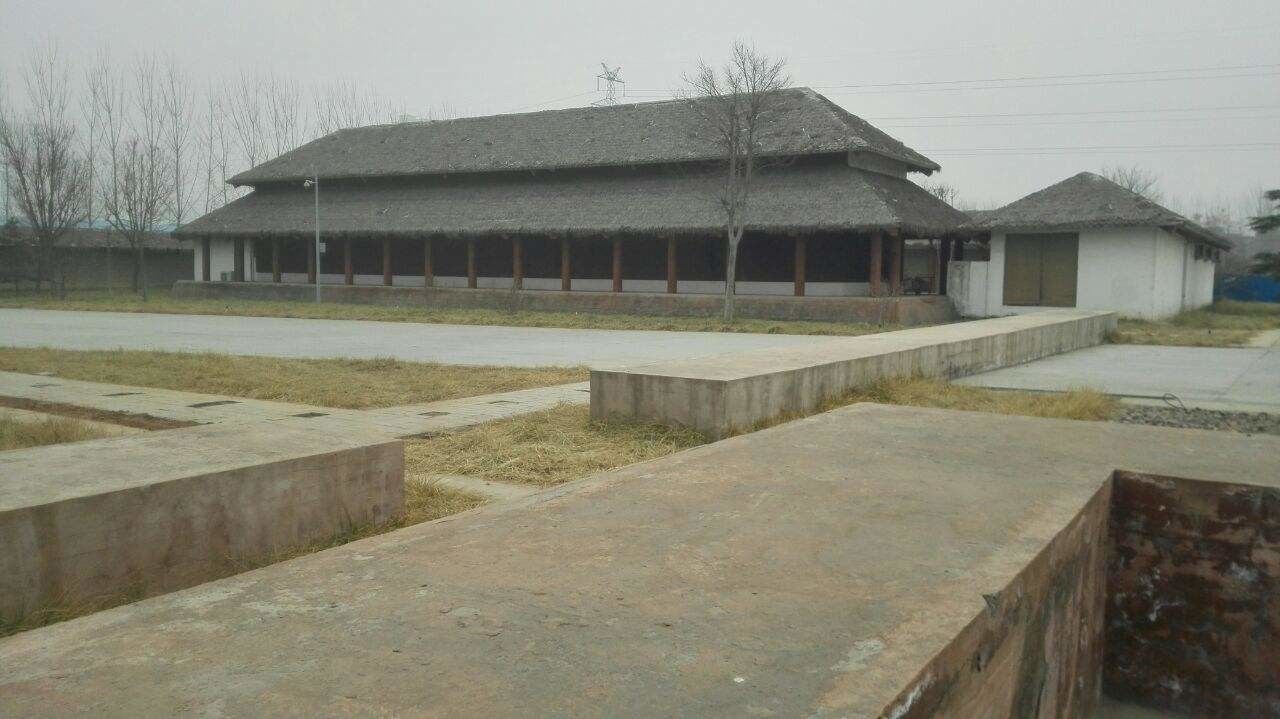
At the time of the Shang Dynasty, there were several large cities including Anyang and Zhengzhou, though it is not believed these cities were the densely urban settlement. Around 1300 BCE, under the ruling of King Pan Geng Anyang became the capital of the Shang dynasty. Zhengzhou was known for its four miles long, 32 feet high and 65 feet thick walls. Anyang the city with temples and palaces located at the center is believed to rule by Shang kings for more than two centuries. Surrounding the political center were artisans consisting of the industrial area of stone carvers, bronze workers, potters, and others, and then small housing structures and burial sites.
Technological innovation and exchange
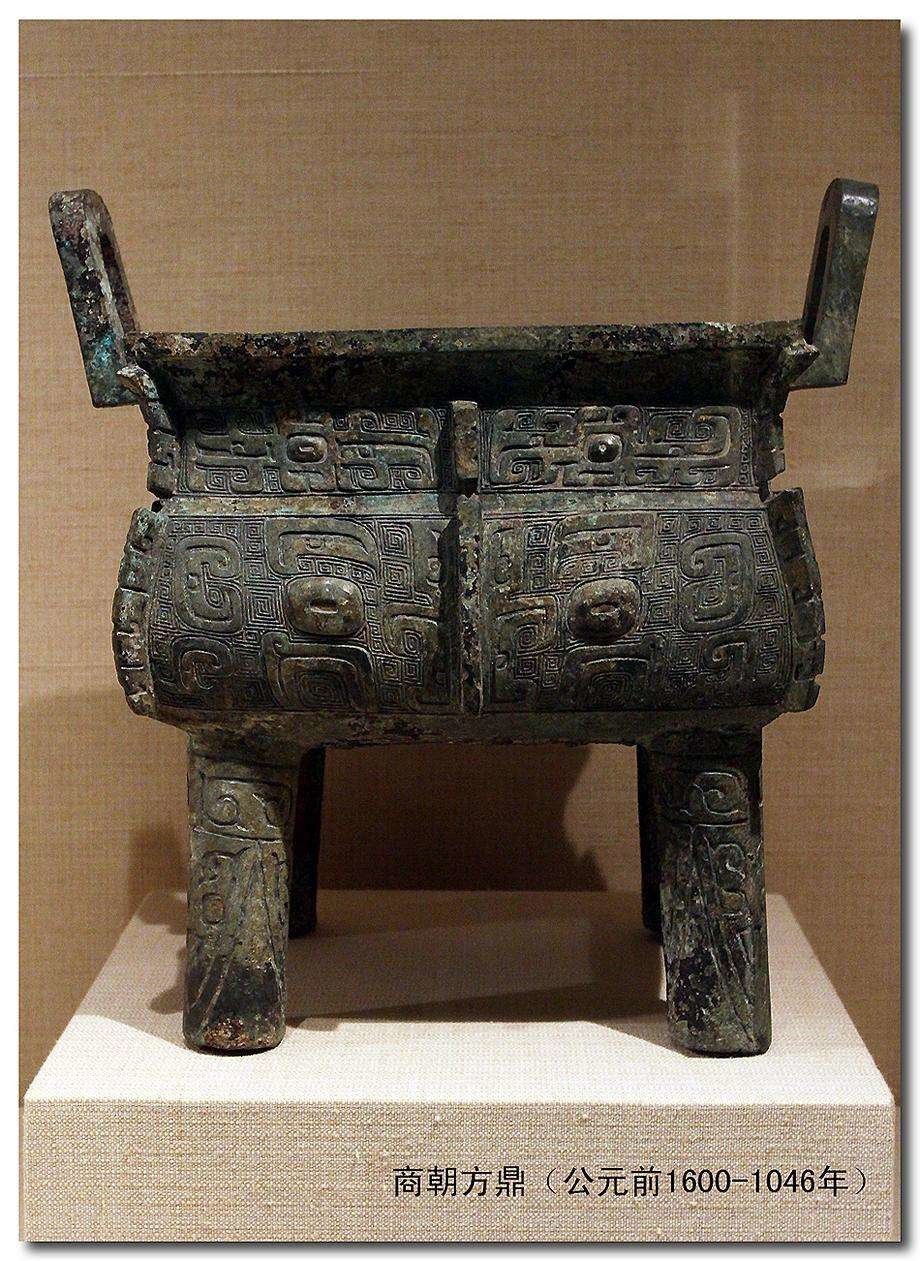
The most important metal during the Shang period was Bronze. Shang metalworkers developed a highly sophisticated method for casting bronze and used it to make ceremonial objects and weapons. Swords and spearheads made from bronze were stronger than any other available metals of the time, which was giving Shang soldiers an advantage in battle.
The important advancement for the Shang military was to mastery on bronze with the combination of horse, chariot, and composite bow which were integral to their success. The chariot helped Shang soldiers to move vast in distances at high speeds and also acted as a mobile archery platform. Shang archers also had composite bows, made from animal sinew and horn. These items gave more power to the bow than a wooden bow of the same size. Archers were able to keep their bows small enough to shoot quickly while standing in a chariot without losing strength.
The Shang people needed these technologies for the military because they were constantly at war. A large number of writing on the oracle bones indicate that the Shang used chariots as mobile command vehicles and in royal hunts. Members of the imperial families were often buried with horses, chariot and a charioteer. The Shang military expanded the borders of the kingdom and captured prisoners and valuable resources, that could be enslaved or used as human sacrifices. The oracle bones also show deep concern over the ‘barbarian’ living outside the empire, who were a constant threat to the stability of the kingdom; the military had to be always ready to fight them.
The Shang dynasty influence was extended hundreds of kilometers away from the capital, that’s why several of the Shang bronze techniques diffused over large areas. While in turn, the Shang people adopted ideas, skills, and crops such as wheat and axes, which are supposed may have come from western Asia. However, because of natural problems like the deserts, ocean, mountain ranges and steppes kept the Shang in isolation as well as later dynasties evolved in unique and insular ways.
The religion of Shang Society
In Shang society, religion was extremely important, which was extended into the economic and political spheres of life. The legislative power and religion were closely connected; state power was consolidated through a sense of reverence for royal Shang ancestors. By the end of the Shang dynasty, the king was the only one who could interpret the oracle bones, thereby making him the head Shaman. Their religion was characterized by a combination of animism, the idea that everything has a soul; Shamanism, the belief in shamans who have the ability to communicate with the spiritual world; ancestor worship and divination. Different gods represented natural and mythological symbols such as the sun, the moon, the rain, and the dragon. Farmers prayed to these gods for generous harvests. The Shang rulers who thought themselves divine kings consulted the great god Shangdi for wisdom and advice. The Shang believed that the ancestors could also confer good fortune that’s why the Shang would ask ancestors through oracle bones in order to seek approval for any major decisions and to learn about success in battle, harvesting, and hunting.
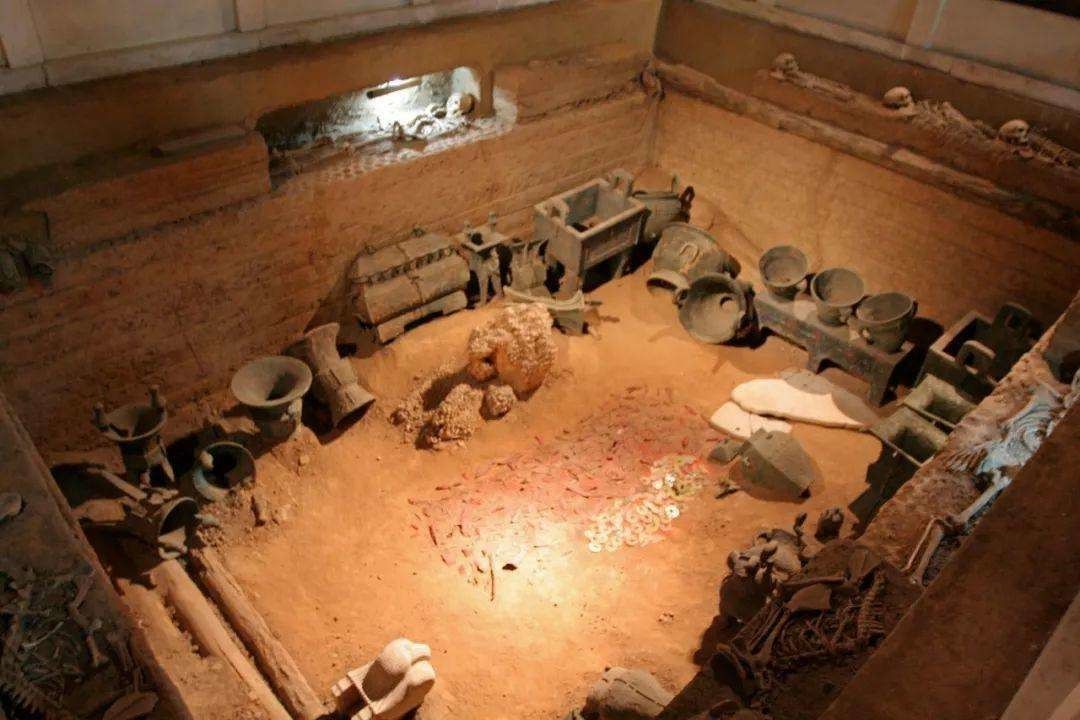
Based on the archaeological, it seems that people of the Shang dynasty believe in life after death. Archaeologists found Shang tombs surrounded by the skulls and bodies of humans that were sacrificed. It is believed that the Shang tomb found by archaeologists were similar to those found in the Egyptian pyramids in which they buried servants with them. The Chinese archaeologists conclude that the Shang like the ancient Egyptians believed that their servants would continue to serve them an afterlife. That’s why they would kill and buried servants with them. Another explanation is that these were the enemies who were captured in battle and later buried with them. One elaborate tomb which has been uncovered is thought the grave of Lady Hao, a Shang ruler who resigned around 1200 BCE. The objects found in her tomb show that she had high social status and a great deal of power in Shang society which makes historians speculate about the role women played in the Shang dynasty. Based on the archaeological artifacts found in Lady Hao’s tomb, it seems that she had her own wealth and political influence in Shang society and it is also possible that she also had a prominent role in the military, as in the tomb many bronze weapons were found which were buried with her.
Power and Social Hierarchy in Shang dynasty
The archaeologists found that the Shang dynasty power was concentrated in many ancient cities. The first Shang king supposedly founded a new capital for his dynasty at a town called Shang, near the modern city of Zhengzhou, which is a city of 2.6 million people in eastern China’s Henan province. Archaeological records indicate that this city has functioned as a sacred capital because the most sacred temples and religious objects were housed there.
The architecture of Shang, along with other ancient cities, was designed in a way to separate different classes. For example, the Shang city had two walls-- inner and outer walls. The ordinary people could live within the outer wall but was not allowed to pass the inner wall, which surrounded the temple area, bronze foundries, cemetery sites, and bone workshops. The inner walls thus surrounded an area of rulers and crafts specialist, who together were the organizers of the essential ritual performances.
However, it is also believed that there were other capitals too aside from this one, and kings had moved from one capital to the other because of military strategy, food requirements, or religious rituals. That suggests that the authority of the dynasty was concentrated in the king, whose political power was reinforced by the Shang religion. To continue their government further, rulers often went on excursions and military expeditions to walled towns outside the capitals where aristocrats had a lot of influence. Consolidating power in these areas was necessary because the control of peasant-farmed agricultural territories ensured sufficient resources for the inhabitants of the walled towns.
Another famous capital ‘Anyang’ of the Shang dynasty was also located in modern-day Henan Province. It was lies between the mountain (which acted as a defensive border) and low land agriculture areas of the North China Plain. The Anyang site produced a large number of oracle bones that describe the travels of 11 named kings. The description on the bones matches with the list of traditional Shang kings. Anyang was a big city, with an extensive graveyard of thousands of graves and large elven tombs which may have belonged to the 11 conventional rulers of Shang. In the archaeological records, the cities of Shang are not very well preserved because of how they were built. The stones' material was rare, so the security of the cities was reinforced by massive walls made of compacted earth. The buildings were built from dried mud over a framework of wooden posts. For the Shang dynasty, cities were highly crucial for religious and political affairs because they were the seats of administrative matters, palaces, royal tombs, and shrines. Ordinary people were concentrated in the agricultural areas out of the main cities.
The borders areas of the Shang kingdom were led by chieftains who gained the right to govern through connections with rulers. Shang heavily depended on the neighboring fiefs for raw materials, most of the part of the raw materials were devoted to ceremonial performances. Fiefs were lands given to social elites to rule on behalf of a more powerful king. The person who governed a fief was expected to provide resources to the kings for military and political supports. Fiefs also had played important economic roles by organizing flood and irrigation control systems and supervised their construction.
The Shang dynasty enacted a feudal system in which duties were assigned to land ownership based on a clan birthright. The ownership of the land was given to the class belong to Anyang, which was the place of government affairs for the surrounding areas. The wealthy class also controlled the regional territories, which were located far from the capital. After the rulers and elite classes, the Shang military was next in the social hierarchy and was honored and respected by the people because of their profession. The army was divided into two subdivisions; one was the infantry divisions, and another was chariot warriors. The last one was famous for their skills in hunting and warfare.
Many rulers belonged to the elite classes and who benefitted from the production of farmers and from large scale projects under their control. There was also a class of proto-bureaucrats who hold official titles and had managerial roles to kept extensive records. Their duties were to keep records of ritual materials, arranging ritual performances, managing large construction, and tracking incoming tributes. Craftspeople and Artists were considered middle class. The rulers supported these artists in order to provide them with luxury goods for their personal consumption and ceremonial purposes. In the 1920s the archaeologists discovered bronze, ritual vessels, and treasures that illustrate the work of these artists. The Shang rulers and high-class people were likely buried with large numbers of bronze valuables, particularly wine vessels and other ornate structure.
The lower class in the social hierarchy were the peasants, the poorest in Chinese citizens. They comprised the majority of the population and were limited to farming and selling crops for profit in the feudal system. Archaeological shreds of evidence have shown that masses of peasants were buried with aristocrats, leading some scholars to believe that they were the equivalent of slaves. Other scholars think that they were similar to serfs, who were bound to take care of aristocrat-held land and gave aristocrats part of their harvest. The historians know about these social hierarchies in Shang society by examining cemeteries that were different in each neighborhood and varied in quality according to the status of the people buried there.
Around 1046 BCE, The Shang dynasty came to an end. The last ruler was King Di Xin, who was a cruel leader who enjoyed torturing people, leading to calls for the end of his rule. The Zhou army, who was lead by King Wu marched in the capital city. The Di Xin armed 20,000 slaves to strengthen their army, but the Zhou forces defeated them. In the Battle, which is known by Muye, many Shang soldiers refused to fight the Zhou, and some joined their side. The king Di Xin set fire to his palace and committed suicide. The next Zhou dynasty ruled for 800 years, though the Shang dynasty had left an indelible mark on Chinese history.
Responses • 0
0/2000
ID: 322
Matthias
Offline
1 day
Visited
From
Orlando, United States
Send Message