Correct
乘兴而往,败兴而返
/ chéng xìng ér wǎng, bài xìng ér fǎn /
Strokes
Collocation
1
原先是乘兴而往,结果却是败兴而返
2
弄得乘兴而往,败兴而返
3
结果是乘兴而往,败兴而返
4
真是乘兴而往,败兴而返
Definition
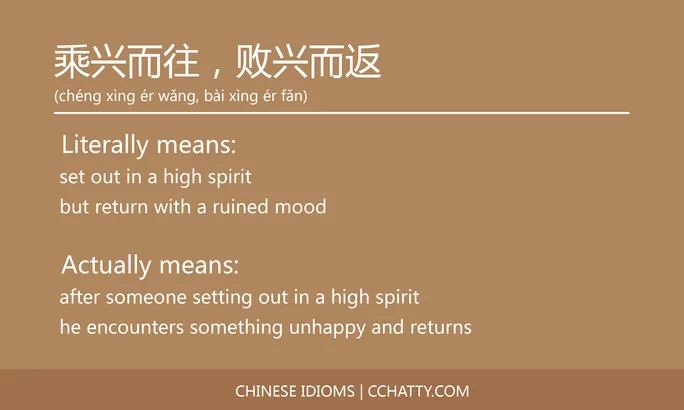
乘兴而往,败兴而返
Literally means:
set out in a high spirit but return with a ruined mood
Actually means:
乘兴, means that someone is a high spirit; Bai Xing, refers to the good mood being ruined.
This phrase means that after someone setting out in a high spirit, he encounters something unhappy and returns with a ruined mood.
乘兴,乘着兴致很高的时候;败兴:兴致遭到破坏。
乘兴而往,败兴而返,高高兴兴地外出以后,因碰到不开心的事情而带着不愉快的心情返回。
Example
Used as predicate, object or attributive. Both parts of the phrase can be used independently. (作谓语、宾语、补语,前后两部分可以分开使用)
1
Wǒ
我
céngjīng
曾经
cānjiā
参加
guò
过
hǎojǐ
好几
cì
次
dàxíng
大型
hūnyàn
婚宴
,
yīnwèi
因为
cānzhuō
餐桌
shàng
上
dōu
都
shì
是
bù
不
rènshi
认识
de
的
rén
人
,
juéde
觉得
hěn
很
bièniǔ
别扭
,
suǒyǐ
所以
jīhū
几乎
měicì
每次
dōu
都
chéngxìng
乘兴
ér
而
wǎng
往
,
bàixìng
败兴
ér
而
fǎn
返
。
I have participated in several large wedding banquets, because the table is not known people, feel very awkward, so almost every time to take advantage of the fun, defeat.
2
Zhècì
这次
wǎngqiú
网球
bǐsài
比赛
,
tā
他
méi
没
xiǎngdào
想到
dìyī
第一
lún
轮
bǐsài
比赛
jiù
就
bèi
被
táotài
淘汰
le
了
,
jiēguǒ
结果
shì
是
chéngxìng
乘兴
ér
而
wǎng
往
,
què
却
bàixìng
败兴
ér
而
fǎn
返
。
This tennis match, he did not expect the first round of the round was eliminated, the result is to take advantage of the fun, but lost.
3
Zuótiān
昨天
qīngzǎo
清早
hé
和
jǐ
几
ge
个
péngyou
朋友
qù
去
hǎibiān
海边
kàn
看
rìchū
日出
,
méi
没
xiǎngdào
想到
tiānqì
天气
tūrán
突然
yóu
由
qíng
晴
zhuǎi
转
yīn
阴
,
tàiyang
太阳
bù
不
chūlái
出来
le
了
,
gǎo
搞
de
得
chéngxìng
乘兴
ér
而
wǎng
往
,
bàixìng
败兴
ér
而
fǎn
返
。
Yesterday morning and a few friends went to the seaside to see the sunrise, did not expect the weather suddenly from sunny to cloudy, the sun does not come out, make a happy, lost.