Chinese Acupuncture and Moxibustion
Original
TMC
Nov 21 • 1698 read
Ancient Chinese created the acupuncture and moxibustion thousands of years ago, using a needle to prick some acupoints has a magical effect on the human body. it is an important part of TMC (traditional Chinese medicine).
What is acupuncture?
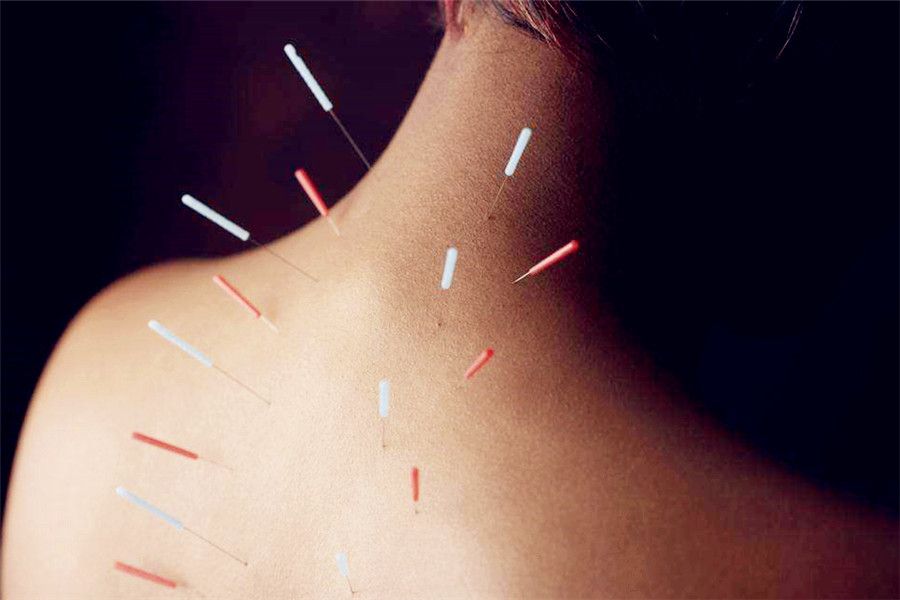
Acupuncture is a kind of medical treatment unique in China; it enjoys a long history. Acupuncture is short for acupuncture and moxibustion. (refer to Terminologies on Traditional Medicine P233)
Acupuncture refers to pushing a special needle into the specific acupoints of the patient. It treats the disease by twirling and lifting the stylus. Moxibustion means to turn the artemisia leaf into moxa. And then burn it on the skin of specific acupoints to scald it with the heat to treat the disease.
Created and the theory?
/fit-in/0x0/img/201911/Chinese-Acupuncture-and-Moxibustion---What-is-the-theory-article-1574298848.jpg)
How was the magical acupuncture created and what was the approach?
According to experts, the ancients occasionally invented the acupuncture. In the distant past, people frequently pressed certain parts of their bodies with sharp and hard objects like stones, shrubs and so on. Unexpectedly, the pain in them was relieved. Thus, from then on, the ancient people would irritate certain parts of their bodies consciously with some sharp stones and even made them bleed to relieve the pain.
Later on, in the long-term daily health care and medical treatment, the ancient people gradually unveiled the secrets of meridian and acupuncture points. From then on, Chinese-characteristic acupuncture came into being.
/fit-in/0x0/img/201911/Chinese-Acupuncture-and-Moxibustion---how-to-created-article-1574298848.jpg)
What is the theory?
Acupuncture is a unique subject in China, To know about acupuncture, we must first learn meridians and acupuncture points. Extremities are the passages for the circulation of blood and Qi within our bodies. It is the general name of channels and collaterals (Jing Mai and Luo Mai). The ancient people found that some passages spread all over our bodies. They called them channels. In these significant chains, there were some small branches, which named as collaterals. They covered all over our bodies like a net and formed an integrated system. They are linked with internal organs of the body and connected with the five sense organs and seven orifices externally. By combining the exterior and interior, top and bottom parts of our bodies, they combine all components in our bodies into organic integrity. The infusion parts of internal organs and meridians on the surface of our bodies are acupuncture points, which are the acupoints that are irritated and respond to acupuncture.
We have known about meridians and acupuncture points. Acupuncture is a kind of treatment to heal the diseases by irritating the acupoints of meridians. Acupuncture is a kind of external therapy to cure diseases. In traditional Chinese medical science, we should provoke the corresponding acupuncture points to smooth the channels and adjust blood and Qi, to keep internal organs in harmony and prevent or cure the disease.
Bronze Acupuncture Status 针灸铜人
/fit-in/0x0/img/201911/Chinese-Acupuncture-and-Moxibustion---Bronze-Acupuncture-Status-article-1574298848.jpg)
In ancient times, when Chinese applied acupuncture to treat the disease, they could only rely on books and pictures. There was no bright object for them for reference. Mistakes would come quickly to make, so acupuncture emerged on that occasion.
In the Ming Dynasty
This acupuncture bronze statue in the Ming Dynasty collected in Hubei Museum. It is in the image of a naughty and lovely boy in ancient times. He is 86.5 cm tall and has delicate and serene facial expressions. He raises his left hand, with the right one drooping, he stands with his right leg erect and the left one kneeling down to the pillar. Hundreds of acupuncture points spread over his body. Each of them has a pinhole, with the name of the location carved nearby, such as Baihui acupoint, Yuzhen acupoint on pate and Hegu acupoint and Waiguan acupoint on arms.
There are hundreds of acupuncture points on this acupuncture bronze statue. Giving acupuncture to Baihui acupoint, we can treat a headache, high blood pressure and so on. Providing acupuncture to Fengchi acupoint, we can handle headache deafness, cold, etc. Giving acupuncture to Hegu acupoint, we can treat a toothache, whelk, asthma, eat. Interestingly, as one of the bronze statue’s legs kneels down, the acupuncture points on the sole are apparent at a glance. According to experts, the bottom close connected with internal organs and meridians all over our bodies. Six meridians spread over our feet. They are linked with internal organs like liver, spleen, stomach, kidney, etc., and run through stems and channels from head to toe. They can regulate and adjust internal organs. There’re 66 acupuncture points on our sole, like Yongquan acupoint, so the sole also regarded as the second heart of a human being. The bronze statue is vivid, and the structure is elaborate.
It said that it helped people identify acupuncture points. Moreover, Ancient Chinese applied it to the acupuncture exam in ancient times. Before the review, the bronze statue would be smeared with wax in advance to cover the acupuncture points on them. And then people filled the bronze statue with quicksilver to let the examinees insert the needle. They should push the needle to the right acupuncture points on the bronze statue according to the requirements of the examiner. If they needle it in the right place, the quicksilver will flow out. Otherwise, the needle would fail to push in. Through the uniform standard of the acupuncture exam, student's capability could reflect faithfully. It significantly promoted the development of acupuncture education in ancient China.
In the Song Dynasty
In addition to the acupuncture bronze statue, there’re two famous bronze statues in the history of Chinese acupuncture. One of them is the Tiansheng bronze statue, made in the fifth year during the Tiansheng Period of the Song Dynasty. Unfortunately, the acupuncture bronze statue of the Song Dynasty was missing. However, form the book of rubbings of the carved stone “Acupuncture Points for Bronze Statue” during the Zhengtong Period of the Ming Dynasty, we can appreciate the elegant demeanor of the bronze statue of the Song Dynasty.
In the Han Dynasty
This human meridian painted figure of the Western Han Dynasty painted black. It stands and is 28 cm tall. Its legs mutilated. Both arms drop down on both sides of the body. The left-arm mutilated, too. This figure is bare-headed, its eyes are delicate, and it is muscular. Meridians painted on the surface of this human meridians figure of the Western Han Dynasty, with a system of meridians formed.
Story with Bian Que
There are many stories about treating patients with acupuncture. It said that the highly skilled doctor Bian Que was proficient in acupuncture. One day more than 2,400 years ago, the State of Guo in Yellow River basin was preparing for the funeral of the prince. At that moment, the famous doctor Bian Que passed by. After knowing of the symptoms of the prince, he said that the prince was still alive. He could bring him through. Bian Que took out a sharp stone needle and pushed it to the point on his pate to give the acupuncture. After a while, the prince regained his consciousness as expected. This case was told from mouth to mouth with approbation by people in the State of Guo. They all said Bin Que was a highly skilled doctor. He could bring the dead back to life. The treatment Bian Que applied was acupuncture.
What is moxibustion?
/fit-in/0x0/img/201911/Chinese-Acupuncture-and-Moxibustion---what-is-Moxibustion-article-1574298848.jpg)
In the medical books written in the Ming Dynasty, there is such a saying, “if medicine or needle doesn’t work, we must turn to moxibustion”. It implies that moxibustion can take certain effects when needle or medicine fails. A vivid “Moxibustion with Artemisia Leaf” is collected in the National Palace Museum in Taipei, it is about moxibustion in traditional Chinese medical science.
The “Moxibustion with Artemisia Lear” takes the hillside and farmhouse as background and shows us the typical scenery of the rural field. In front of a farmhouse, an old farmer in the shade of a tree, with the upper part of the body uncovered was seeing a doctor. His two arms are caught tightly by a countrywoman and a youngster. Another youngster pressed his body firmly. The old farmer opens his eyes and mouth widely and shouts in hysterics. Both of his legs stepped upon by a countrywoman and a youngster. A village doctor sits on a wooden bench and cures, in natural grace, the fester on the back of the old farmer with a lighted Artemisia leaf.
A disciple stands in the back of him, with ointment in his hand, which prepared for the old farmer. Figures in the picture wear different expressions. They painted vividly. The method of scalding the acupuncture points to cure diseases by lighting the Artemisia leaf. It is moxibustion.
Origin of moxibustion
/fit-in/0x0/img/201911/Chinese-Acupuncture-and-Moxibustion--Origin-of-moxibustion--article-1574298848.jpg)
According to the textual research of experts, Ancient Chinese invented moxibustion in the same way of acupuncture. They found that after being scalded by fire occasionally, their pain would be relieved or removed, so they knew scalding could treat diseases.
Compared with acupuncture in traditional Chinese medical science, moxibustion is simple, feasible and efficient, and is therefore very popular. Recorded in historical materials, Confucius would make moxibustion to himself though he wasn’t ill. He did so to protect his health.
Sun Simiao, who was the king of medicine in the Tang Dynasty, also formed his thoughts on health protection by making moxibustion on Sanli acupoint to treat all diseases. He put forward that to get rid of illnesses and keep healthy; we’d better give moxibustion to Sanli acupoint on sole frequently. The Sanli acupoint on foot lies in area 3 can (a unit of length) lower than the external Xiyan acupoint and a transverse finger away from the outside of the tibia. In traditional Chinese medical science, we can improve our stomachs by scalding this acupoint with Artemisia leaves frequently. If someone has a good appetite, his internal organs will be enhanced, and Qi and blood will be sufficient within his body so that he won’t be ill easily.
Artemisia leaf as the material for moxibustion
/fit-in/0x0/img/201911/Chinese-Acupuncture-and-Moxibustion---Artemisia-leaf-article-1574298848.jpg)
Well, why do we choose Artemisia leaf as the material? Artemisia leaf has medicinal value. It is moderate and tastes bitter. It helps to smooth meridians, keep Qi and blood in balance and remove rheumatism. According to “Compendium of Materia Medica”, Artemisia leaf can cure all diseases. It needs the skill to pick up artemisia leaf by ancient Chinese. It should be picked up Around Dragon Boat Festival every year because Artemisia leaf flourishes in that season and has the most substantial effect.
Moxibustion can dissolve accumulated stasis of blood, so when the old farmer in “Moxibustion with Artemisia Lear” suffers from decaying, the village doctor treats it by moxibustion. From “ Moxibustion with Artemisia Leaf” people, judging from the painful expression of the old farmer may think it must be painful to be treated by moxibustion. In fact, after long-term practice, ancient Chinese doctors have invented painless moxibustion. That is to cover some salt or a piece of ginger splice on skin before scalding it with the lighted Artemisia leaves. In this way, the patient will feel painless and maximum results will also achieve with little effort.
All in All
/fit-in/0x0/img/201911/Chinese-Acupuncture-and-Moxibustion---history-article-1574298849.jpg)
Acupuncture and Moxibustion in traditional Chinese medical science can not only treat diseases but also help to protect our health and even prolong our lives. National treasures like the vivid acupuncture bronze statues and “Moxibustion with Artemisia Leaf” have reproduced the history and culture of Chinese acupuncture and moxibustion.
Responses • 0
0/2000
ID: 322
Matthias
Offline
3 day
Visited
From
Orlando, United States
Send Message