Turn Breakfast Into Daily Chinese Practice
AI Learn Chinese
3 hr • 0 read
Turn breakfast into a daily Chinese lesson packed with practical vocabulary and cultural insights.
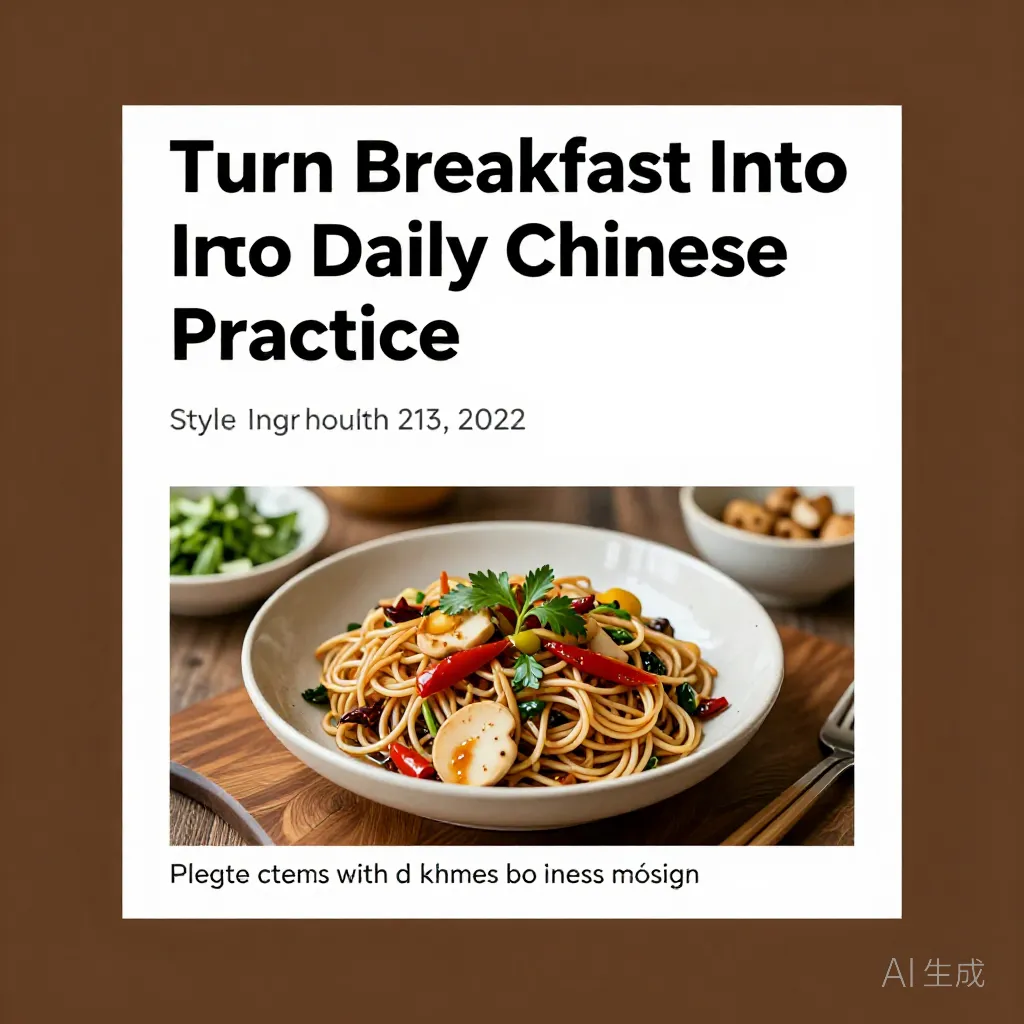
Introduction: Why Breakfast is the Perfect Chinese Classroom
Imagine your morning routine. The smell of toast, the click of the refrigerator, the wait for the kettle to boil. Now imagine describing all of that in Mandarin.
This isn’t just about memorizing words; it’s about capturing a slice of real life. The simplest daily rituals hold the most powerful language lessons because they are repetitive, contextual, and emotionally neutral. When you learn Chinese through a familiar scenario like breakfast, you bypass the awkwardness of hypothetical situations.
You anchor new vocabulary to existing sensory memories.
The goal here is not academic perfection but functional communication. You will learn to ask if breakfast is ready, to state where an egg is kept, and to understand the nuanced difference between “not yet” and “just a moment.” This approach transforms abstract study into tangible skill. Breakfast is a universal human experience, yet the specifics—what we eat, how we prepare it, how we talk about it—vary culturally.
By zooming in on this one scene, you get a concentrated dose of practical Mandarin, complete with the grammar, vocabulary, and social nuances that govern real conversation. It’s a low-stakes, high-reward environment where mistakes don’t matter and repetition is built into the day. The morning meal is a daily anchor, a predictable event that creates a reliable, recurring opportunity for engagement.
This consistency is the bedrock of habit formation in language learning. You are not adding a “study session” to your day; you are overlaying language awareness onto an activity you already perform. The cognitive load is minimal because the context is deeply familiar.
You are not learning about breakfast; you are learning Chinese through breakfast. This subtle shift in perspective changes everything. It moves you from a student to a participant, even if that participation is initially internal or simulated.
The kitchen becomes your classroom, the ingredients your textbook, and the act of preparation your immersive experience.
The Linguistic Microcosm: How a Single Scenario Builds Comprehensive Skills
Beyond Lists: Vocabulary in Action
Traditional vocabulary learning often presents isolated words on flashcards. “Refrigerator.” “Egg.” “Ready.” These are data points without a home. Context is the home.
When you learn that 冰箱 (bīngxiāng) means “refrigerator” within the sentence “鸡蛋在冰箱里” (The eggs are in the refrigerator), you gain syntax, preposition use, and a common location phrase all at once. You learn that 在…里 (zài…lǐ) is the standard structure for “inside.” This is how native speakers learn—through dense, meaningful chunks of information, not individual atoms. A single sentence can teach you vocabulary, grammar, and a common life situation simultaneously.
This method, often called comprehensible input, makes the language stick because it is understood and immediately useful. The brain retains information better when it’s embedded in a narrative or a scenario it can visualize. You’re not just memorizing a word; you’re remembering a situation.
The next time you open your fridge, the word 冰箱 (bīngxiāng) will be triggered by the actual object and the associated action of reaching for eggs or milk. This creates multiple retrieval pathways—visual, spatial, and contextual—making recall automatic over time. The principle of “chunking” is critical here.
Instead of storing “ice-box” as two separate morphemes, your brain stores “refrigerator” as a single lexical unit tied to a specific function and location. This is more efficient and mirrors native language processing.
The Breakfast Scenario as a Linguistic Microcosm
A breakfast scene is a perfect linguistic microcosm. It involves preparation, location, states of being (cooked/raw, hot/cold), time, and polite requests. It’s a multi-turn conversation with a clear goal: to eat.
This mirrors countless other daily interactions. Mastering this one scenario provides a template. The patience required for “再等几分钟” (a few more minutes) is the same patience you’ll need when waiting for a bus, a colleague, or a repair person.
The urgency of “很烫!” (It’s very hot!) applies to coffee, soup, and freshly ironed clothes.
By focusing on this one slice of life, you build a versatile toolkit. The conversational structure—inquiry, response, follow-up, permission, warning—is a blueprint. Swap out “breakfast” for “the meeting,” “the taxi,” or “the report,” and you have a ready-made framework for countless situations.
This is the power of scenario-based learning: it’s not about accumulating vocabulary but about acquiring conversational patterns that can be infinitely adapted. You learn the grammar of everyday life, not just the grammar of the textbook.
Consider the core dialogue: A: 早饭好了吗? (Is breakfast ready?) B: 还没有,再等几分钟。 (Not yet, wait a few more minutes.) A: 现在呢? (How about now?) B: 已经好了。 (It’s already ready.) A: 我可以吃了吗? (Can I eat now?) B: 等一下!很烫! (Wait a moment! It’s very hot!)
This six-turn exchange is a masterclass in functional Mandarin. It contains: - A yes/no question using the particle 吗 (ma). - A negation of a state using 还…没有 (hái…méiyǒu) for “not yet.” - A temporal adverb (再 zài for “a bit more”) and a time phrase (几分钟 jǐ fēnzhōng).
- A follow-up question using the particle 呢 (ne). - An affirmation of completion using 已经 (yǐjīng) and the change-of-state 了 (le). - A request for permission using 可以…了吗 (kěyǐ…le ma).
- An urgent imperative and an adjective with an intensifier (很 hěn).
This is not a random collection; it is a coherent, high-frequency interaction. Learning this dialogue is like installing an operating system for a whole category of daily conversations. The vocabulary (早饭, 好, 等, 烫) is secondary to the pragmatic patterns it demonstrates.
Once you internalize this pattern, you can plug in different verbs and nouns: “车准备好了吗?” (Is the car ready?), “电影开始了没?” (Has the movie started?), “报告写好了吗?” (Is the report written?). The scenario provides the neural scaffold upon which infinite variations can be hung.
Essential Vocabulary and Grammar for the Breakfast Table
Core Nouns: The Objects of the Meal
Let’s dissect the key nouns. 早饭 (zǎofàn) is the most general term for “breakfast.” It’s what you eat. 燕麦 (yànmài) specifically means “oats” or “oatmeal.” Knowing this distinguishes it from 粥 (zhōu), congee, or 面包 (miànbāo), bread.
鸡蛋 (jīdàn) is the universal “egg.” Note it’s “chicken egg,” though context usually makes the animal clear. 冰箱 (bīngxiāng) is a compound: 冰 (bīng) for ice/cold and 箱 (xiāng) for box/container. This logical construction aids memory.
Other useful nouns include 牛奶 (niúnǎi) for milk, 锅 (guō) for pot/pan, 碗 (wǎn) for bowl, 筷子 (kuàizi) for chopsticks, and 水 (shuǐ) for water. Each object is a node connecting to verbs (to cook, to open, to pour) and locations (on the table, in the cupboard). Learning these nouns in isolation is less effective than learning them within their typical prepositional phrases: “在冰箱里” (in the fridge), “在锅里” (in the pot), “在桌子上” (on the table). This builds your spatial intuition in Chinese.
Consider the semantic field of a Chinese kitchen. The 灶 (zào) is the stove. The 案板 (ànbǎn) is the cutting board.
The 橱柜 (chúguì) is the cupboard. The 水槽 (shuǐcáo) is the sink. The 垃圾桶 (lājī tǒng) is the trash can.
Learning these words creates a mental map of a physical space. When you later hear “把刀放到案板上” (Put the knife on the cutting board), you can visualize the entire scene. This is “situational vocabulary.” Group words by location: everything on the table (桌子上), everything in the fridge (冰箱里), everything under the sink (水槽下面).
This creates mental categories that are instantly retrievable.
Essential Verbs and States
The scenario hinges on states and actions. 好了 (hǎo le) is crucial. It doesn’t just mean “good”; it means “ready,” “finished,” or “done.” When you ask “早饭好了吗?” (Is breakfast ready?), you’re asking about a state of completion.
等 (děng) means “to wait.” The phrase 再等几分钟 (zài děng jǐ fēnzhōng) uses 再 (zài) to mean “again” or “a bit more,” so it’s “wait a few more minutes.” 烫 (tàng) means “scalding hot.” It’s a specific, urgent warning. 吃 (chī) is “to eat,” but in “我可以吃了吗?” (Can I eat now?), it’s about permission and readiness.
Other vital verbs include 做 (zuò) to do/make, as in “做早饭” (make breakfast); 热 (rè) to heat up, as in “热一下牛奶” (heat up the milk); 拿 (ná) to take/get, as in “拿碗” (get a bowl); and 倒 (dào) to pour, as in “倒水” (pour water). States are often expressed with adjectives followed by 了 (le) to indicate a change: “热了” (it’s gotten hot), “凉了” (it’s gotten cold). These verbs and state-change markers are the action engines of the conversation.
The verb 要 (yào) is a multitool. It can mean “to want” (我要茶 – I want tea), “to need” (需要盐 – need salt), or “to be going to” (要出门了 – about to go out). In the breakfast context, “要等” (need to wait) and “要热” (need to heat) are common.
The verb 可以 (kěyǐ) for “can” is central to permission, as seen in “我可以吃了吗?” Its negative, 不可以 (bù kěyǐ), means “cannot” or “not allowed.” The verb 会 (huì) expresses ability (“我会做” – I can make it) or future possibility (“会好的” – it will be fine). Distinguishing 要 (want/need), 可以 (permission), and 会 (ability) is a key milestone.
Key Adverbs and Time Phrases
Time and degree modifiers make speech precise. 每天 (měitiān) means “every day,” establishing routine. 今天 (jīntiān) is “today,” for specific instances.
现在 (xiànzài) is “now,” often used to check for immediate change, as in “现在呢?” (What about now?). 已经 (yǐjīng) means “already,” indicating completion has been achieved, as in “已经好了” (It’s already ready). 马上 (mǎshàng) means “immediately” or “right away,” a common response to a wait.
还 (hái) means “still,” as in “还没有” (not yet). 再 (zài) means “again” or “a bit more,” as in “再等” (wait a bit longer).
These small words dramatically alter meaning and are used constantly in daily speech. They are the difference between a statement and a question, between a suggestion and a command, between a past action and a future plan. Mastering these particles is key to sounding natural.
For example, “好了吗?” (Is it ready?) versus “好了。” (It’s ready.) The addition of 吗 (ma) turns a statement into a yes-no question. Similarly, “现在呢?” (How about now?) uses 呢 (ne) to create a follow-up question based on previous context.
The adverb 就 (jiù) is another workhorse. It can mean “then” (那就好了 – then it’s fine), “only” (就一杯 – only one cup), or “as early as” (九点就好 – ready by nine). In “就好了,” it softens a promise.
The adverb 才 (cái) often pairs with 就 to indicate “only then”: “等了十分钟才好” (It was only ready after waiting ten minutes). These subtle nuances add color and precision.
Dissecting the Mini Conversation Line by Line
Line 1: “早饭好了吗?” (Is breakfast ready?)
This is a polite, efficient inquiry. The particle 吗 (ma) turns the statement “早饭好了” (Breakfast is ready) into a yes-no question. The word order is Subject-Verb-Adjective (breakfast ready).
A more casual version might drop the subject: “好了吗?” The implied subject is clear from context. This question assumes the preparer is someone else—a parent, a partner, a roommate. It’s a common household phrase.
The tone is neutral, neither demanding nor overly polite; it’s the standard way to check on progress among familiars. The rising intonation on 吗 is essential. A flat tone would make it sound like a statement.

Line 2: “还没有,再等几分钟。” (Not yet, wait a few more minutes.)
还没有 (hái méiyǒu) is the standard negation for “not yet.” 还 (hái) here means “still.” The speaker is in the process of preparing. The response 再等几分钟 is a soft command. It’s not “等!” (Wait!) which is abrupt, but a suggestion with a timeframe.
This manages expectations. The phrase is universally applicable beyond breakfast. Notice the omission of the subject “我” (I) or “早饭” (breakfast); it’s implied.
The speaker might also say “马上就好” (almost ready) or “还要五分钟” (five more minutes). The choice between 再等 and 还要 (still need) depends on nuance: 再等 focuses on the waiting, 还要 focuses on the remaining time required.
Line 3: “现在呢?” (How about now?)
This is a follow-up check. 呢 (ne) is a versatile particle. Here, it asks about the current state after a previous negative answer.
It’s like saying “And now?” or “What about the present moment?” It’s short, curious, and not impatient. A more explicit version could be “现在好了吗?” but the brevity is natural in spoken Mandarin. The use of 呢 shows the speaker is tracking the progression of time and is gently prompting for an update.
It’s a very common way to re-ask the same question after a short interval. The particle 呢 can also be used to ask about a third item: “牛奶呢?” (What about the milk?). Its function is to shift the topic slightly while maintaining a link to the previous context.
Line 4: “已经好了。” (It’s already ready.)
已经 (yǐjīng) signals that the state has changed since the last check. It provides the positive update. The subject “it” (referring to breakfast) is omitted, which is standard.
The 了 (le) here indicates a new situation. The tone is matter-of-fact, perhaps slightly relieved. This line often comes with a visual cue, like taking something off the stove or turning off the burner.
The speaker might also add “可以吃了” (can eat now) to proactively grant permission. The combination 已经…了 is a fundamental pattern for expressing completed actions with present relevance. “我吃过了” (I have eaten) vs. “我已经吃过了” (I have already eaten) – the latter emphasizes the completion more strongly.
Line 5: “我可以吃了吗?” (Can I eat now?)
This asks for permission to proceed to the next action. 可以 (kěyǐ) means “can” or “may.” The 了吗 (le ma) combination asks about a change in state—the transition from “not able to eat” to “able to eat.” It’s a polite check, showing respect for the preparer’s authority. A more direct, childlike version might be “能吃了吗?” (Can it be eaten?).
The use of “我” (I) emphasizes the speaker’s personal readiness, not just the food’s state. In a family setting, this might be rhetorical, as the child may start eating anyway, but it’s a social nicety. The structure 可以 + verb + 了吗 is a polite request for permission or confirmation of readiness.
Compare “我能吃了吗?” (Am I able to eat now?) which focuses on physical ability, versus “我可以吃了吗?” which focuses on social permission.
Line 6: “等一下!很烫!” (Wait a moment! It’s very hot!)
This is an urgent warning. 等一下 (děng yīxià) literally “wait a moment.” It’s a universal signal to pause. 很烫 (hèn tàng) uses 很 (hěn) as a general intensifier (very).
The exclamation marks in the translation reflect the likely sharp tone. The speaker might be pointing to a bowl or blowing on food. This is a critical safety phrase.
Note the omission of the subject “it” again. The speaker might also say “小心烫!” (Careful, it’s hot!) or “太烫了” (It’s too hot). The word 烫 specifically means scalding, not just warm.
It’s used for liquids, hot food, and even metal objects that have been heated. The interjection 啊 (a) or 呀 (ya) might be added for emphasis: “很烫啊!” The imperative 等一下 can be softened with 请 (qǐng): “请等一下!” (Please wait a moment).
Cultural Context: What’s Typically on a Chinese Breakfast Table?
Understanding the vocabulary requires a glimpse into the meal itself. A traditional Chinese breakfast is savory and warm, contrasting with the Western sweet, cold model. 粥 (zhōu), rice porridge, is a staple, often accompanied by 咸菜 (xiáncài), pickled vegetables, and 油条 (yóutiáo), fried dough sticks.
包子 (bāozi), steamed buns with fillings like pork or vegetables, are common. 豆浆 (dòujiāng), soy milk, is drunk instead of dairy milk. The presence of 辣白菜 (là báicài), kimchi, in the refrigerator hints at a household that enjoys Korean influences, which is common in many regions.
The act of heating food, hence the warning “很烫!”, is central. Food is rarely eaten cold straight from the fridge, so the refrigerator is a storage place, not a serving destination. This context explains why the conversation revolves around preparation and temperature rather than retrieval.
In many Chinese households, breakfast is a cooked meal, even if it’s just reheating leftovers or making a simple porridge. The expectation is that food will be hot and fresh. This cultural logic shapes the language: we wait for things to be ready (好了), not just available.
Regional variations are significant. In southern China, you might find 肠粉 (chángfěn), rice noodle rolls, or 叉烧包 (chāshāo bāo), steamed buns with char siu pork. In the north, 煎饼果子 (jiānbǐng guǒzi), a savory pancake with egg and scallion, is a street-food staple.
Tea is almost always present—绿茶 (lǜchá) green tea or 红茶 (hóngchá) black tea—often brewed in a thermos and consumed throughout the morning. Understanding these nuances helps you visualize the scene and use the right vocabulary for the right context.
The timing of breakfast also varies. In urban areas, a quick 包子 and 豆浆 from a street vendor is common. In rural households or multigenerational homes, a sit-down meal with 粥 and several dishes may be the norm.
The social dynamic matters: is it a quick solo meal before work, or a family gathering on a Sunday? The language used would differ. A hurried “我拿了就走” (I’ll grab and go) versus a leisurely “慢慢吃” (Eat slowly).
The breakfast scenario, therefore, is not monolithic; it contains micro-scenarios that teach different registers and paces of speech.
Common Pitfalls and How to Avoid Them
Over-Translating Word-for-Word
A learner might hear “再等几分钟” and think “again wait how-many minutes,” producing a clunky “Zài děng jǐ fēnzhōng.” Instead, internalize the phrase as a single unit meaning “wait a bit longer.” The same goes for “已经很好了” (It’s already very good/ready). Don’t translate “很” as “very” in your mind every time; understand it as a common degree modifier before adjectives. Chinese often uses 很 where English would use no modifier at all.
“很好” simply means “good,” not “very good.” This over-literal translation makes speech sound stilted and unnatural. The brain must learn to process “很好” as a single concept, not an adjective modified by an adverb. This is a common hurdle for learners from languages with more explicit degree marking.
Ignoring Particle Function
Missing or misusing 了 (le), 吗 (ma), and 呢 (ne) changes meaning entirely. “早饭好了” is a statement. “早饭好了吗?” is a question.
“现在呢?” is a follow-up. Practice by taking a statement and turning it into a question with 吗, or a follow-up with 呢. Drill these transformations.
For example, start with “饭好了。” (The rice is ready.) Then make it a question: “饭好了吗?” Then make it a follow-up after a negative answer: “现在呢?” This trains your brain to use particles instinctively. These particles are the glue of Mandarin grammar. 了 is perhaps the most complex, indicating change, completion, or new situation.
吗 is purely a question marker. 呢 is for topical follow-up. Mastery of these three unlocks a huge percentage of daily sentences.
Misjudging Politeness Levels
“等一下!” can be a sharp command. “能等一下吗?” (Can you wait a moment?) is softer. In a family setting, the direct “等一下” is fine.
With a hotel concierge, it’s too blunt. The provided conversation is between equals in a familiar setting (family/housemates). Recognize this register.
Similarly, “我要吃” (I want to eat) is neutral among family but could sound demanding to a guest. “我可以吃了吗?” is more polite. Pay attention to who is speaking to whom.
The same phrase can have different social weight depending on the relationship. The verb 请 (qǐng) for “please” is your friend for politeness. “请等一下” (Please wait) is always safe.
The question particle 吗 can also soften a direct statement into a polite inquiry.
Forgetting the Cultural “Why”
Why is the food hot? Because it was just cooked. Why is it in the refrigerator?
For storage, not serving. Understanding these cultural logic chains prevents confusion. If you expect to grab cold cereal from the fridge, the phrase “鸡蛋在冰箱里” makes sense.
If you expect to find eggs on the counter for immediate cooking, it seems odd. Align your mental model with the cultural context. Ask yourself: In this scenario, what is the normal sequence of events?
What is assumed about the food’s state? This cultural empathy makes the language make sense. Language is a reflection of lived experience.
The Chinese breakfast vocabulary assumes a hot, freshly prepared meal. A Western breakfast vocabulary assumes cold, retrieved items (cereal, milk from the fridge). The prepositions and verbs change accordingly.
One is about making and waiting, the other about getting and pouring. Recognizing this paradigm shift is crucial.
Expanding Your Scenario Toolkit Beyond Breakfast
Applying the Template to Other Meals
The same structure works for lunch and dinner. Replace 早饭 with 午饭 (wǔfàn) or 晚饭 (wǎnfàn). The vocabulary changes slightly—you might cook rice in a 电饭煲 (diànfàn bāo), rice cooker—but the conversational flow is identical: “饭好了吗?” “马上好。” “可以吃了吗?” “等一下,太咸了!” (Wait, it’s too salty!).
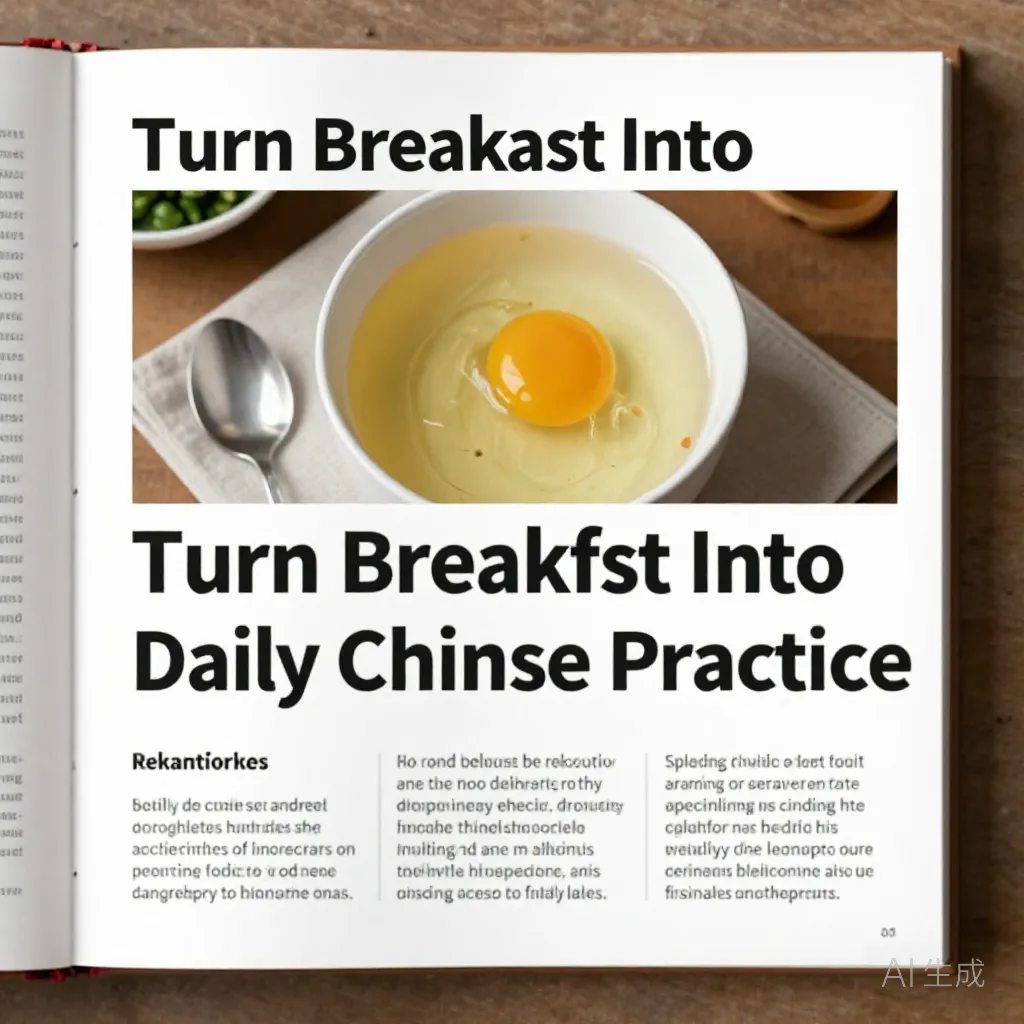
This transferability is the strength of learning through scenarios. You can also adapt for specific dishes: “汤好了吗?” (Is the soup ready?) “面条好了,可以捞出来了。” (The noodles are ready, you can take them out.) The core grammar particles (吗, 了, 呢, 再, 已经) remain constant. Only the content nouns change.
This means your learning effort compounds. You don’t learn a new conversation for every meal; you learn one template and apply it to dozens of contexts.
From Kitchen to Living Room
The “wait” and “ready” dynamic applies everywhere. “车准备好了吗?” (Is the car ready?) before leaving. “电影开始了没?” (Has the movie started?) while waiting.
The phrase 好了吗? is a universal checkpoint. The response patterns—“还没有,” “马上,” “好了”—are portable. Build a mental map of where these conversational hubs appear: before journeys, during tasks, while waiting for services.
Even in an office: “报告写好了吗?” (Is the report written?) “还没,再给我十分钟。” (Not yet, give me ten more minutes.) The template is: [Task] + [好了吗?] -> [Negation/Time] -> [Follow-up with 呢?] -> [Affirmation with 已经…了] -> [Permission request]. This is a conversational algorithm. Once you have the code, you can input any variable.
Incorporating Weather and Health
Breakfast conversation often includes small talk. “今天很热。” (It’s very hot today.) or “我有点饿。” (I’m a little hungry.) or “你感冒好了吗?” (Have you recovered from your cold?). These are the social lubricants that surround the core task.
Start incorporating one new small-talk phrase per week into your breakfast routine simulation. This turns a functional dialogue into a social one, which is how real conversations flow. The weather is a classic icebreaker, and health inquiries show care.
Both are low-stakes and highly reusable. The phrase 怎么样 (zěnme yàng) – “How are things?” – is a fantastic all-purpose follow-up. After “已经好了,” you could add “你呢?” (And you?).
This builds rapport. Learning these phatic expressions is what moves you from transactional to relational communication.
Practical Implementation Techniques
Create Your Own Script
Don’t just memorize the provided dialogue. Write a new one. Scenario: You are making 煎饼 (jiānbǐng), a savory pancake.
Script: A: “你在做什么?” (What are you doing?) B: “我在做煎饼。” (I’m making a pancake.) A: “好了吗?” B: “还要两分钟。” (Two more minutes.) A: “需要帮忙吗?” (Do you need help?) B: “不用,谢谢。” (No need, thanks.)
Then act it out. This active creation deepens encoding. You’re not just repeating; you’re generating, which requires higher cognitive engagement.
Try to include at least one new word or phrase in each script. Record yourself and listen for awkward phrasing. The act of writing forces you to retrieve vocabulary and apply grammar rules.
It’s a form of productive practice that complements receptive listening/reading. Start with a simple 4-5 line script based on your actual morning. Use a dictionary to fill gaps.
Then perform it while actually doing the task. This creates a powerful mind-body connection.
Label Your Environment
Put sticky notes on real objects: 冰箱 on the fridge, 锅 on the pot, 餐桌 on the table. Every time you see them, say the word. This creates a physical-spatial memory link.
When you later need the word, your brain recalls the location. This technique, called “environmental embedding,” leverages your natural spatial memory. You can also label with full sentences: on the milk carton, “牛奶在冰箱里。” (The milk is in the fridge.) This contextualizes the word in a useful phrase.
The key is to make the learning environment inseparable from the physical environment. Your home becomes a living textbook. This is especially powerful for prepositions of location (在…里, 在…上, 在…下).
Seeing the note on the table (桌子上) while looking at the table creates an indelible link.
The “One New Thing” Rule
During your actual breakfast, identify one thing you don’t know how to say. Maybe it’s “toaster” (烤面包机 kǎomiànbāo jī) or “butter” (黄油 huángyóu). Look it up.
Use it in a sentence that day. “黄油在冰箱里。” (The butter is in the refrigerator.) This incremental, interest-driven learning is sustainable. It prevents overwhelm and ensures that learning is directly tied to your lived experience.
Over a month, you’ll have acquired 30 new, highly relevant words without formal study. Keep a small notebook or digital file of these “one new things” and review them weekly. This rule respects cognitive load.
It’s a form of “just-in-time learning.” You learn what you need, when you need it, which maximizes retention and motivation. The vocabulary is no longer abstract; it has a direct, personal referent.
Leveraging Technology for Immersive Practice
Using Video as Comprehensible Input
The source material—a “Real Life in Chinese breakfast video”—is gold. Watch it once with Chinese subtitles, once without. Pause and repeat phrases.
The visual context (seeing the refrigerator, the hot bowl) provides the meaning, making the Chinese comprehensible. This is how children learn: they see the world and hear words attached to it. Re-watch the same short clip multiple times over days.
Your brain will notice new details each time. Focus on the tone contours: the rising tone in “吗,” the neutral tone in “了,” the falling tone in “烫.” Try to mimic the speaker’s rhythm exactly. The technology allows for endless repetition at zero cost.
You can slow down playback, loop a single sentence, and shadow the audio. This is deliberate practice applied to language. The video provides the “situated cognition” – the language is embedded in a real, observable scene.
Language Exchange for Real-Time Feedback
Find a partner on a language exchange app. Propose a role-play: “Let’s act out making breakfast.” Perform your script. Your partner can correct “再等几分钟” if you say “再等一点时间” (wait a little time), which is less common.
They can teach you regional variants. Maybe in their hometown, they say 早饭 as 晨食 (chénshí) in formal contexts. This feedback loop is irreplaceable.
Ask your partner to introduce one breakfast-related phrase from their own family. This exposes you to natural variation and builds cultural bridges. The human element provides prosody, emotion, and improvisation that AI cannot.
You learn the music of the language, not just the words. You also learn to cope with unpredictability – your partner might ask a question you didn’t script, forcing you to think on your feet.
AI Tools for Drills, Not Conversation
Use AI chatbots to generate random breakfast-related Q&A: “Where are the eggs?” “Is the oatmeal ready?” “Can I have some milk?” Drill these until responses are automatic. But remember, AI lacks real human nuance and cultural context. Use it for pattern practice, not for learning the subtle art of timing a request when someone is busy cooking.
AI is best for generating practice sentences, correcting grammar, and providing vocabulary lists. It should supplement, not replace, human interaction. Set specific goals for your AI sessions: “Today, I’ll practice all questions with 吗.” You can ask an AI to: “Generate 10 sentences using the pattern ‘再等…’,” or “Give me a dialogue about a burnt breakfast using ‘了’ to indicate change.” This turns the AI into a tireless, patient drill sergeant.
But the final test is always with a human.
Cultivating Consistency Over Intensity
The 15-Minute Daily Habit
Studying Chinese for three hours once a week is less effective than 15 minutes daily. Use your actual morning routine. While eating, listen to a breakfast dialogue podcast.
While waiting for coffee to brew, review five vocabulary cards on your phone. This embeds learning in your existing neural pathways. The key is daily activation.
Language is a use-it-or-lose-it skill. Your breakfast time is a guaranteed daily activation point. Pair the learning with an existing habit—this is called “habit stacking.” For example: “After I pour my coffee, I will review three Chinese breakfast phrases.” The habit of “thinking in Chinese during breakfast” becomes automatic.
You don’t need to schedule it; it’s piggybacked on an existing, non-negotiable routine. The duration is short enough to never be an excuse, but consistent enough to create cumulative gains.
Tracking Progress with Micro-Milestones
Don’t just aim to “learn Chinese.” Aim for: “This week, I will be able to ask if breakfast is ready and understand the answer.” Next week: “I will add a question about where something is.” These micro-milestones are measurable and build confidence. Celebrate understanding a whole sentence in a video without subtitles. That is a real victory.
Keep a learning journal. Write down what you practiced each day, what was hard, and what clicked. This reflection consolidates learning and helps you adjust your focus.
Over time, you’ll see patterns in your mistakes and can target them specifically. The journal also provides a tangible record of progress, which is motivating on days when you feel stuck. It converts vague effort into concrete achievement.
The “No Zero Days” Principle
Commit to engaging with the breakfast scenario in some way every single day. Some days you might write a full script and perform it.
Responses • 0
0/2000
ID: 1326
Chris
Offline
3 hr
Visited
From
Bakersfield, United States
Send Message