The Quick Help Thread Revolution
AI Learn Chinese
2 hr • 0 read
Learn about Quick Help Threads on Discord, offering instant translation help for Chinese language learners worldwide.

Introduction: The Instant Gratification of Language Learning
Every Chinese learner, from the absolute beginner to the advanced scholar, hits a wall. It’s that moment when a textbook fails, a dictionary feels impersonal, and a nagging question about phrasing, vocabulary, or translation blocks progress. In the digital age, the expectation for an answer is immediate. This fundamental need for quick, reliable clarification is the engine driving a powerful, grassroots phenomenon within the global Chinese learning community: the "Quick Help Thread." Born from forum culture and now thriving on platforms like Discord, these dedicated spaces offer a lifeline for specific, focused queries that don't require a full lesson but demand a native or expert's touch.
The model is beautifully simple. A learner posts a concise question—"How do you say 'supply chain disruption' in a business context?" or "Is this translation of 我饿了 natural?"—and receives direct, community-vetted responses. This article explores the anatomy, impact, and evolution of this system, focusing on its structured approach to translation requests and its role as a complementary resource for formal study.
We will examine why this format works, how it maintains quality at speed, and why, in 2026, it remains an indispensable tool in the language learner's toolkit. It represents a perfect middle ground between the silence of solitary study and the commitment of a full class.
The Evolution of Rapid-Response Language Aid
From Static Forums to Dynamic Servers
The concept of a "quick help" thread isn't new; it has roots in the early days of internet forums like Reddit's r/ChineseLanguage or legacy language learning platforms. These were typically single, pinned threads where users could post brief questions. The format was static and linear, with replies stacking chronologically.
While functional, it lacked real-time interaction and often suffered from buried questions in high-traffic threads. The transition to Discord and similar real-time platforms revolutionized this. Discord servers organize conversations into channels, allowing for multiple simultaneous "Quick Help" threads dedicated to specific topics—general questions, translation, characters, or even regional dialects.
This shift from a single, monolithic thread to a channel with sub-threads (using Discord's native thread feature) created a scalable system. Each query gets its own mini-discussion, preventing answers from becoming entangled. The immediacy of notifications and the presence of a live, global community of learners and native speakers transformed the experience from a slow bulletin board into a vibrant, responsive help desk. The 2026 landscape sees this model as the default for many large, active Chinese learning communities online, a testament to its efficiency.
The 2026 Community Ecosystem
By 2026, the ecosystem around these quick-help channels is sophisticated. Major Discord servers for Chinese learners boast thousands of members, with dedicated moderator teams ensuring quality. These servers often integrate with other tools; for instance, a bot might automatically remind users to include context for their translation request or link to a community-maintained FAQ before they post.
The culture has matured, with established etiquette norms: search before posting, provide full context, and upvote helpful answers. This self-policing community is what sustains the model's speed without sacrificing accuracy. It’s a peer-to-peer network built on mutual aid, where helping others reinforces one's own knowledge.
Anatomy of a Quick Help Thread
Core Principles and Boundaries
The success of any Quick Help Thread hinges on a shared understanding of its purpose and limits. Its core principle is specificity and brevity. It is designed for pinpoint questions that have a relatively clear answer.
"What's the word for 'blockchain'?" or "Why is 被 used here instead of 让?" fit perfectly. The boundary, equally important, defines what does not belong here. Requests for substantial translation reviews—where a user posts a paragraph or essay and asks for a full critique—are explicitly redirected to their own dedicated thread.
Similarly, open-ended questions like "Explain Chinese grammar to me" or "How do I become fluent?" are too broad.
This boundary-setting is crucial. It protects the thread from becoming a dumping ground for homework or a substitute for structured learning. It respects the time of volunteers by ensuring their contributions go toward solving discrete problems.
The community guidelines, often pinned in the channel, make this distinction crystal clear: "For quick clarifications, use this thread. For deep dives, start a new post." This simple rule maintains the thread's velocity and focus, making it a reliable resource for everyone.
What Constitutes a "Quick" Question?
Defining "quick" is an art form refined by community consensus. Generally, a question is quick if: 1. It seeks a single piece of information: a word, a phrase, a grammatical ruling.
2. It includes all necessary context in the initial post: the full sentence, the source material, the learner's own attempted translation. 3.
It can be authoritatively answered in a paragraph or two.
Questions about nuanced cultural connotations, stylistic choices for a specific genre, or debates on theoretical grammar points often exceed this scope. The community has developed an intuitive sense for this. A post like, "Is 客气 appropriate when refusing a gift from a close friend?" might spark a short discussion but stays within bounds because it's tied to a specific scenario.
"Discuss the concept of 面子 in modern Chinese society" does not. This implicit curation happens through user flags and moderator guidance, keeping the thread's signal-to-noise ratio high.
The Protocol of Translation Requests
The 翻译求助 Tradition
Within the Quick Help Thread, the translation request is its most common and vital sub-genre. The Chinese term 翻译求助 (fānyì qiúzhù), meaning "translation help-seeking," has become a recognized tag or channel name in itself. These requests follow a mini-protocol.
The poster provides: the source text (in English or another language), their own best attempt at a Chinese translation, and—critically—the context and purpose. Why is this translation needed? Is it for a business email, a tattoo, a game localization, or a literary essay?
This context is everything. A term like "run" in software has a standard translation (运行), while in fashion it means "a series" (一场秀).
The community's response to these posts is a masterclass in collaborative problem-solving. Multiple users might offer slightly different translations, explaining the subtle shades of meaning between synonyms. Native speakers will often comment on what sounds most natural to their ear.
Advanced learners might point to dictionary entries or corpus examples. The original poster can then clarify, ask follow-ups, and ultimately select the answer that best fits their unstated need. This process efficiently crowdsources the cultural and pragmatic knowledge that no single dictionary can hold.
Guidelines for Effective Posts
To get the best help, the community has converged on a post template. An effective translation request post typically follows this structure: 1. Source Text: "Please translate: 'Our quarterly results show a resilient performance despite market volatility.'" 2.
My Attempt: "My try: 我们的季度财报显示,尽管市场波动,我们的表现依然坚韧。" 3. Context: "This is for a formal investor presentation. I want to sound professional but not stiff." 4.
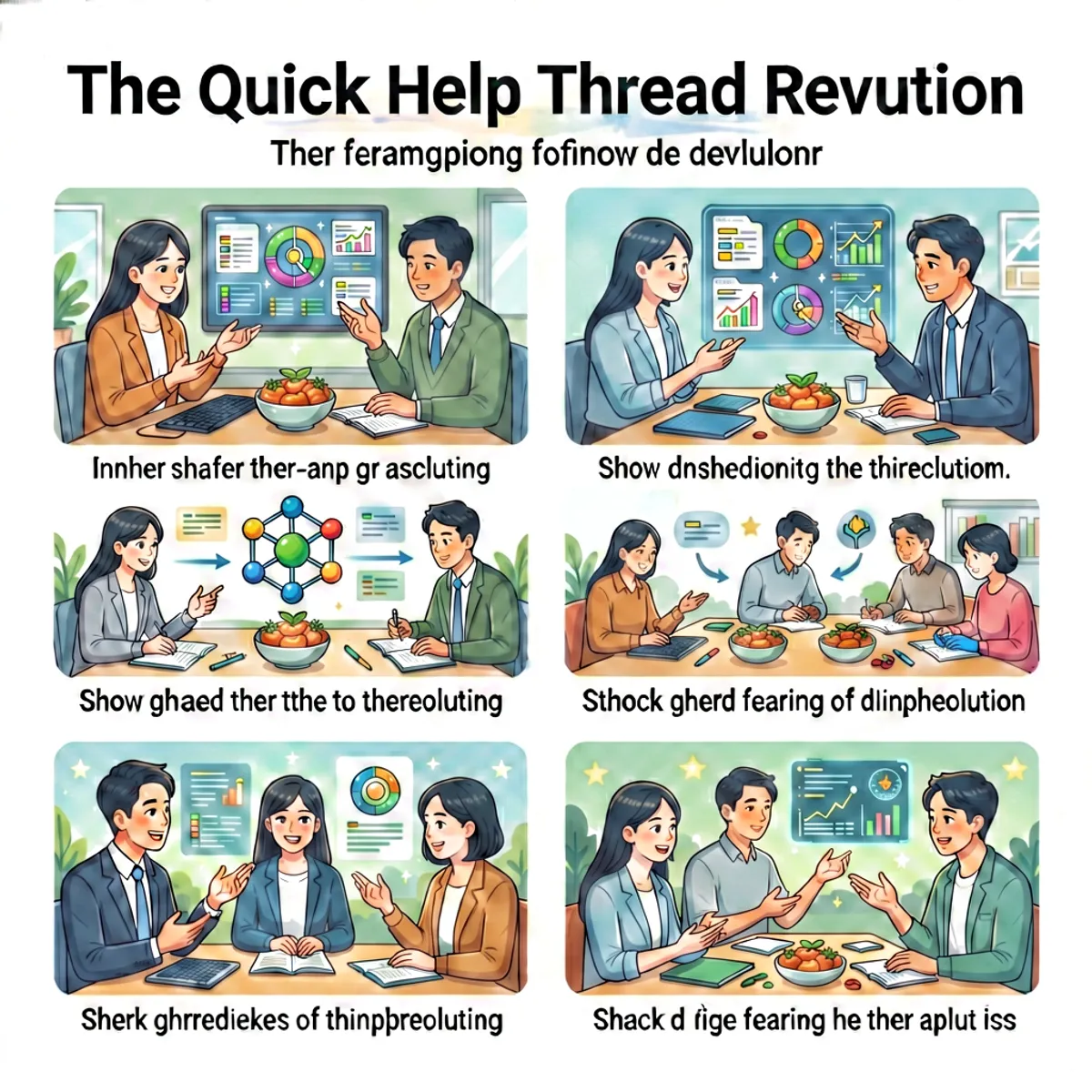
Specific Question: "Is 坚韧 the right word for 'resilient' here? Would 稳健 be better?"
This format eliminates back-and-forth clarification, delivering maximum information upfront. It respects the time of responders and yields higher-quality answers faster. Moderators often gently remind new users to adopt this format, turning individual requests into a teachable moment about effective communication itself. The thread thus becomes a living style guide, built from thousands of real-world examples.
Discord as a Living Classroom
Channels, Threads, and Real-Time Interaction
Discord's architecture is ideally suited for this model. A large server might have a main `#quick-help` channel. Within it, users create threads for each question.
This keeps the main channel from being flooded while allowing focused discussion. Someone can reply within the thread, and all participants get notifications. The conversation stays organized.
In addition, servers often create specialized channels: `#translation-requests`, `#grammar`, `#characters`, `#pronunciation`. This thematic sorting directs experts to the questions they can best answer and helps learners find existing discussions via search.
The real-time aspect cannot be overstated. While not always instantaneous, answers often come within minutes during peak hours in major time zones. This creates a dynamic where a learner can post a question, engage in a brief clarifying exchange, and have a resolved query within a single study session.
It mimics the experience of tapping a teacher on the shoulder, but with a global pool of talent. The ephemeral nature of Discord also encourages more candid, conversational explanations than a permanent forum post might.
Moderation and Community Standards
This speed and openness necessitate strong moderation. Dedicated moderators and trusted community members patrol the quick help channels. Their roles include: deleting off-topic posts, merging duplicate questions, issuing reminders about formatting, and stepping in if a discussion becomes unproductive or contentious.
They are the guardians of the thread's quality and tone. In 2026, many servers use bot-assisted moderation; a bot might auto-delete a post that lacks context or ping a user who hasn't read the rules.
The community standards are co-created. Over time, unwritten rules solidify: no "Google-able" questions, no requests for full homework solutions, no promotional content. These norms are enforced not just by mods but by peer pressure—users will comment "please search first" or "this needs more context." This self-regulation is powerful because it stems from a shared investment in the resource's value. The culture prizes helpfulness and efficiency, creating a positive feedback loop that attracts and retains knowledgeable members.
The Human Element: Why Crowdsourcing Beats Algorithms
The Nuance of Native Speaker Intuition
For all the advances in AI translation and grammar checking, the Quick Help Thread thrives on a fundamentally human asset: native speaker intuition. An algorithm can tell you that 运行 is the standard translation for "run" in a software context. A native speaker, however, can instantly sense that in a specific business report, "execute" might be better (执行), or that "drive" (驱动) carries a more proactive connotation. They understand the register, the jargon, the unspoken connotations that escape corpora and dictionaries.
This is especially true for idioms, slang, and recent neologisms. A learner asking how to say "ghosting" someone in a social context will get a current, culturally-aware answer (e.g., 突然断联 or the borrowed 鬼影). An AI might offer an obsolete or literal translation.
The thread captures language in flux, as it's actually used. In addition, when a learner posts their attempt, a native speaker can pinpoint why it sounds off—not just "this is wrong," but "this word choice feels too formal here" or "the word order is awkward because..." This explanatory power is the thread's greatest strength.
Building Trust Through Consistency
Over time, certain community members become recognized subject matter experts. You learn that UserA is a brilliant translator of technical documents, UserB has a deep knowledge of classical allusions, and UserC is a teacher who explains grammar with unparalleled clarity. This builds a form of social capital and trust.
Learners start to seek out these users' opinions, and experts take pride in their role. This consistency is irreplaceable. You cannot build a rapport with an AI model that updates weekly.
The thread becomes a network of relationships, where help is given not just from a sense of duty, but from a shared identity as part of a learning community. This human connection transforms a simple Q&A into a sustained, motivating engagement with the language and its people.
Measuring Success: Beyond the Answer Count
Engagement Metrics and Learning Outcomes
How do we measure the success of a Quick Help Thread? Superficially, it's in the volume: thousands of questions answered monthly. But deeper metrics matter more.
One is resolution rate—what percentage of questions receive at least one accepted or upvoted answer? High resolution indicates the community is effectively addressing the types of questions it sets out to solve. Another is follow-up engagement.
Do posters return to clarify or thank responders? This shows the interaction was meaningful, not transactional.
Crucially, success is measured in learning outcomes that are hard to quantify. A learner who gets a crucial translation right for a job application gains confidence. A student who finally understands the nuanced use of a particle after three examples from different users has a breakthrough.
The thread serves as a just-in-time learning intervention, filling precise gaps at the moment of need. This complements systematic study perfectly. The knowledge gained here is immediately applicable, creating powerful positive reinforcement that fuels further study.
Case Studies from 2026
Consider two anonymized examples from a major server in early 2026. Case One: A user needed to translate "user experience (UX) designer" for a LinkedIn profile. The initial attempt was "用户体验设计师," which is correct but common.
Respondents suggested "交互设计师" (interaction designer) as a more specific and modern title in the tech industry, explaining the industry trend. The user adopted this and later reported getting more relevant job inquiries. Case Two: A user was confused by the sentence "他跑去了超市" in a novel.
They thought 跑 implied "running." Native responders explained that here, 跑 simply means "to go" with a sense of urgency or informality, and that literal "running" would be 跑步. This clarified a fundamental aspect of semantic range versus literal meaning. These are micro-lessons with macro impact.
Challenges and the Shadow of Superficiality
Managing Expectations and Quality Control
The model’s greatest strength—speed—can also be its weakness. The pressure for quick answers can lead to superficial or incorrect responses being upvoted. A confident but wrong answer might rise to the top faster than a correct but nuanced one.
This is a constant battle for moderators. They must encourage sources (linking to dictionaries, corpora) and sometimes step in to correct misinformation. The community culture must value accuracy over speed, a lesson learned through occasional high-profile errors that are later corrected.
Another challenge is managing user expectations. Some newcomers expect the thread to be a free, unlimited tutoring service. They may post vague questions, become impatient if not answered instantly, or argue with responders.
The moderation team spends significant energy on "user education," gently reminding people of the thread's scope and etiquette. This social labor is invisible but essential. The thread's sustainability depends on a continuous influx of knowledgeable volunteers willing to endure occasional friction.
The Risk of Fragmented Knowledge
There's an inherent fragmentation in this model. Knowledge is dispersed across thousands of thread snippets. A key explanation about the difference between 的, 得, and 地 might be given in one thread, a slightly different nuance in another.
There is no single, curated repository of this collective wisdom. While the server's search function helps, it's not a substitute for a structured textbook. This can lead to learners receiving piecemeal, potentially contradictory advice.
The community mitigates this through FAQ channels and dedicated "knowledge base" channels where moderators compile the most common and critical explanations. Still, the thread remains a stream of consciousness, not a syllabus. Users must be self-directed to synthesize the information they receive.
The Future: AI Integration and Human Preservation
Augmentation, Not Replacement
Looking ahead to 2026 and beyond, the role of AI in these threads is a hot topic. Advanced language models can already generate plausible translations and grammar explanations. Some communities experiment with bots that provide a first-pass answer, which humans then review and refine.
The most successful integration sees AI as a tool for responders, not a replacement. A responder might use an AI to generate three translation options instantly, then apply their human judgment to select and explain the best one. This augments efficiency without sacrificing the crucial layer of cultural and pragmatic judgment.
The key principle is human-in-the-loop. The final, accepted answer must come from a verified human account, with the community's upvote/downvote system serving as the quality control. This preserves trust.
Learners come for the human touch; they want to know what a real person would say or write. An AI's answer, even if technically correct, lacks the authority of lived experience. The future model is likely a hybrid: AI for speed and breadth, humans for depth, nuance, and trust.
Preserving Community in a Scalable Model
The existential question is whether this community-driven model can scale without losing its soul. As servers grow into tens of thousands, the intimate feeling can fade. Sub-communities or "squads" may form organically.
Platform changes (like Discord's feature updates) can disrupt established workflows. The challenge is to institutionalize the culture without bureaucratizing it. This involves clear, living documentation of norms, a transparent moderation promotion process, and rituals that reinforce community identity—like weekly "translation challenge" events or spotlighting outstanding helpers.
The goal is to scale the quality of interaction, not just the quantity of answers. It means building systems that help new users acclimate quickly and ensure that experts feel valued and not burned out. The Quick Help Thread's magic lies in its informal, peer-to-peer nature.
Any formalization must serve that end, not stifle it.
The Role of Mentorship in Sustainable Growth
Formalizing Guidance Without Bureaucracy
To manage growth while preserving its peer-to-peer soul, the most resilient servers in 2026 have organically developed mentorship frameworks. These are not formal enrollment programs but lightweight, opt-in systems. Experienced, trusted members—often those with a history of high-quality, patient answers—are invited to become "Mentors" or "Guides." This role is signaled by a subtle role tag in the server, not a title of authority.
The function is to provide a slightly more sustained point of contact for newcomers who frequently ask foundational questions. A new user posting repeatedly basic queries might receive a friendly DM from a Mentor pointing them to essential resources or offering to review a short practice paragraph. This intervention prevents burnout among general responders and gives novices a clearer onboarding path, all within the server's existing, informal culture.
The key is that mentorship is a service role, not a status symbol, and it operates entirely within the public channels unless a private DM is genuinely helpful.
Knowledge Transfer Through "Learning Squads"
Building on the idea of organic sub-communities, many servers facilitate "learning squads" or study circles. These are small, self-organizing groups of 5-10 learners at a similar level, often formed around a shared goal like passing the HSK 5 exam or reading a specific novel. A more experienced member might volunteer as a squad "anchor," helping to curate resources and facilitate discussions.
These squads use private threads or separate channels for their focused work but remain part of the larger server ecosystem. They often post summaries of their discoveries—common pitfalls, useful vocabulary lists—back into the main knowledge-base channels. This creates a beautiful feedback loop: the main Quick Help Thread provides immediate, atomic solutions, while the squads build deeper, contextual understanding.
The squads combat fragmentation by allowing learners to co-construct a more cohesive mental model of the language, supported by the broader community's instant help when they hit specific snags. It’s a scalable way to foster the consistency and rapport that the article identified as crucial, without forcing large-group interaction on everyone.
Curating the Canon: From Snippets to a Living Wiki
The challenge of fragmented knowledge is met not with a static textbook but with a collaborative, evolving community wiki. Major servers maintain a dedicated channel or linked external wiki where the most valuable, frequently referenced explanations from the Quick Help Thread are curated. This isn't done by a central committee but through a democratic process.
When a particular answer in a thread receives an unusually high number of reactions or is repeatedly linked in new threads, any user can nominate it for inclusion. A moderator or a trusted editor then polishes the language, adds cross-references, and posts it to the wiki with attribution to the original responder. This process transforms a brilliant one-off explanation about, say, the historical usage of 之 vs. 的 into a canonical resource.
It respects the originator's contribution while making the knowledge persistently accessible. The wiki becomes the structured syllabus that complements the thread's spontaneous Q&A, and its growth is a direct metric of the community's intellectual output. New users are required to search this wiki before posting, a rule that both reduces repetition and educates them on what the community already values and knows.
Conclusion: The Enduring Power of Focused Community
The Quick Help Thread, in its various manifestations from forum sticky to Discord channel, represents a elegant solution to a perennial problem in language learning: the need for timely, contextual clarification. It operates on a simple contract: the asker provides a clear, focused question with necessary context; the community provides a direct, informed answer. This contract, enforced by shared norms and light moderation, creates a remarkably efficient and effective knowledge-sharing ecosystem.
Its power stems from its focus. By rigorously defining its scope—quick questions, specific translation help—it avoids the pitfalls of being a general forum or a substitute for structured education. It excels at what it does, freeing other spaces for deeper discussion.
In 2026, as AI tools proliferate, this human-centric, community-moderated model becomes more valuable, not less. It provides the judgment, the cultural intuition, and the social proof that algorithms cannot replicate. For the Chinese learner, navigating the complexities of a language and culture not their own, having a place to ask "How would a native person say this?" and get a real, immediate answer is nothing short of essential.
It is the modern incarnation of tapping a knowledgeable friend on the shoulder, a global, always-on help desk built on reciprocity and shared passion. Its continued evolution will be a key indicator of how online communities can harness technology to preserve humanity in learning.
Responses • 0
0/2000
ID: 1326
Chris
Offline
44 min
Visited
From
Bakersfield, United States
Send Message