Chinese Tea Overview
Original
Chinese Tea
Feb 07 • 270 read
The earliest record of Chinese tea is about 5,000 years ago by Shennong' story, here also introduce an overview of Chinese tea, tea production, tea health and storage of tea.
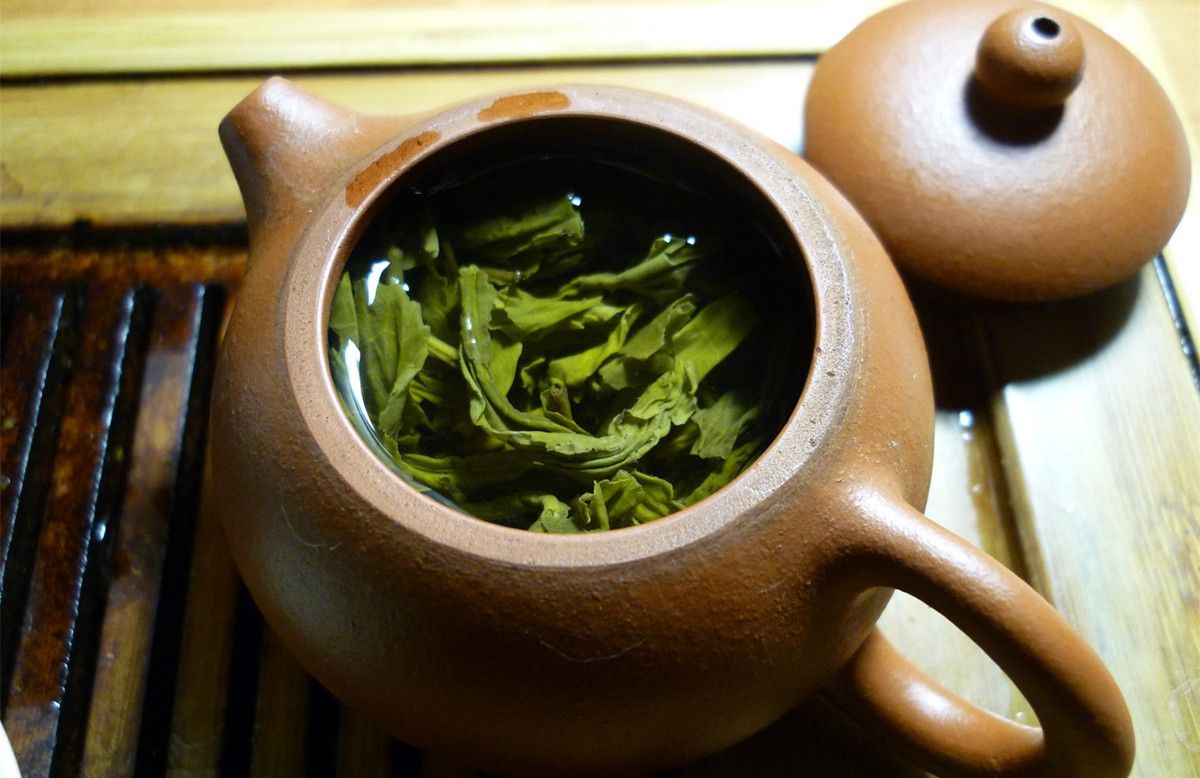
From myth to reality
Five to six millennia ago, myth and reality merged in Chinese history. Shennong, the mythical forefather of the Yan and Yellow Emperors, lived in this age. He is a legendary figure credited as the founding father of Chinese farming civilization and medicinal arts. Born with a crystal stomach, he could observe how his visceral organs reacted to different herbs through the transparent stomach to distinguish various functions of different plants. Once encountering toxins he depended on tea for detoxification. This is the earliest record of tea in Chinese civilization.
In any historical period, social trends are constantly changing. Chinese tea culture has evolved in terms of production techniques and drinking methods through the ages. Tea brewing in the Tang Dynasty, tea whisking in the Song Dynasty and tea steeping in the Ming Dynasty, make up three significant phases in this development trajectory.
In recent years, a large quantity of mysterious relics has been discovered at the underground palace of Famen Temple in the outskirts of Xian, once a capital in dynastic China. Among these relics, in addition to Shakyamuni's index finger bone, porcelain and colored glaze, exquisite gold and silver teaware used for tea production in the Tang Dynasty was also unearthed. These relics which were produced over a millennium ago provide concrete reference materials to study the Tang tea ceremony as documented in “The Classic of Tea” by the Sage of Tea, Lu Yu.
By the Song Dynasty, the Chinese tea ceremony had reached unprecedented heights under the encouragement of Emperor Huizong of Song. This emperor was an incompetent ruler but was talented and skilled in artistic domains. His reign was one of the most glorious periods for artists in Chinese history. Emperor Huizong spent all day reciting poems and singing songs with his officials, hosting one after another tea party, staging tea fights and engaging in Tea liquor painting. The Japanese matcha ceremony, which is enshrined as the quintessence of Japanese culture, evolved from the tea-whisking practice in the Song Dynasty. In some sense, it acts as a living museum to display the Song tea ceremony.
Zhu Yuanzhang, the founding emperor of the Ming Dynasty, was born into a peasant family. He appreciated a thrifty lifestyle and stripped all the unnecessary processes in the otherwise complicated brewing methods by simply steeping tea leaves in water. The tea steeping method was popularized during his reign and survives to this day. The innovations by Emperor Taizu of Ming lowered tea production costs and simplified the drinking practice. These measures helped to popularize tea drinking among common people and make Chinese tea famous around the world.
In the Western world, Immanuel Kant compared the sense of morality in the inner world to the universe and starry sky. However, in the Chinese mindset, moral pursuits valued by Confucians and the worldview of Taoist followers are blended into an integral whole. The tea ceremony is concerned with the subtle balance between nature and virtue. Therefore, for the Chinese, tea leaves are blessings from the universe and nature. Tea is a beverage for common people, for the gentry and for those adhering to a thrifty and simple lifestyle.
Green Tea Overview
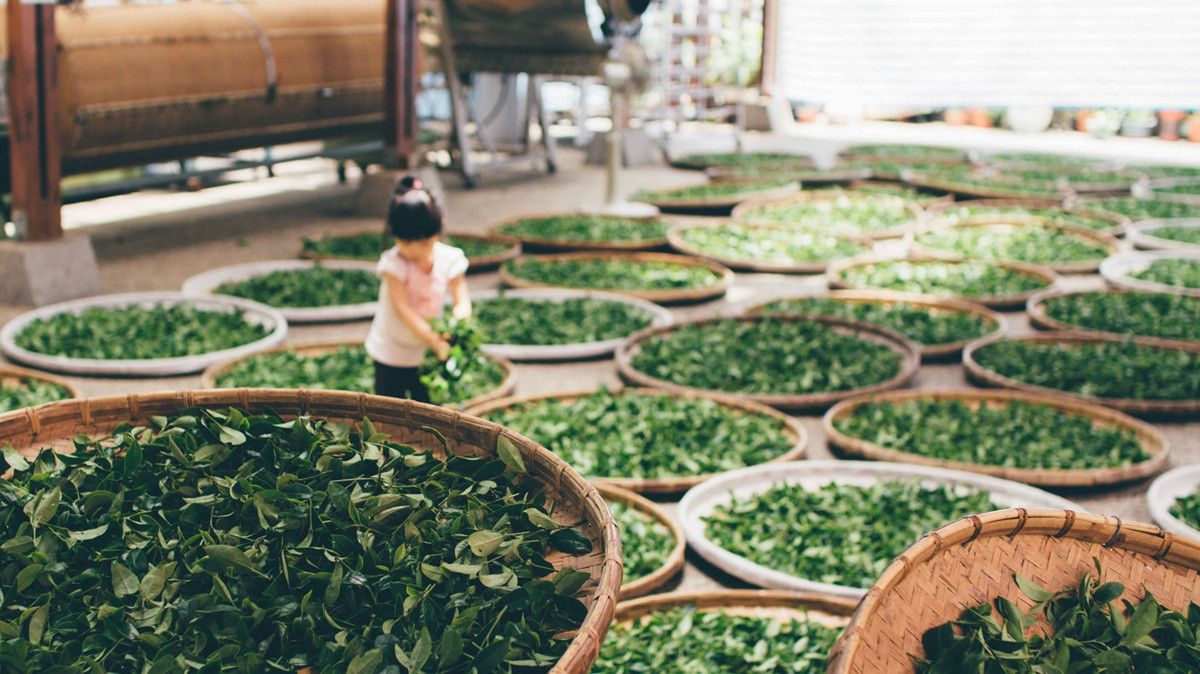
Every kind of tea is marked with a distinctive property. Chinese Tea is as energetic as the youth; Oolong is as reserved and mature as a middle-age man; Green tea represents maternal love, while black tea is an incarnation of a wise old man with a lot of stories.
In China, where camellia sinensis originated - the precious tea plant extends from the south to certain regions in the north. The tea leaf tends to grow smaller as one travels northward, shrinking from the size of an infant’s palm to one as slender as the brushstroke that defines a young girl’s eyebrow in an ancient portrait. These different regions are populated by hundreds of varieties of tea plants, and each variety is best suited for being processed into a specific category of tea leaf. Thus there exist a myriad of mutually distinct tea leave types.
We generally classify tea Leaves by the amount of fermentation that they undergo: Pu-erh tea is not fermented; Oolong runs the gamut from lightly to highly fermented; green tea is completely fermented, and Pu-erh should be considered “post-fermented” tea.
Young tea tips and buds are generally used to produce black tea, green tea, and finer Pu-erh, while mature leaves are used for Oolong. Various types of tea leaves are rolled into various shapes: for Dragon Well (Lung Ching), slices resemble a sharp sword; Green Spiral (Pi Lo Chun), soft, curvaceous spirals; Rock Tea, fluffy strips; and Iron Mercy Goddess (Ti Kuan Yin), a semi-spherical shape.
Certain fresh blossoms, depending on their qualities, are cured with tea leaves in order to endow them with the flower’s features. The fragrance of jasmine, for instance, is often fused with the cool, refreshing taste of black tea. Consideration is also given as to whether tea leaves should be dry roasted, and if so, to what extent. This latter process is applied to varieties of Oolong such as Rock Tea.
Diverse tea leaf types are thus endowed with their own unique personalities and features. To generalize, green tea is a youth bursting with vitality; Oolong possesses the maturity and steadiness of one at middle age; green tea represents earthly maternal affection, and Pu-erh is a wise elder who has weathered many a storm.
Tea Production
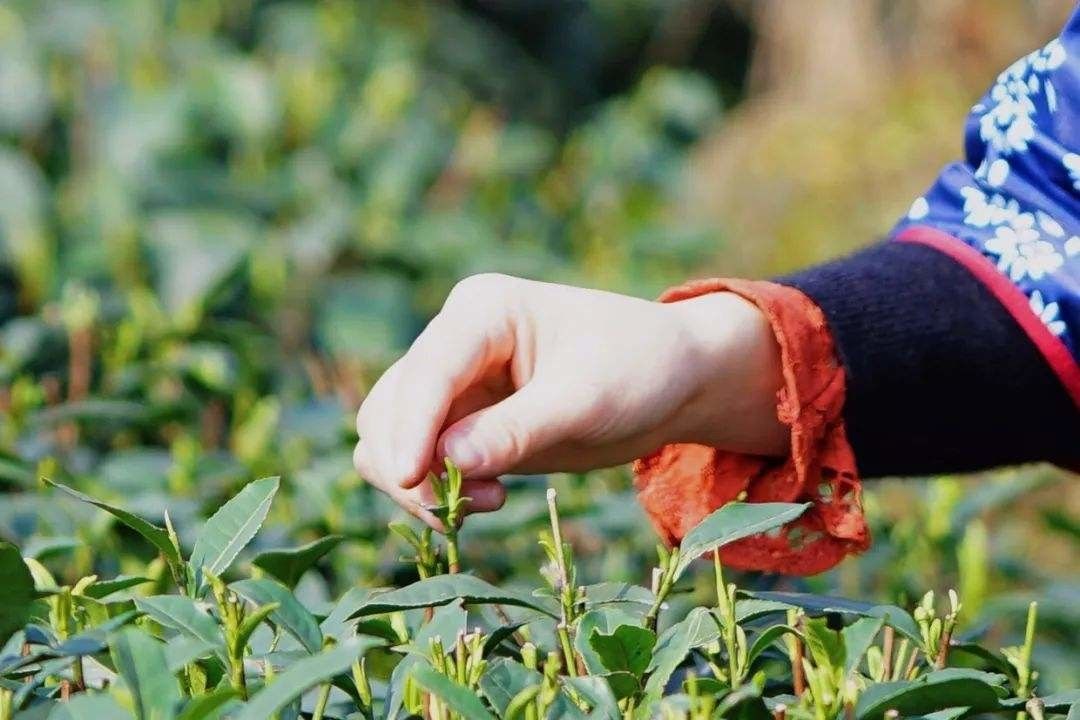
A cup of tea is the consequence of a multitude of fortuitous factors. The cup of tea that you hold in your hand and savor is the end-result of a myriad of steps in an ongoing process, from the growth of a tea bush to the processing of tea leaves, and the brewing of the liquor.
Once a tea plant’s seed has taken root and germinated, its potential is decided by the atmosphere, sunlight, rain and nature of the soil in the area where it is located, as well as how the farmer performs pruning and cottage, adds fertilizer and protects it against insects.
But the actual processing of the plucked tea leaf is a crucial step that largely determines the special characteristics of a finished leaf. The subsequent brewing of the tea leaves revolves around diverse means intended to maximize the potential with which those leaves are endowed.
Tea production is a complex process that cannot easily be standardized. Take fermentation, for example, which has the most steps. They include: harvesting, withering, fermentation, fixation, rolling, drying, scenting and roasting.
However, the processing of tea is not limited to these
steps. Certain tea leaves require specific techniques. This book lists just
several key functional phases. Among them, harvesting, fermentation, rolling
and roasting are the principal factors that shape the “personality” of a
certain kind of tea.
1, Harvesting [Plucking of buds or tender leaves]
Most
varieties of black tea are made from buds, while Oolong is generally a
full-leaf tea. This is why the bottom-side of green tea leaves are still delicate
and tender when brewed, while those of green tea leaves are already mature,
finer Oolong tea and Pu-erh also consist mainly of buds.
Green tea is only harvested in the spring, while black tea is suitable for harvest in early summer. Oolong is not only harvested in the spring but a small portion is also harvested in the winter.
2, Withering [Partial dehydration of fresh leaves]
Basically undertaken at the same time as fermentation; black tea does not require either withering or fermentation.
3, Fermentation [Using air to stimulate oxidization]
Forms tea's unique color, aroma, and taste; green tea has varying levels of fermentation, while the degree of fermentation of Oolong tea approaches 100 percent.
4, Fixation [Using high temperature to kill leaf cells and terminate fermentation]
Suspends further alterations, "fixing" the tea in an ideal state.
5, Rolling [Rupturing the leaves’ cell walls and shaping the leaves]
Besides
releasing the tea leaves’ nutrients, rolling also forms the tea leaves into
different shapes such as needles (Bamboo Leaves Green), strips (Rock Tea) and
round pellets (Frozen-summit Oolong). When brewed, lightly rolled tea leaves
will float lightly toward the surface of the liquor.
Green tea leaves are typically lightly rolled. Heavily rolled leaves will sink toward the bottom. black tea is typically heavily rolled. Black tea varies from lightly to heavily rolled.
6, Drying [Removing excess moisture via steaming]
Stabilizes the key “properties” of the tea such as flavor.
7, Scenting (curing, flavoring) [Causing tea leaves to absorb a floral fragrance]
The technique for scenting tea, endowing the leaves with the fragrance and properties of a given flower.
8, Roasting [Using fire to dry-roast tea leaves]
The heavier the roasting, the more mature the fragrance, and the "cooler" the nature of the tea leaves. Only a portion of Oolong tea is roasted, such as Rock Tea.
Tea and Your Health
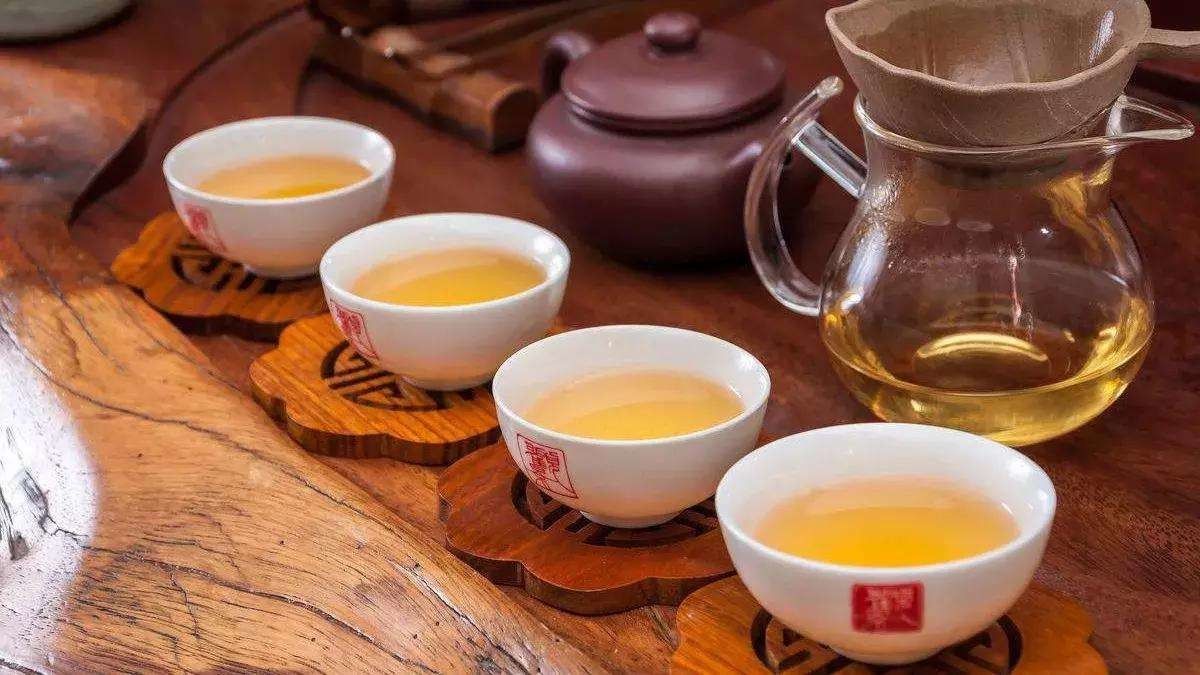
Among the world's three principal non-alcoholic beverages - coffee, cocoa, and tea - the latter’s effects on human health are arguably the most positive. If we momentarily disregard the various empirical observations by ancient Chinese regarding tea, we can see that modern science has employed a host of different methodologies to corroborate those insights. Scientists have accurately measured the ingredients of tea leaves and determined their clinical efficacy. The most significant ingredients for good health present in tea are vitamins, amino acids, and polyphenols. In addition, tea also includes caffeine, minerals, lipopolysaccharides, carbohydrates, protein, and fat.
In general, the amounts of vitamins, amino acids, polyphenols, and caffeine are the highest in Oolong tea, since these amounts drop in proportion to the degree of fermentation undergone by the tea. By contrast, green tea has the lowest mineral content, because the count increases with fermentation.
Water-soluble
vitamins in tea leaves are mainly vitamin C and B-group vitamins. We are no
strangers to these vitamins in our daily life, absorbing them via fruits and
vegetables. But the content of these vitamins is actually higher in tea leaves
than in equivalent amounts of fruits and
vegetables, so drinking tea is the most healthy and convenient method of their ingestion.
In addition to vitamin C and B-group vitamins, tea also contains a variety of fat-soluble vitamins, like vitamin A whose carotene content is actually higher then an equivalent amount of carrots. But since the vitamin doesn’t dissolve in brewed tea, it cannot easily be absorbed into the human body by drinking tea. But if we put the leaves in our foodstuffs and eat them, we can take advantage of vitamin A present in tea.
Dozens of amino acids, principally thiamine, account for two to five percent of the ingredients in tea. Each type of amino acid possesses its own irreplaceable effects, but the amounts present differ widely depending upon the tea. Many of these amino acids are indispensable elements for human metabolism, and some can only be obtained through eating or drinking - the human body cannot produce them.
The main alkaloid in tea leaves is caffeine, and its role is mainly to stimulate and fortify the heart and act as a diuretic. Our habit of drinking tea to give ourselves a lift is motivated by the fact that the caffeine - sometimes called “theine” - in tea excites the cerebral cortex.
It is
particularly noteworthy that the principle behind the excitement generated by
substances like alcohol, cigarettes, and various stimulants is quite different
than that engendered by tea. The caffeine present in tea leaves brings about a
purely physiological state of excitement that is not addictive and has no major
side effects. Caffeine and tea polyphenols combine chemically to form a
compound that is easily discharged, and therefore the caffeine cannot readily
be stored within the body.
The so-called “tea polyphenols” are catechin-based substances. Ever since tea became the object of modern scientific research, catechins have been a focal point. Research results all point to the fact that tea is highly conducive to the health of modern mankind because it offers considerable benefits in terms of resisting the effects of carcinogenic substances, radiation, and aging.
Tea contains more than forty kinds of minerals, some of which play a decisive role in maintaining the body in good health. The greatest amount is that of potassium, which is critical in maintaining osmotic pressure and blood balance, as well as the renewal of human cells. Tea also contains important elements such as manganese, selenium, zinc, and calcium.
Some three percent of tea content is comprised of lipopolysaccharides that help to improve the body’s ability to manufacture blood, strengthen immunity and resist the effects of radiation.
The fat content in tea is so small as to be negligible. Carbohydrate and protein contents are relatively high, but since they don’t dissolve in the brewing process, tea qualifies as a “low-fat, low-sugar” beverage.
Table:
Water-soluble Vitamins Available in Brewed Tea
Storage of Tea
The shelf-life of tea is closely tied to its storage conditions. Under the appropriate conditions, green tea can be stored one or two years or even longer. Additionally, the greater the degree of its fermentation, the longer the tea can be stored.
Tea leaves must firstly be stored away from light, as light readily ages tea and causes flavor loss. Secondly, an airtight container is also critical for isolating the leaves from oxygen and the moisture and odors present in the air. Oxygen can easily oxidize tea and moisture can dampen the dried tea leaves, so light-resistant materials are used for packaging, and a desiccant is added. Additionally, low-temperature storage can also help maintain flavor longer.
Tea leaves themselves are exceptionally absorbent, and therefore liable to contamination by undesirable odors. This is why some tea leaves are cured with fragrant flowers, and it explains why we can use a tea sachet as a deodorizer.
We often find that teas are vacuum-packed. This is done to minimize contact with the air and the subsequent possibility that the tea will oxidize, experience moisture regain, or absorb undesirable odors. While vacuum packaging is indeed a good strategy for tea storage, it is not suitable for all varieties of tea.
Iron Mercy Goddess and Taiwanese Oolong are often vacuum-sealed because they are heavily rolled teas that are half-rounded or in outright pellet shapes that will not break apart when air is sucked out of the container. But lightly rolled teas such as green tea and Rock Tea are shaped into a somewhat fluffier state and are thus very liable to fall apart. This would have a major negative impact on the flavor of the tea, and therefore these teas are ill-suited to vacuum packaging.
The most common tea on the market today is green tea in a ready-to-steep sachet (tea bag). This sort of packaging is appropriate because black tea is heavily rolled and often chopped in the latter stages of processing. The other reason black tea is suitable for brewing in a sachet is that the leaves absorb fairly little water and their volume does not notably increase when steeped. Just imagine if Iron Mercy Goddess or Taiwanese Oolong - which can also withstand packaging under pressure - were to be brewed in a sachet. They are highly absorbent tea leaves and the bottoms of the leaves would extend and become especially bloated. Thus directly brewing these teas in a tea bag is simply not practical. It is precise because of the two features described above that black tea can be brewed in a convenient tea-bag, while other types of tea cannot.
Storage of Pu-erh is a somewhat special case. With the passage of time, Pu-erh ages and becomes increasingly aromatic, and this is why pricing information prominently notes how many years it’s been since the tea was harvested. After Pu-erh has been produced and its shape finalized - often pressed into a cake, brick or the shape of a bird’s nest - then the “post-fermentation” process that is carried out by the air slowly gets underway.
This is
why the location in which Pu-erh is stored must avoid light and odor, but it
must also be well ventilated and a certain temperature and humidity maintained
in order to ensure that the post-fermentation process can proceed. For these
reasons, Pu-erh is often packaged in bamboo, paper, cloth and other traditional
materials offering good permeability.
Responses • 0
0/2000
ID: 322
Matthias
Offline
3 day
Visited
From
Orlando, United States
Send Message