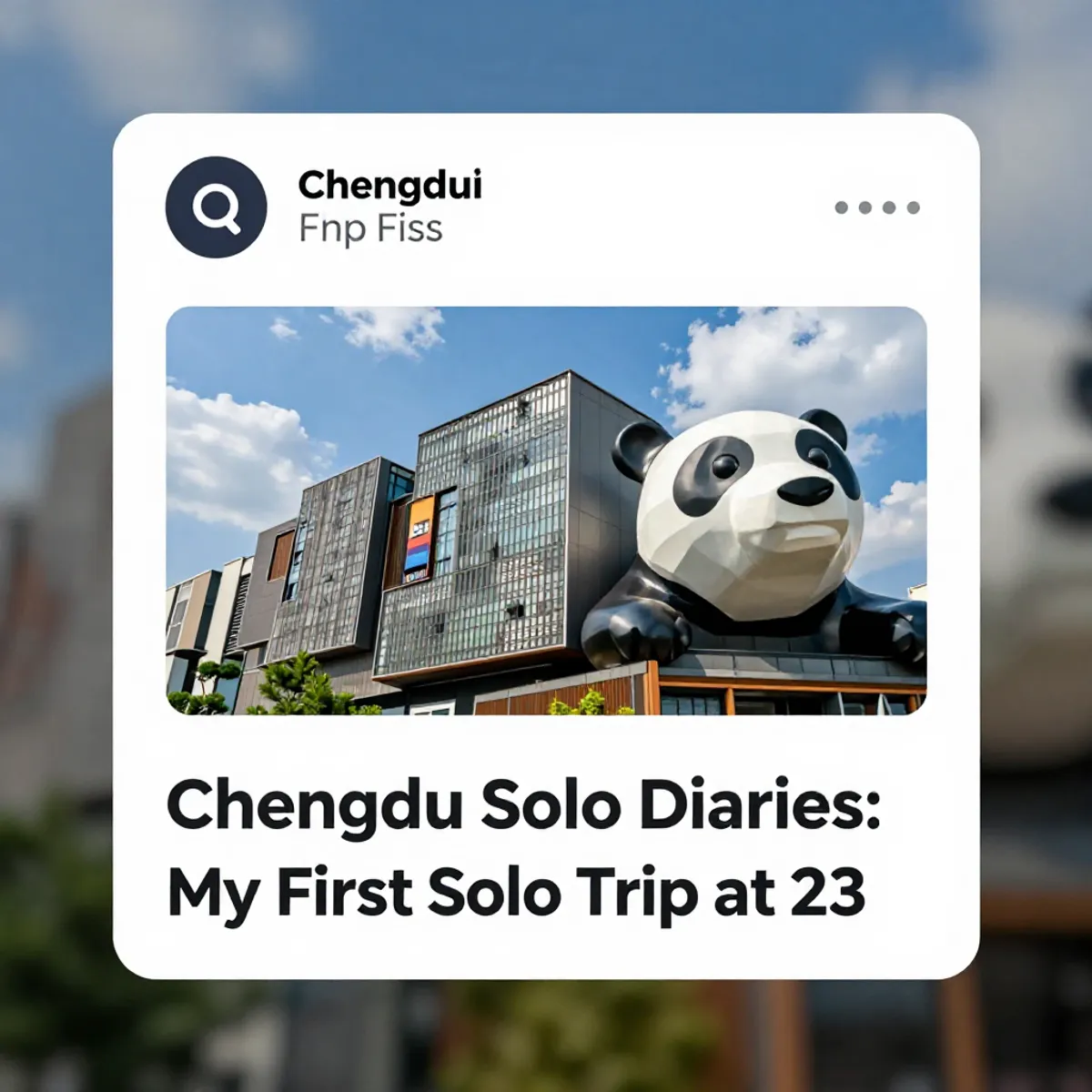
Chengdu Solo Diaries: My First Solo Trip at 23
AI Learn Chinese
1 hr • 0 read
A 23yearolds first solo trip to Chengdu in 2026, hunting hidden local gems, tasting authentic Sichuan cuisine, and forging genuine connections.
First Steps: Preparing for Chengdu
Mindset and Logistics
The decision to book a one-way ticket to Chengdu for August 2026 felt like stepping off a cliff with my eyes closed. At 23, this was my first solo journey abroad, a leap from the familiar routines of my hometown into the vast, unknown territory of China. The initial research was a whirlwind of guidebooks, travel forums, and Google Maps street views.
I wasn't just planning an itinerary; I was mentally preparing for a fundamental shift in perspective. The key was embracing flexibility over a rigid schedule. I learned to look forward not to checking off sights, but to the unstructured time—the hours to simply sit in a square and watch life unfold.
This mindset became my most valuable packing item, more essential than any adapter or guidebook.
Practical logistics formed the backbone of this mental preparation. Securing a tourist visa, arranging travel insurance that covered potential health scenarios, and notifying my bank of my travel dates were non-negotiable steps. I studied a map of Chengdu, not to pinpoint every attraction, but to understand the city's layout—the ring roads, the flow of the Jin River, the location of the massive Chengdu Research Base of Giant Panda Breeding relative to my accommodation.
I booked my first night's hostel in the Jinli area, a choice made for its walkable proximity to historical streets and its buzz of activity, ensuring my arrival wouldn't be met with silent, confusing solitude. Every detail, from downloading offline translation apps to purchasing a local SIM card upon arrival, was a small act of reclaiming control in a situation designed to push me out of my comfort zone.
Essential Phrases and Etiquette
My language preparation was humble but focused. I drilled a core set of Mandarin phrases beyond "nǐ hǎo" (hello) and "xièxie" (thank you). "Duōshao qián?" (how much?), "wǒ bù dǒng" (I don't understand), and the crucial "méi guānxi" (it's okay/no problem) became my linguistic toolkit.
I learned that a respectful, slightly hesitant tone when speaking, coupled with a smile, often disarmed potential confusion more effectively than perfect pronunciation. Understanding basic etiquette was equally important. I practiced the art of the two-handed exchange when giving or receiving items, a small gesture signifying respect.
I read that pointing with a single finger is considered rude, so I trained myself to use an open hand. These weren't just cultural notes; they were keys to smoother, more respectful interactions, a way to show I was a guest making an effort, not just a tourist passing through.
The concept of mianzi (face) and guanxi (relationships/connections) was abstract until I arrived, but I understood its practical application: patience, humility, and avoiding public confrontation were paramount. I decided early on that any misstep would be a learning moment, not a failure. This preparation wasn't about achieving fluency or flawless behavior; it was about building a bridge of goodwill.
It was my promise to the city and its people that I was here to experience, not just to consume. This intention shaped every subsequent interaction, from ordering breakfast to asking for directions.
Arrival: First Impressions of Chengdu
The City's Warm Welcome
Stepping out of Chengdu Shuangliu International Airport into the August 2026 humidity was a sensory overload. The air, thick and warm, carried a complex aroma—a blend of exhaust, street food smoke, and the unmistakable, earthy scent of damp soil and blooming jasmine from nearby pots. The initial language shock hit as I tried to parse the rapid-fire announcements and chatter around me.
Yet, almost immediately, a gentle warmth permeated the chaos. The woman at the airport information desk, seeing my hesitant English and fumbled gestures, patiently tapped the bus route to my hostel into my phone with a kind smile. This first interaction set the tone: Chengdu’s famed hospitality was real, a tangible counterpoint to the intimidating scale of the city.
My taxi ride into the city was a blur of neon signs, sprawling markets, and towering apartment blocks. The driver, a man with a calm demeanor, turned on the radio to a soft Sichuan opera, the plaintive melodies weaving through the traffic sounds. He didn't speak much English, and I butchered my attempt at xièxie, but he nodded, his eyes crinkling at the corners.
He dropped me at the entrance to Jinli Ancient Street, a reconstructed historical lane now thrumming with tourists and locals alike. Dragging my suitcase over the cobblestones, I felt a thrilling disconnect—I had arrived, truly arrived, in a place where every sight, sound, and smell was new, yet the general human kindness felt universal. The first hurdle was cleared, not by my own effort, but by the innate graciousness of a stranger.
Navigating from the Airport
For the solo traveler, the journey from airport to accommodation is the first real test of independence. I had studied the airport shuttle bus routes meticulously, a cost-effective and immersive option. Finding the correct ticket counter involved a game of charades with a security guard, pointing at my printed bus number and then at myself.
He understood, led me to a kiosk, and ensured I bought the right ticket. The bus itself was a microcosm of Chengdu life. It filled with workers in uniforms, students with backpacks, and elderly passengers holding bundled vegetables.
I clutched my suitcase, observing the unspoken rules: the priority seating for the elderly, the seamless payment with phones or cards, the general hum of quiet conversation.
Getting off at the correct stop required watching the digital display and the passing street signs, a simple task made anxious by the language barrier. When I finally alighted, the street was quieter than expected. I unfolded my map, the physical paper feeling reassuringly real in a digital world.
A young woman on a bicycle paused, seeing my obvious confusion. In broken English, she asked, "Lost?" I showed her my hostel's address. She nodded, pointed down a narrow lane, and said, "Go straight.
Big tree. Turn left." Her directions were perfect. These small, unsolicited acts of guidance were the city's way of welcoming me, reassurances that I could navigate this place, one gesture and one smile at a time.
Exploring the Urban Landscape
Historic Streets and Modern Alleys
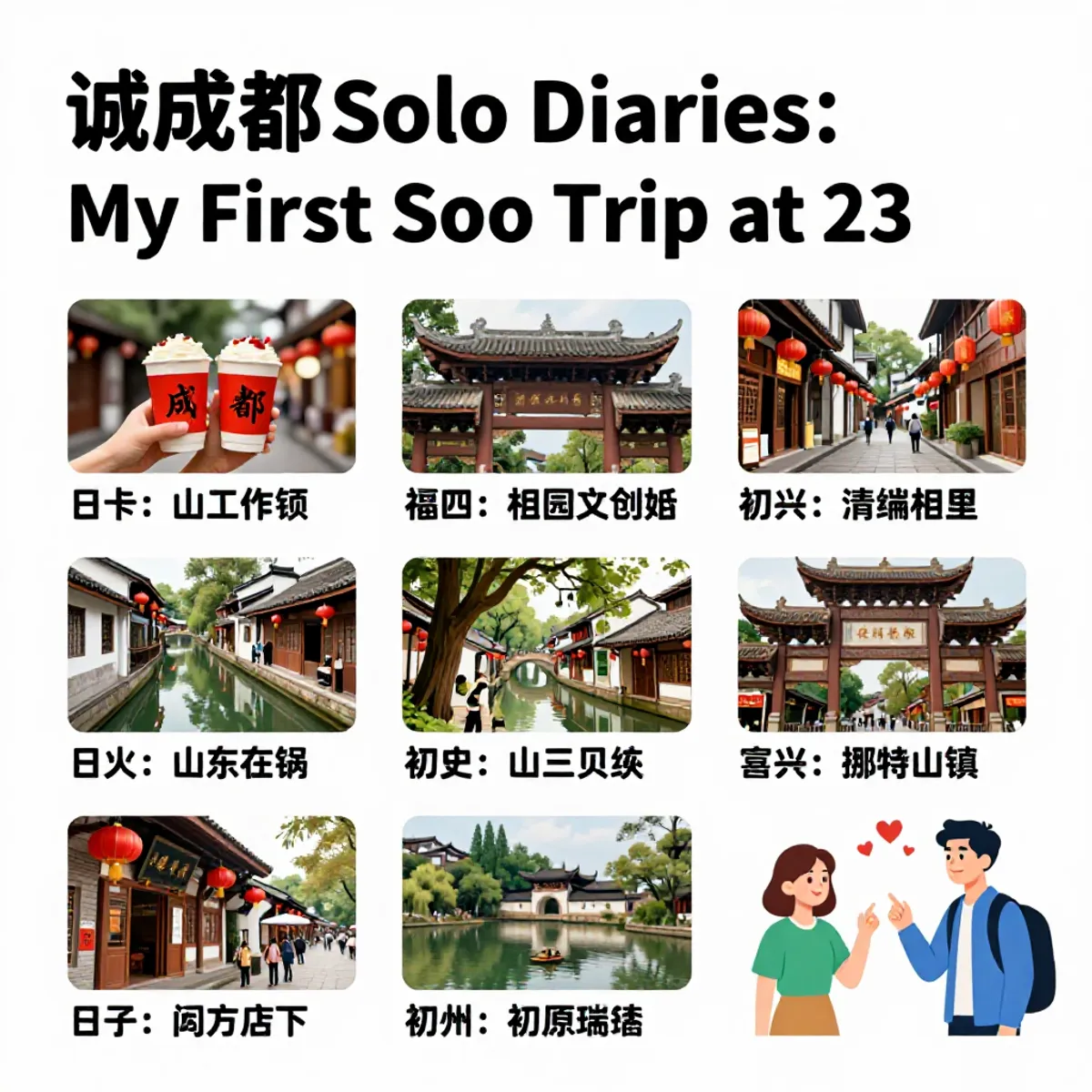
Chengdu is a city of beautiful juxtapositions, where 2,000-year-old history bleeds seamlessly into 21st-century life. My first full day was dedicated to getting intentionally lost in the urban fabric. I started in the meticulously restored Jinli Ancient Street, with its grey-brick arches, lanterns, and stalls selling handicrafts and snacks.
It was beautiful but felt curated, a performance for visitors. The real magic began when I turned down a side alley (hutong-style, but distinctly Sichuan) just off the main drag. Here, the modern city revealed itself: laundry strung overhead between concrete apartment blocks, the clatter of mahjong tiles from a ground-floor room, the smell of frying mapo tofu from a family kitchen.
I wandered toward Wuhou Shrine and the Jinsha Site Museum, where the ancient history felt palpable. Walking the paths around the shrine, I imagined the Three Kingdoms era strategists Zhuge Liang and Liu Bei. The contrast was striking—just blocks away, sleek cafes served pour-over coffee to students glued to laptops.
This layering of time is Chengdu's essence. I explored Kuanzhaixiangzi Alleys, a larger, more commercial historic district, but again found my joy in the quieter residential lanes behind it, where elders practiced Tai Chi in small pocket parks and street vendors sold jianbing (savory crepes) from tricycles. To explore Chengdu is to move between these temporal layers, understanding that the city's soul isn't locked in its museums, but alive in its everyday streets.
Parks and Green Spaces
The pace of Chengdu is dictated by its parks. If the streets are the city's arteries, the parks are its lungs. People's Park is the epicenter of this relaxed philosophy.
Arriving in the late afternoon, I was greeted by a symphony of life: the metallic clink of tea sets from hundreds of outdoor teahouses, the rhythmic thwack of badminton shuttlecocks, the low murmur of countless conversations. I paid 20 yuan for a ticket to a traditional teahouse, a simple plastic chair and a glass of longjing green tea. For an hour, I just sat, observing.
Men played chess with intense, silent focus. Women in vibrant dancewear moved in unison to folk music. A man napped, hat over his face, a newspaper on his chest.
This wasn't just recreation; it was social infrastructure. I later visited Shahexi Park and Baihuatan Park, each with its own character. Baihuatan, smaller and more literary, had a quiet corner with bookshelves where people read under trees.
The parks are where chengdu ren (Chengdu people) cultivate their famous erba (leisure). For a solo traveler, they are the perfect, low-pressure environment to be alone without feeling lonely. It’s socially acceptable to sit solo with a book or phone, merely participating in the collective vibe.
I learned to build my days around these green oases, using them to recharge, people-watch, and simply absorb the city's unhurried rhythm. They are the true public squares of Chengdu.
The Culinary Heart of Sichuan
Beyond Spicy: Understanding Sichuan Cuisine
The global reputation of Sichuan cuisine precedes it: fiery, numbing, overwhelming. My first meal in Chengdu shattered that simplistic stereotype. Yes, the málà (numbing-spicy) flavor from Sichuan peppercorns was a revelation—a tingling, citrusy buzz that doesn't burn but rather vibrates on the tongue.
But I learned that Sichuan cooking is a masterclass in balance and layering. It's about the interplay of là (spicy from chili), málà (numbing), xiāng (fragrant), suān (sour), tián (sweet), and xián (salty). A dish like Kung Pao Chicken is not just about heat; it's about the crunch of peanuts, the sweetness of the sauce, the savory depth of soy and vinegar, all anchored by that distinctive peppercorn buzz.
I began to look for the fu he wei (complex flavors) in every meal. A bowl of zhajiangmian (noodles with soybean paste) was deeply savory and umami-rich. Fish in pickled mustard greens (paocai yu) was sour, spicy, and incredibly fresh.
I visited the Chunxi Road area, a food hall paradise, and tried Liangfen (cold starch noodles with chili-vinegar sauce) and Hongyou chaoshou (wontons in red chili oil). The key was asking vendors or restaurant staff, "What is the wei (flavor) of this?" Their explanations, often with a proud smile, were my culinary education. Sichuan cuisine is an adventure in sensory complexity, and approaching it with curiosity, not fear, unlocked its true genius.
Hotpot and Street Food Adventures
No culinary experience in Chengdu is more iconic or social than Sichuan hotpot. My first solo hotpot was a calculated risk—I joined a communal table at a bustling mid-range restaurant. The center of the table held a simmering, red broth divided into two sections: a fiery málà broth and a clear, mild one for the timid or for cooking delicate items.
Plates of raw ingredients circulated: paper-thin slices of lamb, beef, and pork; fish balls; tofu skin; fresh vegetables; and mushrooms. The process is participatory: you cook your chosen items in the broth for a minute or two, then dip them in a personal small bowl of sesame oil, sometimes mixed with garlic, cilantro, and a touch of vinegar.
The communal aspect is powerful. At my table, an older man nodded at my cautious first bite of a peppercorn-infused slice of lamb. He pointed to the mild broth and gave a thumbs up.
We didn't share a language, but we shared a meal. The heat builds gradually, a pleasant, addictive warmth rather than a shock. Beyond hotpot, the street food scene is a constant, delicious distraction.
I fell for chuanchuanxiang (skewered ingredients boiled in a spicy pot), guokui (pan-fried stuffed pancakes), and sweet rice balls (tangyuan) in ginger soup for breakfast. Each bite was a direct connection to the city's working-class roots and its vibrant, on-the-go energy. Eating in Chengdu is never just about sustenance; it's a daily celebration of flavor and community.
Tea Houses and Cultural Hubs
The Social Ritual of Tea
Tea in Chengdu is not a quiet, solitary meditation. It is a loud, social, and essential institution. My first visit to a traditional teahouse, a sprawling establishment near People's Park with bamboo chairs under giant canvas umbrellas, was a masterclass in erba.
For a few yuan, you buy a pot of tea (often a robust zhū chá or scented jasmine tea) and the seat is yours for hours. The soundscape is unique: the constant clink of lids as tea is poured, the shuffling of cards, the sharp snap of mahjong tiles, and the overlapping chatter of dozens of conversations. I learned the basic etiquette: the server pours tea, you tap your finger on the table twice to show thanks (a custom born from showing gratitude to an emperor); when someone pours you tea, you tap twice in return.
I was invited, by a simple nod and a pat on the empty chair, to join a table of three elderly gentlemen. We communicated through smiles, gestures, and the shared pot. They pointed to their strong tea, then to my cup, encouraging me to refill.
One man, noticing my notebook, drew a simple map of a better teahouse in the Qingyang Palace area. This exchange, wordless but deeply meaningful, epitomized the tea house's role: it is the great equalizer and connector. It’s where business deals are struck, families gather, friends gossip, and solo travelers like me are quietly folded into the communal rhythm.
The tea itself is almost secondary to the space it creates for unhurried human connection.
Modern Cafes and Student Hangouts
Chengdu’s tea culture coexists with a thriving, modern cafe scene, particularly popular with the city's large student population from Sichuan University and other institutions. These spaces offer a different kind of connection, often centered on work, study, or casual meet-ups. I discovered Cafe 102 in the Kuanzhaixiangzi area, a cozy spot with exposed brick and shelves of second-hand books.
It was packed with students on laptops, but the atmosphere was collaborative, not silent. The baristas were friendly and spoke some English, happy to recommend a dirty coffee (cold brew with ice cream) or a local craft beer on tap.
These cafes serve as contemporary guanxi hubs. I struck up a conversation with a design student working on a project about Jinli's architecture. Over boba milk tea, she explained the tension between preserving history and developing the city.
She gave me a list of "non-touristy" galleries and music venues in the Taikoo Li area. Later, at a bar called The MOON in the Dongmen** area, I met a group of expat English teachers and local freelancers. This hybrid space—part cafe, part bar, part co-working area—was buzzing with the energy of young Chengdu.
It was here I learned about the city's indie music scene and its surprisingly vibrant underground art culture. These modern hubs prove that Chengdu's love for social gathering adapts to any format, whether over a century-old tea ceremony or a third-wave latte.
Connecting with Locals and Travelers
Apps and Social Strategies
For a solo traveler, intentionality is required to move beyond observer status. I utilized a combination of tech and traditional approach. Language exchange apps like HelloTalk were invaluable.
I set my profile to "looking for language practice and local recommendations." I connected with several Chengdu students and young professionals. One, a marketing student named Xiao Li, agreed to meet for tea at Guanyin Pavilion. We spent two hours switching between Mandarin and English, discussing everything from American pop culture to the pressures of the gaokao (college entrance exam).
These pre-arranged meet-ups provided a structured, low-anxiety entry point into local social circles.
For spontaneous connections, I learned to look in the right places. The communal tables at hotpot restaurants, the shared benches in parks during festivals, and the waiting areas outside popular tea houses were natural melting pots. I also discovered "Chengdu Expats" Facebook groups and Meetup.com events for hiking groups or language exchanges.
Attending a "Sunday morning bike ride along the Fu River" organized through one such group was a highlight. I met travelers from Europe and Australia, but also several long-term expats who offered priceless insights—like the best day trip to Mount Qingcheng or where to find authentic *Liangzhou (Gansu) cuisine**. The strategy was simple: be visible, be open, and have a clear, low-stakes suggestion ("Would you like to share a table?" or "I'm trying this dish, have you had it?").
Shared Experiences and Lasting Friendships
The connections that transcended the moment often began with a shared, simple experience. It was sharing a plate of cold chicken in chili sauce (la zi ji) with a Taiwanese traveler at a street stall, our faces flushed from the spice, laughing at our own tears. It was joining a group of local retirees in People's Park who were practicing a traditional fan dance, them patiently showing me the steps, me clumsily imitating.
These moments built a sense of camaraderie that felt more profound than a typical tourist interaction. The goal wasn't to collect friends like souvenirs, but to have authentic exchanges that left both parties with a positive, human memory.
One friendship, in particular, solidified over a visit to the Chengdu Panda Base. I met Anya, a Ukrainian volunteer at the base, while we both waited for the panda kindergarten feeding. We bonded over our mutual awe at the animals and our shared status as long-term visitors to Chengdu.
Over the next week, we explored the Dujiangyan Irrigation System together, a UNESCO site. The conversation flowed from pandas to engineering marvels to our respective life paths. We exchanged contacts, promising to meet again if our travels crossed.
These connections, forged in the unique environment of Chengdu—a city that encourages lingering and conversation—were the most valuable takeaway. They transformed the trip from a solo sightseeing tour into a shared human experience, proving that the desire to connect is a universal language.
Challenges and Growth on the Road
Navigating Loneliness and Language Barriers
The romantic notion of solo travel often glosses over the quiet moments of doubt. There were evenings, sitting alone in my hostel room or at a restaurant table for one, when a wave of loneliness would hit. The constant mental labor of translation, the effort to initiate and sustain conversation, and the sheer weight of being solely responsible for every decision could be exhausting.
The language barrier was the most persistent challenge. Simple tasks—buying a bus ticket, asking for the restroom, clarifying a menu item—required significant cognitive energy. Misunderstandings happened.
I once ordered a dish thinking it was vegetarian, only to find it swimming in minced pork. I laughed, paid, and ate it anyway. These were not failures, but lessons in adaptability and humility.
I learned to lean into the discomfort. Instead of retreating to my phone in awkward moments, I would people-watch more intently, observing the nuances of local interaction. I carried a small notebook and drew pictures when words failed.
I embraced the silence, recognizing that not every moment needs to be filled with chatter. The loneliness forced introspection. With no familiar faces to buffer my experience, I was left alone with my thoughts, the city's ambiance, and my own reactions.
This solitude, initially frightening, became a source of strength. It taught me to be my own reliable companion, to find contentment in my own company, and to appreciate the quiet spaces between the exciting encounters.
Building Confidence Through Small Wins
Growth on the road is measured in small, cumulative victories. The first time I successfully haggled for a souvenir at a market in Wuhou District using a calculator and smiles. The morning I confidently ordered baozi (steamed buns) and doujiang (soy milk) for breakfast without pointing at a menu.
The afternoon I navigated the metro system alone, transferring lines with ease. Each of these micro-accomplishments built a foundation of practical confidence that spilled over into social realms. Successfully communicating a complex need—like returning a faulty item or explaining a dietary restriction—felt like winning a small battle.
The biggest confidence boost came from a mistake. I took a bus in the wrong direction, ending up in a completely unfamiliar suburb. Panic rose for a moment.
Then, I took a breath, found a map on my phone, and asked a young woman at a bus stop for help. She not only directed me but, seeing my flustered state, called the bus driver as my bus arrived to ensure he knew I was getting on. Her kindness in the face of my error was transformative.
It taught me that errors are not disasters but opportunities for human connection. I began to see challenges not as threats to my carefully planned trip, but as invitations to engage more deeply, to rely on my resourcefulness, and to trust in the general goodwill of people. This shift in perspective was perhaps the most significant personal gain of the entire journey.
Reflections: What Chengdu Taught Me
Slow Travel and Present-Moment Awareness
Chengdu’s most profound lesson was the art of man (slow). In a world obsessed with productivity and optimization, the city operates on a different temporal rhythm. I had to consciously fight my initial urge to "do" everything.
The pressure to see the pandas, the museum, the ancient street, and the teahouse in one day was strong. But I watched the locals. They didn't rush from the park to the teahouse; they were at the teahouse for hours.
They didn't grab food to go; they sat, shared, and lingered. I began to adopt this pace. One afternoon, I sat on a bench by the Jin River for over an hour, just watching the water, the swans, and the families on boats.
I didn't take a single photo. I was simply present.
This practice of slow travel—choosing depth over breadth, presence over productivity—redefined my travel philosophy. I visited fewer places but experienced them more fully. I learned the name of the tea lady at my favorite park teahouse.
I knew the best time to see the pandas (morning, before the crowds). I discovered a tiny bookshop in an alley that hosted poetry readings on Thursday nights. This attentiveness fostered a sense of belonging, however temporary.
I wasn't just moving through Chengdu; I was allowing Chengdu to move through me. The city taught me that the value of a journey isn't in the checklist completed, but in the moments fully absorbed, the conversations lingered over, and the simple act of being in a place without an agenda.
The Value of Human Connection
Above all, Chengdu reaffirmed the fundamental value of human connection. The shared hotpot pot, the clinking tea cups, the collaborative effort to order a meal with gestures and smiles—these were the true highlights. The city’s design—its parks, teahouses, and casual eateries—physically facilitates this connection.
The cultural emphasis on hospitality (haochi haohe, "eat well, drink well") creates an environment where sharing is the default. I arrived seeking adventure and "hidden gems," but I left with the understanding that the gem is the interaction itself. The 23-year-old man from the suburbs who shared his jianbing with me.
The elderly dance troupe that welcomed me to join their routine. The student who spent an afternoon explaining Sichuan opera masks.
These connections dissolved the "us vs. them" barrier of tourism. I was no longer a waiguoren (foreigner) merely observing; I was a participant, however briefly, in the social tapestry. This has a lasting impact.
It makes the world feel smaller and kinder. It replaces fear of the unknown with curiosity. I now look back not on the sites I saw, but on the hands I shook, the shared laughter over a language mix-up, and the silent understanding passed over a pot of tea.
Chengdu didn't just show me a city; it showed me a way of being with others, a model of community that prioritizes shared time and simple pleasure. That is the souvenir I carry forward.
Conclusion: Carrying Chengdu Forward
My first solo trip to Chengdu in August 2026 was more than a vacation; it was a formative experience that recalibrated my approach to travel, to culture, and to myself. I arrived with a backpack, a list of hopes, and a significant amount of anxiety. I leave with a heart full of specific, vivid memories: the numbing tingle of my first authentic málà hotpot; the sound of a hundred tea sets clinking in People's Park; the gentle guidance of a stranger on a bicycle; the shared, silent awe at a panda cub tumbling in the grass. These moments are stitched together by the golden thread of human kindness and the city's deliberate, welcoming pace.
The lessons are portable. The practice of slow observation, the courage to initiate a simple interaction, the humility to embrace miscommunication—these are tools for any future adventure, abroad or at home. Chengdu taught me that to truly explore a city, you must be willing to meet it, not just see it.
You must look for the unspoken rhythms in the parks, experience the communal joy in a hotpot pot, and forward your own comfort to make a connection. I went to arrive in Chengdu as a tourist, but I left feeling I had, for a short time, been a temporary resident of its warm, spicy, and leisurely soul. The student of life that I was when I boarded the plane was forever changed by the teacher that is Chengdu.
The adventure continues, now with a deeper understanding of how to look, how to meet, and how to carry a piece of that city's spirit forward.
Responses • 0
0/2000
ID: 1326
Chris
Offline
1 hr
Visited
From
Bakersfield, United States
Send Message