Black Tea
Original
Chinese Culture
Feb 19 • 441 read
Black tea is termed as “red tea” in the Chinese language, the Chinese term “red tea” describes the color of the tea liquor, while the English term “black tea” captures the color of the dried tea leave
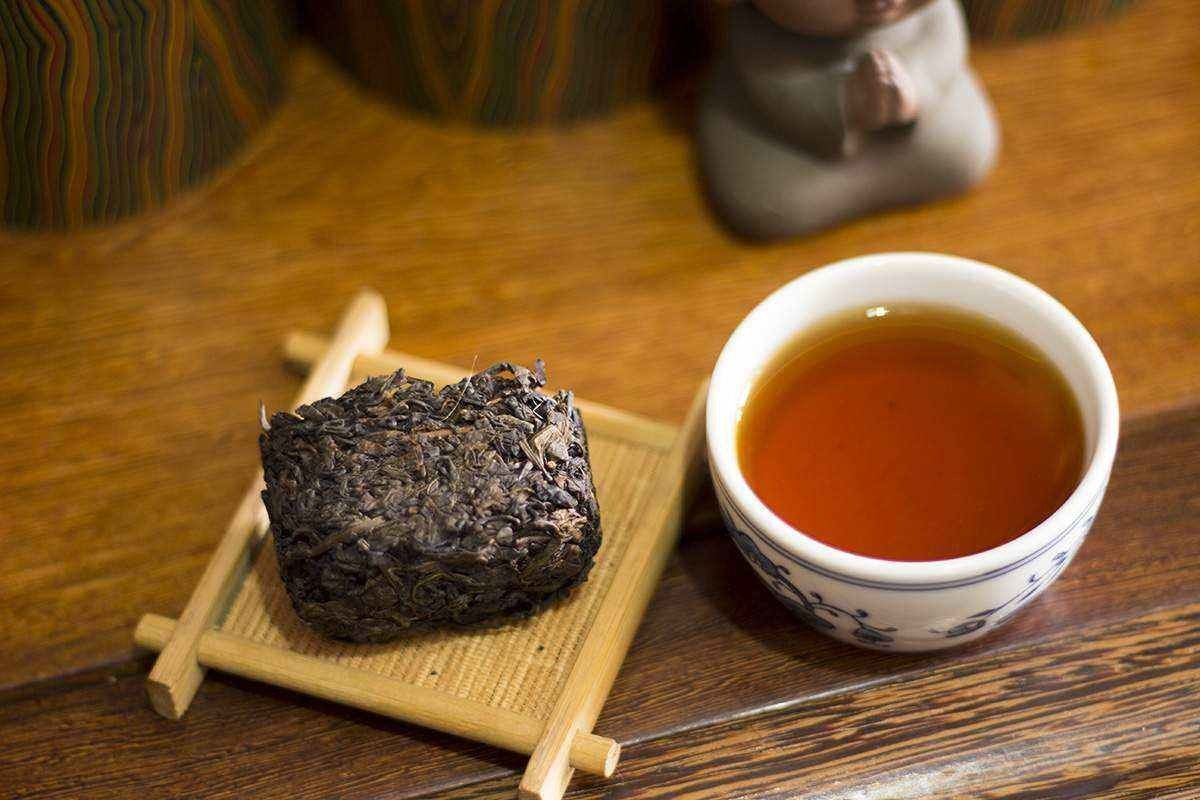
Black
tea is by far the most popular tea globally in terms of yield and consumption.
It must, of course, be understood that this conclusion is based on the
inclusion of tea markets in the Western world, where black tea dominates the
market. However, in China and Japan, unfermented tea and lightly fermented tea
constitute the mainstay of the market. In terms of production, black tea is
produced in a number of countries including China, Japan, Sri Lanka, and India,
among others. Of these producers, the Chinese were the first to grow black tea.
Renowned black tea varieties associated with other countries, such as
Darjeeling, all originated in China.
Black tea is, in fact, referred to as “red tea” in Kung Fu, illustrating one of the differences between Chinese and Western tea cultures. As with green tea, the Chinese term “red tea” is used to describe the color of the tea liquor, while in the Kung Fu "black tea” refers to a variety whose liquor is black in color. In western culture, tea tends to be named after the color of the dry leaves, which explains the use of the name of “black tea.” Some assert that the difference in the name stems from a mistaken translation. However, there is little evidence to support this interpretation.
There are also differences between the Japanese and Chinese tea cultures. In contrast to Chinese tea culture which builds upon the liquor, Japanese tea culture maintains the brewing process as its core. For this reason, Japanese tea culture has divided into different schools, while Chinese tea culture has not.
What differentiates black tea leaves and the liquor of black tea is its heavily-fermented property. In black tea, fermentation occurs after the rolling process. Since it is a fully-fermented tea, the production of black tea does not involve the fixation process that terminates fermentation by killing the cells. Black tea is also made of buds or tender tea leaves. For this reason, we can spot golden tips in top-quality black tea, which turns from white to gold during the fermentation process. Also due to its fully-fermented nature, black tea can be brewed in water exceeding ninety degrees centigrade in temperature or even in boiling water.
Though most Westerners prefer to use ceramics of high density to brew black tea, Yixing clay pots with low density are a great choice to preserve the strong flavor when brewing traditional unchopped Chinese black tea. In China, black tea is roughly categorized into Chinese language Black Tea, Souchong Black Tea, and black tea fannings. The first category includes Dian Hong and Keemum Black Tea, while Lapsang Souchong is the best known among the second category. Such classifications can help the public differentiate varieties, but tells us little about the properties of them. Taking Chinese language Black Tea as an example, its name suggests that its production is extremely time-consuming. However, all top-quality black tea takes time to produce. For example, Lapsang Souchong requires an additional process of scenting to give the tea a hint of pine. The third category, namely, black tea fannings, is generally the most popular among Western tea enthusiasts. It needs to be chopped before it is made into tea bags. The original flavor of black tea fannings is preserved even when served in tea bags.
Unchopped black tea mostly takes the shape of long twisted leaves. The raw materials for black tea are sourced from a wide range of tea trees that are widely distributed across China, including the broad-leaved tea trees for Dian Hong, medium-leaved trees for Lapsang Souchong and small-leaved trees for Keemum. I personally believe that broad-leaved black tea such as Dian Hong and Assam in India is a better choice for blending.
KEEMUM AND DIAN HONG 祁门红茶和滇红
Keemum Black Tea is named after its production area, where cloud-capped hills rise in an elegant procession. Tea gardens on the hills are covered with reddish-yellow soil, creating an agreeable condition for the growth of Black Tea. Keemum was already known as a production area of tea back in the Tang Dynasty, when green tea, rather than Black Tea, was its primary product. It was not until the Guangxu Years in the Qing Dynasty that local tea farmers started to produce Keemum Black Tea. Despite its late debut, Keemum Black Tea quickly rose to fame, winning the Gold Award at the Panama World Expo in 1915. Since then, it has been frequently presented by the Chinese government to foreign emissaries. This world-famous variety is referred to as "Prince Tea” in Britain.
Dian Hong (literally, Yunnan Black Tea) is also named after its production base, within which Dian refers to the ancient name for Yunnan Province. Broad-leaved Dian Hong and small-leaved Keemum Black Tea differ in flavor and other properties due to their different production areas but share similar production processes and brewing methods. Farmers will choose buds with one or two leaves to make black tea. The more tender the tea leaves are, the higher they will be graded. Generally, it is easier to identify gold tips in Dian Hong than in Keemum because the leaves are plucked from different varieties of tea trees.
It is interesting to note that the tea leaves used to make black tea can also be used to make green tea. For this reason, Keemum was once known for its high yield of green tea. Even today, a small amount of Dian Lv (literally, Yunnan Green Tea) is produced to supply a limited group of consumers. In some sense, the difference between green tea and black tea lies in the fermentation process. It should be acknowledged that both categories are imbued with unique merits. As a piece of jade, we can choose to preserve its original shape and form without making changes, or we can leave it in the hands of a sculptor who will shape it to his own vision.
However, it should be noted that not all processing produces positive effects. In some cases, changes can spoil unadorned beauty. This rule also applies to tea processing. In recent years, in the context of rapid growth in China, it is a common trend to seek novelty. In response, some bold experiments have been made using the materials for Oolong tea and traditional green tea to make black tea. However, every kind of tea tree has its unique properties. We must take account of these properties when tea leaves are processed. For this reason, many of these experiments with tea varieties have met a lukewarm reception with new varieties ending in failure with only a short market presence.
LAPSANG SOUCHONG 正山小种红茶
Tea leaves of Lapsang Souchong are somewhere between Dian Hong and Keemum Black Tea in size and, like Rock Tea, are grown in the Wuyi Mountains. Lapsang Souchong has a longer history than Keemum Black Tea and was among the first varieties introduced to the Western world. Byron, a leading figure in the Romantic Movement in the early nineteenth century, mentions Lapsang Souchong in his “Don Juan.”
Lapsang Souchong stands out from the category of Souchong Black Tea not for its production area or a variety of tea trees, but for its unique flavor, a product of the pine-scenting process. Mostly employed during the drying or withering process, this technique to introduce hints of pine to tea utilizes the remarkable absorptive quality of tea leaves. The combination of the lasting scent of pine and the thick aroma of Souchong Black Tea in the Wuyi Mountains produces an intoxicating atmosphere.
One thing that deserves mentioning is that there is also a variant of Lapsang Souchong which does not involve the scenting process in its production. This variant is labeled with a tag clarifying its identity as “non-scented Lapsang Souchong.” In the Chinese market, black tea is usually rolled into long leaves; whereas, to target the international market, it is a common practice to chop Black Tea into fannings and package it in teabags. Generally speaking, tea bags are usually only steeped once.
Taking a two-gram tea bag as an example, the drinker needs only steep it in 130 ml of boiled water for ten minutes to produce full-flavored tea liquor. Teabags are easy to carry and steep. While they provide a convenience that traditional tea-brewing methods are unable to, brewing tea in a traditional way can preserve the original flavor of tea on one hand and offer the drinker a chance to embark on a cultural journey on the other hand. On this journey, the drinker must think about the brewing methods and vessels, and how to create an overall ambiance. Each journey is a unique experience.
Responses • 0
0/2000
ID: 322
Matthias
Offline
2 day
Visited
From
Orlando, United States
Send Message