Your China University Journey: Space, Culture, and Growth
AI Learn Chinese
6 hr • 1 read
A practical guide for international students on China university life, covering accommodation choices, cultural nuances like body comments, and academic adjustment.
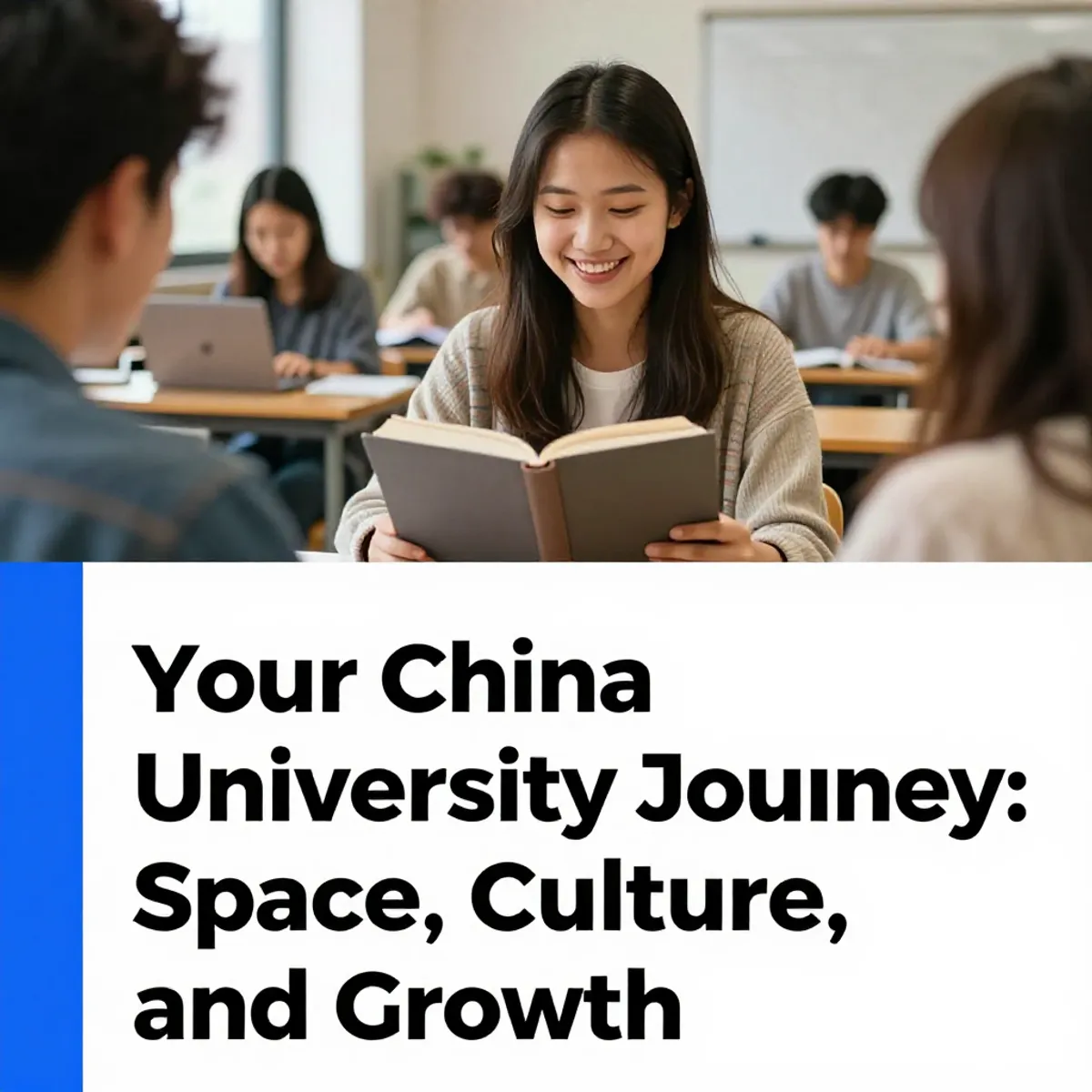
Introduction: The China University Crossroads
You are at a pivotal moment. You are eighteen, finishing your A-levels, and China feels like the logical next step. The economics make sense, the degree carries weight, and the experience promises to be transformative.
Yet, there is a quiet dissonance. The life you are picturing—perhaps inspired by films or brief visits—clashes with the practical reality of moving continents for years of study. This article is for you, the student standing at this cross-continental threshold, weighing not just the cost of tuition but the cost of personal space, social comfort, and cultural integration.
We will navigate the tangible questions of dorms versus apartments and the intangible, often surprising, social dynamics like comments on weight. The goal is not to paint an idealized or a dire picture, but to map the terrain with honesty, so you can step onto Chinese soil prepared for both the challenges and the profound rewards.
A Leap Across Continents
Choosing China for higher education is a significant departure from the traditional UK, European, or American path. The decision often stems from a pragmatic assessment of global economics and future employability. Degrees from Chinese institutions are increasingly recognized worldwide, and fluency in Mandarin combined with on-ground experience is a formidable career asset.
But, this pragmatism can overshadow the emotional and logistical upheaval. You are not just selecting a university; you are choosing a lifestyle for your formative young adult years. The initial romanticism of "studying abroad in China" can quickly meet the mundane reality of lease agreements, grocery shopping in an unfamiliar language, and the simple ache for a private bathroom after a long day.
Acknowledging this gap between expectation and reality is the first step toward building a resilient and fulfilling experience.
The Allure of Chinese Higher Education
The appeal is multifaceted. China’s top universities, like those in the C9 League, are investing heavily in research infrastructure and attracting global faculty. For STEM fields, business, and increasingly humanities, the resources are substantial.
In addition, the Chinese government and universities offer a range of scholarships for international students, making it financially competitive. Beyond the classroom, the sheer scale of China’s economy offers unparalleled opportunities for internships and networking. A summer internship at a Shanghai tech startup or a Beijing trading firm provides a depth of real-world experience difficult to match elsewhere.
This practical, career-oriented allure is a powerful counterweight to the cultural disorientation you may initially feel.
Accommodation Realities: Dorm or Apartment?
This is your first major logistical decision and it fundamentally shapes your daily life. The choice between on-campus dormitories and off-campus apartment rental is rarely just about cost; it’s a choice between immersion and independence, between communal bonding and personal sanctuary. Your stated preference for your own bathroom and personal space is completely understandable and is a critical factor in this equation. For many international students, the accommodation question becomes the central battleground for managing stress and cultivating a sense of home.
Campus Housing: Immersion vs. Constraints
University dormitories in China are the default for most domestic first-year students and a common, often mandatory, starting point for internationals. The primary advantage is integration. You are physically embedded in the campus ecosystem, a five-minute walk from libraries, cafeterias, and student activity centers.
Making friends, especially with Chinese roommates, happens organically through shared spaces. The dorm experience is a crash course in communal living and Chinese student culture. You will witness the rhythms of student life up close: late-night study sessions, the communal use of electric kettles, and the intricate social hierarchies that can form within a floor.
Shared Bathrooms and Social Bonds
The shared bathroom is the quintessential dormitory experience—and your primary concern. In most Chinese university dorms, facilities are communal per floor or per wing. This means navigating peak times (early mornings before class, late evenings) and adhering to a cleaning schedule often managed by students themselves.
For someone valuing privacy, this can be a persistent source of low-grade stress. But, this very inconvenience can become a social catalyst. The queue for showers or sinks becomes a natural place for casual conversation, for asking about a class, or for bonding over the shared struggle.
It forces a level of interaction that a private en-suite might not. The key is mindset: viewing the shared bathroom not as a privacy violation but as a designated social zone can reframe the experience.
Private Rent: Independence and Isolation
Renting an apartment, either alone or with roommates, offers the autonomy you crave: a private bathroom, a kitchen you control, a space you can decorate and retreat to. This independence is invaluable for mental well-being, especially after a long day of cultural and linguistic exertion. It provides a neutral, quiet space for video calls with family and a sanctuary for solitude.
The trade-off is physical and social distance from the campus heartbeat. Commuting—even a 20-minute bike ride or subway trip—adds a layer of logistics and time. You may miss spontaneous gatherings, last-minute study groups, or the simple ease of rolling out of bed and into a lecture hall.
Navigating Neighborhoods and Contracts
The process of securing an apartment near campus in a Chinese city can be daunting. It often involves platforms like Ziroom or well-known local agents. Contracts are in Chinese, and understanding the clauses on deposits, maintenance responsibilities, and cancellation policies is crucial.
University international student offices sometimes provide lists of vetted agencies or landlords, which is an excellent starting point. Budgeting is key; while a studio apartment might cost significantly more than a dorm bed, splitting a two-bedroom with trusted classmates can bridge the cost gap while granting you a private room and bathroom. This hybrid model—living with fellow international students in a nearby apartment complex—is very popular for those seeking a balance of privacy and community.
Cultural Integration: Beyond the Classroom
Academic success is only one part of the equation. Your growth will be measured in your ability to navigate the unspoken rules of social interaction, to build guanxi (relationships), and to find your footing in a society that operates on different assumptions about friendship, privacy, and communication. The initial months will feel like a series of cultural puzzles.
Language Barriers and Small Wins
Mandarin is the gateway. Even with a solid foundation from A-levels, the speed of native conversation, regional accents, and the sheer volume of specialized vocabulary in university settings will be overwhelming. The first time you successfully argue with a delivery rider about a missing order, or help a lost elderly person on campus, you will feel a surge of accomplishment.
These small wins are essential morale boosters. Language is more than communication; it’s the tool for accessing humor, understanding indirect criticism, and participating in the gossip that forms social bonds. Invest in language exchange partners early.
Most Chinese students are eager to practice English and will appreciate your effort, creating a natural, reciprocal relationship.
The Power of "Chīfàn" Invitations
In China, "chīfàn" (to eat/ have a meal) is the fundamental social verb. An invitation to eat is rarely just about food; it’s an invitation into a circle of trust. Accept these invitations eagerly, even if you are shy or unsure of the customs.
The meal is a prolonged, shared experience that builds rapport in a way that quick coffee meetings in the West might not. Be prepared to learn dining etiquette: how to use chopsticks skillfully (or at least gracefully), how to pour tea for others before yourself, how to navigate the seating hierarchy at a round table. These acts demonstrate respect and cultural sensitivity, often speaking louder than perfect grammar.
Social Circles and Guanxi
Chinese social life is deeply rooted in guanxi, a system of mutual obligation and relationship-building that extends from family to classmates to professional contacts. For international students, guanxi starts with your immediate cohort. Your Chinese classmates will likely have established friend groups from high school or their home province.
Penetrating these circles requires patience and consistent, low-pressure presence. Join student clubs—not just international ones, but calligraphy, hiking, or drama clubs where you interact with Chinese peers around a shared interest. This provides a structured context for friendship.
Remember, guanxi is built through repeated interaction and small favors. Offering to help a classmate with a presentation, sharing a snack from your home country, or simply remembering a birthday can lay the foundation for a deeper connection.
Making Friends in a Collectivist Setting
Understanding the collectivist mindset is key. Decisions, from weekend plans to group project work, are often discussed and negotiated within the group consensus. The Western ideal of fiercely independent, individual choice can sometimes be perceived as selfish or disruptive.
Your desire for a private bathroom is a perfectly valid individual need; communicating it to potential apartment mates requires framing it within a collective benefit—"I think having our own bathrooms would make cleaning schedules much easier for everyone." Learning to voice personal preferences in a way that acknowledges group harmony is a subtle but vital skill. True friendship often means being included in the group’s "us," which can be incredibly warm and enveloping once achieved.
Body Image and Social Comments
Your specific concern about comments on weight is astute and touches on a significant cultural difference. In many Western contexts, commenting on someone’s body, especially weight, is considered rude, intrusive, and potentially harmful. In China, the social script is often different, and this can be a jarring experience for international students, particularly young women.
Weight Talk in Chinese Context
Direct observations about weight—"You’ve gained weight!" (胖了!Páng le!) or "You’ve lost weight!" (瘦了!Shòu le!)—are extremely common greetings, often used with the same frequency as "How are you?" They are generally not intended as insults but as observations, sometimes framed as expressions of concern for health or prosperity. In a culture that historically associated plumpness with wealth and health (especially in less affluent times), weight gain can be misinterpreted as a sign you are eating well and living comfortably. Conversely, sudden weight loss might prompt questions about whether you are stressed, sick, or not eating properly. The intent is often caring, albeit delivered with a bluntness that can feel violating to an outsider.
"You've gained weight!" as a greeting?
The critical factor is the relationship and tone. From a distant relative you haven’t seen in a year, it’s a standard, almost formulaic, remark. From a close friend, it might carry more genuine concern.
From a new acquaintance, it can feel like an inappropriate invasion. The challenge is deciphering the intent in the moment. The safest internal response is to assume benign, if clumsy, concern rather than malice.
A neutral, polite acknowledgment like "Maybe a little!" (可能吧!Kěnéng ba!) or deflecting with a smile and a change of subject is often the most graceful path. Understanding this as a cultural quirk, not a personal indictment, is the first line of defense.
Health Perceptions and Personal Boundaries
This cultural norm intersects with a strong societal focus on health and appearance. The fitness and diet industries are booming in China’s major cities. There is a growing, complex tension between traditional views of robust health and modern beauty standards influenced by K-pop and fashion.
As an international student, you may find yourself the subject of unsolicited dietary or exercise advice. "You should eat more soup," or "You should go running with us," can be well-meaning but feel prescriptive. Establishing personal boundaries is important, but it must be done with cultural finesse.
A firm but kind "Thank you for your concern, I have my own routine" (谢谢关心,我有自己的习惯 Xièxie guānxīn, wǒ yǒu zìjǐ de xíguàn) can politely shut down further commentary while maintaining harmony.
Strategies for Graceful Deflection
Developing a repertoire of polite, non-confrontational deflections is useful. Humor can be a powerful tool: "University food is just too delicious!" (学校食堂太好吃啦!Xuéxiào shítáng tài hǎochī la!). Changing the subject immediately after a comment ("Oh, did you finish the assignment for Professor Li's class?") signals you do not wish to engage on that topic.
With closer friends, you can eventually have a gentle, private conversation explaining that in your home culture, talking about weight is considered private and makes you uncomfortable. Most caring friends will adjust their behavior once they understand. Remember, you are also an ambassador of your own culture’s norms, and gentle education goes a long way.
Academic Life in China
The classroom will be another arena of adjustment. While the prestige of a Chinese degree is high, the pedagogical approach can differ significantly from the UK’s A-level system or the seminar-based models of the US and Europe.
Teaching Styles and Classroom Dynamics
Large lecture halls for foundational courses are common, especially in the first two years. The professor may lecture for two hours with minimal interaction, a stark contrast to the discussion-heavy seminars you might be expecting. Note-taking is paramount; critical analysis is often expected to develop in your own study time, not always in class.
Respect for the professor is absolute and displayed through formal address (using titles and surnames) and not challenging them publicly. Disagreement is typically framed as a question seeking clarification, not a direct counter-argument. Group projects (zǔtǐ 组体) are frequent and can be intense, as they often constitute a large portion of the grade.
Here, the collectivist mindset is in full force: group harmony and collective output are prioritized over individual brilliance.
The Role of Memorization and Respect
Memorization plays a larger role than in some Western systems. Mastering key texts, formulas, and historical dates is a foundation. This isn’t mere rote learning; it’s about building a shared base of knowledge from which more complex discussion can spring.
Your role is to absorb this base diligently. The professor’s authority is rarely questioned, which can stifle open debate but also creates a clear, structured learning environment. Your challenge is to find your voice within that structure—through well-prepared questions after class, in office hours, or in written assignments where you can present nuanced arguments.
Building a good rapport with your professor (lǎoshī 老师) is academically advantageous and culturally appropriate.
Internships and Career Prospects
This is where the pragmatic choice of China truly pays off. Universities in major cities have strong ties to local and multinational companies. Career fairs are bustling with opportunities.
The concept of the "internship" (shíxí 实习) is taken very seriously, often during long summer breaks or even part-time during the semester. A semester-long internship at a company like Huawei, Tencent, or a major foreign firm with a China base is a golden ticket on a resume. The key is starting early.
Network through university career centers, alumni associations, and platforms like Liepin or Zhaopin. Your combination of international perspective and Chinese language skills makes you a unique candidate. But, be aware that competition is fierce, and many top internships are secured through personal connections (guanxi), underscoring the importance of the social integration discussed earlier.
Leveraging China's Economic Landscape
Your degree is not an island. It exists within the context of China’s role as a global manufacturing hub, a tech innovator, and a massive consumer market. A business degree should be supplemented with an understanding of China’s unique digital ecosystem (WeChat, Alipay, Douyin).
An engineering degree benefits from knowledge of China’s infrastructure projects and supply chains. Actively seek courses or projects that engage with China-specific case studies. The goal is to graduate not just with a degree, but with a specialized, marketable understanding of how the world’s second-largest economy functions from the inside.
This contextual intelligence is your primary differentiator in the global job market.
Practical Survival Guide
Beyond the philosophical and academic, daily logistics form the bedrock of your comfort and confidence. Mastering the practicalities of life in China reduces anxiety and frees mental energy for learning and exploration.
Banking, Apps, and Daily Logistics
Your first week must include opening a Chinese bank account. Major banks like ICBC, China Construction Bank, or Bank of China have branches near most universities. You will need your passport, student ID, and sometimes a small initial deposit.
This account is essential for receiving scholarship funds, paying rent, and, most importantly, linking to Alipay and WeChat Pay. These super-apps are your keys to the kingdom. From buying groceries and hailing a Didi (ride-hailing) to paying utility bills and splitting dinner checks with friends, cash is becoming obsolete.
Download and set them up immediately with your new bank card. Also, download a reliable map app (Baidu Maps is more detailed for China than Google Maps), a translation tool with offline capability (Pleco is the gold standard), and a VPN if you require access to Western social media or news sites.
WeChat Pay and Super Apps
WeChat is not just a messaging app; it’s your social ID, payment system, and mini-program hub. Your university will likely have an official WeChat account for announcements. Student clubs communicate via WeChat groups.
Paying for everything from street food to a new phone is done by scanning a QR code with your WeChat Pay. The social expectation is to use the red envelope (hóngbāo) feature for gifts, lucky money during festivals, or even splitting a bill. Mastering these digital social customs is part of the integration process.
Your digital life in China will be fundamentally different, more integrated, and more convenient than back home, once you navigate the initial setup.
Healthcare and Emergencies
Understanding the healthcare system is non-negotiable. Every university has a campus clinic or health center (xiǎoyīyuàn 小医院). For minor illnesses, headaches, or prescriptions, this is your first stop.
It is usually inexpensive and staffed with doctors who may have some English capability. For anything serious, you will be referred to a larger public hospital. The process can be daunting: long queues, multiple departments, and payment at each stage.
International student insurance, typically purchased through the university or a provider like Ping An, is mandatory and crucial. Know your policy’s coverage and the network of hospitals. In an emergency, dial 120 for an ambulance.
It is wise to have a Chinese-speaking friend or your university’s international office contact saved in your phone for such situations.
University Clinics and Hospitals
The campus clinic is your best ally. Build a relationship with a doctor there if you have ongoing conditions. They can provide basic care and necessary referrals.
For dental work or specialized care, private international clinics exist in Beijing, Shanghai, and Guangzhou, but they are very expensive. The pragmatic approach is to use the public system for most needs, armed with patience, your insurance card, and a translation app for describing symptoms. Keep a small stash of common over-the-counter Western medicine (like ibuprofen or cold medicine) from home, as Chinese equivalents may have different formulations or names.
Prevention—dressing appropriately for seasonal changes, drinking hot water—is a widely held health principle in China; adopting these habits can reduce clinic visits.
Conclusion: Embracing the Journey
Your impending move to China is not just a change of address; it is an invitation to a profound recalibration of your worldview. The concerns you hold—the desire for a private bathroom, the anxiety about unsolicited comments on your body—are valid and shared by countless students before you. They are the small, tangible edges of a much larger cultural shift.
The dormitory’s shared bathroom will teach you about communal patience and unexpected connection. The direct comment on your weight will force you to distinguish intent from impact, to teach and to learn. These are not mere inconveniences; they are the curriculum of life beyond the lecture hall.
The pragmatic choice of a Chinese university degree will unfold into an intensely personal education. You will learn to negotiate contracts in a second language, to build friendships across a vast cultural divide, to find solace in a private room that is truly yours after a day of collective living. You will graduate not only with a degree but with a hard-won understanding of guanxi, a practiced fluency in navigating ambiguity, and a deep, embodied knowledge of a civilization that is shaping the 21st century.
The life you pictured may evolve. The reality, with all its friction and brilliance, will become your own. Go prepared, be patient with yourself, and open yourself to the transformative grit of the experience.
The value of your China business degree, or any degree earned here, will be measured in the resilience and perspective you forge along the way.
Responses • 0
0/2000
ID: 1326
Chris
Offline
2 hr
Visited
From
Bakersfield, United States
Send Message