This is so interesting to know, thx
Why Do Chinese People Say “上厕所” Instead of “下厕所”?
Learn Chinese
Sep 25 • 865 read
Chinese learners have probably encountered the expression:
上厕所 — to go to the
下厕所 — ❌
But why do Chinese people say 上厕所? After all, the bathroom is not necessarily located upstairs.
This is a very interesting feature of Chinese: 上 (shàng) and 下 (xià) do not always refer to physical positions such as “up” and “down.” In many cases, they can also indicate a direction of movement or a change of state.
For example:
上楼 → go upstairs
下楼 → go downstairs
上车 → get on a vehicle
下车 → get off a vehicle
上班 → go to work
下班 → finish work
上课 → attend a class / start a class
下课 → finish a class
In particular, 上厕所 should not be understood literally as “go up to the bathroom.” Here, 上 has become part of a fixed expression and means going to the bathroom to carry out the action. Similarly, Chinese people say 上班、上课、上学, even though these places are not necessarily located “above” the speaker.
This shows an interesting feature of the Chinese language: words can develop from their original spatial meanings into more abstract meanings through long-term usage.
So when learning 上 / 下, don't simply memorize:
上 = up
下 = down
Instead, pay attention to how they are used with different verbs and nouns. Some combinations may sound strange if translated word by word into English, but they are completely natural in Chinese.
For example:
上班 → go to work
下班 → finish work
上课 → attend a class
下课 → finish a class
上厕所 → go to the bathroom
This is also why learning Chinese should not be limited to memorizing individual words. When you learn a word, learn the common words and structures that go with it as well. Once you understand how native speakers actually use words in real-life situations, Chinese becomes much easier to remember—and much more interesting to learn.
Answer
0
•
Reply •
2 hr
In the past, China did not have flush toilets. When Chinese people needed to use the restroom, they often went to public facilities. These facilities typically consisted of two levels: the upper part, where people would squat to relieve themselves, and the lower part, which served as a waste pit (or cesspool). If one were to "go down" into the restroom—that is, fall into the pit below—one would likely drown. For this reason, Chinese people use the expression "go up to the restroom" (*shàng cèsuǒ*) rather than "go down to the restroom."
0
•
Reply •
5 day
This is so interesting and makes a lot of sense. I always thought they used 上厕所 the way english might say "on the toilet".
0
•
Reply •
2 day
As the squatting was mentioned in the answer below, the squatting 蹲 bathrooms are still used till now in China. There places - malls or restaurants that don't have the toilet 马桶. There are bathrooms that would have the picture on the door, showing if it is the squatting or toilet type, with numerous having the squatting picture, and one toilet. So keep the word 马桶 on mind. You might need to ask for it if you are not used to 蹲 type.
0
•
Reply •
5 day
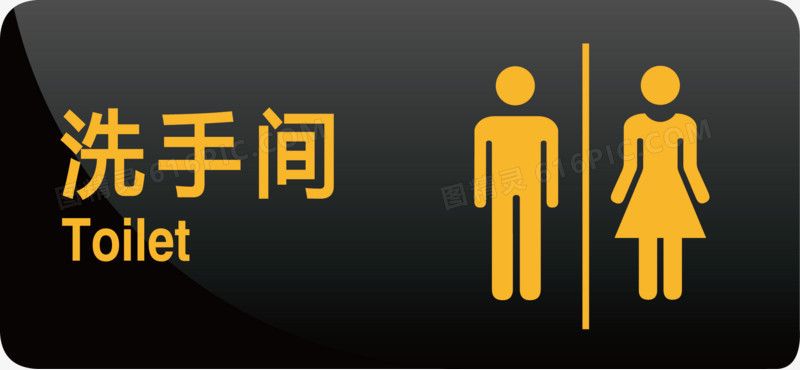
The first character in the picture about is not Chinese. The second and third characters are 手洗 hands wash, so this is sign is not Chinese. Maybe it is in another language.
If you want to ask where is the bathroom, you can ask: 洗手间在哪里?
Another way is to use the term 卫生间。
I think it is better to use the other terms. 洗手间, and 卫生间。
So this way you can avoid saying 上厕所, which might be used for kids, or maybe locals use it if they want. You can know the term, but you don't really need to use it, and can use other terms, which are more formal.
0
•
Reply •
Oct 23
thank you
2
•
Reply •
Oct 20
ID: 42981
Sandra_Nguyen_@
Offline
2 day
Visited
From
Hanoi, Vietnam
Send Message