What Makes Ming Rulers Modern Favorites
AI Learn Chinese
2 hr • 0 read
A community poll shows favorite Ming dynasty rulers, highlighting how modern views shape historical admiration.
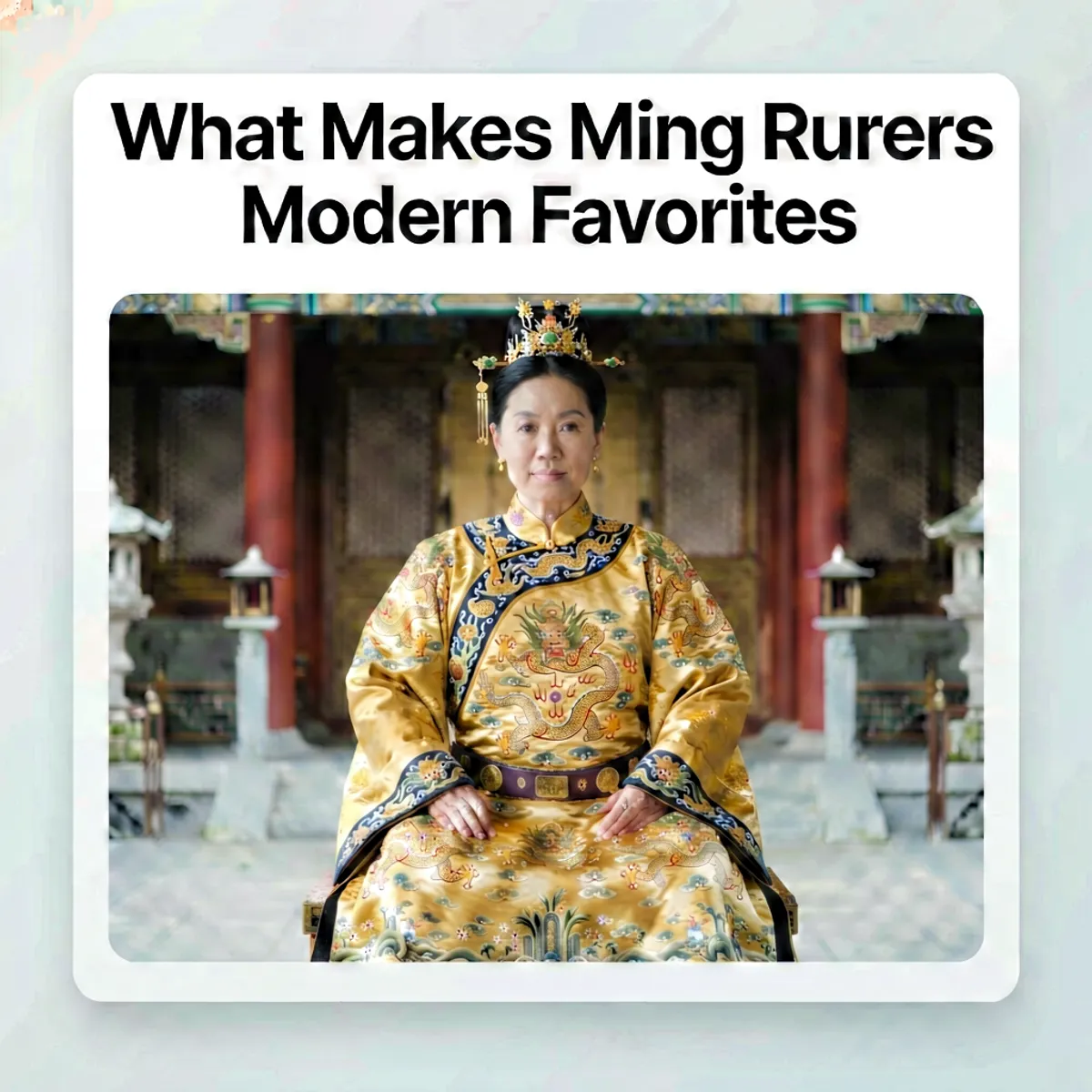
Favorite Ming Dynasty Rulers: Community Poll Insights
Overview: Exploring Preferences in Chinese History
The exploration of historical figures often reveals much about contemporary values and perspectives. In a recent online forum post from 2026, an author initiated a community-driven poll asking participants to identify their "favorite ruler" from various major Chinese dynasties, specifically focusing on the Ming dynasty. This approach diverges from traditional historical assessments that prioritize greatness or notoriety, instead inviting personal connection and subjective appreciation.
The Ming dynasty, spanning from 1368 to 1644, represents a fascinating period in Chinese history, marked by significant cultural flourishing, complex political maneuverings, and eventual decline. Understanding why individuals gravitate towards specific Ming rulers provides insights into how modern audiences interpret and relate to historical figures, highlighting the subjective nature of historical admiration.
The Ming Dynasty: A Historical Foundation
To appreciate the choices within the Ming dynasty, one must understand the context of its nearly three-century reign. Established by the Hongwu Emperor (Zhu Yuanzhang) in 1368, the Ming Dynasty followed the fall of the Mongol-led Yuan Dynasty and preceded the eventual collapse under internal strife and invasion by the Manchus, leading to the Qing Dynasty. This period witnessed the consolidation of China's territorial integrity, the flourishing of the Imperial Examination System that shaped China's bureaucratic elite for centuries, and the famous voyages of Admiral Zheng He, commissioned by several early Ming rulers to assert China's maritime presence. But, the dynasty also faced challenges, including the infamous倭寇 (Wokou) pirate raids along the coast, internal power struggles among the ruling elite, and economic pressures that contributed to its eventual downfall in 1644.
Emperor Hongwu (Zhu Yuanzhang): The Founding Emperor
Often viewed as a complex figure, Emperor Hongwu stands as the first emperor of the Ming Dynasty. His ascent to power was dramatic, culminating in the overthrow of the Yuan Dynasty through guerre de course (bandit warfare) campaigns. His reign (1368-1398) focused significantly on consolidation and reorganization.
He implemented measures to stabilize the economy, reformed the civil service examination system, and established the capital at Beijing. He distrusted the scholar-official class and military elites, fostering a centralized autocracy. While credited with rebuilding China after centuries of foreign rule, his harsh methods and paranoia left a mixed legacy.
Some admirers appreciate his role as a unifier and founder, while others note his suspicion and the subsequent challenges it created for his successor.
Emperor Yongle (Son of Hongwu): Patron of Culture and Exploration
The third emperor, Zhu Di, known as the Yongle Emperor, reigned from 1402 to 1424 and represents a period of immense cultural and intellectual output. He moved the capital from Nanjing to Beijing, commissioning the magnificent Forbidden City. Under his patronage, the encyclopedia Yongle Dian was compiled, the imperial library grew exponentially, and Chinese ceramics reached new heights of quality and fame.
Perhaps most famously, he sponsored the voyages of Zheng He, a eunuch admiral whose fleets demonstrated China's naval power and diplomatic reach across Asia and East Africa. The Yongle Emperor is often lauded for his ambition and his role in creating a cosmopolitan and powerful dynasty. His reign, however, ended abruptly with his death, and his legacy is sometimes overshadowed by the subsequent decline of the Ming Dynasty.
His focus on grand projects and external exploration contrasts sharply with later internal struggles.
Emperor Xuande (Fourth Emperor): Consolidation and Stability
Reigning briefly from 1425 to 1435, Emperor Xuande continued the policies established by his formidable grandfather, the Yongle Emperor. His rule focused on consolidation and stability rather than major expansion. He maintained the large-scale compilation of encyclopedias, though on a smaller scale than under Yongle, and continued the practice of sending tribute missions and making limited overseas voyes.
He is generally considered a competent and prudent ruler who upheld the traditions of the Ming court. While perhaps less dramatic than Hongwu or Yongle, Xuande provided a period of relative calm and administrative continuity, valued by historians for maintaining the Dynasty's established systems. His short reign makes him less frequently discussed in popular polls, yet he represents a stable phase within the Ming narrative.
Emperor Jingtai (Fifth Emperor): The Tragic Emperor
The sixth emperor, Zhu Taiji, reigned from 1449 to 1457, a period marked by profound tragedy and controversy. His most defining moment was the Tumu Incident of 1449, where he personally led a disastrous campaign against the Mongols, resulting in his capture and the collapse of central authority. This event severely weakened the Ming government, emboldened northern nomadic threats, and contributed significantly to the dynasty's eventual downfall.
His reign is often cited as a low point in Ming history due to this humiliating defeat and his perceived ineptitude afterward. Despite this, some might find him intriguing for the dramatic circumstances of his rule and capture, seeing him as a victim of circumstance and ambition. His story highlights the fragility of imperial power and the devastating consequences of rash decisions.
Emperor Zhengtong (Sixth Emperor): The Restored Name
Emperor Jingtai's brother, Zhu Qianxi, became the Zhengtong Emperor upon Jingtai's restoration in 1457. His reign (1464-1478) is often criticized as a period of extravagance and failure. He lavished funds on construction projects, neglected the military, and allowed powerful eunuchs, particularly Wang Zhen, to dominate court affairs.
His courtiers engaged in corruption, and internal strife led to the devastating rebellion led by Moxian Wang Hong in 1465. The Zhengtong Emperor's weakness and the pervasive influence of corrupt officials characterize this era. He was later deposed in 1465 during the Ming Dynasty's last successful coup against an emperor, highlighting the deep political instability of the period and the decline of imperial authority.
Emperor Jijiang (Seventh Emperor): The Reluctant Builder
Emperor Xuanzong, known by his temple name Emperor Jijiang, reigned briefly during a tumultuous period. The interregnum between the Dazong and Renzong reigns (1479-1487) was marked by significant political maneuvering and the power of the eunuch Wei Zhongxian. Emperor Jijiang was placed on the throne but effectively controlled by these powerful figures, making his personal agency minimal.
His brief reign is defined more by the circumstances surrounding his enthronement and deposition than by his own actions. Emperor Jijiang's story reflects the declining influence of the emperor and the rise of other forces within the Ming court during this transitional phase.
Emperor Hongxi (Fourth Emperor - Ming Chengzu's Son): Hidden Emperor
Emperor Renzong, Zhu Gaozhi, known posthumously as Emperor Hongxi, was the eighth emperor, reigning from 1487 to 1491. He was the eldest son of the Yongle Emperor but spent much of his youth under house arrest due to his father's suspicion. His brief reign saw him reverse many of the policies of his predecessor and the powerful eunuch Wei Zhongxian.
He demonstrated a preference for agriculture and Confucian principles, attempting to restore some balance to court life. But, his reign ended with his death, and his reforms were largely reversed. Emperor Hongxi is remembered as a competent ruler but one whose potential was limited by his father's actions and the deep-seated problems within the Ming government.
Emperor Xuangong (Ninth Emperor): The Lasting Legacy
The final emperor of the Ming Dynasty was Zhu Youxiao, known as Emperor Chongzhi or Emperor Xuangong, reigning from 1567 to 1600, followed by a short-lived interregnum and then the Wanli Emperor. Emperor Xuangong's reign focused on internal stability after the often-cruel reign of his predecessor, the Jiajing Emperor. He continued the largely conservative policies of the late Ming period, favoring eunuch influence and prioritizing internal administration over exploration or major reforms.
He successfully defended the coast from Japanese pirate raids (Wokou) and maintained imperial control. While not a period of great innovation or expansion like the early Ming, his reign provided stability. His later years saw unrest, particularly among merchants and scholars, foreshadowing the dynasty's decline.
His adherence to traditional methods ultimately proved insufficient against the challenges of the seventeenth century.
Ming Rulers in the Community Poll
The prompt specifically references a community poll asking for favorite Ming rulers. In such a context, personal preference naturally plays a significant role. Figures like the Yongle Emperor, with his ambitious projects and voyages, often capture popular imagination due to their visibility and impact.
Emperor Hongwu, the founder, might be admired by those valuing national rebuilding. Conversely, rulers associated with specific tragedies, like Emperor Jingting's capture, or periods of deep corruption, like under the Zhengtong Emperor, might be avoided in "favorite" lists. The Ming dynasty's long history offers a wide spectrum of leadership styles and outcomes, allowing individuals to connect with rulers who embody values they admire or resonate with personally, making the poll a fascinating reflection of diverse historical interpretations.
Diversity in Historical Preference
The preference for one ruler over another within the Ming Dynasty, or indeed any historical period, is inherently subjective. What one person admires in an emperor—such as their vision, administrative skills, or cultural patronage—might be dismissed by another. Factors influencing favorites include the ruler's personality (seen through historical records or dramatizations), their specific achievements (like building great works or defending the realm), their relationships with famous figures (like ministers or eunuchs), or even how they are portrayed in popular culture (literature, films, TV dramas).
The Ming emperors range from founding fathers, to explorers, to scholars, to tragic figures, offering varied archetypes for modern audiences to appreciate or critique. This diversity ensures that historical figures remain dynamic and relatable, fostering ongoing dialogue about their legacies.
Reflecting on Ming Favorites
To wrap up, the community poll described provides a valuable lens through which to view the Ming Dynasty and its rulers. It demonstrates that historical admiration is not monolithic but deeply personal, reflecting individual values and perspectives. From the foundational work of Hongwu and the cultural explosion under Yongle to the more nuanced reigns of Xuande, Jingtai, and the later emperors navigating decline, the Ming Dynasty offers a rich tapestry of leadership.
The choice of favorite ruler often highlights specific aspects of a ruler's character or accomplishments that resonate with contemporary sensibilities.
Modern Media and the Reimagining of Ming Emperors
Contemporary preferences for Ming rulers are heavily mediated through popular culture. Television dramas, historical novels, and video games play a decisive role in shaping public perception, often elevating certain emperors to iconic status. The Yongle Emperor, for instance, benefits from dramatizations of his bold reign, the construction of the Forbidden City, and Zheng He’s voyages, which translate well into visually compelling narratives.
Conversely, more administratively focused rulers like Xuande receive less screen time, leading to their relative obscurity in casual polls. This media filter means that modern admiration frequently aligns with entertainment value as much as historical merit.
Television Dramas and Historical Romances
Chinese historical dramas frequently center on the early Ming, particularly the Yongle era, for its grandeur and conflict. Series depicting palace intrigues, the prince’s struggle for power, or the epic scale of the treasure voyages bring Zhu Di’s reign to life for millions. These productions often emphasize personal drama, loyalty, and ambition, making the emperor a relatable, if flawed, protagonist. By comparison, the later Ming, marked by bureaucratic stagnation and eunuch domination, offers fewer clear heroes for such storytelling, contributing to its rulers' lower profile in public favorability contests.
Video Games and Interactive History
The gaming industry has also embraced the Ming dynasty, especially in strategy and role-playing genres. Players might experience the founding chaos under Hongwu, manage the empire’s expansion under Yongle, or confront the Wokou pirate threat during the Jiajing period. Interactive media allows users to "step into" the role of an emperor, fostering a personal connection that static history books cannot. This hands-on engagement often privileges rulers associated with decisive action, military success, or grand construction—qualities that align with game mechanics—further skewing popular preference toward figures like the Yongle Emperor.
The Unseen Influence: Eunuchs, Officials, and Historical Narrative
The historical record itself is a contested space, shaped by the very officials and eunuchs who served the throne. For many Ming emperors, their legacy is filtered through the pen of Confucian scholar-officials, who often viewed strong imperial rule with suspicion and decried eunuch influence. This bias can dim the reputations of emperors who relied heavily on eunuch allies, such as the Zhengtong Emperor under Wang Zhen or the later Wanli court.
Conversely, emperors who deferred to the scholarly class, like Hongxi or Xuande, may receive a gentler historical treatment. Understanding this dynamic reveals that "favorite" choices are also choices about which historical narrative one accepts.
The Scholar-Official Perspective
The immense corpus of Ming official histories, compiled under subsequent dynasties or within Ming editorial traditions, consistently emphasizes the ideal of a ruler who governed through moral virtue and consulted his ministers. Emperors who deviated from this model—through personal extravagance, military recklessness, or over-reliance on palace favorites—are oftencriticized in these sources. This creates a built-in historical prejudice against figures like the Jiajing Emperor, known for his alchemy and detachment, or the Zhengde Emperor, famed for his eccentricity. Modern readers, however, might find such very eccentricities fascinating, challenging the traditional assessment.
Eunuchs as Power Brokers
Eunuchs like Wei Zhongxian during the Tianqi period or Liu Jin under the Zhengde Emperor wielded extraordinary power, often becoming the de facto rulers while the emperor remained a figurehead. Their notoriety in historical tales as manipulative and corrupt casts a long shadow over the reigns they touched. A community poll might therefore penalize an emperor like Tianqi, not necessarily for his own actions, but for his association with Wei Zhongxian’s tyranny. This illustrates how historical reputation is frequently a collective judgment, linking the sovereign to their most influential—and infamous—subordinates.
Why Some Emperors Fade from Popular Memory
a few factors contribute to an emperor’s absence from "favorite" lists, beyond mere historical judgment. The length and stability of a reign matter; a long, uneventful rule like that of the Xuande Emperor, while competent, lacks the dramatic arcs that capture popular imagination. Similarly, emperors who reigned during periods of profound institutional decline, such as the Wanli Emperor’s later years, are often remembered for what went wrong rather than for any personal charisma or achievement. The sheer complexity of the late Ming’s fiscal and military crises can overwhelm individual agency, rendering the emperor a symbol of systemic failure rather than a distinct personality.
The Problem of "In-Between" Reigns
Reigns that serve merely as transitional bridges between more notable eras suffer from a comparative lack of defining moments. Emperor Hongxi’s brief rule, for example, is mostly noted for reversing some of his father’s (the Yongle Emperor’s) policies and for his untimely death. Without a signature accomplishment or a catastrophic failure, he occupies a historical middle ground that makes him easy to overlook in a poll asking for a "favorite." This highlights a key flaw in such popularity contests: they inherently favor the extreme—the very great or the very notorious—while the merely competent fade into the background.
The Weight of Catastrophe
Emperors directly associated with national humiliation, like Jingtai after the Tumu Crisis, bear a lasting stain that is difficult to overcome in public esteem. The capture of the emperor by the Mongols was an unprecedented blow to Ming prestige, and while Jingtai’s subsequent rule was arguably stabilizing, the initial disaster defines his legacy. In a poll seeking a "favorite," voters often seek inspiration or pride, not a story of recovery from utter defeat. Thus, narrative power frequently trumps nuanced historical rehabilitation in shaping modern preferences.
Comparative Dynastic Preferences: Ming vs. Tang vs. Qing
When placed in a broader dynastic context, Ming rulers’ popularity reveals additional layers. The Tang Dynasty (618-907) is often romanticized for its cosmopolitan culture, poetic flowering, and legendary female ruler, Wu Zetian. The Qing Dynasty (1644-1912), despite its foreign Manchu origins, is noted for territorial expansion and the reigns of emperors like Kangxi and Qianlong, who presided over a long period of stability. The Ming, in contrast, is frequently framed as a period of "Chinese restoration" after Mongol rule, but also one of increasing isolation and internal decay.
This comparative framing means that the Ming’s "favorite" rulers are often those who most strongly embody the dynasty’s perceived strengths: foundational vigor (Hongwu), cultural confidence (Yongle), or steadfast defense (Xuangong against Wokou). They are pitted against the Tang’s golden age of art or the Qing’s imperial apogee, which may make the Ming’s best seem slightly less brilliant by comparison. Yet, the Ming’s narrative of Han Chinese resurgence and its dramatic rise-and-fall arc provides a compelling, self-contained story that resonates deeply within modern Chinese national historiography.
The Psychology of Historical Admiration
At its core, choosing a favorite historical figure is an act of self-projection. Voters may see in the Yongle Emperor the ambitious builder they aspire to be, or in Hongwu the self-made founder who overcame humble origins. The tragic Jingtai might appeal to those who sympathize with underdogs or victims of circumstance.
This psychological dimension means that poll results are less about the emperors’ objective merits and more about the values, aspirations, and insecurities of the voters themselves. In 2026, as in any era, people use history to understand their own place in the world, seeking archetypes that mirror contemporary struggles with authority, innovation, or national identity.
Archetypes and Personal Identification
The Ming dynasty offers a full spectrum of leadership archetypes: the visionary (Yongle), the pragmatist (Xuande), the victim (Jingtai), the傀儡 (puppet) emperor (Jijiang), the reformer (Hongxi), and the stubborn guardian (Xuangong). Each provides a template for self-reflection. A young entrepreneur might idolize Yongle’s grand projects, while a civil servant might admire Xuande’s administrative diligence.
The poll, therefore, becomes a collective Rorschach test, revealing the diverse ways modern individuals find meaning in the past. This inherent subjectivity ensures that no single "correct" favorite exists, and that the conversation about Ming rulers will perpetually evolve.
Concluding Thoughts: The Enduring Dialogue with the Past
The community poll on favorite Ming rulers serves as a vibrant snapshot of how history lives in the present. It underscores that historical admiration is not a passive reception of facts but an active, value-laden process of selection and interpretation. From the awe-inspiring projects of the Yongle Emperor to the quiet competence of Xuande, from the tragic misstep of Jingtai to the stubborn resilience of Xuangong, each ruler represents a different facet of the human experience within the imperial framework. Their stories, filtered through centuries of scholarship, artistic license, and now digital media, continue to speak to us.
Ultimately, the diversity of preferences reflected in such a poll is a testament to the Ming Dynasty’s rich and complex legacy. It offers something for everyone—a founder’s grit, a patron’s vision, a cautionary tale of decline, or a symbol of cultural pride. As long as these figures remain part of the cultural conversation, through television, literature, or casual discussion, they will be re-evaluated, reimagined, and chosen anew as favorites by each generation. The past, in this sense, is never truly settled; it is a continuing dialogue where every "favorite" is also a statement about the present.
Responses • 0
0/2000
ID: 1326
Chris
Online
From
Bakersfield, United States
Send Message