What is Mstory vs Story?

CCHATTY
 
  Oct 23  •  1002 read 
大家好,

Here on Cchatty, what is the difference between posting a Story vs Mstory?

Thanks
2
1
0
Answer
Best Answer
Mstory (Mini story): Writing short text with multiple pictures;

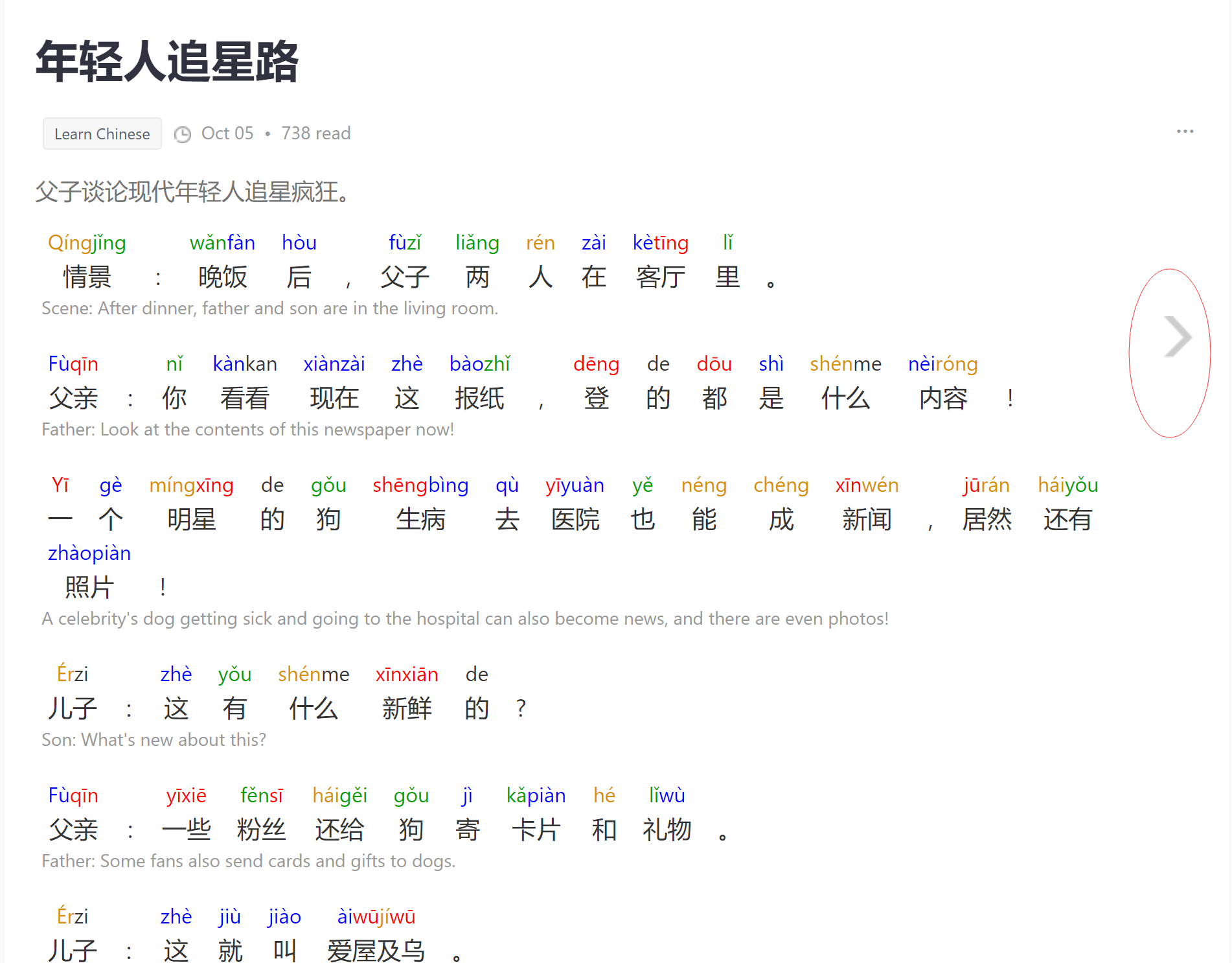
Story: Writing long-form content can help you get more points by applying for the "Original" designation. And if the content is Chinese, the author may turn on the “Chinese reading” mode, and view that showing via clicking the right arrow in the main body, eg: this post, https://www.cchatty.com/年轻人追星路-g-106151

Notebook: This is for Chinese learners to write a Chinese sentence or short passage. Teachers or other users are welcome to help modify the content, and the system will automatically mark the modified content;

QA: Start your questions with “what”, “how” and other question words. By offering bonus points, the author can create enthusiasm in respondents and increase the response rate, points will be deducted from the author's account, and the respondents who chosen as the best answer will receive points set by the author;

Video: Upload videos, or share video links;

Last, Posting plagiarized content, and spam content may be removed and punished.
(more)
3-322-1666517921
 1  •  Reply •  Oct 23
非常好, 谢谢
 0  •  Reply •  Oct 26
More
ID: 28752

Justin

Offline
Nov 15  Visited
From Cedar Rapids, United States
Send Message
Related
爱情vs婚姻What TV shows/Movies/Music would you recommend for learning Mandarin?What is the difference on these? 多云VS阴天To WEAR in Chinese=穿/戴❓❓ 穿👔👖👗VS戴+👓🧢🎧Which Chinese Tv series do you recommend?"After" / "later": yǐhòu 以后 vs. ránhòu 然后 When you say that someone will do something and then afterward/later will do something else in the future, or that someone generally does something and then afterward/later does something else, you can either use yǐhòu 以后 or ránhòu 然后 for "after that" / "afterward" / "later." HOWEVER, depending on which of the two expressions you use, the structure of the sentence will be different: After she goes to class, she'll go to work. Tā xià le kè yǐhòu jiù huì qù gōngzuò. 她下了课以后就会去工作。 OR: She's in class right now, and afterward will go work. Tā xiànzài zhèngzài shàngkè, ránhòu tā huì qù gōngzuò. 她现在正在上课,然后她会去工作。 You cannot use hòulái 后来, which is only used for actions in the past. ✖ BC: Tā xiànzài zhèngzài shàngkè, hòulái tā huì qù gōngzuò. 她现在正在上课, 后来她会去工作。 Every evening they watch TV, and after that, they go to bed. ✔ CC: Tāmen měitiān wǎnshang kànle diànshì yǐhòu jiù shàngchuáng. 他们每天晚上看了电视以后就上床。 了 is used here because you're really saying: "Having watched TV, they then go to bed.” OR: ✔ CC: Tāmen měitiān wǎnshang kàn diànshì, ránhòu jiù shàngchuáng. 他们每天晚上看电视,然后就上床。 了 is NOT used here because you're saying: "They watch TV, and after that, they go to bed." ✖ BC: Tāmen měitiān wǎnshang kàn diànshì, hòulái jiù shàngchuáng. 他们每天晚上看电视,后来就上床。 HOWEVER, there is a difference between the use of yǐhòu 以后 and ránhòu 然后. Ránhòu 然后 always implies that one action logically or naturally follows the other, whereas yǐhòu 以后 can be used even with two actions that are not necessarily a logical or natural sequence. As a result, ránhòu 然后 cannot be used with a negative clause: He's working at a factory this year, but afterward, he doesn’t plan to work there anymore. ✔ CC: Tā jīnnián zài gōngchǎnglǐ gōngzuò, kěshì yǐhòu tā bùdǎsuan zài nèr gōngzuò le. 他今年在工厂里工作,可是以后他不打算在那儿工作了。 ✖ BC: Tā jīnnián zài gōngchǎnglǐ gōngzuò, kěshì ránhòu tā bùdǎsuan zài nèr gōngzuò le. 他今年在工厂里工作,可是然后他不打算在那儿工作了。 ★ 然后 is a Conjunction, and it can be used in a complex sentence, and applied to the future or past. ✔ Tāmen zhōu mò jìhuà xiān dá lánqiú, ránhòu zài kànshū. 他们周末计划先打篮球,然后再看书。 They plan to play basketball first on the weekends and then read a book. ✔ Tāmen zuótiān xiān dá lánqiú, ránhòu zài kànshū. 他们昨天先打篮球,然后再看书。 They played basketball yesterday and then read a book. ★ 以后 is a Noun, and it can form a phrase with a verb. ✔ Chīfàn yǐhòu, tāmen yào qù kànshū. 吃饭以后,他们要去看书。 After dinner, they are going to read. ✔ Cóngcǐ yǐhòu, tā jiù àishàng le kànshū. 从此以后,他就爱上了看书。 From then on, he loved reading.Chinese grammar: 了1 vs 了2 - YoutubeHSK whole list 2021 version, excel. https://drive.google.com/file/d/1Y1UnwteRHVnS9eek_NjVshFFMVcij9VJ/view?usp=sharingWhen to use 看过了 vs 看了过?How to use these language points,整天vs一整天,一切vs所有