Verifying Chinese Calligraphy Scrolls Seals and Silk Works
AI Learn Chinese
7 hr • 0 read
Struggling to decipher an old Chinese signature or seal stamp on a silk scroll? This expert guide explores the intricate world of Chinese calligraphy authentication. Learn to analyze brushwork, seal carvings, silk aging, and provenance. Discover why professional appraisal is crucial and the common pitfalls of DIY identification for artifacts found outside their cultural context.
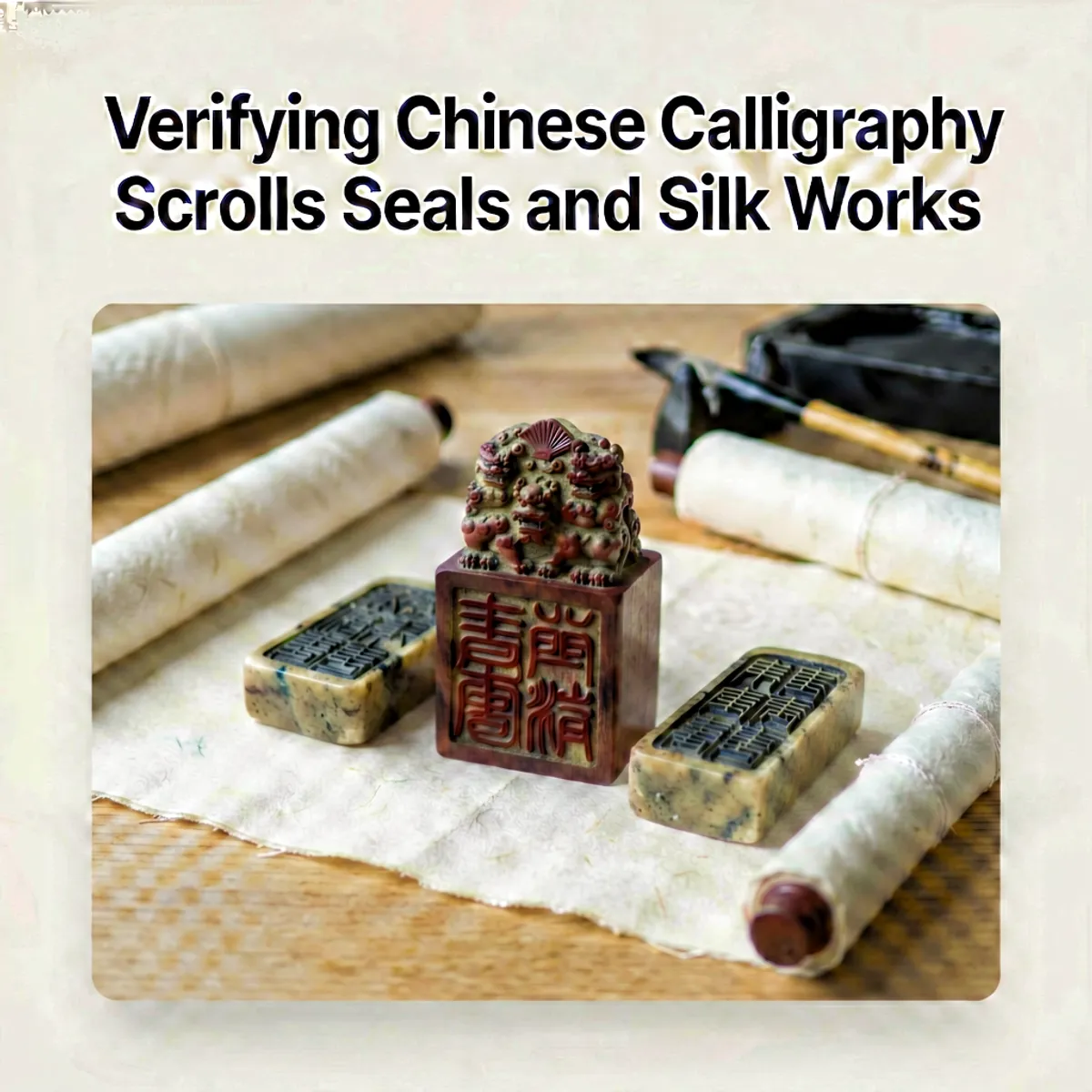
1. Introduction: The Allure and Challenge of the Unidentified Scroll
The scenario is a classic one for enthusiasts and collectors: an object of undeniable beauty and apparent age, wrapped in mystery. Someone, perhaps like the Reddit user freakinmom, acquires a set of old silk scrolls from an unexpected place—a small, cluttered antique shop in South Carolina, a location with no inherent historical connection to the object's presumed culture of origin. The scrolls are visually striking: original paintings on silk, mounted on paper that has yellowed with time. The primary puzzle lies in the red seal stamps—the traditional hallmark of authenticity and ownership in Chinese art—which are unfortunately not clear. The central, human question echoes: "Can somebody help me read this?" This request, while simple, opens a vast and complex field that straddles art history, linguistics, material science, and cultural studies. This article will serve as a comprehensive guide to navigating such a mystery. We will move beyond the immediate desire for a translation to build a foundational understanding of Chinese painting and calligraphy authentication. The goal is not to magically decode the specific signature in question—that would require handling the physical objects—but to equip any curious individual with the framework, vocabulary, and critical thinking needed to understand why the task is so difficult, what experts actually look for, and what the most prudent next steps are. The journey from a模糊的 red stamp to a confident attribution is a lesson in patience, respect for context, and the humility to acknowledge when an object's secrets are best left to specialized investigation.
2. The Foundation: Understanding Chinese Calligraphy (Shūfǎ 書法)
Before attacking a signature, one must understand the art form it belongs to. Chinese calligraphy is not merely writing; it is a highly revered visual art form, considered the highest expression of a scholar's intellectual and spiritual cultivation for millennia. Its principles are the same that govern the painted elements on the scrolls.
2.1. The "Four Treasures" and Beyond: Tools of the Trade The traditional tools are the brush (bǐ 筆), ink (mò 墨), paper (zhǐ 紙), and inkstone (yàn 硯). For painting on silk, the silk itself becomes the fifth treasure. The brush—typically made of weasel, goat, or mixed hair—has a flexible, tapered tip that allows for the celebrated variation in line width. The ink, historically made from soot and animal glue, creates the deep black that ages to a warm brownish-black. The absorbency and texture of the silk (or paper) directly influence how the ink bleeds and settles, affecting the final appearance of every stroke. An expert can often infer the period and quality of an artwork by the implied interaction between these tools and the medium.
2.2. The Five Script Styles: From Seal to Running Chinese characters have evolved through several standardized script styles, each with distinct formal rules. Understanding these is the first step in reading any inscription.
- Seal Script (Zhuànshū 篆書): An ancient, archaic form used primarily for seals and very formal inscriptions. Its characters are intricate, with uniform, curved lines that often resemble pictographs. It is the most common script for the content of carved seals themselves. - Clerical Script (Lìshū 隸書): Developed during the Han dynasty, it has a distinctive "silkworm head and swallow tail" (cán tóu yàn wěi) quality—horizontal strokes are flat and wide at the ends, vertical strokes are tapered. It feels structured and powerful. - Regular Script (Kǎishū 楷書): The standard, "model" script learned by beginners. It is clear, balanced, and upright. Most modern printed Chinese text is based on it. a number of artist signatures, especially from the Ming and Qing dynasties onward, are in a semi-cursive or cursive form, but they are based on regular script structure. - Running Script (Xíngshū 行書): A cursive-influenced style where strokes are connected and characters may flow into one another. It is faster to write than regular script but remains largely legible. It is the most common script for calligraphic signatures and dedications on paintings. - Grass Script (Cǎoshū 草書): Highly abbreviated and fluid, with many strokes merged or omitted. It requires deep knowledge to read and is rarely used for signatures on artworks meant for public viewing, as it can be illegible to all but specialists.
The signature on a painting is almost never in Seal Script. It is typically in Running or Regular Script. The seal stamp itself contains characters in Seal Script. This is a critical distinction. The blurry red stamp is a seal carved in Seal Script, not a handwritten signature.
2.3. The Soul of the Stroke: Analyzing Brush Technique and "Vitality" (Qì 氣) Authentic calligraphy is judged by its "bone" (gǔ 骨) and "flesh" (ròu 肉)—the structure versus the ink tone—and its overall "vitality" or "spirit" (shénqì 神氣). Experts look for:
- Pressure Variation: A skilled brush creates lines that thicken and thin naturally based on speed, angle, and pressure. Hesitant or mechanical lines lack this life. - Rhythm and Pace: The flow of strokes across a character, and characters across a line, has a musical rhythm. Abrupt stops or inconsistent speed suggest inauthenticity. - Structural Integrity: Even in cursive scripts, the underlying skeletal structure of the character must be correct. A single misplaced dot or incorrect radical can betray a forger or a later, less skilled hand. - Ink Color and Absorption: Old ink from mineral or plant soot has a specific density and luster. It should sit on the silk or paper surface in a particular way, not merely stain it. Modern ink often looks flat or too black.
This analysis is subjective and requires years of training. For our hypothetical scrolls, the brushwork "above" the seal (presumably the main inscription or title) must be evaluated for these qualities. Is the line confident? Does it have the "bones" of a trained hand? Or does it look tentative, repetitive, or overly controlled?
3. The Signature and the Seal: Dual Pillars of Authentication
In Chinese painting, the artist's identity is confirmed through two primary, complementary marks: the handwritten signature/dedication and the carved name seal.
3.1. The Artist's Name: Reading Handwritten Signatures and Dedications The signature is usually placed in a corner, often the lower right. It may include the artist's name, the year, the season, or a poetic dedication to a friend. Reading it requires:
1. Identifying the Script: Is it Running Script? This is most likely. 2. Recognizing Character Forms: Even in Running Script, the core structure of characters is recognizable to anyone literate in modern Chinese. But, historical variant forms (古字) exist. 3. Context is Everything: The signature may be a pseudonym (hào 號), a studio name (zhāo 號), or a combination. "Wang Wen" could be a name, but "Wen" might also be part of a longer pseudonym like "Wenming Xiansheng" (Mr. Cultured Brightness). Without knowledge of common artist names and sobriquets, one cannot decipher it. 4. The Handwriting Problem: Even if you can read the characters, can you read the hand? A forger may copy the shape of characters but fail to capture the energy and unique habits of the master's brush. This is where connoisseurship transcends literacy.
3.2. The World of Seals (Yìn 印): More Than Just a Stamp The red seal is arguably more important for authentication than the signature. It is a carved stamp, usually made of stone, ivory, or horn, pressed into red cinnabar paste and stamped onto the artwork.
3.2.1. Seal Carving Styles: Zhu Wen vs. Bai Wen
- Zhu Wen (朱文): "Red characters." The characters are carved away from the surface, leaving the characters raised in relief. When stamped, the characters appear red on a white (silk/paper) background. This style is common for artist seals. - Bai Wen (白文): "White characters." The background is carved away, leaving the characters recessed. When stamped, the characters appear white (the color of the silk/paper) on a red background. This style is common for collector's seals and for official seals. The style of the seal (red-on-white or white-on-red) is a clue to its purpose.
3.2.2. Content and Layout: Names, Studios, and Collectors' Seals Seal content is formulaic:
- Artist's Name Seal: Usually a two- or four-character name or pseudonym. E.g., "Xu Wei" (徐渭), "Shitao" (石濤). - Studio/Collection Name Seal: a number of artists had a "studio name" (zhāo 號) like "Bamboo Studio" (Zhúwò 竹屋) or "Hall of the Happy Old Man" (Lǎo Lè Táng 老樂堂). Collectors also had their own seals. - Poetic or Philosophical Seals: Short phrases like "Seek Truth" (Qiúshí 求實) or "Appreciation from the Pine Window" (Sōngchuāng Yǎnjìng 松窗偃蹇). - Layout: The characters are arranged in a square or rectangle, often with a border. The composition is part of the seal's art.
3.2.3. The Critical Challenge: "Blurry Seals" and Impression Analysis This is the core problem in the user's query. A "not very clear" seal impression can be due to:
- Poor stamping pressure or uneven ink paste. - Wear on the seal itself: The carved edges can become rounded over centuries of use, blurring the impression. - Degradation of the silk/paper surface: If the silk is frayed or the paper is damaged, the ink bleeds. - Accumulated dirt and oxidation on the seal or the artifact.
Analyzing a blurry seal is a specialist's game. Experts look for:
- Recognizable Radicals: Can you identify the "water" radical (氵), the "heart" radical (心), or the "speech" radical (言)? These are often the most robust parts of a character. - All things considered Composition: Does the shape of the entire seal impression match the known shape of a specific artist's seal? A famous seal like that of the Qing dynasty court painter Giuseppe Castiglione (Lang Shining 郎世宁) has a very distinctive, slightly uneven layout that is recognizable even if partially blurred. - Comparative Analysis: The expert will have books and databases of thousands of seal rubbings (impressions taken from the original seals). They mentally overlay the blurry impression with known clear examples, looking for matching points of structure. - The "Maybe Somebody Here Can Help" Problem: On a forum, people might guess based on one or two visible strokes. This is highly unreliable. One person might see a "mountain" radical (山) where another sees a broken line. Without the full, clear context of the seal's design and the artist's known seals, any "reading" is a shot in the dark.
For the South Carolina scrolls, the red seals are the primary authentication keys, and their poor condition makes any confident reading virtually impossible for a non-specialist. The brushwork above must be assessed independently, but its attribution is also tied to the seal's presumed artist.
4. The Medium Matters: A Deep Dive into Silk (Sīchóu 絲綢) and Paper Mounting
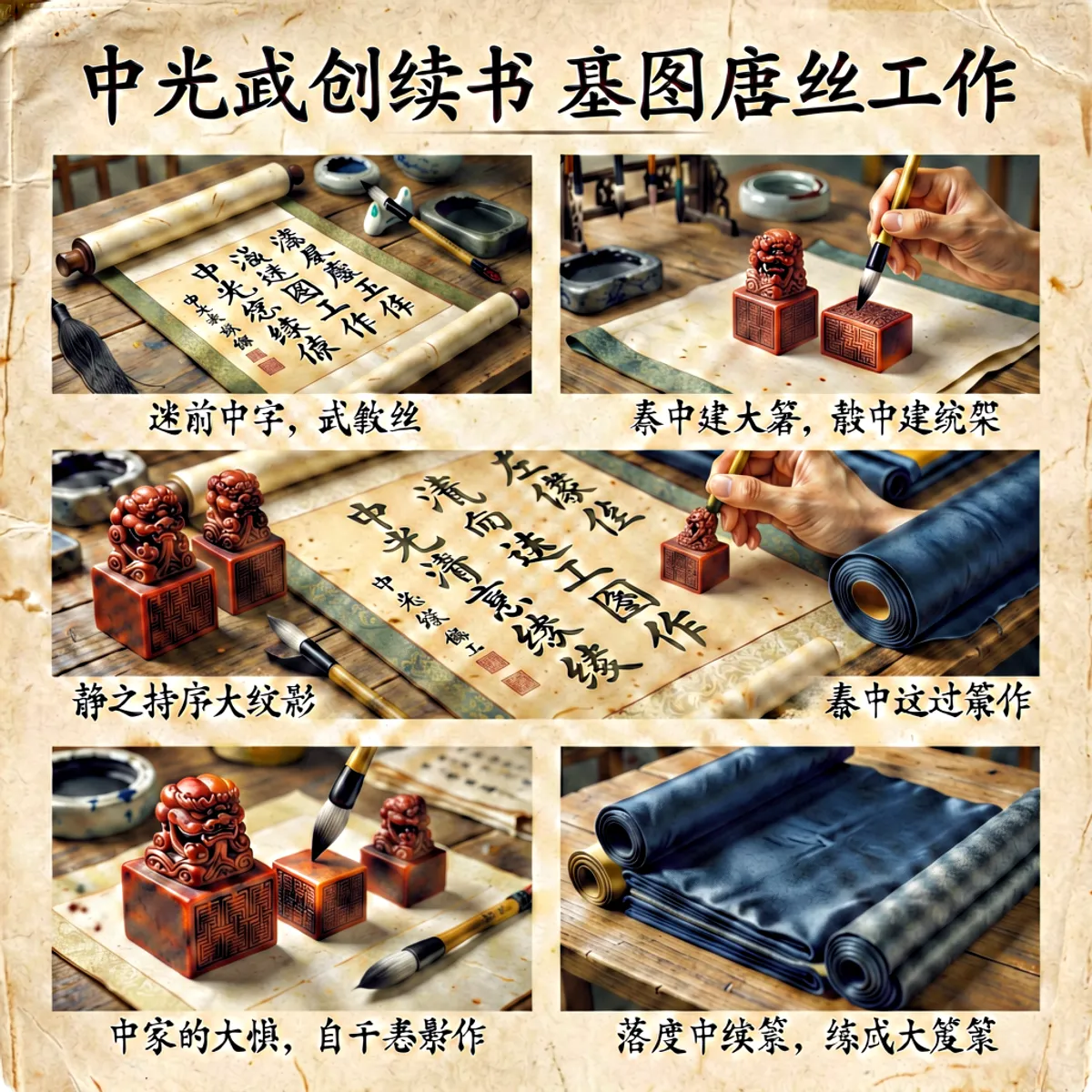
The material is a primary dating and authenticity tool. "Silk scrolls" are not just a generic description; they are a specific format with a long history.
4.1. Historical Context: Silk as a Primary Medium for Elite Art Silk was the premier painting surface in China for over a thousand years, from the Han Dynasty (206 BCE–220 CE) through the Tang (618-907) and Song (960-1279) dynasties. Its fine, smooth weave allowed for incredible detail. Paper became dominant for calligraphy and painting later, especially from the Yuan (1271-1368) and Ming (1368-1644) dynasties onward, due to its lower cost and easier production. A painting on silk that is mounted on paper is a classic format. The silk is the painting surface; the paper mount (huàbù 畫褙) is a protective and decorative backing, often with additional silk borders. The entire piece is then rolled onto a wooden rod at the top and sometimes a wooden strip at the bottom.
4.2. Weave, Texture, and Aging: What the Fabric Itself Reveals
- Weave Density: Earlier silks (Tang, Song) often have a very fine, tight weave. Later silks (Qing, Republic) can be coarser. A magnifying glass can reveal the weave pattern. - Silk Type: Was it a fine "raw silk" (shēnsī 生絲) or a soft "processed silk" (sù 素)? The texture differs. - Aging Characteristics: Authentic age on silk manifests as: - Loss of Luster: Silk becomes matte, not shiny. - "Silk Rot": A specific type of degradation where the protein fibers become brittle and fragment. It looks like a fine, powdery network on the surface. - Staining and Yellowing: From environmental pollutants, oils from handling, and the natural oxidation of the silk gum. This yellowing is usually uneven, following the folds of the scroll. - Holes and Weak Spots: Along fold lines, where stress is greatest.
4.3. The Mounting System: Paper Backings, Borders, and Rods The mounting is a historical record in itself. The paper backing (often a coarse, fibrous paper called xiōngzhǐ 胸紙) was added later, sometimes decades or centuries after the painting was made. Its color, texture, and any inscriptions on it provide a secondary layer of provenance. The border silks (píngfú 屏副) around the painting edge have stylistic patterns. A Ming dynasty blue-and-white cloud pattern border on a silk painting suggests the mounting was done in the Ming or later. The wooden rods—their wood type, the style of the end caps (tóu 頭)—are also datable elements. A crude, modern rod on an old painting suggests a recent remounting, which is common and does not necessarily hurt the painting's value if done well, but it severs an earlier layer of history.
4.4. The Yellowing Question: Age vs. Environmental Damage "All of it is yellowed with age." This is a key observation, but it is not a definitive proof of age. Yellowing can be:
- Natural Aging: The slow oxidation of silk proteins and paper cellulose over centuries. - Environmental Damage: Exposure to smoke (from fires, candles, tobacco), pollution, or acidic storage materials accelerates yellowing and embrittlement dramatically. A painting stored in a smoky environment for 50 years can look older than one kept pristine for 300 years. - Deliberate Aging (Faking): Forgers will expose new silk to ammonia fumes, sunlight, or soil to artificially age it. But, faked aging often looks uniform and lacks the complex, layered staining patterns of genuine age.
The combination of silk weave analysis, examination of the mounting layers, and scientific testing (like fiber microscopy) is required to separate true age from accelerated decay or fakery.
5. The Provenance Puzzle: Why "Found in South Carolina" is a Major Red Flag
This is the most significant contextual clue, and it is a negative one. Provenance—the history of ownership—is the cornerstone of art authentication. A gaping hole in provenance, especially one that jumps continents, creates immense difficulty.
5.1. The Wartime and Post-War Displacement of Asian Art The 20th century saw massive, chaotic movements of Chinese art. The Second Sino-Japanese War (1937-1945) and the subsequent Chinese Civil War led to the looting, sale, and dispersal of countless private collections and imperial treasures. a number of objects entered the international market through soldiers, diplomats, and merchants in the 1940s-1960s. A Chinese painting appearing in South Carolina in, say, the 1980s or 1990s could plausibly have entered the US via this route. But, this "wartime dispersal" provenance is itself a category that experts scrutinize heavily for gaps and documentation.
5.2. The "Junky Antique Shop" Scenario: Common Sources of Disconnected Objects Small, unspecialized antique shops are notorious for being the final stop for objects with lost or fabricated histories. Items may have been:
- Purchased at estate sales with no records. - Acquired through "finders" who scour attics and barns. - Imported in bulk by dealers who mix high-end items with common wares. - Outright forgeries made to look old and sold as "antiques."
The lack of a box ( Hézi 盒子) is telling. Original storage boxes, often inscribed with the owner's name or the artist's name, are a huge piece of supporting provenance. Their absence suggests the scrolls have been separated from their original collection context long ago.
5.3. The Missing Boxes ( Hézi 盒子): A Significant Loss of Context A painted silk scroll, when stored, would often have its own custom-made, padded box. The box might have a label or an inscription identifying the contents. For a set of four scrolls, they might have had a single, larger outer box. The complete absence of any box indicates the object has been divorced from its primary storage context for a very long time, likely since before it left Asia. This makes tracing its history nearly impossible without other documentary evidence (like old auction records or gallery receipts, which are also absent here).
5.4. Ethical Considerations and Legal Frameworks The modern trade in Asian art is governed by conventions like the UNESCO 1970 treaty, which aims to prevent the illicit trafficking of cultural property. While an object bought in a South Carolina shop in the 1990s is unlikely to be subject to immediate claim, museums and serious auction houses perform rigorous "due diligence" on provenance. A large, unexplained gap between an object's creation (e.g., 18th century China) and its first documented location (20th century USA) is a major red flag. It raises the specter, however faint, that the object could have been looted during a period of conflict. This doesn't automatically make it suspect, but it places a much higher burden of proof on the object's legitimacy. An expert appraiser will note this provenance gap prominently in any report.
6. A Methodological Framework: How Experts Approach an Unknown Scroll
A professional connoisseur or curator does not guess. They follow a rigorous, multi-step process.
6.1. Step One: Physical Examination Under Various Lighting
- Normal Light: Assess overall condition, colors, mounting. - Raking Light (side light): Reveals surface texture, brushstrokes, cracks, and any damage or repairs. It shows the relief of the seal impression and the weave of the silk. - UV Light: Reveals later restorations, overpaintings, and sometimes different varnishes or adhesives. Modern materials fluoresce differently than old ones. - Infrared Reflectography (IRR): Can sometimes reveal underdrawings or changes (pentimenti) made by the artist. This is more common in Western oil painting but can be used on some Chinese works.
6.2. Step Two: Material Analysis (Fiber, Ink, Pigment)
- Fiber Analysis: A tiny sample of silk (or even just a microscopic examination) can determine if it's natural silk (protein-based) or modern synthetic. The fiber diameter and condition can be compared to known historical samples. - Ink and Pigment Analysis: Using microscopy (like a polarizing microscope) or even X-ray fluorescence (XRF), experts can identify the composition. Traditional ink is carbon-based with glue. Modern printer toner or India ink looks different under magnification. Traditional mineral pigments (azurite blue, malachite green) have distinct crystalline structures versus modern synthetic dyes.
6.3. Step Three: Stylistic Comparison to Known Artists and Periods This is the heart of connoisseurship. The expert mentally compares the painting's composition, brushwork, and "feel" to a vast internal catalog of works by known masters and their schools.
- Is it a "Masterpiece" or a "Workshop Piece"? Is the execution confident and innovative, or competent but formulaic? - Does it fit a known artistic trend? For example, the bold, expressive ink washes of the Ming dynasty artist Xu Wei are very different from the refined, descriptive bird-and-flower paintings of the Song dynasty Imperial Academy. - Are there anachronisms? Does a painting of a subject popular only in the 18th century have a seal style that only became common in the 20th? This would indicate a forgery or a later addition.
6.4. Step Four: Seal Script Identification and Cross-Referencing For each clear seal impression on the object (even if blurry, parts may be clear), the expert:
1. Identifies the script form (likely Seal Script). 2. Transcribes the characters as best as possible, noting uncertain strokes. 3. Searches databases (like the Zhongguo Meishu Quanji 中国美术全集 seal index, or the online Chinese Seals Database) for matching or similar seal impressions. 4. Checks the seal's "biography": When was this seal carved? Who owned it? Is it documented in historical records or on other authenticated artworks? A seal that only appears on works from 1900-1950 cannot belong to an 18th-century painting.
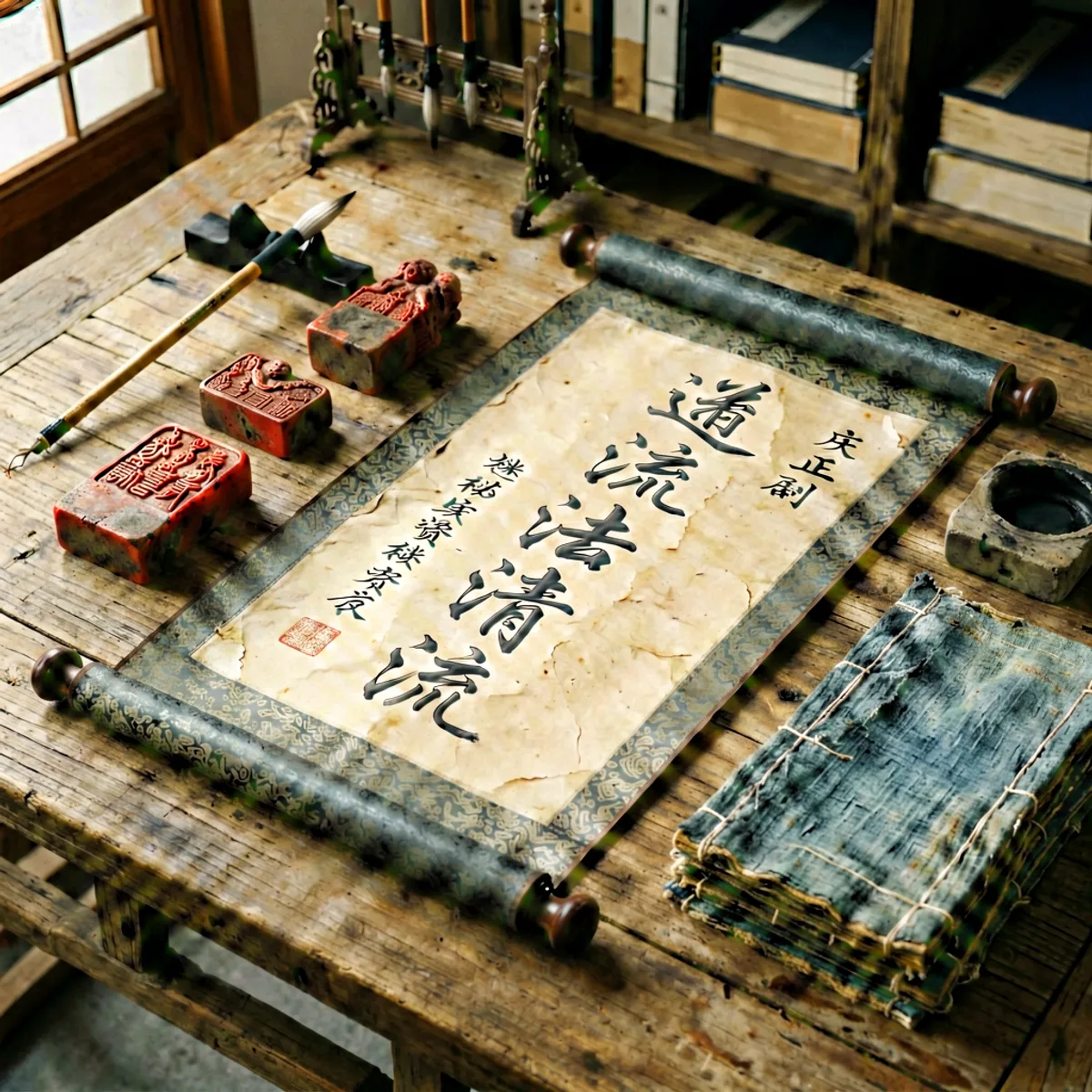
6.5. Step Five: Holistic Judgment and Assigning Probability The expert synthesizes all evidence:
- Material Evidence: Does the silk/paper/ink date to the claimed period? (Material science can provide a "terminus ante quem"—a date before which it cannot be). - Stylistic Evidence: Does the painting style align with the period and artist suggested by the seals? - Seal Evidence: Are the seals consistent with the period and known for that artist/collector? - Provenance Evidence: What is the history? Is it documented?
The final judgment is rarely "This is by Master X, 1750." It is a probability statement: "The brushwork is consistent with the Wu School of the late Ming dynasty. The primary seal appears to be that of the collector Liang Qingzhi (fictional example), who lived 1580-1650. The silk weave is appropriate for the late Ming. The provenance is unverified post-1950. Attribution: Attributed to the school of Wen Zhengming, 16th century, with later collector's seals." The "attributed to" and "school of" are crucial qualifiers.
7. Common Pitfalls for the Amateur Detective
Armed with this knowledge, we can see why the Reddit post's request is fraught with danger.
7.1. The "It Looks Chinese to Me" Fallacy Everything from a blurry seal to a generic landscape painting can "look Chinese." But Chinese art spans 5,000 years and immense regional and stylistic diversity. A 19th-century cantonese school export painting looks utterly different from a 12th-century Song dynasty academy scroll. Without a trained eye, one cannot place an object in time or space.
7.2. Misreading Seal Script as Modern Characters This is the most common error. Seal Script characters are not the same as modern Simplified or Traditional characters. The character for "horse" (馬) in Seal Script looks like a side-view drawing of a horse. The character for "south" (南) is completely different. A blurry impression might look like a "south" (南) to an amateur, when it's actually the "heart" (心) radical of a different character. Online forums are filled with people confidently "reading" seals based on this mistake.
7.3. Confusing Later Collectors' Seals with Artist Seals A painting can accumulate dozens of seals over centuries: from the first owner, from a later imperial collector, from a modern museum. The largest, most prominent seal is often a collector's seal, not the artist's. The artist's seal is usually smaller and placed next to the signature. Amateurs often latch onto the biggest, reddest seal and assume it's the artist's name, leading to completely wrong conclusions.
7.4. Overvaluing "Antique" Silk and Undervaluing Modern Reproductions The "yellowed silk" is a powerful psychological cue. But, skilled forgers use old silk bolts (bought cheaply) or chemically age new silk. A painting on genuinely old silk from the 1920s (which is "antique") could be a modern (20th-century) forgery of an 18th-century style. The material is old, but the artwork is new. Conversely, a painting on new, bright silk could be a modern copy, but it could also be a genuine painting from a period when new silk was used (e.g., a court painting from the early Qing). Material alone is not proof.
8. Case Study Application: Analyzing the Hypothetical "Four South Carolina Scrolls"
Let's apply our framework to the clues provided:
- "Set of four old silk scrolls": A set (四條屏 sì tiáo píng) is a common format. "Old" is subjective. - "Found at a small, junky antique shop in South Carolina": Provenance is non-existent for the period of creation. Likely 20th-century entry into the US market. - "Unfortunately no boxes present": Severely damages any chance of tracing an early collection. - "They are original paintings on silk, that is mounted on paper": A standard, long-lived format. Does not date the paintings. - "All of it is yellowed with age": Consistent with age or environmental exposure. Requires analysis to distinguish. - "The red seal stamps are unfortunately not very clear": The primary authentication keys are damaged. This is a critical flaw for identification. - "Maybe someone here can help me at least read the brush work above it?": The user intuitively understands the seal is problematic and seeks an alternative route.
8.1. Evaluating the Given Clues: Formulating the Key Questions An expert presented with just this description would have a million questions:
1. What is the subject? Landscape? Bird-and-flower? Figure? Calligraphy-only? The subject is a huge stylistic clue. 2. What is the condition of the silk weave? Can we see the weave? Is it fine or coarse? 3. What is the condition of the paper mount? Is it modern? Does it have any inscriptions on the back? 4. What is the style of the brushwork above the seal? Is it tight and detailed ( suggestive of court painting) or splashy and expressive (suggestive of literati painting)? Can we see the "bones" of the strokes? 5. Are there any other marks? Any other smaller seals? Any colophon (a written appreciation) on the mounting paper? 6. What are the dimensions? Standard sizes differ by period. 7. Are there any repairs, patches, or overpainting?
Without answers to these, any attempt to "read" the signature is pointless. The user needs to provide high-resolution, well-lit photographs of:
- The entire scroll, rolled out. - The signature area (lower corner). - Each seal, from multiple angles and under raking light if possible. - The back of the mounting paper. - Close-ups of the silk weave.
Even then, an online assessment would be preliminary and qualified.
9. The Path Forward: Professional Appraisal and Cultural Respect
Given the profound challenges, what should the owner of such scrolls do?
9.1. Finding the Right Specialist: Auction Houses, Museums, and Scholars
- Major Auction Houses (Sotheby's, Christie's, China Guardian, etc.): They have departments of Chinese Paintings and Calligraphy with world-class specialists. They offer free preliminary assessments (often via email with photos) to determine if an object is worth consigning. They are the best first stop for a commercial valuation and attribution opinion. Their word carries weight in the market. - University Art Museums or Curators: A curator at a major museum (e.g., the Met, the British Museum, the National Palace Museum in Taipei) might be willing to offer a brief opinion, especially if the object is potentially significant. They are focused on cultural/historical value, not price. - Independent Scholars: Researchers who have published on specific dynasties or artists. They may charge a fee for a detailed report. - What to AVOID: Local antique shops (conflict of interest), general appraisers with no Chinese art specialty, and online forums for definitive answers.
9.2. What to Expect: The Appraisal Report and Its Limitations A professional report will state:
- Physical Description: Materials, condition, dimensions. - Stylistic Analysis: Period, school, possible artist (with qualifiers like "attributed to," "in the style of," "workshop of"). - Seal Analysis: Transcription of readable seals, discussion of their known history. - Provenance: What is known, what is unknown. - Condition Report: Damage, repairs, vulnerabilities. - Valuation: Market value, if requested. - Limitations: It will explicitly state if the blurry seals prevent a definitive artist attribution. It might say, "The painting is a fine example of a late Qing dynasty bird-and-flower painting in the style of the Shanghai School. The primary seal is too blurred for positive identification, but the seal script form is consistent with the period. Without a clear seal or documented provenance, the artist cannot be named."
9.3. The Cultural Dimension: Art as a Historical Document, Not Just a Commodity This is the most important yet often overlooked aspect. A Chinese painting is not just a "decorative object" or an "investment." It is a cultural artifact, a physical document of a philosophical tradition (Daoism, Buddhism, Confucianism), a specific historical moment, and a personal expression. The seal is not just a "signature stamp"; it is a piece of carved art, often made by a famous carver, and it represents a chain of stewardship—the artist, then collectors, each adding their mark and becoming part of the object's biography. When such an object is found divorced from its context—in a South Carolina junk shop—we have a responsibility to treat it with this understanding. The goal should be to learn from it, to place it as best we can within the vast tapestry of Chinese art history, and to ensure its preservation. This requires humility. The desire for a simple answer—"Oh, that's by so-and-so"—is a modern, commodified impulse. The historical truth is often nuanced, layered, and deliberately opaque. The "unfortunately not very clear" seal is not just a frustration; it is a reminder of the object's long, eventful, and likely difficult journey through time. Respecting that journey means acknowledging the limits of our own knowledge and seeking the most informed, ethical guidance possible.
10. Conclusion: The Unread Signature and the Journey of Understanding
The original query—"Can somebody help me read this signature?"—springs from a natural human curiosity to name and categorize the unknown. We want to slot the object into a box labeled with an artist's name and a date. The comprehensive exploration above reveals why that simple act is, in reality, a monumental challenge. It requires deciphering a blurry Seal Script impression—a task that can baffle even seasoned sinologists without a comparative database. It requires analyzing brushwork that carries the intangible "vitality" of a centuries-old hand. It demands an understanding of silk weaves, mounting practices, and the devastating impact of lost provenance. The "South Carolina" clue is not a quirky detail; it is a central piece of evidence that places the object in a category of displaced cultural heritage, demanding extra scrutiny and ethical awareness.
So, the direct answer to the user's plea must be: No, a random person on the internet cannot reliably read that signature. The probability of a correct identification from blurry photos and zero provenance is infinitesimally small. The risk of a misattribution—either falsely connecting it to a famous name or dismissing a genuine masterpiece—is extremely high.
The true value of this exercise lies not in finding a name, but in understanding the process. It transforms the object from a simple mystery to be solved into a portal for learning about Chinese calligraphy, seal carving, textile history, and the complex ethics of the art world. The four yellowed silk scrolls, with their unclear red stamps, are now understood as nodes in a vast network of historical knowledge. The proper path forward is one of diligent, professional inquiry. It involves carefully documenting the object, seeking out a specialist in Chinese painting authentication, and accepting that the final report may contain more questions than answers. In doing so, we move from the frustration of an unreadable signature to the richer, more respectful engagement with a fragment of artistic history that has survived, against the odds, to ask its own questions of us. The goal is not to force a name upon it, but to earn the right, through proper study, to understand what it truly is. That is the beginning of real connoisseurship.
Responses • 0
0/2000
ID: 1326
Chris
Offline
38 min
Visited
From
Bakersfield, United States
Send Message