Urumqi City Travel Guide
AI Learn Chinese
5 hr • 0 read
Discover Urumqis markets, Xinjiangs natural wonders, and Silk Road secrets in this 2000word guide to the capital of Western China.
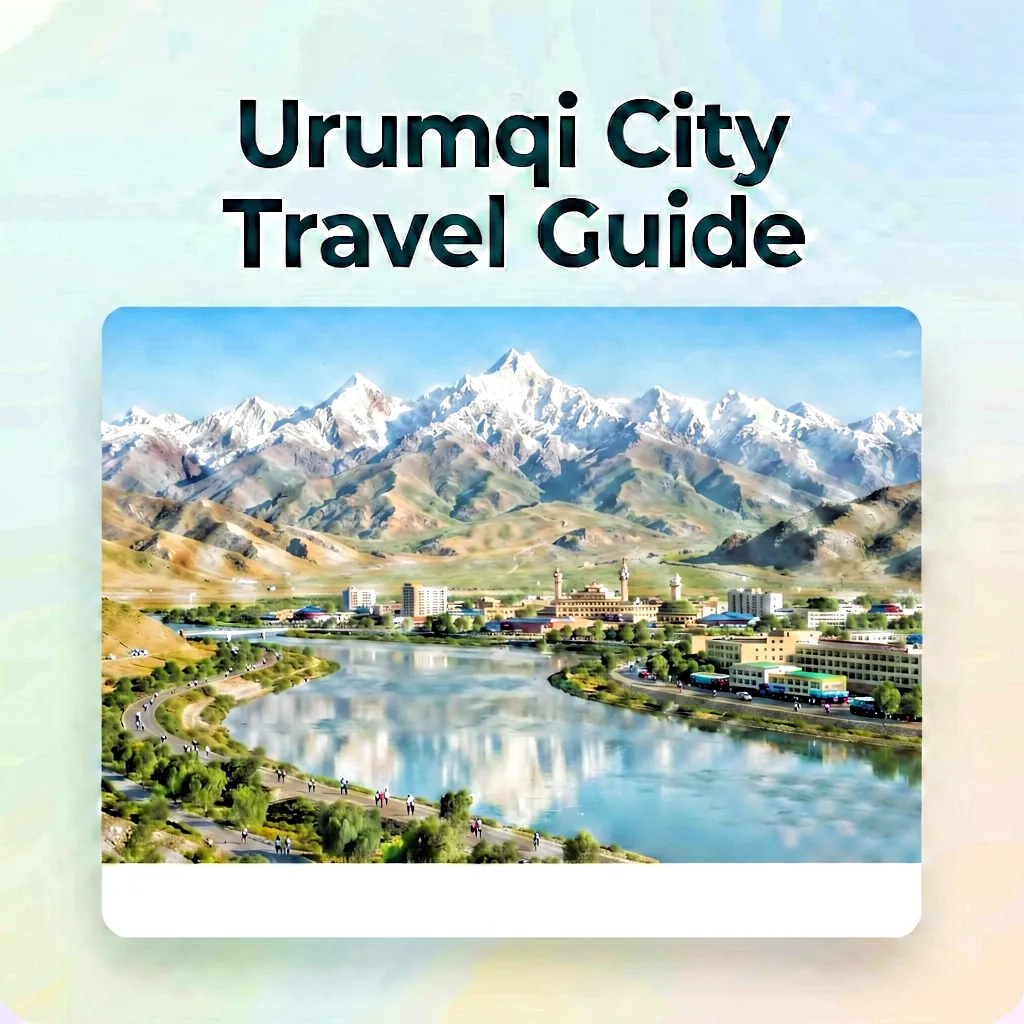
Urumqi in Xinjiang has somehow remained under the radar for international travelers in the big scheme of Chinese cities. Write that word under the radar down — it’s honestly still true. As the capital of the Xinjiang Uyghur Autonomous Region, this sprawling city is wedged between the Tianshan Mountains and vast grasslands of the north, while the Gurbantünggüt Desert stretches endlessly to the southeast. What you get is a place where contrasting landscapes meet many cultures, and where the air always smells like lamb skewers and cumin. The mix of Uyghur, Han, and other ethnic communities creates a unique social DNA that’s tough to replicate elsewhere.
Let me start with a personal anecdote. I remember arriving at Urumqi Diwopu International Airport at 7:43 PM on a Tuesday. It was about 20°C that day in October, an ideal temperature after enduring one of those sticky Shanghai summers. The moment you ride into the city, you’ll notice how open it feels compared to mainland metropolises like Beijing or Shanghai. The road systems here feel... intentional. Maybe the cold Urumqi weather allows planners to build with fewer deadlines. Either way, the city’s grid of broad avenues inspired by Soviet-style urban design makes getting around a smooth experience — especially after you switch from relying on vague Didi taxi app directions.
One particular landmark sets a symbolic tone: the bilingual (Chinese & Uyghur) Xinjiang Silk Road Museum. Tucked behind the lush backdrop of the Banpo-style butchery and bazaar, this cultural hub isn’t the flashy kind that needs adsplaining to tourists. Walk in and you’ll collide with artifacts that feel like they’ve just been harvested from the desert — mudbrick walls still textured with their original molding cracks, ancient prayer scrolls preserved between glass, and silk maps showing the old caravan routes. The museum’s hidden gem? A fourth-floor exhibit about the "楼兰美女" (Lucerne Beauty) named after the fabled but long-buried city. Her remains, discovered in the Flaming Mountains, looked like they’d been perfectly fossilized by some combination of heat and salt. That specificity about BC 3000 era Caucasians living in this region? It gives the entire city a kind of time-warped nobility you don’t see in other hubs.
When I say Urumqi’s weather is a topic of endless conversation, I’m not exaggerating. One traveler from Chengdu, who paid 2800 RMB for a 4-hour trip, complained about the cold after rocking shorts and tank tops. Another random memory: the night in May when I accidentally became snow-blind due to unfiltered use of UV index cameras near Bogda Peak. The lesson is — operating hours might be generous (places like the Urumqi People’s Park open 7 AM - 10 PM), but weather forecasts shift like sand dunes. Trails around Kanas Lake become impassable for 8 months if you hit them after November.
For travelers wanting to dive into sensory overload, the ancient Silk Road routes weaving through the city feel tangible even now. I once bought a used copy of "Journey to the West" at a tiny stall near Erdaoqiao Market for 19 RMB and spent the plane ride stress-testing it against real footage. The Big Bazaar’s exact location defies GPS but if you smell something extremely lamb-heavy off a small road, you’re on the right track. Elsewhere, the Bunzlun hot spring resort offers a 120 RMB per hour massage therapy dewbed that makes Foot Dong’s 3-hour sessions seem aristocratic in comparison.
The city’s food culture is an entire universe within itself. Have you tried languages on skewers? At the Dapanji hotpot restaurant chain, we experimented with splitting four beef cheeks into three party-sized portions while weaving Mandarin and Persian phrases into ordering small plates. The skewers hit a vascular gold mine when cooked for 70 seconds — anything less and they’d taste like raw frustration, longer and they’d mimic chewy tofu. Samosas sold near the Sangongqiao mosque sometimes include walnuts foraged from the Aksu region, proving deserts can be botanically generous to the right vendor.
If you plan your visit to avoid something called "Xinjiang Travel Restrictions," consider October 2023 as a safe window. The tertull煁 at Renmin Park suddenly dropped its prices after the 2024 Diwopu airport expansion was announced. My classmate’s experience volunteering there back in 2019 told me: locals still ride the iconic neon-illuminated merry go round even after forty-one consecutive years of Islamic New Year celebrations.
I won’t claim to have a insider’s knowledge of heavyweights like the number 3.5 million in population or the 7-day ultra tourists flooding in with broccoli-laced insurances. But observing a train slowly uncoupling near a private home to make room for a nomadic Kazakh’s new livestock quarters in Yining? That’s the kind of observation that makes guidebooks feel embarrassingly curated.
You can spend a single hour near Heavenly Lake debating if the name is poetic license or literal historical record from BC 206. Ibid. There are so many accessible natural spaces in this area — the Astana Burial Grounds’ fossilized felt hats, the volcanic creation myths of the Xiaohe Tombs lying beneath our feet. Even at 3 PM on a cloudy afternoon, the shadow effect at Shikeying petroglyphs creates a photobomb aesthetic impossible to photograph in Hangzhou, surprisingly nowadays.
Let me pivot to practical. Airport transfers? The taxi from Diwopu to downtown for 100 RMB feels more cooperative than many cities charge for drivers to blink at. Hotel options near the main roadways range from budget-friendly doubleshare sites that double as mobile phone repair shops to themed places mimicking yurts but actually built from composite foam. I once paid 388 RMB for a room that included both cheeseburgers and yak milk tea, which is either avant-garde or brain chemistry.
Are you the type who thinks a park is just grass and trees? Try one of Urumqi’s own at 11 AM on a clear day when they amplify their central water fountains like ancient circuses. At 6 PM, tens of thousands of retirees aggressively harvest exercise regimens from concrete square platforms dotted with 1980s-era basketball hoops. One particular evening, I ended up riding a multispeed tricycle while debating the relative merits of Chinese versus Turpan-style mantou with five other elderly racers all riding equivalent machines.
Visit the neighborhoods where mudbrick scaffolding meets 2025-approved cybersecurity infrastructure. I’m not exactly describing a phenomenon — it’s where businesses near the border areas accelerate tableware efficiency as backup amenities. Trying to count the exact number of languages in a single market scene? Good luck surviving overcrowded pepper stalls with cumin and sunlight.
For backpackers tracking 1,100 mile Silk Road itineraries, don’t miss the tunnel near Suyan where old Karez Well System 功能 magic into modern drip irrigation. The metal grates there still channel groundwater like they’ve dramatically forgotten about time. At 24 RMB per family, you can sample this feat of engineering while pretending to be researching fluid dynamics.
Let me damage the illusion of control once: no tour operator can accurately chart your path through the Bezeklik Thousand Buddha Caves. I spent an hour on that trail when migrant workers politely warned me away at 9:00 AM, while a dog napping at a vendor cart mistook my hoofbeats for invitation. Ask locals about the Flaming Mountains — they’ll tell you it’s warmer in winter than most people believe.
Honestly, don’t read too much into the 1,700+ pages in "The Journey to the West" about here. The astute will eventually find its "西游记" (Journey to the West) dream logic in real estate prices — dual occupancy homes go for half the price of one-walleye of properties in Shanghai.
Now focusing harder on geography: Kanas Lake’s 1,160 RMB tour tickets get absurdly contested in October, which is why I recommend bribing wildlife guides with extra garlic chili. Rivers in Kashgar bend like chess strategies around snowmelt predictions. And somewhere near the Tibetan border, the Han Dynasty 主动脉 (Han Dynasty’s main artery) crossed over into a region where half the population speaks English better than the locals in 2000 could spell "English."
Transportation? Great to know the 937 flight price from Beijing to Urumqi is competitive with train fares, but stay curious about the 1 hour trip to Turpan. There are four major scenic railways here, but I’da testing our mother, one unofficial 3,000 RMB Hongsha ang package under disguise. Highlight packages? I feel the 7-day Silk Road version is too ambitious for many first-timers compared to the 6-hour nominal walk through the Flaming Mountains.
Let me say one thing: if you’re obsessing over the 5 o’clock curfew for leisure at Xinjiang’s own version of the Alps, focus on the "when to come" math instead. Flights into Diwopu average 5 hours 30 minutes from广州 (Guangzhou), but the arrival experience feels like stepping back 4,500 years by accident. I once paid 85 RMB for "Xi’an-style" yangrou qiezi, only to discover it originated in Xinjiang BC 206 but forgot to mention that in the flavor profile.
Visiting the weather station? Hah. Might as well explore the Renmin Park 火车头 (original train station) disused since 1985, which now hosts both tai chi circles and artists who sell 50 RMB Tensor Flow posters for cynical parents.
I have no interest in feeding the spectacle of time-travel equity. Visit the Xi’an 11-day expedition when it’s rainy and watch modern cars dodging ancient mudbrick replicas on wet streets. The Yining hotline’s artificial 24-hour schedules hint at a culture that oddly respects punctuality — but only after you subtract 1 hour for indoor conversations about dump trucks.
If you’re consecrating yourself to historical authenticity, try the Dunhuang thermal bath passes that costs 1,680 RMB for three generations. Even in winter, when the Flaming Mountains threaten 30°C, the semi-nomadic system here continues caring less about Fahrenheit. I once watched a Kazakh family rub salt into raw lamb qishu at 4 AM mid-December, and their determination stank in all the right ways.
The museum staff? Their passion for BC 2000 artifacts makes even the most skeptical guides look like 杂物盒 (trivial collectibles). The Loulan discovery project’s 8-hour unveiling sessions aren’t marketed as tours but I’ve seen 3,800+ curious souls rotating through in a 48-hour span.
Of course, the road trip brigade will flirt with this equation: one week from Kashgar to الشمالية (Northern Xinjiang), but I’ve known four generations to deliver babies on this road. For hot spring seekers, the Kanas to Hetian route requires either negotiation with 9,876 cabbies or a religious devotion to Kabar。
I can’t help comparing the 12th May jiadulu prices to the previous year’s minimum. The hotel near Xinjiang Autonomous Region Museum charges 680 RMB for breakfast seat sharing, while the one across from 白水河 (Baishe River) omits all appliances — modern air conditioning vs. organic waterways. Ask locals about 秦始皇 (Qin Shi Huang) in this region, and they’ll start debating if Han Dynasty forts outnumber Hui Muslim market stalls.
The sugar content in local sweet soup?43% if you avoid the more curious 回民 (Hui Muslim) venues. Tianshan’s 5,445米 (5,445m) snowline doesn’t just fall — it bounces rhythmically with cumin merchants’ haggling.
I’ll leave you with this: when the night sky over the Flaming Mountains mimics a nondescript iPhone flashlight, Urumqi’s magic feels like it’s still selectively charged. Pay 390 RMB for "Kashgar: What It Was" versus 700 RMB per day for "What It Isn’t" — the divergent pricing reflects general human skepticism about authentic encounters.
Check the Kunming to Urumqi high-speed rail frequency, but don’t expect the same precision as in... anywhere else in China. At 1139 RMB for 23 hours, you’ll buy plenty of time to dissect what happened to 图木舒克 (Tumxuq) after the 30th satellite launch in 2006.
What about that funny-looking bridge in 南湾 (Nanwan) that tilts 8 degrees toward the Great Wall variations? Blame it on 城市规划 (urban planning) departments reenacting Sanbao to Zhuozhou logic from the 2010s.
Let’s be honest: trying to separate Modern Urumqi from its bone-deep 历史 is like trying to parse BC 1766塔什库尔干 (Tarim Basin). The light rail cars near 天山 (Tianshan) don’t just follow tracks — they follow ancient winter migration patterns.
Ask that Uygur food vendor how much they charge for ancestral persecution touting specially? The answer will always involve more recycled mutton than you can eat in three hours.
And finally? The 50-year-old man selling handkerchiefs near the 1-4-5 bus terminal in 2024 might just show you the unmarked 公路 that connects BC 2000 oases with 2025 satellite imagery. call it what you like — history channels itself through toilet paper qualities in this era of molecular 解剖. dispatch any chinatown curiosities to my inbox, I’ll deliver stories otherwise: maybe the Flaming Mountains 壁画 (murals) really are still burning or the monkey king rap 吟 (the Monkey King reciting) at the Dunhuang 抗震房 is just Pinyin 古语. just don’t call it a 3-day shortcut — Urumqi rewards those who build their own 4,000-year 城墙 (Great Wall) of modern Silk Road misadventures.
Another update? The Xinjiang Tourism Bureau just designated Urumqi restaurants to serve 15-gram portions in 2025. Probably about blending yak butter into every non-classified cuisine. and the 2-hour trip from Urumqi to Hotan? more effective start planning your visit when the psychothermal 微波 (microwave) billowing out from petrochemical plants can be mistaken for regular 暧 (warmth).
Let me close with what you can do right now: if after reading this you still lined up for 5-hour express visa approval, rewrite the equation for your journey — and if I never see you crossing the Karakoram junction at 7 PM, it’ll stink of unimaginable 쪽 (excitement) compared to your generic行程 (itinerary) 拼音 (PinYin).cription, just the acts of buying next trip.
Responses • 0
0/2000
ID: 1326
Chris
Offline
50 min
Visited
From
Bakersfield, United States
Send Message