Ultimate First China Itinerary: Perfectly Balanced
AI Learn Chinese
3 hr • 0 read
Plan your perfect first China trip balancing Beijing, Zhangjiajie, Shanghai, Xi'an and 2026 travel prep.
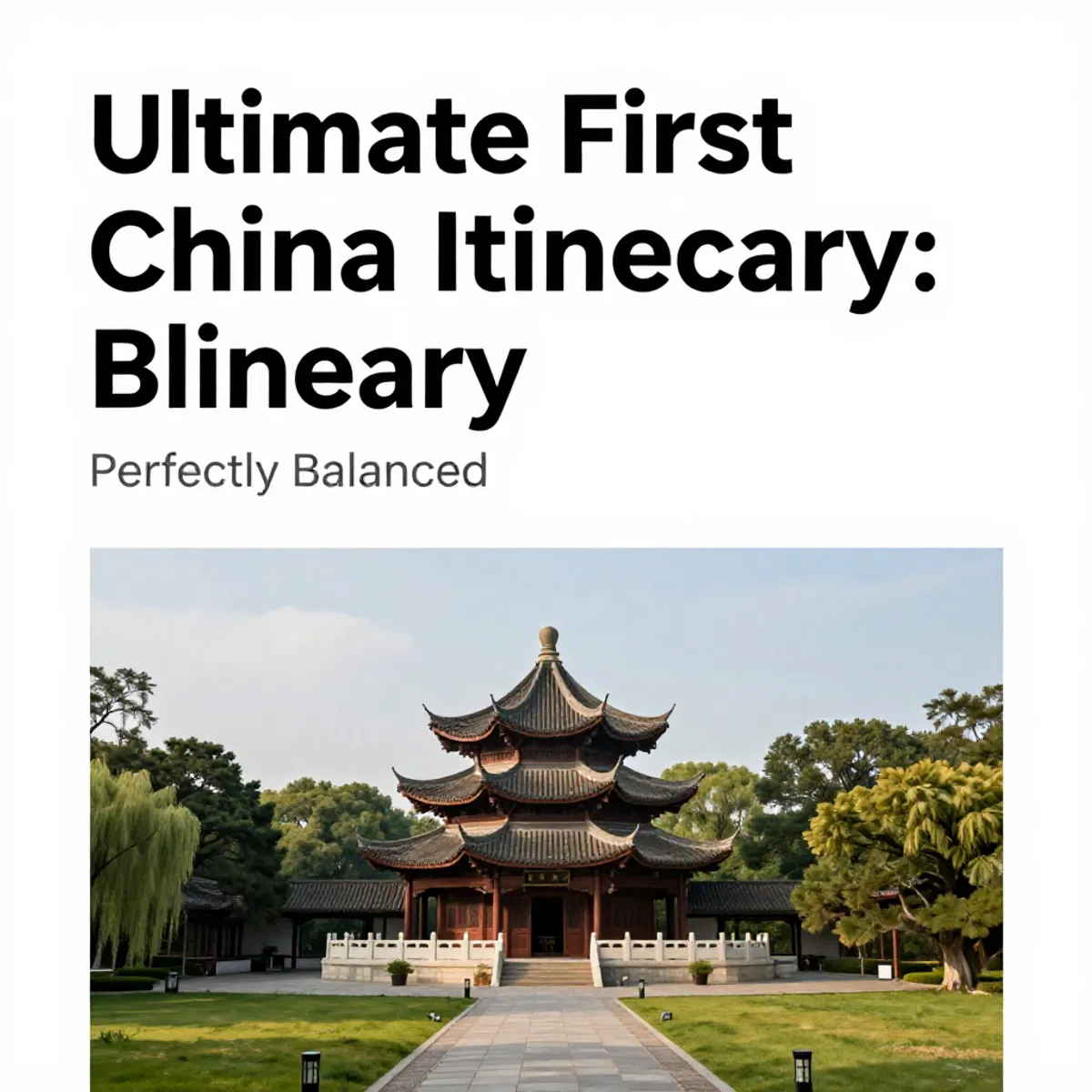
Introduction: The Dual Thrill and Challenge of a First China Trip
Planning your first journey to China is an exercise in exhilarating possibility and palpable tension. The mind fills with iconic imagery: the vast sweep of the Great Wall, the terracotta warriors frozen in time, the mist-shrouded pillars of Zhangjiajie. Yet, alongside this excitement sits a weight of anxiety.
The sheer geographic scale, the profound cultural differences, and the logistical labyrinth of a country that operates on a different digital and social plane can feel overwhelming. For a couple, this is compounded. You are not just planning a trip; you are co-authoring a shared narrative, seeking an experience that resonates with both your senses and your souls, balancing mutual interests with individual travel rhythms.
Your preliminary focus on Beijing and Zhangjiajie captures a brilliant, classic dichotomy: the monumental, human-made history of the imperial heartland versus the breathtaking, almost mythic, artistry of the natural world. This is a powerful foundation. It promises a dramatic "before and after" perspective.
But, the very questions you are asking—about Shanghai, about other destinations, about practical realities—are precisely the ones that separate a good trip from a truly transformative one. They point to the core challenge: how to weave together the ancient and the modern, the epic and the intimate, the iconic and the authentic, into a coherent and manageable journey.
This article is your detailed planning companion. We will move beyond simple destination lists. First, we will dissect your proposed two-city core to understand its strengths and inherent gaps.
Then, we will engage in the pivotal debate around Shanghai and introduce the compelling case for Xi'an. We will explore other regional alternatives for a different "feel." Crucially, we will ground all dreams in the non-negotiable practicalities of travel in 2026—the digital barriers, the payment systems, the visa processes. Finally, we will synthesize this analysis into three distinct, fully-realized 14-16 day itinerary frameworks, each offering a different philosophical approach to your first encounter with China.
Our goal is not to prescribe a single "perfect" plan. Such a thing does not exist. Instead, we aim to equip you with a decision matrix—a framework for understanding the trade-offs, the logical flows, and the experiential outcomes. This knowledge will empower you to craft an itinerary that feels uniquely right for you, one that balances jaw-dropping icons with quiet moments of connection, ensuring your first journey builds a passionate foundation for many more to come.
Deconstructing Your Core Proposal: Beijing and Zhangjiajie
Your current plan anchors on two profoundly different, yet equally iconic, destinations. Evaluating this core pair is the essential first step. It clarifies what you will gain—the imperial narrative and the Avatar landscape—and, just as importantly, what you will miss.
Beijing: The Imperial Narrative
Beijing is non-negotiable for a first trip. It is the physical and philosophical epicenter of China's last three imperial dynasties. The Forbidden City is not merely a palace; it is a 500-year-old symbol of absolute cosmic and political order.
Walking its vast courtyards and through its labyrinth of halls is to immerse yourself in the mindset of dynastic rule, in a world of intricate protocol and symbolic power. Adjacent, the Temple of Heaven complex reveals the cosmological beliefs that underpinned the emperor's mandate. Its iconic Hall of Prayer for Good Harvests, with its triple-gabled roof and azure tiles, is a masterpiece of symbolic architecture where the emperor would perform rituals to ensure the empire's prosperity.
The Summer Palace provides a stark, beautiful contrast. It is the Qing dynasty's legacy of leisure and aesthetic refinement, a sprawling park centered on Kunming Lake, dominated by the graceful Long Corridor and the opulent, multi-story Tower of Buddhist Incense. It tells the story of an empire that could afford, and desired, to build paradise on earth. These sites collectively narrate the story of governance, philosophy, and artistic achievement on a scale unmatched anywhere.
The Great Wall is the indispensable exclamation point. A visit here is a physical and philosophical journey. To stand on a rampart, watching the wall snake over the rugged mountains into infinity, is to confront the immense historical effort of defense and the breathtaking geography it sought to control.
The choice of section dramatically shapes the experience: Mutianyu offers restored grandeur and cable cars, ideal for first-timers; Jinshanling provides a wilder, more strenuous hike with stunning views; Badaling is the most famous and crowded, a symbol of the Wall's global icon status. Beijing, therefore, delivers the essential historical and architectural "look" at China's classical civilization—powerful, ordered, and enduring.
Zhangjiajie: The Avatar Landscape
Zhangjiajie National Forest Park is the reason your itinerary possesses such dramatic visual appeal. Its towering sandstone pillars, often shrouded in ethereal mist, directly inspired the floating mountains of Pandora in James Cameron's Avatar. This is China's "nature" side distilled to a spectacular, surreal extreme.
The experience is one of hiking through a real-world fantasy, navigating a landscape of sheer verticality via a network of cable cars, glass bridges, and vertiginous cliff paths. It represents a China that feels primordial, untouched by human hands (though, of course, heavily managed for tourism).
The key consideration with Zhangjiajie is its location and the travel time required. It sits in Hunan Province, a significant geographic leap from Beijing. To integrate it smoothly, you will almost certainly fly from Beijing to Zhangjiajie or to the nearby city of Zhangzhou.
This adds a domestic flight but is very manageable within a 14-16 day timeframe. The reward is a complete, jarring shift in scenery and mood—moving from stone and history to mist, forest, and geological wonder. It perfectly answers the desire to "feel" a different, almost magical, side of the country.
The Gap in Your Current Plan: Modern China and Regional Diversity
Between these two poles lies a vast, crucial gap. Your itinerary, as it stands, has a 2,000-year leap in focus. You will see the glories of pre-modern imperial China and a pristine natural wonder, but you will miss the dynamic, chaotic, futuristic energy of modern urban China.
You will also miss the incredible regional diversity in dialect, cuisine, and daily life that defines the Chinese experience. A first trip that only sees the ancient and the pristine can inadvertently create a skewed perception, viewing China as a museum or a national park rather than a living, breathing, rapidly evolving civilization. This is the primary argument for considering a city like Shanghai or others.
You are not just seeing sights; you are trying to "know" a country. That knowing requires a glimpse of its present as much as its past.
The Megacity Dilemma: To Shanghai or Not?
This is the pivotal debate for your route. Shanghai is often cited as a must-see, but is it right for your first trip, given your other goals and the desire to avoid sensory overload?
The Allure of Shanghai: Energy, History, and Ease
Shanghai is the definitive symbol of China's economic rise and global ambition. Its skyline along the Bund—a colonial-era promenade facing the futuristic skyscrapers of Pudong—is an iconic image of 21st-century Asia. To walk through Nanjing Road or Lujiazui is to feel the sheer kinetic energy of a global metropolis.
It provides the essential urban counterpoint to Beijing's imperial gravity. The city's history as a treaty port is visible in the French Concession, with its tree-lined lanes, boutique shops, cafes, and elegant, early 20th-century architecture. This area offers a walkable, charming, and less overwhelming urban experience.
Culinary-wise, Shanghai is a kingpin. It offers everything from exquisite Shanghainese cuisine—sweet, delicate, and refined, featuring dishes like xiaolongbao (soup dumplings) and hongshao rou (red-braised pork belly)—to international dining at the highest levels. For a couple, it can offer a more relaxed, romantic, and stylish vibe compared to Beijing's monumental scale.
Logistically, Shanghai is a major international and domestic hub. Flying into or out of Shanghai could create a more efficient flight path, potentially saving time and money. The classic Beijing-Shanghai-Xi'an "golden triangle" is a common and logistically smooth first-trip template for a reason, often utilizing the comfortable, scenic high-speed rail connection between the first two cities.
The Case Against: Overwhelm and Opportunity Cost
Your primary goal includes experiencing the "nature" side via Zhangjiajie. Adding a massive, sprawling megacity like Shanghai requires a significant allocation of time and energy. In a 14-16 day trip, adding Shanghai might mean reducing time in Beijing or Zhangjiajie, or creating a very rushed transit day. The sensory overload of Shanghai—its crowds, noise, neon, and sheer size—can be exhausting, especially after the contemplative spaces of the Forbidden City or the immersive hiking in Zhangjiajie.
For some travelers, the "feel" of Shanghai can feel less authentically "Chinese" in a traditional sense and more like a global city with Chinese characteristics. The argument is that you could get a "global city" experience anywhere; what makes China unique is its ancient civilization and its dramatic regional cultures, which Shanghai, for all its glories, may not showcase as purely as other places.
A Middle Path: The Strategic Stopover
You do not need to spend 4-5 days in Shanghai to get its essence. A well-planned 2-3 day stopover can be highly effective. Arrive, check into a hotel in the French Concession or near the Bund, and use your time strategically: an evening cruise on the Huangpu River to see the iconic skyline light up, a morning exploring the Bund's historical buildings and museums, an afternoon getting lost in the lanes of the French Concession or visiting the Jing'an Temple, and an evening in the vibrant Xintiandi district.
This gives you the flavor without the full immersion. The decision hinges on whether you prioritize a taste of urban energy and modern history over more time in your existing destinations or a different alternative.
The Historical Powerhouse Alternative: Xi'an and the Ancient Capital Triad
If you are leaning towards skipping Shanghai to preserve your nature focus and historical depth, the single most compelling addition to strengthen your narrative is Xi'an. While Beijing is the last imperial capital, Xi'an is the first, the capital during the Han and especially the Tang Dynasty—often considered China's cultural zenith. Including Xi'an creates a powerful historical triptych: Beijing (Ming/Qing), Xi'an (Tang), and Zhangjiajie (nature). This trio tells a more complete story of Chinese civilization: its imperial apex, its classical artistic peak, and its primordial landscape.
The Unrivaled Magnet: The Terracotta Army
The Terracotta Army is, for many, the single most awe-inspiring archaeological site on Earth. The scale—thousands of life-sized soldiers, horses, and chariots, each with unique facial features—the detail, and the silent legion buried to guard the tomb of Qin Shi Huang, the first emperor who unified China, is a profound experience. It connects you directly to the birth of imperial China, to the ambition, the artistry, and the terrifying power of that first unification.
This is a "must-know" and "must-see" that rivals the Great Wall in iconic power. A visit here fundamentally changes your understanding of China's ancient capabilities and beliefs.
The Living History: The City Wall and Muslim Quarter
Xi'an's massive, intact Ming Dynasty City Wall is not just a relic; it's a public space. You can rent a bike and cycle its entire 14-kilometer circumference, a unique and fun way to see the city from above and comprehend its historic layout. The wall encapsulates the city's defensive past and its enduring form.
Beneath this lies the vibrant, sensory Muslim Quarter. This is not a museum; it is a living, bustling neighborhood where Hui Muslim culture has thrived for over a millennium. The narrow lanes are packed with food stalls (try the roujiamo, a savory Chinese hamburger, and yangrou paomo, shredded bread in lamb soup), teahouses, and crafts.
It provides the kind of immersive, chaotic, and delicious street-level "feel" that is harder to find in the more monumental, museum-like Beijing. Here, history is not behind glass; it's in the sizzle of a grill and the call to prayer echoing from the Great Mosque.
The Strategic Fit
Xi'an is a major domestic flight hub, easily connected from Beijing (1.5-2 hours) and to Zhangjiajie (often via Changsha). It slots perfectly into a triangle. A suggested flow would be: Beijing (4-5 days) -> Fly to Xi'an (2-3 days) -> Fly to Zhangjiajie (3-4 days).
This gives you imperial grandeur (Beijing), ancient army wonder (Xi'an), and surreal nature (Zhangjiajie), with a constant thread of incredible food and vibrant local life. It avoids the potential sensory fatigue of a mega-city while still providing a major urban experience that is deeply historical and culturally rich. For a first-timer wanting "the best of" in a balanced way, this triad is phenomenally strong.
Other Regional Contenders: Chengdu, Guilin, and the Silk Road
If the Beijing-Xi'an-Zhangjiajie triad feels too history-and-nature focused, or if you want to inject a completely different regional flavor, consider these alternatives. Each offers a distinct regional identity that broadens your understanding of China's diversity.
Chengdu: Spice, Pandas, and Laid-back Charm
For a completely different culinary and relaxed "feel," Chengdu is unparalleled. The capital of Sichuan province is famous for its spicy, numbing cuisine (mapo tofu, hot pot) and its pervasive teahouse culture. The city has a more laid-back pace than Beijing or Shanghai, with wide avenues and large parks like People's Park, where locals play mahjong, sip tea, get their ears cleaned, and practice erhu.
The primary draw is the Chengdu Research Base of Giant Panda Breeding, where you can see adorable pandas in a semi-natural setting, especially active in the morning. It’s a lighter, more playful, and hugely popular destination. From Chengdu, a short trip leads to the Leshan Giant Buddha, a monumental stone carving, or even ventures into the Tibetan plateau.
This adds a southwestern, spicy, and panda-centric dimension to your trip.
Guilin/Yangshuo: Karst Dreams and Rural Cycling
If the Avatar-like pillars of Zhangjiajie captivated you, the karst limestone peaks around Yangshuo (near Guilin) will offer a different, often more pastoral, version of spectacular Chinese landscape. Here, the mountains rise dramatically from rice paddies and rivers. The experience is about cycling through rural villages, bamboo rafting on the Yulong River, and soaking in a stunning vista that has been painted by Chinese artists for centuries.
It’s more about gentle immersion in an iconic landscape than hiking in a national park. This could be a softer, more scenic alternative or complement to Zhangjiajie, though the landscapes are distinct. Guilin/Yangshuo is about poetic scenery and slow travel.
Dunhuang: A Silk Road Detour for the Dedicated Historian
For a truly epic and different historical narrative, consider a slice of the Silk Road. This means flying west to Dunhuang in Gansu Province. Here, you visit the Mogao Caves, a UNESCO site containing some of the finest examples of Buddhist art spanning a thousand years, from serene statues to elaborate murals.
The experience is awe-inspiring and humbling. The surrounding landscape is desert and dunes, culminating in the Crescent Lake spring, a miracle of water in the desert. This is a journey into China's western frontier and its historical role as a cultural crossroads.
It’s a longer, more specialized detour, requiring more flights (likely Beijing->Dunhuang via a connection, then Dunhuang->Xi'an or Chengdu), but for a history buff, it is unforgettable. It would require dedicating 3-4 days and adjusting your central route significantly.
Practical Foundations: Navigating China in 2026
Your questions about what to know beforehand are crucial. Knowledge transforms anxiety into confident exploration. Here are the non-negotiable realities.
Visas and Digital Preparedness: The Non-Negotiables
Securing a Chinese tourist visa (L visa) is your first task. The process varies by nationality but generally requires an application, a valid passport with at least six months validity, a recent photo, proof of travel plans (flight itineraries, hotel bookings), and sometimes an invitation. Start this process at least 1-2 months in advance. Do not leave it to the last minute. In 2026, assume the process remains stringent and document requirements are strict.
Prepare for the digital landscape well before you board. Google services (Maps, Gmail, Translate) are blocked. You must download and set up essential alternatives before you arrive: Baidu Maps (for navigation, has a basic English version), WeChat (the super-app for messaging, payments, and some services—you must register with a phone number), and DiDi (the Chinese ride-hailing app, has an English version).
Having a reliable VPN (like ExpressVPN, Astrill, or NordVPN) installed and tested on all your devices before departure is highly advisable for accessing international websites and apps. Test it thoroughly; some VPNs work intermittently.
Money, Payments, and Connectivity: Going Cashless
China is a cashless society dominated by mobile payments: Alipay and WeChat Pay. While major hotels and some large stores accept international credit cards, the vast majority of transactions—from street food to taxis to small shops—are cashless. Your strategy must be to link an international credit card to Alipay or WeChat Pay.
This process can be finicky for non-Chinese phone numbers and may require additional verification steps (like a passport scan). Follow official guides carefully and do it weeks in advance. often carry a small amount of cash (RMB) as an absolute backup, especially for smaller vendors, remote areas like Zhangjiajie's park entrances, or if your payment app fails.
For connectivity, purchase a local tourist SIM card (from China Mobile, China Unicom, or China Telecom) upon arrival at the airport. They offer packages with data and some calling minutes for a reasonable price (e.g., 7-10 days for ~$15-30). International roaming is prohibitively expensive and often has poor data speeds.
Language, Communication, and Cultural Nuances
Do not expect widespread English proficiency outside major hotel chains, high-end tourist spots, and international businesses in Beijing/Shanghai. In Zhangjiajie, Xi'an's Muslim Quarter, or Chengdu's teahouses, you will need patience and tools. Translation apps (like Pleco, Google Translate offline packs—download before you go, as Google is blocked—or the built-in WeChat translator) are your best friend.
Learn a handful of mandarin phrases: nǐ hǎo (hello), xièxie (thank you), duōshao qián (how much?), cèsuǒ (toilet). A phrasebook app with audio is useful. Body language and pointing at pictures on menus work wonders.
The effort to say a few words is always appreciated and breaks the ice.
Understanding basic concepts of social harmony and "face" (miànzi) will smooth interactions. Public behavior is generally more reserved. Avoid loud arguments or public displays of strong frustration.
Queueing is expected, but sometimes ignored—be politely persistent. Tipping is not customary in restaurants and taxis and can sometimes be refused. When receiving a business card (or a menu), take it with both hands and look at it before putting it away—it’s a sign of respect.
These small gestures show cultural awareness.
Health, Safety, and Comfort
Tap water is not potable. Drink only bottled or boiled water. Air quality in cities like Beijing can be poor, especially in winter.
Check the AQI (Air Quality Index) app daily. A high-quality N95 mask is a practical packing item for bad air days. Familiarize yourself with the basic symptoms of traveler's diarrhea (often called "Beijing belly") and have over-the-counter remedies like loperamide.
Pack any personal medications in their original packaging with a copy of the prescription.
China is generally very safe for tourists, with low violent crime. Standard city precautions against pickpocketing in crowded areas (like subway stations, markets, and tourist sites) apply. Be mindful of your belongings, especially in Zhangjiajie's crowded viewing platforms.
Building Your Optimal Itinerary: Three Sample Frameworks
With the analysis above, let’s synthesize three distinct 14-16 day itineraries that answer your core questions. Each prioritizes a different balance.
Framework A: The Historical & Natural Powerhouse (Your Base Plan, Refined)
This plan doubles down on your original vision, adding Xi'an for historical depth and skipping the mega-city. It is maximally efficient for iconic sights.
Days 1-5: Beijing. Forbidden City (half-day minimum, book timed ticket online in advance), Temple of Heaven, Summer Palace, a full Great Wall day (Mutianyu section for accessibility), explore Hutongs by rickshaw, visit the National Museum if interested. Fly to Xi'an. Days 6-8: Xi'an. Terracotta Army (half-day excursion from city, book ticket), cycle the City Wall (rent bikes at the gate), explore the Muslim Quarter (evening is best for food and atmosphere), see the Big Wild Goose Pagoda, visit the Shaanxi History Museum (book ticket). Fly to Zhangjiajie. Days 9-13: Zhangjiajie. Zhangjiajie National Forest Park (2-3 full days minimum—the park is huge; consider the Bailong Elevator, cable cars to different peaks, and key trails like the Golden Whip Stream). Tianmen Mountain in Zhangjiajie city (requires separate ticket, includes the world's longest cable car ride and the glass cliff walk). Consider a day trip to Suoxi Valley for a different perspective. Fly from Zhangjiajie to your final departure city (likely Beijing or Shanghai for international flight). Day 14: Transit/Departure. * Why it works: Maximizes iconic sights. Creates a powerful historical narrative (Imperial Ming/Qing -> First Emperor -> Tang Dynasty). Delivers the stunning nature goal. Manages urban intensity (Xi'an is big but less overwhelming than Shanghai). Highly efficient for a first-timer wanting "the best of." The flight sequence (Beijing -> Xi'an -> Zhangjiajie) is logical and minimizes backtracking.
Framework B: The Urban-Nature Balance (Including Shanghai Lightly)
This plan incorporates the modern urban energy without letting it dominate, using the high-speed rail as a scenic journey.
Days 1-4: Beijing. Forbidden City, Great Wall (Jinshanling for fewer crowds), Summer Palace, Temple of Heaven. Take a high-speed train to Shanghai (approx. 4.5 hours, scenic and efficient, book first-class for comfort). Days 5-7: Shanghai (Light). Arrive, evening Bund walk. Day 6: Explore the French Concession, Xintiandi, Jing'an Temple. Day 7: Shanghai Museum, perhaps a Huangpu River cruise. Fly from Shanghai to Zhangjiajie. Days 8-12: Zhangjiajie. Full immersion in the national park and Tianmen Mountain. Days 13-14: Return Transit. Fly from Zhangjiajie to Beijing or Shanghai for departure. Consider one last meal or stroll. * Why it works: Gives you the definitive modern Chinese city experience in a condensed format. The high-speed train from Beijing to Shanghai is a fantastic travel experience in itself—watching the countryside blur by at 300 km/h. It contrasts ancient capital, global metropolis, and primal nature vividly. It’s a bit more transit-heavy (train + two flights) but logistically smooth and offers a clear before/after of China's transformation.
Framework C: The Culinary & Regional Explorer (Southwest Focus)
This plan swaps Xi'an for Chengdu, prioritizing food, a relaxed vibe, and pandas, while keeping the nature.
Days 1-5: Beijing. As above. Day 6: Fly Beijing -> Chengdu. Days 7-9: Chengdu. Panda Base (go early! 7:30-8:00 AM), explore People's Park and a traditional teahouse, spend an afternoon/evening in the Jinli Ancient Street (touristy but fun), take a day trip to Leshan Giant Buddha (see the colossal carving). Savor Sichuan cuisine—hot pot is a must. Day 10: Fly Chengdu -> Zhangjiajie. Days 11-14: Zhangjiajie. As above. Day 15: Fly Zhangjiajie -> Beijing/Shanghai for departure. * Why it works: Offers the most dramatic regional contrast: northern imperial (Beijing), southwestern spicy and panda-focused (Chengdu), and central surreal nature (Zhangjiajie). Food becomes a major theme. Chengdu provides a much more relaxed, human-scale urban experience than Shanghai or even Beijing. Excellent for travelers who prioritize culinary and cultural diversity over sheer historical volume. The flight path (north -> southwest -> central) is less circular than the triangle but still efficient.
The Logistics of Flow: Timing, Transit, and Time Allocation
Your question about replacing destinations is fundamentally about logical flow and time allocation. A few key principles:
1. Minimize Backtracking: Your travel time is precious. Map your cities. The triangle (Beijing-Xi'an-Zhangjiajie) or the line (Beijing-Shanghai-Zhangjiajie) flows in one general direction. Avoid criss-crossing the country. Flying back to a previous city is a major time sink. 2. Cluster by Region: Your proposed Beijing-Zhangjiajie is a massive geographic leap. Adding Xi'an in between is geographically logical—it sits roughly between them. Adding Chengdu requires another major leap southwest. Be honest about the travel time your geography demands. 3. Allocate Minimum Viable Time: For Beijing, 4 full days is a minimum (Great Wall + Forbidden City complex + Summer Palace/Temple of Heaven + a buffer/hutong). For Zhangjiajie, 3 full days is essential to avoid a rushed, disappointing hike. For Shanghai, 2 days is a taste, 4 is a proper visit. For Xi'an, 2 full days (Terracotta Army + City Wall/Muslim Quarter). For Chengdu, 2-3 days (Panda Base + city/teahouse + Leshan day trip). If you short-change these, you will leave frustrated. 4. Factor in Travel Days: A domestic flight, even with a smooth airport process, consumes a half-day (airport transfer 1-2 hrs, check-in 1 hr, security 30 min, flight 2-3 hrs, baggage claim 30 min, transfer to hotel 1 hr). A high-speed train is similar but often more centrally located (train station in city center vs. airport on outskirts). rarely schedule a major sightseeing activity on a travel day. Use travel days for transit and a light evening activity (like a stroll). 5. Build in Buffer: Your 14-16 day range is good. It allows for 3 destinations with 4-5 days each, plus travel. Do not pack a fourth city unless you are comfortable with very tight scheduling (2 days per place). It’s better to see three places deeply than five places superficially. One "buffer" day somewhere (e.g., a free afternoon in Beijing) is wise for fatigue or weather issues.
Sample Calendar View for 14-16 Days
Day 1: Arrive Beijing, settle, light evening exploration. Day 2: Forbidden City + Tiananmen Square. Day 3: Great Wall (Mutianyu or Jinshanling). Day 4: Summer Palace, Temple of Heaven. Day 5: Hutong tour, National Museum, fly/train to next city (Xi'an or Shanghai). Day 6: Xi'an: Terracotta Army. Day 7: Xi'an: City Wall cycle, Muslim Quarter. Day 8: Xi'an: Pagodas, Museum, fly to Zhangjiajie. Day 9: Zhangjiajie National Forest Park (upper area). Day 10: Zhangjiajie National Forest Park (lower area
Day 10: Zhangjiajie National Forest Park (lower area exploration, focusing on the serene Golden Whip Stream trail and the iconic Avatar Hallelujah Mountain).
Day 11: Ascend Tianmen Mountain via the world’s longest cable car, walk the vertiginous glass cliff path, and explore the Tianmen Temple complex. Alternatively, a day trip to Suoxi Valley offers a quieter, less crowded alternative with its own dramatic peaks and waterfalls.
Day 12: Final morning in Zhangjiajie for any missed park highlights or souvenir shopping. Afternoon flight to your international departure hub (typically Beijing or Shanghai).
Day 13: Buffer day or final exploration. Use this for a leisurely hutong stroll in Beijing, a last walk along the Bund in Shanghai, or a revisit to a favorite museum. This day absorbs any travel delays or fatigue.
Day 14: Departure.
For a 15-16 day itinerary, simply add an extra day to Beijing (for a deeper hutong experience or the Capital Museum), Xi'an (for the Forest of Stele or a Tang Dynasty show), or Chengdu (for a leisurely tea house afternoon or a visit to the Jinli Ancient Street at night). The principle remains: depth over breadth.
Seasonal and Budget Anchors
Your travel timing in 2026 will fundamentally shape both experience and cost. Spring (April–May) and autumn (September–October) are universally ideal: mild weather, clear skies for photography, and vibrant natural colors. These are peak seasons, meaning higher prices and larger crowds at icons like the Great Wall and Zhangjiajie.
Book everything—flights, hotels, park tickets—as early as possible. Summer (June–August) brings intense heat and humidity, especially in Zhangjiajie and Chengdu, along with potential monsoon rains that can obscure mountain views and disrupt travel. But, it’s the best time for seeing pandas active in Chengdu’s outdoor enclosures.
Winter (November–March) offers stark beauty, fewer tourists, and lower prices, but Beijing and Xi'an can be bitterly cold, and Zhangjiajie’s peaks may be shrouded in fog rather than magical mist. Snow on the Great Wall is a unique, crowd-free spectacle but requires winter gear.
Budgeting requires a tiered approach. Mid-range (comfortable hotels, domestic flights, paid guides for key sites) will average $150–250 per day per person, excluding international airfare. Economy (hostels/guesthouses, trains over flights, self-guided exploration) can drop to $80–120.
Premium (4–5 star hotels, first-class train, private drivers, fine dining) starts at $300+. often allocate 20% over your estimate for unforeseen costs, souvenirs, and exceptional meals. The single biggest expenses will be your domestic flights (book 2–3 months ahead for best fares) and the Zhangjiajie park pass (valid for 4 days, ~$50) and Tianmen Mountain ticket (~$35).
Conclusion
Your first journey to China is not merely a checklist of destinations; it is the prologue to a lifelong relationship with a civilization of immense depth and contrast. The analysis above reveals that the "perfect" itinerary is a personal equation, balancing the gravitational pull of iconic history against the siren call of surreal nature and the vibrant pulse of modern life. Whether you choose the concentrated power of the Historical & Natural Powerhouse (Framework A), the dynamic urban-nature contrast of The Urban-Nature Balance (Framework B), or the spicy, relaxed regional immersion of The Culinary & Regional Explorer (Framework C), you are crafting a narrative that resonates with your own curiosity.
The true foundation of this journey, however, lies in the practical preparedness for China in 2026. Your success will be determined long before you land, in the meticulous securing of your visa, the configuration of Alipay on your phone, the download of Baidu Maps and a reliable VPN, and the mental shift to a cashless, digitally-driven society. These steps transform potential friction into fluid navigation.
Embrace the trade-offs. Adding Shanghai gifts you a kinetic, global metropolis but costs time and energy. Choosing Xi'an delivers an unmatched historical continuum but requires an extra flight.
Opting for Chengdu swaps imperial grandeur for panda encounters and peppery feasts. There is no wrong choice, only the choice that best aligns with the story you wish to tell.
Finally, build in whitespace. Do not schedule every minute. Leave an afternoon to wander a Beijing hutong without a map, to sit in a Chengdu teahouse as mahjong tiles clatter, or to simply stand on a Zhangjiajie peak and let the mist and silence settle.
It is in these unplanned moments—a shared smile over a bowl of xiaolongbao, the unexpected courtesy of a local helping with a translation—that the true spirit of China reveals itself. Your first trip will build a passionate foundation. Plan with intention, prepare with rigor, and then, most importantly, arrive with an open heart and a willingness to be surprised.
The Middle Kingdom awaits.
Responses • 0
0/2000
ID: 1326
Chris
Offline
3 hr
Visited
From
Bakersfield, United States
Send Message