The Unspoken Rules of China's Street Markets
AI Learn Chinese
7 hr • 1 read
A 2026 incident in a Chinese vegetable shop reveals deeper cultural norms around public behavior, child-rearing, and social space in local markets.
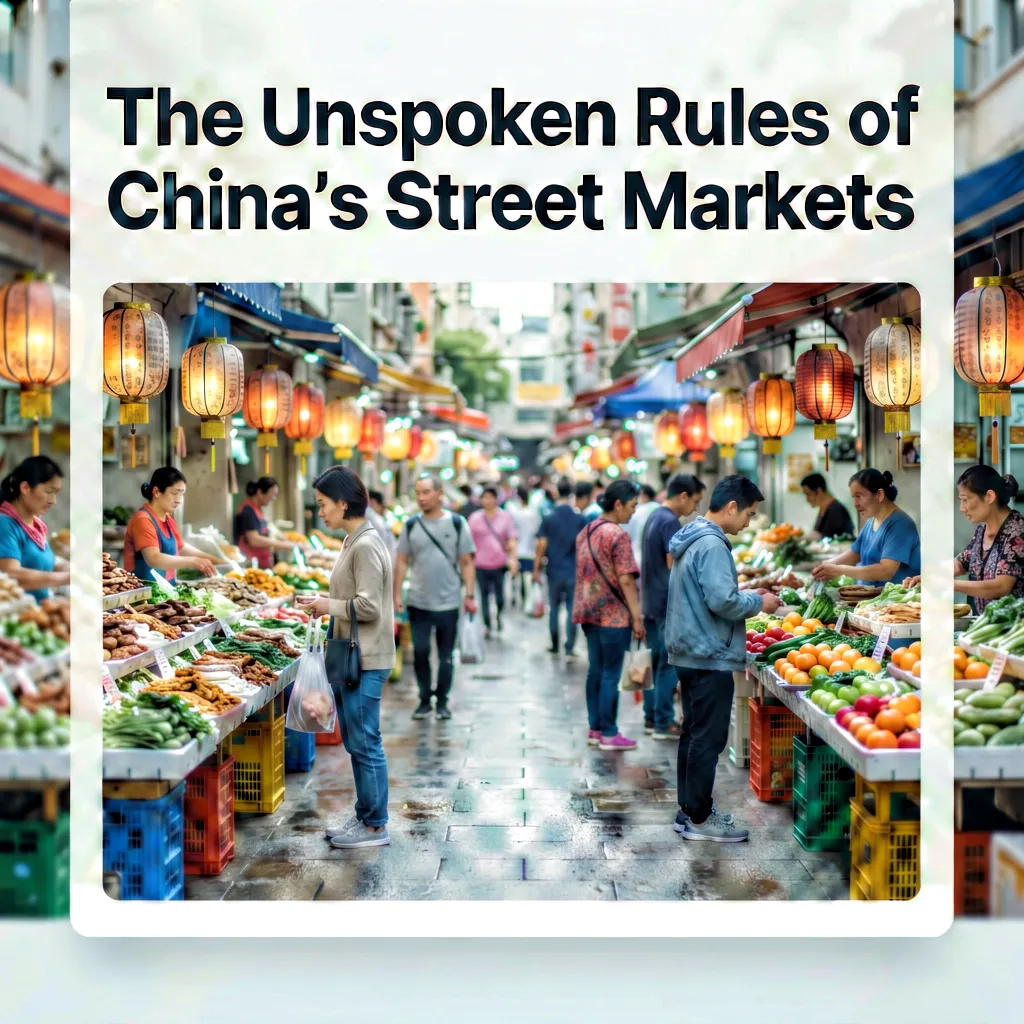
The scene unfolds with a quiet, almost cinematic normalcy. In a modest fruit and vegetable shop in a Chinese city in 2026, an elderly man browses the day’s selection. Trailing behind him, a little boy, perhaps three or four years old, stops suddenly. Without a hint of urgency or shame, without even breaking the gentle, conversational eye contact he’d been sharing with his grandfather, the child begins to urinate, right there on the shop’s tiled floor. The old man simply smiles, a soft, accepting expression, and continues his slow perusal of a basket of leafy greens. For a newly arrived foreign observer, this is a moment of profound cultural collision. It is not merely an act of public inconvenience; it is a direct challenge to deeply ingrained Western notions of public decency, parental responsibility, and the sanctity of commercial space. Yet, for the locals in the shop, it registers as a minor, if slightly damp, footnote in their daily routine. This incident, while jarring, is a perfect prism through which to examine the often-misunderstood social architecture of China’s neighborhood markets—spaces governed by a flexible, pragmatic, and communal set of rules that differ sharply from the rigid, privatized norms of many Western societies.
The initial shock for the "lao wai" or foreigner is a visceral one. The shop floor, a surface we are conditioned to see as a shared public good and a hygienic zone for commerce, is instantly re-contextualized. It becomes an extension of the home, a neutral ground where biological needs, especially of the very young, are met with casual tolerance. The grandfather’s smile is not one of delinquency but of benign permission. He is not allowing the act so much as he is acknowledging it as a natural, if untidy, part of the child’s existence in this shared space. This immediately prompts a cascade of questions for the outsider: Where is the public toilet? Why not use a container? Where is the maternal chiding, the "No, no, not here!" that is the universal soundtrack of toddlerhood? The answers lie not in a lack of discipline, but in a fundamentally different calculus of social boundaries.
To understand this, one must first deconstruct the Western paradigm of "public" and "private." In many Euro-American contexts, these spheres are fiercely guarded. The public realm—streets, shops, transport—is a zone of strict behavioral codes designed to maximize individual comfort and minimize sensory intrusion. Bodily functions, strong odors, loud conversations, and unruly children are framed as violations of a social contract that prioritizes abstract order and personal space. The private sphere of the home is the only sanctioned domain for complete, unselfconscious release. China’s social fabric, however, has historically been woven from the threads of collectivism and relational harmony (guanxi), not abstract individualism. The distinction between "my business" and "our space" is far more porous. A neighborhood shop is not a sterile corporate outlet; it is a community node. Its floor is not just a transactional surface; it is a courtyard, a living room, a place where neighbors exchange gossip, where deals are brokered over baskets of oranges, where life happens in situ. The child’s action, therefore, is not a pollution of a commercial zone but an organic event within a social zone. The shopkeeper, if they notice at all, will likely fetch a mop after the fact without a word of complaint, viewing it as an unfortunate but inevitable cost of being a community hub. The transaction is not just the sale of vegetables; it is the perpetuation of a social bond. The boy’s biological need is accommodated because the relational harmony between the grandfather (a valued customer) and the shopkeeper supersedes the abstract rule of "no urination on premises."
This fluidity extends to other behaviors noted in the summary: the casual spitting, the smoking in the produce aisle, the obsessive but ultimately fruitless fondling of every eggplant. Each is a small rebellion against a hyper-sanitized, rule-bound commercial ideal. Spitting, often cited as a major faux pas by foreigners, is in many contexts a pragmatic expulsion of phlegm—a bodily function deemed less offensive than soiling a public bin or, worse, swallowing it. It is a direct, unceremonious release. The smoking in the produce aisle is less about addiction and more about the shop being an extension of the street, where smoking rules are hazy and social permission is granted by the simple fact of being an enclosed, familiar space. The "fondling and inspecting every vegetable before buying none of them" is not merely indecisive shopping; it is a form of social engagement. The tactile inspection of produce—feeling the weight of a tomato, squeezing a cucumber—is a legitimate part of the bargaining and quality-assessment process. The act of touching, of leaving a small trace of oneself on the goods, is part of the intimate, unmediated negotiation between customer and commodity that defines these markets. To buy without this ritual is to skip a step in the social dance. The fact that the person buys nothing is irrelevant; the social performance, the contact, has been completed.
This brings us to the central, and most culturally specific, element: the child. The Western model of child-rearing in public is one of containment and instruction. The child is a project to be managed, their behavior a direct reflection of parental competence and respect for public order. We say, "We’re working on potty training," and the subtext is, "Please judge us favorably." The Chinese model, particularly in these densely populated, communal environments, often treats the child as an autonomous social actor from a much earlier age, with needs that are communally acknowledged. The intense, sometimes baffling to outsiders, focus on a child’s comfort—stripping them down to single layers in summer, feeding them on the spot, tolerating tantrums with a shrug—stems from a view of the child as an integral part of the social fabric, not a disruption to it. The grandfather’s lack of dramatic intervention suggests a philosophy where the child’s immediate physical need is more important than the abstract rule of floor sanitation. The social "face" saved here is not the shopkeeper’s pristine floor, but the grandfather’s reputation as a reasonable, caring elder who does not cause a scene over a minor, natural accident. Confrontation, shame, and public correction are often seen as greater disruptions to harmony than the original act.
The shopkeeper’s probable reaction—or lack thereof—is the final piece of this puzzle. Their tolerance is not born of weakness but of astute social and economic calculation. In a market where competition is fierce but customer loyalty is paramount, alienating a regular over a toddler’s accident would be a catastrophic misstep. The shopkeeper operates on a different ledger. Their account is not in strict adherence to posted rules but in accumulated social capital. They remember your favorite tea, they give you an extra orange, they overlook the little one’s accident. In return, you are a loyal customer, you speak well of them, you bring your family. This is the currency of guanxi in its most micro form. The shop floor, then, is a stage where these transactions of tolerance and loyalty are constantly performed. The "surprise" felt by the outsider is the surprise of encountering a completely different economic and social logic. We think in terms of rights and violations; they think in terms of relationships and long-term reciprocity.
What the summary calls "casually smoking in the produce aisle" can be re-framed as the blurring of functional zones. In a Western supermarket, the produce aisle is a carefully curated, climate-controlled zone of health and freshness. Smoking violates its very premise. In the neighborhood shop, the "produce area" is simply where the vegetables happen to be stacked, adjacent to the space where the shopkeeper sits on a stool, where customers lean on the counter to chat, and where the air is already thick with the smell of damp earth, garlic, and yesterday’s cooking oil. The smoke is just another layer in that olfactory tapestry. The boundary between "commerce" and "leisure," between "clean" and "dirty," is negotiated in real-time by the people present, not dictated by a corporate policy manual.
This is not to romanticize the scene. The shop can be chaotic, the air quality poor, the hygiene standards lax by certain international metrics. The "little" boy’s accident is, in practical terms, unhygienic. But to judge it solely by those metrics is to miss the point entirely. It is to apply the grammar of one language to a sentence written in another. The value of observing this incident is not in concluding that one way is right and the other wrong, but in understanding the coherent, alternative logic at play. The Chinese market operates on a principle of flexible functionalism. Spaces adapt to needs. Rules yield to relationships. The individual’s immediate comfort, particularly a child’s or an elder’s, can temporarily suspend the general order because the community’s cohesion is seen as a more resilient, long-term order.
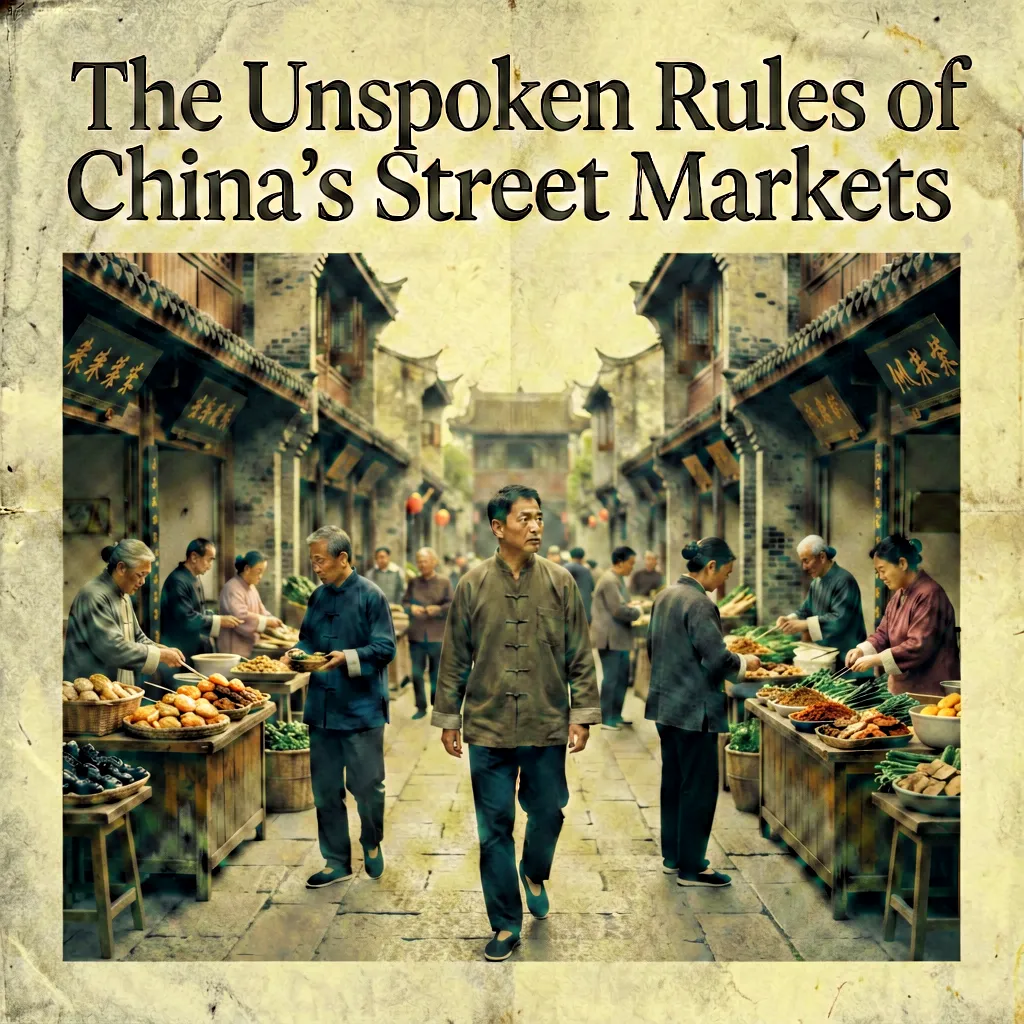
For the foreigner trying to "think" like a local, the shift in perspective is difficult but illuminating. One must stop looking for the rulebook and start reading the room. Who is the shopkeeper? Who are the regulars? What is the unspoken negotiation happening? The man who spends ten minutes handling every vegetable may not be a frustrating time-waster; he may be conducting a meticulous quality check, or he may be using the tactile experience as a pretext for conversation, for maintaining guanxi with the vendor. The woman who loudly complains about the price is not necessarily being rude; she is performing a expected role in the bargaining drama, a ritual that strengthens the social bond through playful conflict. The grandfather with the urinating grandchild is not a negligent parent; he is a participant in a system that prioritizes the child’s immediate needs and the family’s social standing over the abstract cleanliness of a commercial floor.
This cultural script becomes most visible at moments of "surprise," like the incident described. These are the stress tests of the social system. How does the system respond? In this case, the response is a collective, silent shrug. The other shoppers might offer a knowing look to the grandfather, a slight smile. The shopkeeper might nod, fetch the mop. The crisis is averted not by enforcement but by incorporation. The event is absorbed into the day’s flow without a ripple of major conflict. This is the ultimate proof of the system’s strength: its capacity to absorb the unexpected without collapsing.
In 2026, as China’s cities modernize and new generations grow up with different influences, these traditional market spaces are both cherished and contested. They are seen as authentic, vibrant, and socially rich, but also as messy, inefficient, and unhygienic by new standards. The incident with the child is a tiny, symbolic battle between these two value systems. The grandfather represents an older, more fluid, relationship-based order. A younger, more Westernized parent might have rushed the child to a public toilet, mortified, adhering to a new code of privatized, contained childhood. Both approaches are valid within their own frameworks. The mark of cultural intelligence is not to judge which is superior, but to recognize the framework in operation.
Ultimately, the vegetable shop floor becomes a cultural text. The spilled urine is not a stain but a punctuation mark—a sudden, stark reminder that the rules here are written in a different ink. They are rules of tolerance, of flexible space, of communal responsibility for the very young and the very old, of economic exchange as social exchange. To see the "surprise" and only feel disgust is to read the text with the wrong alphabet. To understand the smile of the grandfather, the unperturbed shopkeeper, the continuing hum of conversation, is to begin to decipher a profound and pragmatic social philosophy. It is a philosophy that asks not "What is the rule?" but "What is the relationship?" and "What is the need?" In that quiet shop, with its smells, its textures, its unspoken agreements, the answer to those questions is written all over the floor, in a language that takes a lifetime to learn, but can be glimpsed in a single, shocking, yet perfectly normal moment.
``` ```
Responses • 0
0/2000
ID: 1326
Chris
Offline
1 hr
Visited
From
Bakersfield, United States
Send Message