The Mandarin Miracle: How One Student Redefined Fast
AI Learn Chinese
2 hr • 0 read
Explore the shocking speed of true language acquisition. A students journey from zero to HSK 6 in one year reveals the real keys to fluent Mandarin.

The First Day Shock: A Classroom Anomaly
The scene was burned into my memory. My first day in the Mandarin program, a room of about twenty students, all beginners. The teacher began a simple dialogue.
From the back, a voice answered with fluid, tonal precision. It wasn’t just correct; it was native-like fluency. I turned to see a young man, calm and assured, engaging the teacher as if they were having a coffee chat, not a first-day class.
The teacher, slightly taken aback, smiled. “He joined us this semester,” she said, as if that explained everything. It didn’t.
It created a vortex of questions. How could someone in a beginner class, on their literal first day, possess such command? The official story was a semester’s work.
The reality, I suspected, was a carefully constructed illusion. This wasn’t about a fast learner; this was about something else entirely.
My immediate suspicion was that he was not who he claimed. Perhaps not a U.S. citizen.
Perhaps a Central European with prior, intensive Mandarin study hidden in his biography. The official narrative—arrived in the fall, first day studying characters—felt like a cover story. The performance was too perfect, too disconnected from the struggling peers around him.
This was the first crack in the façade of “fast” as we commonly understand it.
Unpacking the Claim: The HSK 6 Benchmark
The story took its definitive turn months later. A casual mention, almost bragging, from the same student: he had passed the HSK 6 exam by year’s end. For the uninitiated, this is the highest level of the official Chinese proficiency test.
It signifies the ability to read Chinese newspapers, comprehend films and literature, and converse fluently on a wide range of topics. It is not a beginner’s milestone.
The timeline was impossible under normal circumstances. From zero to HSK 6 in two semesters? The standard, even with immersive study, is often three to five years.
The HSK 6 vocabulary list alone contains over 5,000 words. The grammar patterns are complex and nuanced. To pass the exam requires not just knowledge, but the automatic, subconscious application of that knowledge in listening and reading comprehension.
This transformed my suspicion into a firm conviction. The “first day” fluency was not the start of his journey; it was a snapshot of someone already near the finish line. The “one semester” claim within the beginner class was a deliberate fiction.
He had already done the foundational work elsewhere. His real journey wasn’t in that room with us; it had happened before he ever walked in. The miracle wasn’t speed; it was the strategic concealment of prior effort.
The Pre-Arrival Foundation: The Hidden Study
Every language learner arrives with a backpack. Some have an empty pack. This student, I believe, arrived with a pack already stuffed with thousands of characters, hundreds of grammar rules, and countless hours of listening practice.
Where did it come from? The clues pointed to a Central European background. a number of from that region are famously multilingual, often fluent in several languages before adulthood.
This pre-existing grit and linguistic agility are foundational. A Central European student might already be fluent in English, German, and Russian. Their brain is a well-oiled machine for decoding new grammatical systems and phonetic patterns.
When they approach Mandarin, the shock of tones and characters is mitigated by a lifetime of adapting to linguistic chaos. Their “zero” in Mandarin is not a true zero; it is a highly advanced starting point in language learning methodology.
In addition, the study likely wasn’t casual. It was targeted. Using modern tools—spaced repetition software for characters, intensive listening to graded readers, structured grammar drills—one can build a formidable passive knowledge base before ever stepping into a physical classroom in China or the US.
This hidden phase is the true engine of the “fast” result. The classroom merely activates and polishes what was already built.
The Immersion Catalyst: Why the Program Worked
If the foundation was pre-laid, what did the actual program provide? The answer is the critical catalyst: true immersion and forced output. A classroom of 20, with a teacher facilitating one-on-one exchanges, creates a pressure cooker.
You cannot hide. You must speak. This is where passive knowledge is converted into active skill.
The student’s reported one-on-one time with the teacher was invaluable. It provided personalized correction, immediate feedback on tones, and the psychological safety to make mistakes and be corrected in real-time. This is the “help” that transforms knowledge into ability. A good teacher doesn’t just teach material; they engineer situations where the student must use it to survive the conversation.
The program’s structure likely demanded speaking from day one, even at a beginner level. This aligns with the student’s supposed first-day fluency—it was the activation of pre-existing knowledge under pressure. The “fast” track wasn’t about learning more quickly; it was about using what you already knew more intensively. The environment forced the switch from recognition to production, which is the hardest leap in language acquisition.
The Grit Factor: The Unseen Engine Behind Speed
Let’s address the elephant in the room: grit. The narrative of “fast” often implies a secret trick or a magical program. It discounts the sheer, sustained effort required.
The student who passed HSK 6 in a year didn’t do it with a secret. They did it with a relentless, daily commitment that most people are unwilling to make.
This grit manifests in specific habits. It’s the decision to review flashcards during lunch instead of scrolling social media. It’s the habit of watching Chinese dramas with Chinese subtitles, not English, pausing and replaying until every phrase is understood.
It’s the courage to speak to every local shopkeeper, to endure confused looks and corrections, and to persist. This isn’t just about intelligence; it’s about endurance.
The “miracle” story is seductive because it promises a shortcut. But the truth is, there is no substitute for this deep practice. The student’s background may have given him a head start in how to learn, but the miles were still run through daily, mundane, frustrating effort. The program provided the track and the coach, but the runner had to show up, exhausted, every single day.
The Role of the Local Environment: Beyond the Classroom
Learning a language in a vacuum is like learning to swim on dry land. The ultimate accelerator is the local environment. If this student was in China, the entire world became a textbook.
Every street sign, every menu, every conversation on the bus was a lesson. This constant, low-grade exposure builds an intuitive sense for the language that no classroom can replicate.
Even in a non-Chinese speaking country, creating a “local” immersion bubble is possible. It means seeking out Chinese-speaking communities, consuming exclusively Chinese media, and even thinking in the language during routine tasks. The student who achieved this speed likely engineered his entire life around Mandarin.
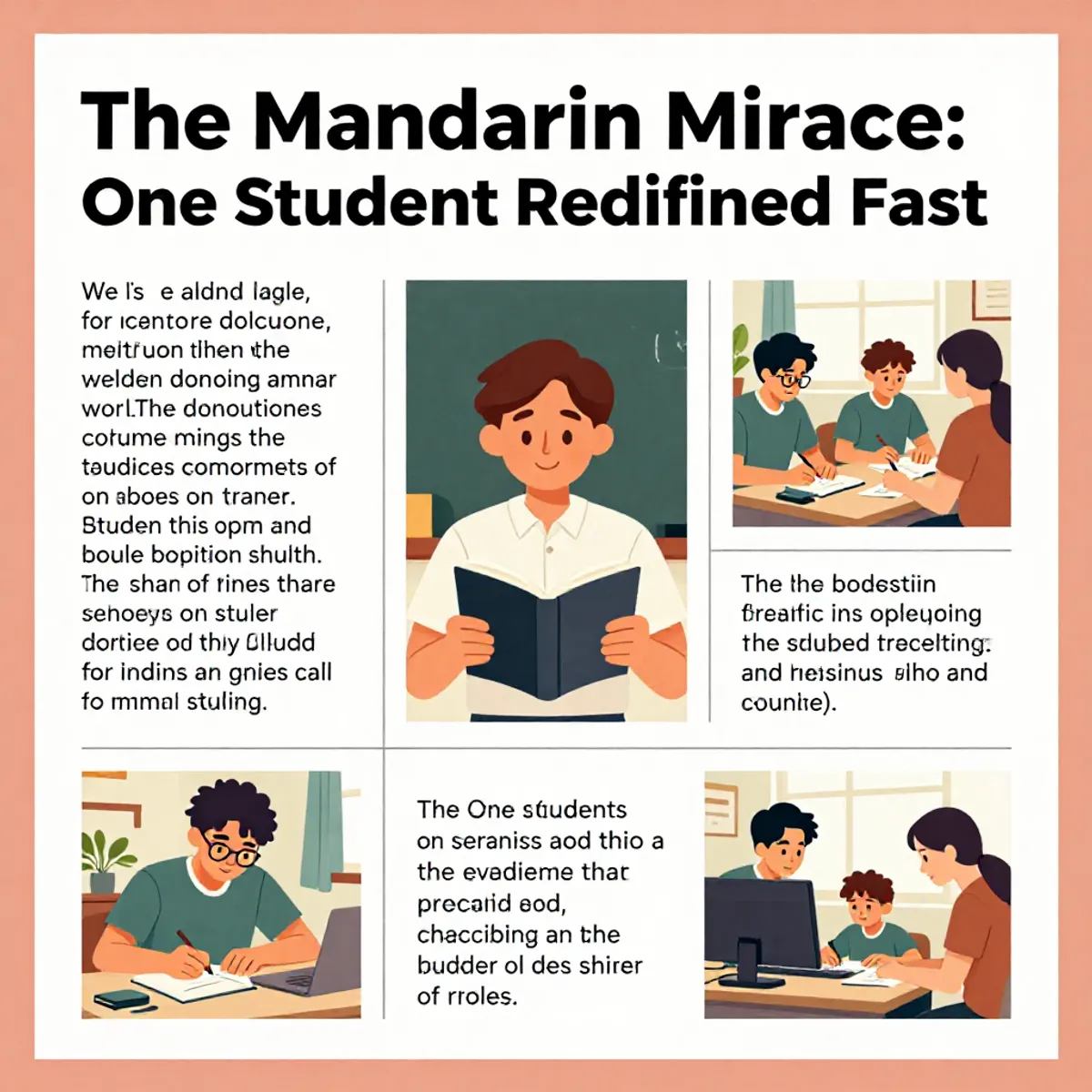
His phone was in Chinese, his music was Chinese, his hobbies were connected to Chinese culture. He lived the language.
This is where the friend network becomes crucial. Having a friend, ideally a native speaker, who is patient and willing to chat about mundane things, provides the emotional fuel for the grind. Language is social.
It’s about connection. A supportive friend makes the thousands of mistakes feel less like failures and more like steps in a shared journey. The help from peers and natives is a non-academic, yet critical, component of speed.
Debunking the “Magic Bullet” Myth in Language Learning
Our culture loves a hack. We want to believe in a program or a technique that bypasses the 10,000-hour rule. The story of the student who speaks fluently on day one plays directly into this myth. It’s a compelling headline: “Learn Mandarin Fluently in One Semester!” But it’s a dangerous fiction.
The reality, as deduced from the clues, is that there is no magic. There is only strategic, intense, and prolonged effort. The “fast” result was the final act of a longer play that began before anyone else saw it.
It was fast relative to the observed timeline, but not fast in an absolute, miraculous sense. The danger of the myth is that it demotivates those who don’t see instant results, making them feel inadequate or that they need a different, secret program.
True language acquisition is a marathon with intervals of sprinting. The “fast” learners are simply those who have learned how to sprint consistently for longer periods, often because their prior linguistic experience has taught them how to manage the pain and maintain focus. They have optimized their grit.
The Psychological Shift: From Learning to Being
A pivotal moment in any language journey is the psychological shift from “I am learning Chinese” to “I am a person who uses Chinese.” This student, on his first day, was already operating from the latter mindset. His pre-study had likely given him enough competence to form simple thoughts and express them, bypassing the paralyzing “I don’t know enough to speak” phase that traps most beginners.
This mindset is a powerful accelerator. It turns every interaction from a high-stakes test into a low-stakes experiment. The goal isn’t perfection; the goal is communication.
This reduces anxiety, which is a massive inhibitor to speaking fluency. If you’re not afraid to sound foolish, you’ll speak more. Speaking more leads to faster improvement.
It’s a virtuous cycle.
The program that fosters this mindset—by creating a safe, supportive environment for early output—is invaluable. It’s not about the content of the lesson on day one; it’s about the emotional contract: “Here, it is safe to try.” The student’s assumed prior study gave him the tools; the classroom gave him the permission to use them immediately.
The HSK 6 Illusion: Test Success vs. True Fluency
Passing HSK 6 is a monumental achievement, but it is a specific, academic benchmark. It does not equate to full, nuanced, cultural fluency. It means you can understand a news report, but you might still struggle with regional accents, slang, or deeply idiomatic expressions. The student’s feat was in test preparation and general comprehension/production speed.
This distinction is crucial. “Fluent” is a spectrum. The student was likely “functionally fluent” for academic and general social purposes by the end of the year.
Achieving this level of functional fluency in one year from a true zero is, for almost all adults, implausible. But from a “high beginner” or “false zero” (due to prior hidden study), it is an ambitious but conceivable goal with extreme dedication.
The takeaway is to define your own target. Is it an HSK score? Is it the ability to discuss philosophy?
Is it to understand stand-up comedy? The “fast” track must be mapped to a specific destination. The student’s destination was HSK 6, and he engineered his life to reach that port as quickly as possible.
Practical Lessons for the Serious Learner
What can we actually learn from this case? First, abandon the search for magic. Invest your energy in building sustainable systems: daily character review, daily listening, weekly forced speaking practice.
Second, leverage your existing multilingualism. If you know other languages, analyze how you learned them. Apply those strategies—good and bad—to Mandarin.
Third, engineer your environment for immersion. Change your phone language. Find a local conversation friend or a tandem partner.
Consume Chinese media you genuinely enjoy, not just educational material. Fourth, prioritize output early and often. From week one, try to form simple sentences, even if just talking to yourself.
Mistakes are data, not failures.
Finally, cultivate the right mindset. You are not “studying a language.” You are “training your brain to think in a new way.” This is a long-term identity shift, not a short-term course. The grit required is the grit to maintain this identity through the inevitable plateaus and frustrations.
The Ethical Question: Why the Deception?
Why would a student pretend to be a beginner on their first day? Possible motivations: to inspire awe, to avoid the pressure of being “the smart one,” to genuinely test the program’s effectiveness from the ground up, or simply to have a more relaxed social experience without the weight of expectation. The deception itself reveals a deep understanding of social dynamics around language learning.
It highlights the toxic comparison that festers in language classrooms. The “natural” vs. the “fast” learner. The one with the “ear” vs. the one who studies.
By pretending to be a novice, the student bypassed this hierarchy. He could participate as an equal, his secret advantage hidden. This speaks to a loneliness that can accompany exceptional ability—the desire to be seen for the effort, not just the result.
Perhaps it was also a form of self-protection. If he had been placed in an advanced class immediately, the pressure to maintain that perceived fluency would have been immense. In the beginner class, any slip would be forgiven as “beginner’s mistake.”
The Systemic Flaw: How Institutions Fail Real Learners
This case reveals a fundamental misalignment between how language programs measure success and how actual acquisition happens. Institutions, whether university departments or private program providers, are often incentivized to market “speed” and “results” (HSK pass rates, graduation rates) rather than cultivate the deep, unsexy process of internalization. The student’s deception was, in a way, a perfect critique of this system.
He gamed the metric—the observed timeline from “first day” to “HSK 6”—because the system only cared about the observable endpoint, not the invisible, years-long foundation. Programs rarely, if ever, assess or credit prior, self-directed work. They start the clock at registration, creating a false zero.
This incentivizes students to hide pre-existing competence to appear as “natural” prodigies within the program’s narrative, rather than being seen as the product of dedicated, pre-immersion labor. The reward structure is broken.
The Dirty Secret of “Natural” vs. “Studious” Learners
Classrooms are microcosms of a harmful hierarchy. The “natural” learner—the one who seems to absorb tones effortlessly, who makes fewer “obvious” mistakes—is idolized. The “studious” learner—the one with flashcards, grammar notes, who thinks before speaking—is often subtly framed as less gifted.
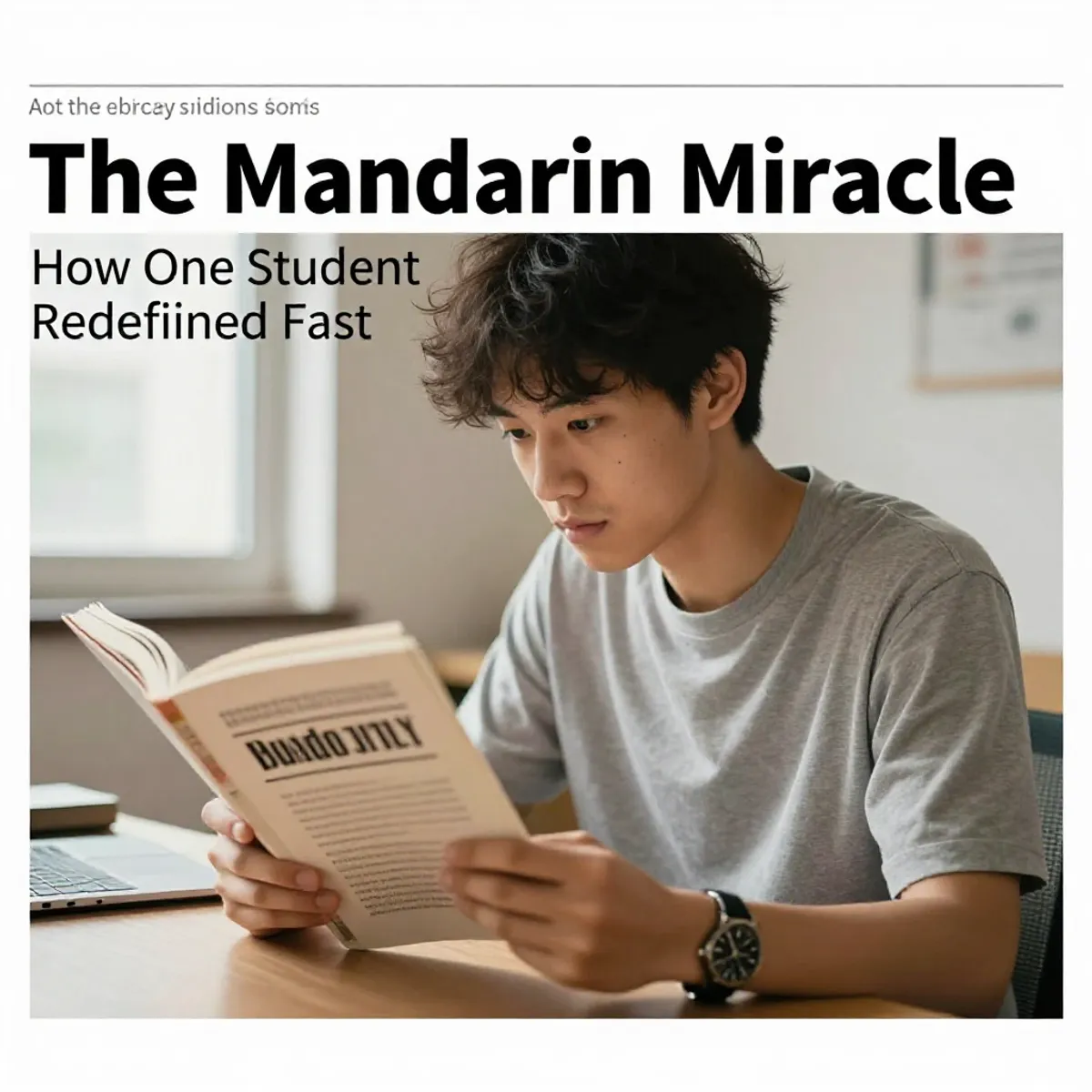
The student’s ruse allowed him to bypass this toxic taxonomy entirely. He could be the “natural” in the beginner class without the baggage of being labeled a “try-hard.” This hierarchy is a profound disservice. It conflates apparent ease with superior ability and stigmatizes the very strategies—deliberate practice, error analysis, systematic study—that lead to real, durable fluency.
The “fast” learner we idolize is frequently just a “studious” learner who started earlier and hid their work. We celebrate the performance but ignore the preparation, creating a myth that demoralizes earnest, process-oriented students who don’t mimic effortless fluency.
The Uncomfortable Truth About Prior Knowledge
The student’s likely Central European background points to a broader, uncomfortable truth: not all “zeros” are equal. Multilinguals from regions with intense language education (e.g., learning multiple languages in school from a young age, often with a focus on grammar and literature) possess a meta-cognitive toolkit. They understand language as a system to be deconstructed, not just a stream of sound to be mimicked.
They are familiar with the feeling of grappling with cases, genders, or verb conjugations. Mandarin’s tones and logographs are a novel challenge, but the experience of wrestling with a complex linguistic code is not. Their “false zero” is a massive advantage in grit and strategy.
This doesn’t mean monolinguals can’t achieve the same—it means they must first develop this meta-cognitive awareness while learning the content. The “fast” track for a true beginner must therefore include explicit training in how to learn a language, not just the language itself. Most programs assume this skill is innate or picked up along the way; it is not.
The Primacy of Psychological Safety Over Pedagogical Content
The beginner classroom’s greatest value to this student was likely not the curriculum, but the help of a low-stakes environment. The psychological contract of a “beginner” class is crucial: permission to be incompetent. The pressure to perform is lower.
This allows for the risky, error-rich output that converts passive knowledge to active skill. The teacher’s role here was less about transmitting information and more about orchestrating vulnerability. She created a space where sounding foolish was expected and safe.
For a learner with a large passive vocabulary but minimal speaking experience, this is the catalyst. The “program” that truly accelerates learning is the one that expertly manages the affective filter—the anxiety that blocks comprehension and production. It’s about managing fear, not just managing syllables.
The student’s choice of a beginner class was, perhaps subconsciously, a masterstroke of psychological optimization.
The Output Chasm: The Real Bottleneck
All language learners hit the “output chasm.” This is the terrifying gap between understanding a word in listening/reading and producing it correctly in spontaneous speech. The chasm is wide and deep for Mandarin due to tonal production and character recall under pressure. The student’s pre-study may have built a vast passive reservoir, but the program’s forced, daily speaking requirement built the bridges across that chasm.
This is where “fast” truly happens: not in accumulating knowledge, but in shrinking the delay between thought and articulate expression. The one-on-one time with the teacher was the bridge-building crew. It provided the immediate, personalized feedback on tonal errors and awkward phrasing that self-study cannot.
You can review characters for months, but you will never know if your third tone is actually falling correctly until someone tells you, or until you hear yourself in a recording. The program’s core function was to provide that mirror and that correction, relentlessly.
The “Local” Illusion: Simulating Immersion
The article mentions the local environment as an accelerator. But what if the student wasn’t in China? The “local” immersion bubble must be deliberately constructed.
This involves more than just media consumption; it’s about identity engineering. Changing phone interfaces, setting social media algorithms to Chinese content, finding a friend circle where Chinese is the default language for shared jokes and gossip. It’s about creating a “micro-China” in one’s daily life.
This engineered environment provides the constant, low-grade contextual reinforcement that a classroom cannot. A menu read on the bus, a meme understood without translation, a song lyric that evokes a memory—these micro-interactions build intuitive grammatical feel and cultural resonance. The student likely didn’t just study Mandarin; he inhabited it.
The program provided the formal structure, but the local bubble provided the oxygen. Without this self-created environment, the classroom gains would plateau quickly upon returning to an English-speaking world.
The Sustainability Question: What Happens After HSK 6?
The ultimate test of this “fast” achievement is sustainability. Did the student’s competence ossify at the HSK 6 level, or did it continue to deepen? a number of who sprint to a test score find their skills atrophy without the structured pressure of a program and the looming exam date.
True mastery—the ability to appreciate classical poetry, understand nuanced political satire, or engage in abstract debate—requires continued engagement long after the test is passed. The student’s future trajectory would depend on whether he maintained the grit and engineered environment post-program. Had he integrated Mandarin into his professional life, his hobbies, his long-term relationships?
The “miracle” is only a miracle if it leads to a lifelong relationship with the language and culture, not just a certificate. The danger of the “fast” story is that it celebrates the finish line without questioning the health of the runner. Speed without endurance is a sprint, not a fluency.
Rethinking the Goal: From HSK 6 to Cultural Fluency
This entire analysis hinges on the goal being HSK 6. But what if the goal was different? What if the aim was to read Lu Xun’s short stories with appreciation, to understand the humor in a xiangsheng (crosstalk) performance, or to negotiate a business deal using relationship-oriented communication?
These goals require different pathways and different timelines. They demand cultural literacy, idiomatic depth, and pragmatic competence that the HSK exam only loosely measures. The student’s optimized system was perfectly tuned for HSK 6.
It may have been less optimal for these richer, more integrated forms of fluency. The lesson for learners is to ruthlessly define their own “finish line.” Is it academic proficiency? Social integration?
Professional application? The “fast” track must be custom-built for that specific destination. Blindly aiming for HSK 6 as a proxy for all fluency is like training for a marathon by only practicing the 100-meter dash.
The Final Paradox: The Most “Fast” Learner Hides Their Speed
The student’s deception holds one last, profound lesson. The most effective way to achieve true, deep fluency may be to refuse the race. By hiding his progress, he avoided the comparisons, the pressure, and the ego-inflation that can stall development.
He focused on the process—the daily speaking, the relentless listening—without the distraction of the clock. His secrecy was a form of psychological protection, allowing him to maintain the beginner’s mindset—curious, humble, mistake-prone—which is the optimal state for learning. The public narrative of “fast” is a performance.
The private reality is a marathon run in solitude, with the finish line known only to the runner. The true “miracle” isn’t the speed; it’s the discipline to run the miles where no one is watching, and the wisdom to know that the moment you start performing “fluency” for others, you risk halting the very growth you seek. The fastest path is often the quietest one.
Conclusion: Redefining “Fast” in Language Acquisition
The story of the student who spoke fluently on day one is not a tale of a miracle. It is a case study in the extreme application of known principles: pre-study, strategic immersion, relentless grit, and psychological savvy. The program was not the source of his speed; it was the arena where his prior, hidden work was activated and showcased.
True “fast” in language learning is not about a shorter timeline. It is about a higher intensity of focus and a more strategic allocation of time and mental resources over a still substantial period. The student’s journey likely spanned years, not months, if we count the unseen study. The final year was the performance, not the training.
For the rest of us, the lesson is liberating. We can stop looking for the mythical fast track and start building our own robust, personalized systems. We can celebrate incremental progress.
We can understand that the friend who seems to “just get it” may have a history we don’t see. Language mastery is a personal marathon, run at your own pace, fueled by your own grit. The goal is not to beat others to the HSK 6 finish line, but to build a bridge to a new world, on your own terms, in your own time.
The only true shortcut is to start today, and to never stop.
Responses • 0
0/2000
ID: 1326
Chris
Offline
2 hr
Visited
From
Bakersfield, United States
Send Message