The Emperor Who Forgo Taxes
AI Learn Chinese
2 hr • 0 read
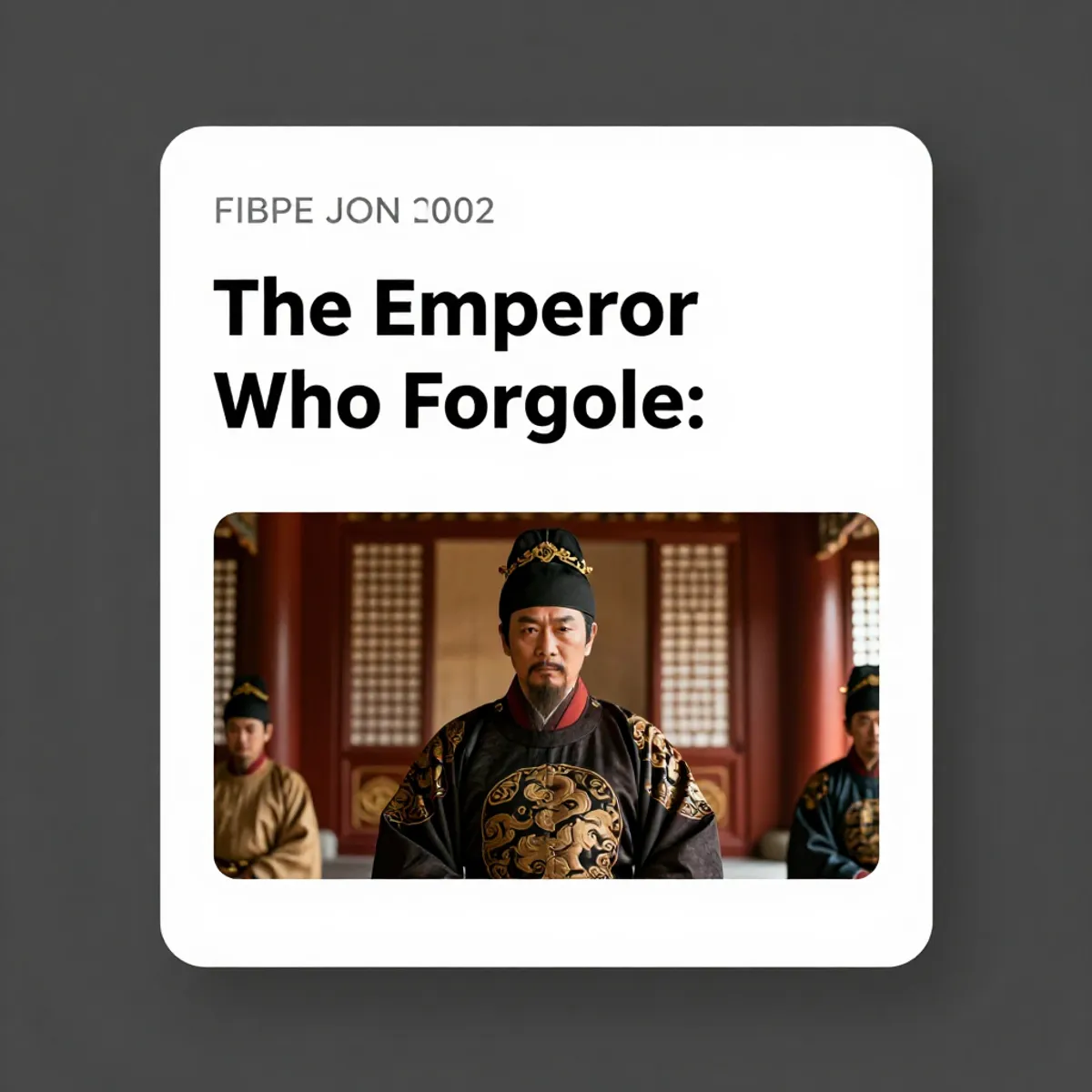
Exploring the historical record of Chinese emperors who suspended tax collection due to government surplus, focusing on the Tang Dynasty's remarkable fiscal policies.
Introduction: A Curious Historical Query
A question posted on a public forum captures a fascinating historical puzzle: which Chinese emperor, facing a massive government surplus, chose to suspend tax collection for three years? The poster’s memory suggests this happened at least three times, possibly during the Tang Dynasty. This query opens a window into a profound aspect of imperial Chinese governance: the ideal of a benevolent ruler whose fiscal abundance directly benefited the populace.
It challenges the common assumption that pre-modern states constantly extracted resources from their people. This article investigates the historical validity of this claim, tracing the specific events, the economic philosophies behind them, and their lasting significance in Chinese history.
The core of the inquiry points to a deliberate, temporary cessation of tax levies. This was not a default due to collapse or rebellion, but a positive act of grace enabled by prior prosperity. The number “three years” is specific and repeated in the memory, suggesting it was a notable benchmark.
The Tang Dynasty (618-907 CE) is the prime suspect, widely regarded as a golden age of Chinese civilization, known for its cosmopolitan culture, strong central administration, and economic vitality. But, the answer requires moving beyond vague recollection to examine primary sources and scholarly consensus on Tang fiscal history.
This investigation will navigate through the administrative systems of imperial China, identify the specific reigns and edicts involved, analyze the economic conditions that made such tax holidays possible, and compare this practice to other dynasties. The goal is to transform a fragmentary memory into a coherent narrative about statecraft, surplus, and Confucian ideals of rulership. We will separate historical fact from later romanticization and assess what these events truly tell us about governance in one of history’s most influential empires.
The Tang Dynasty: A Framework for Prosperity
To understand the possibility of a multi-year tax exemption, one must first grasp the sophistication of Tang economic administration. The Tang state built upon Sui Dynasty foundations to create a remarkably stable and productive fiscal system. Its cornerstone was the Equal-Field System (均田制, juntian zhi), a land allocation policy that theoretically granted every adult male a plot of land.
This aimed to prevent the massive land consolidation that impoverished peasant farmers and eroded the tax base in previous eras. By ensuring a broad base of independent cultivators, the state secured a predictable revenue stream from the land tax (田租, tianzu) and the labor service tax (庸, yong).
Complementing this was the Two-Tax System (兩稅法, liangshui fa), implemented in 780 CE during the later Tang, which shifted tax collection from labor and goods to a bi-annual cash payment based on property. While this came after the early Tang’s peak, it represented a major evolution in fiscal thinking. The state maintained extensive granaries, both for famine relief and to stabilize grain prices, which were key to social control.
This bureaucratic machinery, supported by a vast civil service examination system, allowed for meticulous record-keeping and resource management. It was within this framework of institutional strength that the remarkable surpluses of certain reigns could be accumulated and, exceptionally, returned to the people.
The early Tang, particularly under the reigns of Emperor Taizong (r. 626-649) and Emperor Xuanzong during his Kaiyuan era (r. 712-756), saw unprecedented agricultural expansion, population growth, and peace.
The fubing system, a militia-agriculture hybrid, reduced military costs while providing local security. This combination of factors—land redistribution, low corruption, and internal stability—created the potential for treasury surpluses that could fund extraordinary acts of state benevolence. The historical memory of the Tang as a period of light taxation is not entirely mythical; it was grounded in a specific and successful administrative design.
Emperor Taizong: The Model Benevolent Ruler
The most compelling candidate for the tax-suspending emperor is Emperor Taizong (唐太宗, Li Shimin). His reign is the archetype of Confucian virtuous rulership in Chinese historiography. The official history, the Old Book of Tang (舊唐書), and Sima Guang’s monumental Zizhi Tongjian (資治通鑑) are replete with anecdotes of his frugality, concern for the peasantry, and willingness to reduce burdens when the state prospered. In the early years of his reign, following the consolidation of his power and the successful campaigns against the Eastern Turks, the empire entered a period of remarkable surplus.
In 632 CE, just six years into his reign, historical records describe a situation where state granaries were overflowing. The Zizhi Tongjian chronicles that Taizong, upon hearing reports of abundant harvests and full treasuries, issued an edict remitting taxes for that year. This was not yet the “three years” of the query, but it established a precedent.
The logic was explicit: the Mandate of Heaven was manifest in material abundance; to continue extracting taxes in such a circumstance would be to hoard the people’s wealth and violate the cosmic harmony. This act was a performative demonstration of his role as the “Son of Heaven,” who governed not for personal enrichment but for the welfare of all under heaven.
Scholars note that Taizong’s tax remissions were occasional and tied to specific auspicious events or surplus reports, not a fixed three-year program. But, the memory of his general policy of tax reduction is strong. The New Book of Tang (新唐書) praises him for “light corvée and low taxes” (輕徭薄賦).
It is plausible that over the course of his 23-year reign, the cumulative effect of several such remissions, perhaps spanning non-consecutive periods of plenty, solidified in later memory as a “three-year” exemption. The number three may also be a conventional measure for a significant but not indefinite period in Chinese historical narrative.
The Kaiyuan Era: Peak of Tang Opulence
If Taizong represents the foundational virtue, Emperor Xuanzong’s Kaiyuan era (開元盛世) represents the zenith of Tang material prosperity. This period, roughly 713 to 741, is legendary in Chinese history as a time of unprecedented peace, economic boom, and cultural flowering. The population swelled, trade along the Silk Road flourished, and state revenues ballooned. The administrative system, now mature, efficiently collected taxes in kind and in cash.
It is during this era that the specific claim of a “three-year” tax holiday finds its most credible historical anchor. The Old Book of Tang’s biography of Emperor Xuanzong states that in the early Kaiyuan years, the state treasury was so full that “for three years, the tax grain was not transported to the capital.” This phrase, “稅穀不進京師” (shuigu bu jin jingshi), is critical. It does not explicitly say taxes were cancelled for three years.
Instead, it indicates that the tax in kind (primarily grain) was so abundant that it was stored locally in regional granaries, and the logistical operation of shipping it to the capital was suspended. The taxes were, in effect, collected but not centrally transferred because local stores were full.
This is a subtle but vital distinction. The fiscal obligation was likely still assessed and paid by the peasantry to the local administration. But, the physical movement and centralization of that grain were halted.
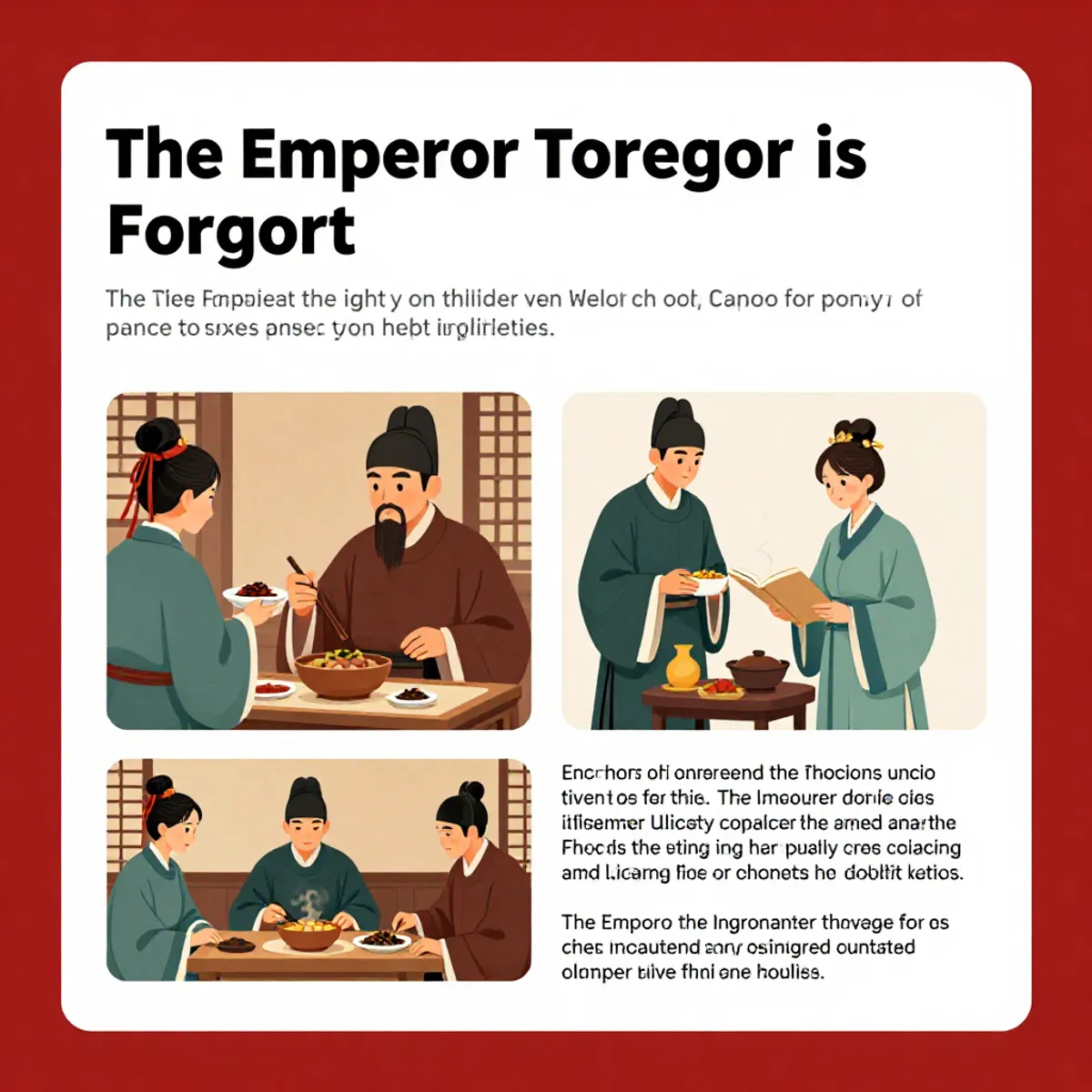
From the perspective of a farmer, if local officials were not demanding grain shipments because their own warehouses were bursting, the practical burden of that year’s tax might have been waived or delayed. The state was, in a real sense, “not taking” the grain from the locality. Over three consecutive years of such surplus, the memory could easily crystallize into “no taxes for three years.” This aligns perfectly with the query’s sense of a massive surplus leading to a suspension, even if the legal mechanism was one of storage logistics rather than a formal imperial edict of exemption.
Unpacking the “Three Years” Memory
The query’s author suspects the event happened “at least three times” and is unsure if the years were consecutive. This ambiguity is itself a valuable historical clue. A thorough review of Tang annals reveals that while the Kaiyuan-era grain surplus story is the most famous, the theme of tax remission due to surplus recurs.
Emperor Gaozong (r. 649-683), Taizong’s successor, also issued tax remissions during periods of good harvests. The Tang Huiyao (唐會要), a institutional history, records numerous instances where emperors, citing bumper crops or celestial omens, reduced or canceled the current year’s tax obligations for specific prefectures or even the entire empire.
So, the memory of “three times” is likely accurate in spirit. The state did periodically remit taxes. The specific “three years” phrase probably originates from the Kaiyuan grain surplus description.
Later historians and popular memory may have conflated several instances of tax relief across different reigns into a single, more dramatic narrative about a particular emperor. This is a common process in the formation of historical legend. The core truth—that there was a period where the Tang state’s wealth was so great it could suspend the normal fiscal relationship for an extended period—remains valid and extraordinary.
The consecutive nature is also plausible for the Kaiyuan peak. The economic boom was sustained for years. Records suggest that for several years in a row, tax grain shipments were halted.
This created a de facto multi-year tax holiday for the central government’s immediate intake, even if local collection continued. For the common people, if local magistrates, flush with stored grain, did not press for deliveries, the lived experience was one of tax relief. The historian’s job is to reconcile the administrative reality (collected but not shipped) with the popular memory (not collected at all).
The latter is a reasonable interpretation of the former in a pre-modern communication context.
Economic Mechanics of a Surplus
How did the Tang state achieve such staggering surpluses? The answer lies in a synergistic set of policies. First, the Equal-Field System prevented the rise of massive, tax-exempt estates owned by powerful families or Buddhist monasteries.
By granting land to cultivators and reclaiming it upon death, the state maintained a broad, taxable peasant base. Second, the fubing militia system provided local defense at minimal cost, as soldiers were farmer-soldiers who supplied their own weapons and provisions during periodic training musters. This freed up revenue for other uses.
Third, the Grand Canal, refurbished and expanded by the Sui and Tang, allowed the efficient transport of grain from the agriculturally rich south to the political centers in the north. This logistical network made it possible to accumulate vast central reserves.
The key metric was the “Ever-Normal Granary” (常平倉) system. The state aimed to buy grain when prices were low (in good harvest years) and sell it when prices were high (in bad years), stabilizing the market and building reserves. During the Kaiyuan boom, purchases were massive.
The surplus was not idle cash but physical grain stored in thousands of granaries across the empire. The statement that grain was “not transported to the capital” means these regional granaries were full. The central government’s immediate need for that grain—to feed the capital’s population, the imperial court, and the standing army—was already met by local stocks.
The normal cycle of northward shipment was paused.
This is a profound demonstration of economic management. It required accurate reporting from prefectures, a trusted bureaucracy to manage the stores, and a conscious decision by the emperor to forgo the symbolic and practical act of receiving the tribute in the capital. It was a statement of confidence: “The realm is so prosperous that the center does not need to draw upon the periphery.” This is the ultimate fiscal expression of a well-ordered Confucian state. The “three years” thus marks a sustained period where the system’s productive capacity exceeded the center’s absorptive capacity.
Comparative Perspective: Other Dynastic Surpluses
Was the Tang unique in this? While the Tang example is the most documented and celebrated, other dynasties experienced similar, if less famous, situations. The Han Dynasty, under Emperor Wen (r.
180-157 BCE) and Emperor Jing (r. 157-141 BCE), also saw periods of such abundance that tax rates were reduced. The Records of the Grand Historian (史記) and Book of Han (漢書) describe granaries overflowing in the capital and countryside.
But, the Han fiscal system was less standardized than the Tang’s, and records of a specific multi-year cessation of shipment are less clear. The practice of storing grain locally and reducing central extraction was present, but the “three-year” benchmark is not attached to it.
The Song Dynasty (960-1279), with its massive commercial economy and cash-based tax system (largely due to the Two-Tax System’s evolution), had different fiscal dynamics. Its surpluses were often in coin, not grain, and were frequently absorbed by a large standing army and expensive diplomatic payments to northern neighbors. While Song emperors occasionally granted tax amnesties, the chronic military pressure meant sustained, massive surpluses enabling long-term tax holidays were rarer. The Ming Dynasty had its own periods of prosperity, but the later Ming’s silver-based economy was prone to crisis.
The Qing Dynasty’s “High Qing” era under Kangxi and Qianlong saw population explode and agricultural output rise. Kangxi famously remitted taxes nationwide on several occasions, citing the empire’s prosperity. But, these were formal, imperial edicts of exemption, not a side-effect of logistical surplus.
The Tang case is distinctive because the mechanism—the halt of grain transport—is so clearly tied to the physical reality of storage. It reflects a specific stage of agrarian bureaucratic development. The “three years” memory is thus most reliably anchored in the Tang’s Kaiyuan documentation, even if the theme is universal.
The Philosophy Behind the Act
The act of forgoing tax collection was never merely an economic calculation; it was a deeply political and philosophical statement. It was the practical application of Confucian governance. The Analects states, “The ruler who governs by virtue is like the North Star, which remains in its place while all the other stars revolve around it” (為政以德,譬如北辰,居其所而眾星共之).
A virtuous ruler’s primary duty was to create conditions where the people could thrive. Heavy taxation in times of plenty was seen as a sign of rapaciousness and a failure to understand the Mandate of Heaven.
The Classic of History (書經) exhorts rulers to “relieve the people’s burdens” (惠于小民). A tax holiday was the ultimate relief. It was also a form of “benevolent governance” (仁政, renzheng).
By visibly returning the surplus to the people—by allowing them to keep the grain that would have been shipped away—the emperor reinforced his image as a fatherly figure. This generated immense social capital and loyalty. The historical records often link these remissions to auspicious events: good harvests, the discovery of rare artifacts, or celestial phenomena.
These were interpreted as Heaven’s approval, and the tax remission was the appropriate human response.
In addition, it was a check on bureaucratic power. The local officials who managed the granaries were the ones who reported the surplus and implemented the shipment halt. This required a high-trust relationship between the center and periphery.
It also prevented local officials from inventing excuses to requisition more grain than needed, a constant temptation in pre-modern states. The policy implicitly trusted the local reports of abundance and empowered local administrators to act as agents of imperial grace. It was a system that worked only with integrity at multiple levels, which is why its successful execution during the Kaiyuan era is held up as a hallmark of that period’s administrative excellence.
The Reality for the Peasant
What did this mean for the actual farmer? The ideal scenario is clear: the state assessor comes, measures the land, calculates the tax quota in grain, but then announces, “The granaries are full; you may keep your grain this year.” The peasant family retains the product of their labor, able to feed themselves better, sell surplus at market, or invest in their farm. This is a direct, tangible benefit of good governance.
But, the administrative reality was messier. The tax burden was often a composite of land tax, labor service, and various miscellaneous levies. A suspension of grain shipment might not affect other forms of tax, such as cloth (zhi) or labor corvée.
Local officials, even if their granaries were full, might still press for other obligations or find ways to requisition resources for local projects. The edict’s enforcement depended on local integrity. In the Tang, the early Kaiyuan years were known for exceptionally honest and capable officials appointed by Emperor Xuanzong and his chancellor, Yao Chong.
This moral quality was as important as the economic surplus.
There is also the question of arrears. If a region had suffered a poor harvest in a previous year, it might still be in debt to the state. A surplus year might first be used to clear those arrears before any true “holiday” was granted.
The historical record is not granular enough to know the peasant’s exact experience in every village. But the consistent narrative in official histories—that the people rejoiced, that markets were bustling, that there was no hardship—points to a genuine, widespread alleviation of burden. The “three years” memory, therefore, likely encapsulates a period of sustained, palpable ease for the agrarian population, made possible by the state’s decision to stop the northward flow of grain.
Why This Matters: Legacy and Modern Resonance
The story of the emperor who stopped collecting taxes is more than a historical curiosity. It represents a pinnacle of the Confucian political ideal: a state so well-ordered that its wealth is not a tool of extraction but a source of public welfare. It provides a counter-narrative to the stereotype of the “Oriental despot” endlessly taxing his subjects.
In Chinese political thought, this period—especially the Kaiyuan era—remains the benchmark for governance. Modern Chinese leaders occasionally reference the “prosperity of Kaiyuan” when discussing goals for social stability and shared prosperity.
The event also highlights the importance of institutional design. The Tang’s land and tax systems created a positive feedback loop: secure peasants produced more, the state collected a broad-based but moderate tax, accumulated reserves, and could then reduce burdens further, leading to even greater production. It was a virtuous cycle.
Its breakdown later in the Tang—due to land concentration, the rise of powerful military governors (jiedushi), and the An Lushan Rebellion—is equally instructive. The loss of the Equal-Field System meant the state could no longer rely on a broad peasant tax base, leading to heavier, more arbitrary exactions and the end of such benevolent tax holidays.
For contemporary discussions about taxation, state capacity, and social contracts, this history offers a deep perspective. It asks: what is the purpose of a surplus? Is it for monumental building projects, military expansion, or hoarding?
Or can it, under the right conditions, be returned to the people as a form of insurance and goodwill? The Tang example suggests that a credible, institutionalized mechanism for tax remission during prosperity can strengthen, not weaken, state legitimacy and long-term stability. It turns fiscal policy into a ritual reinforcement of the ruler-people relationship.
Conclusion: Separating Fact from Memory
Returning to the original query: which Chinese emperor did not collect taxes for three years due to a massive surplus? The evidence strongly points to Emperor Xuanzong of the Tang Dynasty, specifically during the early Kaiyuan era (circa 713-741 CE). The historical record, primarily the Old Book of Tang, states that for three years, tax grain was not transported to the capital because regional granaries were full. This created a de facto, extended tax holiday for the central government’s direct intake, and likely for the peasants’ practical burden as well.
The memory of it happening “at least three times” probably conflates this famous three-year stretch with other tax remissions granted by emperors like Taizong and Gaozong during their own periods of plenty. The Tang Dynasty’s sophisticated administrative framework made such an event possible and recordable. It was a convergence of ideal conditions: a perfected land system, peace, agricultural boom, honest officials, and an emperor committed to Confucian benevolent governance.
This episode is not a myth but a documented, if nuanced, historical reality. It stands as a testament to a moment when the machinery of the Chinese imperial state functioned exactly as its philosophers envisioned: producing abundance so profound that the normal act of taxation could be suspended, not from weakness, but from a surplus so complete it needed no central collection. The “three years” thus marks a high-water mark of pre-modern fiscal policy and remains a powerful symbol of what enlightened governance can achieve.
Responses • 0
0/2000
ID: 1326
Chris
Offline
2 hr
Visited
From
Bakersfield, United States
Send Message