Tattoo Hunting in China: Beyond Beijing
Learn Chinese
1 hr • 0 read
Find tattoo studios in Shanghai and Jingdezhen, China. Tips on research, styles, and cultural insights for your 2026 trip.
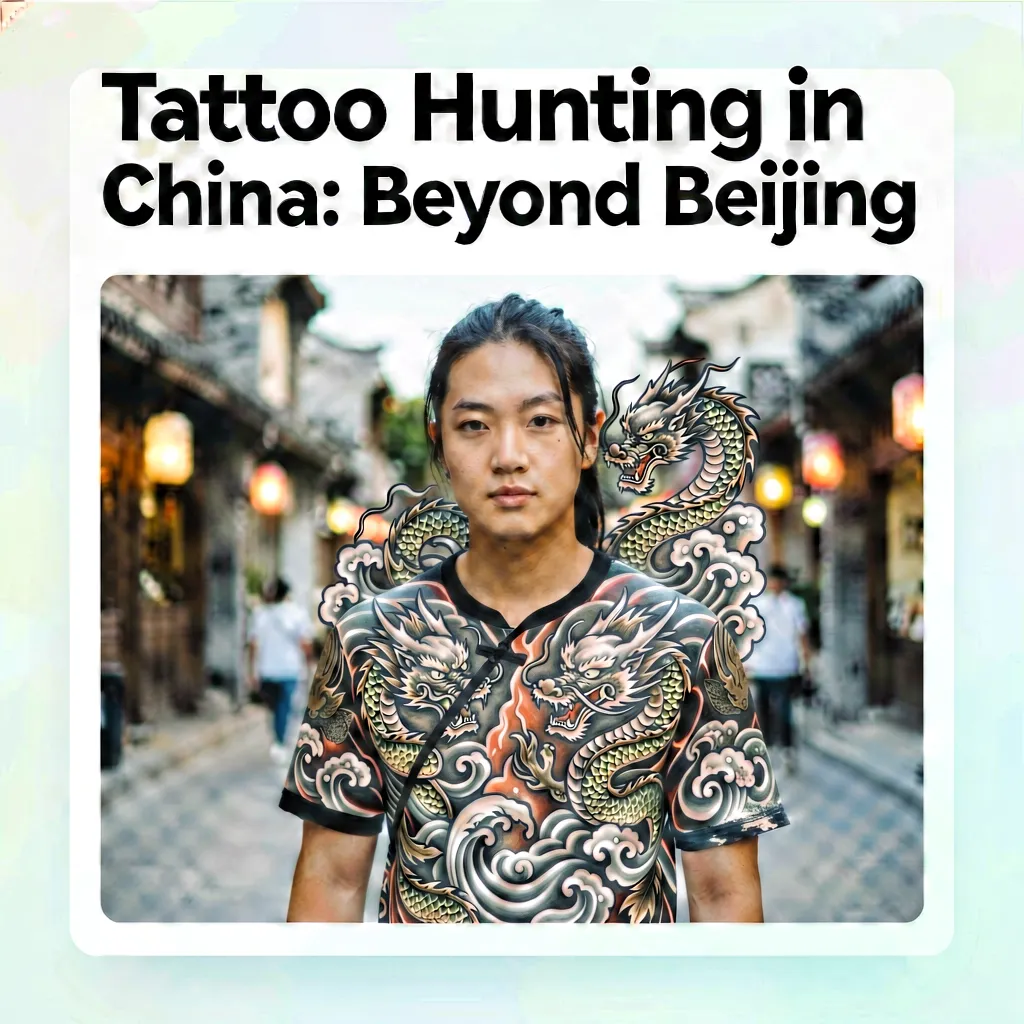
The thrill of planning a trip to China often centers on its ancient history, staggering landscapes, and culinary adventures. Yet, for a growing number of international travelers, the itinerary includes a different kind of pilgrimage: getting a tattoo. The ink is not just a souvenir; it’s a permanent dialogue with the culture, a story etched in skin. A common query on platforms like Rednote (Xiaohongshu) reveals a pattern: finding a tattoo studio in Beijing feels straightforward, a vibrant scene well-documented online. The challenge emerges when the journey turns south to Shanghai or east to the porcelain capital, Jingdezhen. Why does it seem so much harder? And more importantly, what are the effective, respectful methods to locate a skilled artist outside the capital? This guide navigates the practical and cultural landscape of finding a tattoo studio across China, moving beyond the Beijing bubble to equip the autumn 2026 traveler with actionable strategies.
The Beijing Benchmark: Why the Capital Feels Easier
Beijing’s tattoo scene operates with a visible, almost touristic accessibility. A quick search on Xiaohongshu for “Beijing tattoo” yields thousands of posts—studios in Sanlitun, artists showcasing bold realism or delicate linework, clients sharing their fresh ink against backdrops like the Drum Tower. This density creates a perception that tattoo culture in China is centralized. a few factors converge to make this so.
First, Beijing is the nexus for China’s contemporary art and subcultures. Its 798 Art District is internationally famous, fostering an environment where alternative self-expression, including tattoos, thrives. Studios here often cater to an international clientele, meaning their online presence—websites, Instagram, Xiaohongshu—is robust and in English. They understand the foreign customer’s journey: research, portfolio review, consultation, and appointment. The market is saturated enough that competition drives artists to maintain active, polished social media profiles.
Second, Beijing’s status as the political and educational capital means a higher concentration of expatriates and returned overseas Chinese. These communities form the core audience for many of these studios, creating a feedback loop. A studio recommended in an expat Facebook group or by a diplomat’s spouse gains credibility and more international clients, which in turn incentivizes them to maintain that outward-facing marketing.
This creates a benchmark. When a traveler heads to Shanghai and finds fewer English-language posts or Jingdezhen and finds almost none, the immediate assumption is that the practice is uncommon. That assumption is incorrect. The scarcity is often one of discoverability, not existence.
Decoding the Discovery Problem: Platforms and Pitfalls
The core issue is a mismatch of platforms and cultural habits. The international traveler’s default is Instagram, Facebook, or Google. The Chinese local’s default is WeChat, Douyin (TikTok’s Chinese counterpart), and Xiaohongshu. A studio in Shanghai’s Xintiandi area might have a stunning WeChat Official Account with hundreds of portfolio images but zero Instagram presence. So, the search methodology must adapt.
Xiaohongshu (Rednote) is Your Primary Map. This platform is indispensable. But, searching only in English (“Shanghai tattoo studio”) is a critical error. The algorithm prioritizes content in the dominant language of the query. You must search using Chinese keywords. For “tattoo studio,” use 纹身店 (wénshēn diàn). For “tattoo artist,” use 纹身师 (wénshēn shī). Combine with location: 上海纹身 (Shànghǎi wénshēn) or 景德镇纹身 (Jǐngdézhèn wénshēn). Browsing the hashtag feeds for these terms reveals a raw, unfiltered stream of work. You will see flash sheets, healing process photos, and studio environment shots. This is the real-time pulse of the scene. The challenge here is language; using a robust translation app with image/text camera functionality is non-negotiable. Look for patterns: which studios are tagged repeatedly by different users? Which artists’ styles stop your scroll?
WeChat: The Gateway to the Real World. Xiaohongshu is for discovery and inspiration. WeChat is for the transactional reality. Once you identify a promising studio or artist on Xiaohongshu, their post will almost always include a WeChat QR code or ID. This is the key. Adding them on WeChat initiates a direct conversation. Their Moments (朋友圈) will show more recent work, client interactions, and studio life. Crucially, this is where you inquire about availability. a number of top artists book months in advance, and the consultation often happens entirely within WeChat, involving sharing reference images, discussing placement, and receiving a quote. Be prepared for this workflow. Have your design references ready on your phone to send immediately. Note that some artists may require a deposit via WeChat Pay to hold the slot.
Local Expat and Traveler Forums: The Niche Networks. Platforms like the “ShanghaiIST” forum (if still active in 2026), specific Facebook groups for “Expats in Shanghai,” or Tieba (Baidu’s forum) threads for “Shanghai tattoo” can yield personal recommendations. These are slower-burn resources but often provide the nuanced feedback a traveler needs: “Artist X is great but the studio cash only,” or “Be aware Studio Y has a long waitlist but does incredible blackwork.” A user’s personal account of hygiene standards, communication ease, and price transparency is gold. Search these forums for the specific city names plus “tattoo” from the past year to get current data.
The Ground Truth: In-Person Scouting. If your schedule allows, the most reliable method is physical reconnaissance. In Shanghai, neighborhoods like the French Concession (especially around Wukang Road, Tianzifang) or Jing’an are dense with creative studios, fashion boutiques, and cafes—the ecosystem where independent tattoo artists cluster. Walk these streets. Look for small, unassuming signs. A studio might be on the third floor of a lane house (弄堂, lòngtáng) with no ground-floor presence. Peek through glass doors. See if the interior looks clean, professional, and artistic. Don’t be afraid to step into a cafe across the street and ask the barista, “I’m looking for a tattoo studio around here, do you know any good ones?” Locals, especially in creative hubs, often know the best hidden spots. In Jingdezhen, the search is different. The city is famed for its ceramic workshops (作坊, zuōfáng). The connection is profound: many tattoo artists there have backgrounds in pottery or porcelain painting. Their style often reflects this—delicate blue-and-white motifs, intricate floral patterns reminiscent of ceramic decoration. You are not looking for a storefront on a main road. You are looking within the artist communities, often in the old town areas near the pottery markets. Asking at a respected ceramic gallery or a supply shop for clay and glazes can yield a referral. The artist might work out of a shared workshop space that feels more like an artist’s collective than a commercial studio.
Shanghai: The Cosmopolitan Canvas
Shanghai’s tattoo scene in 2026 is a dynamic microcosm of the city itself: hyper-modern, historically aware, and fiercely individualistic. It does not simply copy Beijing’s model; it has its own signature.
Stylistic Currents. The dominant trends lean towards fine line (极细线, jí xì xiàn), geometric patterns, and minimalist blackwork. There is a strong Japanese influence (和风, hé fēng) in certain studios—bold outlines, vibrant color, traditional subjects like koi, dragons, and peonies executed with precision. Simultaneously, a wave of artists explores “new school” with exaggerated proportions and a playful color palette. Watercolor tattoos, mimicking the bleed and blend of paint on paper, are also popular, reflecting the city’s art gallery scene. For the traveler seeking something uniquely Shanghainese, look for artists who incorporate Art Deco motifs (from the 1920s and 30s architecture), or subtle references to the Huangpu River and its Bund skyline. Some artists specialize in “cover-ups” and large-scale blackwork, a style that has gained a dedicated following.
Geographic Hotspots. While studios exist city-wide, three areas are primary:
1. The French Concession & Xintiandi: The epicenter. Streets like Fuxing Lu, Wukang Lu, and the lanes around Tianzifang are packed. The vibe is tourist-friendly but authentic. Studios here are accustomed to foreigners, often have English-speaking staff or artists, and prices reflect the premium location. 2. Jing’an: A more residential but ultra-stylish area. Studios here might be slightly less discovered by the tourist masses but equally high-caliber. The atmosphere can be more relaxed, and appointments potentially easier to secure. 3. Pudong (Lujiazui): The financial district. Fewer traditional tattoo studios exist here, but a handful cater to the high-income expat and banker crowd, offering extremely high-end, custom work in sleek, minimalist spaces. This is the luxury tier.
Practical Shanghai Notes. Hygiene standards in reputable studios are comparable to the West. They use sterile, single-use needles and autoclaves. Do not hesitate to ask to see the packages opened in front of you. Pricing is typically charged by the hour (每小时, měi xiǎoshí), ranging from 600 to 2000+ RMB depending on the artist’s renown. A full day session (6-8 hours) is common for larger pieces. Cash is rarely needed; WeChat Pay and Alipay are universal. For the foreign visitor, ensure your bank card is linked to one of these services or have a Chinese friend assist with the transfer. Tipping is not customary but appreciated for exceptional service, perhaps 10% in cash.
Jingdezhen: The Porcelain Connection
Jingdezhen presents a fundamentally different quest. It is not a metropolis with a visible tattoo district. It is a city of artisans, where the air carries a fine dust of kaolin and feldspar. The tattoo scene here is an underground current, deeply intertwined with the city’s millennia-old ceramic identity. Finding a studio requires a different mindset—you are not just finding a tattooer; you are finding a craftsman.
The Ceramic-Tattoo Aesthetic. This is the key to understanding Jingdezhen’s offerings. Artists here often have formal training in ceramic painting. Their line work can possess a calligraphic grace. Their shading might mimic the subtle gradations of a celadon glaze. Subjects frequently draw from Chinese ceramic history: lotus pods, peonies, flying phoenixes, landscape scenes in a miniature style, and the iconic blue-and-white (青花, qīnghuā) patterns. The “Jingdezhen style” is less about bold American traditional or delicate Japanese irezumi and more about a refined, illustrative approach that feels both ancient and personal. It is tattoo art as a continuation of the city’s decorative arts legacy.
The Search Strategy. There are no “top 10” lists in English. Your search must be deeply local.
1. Keyword Deep Dive: On Xiaohongshu and Douyin, search 景德镇纹身 (Jǐngdézhèn wénshēn). Also search 景德镇手绘 (Jǐngdézhèn shǒuhuì – Jingdezhen hand-painting) and 陶瓷纹身 (táocí wénshēn – ceramic tattoo). This latter term might lead you to artists who explicitly market this fusion. 2. The Ceramic Workshop Network: This is your most potent lead. Visit the famous ceramic markets like the Taoxichuan Ceramic Art Avenue (陶溪川文创街区), a revitalized industrial area now buzzing with galleries and studios. Talk to gallery owners, especially those selling high-end, hand-painted porcelain. They know every painter in the city. Ask, “Do you know any tattoo artists who also paint ceramics?” or “Is there an artist here who does skin as their canvas?” Be specific about your interest in the ceramic aesthetic. 3. University Proximity: Jingdezhen is home to the Jingdezhen Ceramic University (景德镇陶瓷大学). Students and recent graduates are at the forefront of blending traditional craft with modern mediums, including tattooing. Areas around the university campus may have young, experimental artists working out of small, affordable spaces. Look for bulletin boards with flyers or ask in student-focused cafes. 4. Accept the “No English” Reality. Very few artists in Jingdezhen will speak English fluently. Your communication will be via WeChat, using translated text and, most effectively, images. Send multiple reference pictures of the style you want (e.g., “like this blue-and-white vase pattern”). Be prepared for a slower, more patient dialogue. This is part of the cultural immersion.
Logistics and Mindset. Jingdezhen is a smaller city. The number of truly professional, full-time tattoo artists is limited—perhaps a dozen or so. You will likely need to plan your trip around an artist’s schedule, not the other way around. Sessions might be booked months out. The studio itself may be a single room within a larger artist’s compound, lacking the “hip” cafe vibe of Shanghai. Focus on the quality of the art on their skin portfolio (their own tattoos and client work) and the cleanliness of the equipment. The experience is more about the craft than the ambiance. Price-wise, you may find it slightly lower than Shanghai for equivalent skill, but do not expect a bargain; you are paying for a specialized, high-level artisan skill.
Cultural Nuances: Navigating the Inked Exchange
Beyond location and style, understanding subtle cultural norms ensures a smooth and respectful exchange.
Design Sensitivities. China has complex historical and political symbolisms. While a dragon (龙, lóng) is a prestigious symbol of power, its depiction can be sensitive. A dragon with five claws is historically reserved for the emperor. A tattoo artist, especially one working in a traditional style, will advise you on appropriate imagery. Similarly, avoid designs that could be misconstrued as referencing sensitive historical events or figures. When in doubt, present your reference to the artist first. Their hesitation or suggestion for an alternative is a cultural cue to heed. Religious symbols like the Buddha (佛, fó) or Guan Yin (观音) are common in tattoos but carry weight; a respectful, accurate depiction is crucial. a number of artists will decline to tattoo these if they feel the client’s intent is superficial.
The Consultation Dynamic. The initial consultation, often via WeChat, is a mutual assessment. The artist evaluates your ideas, your understanding of the style, and your temperament (can you sit still for 6 hours?). You evaluate their portfolio, their communication clarity, and their professionalism. In Chinese business culture, there is an expectation of respectful deference. Be clear and direct about your wants, but avoid being demanding or presumptuous. Phrases like “Can this be done?” or “What is your suggestion?” work better than “I want this exact image copied.” Collaboration is valued. You may receive suggestions to modify your design for better flow on the body or to incorporate elements that enhance the artistic merit. Trust the artist’s expertise in their medium—your skin.
Hygiene as a Non-Negotiable. This is universal, but in China, it bears explicit discussion. A professional studio will have a separate, clearly designated tattooing area. Needles must be opened from sterile packaging in your presence. Ink caps should be single-use. The artist should wear fresh gloves. If anything feels amiss—reused gloves, a cluttered workspace, a lack of visible sterilization equipment—politely decline. Your health is paramount, and legitimate artists will welcome questions about their protocol. You can simply ask, “How do you sterilize your tools?” The answer should involve an autoclave (高压灭菌锅) and single-use disposables.
Payment and Contract. Once a design and quote are agreed upon, a deposit (usually 30-50%) is standard to secure the date and for the artist to draw the stencil. This is non-refundable if you cancel last minute, as they have turned away other clients. The balance is due on the day of the session. There is almost never a formal printed contract; the agreement is on WeChat. Ensure all details—design description, size estimate, hourly rate or total price, number of sessions, date and time—are confirmed in a WeChat message from the artist. This text record is your contract.
Preparing for the Inked Journey: A 2026 Checklist
Your autumn trip is months away. Preparation begins now.
1. Portfolio Curation: Long before you contact anyone, curate a digital folder of tattoo references. Do not just save random images. Save work that specifically matches the style you desire (e.g., “fine line floral,” “Japanese irezumi,” “Jingdezhen blue-and-white”). Note the artists’ names if possible. This folder is your primary communication tool. 2. Budget Realism: Research average hourly rates for your target cities. For a medium-sized piece (5-8 hours), budget 3000-8000 RMB depending on the artist’s stature. Add 500-1000 RMB for aftercare products (specialized soap, balm) and potential follow-up touches. Remember, this is a luxury service and a permanent piece of art. 3. Health Prerequisites: Ensure you are well-rested, hydrated, and have eaten before your session. Get a full night’s sleep. Avoid alcohol for at least 24 hours prior, as it thins blood and increases pain. If you have any medical conditions (bleeding disorders, skin conditions, heart issues, autoimmune diseases) or are pregnant, consult a doctor first and disclose this to the artist. They have the right to refuse service for health risks. 4. Aftercare Logistics: The healing process takes 2-4 weeks. You must avoid swimming, excessive sweating, sun exposure, and tight clothing over the area. Your autumn trip may involve beaches or hiking—plan your tattoo session at least 2-3 weeks before any such activities, or schedule it for the very end of your trip if you can heal at home. Purchase recommended aftercare products locally in China (brands like “Hualian” or “Bio-Oil” are common) or bring your preferred balm. 5. Documentation: Your tattoo artist will be a crucial part of your travel story. Ask politely if you can take photos during the process (many love to document their work) and certainly afterward. Get a clear, well-lit photo of the final piece. This is your proof of the experience and the art.
Conclusion: The Art is in the Search
The journey to get a tattoo in China is a dual adventure. The first is the physical trip to Shanghai’s creative lanes or Jingdezhen’s ceramic heart. The second, and equally important, is the digital and interpersonal detective work to find the right hands to hold the needle. The perception that tattoo studios are a Beijing-only phenomenon is a mirage born from platform familiarity and marketing visibility.
Shanghai offers a cosmopolitan, style-diverse scene with relative ease of communication. Jingdezhen offers a profound, craft-rooted experience that connects your skin to a thousand years of ceramic artistry, but it demands patience, linguistic flexibility, and a willingness to follow the clay-dust trail. Both are valid, both are rewarding, and both require you to engage with China on a micro, local level—through WeChat chats, through conversations in cafe corners, through an appreciation for the nuance of a blue-and-white pattern.
The tattoo you bring home will be more than pigment under your skin. It will be a story of navigation, of trust built through translated messages, of finding beauty in a tucked-away studio. It will be a tangible artifact of a cultural curiosity pursued with respect and rigor. The methods are clear: master the local platforms, leverage the artisan networks, and approach the exchange with humility. Your perfect studio is out there, working quietly in a Shanghai lane or a Jingdezhen workshop. Your task is to discover it.
Responses • 0
0/2000
ID: 1326
Chris
Offline
1 hr
Visited
From
Bakersfield, United States
Send Message