Suzhou or Taiwan for Engineers in 2026
AI Learn Chinese
2 hr • 0 read
A detailed 2026 comparison for engineers: Suzhou (China) vs. Taiwan. Analyze costs, transit, groceries, expat life, work culture, digital freedom, and cultural fit to decide your next move.
Introduction: The 2026 Decision Framework
You are not choosing between "China" and "Taiwan" as abstract geopolitical concepts. You are choosing between two specific, hyper-functional, tech-centric environments: Suzhou, China, a pillar of the Yangtze River Delta megalopolis, and Taiwan, specifically its tech heartland like Hsinchu Science Park and the Taipei metropolis. Both offer world-class engineering careers forged in the fires of global manufacturing and semiconductor dominance.
This analysis moves beyond salary figures to dissect the tangible, daily reality of living in each. We will build a layered comparison from the ground up: starting with the physical infrastructure of transit and groceries, moving through the social ecosystem of expat and local integration, and culminating in the intangible cultural and professional atmosphere. The goal is not to declare a winner, but to construct a precise mirror in which you can see which environment aligns with your personal hierarchy of needs, professional demeanor, and lifestyle aspirations for 2026 and beyond.
Your questions about sourcing specific ingredients or navigating a metro system are not trivial; they are precise proxies for deeper societal priorities—Is the system built for scale and efficiency, or for human-scale convenience and diversity? The answer defines your daily life.
Part 1: The Physical Foundation – Infrastructure, Cost, and Daily Logistics
Before considering culture or career, you must understand the concrete framework of your daily existence. This section deconstructs the foundational elements: how you move, what you eat, where you sleep, and what it costs. These are the non-negotiable pillars that either enable or constrain everything else.
### Urban Geography and Housing: Scale vs. Density
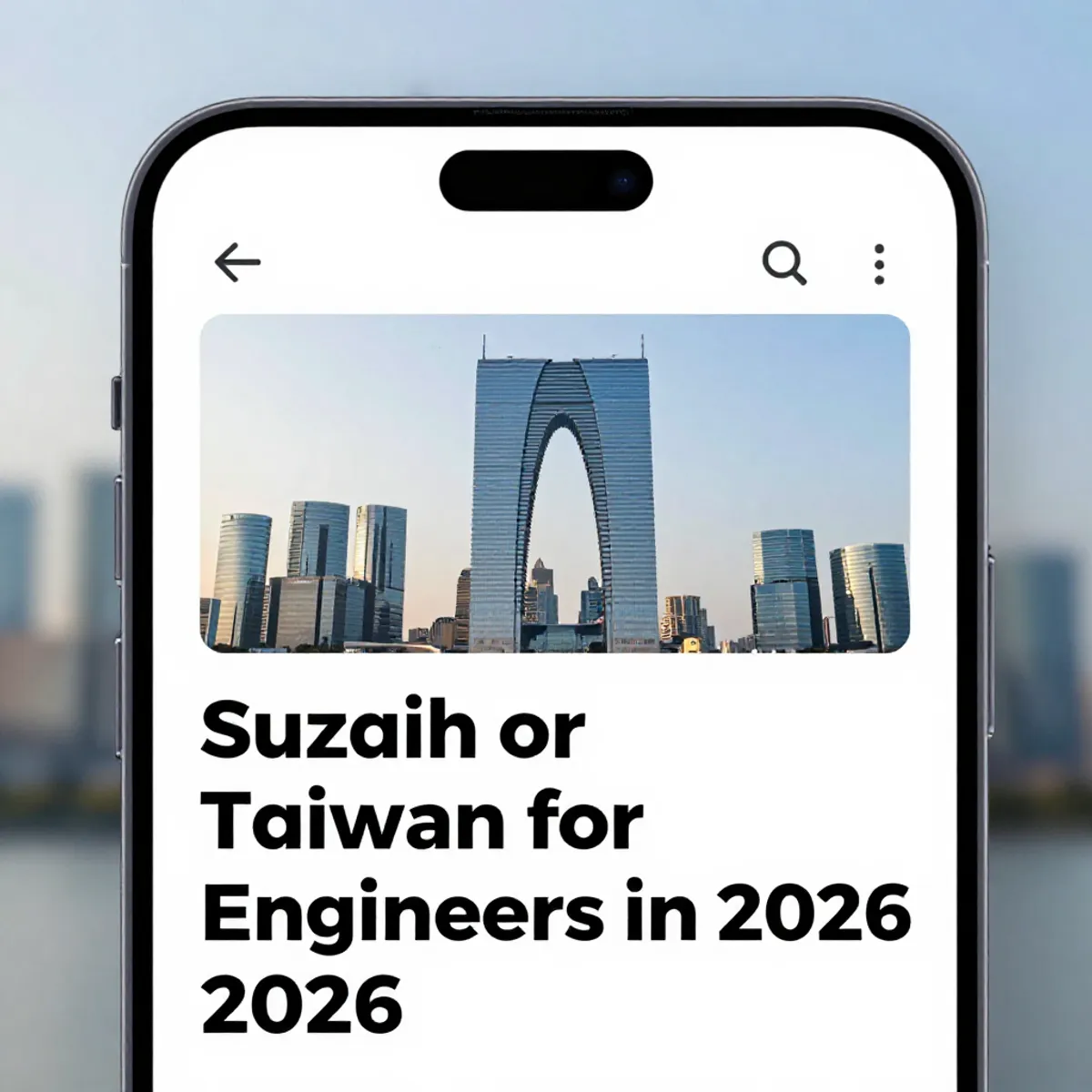
Suzhou presents a study in intentional duality. The Classical Gardens of Suzhou, UNESCO World Heritage sites of poetic, miniature landscapes from the Song and Ming dynasties, exist blocks away from the gleaming, automated production lines of the Suzhou Industrial Park (SIP). This is not a historical accident but a designed identity.
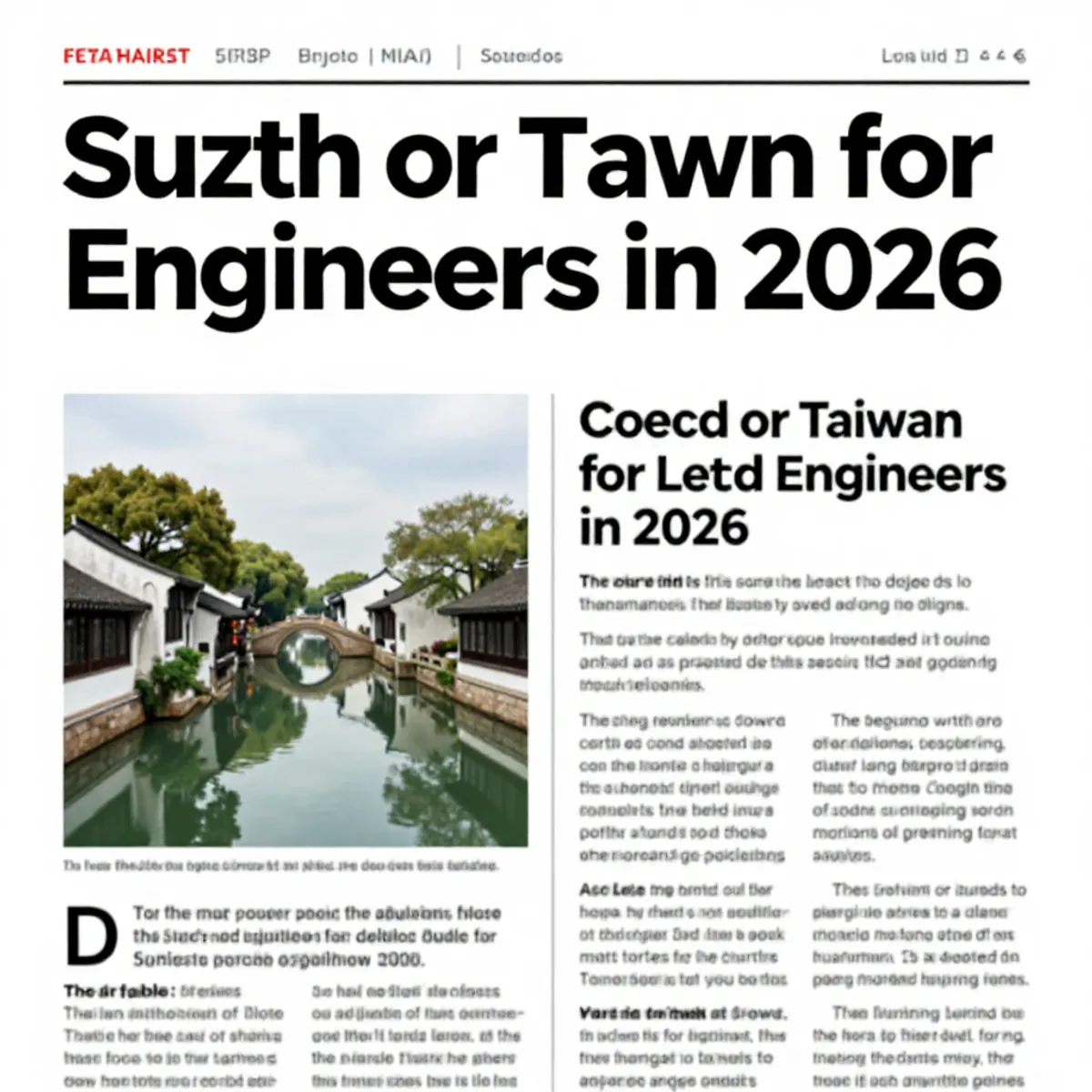
The city is bifurcated. The historic Gusu District (the old walled city) is a labyrinth of canals, stone bridges, and traditional shikumen lane houses, now heavily tourist-oriented. SIP and the Suzhou New District are the planned, expat-centric hubs with wide boulevards, international schools, Western supermarkets, and modern apartment complexes.
Your lived experience changes dramatically between these zones.
The climate is humid subtropical: oppressive, muggy summers (35°C+/95°F+ with high humidity) and damp, chilly winters. Air quality, while improved from a decade ago, remains a seasonal variable, often requiring home air purifiers in winter. For housing, the key advantage is space and modernity.
For a budget of $1,500-$2,500 USD/month, you can secure a spacious (100+ sqm / 1100+ sq ft), newer apartment in a gated community within SIP, complete with clubhouse, pool, and green spaces. The value for square footage and new construction is significantly better than in central Taipei.
Taiwan, by contrast, is a densely populated island with a fiercely defended, distinct identity. The pace is fast and efficient but generally less overwhelming than the continental scale of the Yangtze Delta. Air quality is consistently good by regional standards, with stringent environmental controls.
Recycling is a meticulously enforced civic duty. The cost of living, particularly housing in central Taipei, is very high by Asian standards, on par with Seoul or Boston. A modern 2-bedroom apartment (60-80 sqm / 650-850 sq ft) in a good district (Da’an, Xinyi) can cost $1,500-$2,500+ USD/month.
You pay for density, safety, and convenience. In Hsinchu, prices are lower but still significant for Taiwan. The trade-off is exceptional public services, safety, and infrastructure.
The feeling of being on an island, with the Pacific Ocean and green mountains never more than a short train ride away, creates a unique psychological landscape: a sense of contained energy and self-reliant identity.
### Transit Systems: Continental Connectivity vs. Island Mastery
Suzhou's public transportation is a point of immense pride and utility. The Suzhou Rail Transit metro system is a clean, modern, safe, and affordable network (Lines 1, 2, 3, 4, 5, 8, 11 and expanding) connecting the historic center, SIP, the high-speed rail station, and commercial nodes. It is a testament to China’s large-scale urban execution. Private car ownership is often a burden due to horrific traffic and a complex, lottery-based license plate system.
The transformative element is the Shanghai connection. A 25-minute ride on the China Railway High-speed (CRH) train from Suzhou to Shanghai Hongqiao Station fundamentally alters the proposition. This does not make Suzhou a dormitory town; it creates a hybrid model.
You reside in a city with a lower cost base and a more manageable scale, while possessing on-demand, world-class access to a global alpha city for conferences, specialized shopping, or cultural events. Your daily rhythm is rooted in Suzhou, but your geographic and professional potential is expanded exponentially. This "shadow of Shanghai" is a unique, unrepeatable advantage.
Taiwan's public transportation is arguably the finest in the Chinese-speaking world and competes globally. The Taiwan High-Speed Rail (THSR) is a marvel: a 350 km/h (217 mph) line connecting Nangang (Taipei) to Zuoying (Kaohsiung) in under 90 minutes, with stops in key cities like Hsinchu and Taichung. It is punctual, clean, and comfortable. Within cities, the Mass Rapid Transit (MRT) systems in Taipei and Kaohsiung are extensive, safe, and user-friendly.
The genius lies in integration. A reusable EasyCard (or iPASS) is the universal key: tap on and off for MRT, buses, some trains, and even convenience stores for micro-payments. The national bus network connects even remote villages.
The final, revolutionary layer is YouBike (Ubike), the public bicycle-sharing system. It is phenomenally widespread, cheap (first 30 minutes free with EasyCard), and seamlessly integrated with transit hubs. This multi-modal network—THSR to MRT to bus to YouBike—makes private car ownership completely unnecessary for the vast majority.
The system is designed for people’s mobility, not for cars. For your daily commute, you have numerous, predictable, low-stress options. This logistical ease fundamentally shapes a liberated, exploratory daily life.
### Grocery Sourcing: Digital Efficiency vs. Culinary Paradise
Daily provisioning in Suzhou is efficient, inexpensive, and deeply integrated into the digital ecosystem. The foundation is the local wet market (caichang), offering ultra-fresh produce, meat, and seafood at prices that astonish Western newcomers. Haggling is standard. For staples, large chains like RT-Mart (a Taiwanese chain) and Walmart China are ubiquitous.
The Southeast Asian grocery question is answered positively but with caveats. Due to significant internal migration from provinces like Sichuan and a smaller community from Vietnam/Myanmar, you will find dedicated shops, primarily in areas with foreign worker dormitories. Expect to find Thai bird chilies, Vietnamese rice paper, Indonesian soy sauces, and Filipino sinigang mixes.
The selection is authentic and functional but less curated, less centrally located, and less extensive than in Taipei. For Western/European goods, the primary destination is the Metro Cash & Carry warehouse club (membership required), which stocks Australian meats, European cheeses, and American cereals. Specialty shops for Korean, Japanese, and Indian goods cluster around international compounds in SIP.
The supply chain is robust; if it’s in Shanghai, it will be in Suzhou’s Metro within a week. Online delivery is the default, not a convenience. Apps like Meituan and Ele.me deliver from local markets and supermarkets within 30 minutes.
For imports, JD Worldwide or Tmall Global offer reliable next-day delivery. The infrastructure is seamless and deeply embedded in daily life.
Taiwan achieves near-perfection for the internationally minded resident. The availability of Southeast Asian groceries is exceptional, especially in Taipei. Decades of labor migration from Thailand, Vietnam, Indonesia, and the Philippines have created a mature, distributed market.
Neighborhoods like Taipei’s Wudaohuo (Five Canals Area) or areas near Hsinchu Science Park have dense clusters of shops run by and for Southeast Asian communities. You will find specific herbs (kaffir lime leaves, galangal), sauces (sambal oelek, nam pla), fresh produce, and pre-made snacks. The selection is deep, authentic, and affordable.
Beyond that, Taiwan is a food-obsessed society. Night markets (like Shilin, Raohe, or Fengjia) are vital, daily social and culinary institutions offering incredible local snacks—from oyster omelets and stinky tofu to bubble tea and grilled squid. Supermarkets are excellent.
Carrefour and A.mart are large and comprehensive. For Western health foods, chains like i-Ron (organic focus) and Market Place (Jason’s, upscale) are superb. PX Mart is the ubiquitous, affordable convenience-store chain with surprisingly good fresh food.
Specialty import stores for European, American, and Japanese goods are common in expat-heavy areas like Tianmu in Taipei. The sheer variety, quality, and competitive pricing for both local and international food is, for most, superior to the Suzhou experience. Your culinary curiosity will be richly rewarded daily.
### Digital Life and Information Access: The Great Firewall vs. Open Internet
This is a major, daily differentiator that impacts everything from research to communication with family. In Suzhou, you live behind the Great Firewall. Accessing Google, Gmail, YouTube, WhatsApp, Facebook, Twitter, and most international news sites requires a reliable, high-performance VPN.
The government-approved alternatives (Baidu, WeChat, Weibo, Youku) are ubiquitous and integrated into daily life (payments, services, social media). Your digital ecosystem will bifurcate. For professional engineers, this can complicate software development (accessing certain GitHub repositories, Docker images), cloud services (AWS, Azure tools), and global collaboration platforms.
The VPN requirement is a constant, low-grade operational friction.
In Taiwan, the internet is open and uncensored. You access all global services freely. Social media, news, and communication tools function as they do in the West.
This impacts everything from accessing the latest technical documentation and pre-print research papers to using collaborative tools like Slack, Discord, or Notion without interruption. It is a profound quality-of-life factor for those who value an open information environment, seamless global connectivity, and uncensored media. The psychological effect of not having to constantly circumvent a digital barrier is significant and often underappreciated until experienced.
Part 2: The Social Ecosystem – Expat Communities and Local Integration
Your professional success is only part of the equation. Your social world—who you eat with on weekends, who you turn to for local advice, who becomes your friend—defines your long-term satisfaction. The structure of the expat community and the pathways to local integration differ profoundly between the two locations.
### The Expat Mosaic: Corporate Transience vs. Diverse Choice
The expat community in Suzhou is large but structurally specific. It is overwhelmingly composed of corporate expatriates: mid-to-senior engineers, plant managers, and technical specialists deployed by multinationals in automotive (Volkswagen, Bosch), electronics, and industrial manufacturing. This creates a community that is professional, often family-oriented, and inherently transient (typical 2-4 year contracts).
Social life orbits around company events, international school communities, and an established set of expat-frequented venues, mostly in SIP or near metro stations in the old city. There is a minimal "digital nomad" scene. This structure provides a ready-made support network for logistics and settling in.
But, it can feel insular. Your social world is heavily mediated by your employer’s HR department and the size of its expat contingent. Penetrating the local Chinese social sphere requires serious, sustained effort and a high level of Mandarin proficiency.
The language barrier outside the corporate bubble is significant. The community is a functional ecosystem, but it does not organically permeate the city’s fabric.
Taiwan hosts one of the largest and most diverse expat communities in Asia relative to its population. It is not dominated by a single corporate nationality. It includes a massive American presence (historical ties, education, tech), a significant European contingent, a large and visible Southeast Asian worker community, and a growing number of Australians and Canadians.
The scene is less about "company expats" and more about individuals and families who have chosen Taiwan for its quality of life. Community hubs are plural: international educational institutions, churches, sports clubs (hiking, rugby, softball, ultimate frisbee), language exchange meetups, and tech professional groups. The Taiwanese themselves are famously friendly and welcoming to foreigners who show respect and make an effort to learn Mandarin (or even basic Taiwanese Hokkien).
Integration is possible on multiple levels. You can live largely within the expat bubble, but the density and openness of society make it far easier to build genuine friendships with locals than in Suzhou’s more compartmentalized environment. The community is woven into the city’s fabric, not isolated within it.
### The Language Ladder: Mandatory Proficiency vs. Multilingual Ease
Mandarin is the official language in both locations, but the linguistic ecology is worlds apart. In Suzhou, you operate in a Mandarin-only sphere for nearly all official, commercial, and most social interactions. The local Wu dialect (Suzhounese) is incredibly difficult for learners and is almost exclusively used among older, local residents.
Your ability to function independently, build relationships beyond the expat bubble, understand cultural nuances, and even handle everyday bureaucracy is directly proportional to your Mandarin proficiency. The incentive to learn is existential. Without it, your world is severely circumscribed to the expat enclaves and English-friendly businesses in SIP.
The language barrier is a primary filter on your experience.
In Taiwan, you will hear Mandarin (Guoyu) everywhere, with a distinct accent and vocabulary (e.g., cong for "from" instead of cong; different terms for computer, software). Critically, Taiwanese Hokkien (Taiyu) is the mother tongue for a huge portion of the population. While not strictly necessary for survival, knowing some Hokkien grants immense social capital and signals deep respect.
It opens doors to a richer, more intimate cultural understanding. In addition, English is more widely spoken as a second language, particularly among younger urban professionals, students, and in the service industry. You can have a richer, more independent, and more integrated experience with a lower level of Mandarin in Taiwan than in Suzhou.
But, to achieve the deepest level of engagement and to avoid being perpetually a "guest," serious Mandarin study remains essential. The linguistic environment is more forgiving and offers more layers of engagement.
### Social Rhythm: Work-Centric vs. Life-Centric
The social tempo in each location reflects deeper cultural currents. In Suzhou, the social life of the expat is naturally work-centric. With a transient, company-driven community, socializing often revolves around company outings, expat club events, and gatherings within the SIP bubble.
The sheer scale and density of the Yangtze Delta mean that social plans often involve significant travel via the excellent metro or high-speed rail to meet friends in Shanghai or other cities. The weekend is a time for recuperation from the intense work pace or for planned excursions.
In Taiwan, the social rhythm is more life-centric. The famous Taiwanese work ethic in places like Hsinchu Science Park is balanced by a societal commitment to work-life balance. Weekend hikes in the nearby mountains, night market outings, family gatherings, and cafe culture are entrenched norms for locals and expats alike.
The compact geography and superb transit mean that a diverse social life is accessible without a car. You can spontaneously join a frisbee game in Daan Forest Park, take a evening ferry to Fisherman's Wharf, or explore a different night market every night of the week. The social fabric is denser and more permeable.
The pressure to socialize within a corporate expat bubble is lower because the local society itself is more open and the expat community is more varied.
Part 3: The Professional Atmosphere – Work Culture, Law, and Geopolitics
Your career is the reason for the move. The professional environments in Suzhou and Taiwan, while both tech-powerhouses, operate on fundamentally different wavelengths of corporate philosophy, legal predictability, and geopolitical awareness.
### Corporate Culture: Hierarchical Scale vs. Meritocratic Intensity
In Suzhou, your professional life is likely embedded in a large, often hierarchical organization—either a foreign multinational or a major Chinese state-owned or private enterprise. The environment is intensely results-driven. Expectations for long hours, especially during production ramps or crises, are high.
The concept of guanxi (关系, relationships) remains a subtle but important currency for navigating internal politics and local partnerships. Communication can be indirect; understanding the real meaning behind a "maybe" or a silence is a key skill. The regulatory and business landscape requires local legal and HR support.
You are one node in a vast, continental-scale machine. Decision-making can be slower, filtered through multiple layers to ensure alignment with broader corporate or, in state-backed firms, national strategic goals.
In Taiwan’s tech sector (epitomized by Hsinchu Science Park, home to TSMC, MediaTek, and a vast supplier ecosystem), the culture is also famously hard-working. Overtime is common, and a strong sense of company loyalty and collective effort prevails. But, the hierarchy, while present, can feel less rigid and formal than in large mainland corporations.
Decision-making paths can be shorter due to less bureaucratic overhead. The legal system is transparent and predictable, based on a civil law model, simplifying contracts and operations. The language of business is Mandarin, but English proficiency in the tech industry is generally high, especially in Hsinchu's international R&D centers.
Success depends more on technical excellence and adaptability to a group-oriented (collectivist) work style that values consensus and face-saving, but with less of the opaque political maneuvering sometimes encountered on the mainland. The intensity is focused on engineering execution, not navigating complex webs of institutional relationships.
### Legal and Regulatory Environment: Predictability vs. Context
The rule of law operates differently. In Taiwan, it is strong, transparent, and consistent. Contracts are enforced predictably.
Intellectual property rights are well-protected by an independent judiciary. Labor laws are clear and followed. The regulatory environment for business is stable and rules-based.
You operate under a familiar, codified system. This creates a high degree of certainty for professional and personal matters.
In Suzhou, the legal system operates under a different framework where the state’s interests and social stability are paramount. While the commercial law framework has improved dramatically, the application can be less predictable and more subject to administrative discretion. Understanding this context is crucial for any personal or professional legal matter.
The regulatory landscape can change with policy shifts. The presence of the state is more palpable in business operations. You require excellent local legal counsel to navigate this environment effectively.
The trade-off is operating within a system that can be more malleable for those with the right connections (guanxi), but that same malleability creates uncertainty for those without.
### Geopolitical and Digital Reality: The Pervasive Context
You cannot separate your daily life from the overarching geopolitical context. In Suzhou, you are within the Great Firewall. This is not just a technical barrier; it is a daily reminder of a distinct information sphere.
Your access to global media, academic research, and social platforms is mediated. For an engineer, this affects software tools, cloud services, and collaboration. In addition, the cross-strait political dynamic is a background hum.
While daily life is unaffected for most, major political events in Taiwan or U.S.-China relations can lead to increased scrutiny, nationalist rhetoric in media, and occasional diplomatic tensions that can impact visa renewals or business sentiment. Your residency is tied to a work permit within China's immigration system.
In Taiwan, you live in a democratic, open society with a fiercely independent identity. The internet is open. The political discourse is vibrant, sometimes raucous, and fully public.
The geopolitical threat from the People's Republic of China is a constant, low-grade anxiety in the background—discussed in news, reflected in defense spending, and felt in diplomatic isolation. But, for daily life, it does not impose the same kind of systemic, everyday friction as the Great Firewall. Your visa status (if on a work permit) is stable within Taiwan's system, but the island's ambiguous international status means that for international travel, you use a Taiwanese passport (if eligible) or your home country's passport with a Taiwan entry permit.
The sense of living in a place with a contested sovereignty is part of the unique psychological landscape, but it does not typically impede the mundane logistics of living.
Part 4: The Personal Equation – Who Thrives Where?
Having deconstructed the components, we now synthesize them into two distinct profiles. The optimal choice is not about which place is "better," but which environment's specific set of trade-offs aligns with your personal hierarchy of values and your career's specific demands.
### The Suzhou Profile: The Continental Strategist
The Suzhou path is optimized for the engineer who: Seeks Immersion in a Continental-Scale Civilization: You are energized by being at the epicenter of a historic economic and technological transformation. You view the sheer scale, speed, and complexity as a professional adventure and a profound educational journey. Prioritizes Maximizing Savings and Space: The lower cost of living, especially for housing, allows for significant savings or a vastly more spacious, modern living situation than would be possible in Taipei for the same salary.
Values Strategic Connectivity to Shanghai: The 25-minute HSR link to Shanghai is a non-negotiable benefit. You want the resources and opportunities of a global alpha city without the full-time cost and pressure of residing there. Comfortable with a Corporate-Centric Social World: You accept that your primary social network will be formed through your company and the expat community it attracts.
You are prepared to invest heavily in Mandarin study to break out of that bubble and see the language barrier as a challenge, not a deal-breaker. Fascinated by the Juxtaposition of Ancient and Hyper-Modern: Your ideal weekend might involve a quiet morning in a classical garden followed by an afternoon exploring a cutting-edge industrial museum or a high-speed train to Shanghai for a concert. Has a Company with Strong Expat Support: You are moving with a package that includes quality housing, international educational institution options for children, and clear repatriation terms.
You understand your lifestyle will be largely defined by this corporate ecosystem.
Key Trade-offs: A steeper cultural and linguistic climb, a lifestyle more dictated by your corporate ecosystem, the constraints of the Great Firewall, variable air quality, and a less predictable legal/regulatory environment.
### The Taiwan Profile: The Quality-of-Life Integrator
The Taiwan path appeals to the engineer who: Demands High Quality of Life and Ease of Integration: You want a society where you can independently navigate almost every aspect of life with minimal friction—from using seamless transit to finding your favorite Southeast Asian spice to accessing uncensored information. Values Clean Air, Efficient Services, and Safety: Environmental quality, reliable public services, and a generally polite, safe society are high priorities. You appreciate a place where systems (transit, healthcare, utilities) work predictably and well.
Desires a Rich, Diverse Personal Life Outside Work: You want an expat community that is large, varied, and well-integrated, offering multiple avenues for friendship and networking. You seek a society where you can build friendships with locals relatively easily and where a vibrant cafe, craft beer, hiking, and night market culture is accessible every night. Prioritizes Culinary Diversity and Accessibility: The sheer variety, from night market snacks to niche international imports, is a daily joy and a key part of your lifestyle.
Appreciates Democratic Freedoms and an Open Information Environment: You are drawn to a place with a fiercely independent, proud identity, a vibrant political and cultural scene, and an open internet. The geopolitical context is a consideration, but the lived reality of creativity and resilience is compelling. Wants a "Small Island" with Maximum Variety: You desire the convenience of a compact geography where you can experience alpine mountains, tropical beaches, and world-class cities within a few hours, all via excellent public transport.
Key Trade-offs: A significantly higher cost of living, especially for housing in Taipei; a sense of operating in a smaller, though fiercely independent, geopolitical space; and a potentially smaller, less vertically integrated industrial scale compared to the Yangtze Delta megalopolis for certain manufacturing sectors.
Conclusion: The Personal Equation in 2026
There is no objectively "better" choice between a career anchored in Suzhou or Taiwan. There is only the better choice for you in 2026, based on a deeply personal calculation of trade-offs. The Suzhou offer places you at the heart of continental Asia’s industrial might.
It is a raw, expansive, historically profound experience. You will witness and participate in a city and a region undergoing relentless evolution. The trade-off is a steeper cultural and linguistic climb, a lifestyle more circumscribed by your corporate ecosystem, and the realities of living within a different information and regulatory sphere.
It is a bet on scale, strategic position, and maximal savings.
The Taiwan offer provides a smoother, more immediately comfortable, and socially liberal environment. It offers arguably the best daily logistics—transport, food, digital access, healthcare—in the Chinese-speaking sphere. You trade some housing space and a lower savings rate for a high-trust, efficient, and open society where your personal life can flourish with minimal friction. It is a bet on quality of life, ease of integration, and democratic norms.
Your decision matrix must weigh: 1. Career Trajectory: The specific role/company vs. the regional industry ecosystem. Is your field more aligned with the vast, diversified manufacturing base of the Yangtze Delta or the concentrated, high-tech semiconductor and design ecosystem of Taiwan?
2. Lifestyle Priorities: Space vs. location; cost savings vs. quality-of-life services; air quality; food variety. 3.
Social Needs: Size/diversity of expat community; ease and desire for local integration. 4. Personal Curiosity & Values: Which civilization’s rhythm—the vast, ancient, accelerating continental machine or the dense, democratic, meticulously organized island—calls to you more strongly?
How do you value information freedom, political environment, and environmental quality?
Both locations will challenge and reward you. Both will look different in 2026 than they do today—Suzhou will be more connected and perhaps more regulated; Taiwan will continue to navigate its complex international space with its characteristic pragmatism. The engineer who moves to Suzhou will be part of a continental-scale narrative of production and growth. The engineer who moves to Taiwan will contribute to and live within a unique model of tech-driven, high-quality, democratic living.
Listen to your gut, but inform it thoroughly with this comparative reality. The right fit will feel less like a compromise and more like an alignment of your professional ambition with your desired way of life. Your 2026 begins with this choice. Make it with your eyes wide open to the full spectrum of reality.
Responses • 0
0/2000
ID: 1326
Chris
Online
From
Bakersfield, United States
Send Message