Sui and Tang Dynasties: Favorite Rulers
Learn Chinese
1 hr • 1 read
Explore personal favorite rulers from China's Sui and Tang eras, including Wu Zetian and An Lushan, with deep dives into their legacies and impacts.
Introduction: Rethinking Rulership in Chinese History
When I first embarked on this series about favorite rulers from major Chinese eras, I wanted to move beyond the typical rankings of "best" or "worst." Instead, I asked myself: who among these historical figures resonates with me on a personal level? It’s not about objective greatness—though many were undeniably influential—but about the quirks, decisions, or legacies that spark my curiosity or admiration. In previous posts, we covered earlier periods like the Qin and Han, but now we step into the medieval landscape of the Sui and Tang dynasties, a span often romanticized as a golden age yet riddled with complexity. This era includes not just the Sui and Tang proper, but also the interlude of the Wu Zhou dynasty led by Wu Zetian and the short-lived Yan state forged by An Lushan. Each offers a distinct lens on power, culture, and transformation in Chinese history.
My approach here is deliberately subjective. For the Sui, I’ll argue for Emperor Wen as a foundational yet understated force. For the Tang, it’s Emperor Taizong, whose reign embodies pragmatic idealism. Wu Zetian defies gender norms in a way that still feels revolutionary. And for the Yan, An Lushan—a rebel whose violence reshaped an empire—holds a dark fascination. I’ll weave in historical context, specific anecdotes, and why these rulers "speak" to me, hoping to invite you to reflect on your own favorites. As we look ahead to the Five Dynasties, Song, and beyond, this is just the beginning of a journey through China’s medieval tapestry.
The Sui Dynasty: Emperor Wen and the Art of Unification
The Sui dynasty (581–618 CE) is often dismissed as a brief, brutal interlude between the chaotic Northern and Southern Dynasties and the glorious Tang. But without the Sui, the Tang’s achievements might never have flourished. My favorite ruler from this era is Emperor Wen of Sui, born Yang Jian. He’s not the flamboyant builder his son Yang Guang (Emperor Yang) became known for; instead, Wen was a consolidator, a bureaucrat-emperor who laid the groundwork for a unified China after nearly three centuries of division.
What draws me to Wen is his quiet efficiency. Coming from a powerful Northern Zhou family, he seized power in a coup but immediately pivoted to stability. He abolished many of the harsh laws of his predecessors, reduced taxes, and promoted agriculture. His most enduring legacy is the Grand Canal’s initial construction—a monumental infrastructure project that linked the Yellow and Yangtze rivers, facilitating grain transport and economic integration. Yes, his son Yang Guang expanded it extravagantly, contributing to the dynasty’s collapse, but Wen’s vision was pragmatic: he saw connectivity as key to control. I admire how he balanced centralization with leniency, at least early on. His reign, known as the "Kaihuang Era," was marked by population growth and reduced corruption.
Historians often critique Wen for being overly cautious or even paranoid later in life, but I see a ruler adapting to immense pressures. He unified the Chen dynasty in the south in 589 CE, ending the north-south split, yet he avoided the wholesale slaughter of conquered elites, instead incorporating them into his administration. This tolerance was rare for the time. In a world where many conquerors razed cities, Wen’s restraint feels almost modern. His personal life was fraught—he reportedly had a tense relationship with his son Yang Guang, who may have hastened his death—but his policies outlived him. The Tang dynasty literally built upon Sui institutions, from the equal-field system to the imperial examination framework.
Why is Wen my favorite? Because he represents the unsung architect. In popular memory, Sui is a cautionary tale of overreach, but Wen’s story is about laying stones for a bridge others would cross. His focus on administrative reform over military glory resonates with me; it’s a reminder that lasting change often comes from systems, not swords. When I think of Chinese history’s turning points, Wen’s reunification is a quiet earthquake—less dramatic than Qin Shi Huang’s wars, but equally pivotal.
The Tang Dynasty: Emperor Taizong and the Zhenguan Ideal
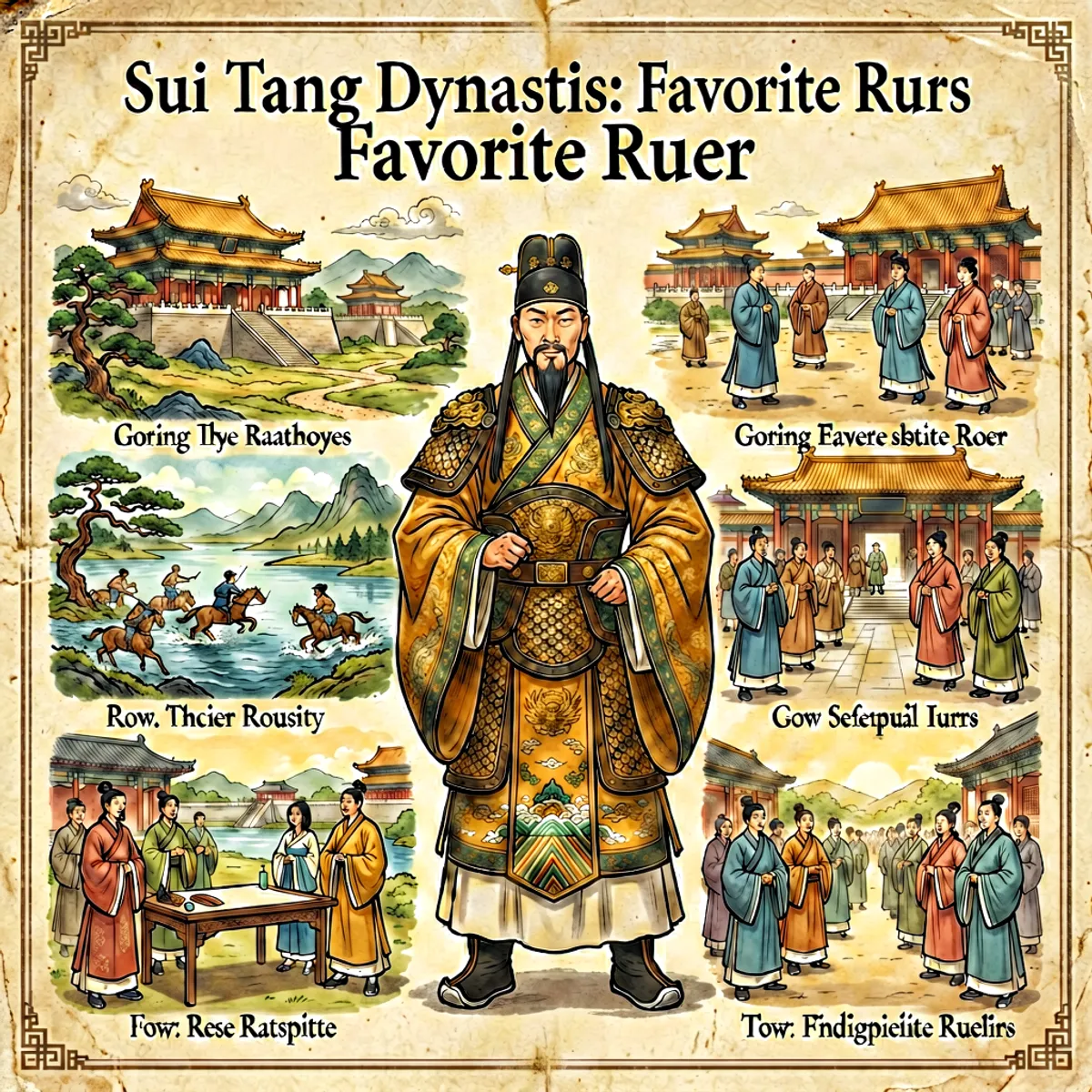
If the Sui was the blueprint, the Tang (618–907 CE) was the masterpiece. This dynasty is famed for its cosmopolitan culture, poetic brilliance, and territorial expanse. Choosing a favorite Tang ruler is daunting—figures like Emperor Xuanzong, under whose reign the empire peaked culturally, or Empress Wu during her Zhou interregnum, are compelling. But for me, Emperor Taizong (Li Shimin, r. 626–649 CE) stands apart. His reign, the "Zhenguan Era," is often held as the gold standard of Confucian kingship in China, and for good reason.
Taizong’s path to power was bloody—he allegedly orchestrated the Xuanwu Gate Incident in 626 CE, killing his brothers to secure the throne. This shadow often overshadows his governance, but what followed was a masterclass in leadership. He surrounded himself with critical ministers like Wei Zheng and Fang Xuanling, fostering a court where dissent was welcomed. His "Emperor’s Preface to the Sacred Teachings" reflects a ruler blending Confucian duty with Buddhist and Daoist tolerance. Militarily, he expanded Tang influence into Central Asia, defeating the Eastern Turks and securing the Silk Road. Economically, he promoted land reforms and encouraged recovery after civil wars.
What makes Taizong my favorite? His self-awareness and adaptability. He famously said, "Using copper as a mirror, one can correct one’s appearance; using history as a mirror, one can understand the rise and fall of nations; using a person as a mirror, one can discern success and failure." This humility, rare among emperors, led him to accept criticism and correct mistakes. For instance, after a failed campaign against Goguryeo, he acknowledged his error and focused on internal development. His reign saw a flourishing of arts and literature, but he never let cultural decadence undermine discipline.
I’m also drawn to his personal narrative. From a young general to a wary emperor, Taizong wrestled with paranoia but channeled it into systemic checks. His support for the "Tang Code" created a legal precedent that lasted centuries. Compared to later Tang rulers who indulged in pleasures (think Emperor Xuanzong and Yang Guifei), Taizong’s restraint feels heroic. In a dynasty of extremes, he represents a balanced zenith—a ruler who understood that power must be tempered with wisdom. His legacy is so potent that later emperors, including Song and Ming, studied his reign as a model. For me, Taizong embodies the ideal of the "scholar-warrior," a concept that still inspires in Chinese cultural memory.
Wu Zetian: The Empress Who Redefined Power
No discussion of Tang-era rulers is complete without Wu Zetian, the only woman to officially wear the imperial robes in Chinese history. Her story spans from concubine to empress consort, then regent, and finally emperor of the Zhou dynasty (690–705 CE), a brief interlude that interrupted the Tang. While some view her as a ruthless manipulator, others see a capable autocrat who navigated a patriarchal world with unmatched cunning. She is my favorite from the Wu Zhou dynasty not merely for breaking gender barriers, but for how she wielded power with strategic brilliance.
Wu Zetian’s rise was anything but conventional. Entering the palace as a low-ranking consort for Emperor Taizong, she later became a nun before being recalled by his son, Emperor Gaozong. She outmaneuvered rivals, including Gaozong’s first wife, Empress Wang, and eventually controlled the court as regent for her sons. In 690 CE, she deposed her youngest son and declared herself emperor, renaming the dynasty Zhou. Her reign was marked by both terror and reform: she employed secret police to suppress opposition but also promoted talent based on merit, expanding the imperial examination system to include commoners. She supported Buddhism, commissioning grand statues like the Longmen Grottoes, to legitimize her rule.
Why does Wu Zetian captivate me? Because she operated in a system designed to exclude her. In Confucian China, female rulers were anathema, yet she used every tool—from religious patronage to bureaucratic innovation—to solidify her authority. Her ability to maintain control for over half a century, despite constant plots against her, speaks to political genius. I admire her pragmatism: she didn’t try to be a "male" emperor but carved a unique path, leveraging her gender as both a weapon and a shield. For instance, she presented herself as a maternal figure to the nation, a rhetoric that softened her authoritarian edges.
Critics highlight her cruelty—the deaths of rivals like her own daughter (though historians debate this) and ministers who opposed her. But I see a ruler playing by impossible rules. In an era when women’s influence was confined to the inner court, she invaded the outer sphere and reshaped it. Her support for Buddhism also had cultural impacts; she helped spread the faith along the Silk Road, influencing art and diplomacy. When she was finally overthrown in a coup, the Tang was restored, but her reforms lingered. To me, Wu Zetian is a symbol of adaptation—a favorite because she challenges our notions of legitimacy and power. Her story isn’t just about a woman in a man’s world; it’s about how anyone can rewrite the rules when circumstances demand it.
An Lushan and the Yan Dynasty: Rebellion’s Dark Allure
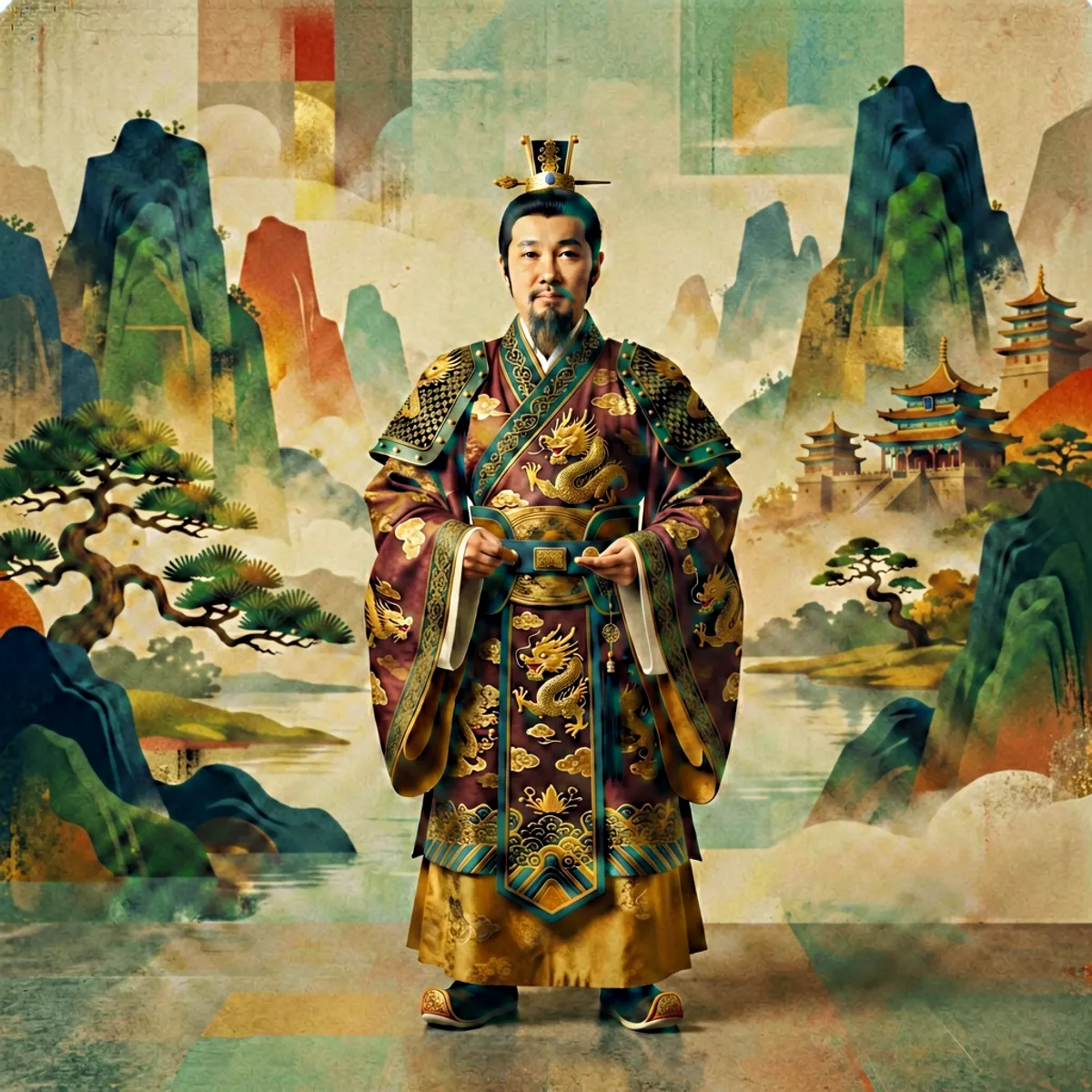
The Yan dynasty (756–763 CE) was a ephemeral state established by An Lushan, a Sogdian-Turkic general whose rebellion against the Tang dynasty plunged China into chaos. Often called the An Lushan Rebellion, it was one of the deadliest conflicts in human history, weakening the Tang irrevocably. An Lushan is not a ruler one typically "likes"—he was a violent opportunist whose actions caused immense suffering. Yet, he is my favorite from this period precisely because of his catastrophic impact and the moral ambiguities he embodies.
An Lushan rose through the military ranks, becoming a favored commander in the northeastern frontier. His mixed heritage (his father was likely Sogdian, his mother Turkic) gave him a unique position in Tang’s multicultural army. But ambition drove him to rebel in 755 CE, citing grievances against the court and the influence of consort Yang Guifei. He captured Luoyang, declared himself emperor of Yan, and pushed toward Chang’an. The Tang nearly collapsed, but An Lushan’s own flaws—his paranoia, obesity, and eventual murder by his son An Qingxu—led to the rebellion’s fragmentation. The Yan dynasty crumbled after years of brutal warfare, leaving a devastated landscape.
Why is An Lushan a favorite? First, he represents the fragility of golden ages. The Tang under Xuanzong was at its cultural peak, yet internal corruption and military overreach allowed a general to shatter it. An Lushan’s story is a stark lesson in how empires can fall from within. I’m fascinated by his persona: a foreigner in the Tang elite who both benefited from and resented the system. His rebellion forced the Tang to decentralize power, granting more autonomy to regional military governors (jiedushi), which ultimately eroded central control and led to the dynasty’s decline.
Second, An Lushan highlights the human cost of ambition. Historical records describe his cruelty—massacres, forced conscriptions—but also his charisma and military acumen. He wasn’t a mere brute; he understood Tang politics enough to exploit them. His brief reign as Yan emperor revealed how quickly a new order can emerge from chaos, even if unsustainable. I find this duality compelling: he is both a destroyer and a catalyst for change. In many ways, the post-rebellion Tang was more regionalized and culturally diverse, a paradox born from his violence.
Finally, An Lushan’s legacy endures in literature and memory. Poets like Bai Juyi lamented the rebellion’s toll in works like "Song of Everlasting Sorrow," embedding An Lushan in China’s cultural consciousness as a symbol of turmoil. For me, he’s a favorite not for his virtues—there were few—but for how he exposes the vulnerabilities of even the most prosperous eras. His story reminds us that history is often shaped by outliers, for better or worse.
Looking Ahead: The Medieval Mosaic and Personal Reflections
As we close this exploration of Sui and Tang favorites, I’m reminded how interconnected these dynasties are. The Sui’s infrastructure enabled the Tang’s cosmopolitan boom; Wu Zetian’s reforms built on Tang foundations; An Lushan’s rebellion left scars that influenced subsequent Song defensiveness. Each ruler I’ve discussed—Wen, Taizong, Wu Zetian, An Lushan—represents a different facet of leadership: consolidation, enlightened rule, subversive innovation, and destructive force. Their "favorability" to me stems from how they complicate narratives of success and failure. Wen’s quiet pragmatism, Taizong’s balanced idealism, Wu’s defiant adaptability, and An’s chaotic impact all offer lenses into the pressures of power.
This post is part of a larger series that will venture into the Five Dynasties and Ten Kingdoms period, the Song, Liao, Jurchen Jin, Yuan, Ming, and Qing eras. Each brings its own cast of rulers—from Song’s scholarly emperors to Qing’s Manchu conquerors—and I anticipate revisiting themes of legitimacy, cultural synthesis, and personal resonance. The categorization I’m using—Sui, Tang, etc.—is traditional but useful for navigation, even if it simplifies complex transitions like the Wu Zhou or Yan interludes.
In 2026, as historians continue to reassess these periods with new archaeological finds and digital tools, our understanding evolves. But the core question remains: who speaks to us across the centuries? For me, these four rulers do because they are neither saints nor monsters; they are humans navigating impossible choices. Their stories urge us to look beyond textbook labels and find the nuances that make history alive. I encourage you to share your own favorites—perhaps a minor king from the Five Dynasties or a Jurchen Jin ruler—and explain why. After all, history’s richness lies in these personal dialogues with the past.
As we move forward, I’ll delve into the fragmented Five Dynasties era, where warlords like Zhu Wen of Later Liang offer yet another perspective on power in a time of disunity. Stay tuned for the next installment, where we’ll explore how favoritism shifts in an age of constant conflict and cultural flux.
Responses • 0
0/2000
ID: 1326
Chris
Offline
47 min
Visited
From
Bakersfield, United States
Send Message