Solar Careers in Transition: 2026 Job Outlook Guide
AI Learn Chinese
4 hr • 0 read
Are solar manufacturing jobs still a stable career path? Unlock 2026 insights on demand, competition and global shifts shaping the industrys future.
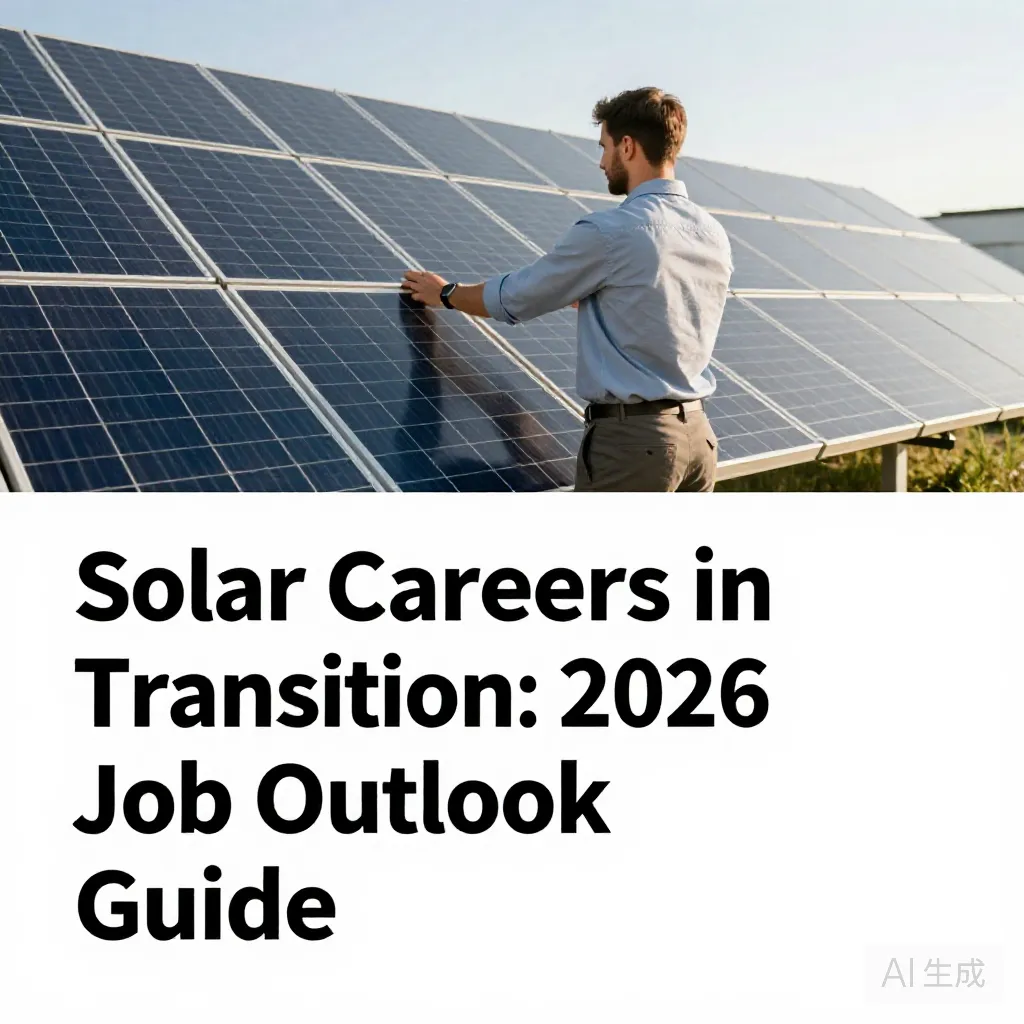
The Future of Working in the Solar Industry
A technician in Southeast Asia, formerly from Mainland China, recently posed a critical question to his network. He observed multiple factories under the WXYZ brand halting operations and wondered if a career in solar manufacturing remained a sound, relevant choice. His core concerns are twofold: the long-term viability of the solar manufacturing industry and the stability of employers like WXYZ.
This uncertainty is shared by many skilled workers globally, especially those with roots in the mainland Chinese solar ecosystem, which has long been the world’s production hub. The visible distress of once-prominent brands fuels this anxiety about the future.
This article directly addresses that technician’s query. It examines the structural forces reshaping the global solar supply chain, moving beyond anecdotal closures to analyze market fundamentals. The goal is to provide a clear, evidence-based perspective for anyone considering or currently in solar manufacturing.
We will dissect whether the industry’s explosive growth translates into durable work opportunities or if volatility is the new norm. The analysis covers technological trends, industry consolidation, geopolitical currents, and the evolving skill sets that will define career longevity through 2026 and the next 5–10 years.
The Current State of Solar Manufacturing
The global solar photovoltaic (PV) industry is at a pivotal inflection point. For nearly two decades, growth was characterized by relentless capacity expansion, primarily driven by mainland China. This created millions of jobs and made solar the cheapest source of electricity in history in many regions.
But, that growth model is maturing, leading to a period of intense competition, price pressure, and strategic realignment. The closures the technician noted are symptoms of this painful but necessary restructuring.
A Story of Overcapacity and Price Wars
The immediate backdrop is a severe case of manufacturing overcapacity, particularly in mainland China. Aggressive investments in polysilicon, wafers, cells, and modules led to a supply glut. This triggered a brutal price war, with PV module prices falling by over 50% in some periods.
Margins for many producers evaporated. In this environment, less efficient, highly leveraged, or poorly capitalized factories—regardless of brand name—cannot survive. The WXYZ closures fit this pattern; they were likely casualties of an unsustainable cost structure in a low-price era.
This consolidation is not a sign of a dying industry but of a maturing one. It mirrors patterns seen in other global manufacturing sectors like semiconductors or steel, where boom periods are followed by shakeouts that leave only the strongest players. The industry is shifting from a phase of "growth at all costs" to one of "profitable growth." This fundamentally changes the calculus for workers. Job security is now more tied to the financial health and technological sophistication of the specific company than to the industry’s overall growth rate.
The Unmatched Scale of Mainland China
Any analysis must start with mainland China’s dominant position. It controls over 80% of global solar manufacturing capacity at multiple stages of the supply chain. This creates a paradox.
For workers within China, the sheer scale means there are still vast numbers of jobs, but they are increasingly concentrated in the largest, most advanced factory complexes. For the global industry, this concentration is a strategic vulnerability, driving policy responses elsewhere.
The dominance also means that shocks and trends originate in China. A policy shift, a new technology adoption, or a wave of bankruptcies there sends ripples worldwide. The WXYZ situation, therefore, is not an isolated event but a local manifestation of a global manufacturing dynamic. The future of work in this industry is inextricably linked to the future strategies of Chinese manufacturing giants and the Chinese government’s industrial policy.
Global Demand: The Irreversible Growth Story
Despite the manufacturing turmoil, the underlying demand story for solar energy remains spectacularly strong and is the primary reason the industry is not in decline. The global energy transition is accelerating, not slowing.
The Path to Grid Parity is Complete
Solar power has achieved grid parity—the point where it is cheaper than fossil fuel alternatives—in most major markets without subsidies. This is a permanent economic shift. The industry is no longer dependent on government incentives for basic viability; it is now driven by pure market economics.
As fossil fuel prices fluctuate and the social cost of carbon is increasingly internalized, solar’s advantage will only widen. This ensures a long-term, expanding customer base for decades to come.
Projections from leading energy agencies consistently show solar leading all other power generation sources in annual capacity additions through 2026 and beyond. The International Energy Agency (IEA) and BloombergNEF forecast that solar will account for over 60% of new global power capacity in the coming years. This is not a niche market; it is becoming the backbone of the global electricity system. So, the question is not if there will be orders, but how the value from those orders will be distributed among manufacturers.
Regional Policy Drivers: From Europe to the US to India
Government policies are now focused not on kick-starting solar, but on securing domestic supply chains. The U.S. Inflation Reduction Act (IRA) and the EU’s Green Deal Industrial Plan are offering massive subsidies and tax credits to build solar manufacturing capacity within their borders. Their goal is to reduce reliance on a single source, namely mainland China.
This creates new geographic hubs of manufacturing activity. A technician in Southeast Asia might see new factory openings in the U.S., India, or Vietnam, funded by these policies. But, these new factories will be smaller in aggregate scale compared to the Chinese ecosystem for now and will compete fiercely on cost.
For workers, this means opportunities may geographically diversify, but the jobs will require navigating different regulatory and business environments. The customer base for these new factories is initially government-backed procurement and corporate sustainability mandates, creating a more policy-sensitive demand cycle.
The WXYZ Phenomenon: What Closures Reveal
The specific case of WXYZ brand factories shutting down offers concrete lessons about the new solar industry landscape. It is a case study in the pressures facing second-tier and regional players.
Brand Fragmentation and Financial Vulnerability
The solar industry saw a proliferation of brands during the boom years. a number of were trading or assembly company entities, not vertically integrated manufacturing powerhouses. They relied on purchasing cells or modules from larger Chinese producers.
When prices collapsed, their margins vanished. WXYZ likely represents this tier of brand-focused company with limited control over its core manufacturing costs. Its closure signals the end of the era where a strong sales brand could compensate for a weak cost position.
For a technician, this is a crucial distinction. Working for a vertically integrated giant that controls its silicon, wafer, and cell production offers far more stability than working for a brand that outsources most manufacturing. The former can survive price wars through internal cost optimization; the latter is a price-taker with no buffer. Evaluating an employer’s position in the supply chain is now a critical career skill.
The Shift to Scale and Vertical Integration
The survivors and winners are overwhelmingly the largest, most integrated players. Companies like JinkoSolar, JA Solar, and LONGi from mainland China, and a few emerging giants in other regions, are investing in entire production chains. This "gigafactory" model achieves economies of scale and technological synergies that smaller plants cannot match. The industry is polarizing into a few global leaders and many niche or specialized players.
This structural shift means job growth is concentrated. The mainland Chinese giants continue to hire, but often in highly automated, advanced manufacturing sites. The jobs that are moving to Southeast Asia or the U.S.
under new policies are often for final assembly or module production, which are less capital-intensive but also potentially more vulnerable to cost competition. The opinion that all solar factory work is equally secure is outdated. The hierarchy of stability now mirrors the hierarchy of corporate scale and integration.
Regional Dynamics: Work Opportunities Across the Globe
The future of solar manufacturing work is not monolithic. It varies dramatically by region, shaped by local costs, policies, and strategic goals.
Mainland China: The High-Tech Hub
Within mainland China, the industry is undergoing a profound upgrade. The government’s "Top Runner" program and other policies push for ever-higher efficiency cells (like n-type technologies) and smarter manufacturing. The work is shifting from basic production line roles to advanced technician, automation engineer, and R&D support positions.
Factories are becoming "lights-out" automated facilities. While total employment may plateau or even decline slightly due to automation, the value per worker is increasing. For a Chinese technician, the career path now requires continuous upskilling in technical domains.
The domestic market in China also remains enormous, providing a stable customer base that insulates producers from some export volatility. But, this domestic demand is also becoming more efficiency-driven, squeezing margins for lower-tier producers. The opinion from within China is often that the golden age of easy expansion is over; the silver age of technological competition and operational excellence has begun.
Southeast Asia: The Assembly & Export Gateway
Countries like Vietnam, Thailand, Malaysia, and Cambodia have become critical manufacturing hubs, primarily for module assembly. This is largely a response to trade policies, especially from the U.S., which imposes tariffs on solar products directly from mainland China. These Southeast Asian factories are often majority-owned by Chinese companyes but employ local workforces.
For the technician in Southeast Asia, this creates a unique position. The work is tied to export markets, primarily the U.S. and Europe.
So, job security is directly linked to the longevity of tariff exemptions and the competitive cost position of these hubs versus new manufacturing in the U.S. or India. The WXYZ closures in the region highlight that not all such ventures succeed.
The future here depends on maintaining a cost advantage while navigating complex rules of origin. The opinion among operators is that these hubs are vital for now but face long-term pressure from automation and rising local wages.
The United States and Europe: The Policy-Fueled Resurgence
The IRA and similar EU policies are creating a renaissance in solar manufacturing work in the West. New factory announcements are daily news. These are not just assembly plants; there is push for polysilicon, ingot, wafer, and cell production to be rebuilt. This is a massive opportunity for workers, offering potentially higher wages and more regulated working conditions compared to Asia.
But, the scale and timeline are challenges. Building a fully integrated supply chain from scratch is a 5-10 year endeavor with high capital costs. The initial work will be in construction and then in ramping up new, often less experienced, production lines.
The customer base is initially very policy-dependent. If political support wanes, these companyes could face a cliff. The opinion among analysts is cautiously optimistic: these policies are game-changing but require sustained commitment.
For a technician, a job at a new U.S. or EU solar factory is a high-potential, higher-risk proposition compared to a role at an established Asian giant.
Essential Skills for the Solar Workforce of 2026
The changing industry structure dictates a changing skills portfolio. The technician of the future cannot rely solely on mechanical aptitude from a traditional factory setting.
From Mechanical to Mechatronic and Digital
Modern solar manufacturing is highly automated. Robots handle cell handling, stringing, and framing. The technician’s role is evolving into a mechatronics specialist—someone who can diagnose and repair integrated mechanical, electronic, and software systems. Understanding programmable logic controllers (PLCs), vision systems, and data analytics is becoming as important as knowing how to tighten a bolt.
In addition, the factory itself is becoming a data source. Workers who can interpret production line data to optimize yield, reduce downtime, and predict maintenance needs are invaluable. Skills in basic data literacy, statistical process control, and familiarity with manufacturing execution systems (MES) are moving from "nice-to-have" to "essential." The companyes that thrive will be those that leverage data from their production most effectively.
Understanding the Full Value Chain
The most secure career paths will belong to those who understand more than their single station. A technician who understands how cell efficiency impacts module performance, or how module quality affects field reliability and bankability, provides more value. Knowledge of the entire PV value chain—from polysilicon to power plant—allows a worker to contribute to continuous improvement and solve system-level problems.
This holistic understanding also helps in roles in quality control, supply chain logistics, and customer technical support. As modules become more commoditized, differentiation comes from reliability, degradation rates, and service—areas where deep process knowledge is critical. The opinion from industry leaders is that they need "T-shaped" professionals: deep expertise in one area (the vertical stem of the T) with broad knowledge across the industry (the horizontal top).
The Competitive Landscape: Who Will Survive and Thrive?
The shakeout is creating a clearer competitive map. Workers should align their careers with the segments and companyes positioned for sustained success.
The Integrated Giants
The vertically integrated manufacturing companyes that control the entire chain from silicon to module have a fundamental cost and supply chain security advantage. They can internalize profits at each stage and buffer against raw material price swings. They have the capital for R&D and large-scale automation.
These are the "blue chip" employers of the solar manufacturing world. While they face margin pressure, their scale and integration make them the most likely to weather downturns and continue investing. Careers here offer stability but may be more corporate and less agile.
The Technology Specialists
Some companyes are betting on being best-in-class at a single, high-value stage, such as producing ultra-high-efficiency cells or innovative module designs. They may outsource other steps but compete on performance, not just price. These companyes often command premium pricing and target specific market segments (e.g., rooftop, space-constrained projects).
They can be more vulnerable if their technology is leapfrogged, but they offer exciting R&D and advanced production work. The opinion is that this niche will remain vital for pushing efficiency boundaries.
The Regional Champions
New manufacturing in the U.S., Europe, and India is often supported by government policy and aimed at serving domestic or allied markets. These companyes are "regional champions." Their success is tied to policy continuity and their ability to achieve cost parity with Asian imports. They offer the advantage of proximity to customers and potentially simpler logistics.
For workers, they represent a new ecosystem with different cultures and labor practices. Their long-term viability is a major question mark for the next 5–10 years, making them a higher-risk, higher-reward career bet.
The Looming Challenge: Overcapacity Persists
Even with demand growth, the specter of overcapacity will haunt the industry for years. The massive investments made in China during the 2020-2022 boom are still filtering into production. New capacity outside China adds to the global pool.
The industry may consistently operate below 80% global capacity utilization for a while. This suppresses prices and profits.
For the worker, this means the era of rapid, across-the-board hiring and wage inflation is likely over. Job creation will be more closely tied to specific company successes and new technology rollouts (e.g., switching from P-type to n-type cells requires new production lines). The future of a career will depend less on the industry’s headline growth and more on the specific trajectory of one’s company and its technological adoption. The opinion is that overcapacity will be a persistent, grinding headwind, not a temporary blip.
Sustainability and Circularity: The Next Frontier
A new driver is emerging that will create entirely new job categories: solar panel recycling and circular economy practices. The first wave of large-scale solar installations from the early 2000s is reaching end-of-life. Managing this waste stream responsibly is a growing regulatory and business imperative.
Recycling PV modules is complex, involving separating glass, aluminum frames, silicon, and precious metals like silver and copper. This requires new manufacturing processes and skilled technicians in decommissioning and material recovery. Companyes are investing in recycling plants, and this will become a significant sub-industry.
For workers, this represents a new, recession-resilient career path as the physical asset base of solar power grows. The future workforce will need to manage not just production, but also end-of-life processing, closing the loop on the industry’s environmental footprint.
Conclusion: A Career of Adaptation, Not Decline
To answer the technician’s original question directly: Yes, working in the solar manufacturing industry remains a good and relevant career choice for the future, but with critically important caveats. The industry is not shrinking; it is consolidating and maturing. Global demand for solar energy is irreversible and will continue to grow strongly through 2026 and for decades after. There will be ample work.
But, the nature of that work is changing. Job security is no longer a given from industry growth alone. It is now earned through possessing in-demand technical skills, working for a financially sound and strategically positioned company (often one with vertical integration or cutting-edge technology), and maintaining adaptability. The closures of brands like WXYZ are not the end of solar jobs; they are the painful sorting of a maturing market, clearing out weaker business models to make way for more sustainable ones.
For the technician from Southeast Asia and all workers in this field, the strategic imperative is clear. Invest in skills in automation, data, and the full PV value chain. Research the financial health and supply chain position of any potential employer.
Be prepared for a career that may involve more frequent company or even geographic moves as regional hubs evolve. The future belongs not to those who simply operate a factory line, but to those who can improve it, optimize it, and understand its place in the global energy transition. The industry needs you, but on new terms.
Responses • 0
0/2000
ID: 1326
Chris
Offline
33 min
Visited
From
Bakersfield, United States
Send Message