Skip Chinas Golden Week Crowds with Proven Travel Hacks
AI Learn Chinese
4 hr • 0 read
Master Chinas National Day holiday in Shanghai, Zhangjiajie, Chongqing, Beijing and Hong Kong with tested tips: ideal timing, booking hacks and local secrets for a great trip.
Introduction: Reframing the Golden Week Challenge
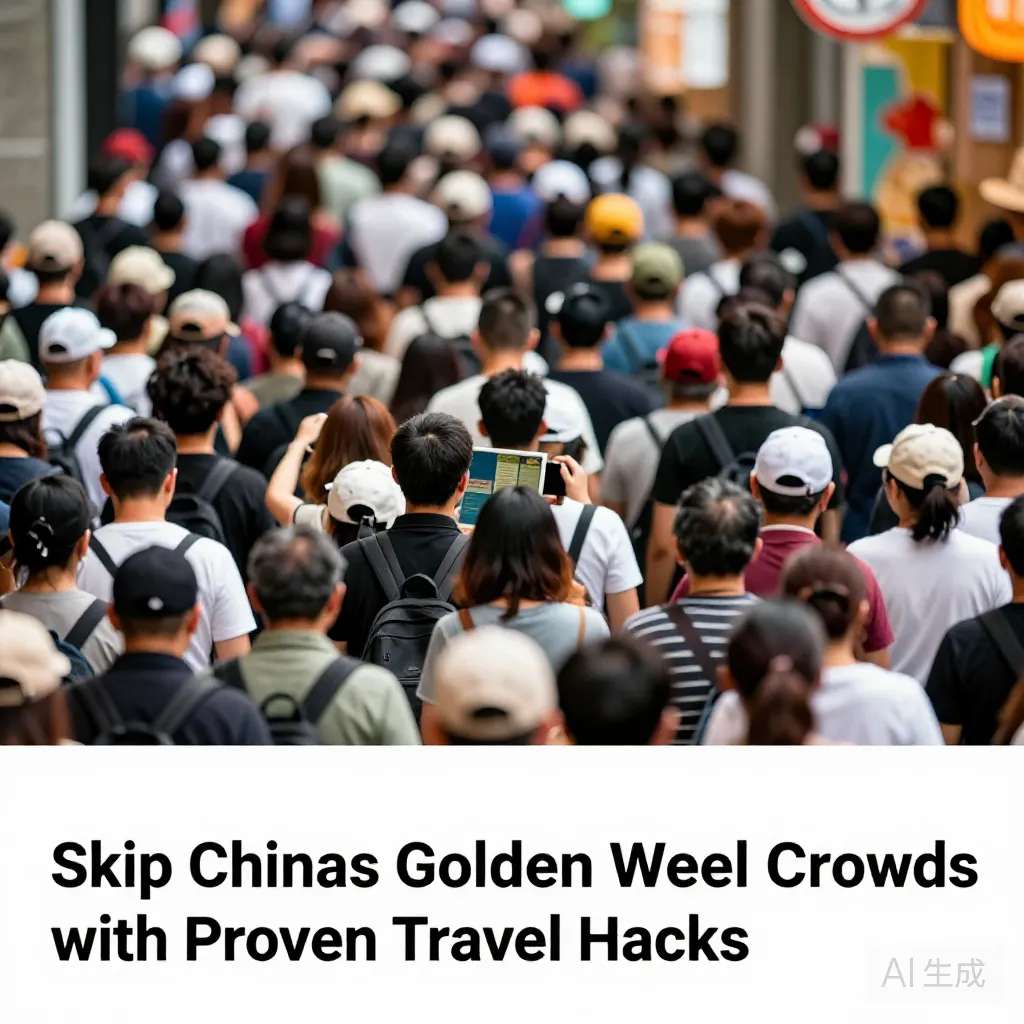
Your travel dates—September 26th to October 4th—place you squarely in the path of China’s largest annual human migration: the National Day Golden Week. The imagery is infamous. The Great Wall becomes a slow-moving river of people.
Popular scenic spots transform into seas of heads. The initial reaction is often one of dread. But, this period is not a travel sentence; it is a complex logistical puzzle that, when solved with precision, reveals a unique and vibrant side of China.
This guide is your systematic blueprint for navigating peak season with grace, strategy, and minimal stress.
The fundamental shift in perspective required is this: you are not trying to eliminate crowds—an impossible task—but to navigate them with superior timing, location intelligence, and preparation. Your itinerary—Shanghai, Zhangjiajie, Chongqing, Beijing, and Hong Kong—follows a logical geographic and thematic progression from modern metropolises to ancient wonders. We will refine each segment with actionable, evidence-based tactics. The goal is to transform potential frustration into a series of small victories: a sunrise on the Bund with few others, a serene morning hike on a quiet Great Wall section, a meal in a Chongqing alleyway just as the dinner rush subsides.
Success hinges on three pillars: absolute advance booking, relentless early mornings, and strategic location selection. You will learn to swim slightly upstream against the main tourist currents. This means prioritizing the first entry slot at any major attraction, seeking out vertical movement in mountainous areas to bypass horizontal bottlenecks, and using urban complexity to find pockets of calm.
The festive atmosphere of a celebrating nation is part of the experience. With this guide, you will not just endure Golden Week; you will strategically enjoy it, collecting memories of China’s wonders without being consumed by its crowds.
Part 1: Urban Mastery – Thriving in Shanghai & Chongqing’s Vertical Landscapes
Your journey begins in China’s powerhouse eastern cities. These megaculates, symbols of hyper-modernity and dense human activity, present the first set of challenges. The strategy here is to leverage their scale and complexity. By mastering their transit systems, understanding the rhythm of local life, and accessing alternative vantage points, you can experience their iconic energy without being swallowed by the peak-season mob.
Shanghai: Exploiting the Pre-Holiday Advantage
Your arrival on September 26th is a major tactical win. The official Golden Week holiday begins on October 1st, meaning your first two full days (27th & 28th) exist in a relative "pre-rush" lull. This window is your most valuable asset in Shanghai.
The city’s iconic sights will be busy but not yet at crushing capacity. Your two-day plan is sound, but execution must be surgical to capitalize on this temporal advantage.
The Dawn Patrol: Securing the City’s Crown Jewels
The Bund at sunrise is an entirely different experience from the Bund at noon. A walk here between 6:00 AM and 7:30 AM will reveal a quiet promenade shared with tai chi practitioners, joggers, and a handful of photographers. The Pudong skyline glows in the soft morning light, unobstructed by the sea of selfie sticks that will dominate by 9:00 AM. This is not merely crowd avoidance; it is accessing the city’s most beautiful, contemplative moment.
This principle applies universally. For any paid observation deck—the Shanghai Tower, Oriental Pearl Tower, or Jin Mao Tower—you must book the first timed entry slot of the day (often 8:00 AM or 8:30 AM). Purchase these tickets exclusively through official channels: the attraction’s WeChat mini-program or a trusted platform like Trip.com (Ctrip).
Do not wait to buy at the door; slots sell out days in advance. Entering with the first group guarantees clear views and short queues. You will be descending as the first major tour buses arrive.
Shanghai Disney: A Calculated Gamble or Strategic Avoidance
Visiting a theme park during Golden Week is the pinnacle of crowd endurance. If Disney is a non-negotiable dream, your execution date is critical: September 29th. This is your last full day before the national holiday begins and represents a significant, though not total, reduction in attendance compared to October 1st-3rd.
Tactics are non-negotiable: 1. Ticket: Buy a single-day ticket online immediately. They sell out.
2. Arrival: Be at the gates at least 45 minutes before official opening. 3.
App: Download the official Shanghai Disney Resort app. Use it for show times, character meet-and-greet locations, and most importantly, single-rider lines for major thrill rides like Tron Lightcycle Power Run and Roaring Rapids. 4.
Prioritization: Accept that wait times for headliners will still be 90-150 minutes. Your goal is to secure 2-3 ride experiences via single-rider or early access, then immerse yourself in the park’s incredible theming, shows, and atmosphere. 5.
Logistics: Pack a lightweight rain poncho (rides can splash), a portable charger, and snacks. Consider a pre-paid meal voucher or quick-service dining to save time.
For many, the wiser choice is to skip Disney entirely during this period. The energy and scale of the city itself provide ample wonder. Redirect that day to a deeper exploration of neighborhoods like the French Concession (Xintiandi, Tianzifang) or a museum like the Shanghai Museum (book timed entry online).
Transitioning into the Storm: September 30th
Your travel day to Zhangjiajie (likely by air or high-speed rail) will feel the first true surge. Airports and train stations will be packed with travelers starting their holiday. Your strategy is simplicity and efficiency.
Travel with a carry-on only if possible. Have all digital tickets (flight, rail) easily accessible on your phone. Arrive at the airport/station with maximum buffer time.
This is a day for smooth transit, not sightseeing. By the time you reach your next destination, the full force of Golden Week will be underway nationwide.
Chongqing: Leveraging the Mountain City’s Natural Bottlenecks
Chongqing, the "Mountain City," presents a different urban puzzle. Its defining characteristic—verticality—is your secret weapon. While flat squares like Jiefangbei will be packed, the city’s hilly, multi-level layout means crowds naturally thin out on inclined streets, in elevated neighborhoods, and on the many bridges and overpasses. Your two days here should embrace this topography.
Day 1: CBD Views and River Strategies
Focus on the Jiefangbei CBD area, but with a vertical twist. Instead of solely battling the pedestrian square, descend into the underground city—a labyrinth of interconnected malls (Chongqing Times Square,WF Center) that are air-conditioned, less congested, and offer a respite from surface-level chaos. For the iconic skyline view, a Yangtze River cruise is standard, but the cruise itself will be a sardine can.
more effective strategy: Book a VIP cabin online for a guaranteed seat and better viewing. Even better, head to a rooftop bar in the Nanbin Road area (e.g., the one at the Hilton). For the price of a drink, you get a stationary, less crowded, and often superior panoramic view of the skyline and the nightly light show (which starts around 8:00 PM).
This solves the dinner rush problem too—dine with a view before or after the main crowds.
Day 2: Ancient Towns, Museums, and Culinary Timing
Ciqikou Ancient Town is on every tourist list. To experience it with relative calm, arrive by 8:00 AM. The morning light is beautiful, tour groups are not yet disembarked from buses, and the narrow lanes are navigable.
The surrounding hills have quieter, authentic lanes with local handicraft shops and tea houses. Contrast this with a midday visit, which is a slow shuffle.
Your culinary mission is hot pot. The cardinal rule: avoid the 6:00 PM - 8:00 PM dinner window. Target 5:00 PM or after 8:30 PM.
Use the Dianping app to find highly-rated local branches in side alleys (like those in the Nanbei area) which often have shorter queues than the flagship locations on the main drag. If crowds become overwhelming, the Three Gorges Museum is an outstanding, spacious, air-conditioned alternative that provides essential historical context for the region you’re traversing.
Part 2: Natural & Historical Pillars – Conquering Zhangjiajie & Beijing
This phase moves from urban landscapes to China’s soul-stirring natural and historical core. The challenges shift: geography creates permanent bottlenecks (narrow mountain paths, single-entry historic sites), and UNESCO status means hard capacity limits. The strategy pivots to vertical movement, remote access points, and the absolute, non-negotiable securing of timed entry tickets. Here, preparation is not just helpful; it is the only thing separating a magical experience from a day in a queue.
Zhangjiajie: The Avatar Landscape – A Tactical Playbook
The Wulingyuan Scenic Area is a masterpiece of geology, but its beauty is matched by its crowd-management complexity. The towering sandstone pillars mean trails are inherently narrow. Your two-day window here must be executed with military precision. The core strategy is vertical first, horizontal second.
The Bailong Elevator: Your Ultimate Crowd-Hack
This is the single most important tactical decision for Zhangjiajie. The Bailong Elevator (Glass Elevator) is a 326-meter-high, high-speed lift that whisks you from the valley floor to the top of the mountain area in under two minutes. The alternative is a grueling, multi-hour hike up steep staircases that become clogged with slow-moving crowds by mid-morning.
Execute this: On your first park day, be at the Wulingyuan Entrance by 7:00 AM. Purchase your 4-day park pass and Bailong Elevator ticket together online in advance. Take the first elevator up (it opens at 7:30 AM).
By 7:45 AM, you will be at the top, on the Golden Whip Stream area or the paths to the Avatar Hallelujah Mountain, with the vast majority of the day’s crowds still below you. You will be hiking downhill or across the ridge, moving with the eventual flow, not against it. This simple choice buys you 2-3 hours of profound peace.
The Glass Bridge and the Tianmen Mountain Dilemma
The Zhangjiajie Glass Bridge is a separate attraction with its own ticketing and massive queue. Book this ticket online for a specific time slot weeks, even months, in advance. Aim for the 8:30 AM - 10:00 AM slot. Arrive 15 minutes early.
Once on the bridge, the viewing platforms on either side fill fast. Your window for unobstructed photos is brief.
Tianmen Mountain (the "Heaven's Gate" with the cliff walkway) is spectacular but a major logistical undertaking. It requires a separate full-day ticket, a cable car ride from the city of Zhangjiajie (not the Wulingyuan park), and involves extreme crowds on the single cable car line and the cliff-hanging walkway. Recommendation: Unless you are an extremely fit hiker seeking the famous "99 Turns" road, prioritize deeper exploration of Wulingyuan (like the serene Golden Whip Stream trail for an afternoon) over the potential marathon of Tianmen Mountain queues. You cannot do both well in two days.
Logistics, Weather, and Sustenance
Accommodation: Stay in the Wulingyuan Village area, within a 10-minute walk of the park entrance. Eliminates all transit stress. Timing: Be on the trails by 7:30 AM. The morning light is magical for photography, and crowds are minimal until ~10:30 AM. Food: Eat lunch early (11:30 AM) or late (1:30 PM). Pack high-energy snacks (nuts, bars) and a full water bottle; refill at mountain springs. Gear: Layers are essential. Mountain weather in October is cool and can shift to mist or rain quickly. A lightweight, packable rain jacket is mandatory.
Beijing: The Imperial & Ancient Challenge – Scale and Bottlenecks
Beijing is your climax and your greatest test. Arriving here at the height of Golden Week means you are in the epicenter. The primary targets—the Great Wall and the Forbidden City—are world heritage sites with finite, controlled entry points. Your strategy must be absolute and pre-emptive.
The Great Wall: Section Selection is Everything
Badaling is a no-go zone. It will be a human avalanche. Your strategy must pivot to sections that are longer, more rugged, and less accessible to short-format tour buses. The hierarchy of options:
1. Mutianyu: The best balance for most travelers. It has a cable car and a toboggan (fun descent), is fully restored, and is significantly longer (2.5 km) than Badaling, spreading crowds out. Execution: Arrive by 7:00 AM. Take the first direct bus (Bus 916 Express from Dongzhimen) or a pre-booked private car. Your goal is to be on the wall by 8:00 AM. You will have 2-3 hours of relative solitude before the deluge. 2. Jinshanling & Simatai: More remote, wilder, and stunning. These sections are connected by a strenuous hike (the "East to West" walk). Crowds thin dramatically after the first few watchtowers. This is for the fit traveler who prioritizes authenticity and views over convenience. Requires a full day and significant physical output. 3. Jiankou (Wild Wall): Unrestored, dangerous, and for expert hikers only. Not recommended for your first solo trip due to safety risks (unstable bricks, steep drops).
Universal Wall Rule: Whichever section you choose, be on the wall at opening time (often 7:00 or 7:30 AM). This is your single most effective crowd-avoidance tactic.
Forbidden City (Palace Museum): The Ticket is King
You must book your timed entry ticket weeks, potentially months, in advance on the official museum website. Slots for October 1st-3rd vanish within minutes of release. Book the first entry slot of the day (8:30 AM). Enter through the Meridian Gate (Wumen).
Once inside, the scale (72 hectares) works in your favor. While the central axis (Meridian Gate -> Hall of Supreme Harmony -> Gate of Divine Might) will be a river of people, you can escape into the vast, quieter side courtyards and gardens. Focus on a thematic route: the "Three Halls and Three Courtyards" core for power, or the Cining Palace area and Garden of Perfect Brightness for a quieter, residential feel.
The Clock and Watch Gallery and Sculpture Gallery are often less congested. Do not try to see everything; pick a quadrant and explore it deeply.
Temple of Heaven & Summer Palace: Park Strategies
Temple of Heaven: The park is a massive green space where locals exercise. Go at 7:00 AM to see the famous tai chi, dancing, and singing crowds away from the main Hall of Prayer for Good Harvests (which will be packed later). The morning atmosphere is a cultural experience in itself. Summer Palace: Vast and beautiful. The Long Corridor will be shoulder-to-shoulder. Your escape: rent a boat on Kunming Lake. It provides a peaceful, different perspective and a break from walking in dense crowds.
Beijing Mobility & Dining Intelligence
Transport: The subway is your god. It’s fast, cheap, and immune to road traffic. Get a Yikatong transit card or use the Alipay/WeChat Pay QR code function for metro entry—it’s faster than tokens. Avoid taxis during rush hour (7-9 AM, 5-8 PM). Use Didi (Chinese Uber); have your destination written in Chinese by your hotel. Dining: For Peking Duck, book days in advance at Quanjude, Da Dong, or Siji Minfu. Lunch is vastly easier to book than dinner. For quick eats, explore the hutongs (alleyways) behind major sights like Nanluoguxiang for smaller, local eateries away from the main drags. Use Dianping to see wait times and menus.
Part 3: Universal Principles & The Hong Kong Finale
Before we address the finale in Hong Kong, we must consolidate the immutable, overarching laws of Golden Week travel. These are not suggestions; they are the non-negotiable rules that will determine your success or failure across every city on your itinerary.
Universal Golden Week Mastery: The Non-Negotiable Rules
1. The Advance Imperative: Book Everything Now
This cannot be stressed enough. Every single ticket for any major attraction must be purchased online in advance. This includes: Forbidden City (official website, releases 7 days prior at 5:00 PM Beijing time—set a calendar alert). Great Wall sections (Mutianyu, Jinshanling via official sites or Trip.com).
Zhangjiajie Glass Bridge & Bailong Elevator (official Wulingyuan ticketing site or Trip.com). Shanghai Tower/Oriental Pearl (WeChat mini-programs). * Yangtze River cruises (Trip.com or operator sites).
Museums (even non-palace ones like Three Gorges Museum often require same-day online registration during holidays). High-Speed Rail tickets (via 12306 app with a Chinese number or Trip.com for international cards—book as soon as your dates are firm; seats sell out). * Popular restaurants (Peking Duck, hot pot chains—book 2-3 days ahead via Dianping or phone).
Do not rely on "at the door." You will be turned away.
2. The Early Bird Strategy: Be First, or Be Last
Your alarm is your primary weapon. 6:00 AM is your new "reasonable" wake-up time on major sightseeing days. Be at the entrance of your target attraction at least 30 minutes before opening. You will have the site 80% to yourself for the first 1.5 to 2 hours.
By 10:00 AM, the tour bus wave from across China arrives, and the experience changes fundamentally. This applies to: Great Wall sections Forbidden City Major parks (Summer Palace, Temple of Heaven) Museums with timed entry * Even popular breakfast stalls to avoid queues
3. Transportation Intelligence: Master the Networks
Inter-city: High-Speed Rail (HSR) is superior to flying for distances under ~1000km (e.g., Shanghai-Zhangjiajie, Chongqing-Beijing). It’s punctual, comfortable, and drops you in the city center. Book early. Intra-city: Subway is king. Have a contactless transit card or, more conveniently, set up Alipay/WeChat Pay QR transit codes. For airport transfers, use Airport Express trains over taxis to avoid gridlock. * Ride-hailing: Didi Chuxing is reliable. Have your destination address in Chinese characters saved. International numbers work, but response can be slower.
4. Culinary Crowd-Sourcing: Eat on "Island Time"
The national dinner rush is a solid block from 6:00 PM to 8:00 PM. Your mantra: eat early (5:00-5:30 PM) or late (8:30-9:00 PM). * Use Dazhong Dianping to find highly-rated local spots with shorter queues in residential areas.
Food courts in large malls (e.g., Shanghai's Super Brand Mall, Beijing's Chaoyang Joy City) offer variety and efficient service. For street food/night markets, go at 9:00 PM—the initial rush is over, but vendors are still active. Or go at 10:00 PM for a more relaxed, end-of-day vibe as some stalls start packing up.
* Embrace local breakfasts (jianbing, youtiao, soy milk) from stalls—fast, cheap, authentic, and eaten on the go.
5. Your Digital Toolkit: Apps Are Essential
Pre-download and configure: Maps: Baidu Maps or Gaode Maps (AutoNavi). Google Maps is unreliable in China. Translation: Pleco (offline dictionary with camera OCR) is the gold standard.
Download offline packs for Google Translate as backup. Ride-hailing: Didi Chuxing (register with international number). Reviews/Booking: Dazhong Dianping (for restaurants, see wait times), Trip.com (for hotels, trains, attractions).
* Social/Communication: WeChat. Have a QR code ready for Wi-Fi logins. It’s the key to almost everything.
6. Payment Systems & Financial Agility: Go Cashless, But Have a Backup
China is a near-cashless society. Fumbling with cash or a foreign card in a queue causes delays. * Primary: Set up Alipay or WeChat Pay with a linked international credit/debit card before you go.
Use the "Tour Card" or similar feature to bind your non-Chinese card. Complete this at least one week before departure to verify. * Operation: Pay via QR code scanning.
Have both apps installed; some tiny stalls only accept one. * Backup: Carry 500-1000 RMB in cash. Tiny vendors, temple donations, or informal guides may only take cash.
Withdraw from ATMs inside secure bank branches, not standalone machines in tourist areas. * Banking: Notify your home bank of your travel dates and destinations. Specify you will use your card in China to prevent fraud blocks.
Consider a dedicated no-foreign-transaction-fee travel card.
7. Health, Safety & Comfort in Overcrowded Conditions
Footwear: Broken-in, cushioned walking shoes are non-negotiable. You will walk 8-12 km daily and stand in queues for hours. Blisters will ruin your trip. Hydration: Carry a reusable bottle and refill constantly. Dehydration leads to fatigue and poor decisions. Security: Use an anti-theft crossbody bag worn in front. Keep phone/wallet in zipped pockets, never back pockets. Vigilant on public transport and at bottlenecks. Separation Protocol: If with others, agree on a clear meeting point ("nearest landmark/exit"). Have your hotel address in Chinese on a card. Health Kit: Pack a small first-aid kit (blister plasters, painkillers, anti-diarrheal, masks). Masks are still common in crowded indoor spaces during flu season. Energy Management: Golden Week is a marathon. Schedule a café break or park sit-down each afternoon. Pushing through exhaustion is counterproductive.
8. Cultural Nuances & Crowd Etiquette: Flow with the River
Queuing: Chinese queues can look fluid. Observe the formation. A polite "请问,这是排队吗?" (Qǐngwèn, zhè shì páiduì ma? – Excuse me, is this the queue?) clarifies. If someone cuts, a firm but polite "对不起,请排队" (Duìbuqǐ, qǐng páiduì – Sorry, please queue) is appropriate. Personal Space: It will shrink to near-zero. Expect full-body contact on subways and at viewpoints. Use gentle, persistent forward motion with a slight "借过" (jièguò – excuse me). Photography: rarely photograph people without permission, especially the elderly or military. A smile and nod toward your camera usually suffices. Be mindful not to block others' shots at iconic spots. Dining: Use serving utensils for shared dishes. Tipping is not expected in most places (restaurants, taxis). Rounding up is fine. For exceptional guides/drivers, a discreet 5-10% tip in an envelope is appreciated. * Festive Spirit: Embrace it. You’ll see public square dances, decorations, and heightened patriotism. A curious, respectful attitude turns potential friction into connection.
Hong Kong Layover: A High-Energy Finale
Your "long layover" in Hong Kong on October 3rd or 4th is a brilliant capstone. As a Special Administrative Region, it operates on a different cultural and logistical wavelength. While also busy, its compact size, incredible public transport, and vertical density offer a different, high-octane finale. With "1 extra day," focus on iconic, efficient experiences.
Maximizing a Short Stop: Icons and Efficiency
Victoria Peak: The queue for the historic Peak Tram will be immense. more effective: Take bus route 15 from the Central Exchange Square bus terminal. It’s slower but offers stunning harbor views and a shorter wait. On the Peak, the Sky Terrace 428 platform will be crowded. Your goal is the view, not the shops. Time it for late afternoon to catch the sunset. Star Ferry: The classic Star Ferry across Victoria Harbour is a must. It’s cheap, efficient, and offers the best views of the skyline. Do it at night for the "Symphony of Lights" show. Buy a ticket for the upper deck. Street Food & Neon: Mong Kok and Tsim Sha Tsui are the epicenters of neon and energy. Skip sit-down meals for time efficiency. Grab egg tarts and pineapple buns from legendary, busy bakeries like Kam Wah Café or Tai Cheong. Walk, absorb the atmosphere, and sample from stalls. If Time is Very Short (Morning Departure): Focus on the Peak (via bus) and a quick stroll through Central or SoHo before heading to the airport.
Conclusion: The Journey is the Reward, Forged by Preparation
Your trip, booked during China’s most formidable holiday, will not be a conventional vacation. It will be a masterclass in adaptive travel, a testament to planning, and a deep dive into the nation’s celebratory spirit. You will witness China adorned in national flags, hear public performances in every square, and share spaces with millions of families on their own sacred annual pilgrimage. This is not a backdrop to your trip; it is the experience.
By internalizing and executing the strategies laid out—the relentless early mornings, the pre-emptive booking of every ticket, the selection of smarter alternatives like Mutianyu over Badaling or the Bailong Elevator over the hiking trail—you will extract profound value from your fixed dates. You will stand on the Great Wall with space to breathe. You will wander the Forbidden City’s grand courtyards with a timed entry ticket in hand.
You will taste Chongqing hot pot at 8:45 PM as the queues dissipate. You will see Shanghai’s skyline at dawn, pristine and quiet.
The crowds will be a factor, but they will not be the defining narrative. Your defining traits will be your preparation, your discipline with an alarm clock, and your willingness to seek the path less taken. This is your first solo journey to China.
It will be physically demanding, logistically complex, and utterly unforgettable. You have been given a puzzle. This guide provides the solution.
Now, book those tickets, set those alarms, and step into the golden, bustling heart of China with the confidence of a strategist. Your adventure awaits.
Responses • 0
0/2000
ID: 1326
Chris
Offline
1 hr
Visited
From
Bakersfield, United States
Send Message