Shanghai's Cozy Cafe Gems for Small Groups
AI Learn Chinese
2 hr • 1 read
Discover the perfect cozy cafe in Shanghai's Changning district for your small afternoon gathering. Find groupfriendly spots with character, space, and a welcoming vibe for around 10 people.
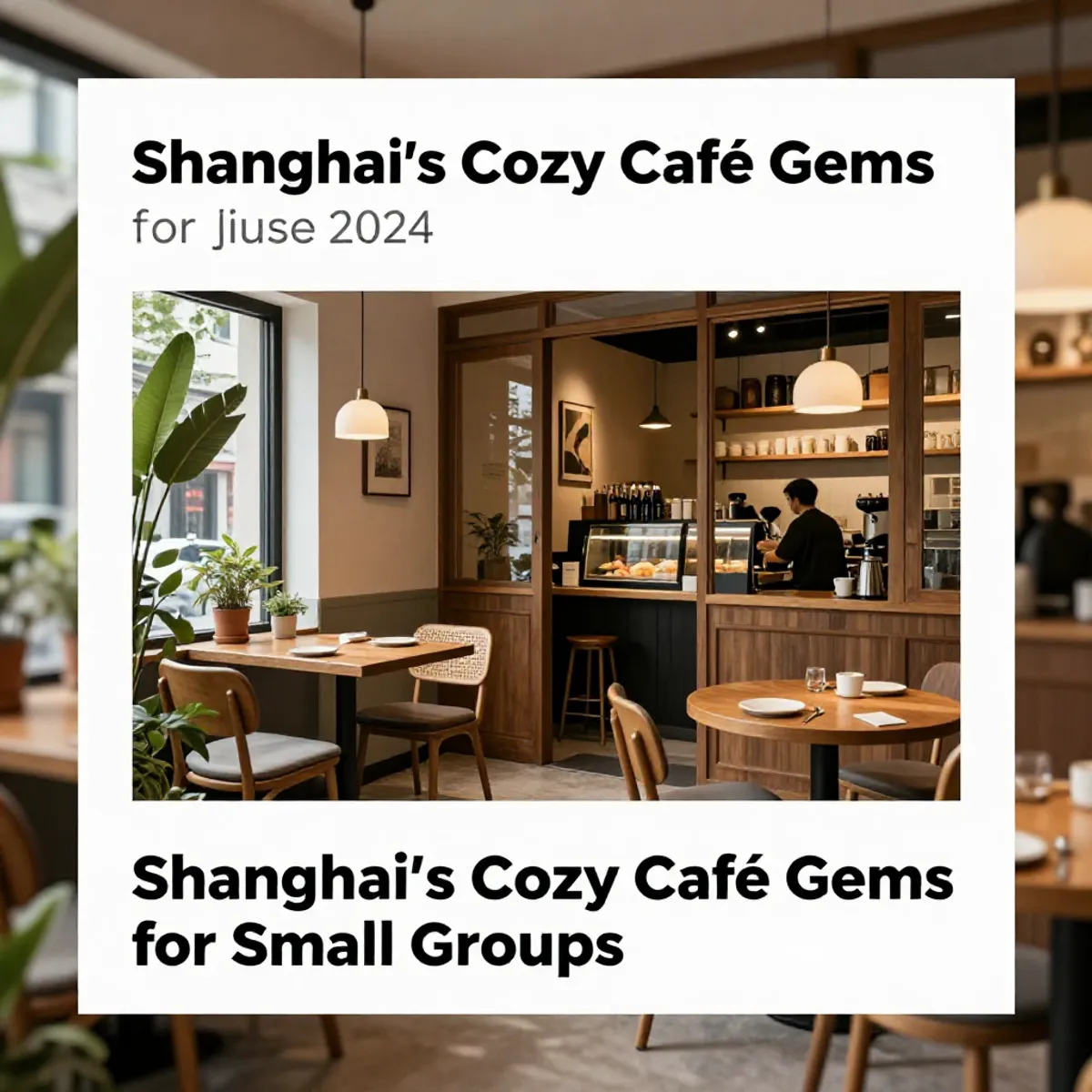
The Search for the Perfect Group Gathering Spot
Finding the right venue for a small group in a vast metropolis like Shanghai can feel like a quiet treasure hunt. The request is specific: a cozy cafe, an afternoon slot, space for about ten people, ideally in the Changning area or nearby. It’s a common need—a casual meetup, a book club discussion, a small project debrief, or simply friends catching up over good coffee.
The challenge isn't just about capacity; it's about finding a place with a welcoming atmosphere that won't rush you, where the noise level is manageable, and the location is convenient. This article is a practical guide to navigating that search, focusing on the unique cafe culture of Changning and the strategies to secure a comfortable, extended stay for your group.
The initial query highlights a key tension in urban cafe culture. a number of of Shanghai's most beloved cafes are intimate by design, built for one-on-one conversations or solitary work. They prize a certain aesthetic of quiet, often with limited seating.
A group of ten immediately shifts the dynamic. The goal, therefore, is to identify those establishments that either inherently accommodate groups or are managed by people flexible enough to welcome them for a few hours. This requires understanding not just the physical space, but the philosophy of the cafe owner.
We will explore the types of venues most likely to say "yes," the best ways to ask, and a curated selection of spots in Changning that fit the "cozy" and "group-friendly" criteria.
Understanding the "Cozy" and "Group-Friendly" Dynamic
The word "cozy" is subjective. For some, it means soft lighting, plush armchairs, and bookshelves. For others, it’s a bright, plant-filled space with a community feel.
In the context of a group, "cozy" must also imply "spacious enough." A truly group-friendly cozy cafe often has a slightly larger floor plan, perhaps a long table, a back room, or a mezzanine level. It's a place where the staff are accustomed to patrons staying for more than an hour, nursing a single coffee while working or talking. The vibe should be relaxed, not a high-turnover, grab-and-go espresso bar.
The Importance of Communication and Timing
The success of your gathering hinges on proactive communication. Calling or messaging ahead is non-negotiable for a group of ten. This isn't just about asking "can we come?" It's about explaining your plan: "We are a small group of friends meeting for a casual chat and coffee on Saturday afternoon.
We anticipate staying for about three hours. Do you have space for us, and is that okay with your cafe?" This transparency allows a cafe to manage their expectations and seating plan. An afternoon slot (say, 2 PM to 5 PM) is often ideal.
It avoids the peak lunch rush and the after-work dinner crowd, placing you in a quieter, more contemplative period when staff may be more amenable to a single group occupying a larger table.
Changning: A District of Distinctive Neighborhoods
Changning District is not a monolithic area; it's a collection of neighborhoods, each with its own character and cafe density. Understanding these micro-scenes is crucial for your search. The district spans from the bustling, international feel around Zhongshan Park to the quieter, more residential lanes of Xujiahui and the historic, tree-lined streets of the former French Concession areas that bleed into Changning. Your "ideal" spot exists somewhere within this spectrum.
The West of Changning: Xujiahui and Around
Xujiahui is a major commercial hub, home to massive shopping malls and office towers. But, nestled within and around it are pockets of tranquility. The streets just north and south of the main Xujiahui intersection, particularly in the lanes off Huashan Road and Wukang Road, are lined with smaller cafes.
These often occupy converted shikumen (stone-gate) houses or ground-floor apartments. They tend to be smaller, incredibly charming, and can be hit-or-miss for groups. The advantage here is proximity to metro lines (Line 1, Line 9, Line 11) and other amenities.
The challenge is finding one with the capacity for ten without feeling cramped. Look for cafes that advertise "private rooms" or have descriptions mentioning "large tables" or "events."
The Heart of Changning: Zhongshan Park Vicinity
Zhongshan Park itself is a massive green space. The area immediately surrounding the park, especially along Changning Road and the smaller streets to the east, has seen a boom in boutique cafes. This area attracts a mix of young professionals, expats, and families.
The cafes here are often newer, designed with Instagrammability in mind—high ceilings, minimalist decor, specialty coffee bars. Some have adopted a "third wave" coffee model, which can mean a focus on the craft over long linger times. But, many also have larger tables or communal seating specifically to encourage community and longer stays.
This is a prime area to target for a balance of style, space, and a generally group-tolerant attitude, especially in the lanes just a 5-10 minute walk from the park's south gate.
The Southern Fringe: Confluence with French Concession
The southern border of Changning District merges seamlessly with the historic French Concession, particularly around the Hengshan Road and Wukang Road areas. This is where you find some of Shanghai's most iconic, atmospheric cafes. Think of grand, old apartment buildings with high ceilings and large windows, or small, hidden gardens.
The ambiance here is unmatched for "cozy" in a historic, romantic sense. The caveat is that many of these legendary spots are tiny, sometimes only fitting 4-6 people. The strategy here is to look for slightly larger establishments on the main roads (like Wukang Road itself) or those that have expanded into adjacent spaces.
The vibe is perfect for an intellectual or artistic gathering, but you must book far in advance and be prepared for potentially higher prices.
Cafe Archetypes: Which Ones Welcome Groups?
Not all cafes are created equal. Categorizing them by their business model and target customer can predict their likelihood of accommodating your group.
The Community Hub
This is your best bet. These cafes are often founded with a specific neighborhood community in mind. They host events—board game nights, language exchanges, book clubs—by design.
Their floor plan usually includes a mix of small tables and one or two larger ones. The staff are friendly and used to groups. They often have a slightly more relaxed pace.
Look for clues: a bulletin board with local flyers, a regular crowd of familiar faces, a menu that includes simple food options beyond pastries (sandwiches, salads). These places want your group's business and the community energy you bring.
The Specialty Coffee Lab
Focused on the precision of the brew—single-origin beans, specific pour-over techniques, latte art competitions. Their primary customer is the individual coffee connoisseur who wants to taste and appreciate. Seating is often at a bar counter or very small tables to maximize space for equipment and staff.
Groups are usually not a priority and can be seen as disruptive to the intended experience. But, some of the newer, larger "lab" cafes have incorporated more lounge-like areas to attract a clientele that stays longer. You must observe the seating layout.
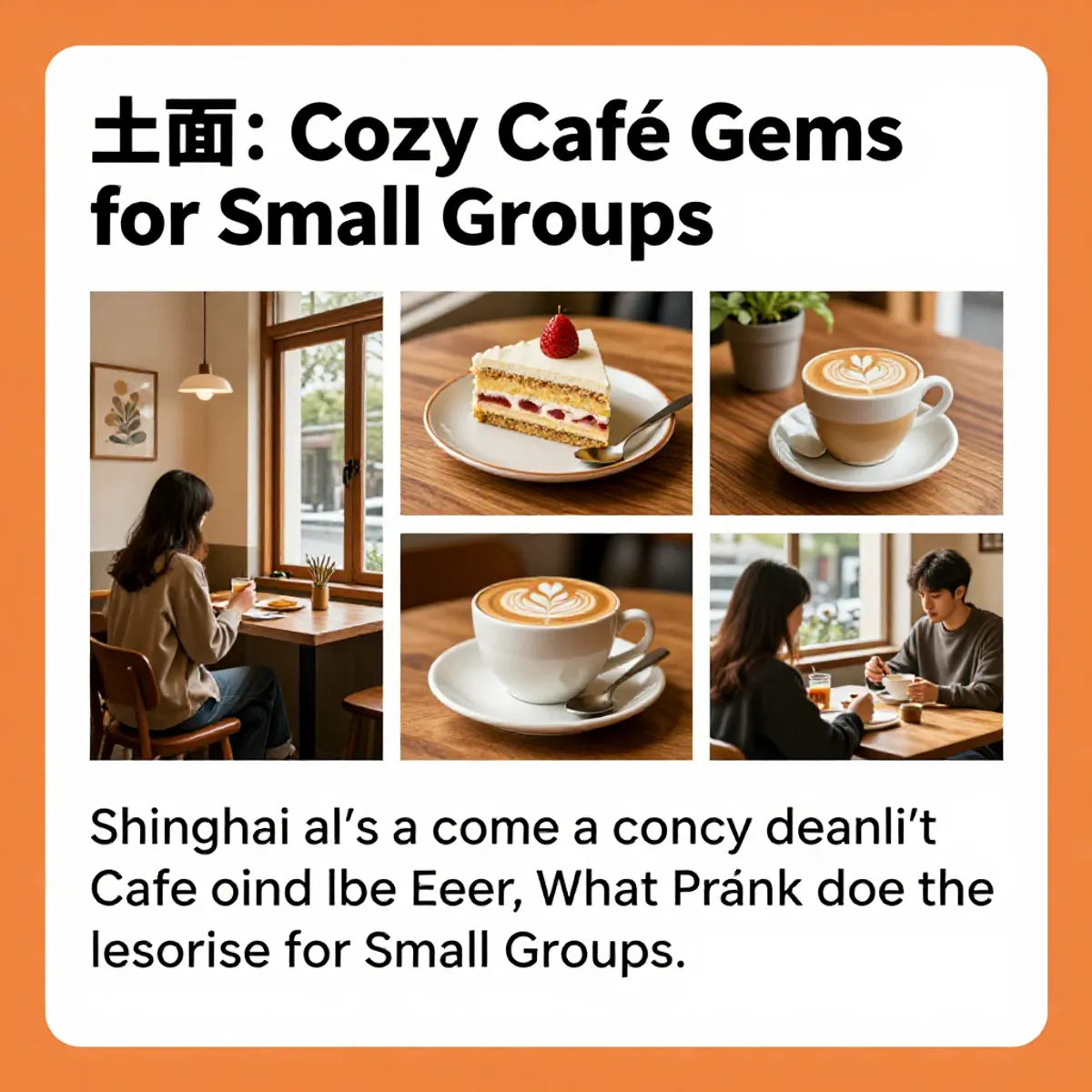
If it's all stools and counters, move on.
The Brunch & All-Day Dining Cafe
These are larger, often brighter establishments that serve full meals from breakfast through dinner. They are designed for duration. People come for lengthy brunches, remote work sessions, and casual meetings.
They inherently have tables for 4, 6, or more. The noise level can be higher due to the kitchen and full house, but the staff are professional and accustomed to managing reservations and large parties. They are almost always your safest option for a guaranteed "yes," though they may require a deposit or a set menu for groups.
The "cozy" factor might be less intimate and more "comfortable restaurant," but the functionality is high.
The Hidden Lane Sanctuary
These are the gems: a small, unassuming door in a lilong (lane) leading to a beautifully decorated, quiet space. They are the definition of "cozy." The risk is their absolute smallness. a number of are one-room affairs with 4-6 tables max.
A group of ten would not fit. But, some of these have expanded over time, taking over the space next door or building a small outdoor garden. These are the unicorns.
Finding one requires deep local knowledge or meticulous research on platforms like Dianping or Xiaohongshu, filtering for "large spaces" or "private rooms."
Practical Strategies for Securing Your Spot
Armed with knowledge of the district and cafe types, your approach becomes strategic.
Research and Vetting
Do not just walk around randomly. Use Chinese apps effectively. Dianping (大众点评) is your most powerful tool.
Search for "cafe" in Changning district. Use filters: look at photos first. Count the chairs at the largest tables.
Read reviews meticulously—search for keywords like "group" (团体), "party" (聚会), "big table" (大桌子), "room" (包间), "loud" (吵) or "quiet" (安静). A review saying "perfect for a small gathering" is a golden ticket. Xiaohongshu (小红书) is also invaluable.
Search "Changning cafe group" (长宁区咖啡馆聚会). Users often post photos of their group bookings, giving you a real sense of the space filled with people.
The Initial Contact: Template and Tone
When you find a promising candidate, contact them. WeChat is the preferred communication channel for most small businesses in Shanghai. If they list a phone number, calling is often faster.
Your message should be: 1. Polite and respectful: "Hello, I am considering your cafe for a small gathering." 2. Specific: "We are a group of about 10 people." 3.
Clear on logistics: "We are looking for a space on [Date] from [Time] to [Time]." 4. Honest about needs: "We would like to stay for approximately three hours for conversation and coffee. Do you have a large table or a separate room available for us?
Is there a minimum spend per person or a booking fee?" 5. Grateful: "Thank you for your time. We look forward to your reply."
This approach shows you are considerate of their business operations. It filters out places that cannot accommodate you immediately.
Understanding Potential Requirements
Be prepared for: A minimum spend: Common for groups, especially if you reserve a private room. This could be a set amount per person or a total bill minimum. A set menu: For larger groups (sometimes even 6+), some cafes ask you to choose from a limited menu to simplify kitchen operations.
A deposit: Particularly for private rooms on weekends, a small deposit via WeChat Pay might be requested. A cancellation policy: Ask about this. A 24 or 48-hour notice for cancellation is standard to get a deposit back.
* Noise expectations: You may be asked to keep the volume at a certain level, especially in smaller, quieter spaces. This is reasonable.
Curated Recommendations: Changning Area Gems
Based on the archetypes and strategies, here are specific types of places to investigate. These are categories and starting points, not a fixed list, as cafe landscapes change. Use them as search keywords on Dianping.
Large-Table Specialists in Zhongshan Park Area
Focus your search on the lanes immediately east of Zhongshan Park (e.g., around the Changning Library area). Look for cafes with descriptions mentioning "共享空间" (shared space), "会议" (meeting), or "团队" (team). One successful model is a cafe that shares its space with a small design studio or bookstore; they often have a flexible back area.
Another is a "coffee + cycling" or "coffee + pet" concept; these tend to be larger, community-oriented storefronts. Search for "Zhongshan Park 大桌咖啡馆" (Zhongshan Park large table cafe).
Historic Charm with Potential Space on Wukang Road
On Wukang Road itself, the famous, tiny historic cafes are not suitable. Instead, look at the side streets just off it, like Hengshan Road or Beichang Road. Here you might find cafes housed in larger, older buildings.
A key phrase to search is "老洋房咖啡馆" (old foreign house cafe). a number of of these have multiple rooms or a garden. A specific example of the type to look for is a cafe that is also a small art gallery or boutique.
The dual-use nature means they have a space meant for events. often verify capacity via photos.
The Modern Community Hub in Xujiahui Lanes

Venture into the residential lanes behind the Xujiahui metro station and the IAPM mall. This area is a maze of quiet streets with cafes serving the local resident and expat population. These are often run by owners who live in the neighborhood and want a local gathering point.
Search for "Xujiahui 社区咖啡馆" (Xujiahui community cafe). Read reviews for mentions of "friendly owner" (老板很好) and "regulars" (熟客). These owners are the most likely to welcome your group with open arms if you communicate respectfully.
They might even help you arrange a slight menu modification.
All-Day Dining Cafes on Major Arteries
For maximum predictability, target larger cafes on Changning Road (长宁路) or Huashan Road (华山路). These are main roads with higher foot traffic. Establishments here operate on a commercial model.
They have the space, the staff, and the systems for groups. The "cozy" factor might be more "stylish and comfortable" than "hidden and intimate," but they will reliably seat ten, provide food options, and not mind a three-hour stay, especially on a weekday afternoon. Search for "长宁路 全天候咖啡馆" (Changning Road all-day cafe) or "brunch 长宁" (brunch Changning).
What to Expect on the Day: Group Dynamics in a Cafe
Even with a perfect booking, managing a group of ten in a cafe requires a bit of group etiquette.
Arrival and Seating
Arrive on time. If you are early, wait until your full reservation time to be seated if the cafe is busy. Have your group's name ready.
Be prepared to be seated at a long communal table or two tables pushed together. This is standard. If you were promised a private room, confirm you are being taken there.
Ordering
Decide as a group on a ordering strategy. Will one person collect orders and payment to simplify for the staff? Or will individuals order at the counter/with servers as they circulate?
For a large group, a single order taker is incredibly efficient. Agree on this beforehand. If there is a minimum spend, track it as you order.
The Three-Hour Stay
Your communication beforehand secured the time, so you are within your rights to stay. But, be mindful of the flow. If the cafe starts to get very busy after 4 PM, consider ordering a final round of drinks or a snack around the 2.5-hour mark to show appreciation for the space. This is not obligatory but is a gracious gesture that ensures you are welcomed back.
Noise Management
This is the most critical group etiquette point. A cafe is a shared public space. While your gathering is the reason you're there, you must be conscious of your volume relative to other patrons.
A group of ten can easily dominate the soundscape. Have one or two people in your group act as informal "volume monitors." If conversations get loud, a gentle reminder helps. This respect for the space and other customers is what will keep venues open to hosting groups in the future.
Beyond Changning: Slight Flexibility in Location
If the Changning search proves too difficult, slight flexibility can open excellent options.
Jing'an District: The Neighboring Powerhouse
Just east of Changning lies Jing'an District, centered around the Jing'an Temple area. This is arguably Shanghai's densest zone for innovative, spacious, and group-friendly cafes. The streets around Wuding Road and Jing'an Temple are packed with large-format cafes, many converted from old factories or apartments with high ceilings and industrial-chic designs.
They are built for events. If you have a few people in your group familiar with the metro, meeting at a Jing'an cafe is a very strong alternative. The vibe is trendier and often more energetic.
The French Concession's Larger Establishments
Further south, in the heart of the French Concession (Xuhui District), focus on the main roads like Fuxing Middle Road or Hengshan Road (the wider sections). Avoid the tiny lane-side spots. Look for cafes with "garden" (花园) or "terrace" (露台) in their name.
These outdoor or semi-outdoor spaces naturally provide more room and a buffer for noise. They are perfect for an afternoon gathering, weather permitting.
The Unspoken Value of a "Yes"
When a cafe agrees to host your group of ten for three hours on a Saturday afternoon, they are making a business decision. They are forgoing potential turnover from multiple smaller tables. They are allocating a scarce resource—their best, largest table—to one party.
They are trusting you to be respectful of their space and other customers. This is a gesture of community support.
Your group's behavior directly impacts the future availability of such spaces. If your group is loud, messy, orders minimally, and overstays your welcome, you contribute to a cafe owner's decision to say "no" to future groups. If your group is orderly, orders sufficiently (coffee, plus maybe a cake or two for the table), cleans up after itself, and maintains a considerate volume, you are an asset.
You become the kind of group a cafe owner remembers fondly and welcomes back. You are validating their decision to have a large table in the first place. This social contract is the invisible key to long-term success in finding these spots.
Conclusion: The Reward of the Found Spot
There is a particular satisfaction in discovering that perfect, cozy cafe that embraces your small group. It transforms a simple meetup into a memorable experience. The ambient sound of coffee grinding, the murmur of other patrons, the quality of the brew, and the comfort of the seats all combine to facilitate better conversation and connection. Shanghai, for all its overwhelming scale, is built on these intimate, neighborhood-scale human interactions.
The search requires patience, research, and respectful communication. It demands that you see the cafe not just as a service provider, but as a partner in your gathering. By understanding the district's layout, recognizing the cafe archetypes that are predisposed to say "yes," and employing a clear, polite booking strategy, you dramatically increase your odds.
Start with Dianping, filter for photos of large tables, read the reviews for group mentions, and craft your thoughtful inquiry. Your ideal afternoon gathering spot in Changning is there. It just needs to be asked for in the right way.
The reward is not just a table for ten, but a welcoming corner of Shanghai to call your own for a few precious hours.
Responses • 0
0/2000
ID: 1326
Chris
Online
From
Bakersfield, United States
Send Message