Shanghai Serviced Apartments: Your 2026 Family Stay Guide
Learn Chinese
1 hr • 0 read
Find the best serviced apartments in Shanghai for families. Walkable neighborhoods, metro access, local cafes, and parks. Jing’an & alternatives for 2026.
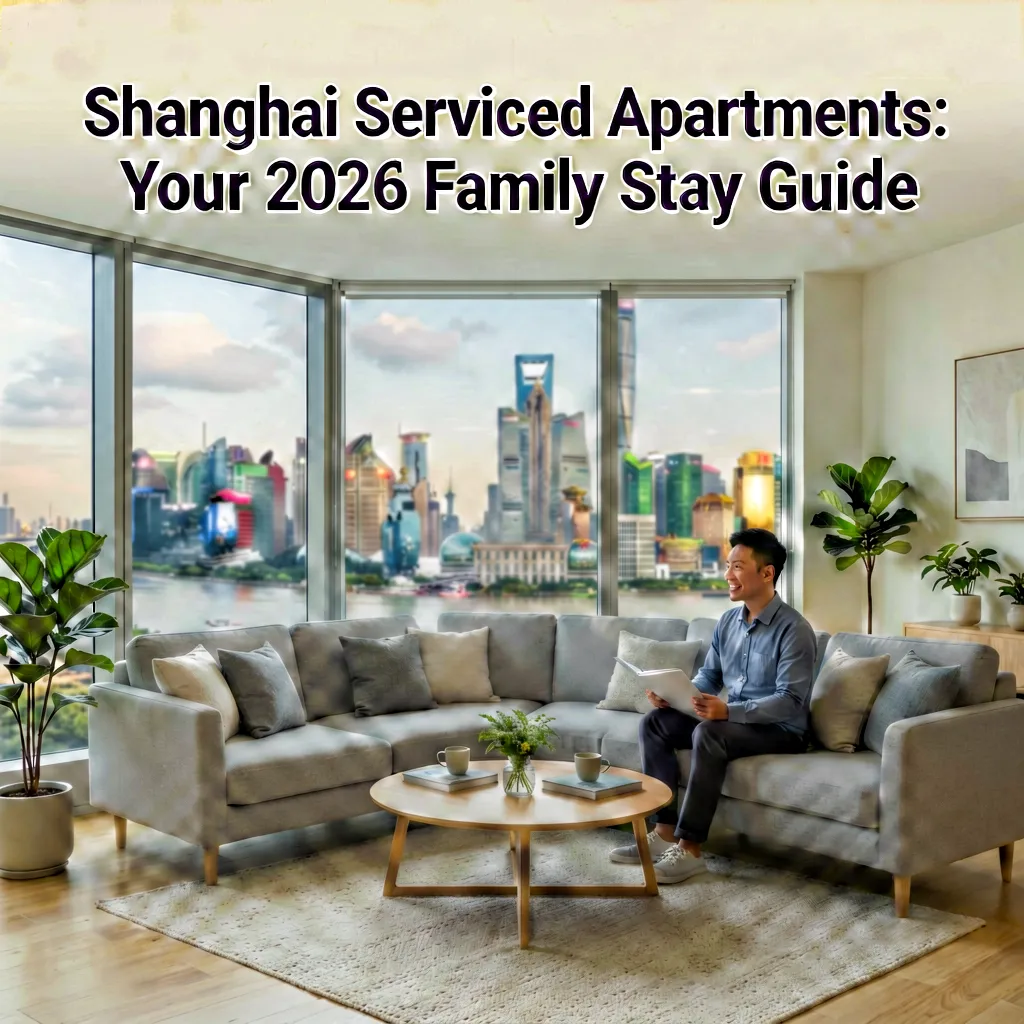
So, your family is planning a two-week trip to Shanghai in early August 2026, and you’ve decided a serviced apartment is the way to go. You’re not alone in that thinking. More travelers, especially families and those on extended stays, are swapping hotel rooms for the space, flexibility, and local immersion of a well-located serviced apartment. The question isn’t just if you should stay in one, but where. Your wishlist is perfect: a walkable area, a metro station at the door, the hum of local life with breakfast spots and parks, and that crucial feeling of being in “real Shanghai,” not a polished bubble. You’ve heard of Jing’an. Let’s dive deep into whether it fits, and explore other districts that might just steal your heart.
Why Choose a Serviced Apartment in Shanghai?
Let’s establish the baseline. A hotel room, even a spacious suite, is a temporary box. A serviced apartment is a temporary home. For a two-week family stay, this distinction is massive. You get separate living and sleeping areas—a game-changer when kids go to bed early and you want to unwind. A kitchen means you can prepare simple meals, pack snacks for long sightseeing days, and even try your hand at local ingredients from a nearby wet market. A washing machine is not a luxury; it’s a necessity for a family, saving you from overpacking or hunting for a laundromat.
Beyond the practical, there’s the psychological shift. You’re not a guest checking in and out; you’re a neighbor. You buy fruit from the same stall each morning. You learn which corner bakery has the best mantou (steamed buns) at 7 AM. This is how you move from tourist to temporary resident, and it’s the only way to truly feel the city’s pulse. Serviced apartments in Shanghai are typically found in modern residential towers or converted historic buildings, managed by companies that provide daily or weekly cleaning, concierge, and often, 24/7 security. The quality varies wildly, so your choice of area is the first and most critical filter for finding a good one.
Defining Your Ideal Neighborhood: The Family’s Checklist
Your criteria are spot-on. Let’s break them into a actionable checklist for evaluating any Shanghai district.
Walkability: This is non-negotiable. In a city of 24 million, traffic can be brutal. You want to accomplish daily errands—morning coffee, lunch, a park visit, metro trip—on foot. The metric is simple: can you reach a metro station, a supermarket (like a Carrefour or local chain), a cluster of small eateries, and a green space within a 10-15 minute walk? If you need a car or a long taxi ride for basics, it’s not the right fit.
Metro Proximity: Shanghai’s metro is arguably the world’s best urban rail system for a visitor. It’s clean, frequent, cheap, and covers the entire city. You must be within 5-10 minutes walking distance of a station. More importantly, check which lines that station is on. A station served by multiple lines (e.g., a transfer station) is a golden ticket, offering flexible routes without transfers. For a family, stations with elevators and escalators are a must—lugging strollers and suitcases up stairs is a nightmare in the summer heat.
Local Breakfast Spots & Cafés: You want the smell of youtiao (fried dough sticks) and jianbing (savory crepes) in the air, not just the aroma of hotel buffet coffee. Look for areas with a high density of small, standalone food shops and xiaochi (snack) vendors, particularly near morning markets or school zones. The presence of independent coffee shops (not just Starbucks) is a great proxy for a neighborhood with a young, local professional crowd and a certain vitality.
Parks: Green space is essential for kids to run around and for you to escape the urban canyon. Shanghai’s parks are more than just grass; they are social hubs with tai chi practitioners, amateur musicians, and families. A large, well-maintained park within walking distance is a huge quality-of-life factor.
The “Real Shanghai” Vibe: This is the trickiest but most important. Avoid areas that are pure commercial tourist traps (like the extreme core of the Bund or certain parts of Old Town). Instead, target mixed-use districts where locals live, work, and shop. Think tree-lined streets with a mix of old shikumen (stone-gate) lanes, mid-century apartment blocks, and new towers. Independent boutiques, neighborhood restaurants with Chinese-only menus, and visible daily life—people walking dogs, grandparents with kids—are your signs.
Jing’an District: The Balanced Choice
You’ve landed on Jing’an. It’s an excellent starting point for your search. Jing’an is a large, central district that embodies Shanghai’s duality: serene residential pockets alongside soaring commercial towers.
The Vibe: Jing’an feels established, mature, and slightly more polished than some alternatives. It’s less “hipster” than the French Concession, less corporate than Lujiazui. The southern part, around Jing’an Temple, is bustling with high-end malls and office buildings. The northern part, especially around the Jing’an Sculpture Park and Zhengfa Road, is quieter, with wider avenues, more greenery, and a strong residential feel. You’ll find a good mix of long-standing local businesses and newer, trendy cafes.
Walkability & Metro: Jing’an is a metro king. Jing’an Temple Station is a major hub on Lines 2 and 7. Line 2 is the east-west spine of the city, connecting People’s Square, the Bund, and Pudong. Line 7 goes north to the university area and south to the Expo Park. Other key stations include Hanzhong Road (Lines 1, 12, 13) and North Zhongshan Road (Line 3). The area around Jing’an Temple itself is very walkable, with malls, the temple, and the sculpture park all clustered. The residential streets north of Changshou Road are quieter but still offer walkable access to daily needs.
Local Food & Café Scene: For a “real” feel, head north. The streets around Changshou Road and Yan’an Road are packed with unassuming laobing (savory pancakes), dumpling shops, and chuanr (skewers) grills at night. Jing’an Temple area has more upscale options, but also gems like the long-standing Jing’an Bakery for shengjianbao (pan-fried soup dumplings). The café scene is robust, with many third-wave coffee shops lining Wuding Road and Jiangsu Road.
Parks: This is a Jing’an stronghold. Jing’an Sculpture Park is a stunning, modern green space with art installations, lawns, and a central pond—perfect for a family picnic. Zhongshan Park is a classic, massive park with a beautiful lake, zoo, and amusement area, a short metro ride or a longer walk north.
Potential Drawbacks: The southern Jing’an core can feel overwhelmingly commercial and crowded during work hours. Some might find it a bit sterile compared to areas with more historic lilong (lane) housing. During August 2026, the lack of heavy tree canopy on some wider roads can make walks feel hot.
Verdict: Jing’an is a fantastic, safe, and convenient base. It delivers on all your criteria with a reliable, upscale-but-not-stuffy vibe. It’s an ideal “first district” for a family’s Shanghai experience.
Beyond Jing’an: Top Alternatives for a Local Feel
If you want to lean even harder into the “real Shanghai” and historic charm, these districts are your next stops.
The French Concession (Lao Xiguan / Xuhui & Changning parts)
This is the quintessential “Shanghai” many imagine: tree-lined avenues, European-style villas, and intimate neighborhoods. It’s a large area, so focus on specific sub-zones.
Vibe: Romantic, leafy, and vibrant. The heart is around Wukang Road, Fuxing Road, and Huaihai Road. It’s pedestrian-friendly, filled with boutique shops, art galleries, and some of the city’s best cafes and restaurants. The density of shikumen lanes and restored historic buildings is unmatched. For Your Family: The walkability is exceptional in the core areas. Shanghai Library Station (Line 10) and Jiaotong University Station (Lines 10, 11) are key hubs. Fuxing Park is a highlight—a gorgeous, active park where you’ll see locals dancing, playing badminton, and socializing. Breakfast is a treat; find tiny shops selling congee (rice porridge) and youtiao tucked away in lanes. * Considerations: It’s immensely popular. Some main streets can be very crowded, especially on weekends. Serviced apartments here are often in older, converted buildings—check for modern amenities and air conditioning quality carefully. Prices are generally higher. The “touristy” feeling is present but more boutique and less overwhelming than the Bund.
Xuhui District (Especially around Tianzifang & Xintiandi)
Xuhui borders the French Concession and offers a slightly more diverse, lived-in feel.
Vibe: A blend of historic and trendy. Tianzifang is a warren of narrow lanes filled with independent designers, small bars, and eateries—more local and gritty than the polished Xintiandi plaza. The area around Dongping Road and Taikang Road is residential and calm. For Your Family: Shi’anmen Station (Lines 10, 14) and Tianzifang Station (Line 9) serve the area. It’s wonderfully walkable. Parks include the smaller but lovely Xujiahui Park (with a glass-bottomed bridge) and Guilin Park. The breakfast scene is authentic and scattered in the back lanes. * Considerations: Tianzifang can be a maze for strollers and gets very lively at night. The overall feel is less “quiet neighborhood” and more “creative hub with residents.” An excellent choice if you want a bohemian, artistic energy.
Pudong (Lujiazui & Century Park Area)
If your family is fascinated by futuristic skylines, Pudong offers a completely different, yet surprisingly family-friendly, experience.
Vibe: Modern, spacious, and clean. Lujiazui is the financial district with the iconic Oriental Pearl Tower and Jin Mao Tower views. Century Park is a massive, serene oasis (you can rent bikes/boats). The area around Century Avenue is a planned urban grid with wide sidewalks and massive malls. For Your Family: The metro system here is superb—Lujiazui Station (Lines 2, 14) and Century Park Station (Lines 2, 9) are central. The wide, shaded sidewalks are great for strollers. Century Park is the star attraction for families. You’ll find international grocery stores (City’super, Ole’) for familiar foods, and local breakfast chains like Yang’s Fry-Dumpling are ubiquitous. * Considerations: It can feel sterile and lacking in “old Shanghai” character. The “real local” vibe is weaker; it’s more of a business and residential zone for the city’s newer middle class. The scale is large, so you might need metro or taxi for some destinations that would be walkable in other districts. But, for a family that loves modern architecture and expansive parks, it’s a top contender.
Other Gems: Putuo & Hongkou
For a deeply local, non-touristy experience with excellent value, look north. Putuo District (around Changshou Road & Zhongshan Park): This is where many Shanghainese live. It’s unpretentious, packed with fantastic, cheap eats (especially around Changshou Road Food Street), and has great access to Zhongshan Park. Metro access is excellent (Zhongshan Park Station, Lines 2, 3, 4). You won’t see many other tourists. The vibe is genuine, bustling neighborhood life. Hongkou District (around North Sichuan Road & Duolun Road): Historically a working-class and literary area. Duolun Road is a preserved historic street with museums and old villas. North Sichuan Road is a famous commercial street with a more local shopping feel than Nanjing Road. Good metro links (Line 10). It’s authentic and less polished, offering a profound sense of daily Shanghai.
Practical Tips for Booking Your 2026 Stay
Booking 18 months out for August 2026 is wise. August is peak summer—hot, humid, and crowded. Air conditioning is non-negotiable. Confirm it’s central, ducted AC, not a noisy window unit.
Platforms: Use a combination. Major international platforms like Booking.com or Agoda have extensive listings and reviews. Airbnb is a major player for longer stays and entire apartments, but vet reviews meticulously for cleanliness, accurate descriptions, and host responsiveness. Consider local Chinese platforms like Meituan (which has a “Homestay” section) or Lianjia for off-market deals, but you’ll need translation help. Key Search Terms: Use “serviced apartment,” “aparthotel,” “short-term rental,” and the specific district names (e.g., “Jing’an serviced apartment”). Filter for “kitchen,” “washing machine,” and “elevator.” Read Reviews Like a Detective: Look for reviews from families or long-term stays. Specific complaints about noise (especially from KTVs or bars), unreliable hot water, or poor cleaning are red flags. Praise for a helpful host, good location, and working appliances is green. Understand the Layout: Photos can be dececing. Is the kitchen a full kitchen or a hot plate? Is the washing machine a combo washer-dryer (common in China) or just a washer? Is there a separate bedroom? For a family, a one-bedroom with a sofa bed in the living area is often the sweet spot. * Legal Note: The regulatory environment for short-term rentals in China is complex. Reputable serviced apartment operators (like Ascott, Fraser, or local brands) operate in a gray-but-established zone. For private rentals on Airbnb, your host should be transparent about any building rules regarding visitors. This is generally not an issue for tourists, but it’s something to be aware of.
Navigating Shanghai: Transport and Daily Life
Your metro proximity will define your mobility. Get a Shanghai Public Transportation Card (Jiaotong Card) from any metro station. It works on metro, buses, and even taxis. Load it with cash. Alternatively, use Alipay or WeChat Pay, which now integrate directly with the metro system—just scan the QR code at the gate. For families, the metro is clean, efficient, and avoids traffic.
Taxis and ride-hailing apps (Didi) are plentiful and cheap by Western standards. often have your destination’s Chinese address saved on your phone. For longer distances (e.g., Pudong to Puxi), the maglev train from Longyang Road to Pudong Airport is a thrilling, 30-second-to-430-kph experience kids love.
For daily life, embrace local apps. Dianping (like Yelp) is essential for finding highly-rated local restaurants, seeing menus with photos, and even booking tables. Ele.me or Meituan are for food delivery—perfect for a night in. A basic translation app with a camera function (like Google Translate) will help decipher food market signs and simple restaurant menus.
Savoring Local Flavors: Breakfast and Beyond
Your desire for local breakfast spots is key to the experience. The classic Shanghai breakfast is a savory, carb-heavy affair.
Youtiao & Jianbing: The universal. Youtiao is a long, crispy fried dough. Jianbing is a savory crepe made with a mung bean batter, an egg, a crispy cracker (baocui), and sauces. Find street vendors from about 5:30 AM until they sell out. Congee & You Tiao: Zhou (congee) is rice porridge, served with toppings like shredded pork, preserved egg, or youtiao on the side. Look for small shops with large pots simmering. Shengjianbao & Xiaolongbao: Pan-fried soup dumplings (shengjianbao) are a breakfast institution, especially around Jing’an and the old city. Xiaolongbao (steamed soup dumplings) are more of a lunch/dinner item but are available everywhere. Soy Milk & Fried dough twists: Sweet or savory soy milk (doujiang) with a mahua (fried dough twist) is another classic combo.
For lunch and dinner, use Dianping to find places packed with locals. Look for restaurants with plastic stools and handwritten specials on the wall. Dishes like hongshao rou (red-braised pork), sweet and sour ribs, and stir-fried green beans are staples. Don’t be afraid to point at what others are eating.
Parks and Green Spaces: Urban Oases
Shanghai’s parks are the city’s living rooms. They are essential for your family’s sanity. Jing’an Sculpture Park: Modern, arty, and spacious. Great for photos and a relaxed stroll. Zhongshan Park: Massive, with a lake, zoo, amusement rides, and beautiful gardens. Easily a half-day excursion. Fuxing Park (French Concession): The most elegant. Modeled on European parks, with formal gardens, a large pond, and a constant buzz of activity—dancing, singing, exercising. Century Park (Pudong): Immense. Rent a surrey bike or a rowboat. It feels like you’re in a different, greener city. * Guilin Park (Xuhui): A smaller, classic Chinese garden style park, peaceful and beautifully landscaped.
Safety, Comfort, and Cultural Etiquette
Shanghai is extremely safe. Violent crime is virtually non-existent for tourists. Standard city precautions apply: watch for pickpockets in crowded metro stations and markets, and keep an eye on your belongings.
Comfort in August: The heat and humidity will be intense. Hydrate constantly. Your apartment’s AC must work perfectly. Plan intense sightseeing for mornings and evenings. Afternoon can be for museums, malls, or your apartment’s pool (if it has one). Pack lightweight, breathable clothing, a hat, and sunscreen.
Cultural Nuances: A few small things go a long way. Queue for everything—metro, tickets, food. It’s a deeply held rule. In your apartment, be mindful of noise, especially in older buildings where sound travels. A simple “xiexie” (thank you) and “zai jian” (goodbye) are appreciated. When in a local restaurant, it’s common to order a few dishes to share family-style. Tap water is not drinkable; use bottled or boil it.
Making the Most of Your Two Weeks
With a home base in a walkable neighborhood, your rhythm can be local. Have a lazy morning with a jianbing from the corner, walk to a park, come home for a lunch of leftovers or a simple chao fan (fried rice). Use your metro pass for deeper explorations: a day in Pudong, an afternoon in the old city, a trip to a museum like the Shanghai Museum or the more interactive and kid-friendly Shanghai Science and Technology Museum.
Build in downtime. The sensory overload of Shanghai is real. A quiet afternoon in your apartment or a park is not wasted time; it’s what makes the trip sustainable for a family.
Final Thoughts: Crafting Your Shanghai Story
Choosing Jing’an is a decision you almost cannot make wrong. It’s the balanced, reliable heart of the city. But if your heart leans toward the poetic decay of the French Concession’s lanes, the creative buzz of Tianzifang, the futuristic calm of Pudong, or the raw authenticity of Putuo, follow it. The “real Shanghai” isn’t one place; it’s a feeling you get when the city’s rhythm syncs with yours. You’ll find it over a morning youtiao on a quiet street, as you watch the neighborhood wake up from your apartment window. That’s the true value of your choice. You’re not just booking a place to sleep for two weeks in August 2026. You’re choosing a portal into the daily life of one of the world’s most dynamic cities. Your family’s Shanghai story begins the moment you step out of your serviced apartment and into the flow of the neighborhood. Choose your street wisely.
Responses • 0
0/2000
ID: 1326
Chris
Offline
1 hr
Visited
From
Bakersfield, United States
Send Message