Shanghai Night Waterscapes: Cool Summer AfterDark Escapes
AI Learn Chinese
21 hr • 3 read
Unwind at Shanghais top chill night spots: private riverside walks, breezy rooftops, and hidden waterways perfect for summer hangs with friends.

Shanghai After Dark: A City of Contrasting Temperatures
Shanghai transforms completely when the sun sets. The relentless summer humidity that clings to you by day often gives way to something more manageable after midnight. This is when the city’s true nocturnal personality emerges, especially for those seeking chill places to unwind with a friend or two.
The goal is simple: find spots that are dark, cooling, and feel private, ideally with the gentle presence of water nearby. The night air along the river or up high can become a natural retreat from the concrete heat.
The user’s query perfectly captures a common dilemma for Shanghai residents and regular visitors. They cherish the autumn walks along the bund when it’s nearly empty, the wind off the Huangpu River providing a perfect cooling effect. That experience is about space, quiet, and a direct connection to the water.
The challenge is replicating that sensory formula during the long, muggy summer. The solution isn’t to abandon the water, but to rethink how and where you access it. It might mean seeking elevation, finding lesser-known river banks, or discovering urban water bodies that benefit from different microclimates.
This article is a practical guide to navigating that shift. We will move from the iconic but crowded waterfronts to their quieter siblings, then ascend to the rise of the city’s skyline for breezy private escapes. The logic is geographical and experiential: start with the most obvious (river edges), then explore vertical alternatives (high-rise), and finally uncover hidden horizontal oases (canals, parks). Each section builds on the core desire for a cooling, intimate night experience, offering specific locations and the why behind their suitability for summer evenings.
The Huangpu River: Beyond the Bund Crowds
The Bund’s Off-Hours Magic
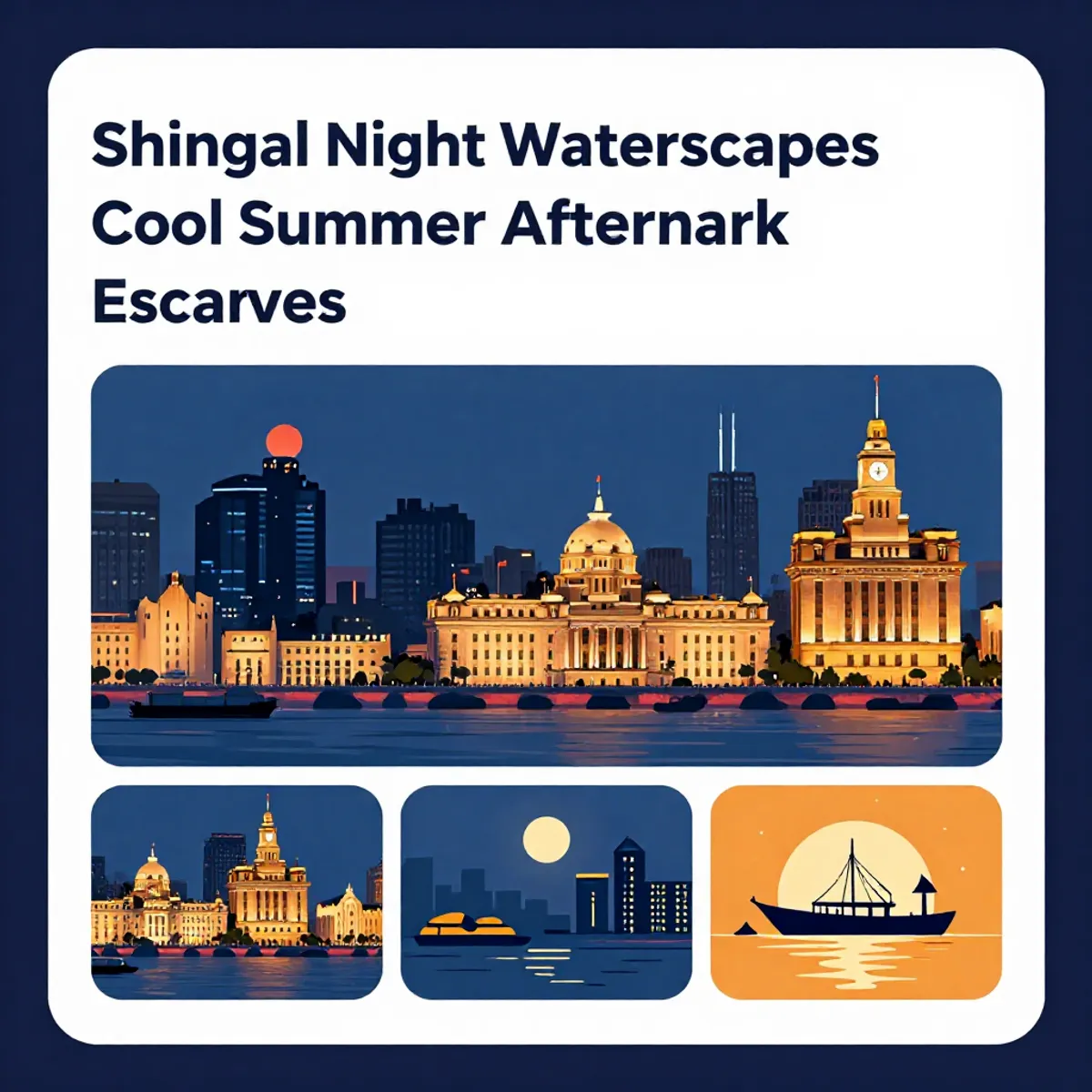
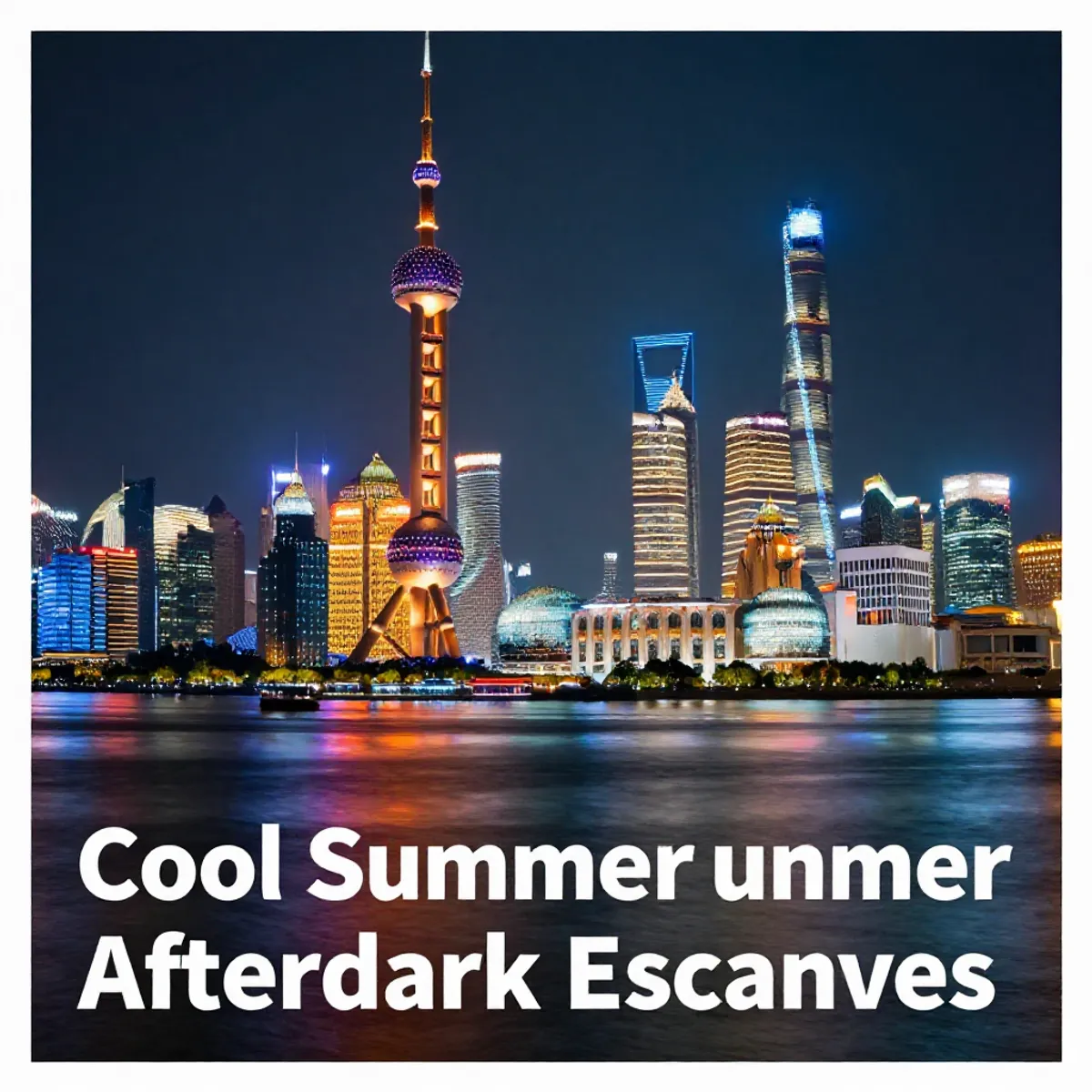
The bund is the obvious starting point, and for good reason. Its grand historic buildings facing the Pudong skyline create a world-famous nightscape. The key, as the user notes, is timing.
After 1 AM, especially on weeknights, the tourist throngs dissipate. The wide promenade suddenly feels vast and private. The river here is wide and deep, and the wind generated by its expanse can be surprisingly effective at cutting through humidity.
Walk from the north end near the Garden Bridge south towards the old consulate area. The further you go, the fewer people you’ll encounter. The water feels closer, the city lights softer.
This is the classic experience, but it requires patience and a late night.
Yangpu and Hongkou: The Industrial Waterfront
For a radically different river experience, head to the northern sections of the Huangpu riverbank in Yangpu and Hongkou districts. This area, once a hub of warehouses and docks, has been partially redeveloped into public walkways like the Yangpu Riverside and Hongkou Riverside parks. The water is the same, but the vibe is grittier, more local, and significantly less crowded after 10 PM.
The night views of Puxi’s older industrial cranes and Pudong’s newer towers are striking. Because these sections are flanked by large, open water surfaces with fewer tall buildings immediately blocking wind, it can feel breezier. Find a bench near the water’s edge, and you’ll likely have the section to yourself.
It’s a private feeling hard to find elsewhere.
The Suzhou Creek Confluence
Where the Suzhou Creek meets the Huangpu River near the bund’s southern end offers a unique micro-geography. The creek is narrower, its banks are more overgrown in sections, and the atmosphere is more contemplative. Walking along the Suzhou Creek paths in Jing’an or Putuo districts late at night is an exercise in urban solitude.
The sound of water is more audible, the lighting is dimmer, and the sense of being in a forgotten place is strong. This isn’t about grand vistas but about a quiet, cooling intimacy with a waterway that has historically been Shanghai’s lifeblood. It perfectly matches the desire for a dark, private spot close to nature within the metropolis.
Ascending for Air: High-Rise and Rooftop Sanctuaries
The Physics of Height and Breeze
The core principle for summer night seeking is simple: rise above the ground-level humidity. Shanghai’s dense urban canyon effect traps hot, stagnant air at street level. Even a few dozen meters up, wind patterns change.
Buildings channel and amplify breezes coming off the river or from the sea. This isn’t just theory; it’s a lived reality. A rooftop bar or observation deck that feels merely pleasant on a spring evening can be wonderfully cooling in July and August after the sun goes down.
The elevation provides both physical and psychological distance from the city’s heat and crowds.
Hotel Rooftops: The Ultimate Private Access
The most reliable way to secure a private, breezy night spot is to access a hotel rooftop. a number of upscale hotels in Lujiazui, Jing’an, and the French Concession have rooftop bars, restaurants, or even quiet garden terraces. The key is to choose one that isn’t solely a loud party venue.
Look for hotels that market "all-day dining" or "lounge" concepts on their upper floors. The clientele is often quieter, the seating more dispersed, and the water views (of the river or smaller ponds in jardin-style hotels) are framed beautifully. Purchasing one cocktail or a coffee grants you hours of access to this controlled, cooling environment.
It’s an investment in comfort and privacy.
Public Observation Decks and Mixed-Use Towers
Not all high-altitude access requires a hotel stay. The Shanghai Tower’s observation deck (118th floor) is open until 10:30 PM. While not private, the sheer height (over 500 meters) guarantees a powerful, constant wind that makes a summer night feel like autumn.
The views are of the entire delta, the river a glittering snake below. Similarly, the Jin Mao Tower’s 86th-floor observatory offers a slightly less crowded alternative. For a more local, less touristy feel, explore the rooftop bars in converted industrial places like the West Bund area or in the new business districts of Shanghai.
These often have multi-level layouts where you can find a corner away from the main crowd.
Hidden Waterways and Urban Oases
The Canals of Zhabei and Putuo
Beyond the Huangpu and Suzhou Creek, Shanghai is laced with smaller canals and drainage channels, remnants of its agricultural past. Areas like Zhabei’s Xizang South Road canal area or the network around Putuo’s Zhenru subdistrict are largely forgotten after dark. Here, the water is still, often reflecting the sodium-vapor streetlights in a melancholy orange glow.
Overhanging trees create a canopy. The air is unmoving, yes, but the profound sense of place—a private pocket of slow-moving water between aging apartment blocks—is uniquely compelling. It’s not about a cooling breeze, but about a cooling of the spirit through absolute quiet and anonymity.
Bring a portable fan; this is about psychological chill.
Fuxing Park and Other Green Enclaves
Large parks are obvious, but few consider them for night visits. Fuxing Park in the French Concession officially closes at 6 PM, but its perimeter paths and the streets that cut through it (like Fuxing Zhonglu) are alive with locals dancing, exercising, and socializing until late. The abundant trees and the park’s central water feature (a large pond) create a localized microclimate.
While not private, the density of people and activity generates its own kind of anonymity. You can blend in, walk the shaded outer paths, and feel the marginally cooler air radiating from the green space. It’s a social, communal kind of chill.
The "Third Front": Chongming and Fengxian’s Coasts
For those willing to venture further, the coastal water bodies offer the ultimate escape. The Dongtan wetlands on Chongming Island are a world away from the city’s humidity. The night air is open, marshy, and genuinely cool.
Similarly, the beaches and river mouths in Fengxian District (like Jinshan Beach, though crowded in day, is quiet at night) offer sea breezes that are a guaranteed cooling agent. These require more planning—a car or a long taxi ride—but they deliver on the promise of being close to water in a dark, private setting. The journey itself becomes part of the chill ritual.
Seasonal Strategy: Summer vs. Autumn Logic
The Autumn Blueprint: Ground-Level Serenity
The user’s default autumn strategy—late-night bund walks—relies on a fundamental seasonal shift. In October and November, Shanghai’s humidity plummets. The river air is crisp, not sticky.
Ground-level waterfronts become perfectly comfortable. Privacy comes from the late hour, not from elevation. This is the season for long, meandering walks along the water, sitting on steps, and feeling the cooling breeze at face level.
The formula is: Time (late) + Season (dry) = Chill. It’s simple and highly effective for half the year.
The Summer Adaptation: Elevation and Selection
Summer inverts this formula. The ground is a heat trap. Privacy at the bund now requires fighting crowds until 2 AM, and even then the air can be heavy.
The adapted summer strategy must therefore prioritize: 1. Elevation: Seek rise. Rooftop, hilltops (like Sheshan), or high bridges.
2. Water Type: Prioritize large, open water bodies (the main river, the sea) over small, stagnant canals. Wind moves over large surfaces.
3. Micro-climate: Target areas where geography funnels wind—between tall buildings, on peninsulas, at the mouths of rivers. 4.
Time: While late is always better, summer cooling can start earlier (after 9 PM) if you have elevation, as the ground heat dissipates faster from above.
Practicalities: Logistics, Safety, and Mindset
Transportation and Timing
Getting to these places at night requires planning. Metro lines close around 11 PM. Didi (ride-hailing) is reliable but can have surge pricing late at night.
For Yangpu Riverside or Hongkou Riverside, the metro gets you close, but a bike or scooter for the final stretch along the river path is ideal. For rooftop bars, book a table if possible, or arrive before 9 PM to secure outdoor seating. For the remote coastal spots, driving is almost essential.
often tell someone your place of destination and approximate return time, especially for isolated waterfront walks.
The "Private" Reality Check
True privacy in a city of 25 million is a relative term. The goal is perceived privacy—a sense of separation from the main flow. This comes from physical separation (a bench tucked behind a tree on a riverbank), temporal separation (being there when 99% of others are not), or social separation (paying for access to a rooftop).
Manage expectations. A private feeling on the bund at 3 AM is achievable; a completely deserted waterfront in central Shanghai on a Saturday night is not.
What to Bring: The Modern Night Walker’s Kit
- Portable fan: A small, rechargeable neck fan is a summer godsend for stationary chill sessions. - Insect repellent: Essential for any water-adjacent place, especially canals and parks. - Light jacket: Even in summer, a breeze at height or by water can feel chilly after midnight. - Power bank: For maps, photos, and ride-hailing apps. - Basic first-aid: A band-aid for blisters from long walks. - Discreet seating: A compact folding stool or a large, clean scarf to sit on dirty steps or grass.
With your kit packed, the final ingredient is how you engage with the environment. These night escapes offer more than just cooling; they are immersive experiences in Shanghai's urban culture. By weaving language and cultural awareness into your outings, you transform simple walks into meaningful journeys of discovery.
Language and Cultural Engagement: Making Every Night a Lesson
The Power of Simple Phrases
Basic Chinese phrases can significantly enhance your interactions. At a quiet riverside bench, a warm "你好 (nǐ hǎo)" or a grateful "谢谢 (xièxie)" often elicits friendly responses. Locals appreciate any effort to speak their language, no matter how tentative. The calm of the night reduces performance anxiety, making it an ideal time to practice pronunciation.
Carry a compact phrasebook or use a language app for quick reference. Essential phrases include asking about the area: "这里有什么好玩的?(Zhèlǐ yǒu shénme hǎo wán de?)" or commenting on the weather: "今晚的风很舒服。(Jīn wǎn de fēng hěn shūfú.)" These small linguistic bridges turn you from an observer into a participant, fostering connections that enrich the experience.
Decoding Place Names and Historical Layers
Shanghai's waterways carry names that tell stories of the city's past. The Bund, locally known as Waitan (外滩), means "outer beach," a nod to its history as a foreign concession waterfront. The Suzhou Creek, or Suzhou He (苏州河), links Shanghai to the ancient cultural center of Suzhou. The Huangpu River (黄浦江) derives from a historical county name.
Learning these terms isn't mere vocabulary building; it's a key to understanding Shanghai's evolution. As you stroll along these waters, silently repeat the names, associating them with the sights. This practice creates a mental map where language and geography merge, making each location stick in your memory more vividly.
Etiquette and Respect in Public Spaces
Shanghai's night oases have their own social codes. In secluded spots like the Hongkou Riverside or Zhabei canals, maintain low noise levels. Residents seek these places for peace, so avoid loud chatter or music. Let the natural sounds of water and wind dominate.
When using public seating, don't block pathways. often carry trash until you find a bin. In lively areas like Fuxing Park's perimeter, respect ongoing activities—don't interrupt dance groups or exercise circles.
These etiquette norms are fundamental to harmonious coexistence. Observing them demonstrates cultural sensitivity and ensures everyone can enjoy the chill atmosphere.
Sensory Vocabulary: Describing the Night
The nocturnal environment is a feast for the senses, perfect for language enrichment. Build a lexicon for visual details: " glittering" (闪闪发光), "shadowy" (阴暗的), "silhouette" (剪影). For auditory cues: "lapping" (拍打), "humming" (嗡嗡声), "rustling" (沙沙声). For tactile sensations: "brisk" ( brisk的), "clammy" (粘糊糊的), "refreshing" ( refreshing的).
Keep a journal to capture these impressions. For instance: "The Huangpu River at midnight is a ribbon of light, its surface rippling with reflections. The breeze carries a faint smell of damp earth." Challenge yourself to translate such sentences into Chinese. This exercise reinforces vocabulary and grammar, turning abstract words into concrete experiences tied to specific places.
Seasonal Language: Talking About Weather and Climate
Weather is a universal icebreaker, and Shanghai's climate offers rich vocabulary. Learn terms like "闷热 (mēn rè)" for muggy heat, "凉爽 (liángshuǎng)" for cool refreshment, and "秋高气爽 (qiū gāo qì shuǎng)" for autumn's crispness. In summer, discuss "降温 (jiàngwēn)" for cooling down.
Use these phrases in conversation with locals. Comment: "今晚真凉爽!(Jīn wǎn zhēn liángshuǎng!)" meaning "Tonight is really cool!" Such remarks show your engagement with the environment and often lead to longer chats. They practice real-world language use while building rapport, making your night out both educational and social.
Cultural Symbols in Water and Light
Shanghai's night waterscapes are layered with cultural meaning. Water in Chinese tradition symbolizes life, adaptability, and prosperity. The city's layout, with its numerous rivers and creeks, reflects feng shui principles where water is an auspicious element. The dazzling lights of the Bund and Pudong represent modernity and economic success.
Contemplate these symbols as you admire the views. Ask a local: "为什么上海的河流这么多?(Wèishéme Shànghǎi héliú zhème duō?)" or "这些灯光有什么寓意?(Zhèxiē dēngguāng yǒu shénme yùyì?)" Such questions open dialogues about history and values. Understanding these contexts adds profound depth to your visual experience, transforming pretty scenes into narratives of cultural identity.
Mindful Exploration: Balancing Technology and Presence
In an era of constant connectivity, practice digital detox during these escapes. Periodically stow your phone and simply absorb the surroundings. Listen to the water, feel the breeze, observe the interplay of light and shadow. This mindfulness echoes Daoist ideals of harmony with nature, even in an urban context.
Being present enhances language acquisition. New words and phrases embed themselves more securely when linked to direct sensory input. You'll find that after a mindful night by the river, related vocabulary surfaces more naturally in your mind. It's a subtle yet powerful learning technique that leverages the environment itself as a teacher.
Community Events and Informal Gatherings
Shanghai's nights host informal community events that are goldmines for language practice. Look for riverside poetry readings, outdoor tai chi sessions in parks, or night markets near waterways. These gatherings are typically free and draw local residents.
Participate or observe attentively. You'll hear colloquial speech and perhaps regional dialects. A smile and nod can suffice for inclusion.
These events are living language laboratories where communication happens organically. They also reveal how Shanghai's inhabitants reclaim and animate public spaces after dark, offering insights into social dynamics and collective rituals.
Documenting and Sharing Your Experiences
Post-adventure, reflect by writing about your night. Draft a short entry in Chinese, describing the spot, atmosphere, and any interactions. Use the new vocabulary you've practiced.
For example: "外滩的夜晚很安静,江水轻轻拍打岸边。我和一位老人聊天,他告诉我这里的历史。" (The Bund at night is quiet, the river water gently lapping the shore. I chatted with an elderly man who told me about the history here.)
Share this on social media or a language exchange platform. Feedback from native speakers can correct errors and suggest improvements. This process solidifies learning and connects you to a broader community. Your personal archive of Shanghai nights becomes both a memory and a measurable progress tracker in your language journey.
Adapting to Change: Urban Development and Preservation
Shanghai's landscape is dynamic. By 2026, some night spots may undergo renovation, face access restrictions, or disappear entirely. Stay updated through local news or neighborhood forums. When visiting, note changes and discuss them: "这里最近有什么变化?(Zhèlǐ zuìjìn yǒu shénme biànhuà?)" or "这个地方以前是什么?(Zhège dìfang yǐqián shì shénme?)"
This awareness positions you as an informed resident rather than a transient visitor. It provides fresh conversational material and shows respect for the local context. Language learning thrives on relevance, and engaging with the city's evolution keeps your practice grounded in reality. It also fosters a sense of stewardship for the cultural spaces you cherish.
Conclusion: Embracing Shanghai's Nocturnal Duality
Finding a chill, cooling, and private night spot in Shanghai during summer is a solvable puzzle. It requires moving beyond the single solution of the bund and understanding the city’s geographic and vertical layers. The river remains the central artery, but its banks differ wildly in character and airflow.
The rise of the city provides a mechanical advantage against humidity. The hidden canals offer a psychological escape. The key is matching your desired vibe—social anonymity vs. utter solitude, grand vista vs. intimate water-edge—to the correct location and season.
The user’s love for the autumn bund experience is about more than weather; it’s about a perfect alignment between human desire and urban environment. Summer simply asks for a little more creativity in engineering that same alignment. Whether it’s feeling the wind 300 meters up over the river, listening to the water move in a forgotten Suzhou Creek alley, or watching the lights ripple on the Yangpu waterfront, the chill is out there.
It just requires knowing where to look, when to go, and what to bring. Shanghai’s night is a vast, layered place. Its best water-side moments are often the ones you work a little to find.
Responses • 0
0/2000
ID: 1326
Chris
Offline
3 hr
Visited
From
Bakersfield, United States
Send Message