Shanghai IT Job Market Realities
AI Learn Chinese
2 hr • 0 read
Navigating Shanghai's competitive IT job market requires more than credentials. Understand local hiring nuances for cybersecurity roles.

Introduction: A Common but Complex Dilemma
Your situation is far from unique. A highly qualified foreign professional, armed with advanced degrees and top-tier certifications in a critical field like cybersecurity, finds the doors to Shanghai's IT market stubbornly closed. The frustration of endless applications via global platforms like LinkedIn and Glassdoor, met with silence, is a palpable experience for many.
This article dissects this modern professional paradox. We will move beyond the simple question of "why no replies?" to explore the intricate ecosystem of Shanghai's hiring landscape in 2026. The goal is to transform your approach from a broad, international broadcast to a targeted, locally-informed strategy.
The core issue is a fundamental misalignment. Your profile is built for a global, Western-centric recruitment model. Shanghai's market, while international in ambition, operates on a deeply local logic.
Success demands understanding this logic. We will examine the market's true state, deconstruct your candidate profile through a local lens, diagnose the failure of standard application channels, and finally, build a actionable, culturally-aware job search framework. This is not about diminishing your credentials, but about contextualizing them for a specific environment.
The Shanghai IT Job Market in 2026: Beyond the Hype
Demand for Cybersecurity Talent Remains Strong
The narrative of China's tech growth has matured. While explosive expansion has cooled, the foundational need for robust Information Security has never been greater. Regulatory pressures, the sophistication of threats, and the digitalization of all industries ensure a steady demand for professionals.
Roles in cloud security, data privacy compliance (especially with evolving laws), and critical infrastructure protection are consistently sought after. The demand is real and quantifiable. But, "demand" does not equate to "open to any qualified foreigner." The market is segmented.
Competition is Intense and Multifaceted
You are not just competing against other expatriates. You are competing against three primary pools: 1) Local Chinese talent with domestic degrees, certifications (like CISP), and flawless cultural and linguistic integration. 2) Returnees (haigui) who possess foreign degrees/experience but also native cultural fluency and local networks.
3) Other foreign professionals who have already cracked the code, often with prior in-country experience or specialized, irreplaceable skills. Your "extensive experience" is a baseline, not a differentiator, in this crowd. The competition is less about technical parity and more about perceived risk and integration cost for the employer.
The "Local First" Hiring Preference
This is the cornerstone of the challenge. a number of companies, even multinationals with global branding, have a strong operational preference for local hires. The rationale is practical: no work permit hurdles, immediate cultural and linguistic alignment, easier management, and lower total compensation cost.
For roles that are not explicitly labeled "global" or "expatriate," this preference is often an unspoken first filter. Your application, originating from an obvious foreign profile on a global platform, may be automatically categorized as "high-cost, high-risk" before a human even sees your resume.
Deconstructing the Candidate Profile: Your Strengths and Perceived Gaps
The Strength of Your Technical Arsenal
Let's unequivocally state your assets. An American background, an advanced degree (likely a Master's or PhD), and certifications such as CISSP, CISM, CEH, or similar are highly respected symbols of rigorous training. In pure technical assessments, you would likely outperform many.
This is your foundation. The problem is not a lack of skill, but the translation and packaging of that skill for a Shanghai-based hiring manager. Your resume probably reads as a list of achievements for a Western audience.
The "Unspoken" Gap: Cultural and Linguistic Fluency
This is the most significant and frequently underestimated gap. "Limited" language ability is not just about ordering food. It's about understanding professional nuance, building guanxi (关系), navigating hierarchical communication, and interpreting indirect feedback.
A hiring manager in Shanghai, reviewing a resume with no indication of Chinese language proficiency, makes a swift calculation: "The onboarding and management overhead for this candidate will be significant." They may question your ability to work effectively with local teams, understand local threats specific to the Chinese internet ecosystem, or even simply participate in team meetings. Your two years of travel for family matters may be seen as a lack of long-term commitment to the Shanghai market itself.
The Geographic and Commitment Question
Applying "endlessly" from outside mainland China, or even while in and out on family visits, signals a certain availability and commitment level. Companies hiring for on-site roles in Shanghai typically prioritize candidates already in the city or demonstrably committed to relocating permanently. Your pattern suggests a candidate who is exploring, not one who is ready to commit fully to a demanding role in a complex environment. This feeds directly into the "high-risk" perception.
Why Global Platforms Are Falling Short: A Channel Analysis
LinkedIn: A Global Network, Local Blind Spot
LinkedIn is powerful for networking with other expats and global HR teams. But, for the bulk of hiring in Shanghai, especially for mid-level operational roles, it is not the primary platform. a number of local hiring managers and internal recruiters in Chinese companies are less active on the English-language interface.
Your applications on LinkedIn are likely entering a system optimized for Western talent flows, not the Shanghai market's specific arteries. The platform itself creates a psychological distance; a candidate applying via a global portal feels less "local" than one referred through a WeChat contact.
Glassdoor: The Wrong End of the Telescope
Glassdoor is primarily a company review and salary transparency site for the US and Europe. Its utility for job searching in Shanghai is minimal. While it may have some listings, these are often the same ones cross-posted to international job boards aimed at attracting foreign talent.
Relying on it is like looking for fish in a birdbath. It represents a fundamental misunderstanding of where the actual job postings live for the roles you want.
The Missing Platforms: Liepin, Zhaopin, Boss Zhipin
The heart of professional recruitment in Shanghai beats on domestic platforms. Liepin (猎聘) is the premier site for mid-to-senior level professional roles, heavily used by both multinationals and top Chinese firms. Zhaopin (智联招聘) and Boss Zhipin (BOSS直聘) are massive, with the latter facilitating direct chat with hiring managers—a critical feature.
Not having a polished, Chinese-language profile on these platforms is a critical omission. Your absence from these spaces marks you as an outsider not playing by local rules.
The Cultural Dimension: More Than Just Language
The Role of Guanxi (关系)

While not a mandate for every hire, guanxi—the network of relationships and reciprocal obligations—influences hiring, especially in Chinese-owned or operated companies. It doesn't mean you need a political connection. It means a trusted internal referral carries immense weight.
A resume submitted with a note from a current employee is not just another application; it is a vetted candidate. Your current strategy generates no guanxi. It is anonymous and transactional.
Building this requires time, genuine networking, and often, a local advocate.
Understanding Mianzi (面子) and Hierarchy
The concept of mianzi (face) permeates interactions. A hiring manager must feel that hiring you will bring them "face"—that it is a safe, prestigious decision that reflects well on their judgment. A foreign candidate with no local references or network presents a mianzi risk.
If the hire fails, the manager loses face for not properly assessing the integration risk. In addition, understanding hierarchical structures is vital. Your resume should demonstrate an ability to operate within clear reporting lines and show respect for seniority, which may differ from the flatter structures you're used to.
Communication Style: Direct vs. Indirect
Western resumes and interviews emphasize directness and individual achievement ("I led a team that increased security by X%"). In a Shanghai context, while achievement is important, framing it within team contribution and harmony can be more effective. The interview process may involve more group settings and less confrontational questioning. Your ability to read between the lines, to understand a "maybe" that means "no," and to convey humility alongside confidence is a skill that must be developed.
A Strategic Pivot: Building a Localized Job Search Engine
Step One: Master the Platforms
You must establish a strong, professional presence on Liepin and Boss Zhipin. This is non-negotiable. Your profile must be in flawless, professional Chinese.
Do not rely on machine translation. Hire a professional translator familiar with IT/cybersecurity terminology. Your resume format should follow local conventions: often includes a photo, personal details, and a career objective at the top.
Highlight your desire to build a long-term career in Shanghai explicitly. Use keywords that local recruiters search for.
Step Two: The Resume and Cover Letter Transformation
Translate your achievements into local business impact. Instead of just "implemented ISO 27001," frame it as "led the design and implementation of a comprehensive information security management system aligned with both international ISO 27001 standards and domestic cybersecurity law requirements, ensuring regulatory compliance for business operations in China." Connect your skills to the local market: experience with Great Firewall implications, understanding of local cloud providers (Alibaba Cloud, Tencent Cloud), or familiarity with common domestic software stacks. Your cover letter must articulate a clear, committed reason for choosing Shanghai, beyond family.
Step Three: Network with Purpose, Not Just Quantity
Leverage your two years of in-and-out travel. Who did you meet? Start connecting on WeChat with professionals in Shanghai's tech scene—not just to ask for a job, but to ask for a brief informational interview.
Your pitch is: "I am a cybersecurity specialist deeply committed to relocating to Shanghai permanently. I am trying to understand the specific challenges and opportunities in the local market from an expert like you." Be respectful of time, offer value (share a relevant article), and build slowly. Seek out alumni groups from your alma mater who are now in Shanghai.
Attend local tech meetups (find them on platforms like Meetup.com or local WeChat groups) once you are in the city for a visit.
Step Four: Partner with Specialized Recruiters
Identify and engage with recruitment agencies that specialize in placing foreign professionals in Shanghai. Firms like Michael Page, Robert Walters, or Hays have dedicated divisions for this. A good recruiter acts as your local advocate, understands the guanxi of the companies they work with, and can package your profile in a way that mitigates the "foreign risk" perception.
They are paid by the employer, so their incentives align with getting you hired. Be prepared for a rigorous intake process with them.
Step Five: Consider the "Gateway" Role
Be strategic about your first role. Instead of exclusively targeting senior cybersecurity manager positions at top tech firms, consider roles at multinational corporations (MNCs) with a strong, established China presence. Companies like IBM, Microsoft, SAP, or major financial institutions (e.g., JPMorgan, HSBC in Shanghai) have more mature processes for hiring and integrating foreign talent. A successful stint in such a role for 2-3 years transforms your profile from "foreign candidate" to "professional with proven China experience," dramatically increasing your desirability for any subsequent role.
The Relocation and Integration Imperative
The "In-Country" Advantage
If at all possible, relocate to Shanghai on a valid visa (e.g., a business visa for job hunting, or a family visa if applicable) before securing a job. Being physically present changes everything. It allows for face-to-face interviews, demonstrates commitment, and lets you network in real-time.
It transforms you from a remote applicant to a local candidate. The cost of a short-term relocation is an investment that directly addresses the primary employer hesitation: risk.
Demonstrating Long-Term Commitment
In every communication, subtly reinforce your plan to stay. Discuss where you might live, your understanding of the international school system if you have children, your interest in the community. This alleviates the fear that you will be a short-term hire who leaves after a year, costing the company significant relocation and training investment. Your two years of family visits can be reframed as the beginning of this commitment, not a distraction from it.
Navigating the Work Permit (Z-Visa) Process
While the employer handles the bulk of the application, your understanding of the process is key. The standard route is a Work Permit (Foreigner's Work Permit) followed by a Z-Visa. Requirements include a clean criminal record (from your home country and often China), verified degree and certificate apostilles, a health check, and a legitimate job offer from a company holding a Quota for foreign experts.
Your advanced degree and certifications are a major asset here, as the system favors "high-end" talent.
Step Six: Master the Art of the Local Interview
Once you secure an interview, the battle shifts. The format may differ. Expect multiple rounds, potentially including a group discussion with future peers or a written case study relevant to the Chinese market.
Technical prowess is assumed; the assessment will heavily weigh your "soft" integration potential. Be prepared for questions about your understanding of China's Cybersecurity Law, the Personal Information Protection Law (PIPL), and how you would navigate a security incident involving a domestic regulator. Your answers must demonstrate not just knowledge, but applied, contextual thinking.
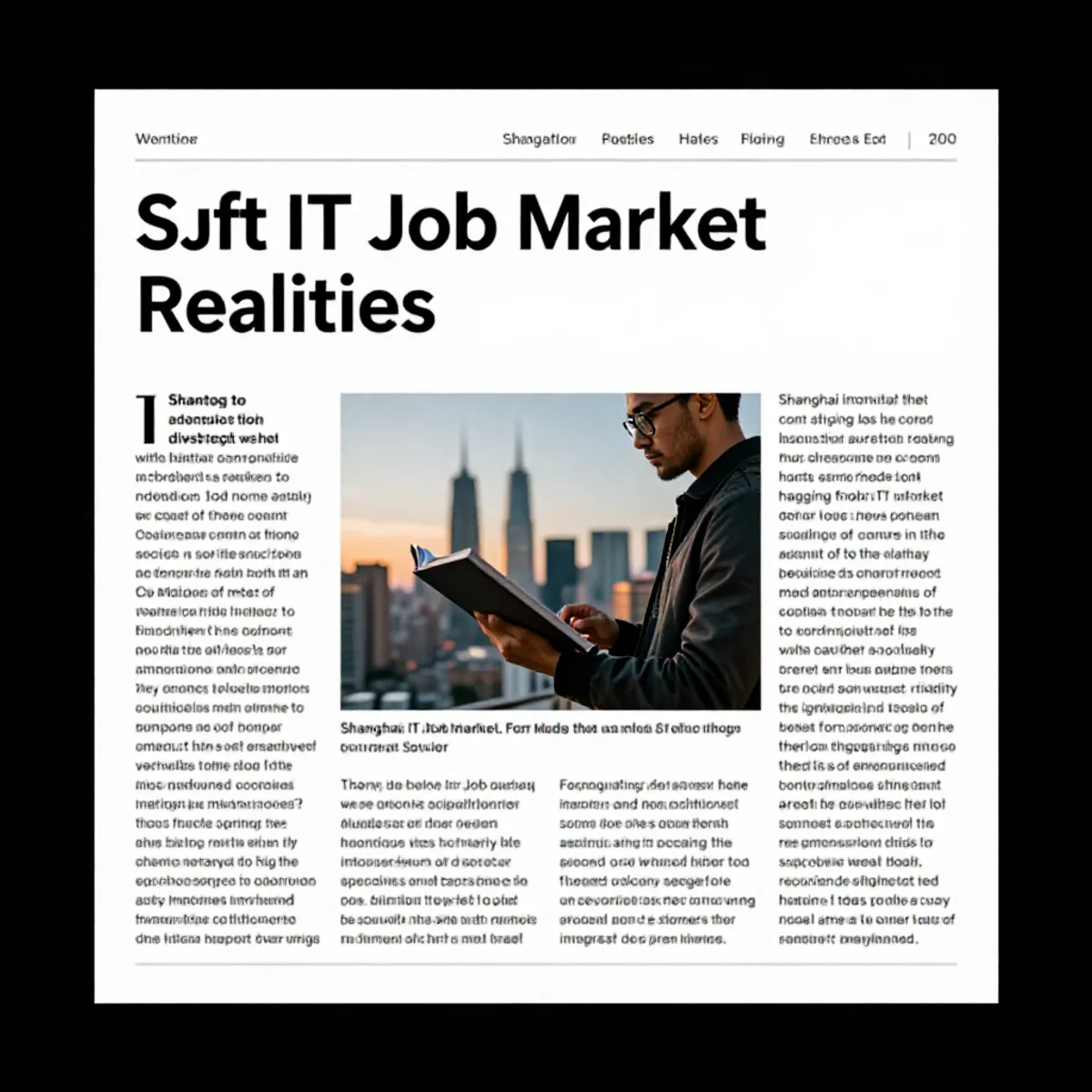
Practice explaining your past achievements through a lens of team harmony and business continuity, not just individual heroics. Arrive early, dress conservatively (a well-fitted suit is standard), and present a humble yet confident demeanor. Bring copies of your degree and certificates, notarized and translated, as they may be requested on the spot.
Step Seven: Negotiate with Local Realities in Mind
An offer is not the finish line; it's the start of a new negotiation phase. Salary discussions in Shanghai for foreign experts are complex. Base salary is important, but the total compensation package is where the real value lies.
Expect and proactively discuss a housing allowance (often a significant monthly stipend), an annual flight allowance for home visits, comprehensive international health insurance, and a tax equalization policy to mitigate the higher personal income tax burden. Clarify the bonus structure—is it guaranteed or discretionary? Understand the social insurance (五险一金) contributions; while you may be on a different scheme, the employer's contribution is a major benefit.
Do not compare solely to your previous Western package; benchmark against the market for foreign experts in Shanghai. Use data from recruiters and platforms like Maimai (脉脉) to gauge realistic ranges. A slightly lower base with a strong housing allowance and tax support can net a far higher disposable income.
Step Eight: The Onboarding and First 90 Days: Proving the Investment
Your first three months are a continuous, high-stakes audition. Your employer has taken a risk; your mission is to make them feel it was justified. Prioritize rapid cultural and linguistic immersion.
If your Mandarin is not business-fluent, commit to intensive, daily lessons. Use every interaction—with your assistant, your IT support, your team lunch—as practice. Your goal is to transition from needing translation to participating directly in meetings within six months.
Actively build your internal guanxi. Schedule one-on-one coffees with every key stakeholder in your department and adjacent ones. Your agenda should be listen-first: understand their priorities, their pressures, their view of the security landscape.
Do not lead with your Western solutions. Instead, ask, "How have you handled X in the past?" and "What would an ideal outcome look like?" Then, position your expertise as an enabler for their goals.
Step Nine: Long-Term Career Development Within the Chinese Ecosystem
Once integrated, your career path must evolve within the local context. Promotion criteria in Chinese companies often emphasize loyalty, team building, and harmonious execution, not just radical innovation. Document your achievements in a way that highlights team contribution and alignment with corporate (and sometimes national) strategic goals.
Seek a mentor—a senior Chinese manager within your firm who can guide you through the unspoken rules. Consider pursuing a locally recognized certification like the CISP (Certified Information Security Professional) to deepen your credibility. Your long-term value becomes your ability to bridge global best practices with local operational reality.
This makes you invaluable for roles involving cross-border data compliance, international audits, or managing global security teams from a China hub.
Navigating the Broader Professional Ecosystem
Engaging with the Local Tech Community
Your professional identity must extend beyond your company. Become an active participant in Shanghai's cybersecurity community. Follow and contribute to discussions on WeChat public accounts dedicated to infosec in China.
Write short, insightful posts on Zhihu (知乎) about global security trends, framed for a Chinese audience. Attend (or even better, speak at) local conferences like the XCon or KCon security forums. This builds your public profile as a committed, knowledgeable member of the Shanghai tech scene, not just a transient foreign employee.
It generates a form of professional guanxi that is visible and valuable to your employer.
Understanding the Geopolitical Tech Currents
A successful career in China's IT sector requires a nuanced understanding of the technological sovereignty narrative. You must be able to discuss concepts like "cyber sovereignty" and "secure and controllable technology" not as political slogans, but as practical drivers of procurement, architecture, and compliance decisions. Your advice on using foreign cloud services or security tools must be tempered with an appreciation for the policy landscape favoring domestic alternatives like Alibaba Cloud, Huawei Cloud, and 360.
This does not mean abandoning best practices, but rather framing them within the context of a dual-track strategy that satisfies both global security standards and local regulatory expectations. Your ability to navigate this duality is a premium skill.
The Mental and Logistical Adjustment
Managing Expectations and Frustration
The pace of decision-making, the ambiguity in communication, and the hierarchical nature of organizations can be jarring. What you might perceive as inefficiency or lack of clarity is often a reflection of a different operational logic focused on consensus and relationship preservation. Develop patience and a diagnostic mindset: when faced with a vague response, ask yourself what underlying relationship or political factor might be at play, rather than seeking a direct technical answer.
Your emotional resilience is a key professional asset. Find a support network of other foreign professionals who have successfully made the transition; their lived experience is an irreplaceable guide.
The Practicalities of Daily Life
Your ability to focus on work is directly tied to your daily life stability. Secure a reliable residence permit (暂住证) promptly. Set up a local bank account and mobile plan.
Learn to use Alipay and WeChat Pay—they are not optional for daily transactions. Navigating the Hukou system is irrelevant for most foreign experts, but understanding its impact on your local colleagues' lives (e.g., their children's education, their parents' healthcare) provides critical social context and builds empathy. These logistical steps, while mundane, signal your commitment to functioning within the system, not just observing it from a foreign bubble.
Family Considerations as a Strategic Element
If you have a family, their integration is your top strategic priority. The quality of international schools in Shanghai is high but competitive and expensive. Securing a spot is a major factor in long-term stability and should be addressed early.
Your spouse's ability to find fulfilling work or build a social network is crucial for your overall happiness and, by extension, your professional performance. Frame your family's positive integration in conversations with your employer as a sign of your long-term commitment. A happy, settled family reduces your perceived "flight risk" exponentially.
Conclusion: From Applicant to Integrated Professional
The silence you have encountered is not a verdict on your ability. It is a symptom of a strategy mismatch. The Shanghai IT job market in 2026 is not a monolithic wall, but a series of layered gates.
Your current approach attempts to scale the outer wall with a global ladder. The successful path requires finding the local gate, understanding its lock, and having the right key—which is a combination of localized credentials, platform presence, network advocacy, and demonstrated commitment.
Begin the transformation now. Invest in the Chinese-language profile. Research the domestic platforms.
Reframe your narrative from "American cybersecurity expert" to "cybersecurity expert committed to a long-term career in Shanghai, with the skills to navigate both global standards and local requirements." Your experience is valuable. The task is to make its value obvious and low-risk to a busy hiring manager in the Lujiazui financial district or the Zhangjiang tech hub. The market is there.
The question is whether you will adjust your map to find it.
Responses • 0
0/2000
ID: 1326
Chris
Online
From
Bakersfield, United States
Send Message