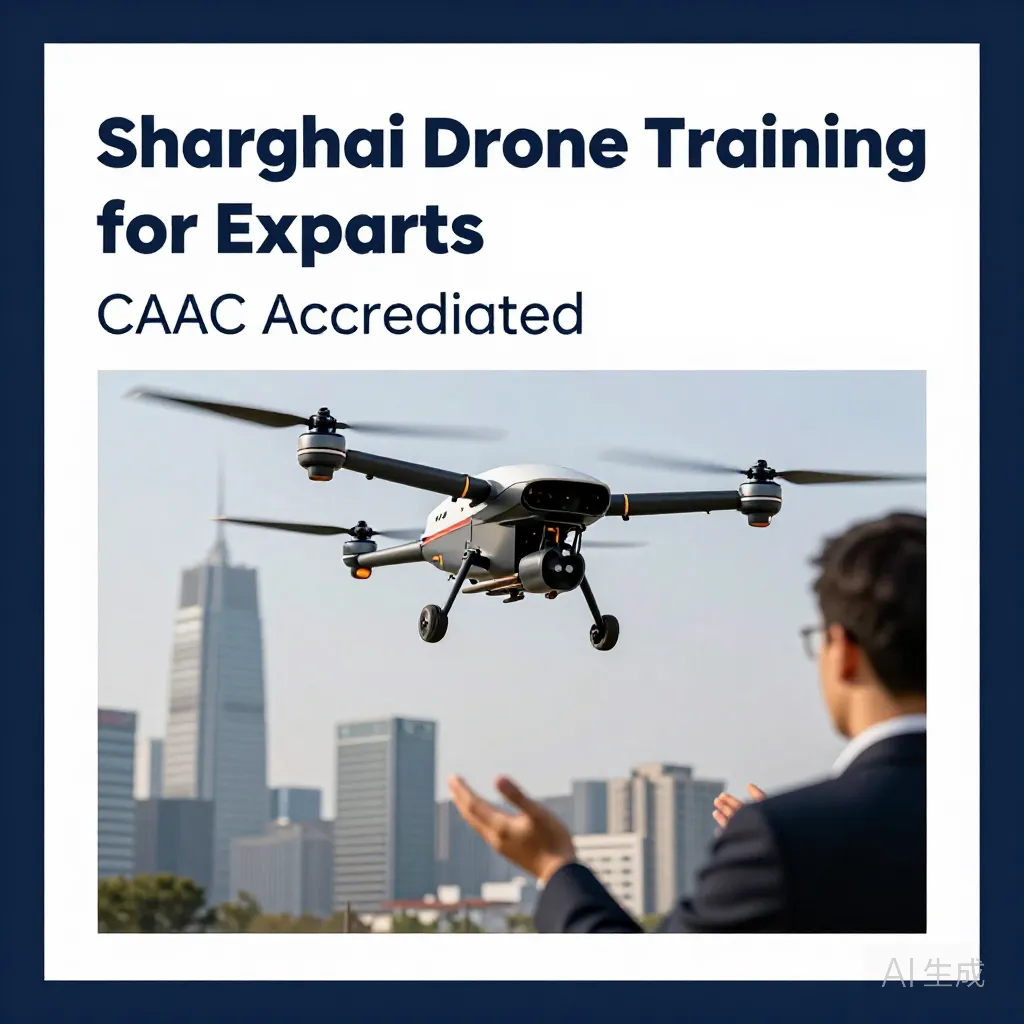
Shanghai Drone Training for Expats CAAC Accredited
AI Learn Chinese
3 hr • 0 read
Your 2026 goto guide for Shanghai drone training for expats. Access English courses at Longhua Heliport with full CAAC accreditation support.
Introduction: Navigating the Shanghai Drone Training Landscape
The hum of drones is becoming a constant backdrop in Shanghai’s soaring skyline. For a foreign professional based in this dynamic metropolis, the path from enthusiast to licensed pilot can seem labyrinthine. The core questions are immediate and practical: Where does one receive structured, legitimate training?
Is instruction available in English? And crucially, can a foreign national legally navigate the Chinese accreditation system to become a certified pilot? This article serves as a comprehensive guide, dissecting the realities of drone training in Shanghai for the expatriate community in 2026, with a particular focus on the city’s most cited training venue.
The desire for structured training stems from more than just hobbyist interest. The commercial applications for certified drone pilots in China are vast, spanning construction site surveying, media production, agricultural monitoring, and industrial inspection. A recognized credential, such as the CAAC-issued UAS Operator Permit, is not just a badge of skill; it is a legal prerequisite for commercial operations and a gateway to professional opportunities. But, the regulatory and linguistic barriers for foreigners are significant and require careful navigation.
This guide will move from the broad context of Shanghai as a drone training hub to the specific, on-the-ground realities at facilities like Longhua Heliport. We will explore the critical issue of language accessibility in training and examination, detail the precise eligibility criteria for foreign applicants, and walk through the multi-stage accreditation process. Practical considerations like equipment, insurance, and flight zone restrictions will be addressed, followed by a breakdown of costs and a survey of alternative training providers. The goal is to transform a query born from uncertainty into a clear, actionable roadmap.
Why Shanghai? The Hub of China's Drone Ecosystem
Shanghai’s status as a global financial and technological center makes it a natural epicenter for advanced drone applications. The city’s skyline is a living laboratory for drone service providers. Major construction projects like the ongoing development in the Xuhui waterfront district or the expansive Shanghai Disney Resort require sophisticated aerial surveying and progress monitoring.
Media companies covering events in the Lujiazui financial zone or along the Bund frequently utilize drone cinematography. This dense concentration of commercial demand creates a robust market for trained, certified pilots.
For a foreigner, Shanghai also offers a relatively familiar expatriate infrastructure. International schools, diverse housing options, and established expat communities can ease the logistical burden of relocation for dedicated training. The city's connectivity, with two major international airports and an efficient metro system, facilitates travel to training sites. Compared to other Chinese cities, Shanghai often has a higher concentration of English-speaking professionals and a slightly more internationalized service sector, which can be a decisive factor when seeking translation support or navigating bureaucratic processes.
But, the very sophistication of the market means competition is fierce and standards are high. The Civil Aviation Administration of China (CAAC) enforces strict regulations that are uniformly applied. Training is not merely about flying skill; it is a deep dive into Chinese airspace law, meteorological understanding, and specific operational protocols unique to the country.
A foreigner cannot assume that a license from their home country, even from a respected aviation authority, will be recognized. The pathway begins with understanding and embracing the CAAC framework from the outset.
Longhua Heliport: The Primary Training Ground
When discussing drone training in Shanghai, the name Longhua Heliport invariably surfaces. Located in the Xuhui district, it is one of the city's few designated facilities with the airspace control and infrastructure to support professional unmanned aircraft systems (UAS) training. Its reputation as the go-to venue is built on its history of serving both manned helicopter operations and, increasingly, the drone sector. For the foreigner researching options, Longhua Heliport represents both the most established opportunity and the primary source of cited experience.
The facility’s layout is conducive to structured training. It typically features designated take-off and landing zones, controlled airspace that minimizes interference from other traffic during booked sessions, and often classroom facilities for the theoretical components of the course. The presence of actual aviation operations means trainees become accustomed to a professional, safety-first airport environment. This immersion is valuable, as it mirrors the operational context in which a commercial pilot must eventually function, adhering to strict air traffic control (ATC) protocols even for drone flights.
Scheduling at Longhua is a key practical consideration. Slots for practical flight training can be competitive, especially during favorable weather seasons in spring and autumn. Prospective students, particularly foreigners who may need to coordinate around visa or work schedules, must plan well in advance.
Contact is typically made through the heliport’s management office or affiliated training companies that lease facility time. It is advisable to initiate contact months before a desired start date, clearly stating the need for English-language support or translation services to avoid later complications.
Facilities and Fleet at Longhua
Longhua Heliport’s physical infrastructure is its foundational strength. The paved runways and helipads are maintained to aviation standards, providing a reliable and safe surface for take-offs and landings. This is not a grassy field; it is a regulated aerodrome.
For training purposes, this means practicing in an environment that accurately reflects the conditions of a certified operational site. The surrounding airspace is classified, requiring coordination with the tower—a critical learning experience in itself.
a number of training providers operating at Longhua maintain a fleet of training drones. These are often mid-sized, GPS-stabilized models from manufacturers like DJI, specifically the Matrice series, which are industry standards for commercial work. The aircraft are typically equipped with the necessary safety features, such as propeller guards and return-to-home functions.
Using a provided drone simplifies the initial barrier to entry, as students do not need to immediately invest in expensive equipment. But, it is wise to inquire about the specific models used, as familiarity with a platform similar to one’s intended future use can be beneficial.
Ground school classrooms at the heliport are where the theoretical knowledge is imparted. These sessions cover CAAC regulations, airspace classification, meteorology, aircraft systems, and emergency procedures. The quality of these sessions—their depth, the currency of the materials, and the instructor’s expertise—varies significantly between the different companies that offer courses at the facility. A tour or virtual walkthrough of the classroom facilities can be part of the initial inquiry process.
Scheduling and Availability
The operational tempo of a working heliport means training slots are a finite resource. Weekends can be booked months in advance by various users, from corporate helicopter charters to other drone schools. For a foreigner planning a dedicated training block, weekday availability is often higher, but this must be balanced with any personal or professional commitments.
A typical training course might span several weeks, with theoretical lessons and practical flight sessions interleaved. Confirm the total duration and the expected frequency of flight sessions per week.
Weather dependency is a stark reality in Shanghai. The city experiences a humid subtropical climate with a distinct monsoon season, bringing heavy rain and reduced visibility from June through August. Typhoons are also a seasonal threat.
Training schedules must be flexible to accommodate weather cancellations. Reputable providers will have a system for rescheduling missed sessions without excessive penalty. When planning your timeline for 2026, build in buffer weeks to account for potential weather disruptions, especially if booking a summer course.
Communication with the scheduling office is paramount. For non-Mandarin speakers, this initial contact is a major hurdle. It is highly recommended to engage a bilingual intermediary—either a trusted Chinese-speaking colleague, a professional translator, or an agent familiar with the aviation training sector—to handle the initial booking and ongoing coordination. Clear, written confirmation of all scheduled dates, times, and associated costs in both Chinese and English is essential to avoid misunderstandings.
The Language Barrier: Is English Instruction Available?
This is the most critical and frequently frustrating question for the foreign applicant: Are courses available in English? The short, direct answer is that fully English-language drone training courses, from theory to practical flight and examination, are exceptionally rare in Shanghai. The regulatory framework, examination papers, and the vast majority of certified instructors operate exclusively in Chinese. But, this does not mean a path is closed; it means the path requires proactive accommodation and translation.
The theoretical component, governed by CAAC syllabus, is delivered through textbooks and official documentation that are almost universally in Simplified Chinese. Even if an instructor possesses excellent English skills, they will be teaching from and referencing Chinese-language source material. Key legal definitions and regulatory phrases do not have perfect one-to-one English equivalents. A foreign student must therefore be prepared to engage deeply with translated materials or have a robust translation support system in place for the study phase.
For the practical flight portion, communication with the instructor is more universal through the language of demonstration and aviation手势 (hand signals). But, safety briefings, pre-flight checks, and in-flight corrections will be delivered in Chinese. An interpreter must be present for these sessions to ensure absolute comprehension, as miscommunication in this context can lead to dangerous situations. Some high-end, private training arrangements may allow for a bilingual instructor, but this is the exception, not the norm, and comes at a significant premium.
Course Materials and Translation Challenges
The primary study texts for the CAAC theory exam are published by the CAAC itself or authorized bodies. They are dense with legal and technical terminology. A foreigner has three main options: 1) Rely on unofficial, potentially outdated English translations or summaries found online, which is risky.
2) Use a professional translation service to translate the core materials, an expensive but thorough approach. 3) Work intensively with a bilingual tutor to study the Chinese text directly. Option three, while demanding, often provides the deepest understanding and is the most reliable for exam preparation.
Online forums and expat groups in Shanghai sometimes circulate shared glossaries of key CAAC drone regulation terms translated into English. These can be a useful starting point but must be verified against the latest official documents. Terms like "controlled airspace" (管制空域), "visual line of sight" (视距内), and "beyond visual line of sight" (超视距) have specific legal meanings in the Chinese regulatory context. Relying on a casual translation could lead to critical errors in understanding operational limitations.
It is advisable to contact the training provider before enrollment and explicitly request a sample of the study materials. Ask if they can provide, or facilitate the purchase of, any official companion guides in English. Some larger training companies, sensing the expat market, may have begun developing their own English-language summary presentations. Scrutinize these for accuracy and alignment with the latest CAAC exam question bank.
Instructor Fluency and Bilingual Support
The instructor’s English proficiency is highly variable. An instructor may be a brilliant pilot and a CAAC-certified examiner, but have only basic conversational English. Conversely, some instructors, particularly those with backgrounds in international aviation or who have trained foreign pilots before, may be exceptionally fluent.
This must be assessed directly during the inquiry phase. A simple test is to ask a detailed regulatory question in English and gauge the depth and clarity of the response.
The most practical model for a foreigner is often to engage a bilingual "training coordinator" or "study partner" separately. This person, hired independently, would attend all theoretical sessions to translate in real-time, help with study, and act as a liaison with the training provider. This adds a significant cost but provides a custom level of support.
Some training providers may offer this as an add-on service for a fee. It is crucial to establish this arrangement formally, with clear expectations about translation accuracy and availability for all scheduled activities.
For the actual flight training, the language of basic commands ("take off," "hover," "land left") can be learned quickly in Chinese. The nuanced discussions about wind correction, camera gimbal settings, or emergency procedure rationale require more complex translation. A dedicated interpreter for the practical sessions ensures that the subtle points of piloting technique are not lost. This interpreter should ideally have some aviation or technical background to accurately convey specialized concepts.
Foreigner Eligibility: Can You Legally Enroll and Test?
The core legal concern is whether a foreign national, holding a non-Chinese passport and typically a Chinese residence permit (e.g., work visa, family visa), can enroll in a CAAC-recognized training course and sit for the official accreditation exams. The answer is yes, but with important caveats and procedural steps that differ from those for Chinese citizens. Eligibility is not automatically denied; it is procedural.
The first requirement is valid identification and residency. A foreigner must present a valid passport and a valid Chinese residence permit for the duration of the training and examination period. The training provider will need copies of these documents for their records and to submit to aviation authorities if required. The type of residence permit generally matters less than its validity; a student visa, work visa, or family visa are all typically acceptable as proof of legal status in Shanghai.
The CAAC does not explicitly bar foreigners from obtaining a UAS Operator Permit. The regulation focuses on the applicant's competency and legal status within China, not their nationality. The permit is tied to the individual, not their citizenship.
So, a foreigner who successfully completes the training, passes the theory and practical exams, and meets all other requirements (such as a medical certificate, which can be obtained from certain hospitals in Shanghai) is eligible to be issued a permit. This permit allows commercial drone operations within the People's Republic of China.
Enrollment Process for Foreigners
The enrollment process begins with the training provider. They will have a standard application form. As a foreigner, you must be prepared to provide not only the standard information but also clear copies of your passport bio-data page and your Chinese residence permit.
Some providers may also request a copy of your visa page. It is prudent to ask if they have previously enrolled foreign students and to request references if possible. A provider familiar with the process will guide you smoothly; one without experience may create unnecessary delays.
A critical step is the CAAC theory exam registration. The training provider typically handles the group registration for their cohort. They will submit a list of candidates to the local CAAC office (in Shanghai, this is the East China Regional Administration).
The office will then schedule a batch exam date. For foreign candidates, the provider must confirm that the exam can be taken in an appropriate language setting. While the exam paper is in Chinese, a request for an English-language exam or the provision of a translator must be made well in advance.
This is not guaranteed and depends on the specific CAAC office's capacity and policies for that exam cycle.
The practical flight test is conducted by a CAAC-certified examiner. This is a one-on-one evaluation. The examiner will give instructions, and the candidate must perform maneuvers and demonstrate procedures.
The language of instruction during this test will almost certainly be Chinese. The presence of a translator is essential for the candidate to understand the examiner's commands fully. The candidate must arrange for their own qualified interpreter for this exam, unless the training provider explicitly includes this service for the test, which is rare.
The interpreter must be impartial and simply convey the instructions accurately.
The Accreditation Exams: Theory and Practical
The CAAC drone pilot accreditation consists of two main parts: a written theory exam and a practical flight test. The theory exam is a multiple-choice test covering the CAAC's "Regulations on the Management of Unmanned Aerial Vehicle Operations" and associated technical knowledge. The question bank is extensive.
For foreign candidates, the language barrier is the primary obstacle. The exam is timed, and reading comprehension in Chinese under pressure is a significant challenge.
Preparation is therefore not just about knowing the answers, but about knowing them in Chinese. Flashcards, practice tests, and repeated reading of the translated or original materials are non-negotiable. Some training providers offer mock exams in a simulated environment.
For a foreigner, taking these mock exams with a translator present to simulate the real test condition is a vital part of preparation. The goal is to recognize the questions and their intent instantly, without the mental overhead of real-time translation during the official exam.
The practical flight test evaluates piloting competency within a defined airspace. The candidate must demonstrate take-off, landing, hovering, basic maneuvers (like circles and figures-of-eight), and an understanding of emergency procedures. The examiner will also ask verbal questions about the pre-flight inspection, weather assessment, and operational planning.
This oral questioning is conducted in Chinese. The candidate must be able to understand the questions and provide coherent, correct answers through their translator. The entire test is a performance under scrutiny, where language proficiency is as much a testable component as stick-and-rudder skill.
The Step-by-Step Accreditation Pathway
Achieving the CAAC UAS Operator Permit is a multi-stage journey. Understanding the sequence is key to planning your time and resources in Shanghai. The pathway can be generalized into five phases: Foundation & Research, Formal Training, Theory Exam, Practical Flight Test, and Permit Issuance. Each phase has its own requirements and potential bottlenecks, especially for a foreigner.
Phase 1: Foundation & Research. Before contacting any training provider, you must conduct your own due diligence. Study the latest CAAC regulations online (the official website has an English section, but the detailed rules are in Chinese). Identify the specific class of permit you need.
The most common for general commercial work is the "Lightweight Multirotor" category (typically for drones under 7kg). Determine if your intended operations (e.g., over people, at night, in controlled airspace) require additional endorsements, which involve further training and testing. This self-education phase helps you ask the right questions of providers.
Phase 2: Formal Training. Enroll in a CAAC-recognized training program at an approved venue like Longhua Heliport. This phase involves completing a mandated number of theoretical instruction hours and practical flight training hours. You will receive a training certificate upon completion, which is a prerequisite for exam registration. For a foreigner, this phase must include a robust plan for language support, whether through a bilingual instructor, a hired translator, or intensive personal study aided by translation tools.
Phase 3: Theory Exam Application & Testing. Your training provider will submit your documentation to the CAAC for exam eligibility. You will then receive a notice of the exam date, time, and location, typically at a CAAC office or a designated test center in Shanghai. On exam day, you must bring your passport, residence permit, and training certificate.
The exam is computer-based. If you have applied for and been granted an English exam or translator accommodation, you will proceed to a separate room or be assigned a translator. Passing score is usually 70% or higher.
Results are often provided immediately.
Phase 4: Practical Flight Test. Upon passing the theory exam, you are eligible for the practical test. This is scheduled separately, often through your training provider who coordinates with a CAAC examiner. The test is conducted at an approved flight site, very likely Longhua Heliport or another designated area.
You must provide your own drone for the test, which must meet CAAC airworthiness standards (most commercial DJI models do). You must also have your own translator present. The examiner will observe your pre-flight briefing, your flight maneuvers, and your post-flight debrief.
You must pass both the flight and the oral components.
Phase 5: Permit Issuance. After successfully completing both exams, your training provider will compile your application package for the CAAC permit. This includes your exam pass certificates, training certificate, proof of identity and residency, and a medical certificate (usually a Class 2 aviation medical from an approved hospital). The CAAC reviews the package and, if complete and correct, issues the physical permit card.
This process can take several weeks. You will be notified to collect the permit or it may be mailed. Once you have the card, you are legally a commercial drone pilot in China, subject to the permit's validity period (typically two or three years) and renewal requirements.
Practical Setup: Gear, Insurance, and Flight Zones
Training is one thing; being operationally ready is another. The practical setup involves equipment acquisition, insurance procurement, and a thorough understanding of where you are legally allowed to fly. These are not academic concerns; they are daily operational realities for any licensed pilot in Shanghai.
Equipment: While training providers supply drones for lessons, you must eventually purchase your own aircraft for the practical exam and future work. The CAAC does not mandate a specific model but requires that the drone meets certain technical standards, particularly for remote identification and geofencing capabilities, which are standard on modern commercial drones from manufacturers like DJI. The most common platform for new pilots is the DJI Matrice 300 RTK or the smaller, versatile DJI Air 2S/Mavic 3 series, depending on payload needs.
Budget for the aircraft, extra batteries, a high-quality tablet for the flight app, and carrying cases. Factor in Chinese customs and potential taxes if importing equipment.
Insurance: Commercial drone operations in China require third-party liability insurance. The CAAC mandates a minimum coverage amount, which is updated periodically. For 2026, verify the current minimum on the CAAC website.
The policy must be issued by an insurer authorized in China. Foreign international policies are not accepted. This is a non-negotiable cost of doing business.
Training providers often have relationships with local insurance brokers and can recommend options. The premium is based on the drone's weight, intended operations, and pilot experience.
Flight Zones and Airspace Restrictions: This is arguably the most complex part of drone operation in Shanghai. China employs a strict, zone-based airspace system. "Red zones" are strictly prohibited.
"Yellow zones" require prior approval from the local CAAC office (a lengthy process). "Green zones" are generally open for low-risk operations but still subject to height limits (typically 120 meters or 400 feet AGL). Major airports (Pudong, Hongqiao), military bases, government buildings, and large public event venues are almost always in red zones.
Shanghai's dense urban core is largely yellow or restricted.
You must use the official CAAC drone flight map application (UAV Client) or a approved third-party app like Airdata or DroneMate (which have Chinese interfaces) to plan every flight. The app shows real-time zone status. A key skill is learning to read these maps and request approvals through the app's system if flying in a yellow zone.
For a foreign pilot, navigating this app and the approval process is a mandatory skill. Expect to spend significant time learning the interface and the bureaucratic workflow for flight authorization requests.
Cost Considerations: Budgeting for Certification
The financial outlay for a foreigner to become a certified commercial drone pilot in Shanghai is substantial. Costs can be broken down into several categories, and it is crucial to get itemized quotes from any training provider before committing. The total range for a complete package, including language support, can vary from 25,000 to 50,000 RMB or more.
Training Course Fees: This is the largest single cost. A standard CAAC-approved course for a lightweight multirotor permit at a facility like Longhua Heliport typically costs between 12,000 and 20,000 RMB for Chinese-language instruction. This usually includes a set number of theoretical classroom hours, a certain number of practical flight hours with a provided drone, and the basic study materials.
For a foreigner requiring a dedicated bilingual instructor or extensive translation services, a significant premium of 30-100% is common. often clarify what is included: Is the exam registration fee separate? Are study materials provided in any form?
Exam Fees: The CAAC theory exam and practical test each have a government-mandated fee. These are relatively modest, perhaps a few hundred RMB each, but must be paid at the time of registration. Your training provider will handle the payment but should itemize it. There may also be a fee for the permit issuance itself.
Language Support Costs: As established, this is a critical and variable cost. Hiring a professional translator for 20-30 hours of classroom instruction and 10-15 hours of flight training can easily add 5,000 to 15,000 RMB depending on the translator's rates and expertise. Some training providers may bundle a "foreign student support package" at a fixed rate. This is a cost you must budget separately from the base course fee.
Equipment and Insurance: You must purchase your own drone for the practical test and future work. A capable commercial drone like a DJI Matrice 300 RTK can cost 30,000+ RMB. A more entry-level but still capable model like the DJI Air 2S is around 8,000 RMB.
Insurance premiums for a first-year commercial policy can range from 1,500 to 4,000 RMB annually, depending on coverage limits and drone value. These are significant capital investments beyond the training itself.
Miscellaneous and Contingency: Budget for travel to the CAAC office in Shanghai (likely in the Xuhui or nearby district), potential retest fees if you fail an exam (both theory and practical have separate retake fees), and a contingency for schedule delays due to weather or personal availability. A 10% contingency buffer on your total estimated cost is a prudent planning measure.
Alternative Training Providers in Shanghai
While Longhua Heliport is the most famous, it is not the only option. a few other entities in Shanghai offer CAAC-compliant drone training. Exploring these alternatives is wise, as they may have different pricing structures, scheduling flexibility, or, crucially, more experience with foreign students.
One category is other licensed heliports or general aviation airports in the Shanghai region. Facilities in or near Songjiang District or the Jinshan area sometimes host drone training programs. These may offer less crowded airspace and potentially lower costs, but they are farther from the city center, increasing commute time.
Their facilities may be less sophisticated than Longhua, but the core regulatory training will be the same. Inquire directly about their CAAC certification and their history of training non-Chinese speakers.
Another avenue is specialized drone service companies that have expanded into training. These are often the same companies that provide commercial drone services for construction or inspection. They have deep, practical knowledge of applying the regulations in real-world Shanghai projects.
Their training may be more focused on specific industry applications (e.g., "Drone Surveying for Construction") rather than a generic pilot permit course. This can be advantageous if you have a clear career niche in mind. Their English capabilities will vary wildly, but their operational insight is invaluable.
A more niche option is seeking out individual CAAC-certified examiners or instructors who operate privately. Some experienced pilots offer one-on-one coaching, particularly for the practical flight test preparation. This can be an efficient way to get tailored, intensive flight training.
But, you must verify that their instruction can be used to fulfill the formal training requirement for the permit application. The CAAC requires that the training be completed at an approved organization, so a purely private arrangement may not suffice for the initial certification, though it can be excellent for supplemental practice.
Conclusion: Making an Informed Decision
The journey to becoming a legally accredited commercial drone pilot in Shanghai as a foreigner is a testament to meticulous planning and cultural adaptability. It is not a simple transaction of paying for a course; it is a navigation of a complex regulatory system where language is both a barrier and a critical skill to acquire. The allure of Longhua Heliport is understandable—its established reputation and professional environment are significant assets. But, the decision on where to train must be based on a provider's concrete experience with foreign students, their transparency about language accommodations, and their clarity on all-in costs.
The non-negotiable starting point is a personal commitment to mastering the CAAC regulatory framework in Chinese. No amount of translation can replace the ability to read and comprehend the source documents. Invest in high-quality translation of the core study materials and budget for a professional interpreter for both theoretical and practical sessions. This is not an area to economize; misunderstandings with aviation regulators or examiners have serious consequences.
Finally, connect with the existing expat community in Shanghai who have already completed this process. Online forums, WeChat groups for drone professionals, and networking events through chambers of commerce are invaluable. Their firsthand experiences—which providers delivered on their promises, which translators were most effective, what hidden costs emerged—will provide the granular detail that no official guide can offer.
The path is challenging but navigable, leading to a valuable credential in one of Asia's most dynamic cities. With the preparation outlined here, your 2026 goal of becoming a certified drone pilot in Shanghai moves from a question to a actionable plan.
Responses • 0
0/2000
ID: 1326
Chris
Offline
1 hr
Visited
From
Bakersfield, United States
Send Message