Renting in Shanghai Before Your Residence Permit
AI Learn Chinese
29 min • 0 read
Can you rent a Shanghai apartment on an X1 visa? Learn the legal process, practical steps, and app tips for securing housing before your residence permit arrives.
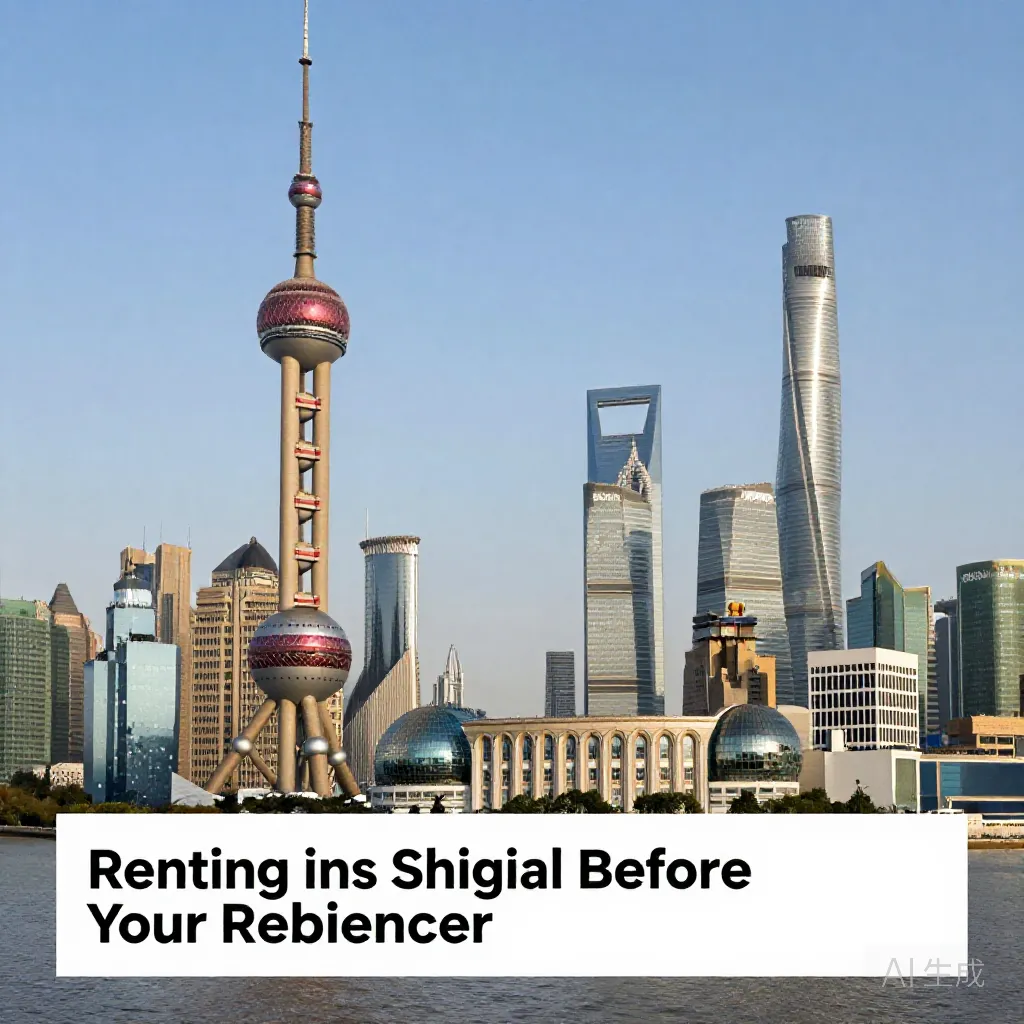
Understanding the X1 Visa and Residence Permit Timeline
Your situation is a classic catch-22 for many new international students in Shanghai. You arrive on an X1 visa, which is a long-term study visa valid for 30 days. Within those 30 days, you and your university must complete the application for your actual residence permit—the sticker that goes in your passport, valid for the duration of your studies.
The core question is about the gap: can you sign a legal lease for an apartment during those initial 30 days, before that permit sticker is issued? The short answer is yes, it is absolutely possible and a very common path. But, it is not a simple process of walking into an apartment and signing a contract like a local resident.
You must navigate a specific set of rules and procedures designed for exactly your temporary status.
The confusion often stems from the term "resident permit." Landlords and police stations are concerned with your legal status to reside in China, not necessarily the physical sticker in your passport. Your X1 visa grants you that legal status for the 30-day period. The key is to prove your imminent transition to long-term status.
The process is less about having the final permit in hand and more about demonstrating a credible, documented plan to obtain it. This involves your university, local police, and a willing landlord who understands the system. The process is standardized but requires you to be prepared with the correct paperwork from day one.
The Legal Foundation: Temporary Residence Registration
The cornerstone of renting in China as a foreigner, regardless of your visa stage, is the Temporary Residence Registration. This is not your final residence permit; it is a separate, immediate requirement. According to Chinese law, anyone staying in a hotel, a friend's home, or a rented apartment for more than 24 hours must register their temporary residence with the local police station (派出所, paichusuo).
For hotel stays, the hotel does this automatically. For private rentals, you are responsible for completing this registration within 24 hours of moving into your new address.
This is the critical link. You can sign a lease and move in on your X1 visa because you are required to perform this temporary registration. The paperwork you provide for this registration—primarily your passport and visa—is what allows the police station to record your stay.
The landlord's role is to provide a signed copy of the lease agreement and their own identification to the police station to confirm the address is legitimately rental property. Your university’s international student office will later help you convert this temporary registration into the formal application for your residence permit, tied to that same apartment address. So, the chain is: X1 Visa -> Sign Lease & Move In -> Complete Temporary Registration -> University Processes Residence Permit Application.
What Landlords Actually Require
A landlord’s primary fear is illegal subletting, tenants who disappear, or violating government rental regulations. Your X1 status, while temporary, is a clear, government-issued document with a defined purpose and end date (the 30-day window). This is actually more reassuring to a landlord than a tourist visa (L visa), which has no long-term intent. So, most landlords familiar with student rentals will accept an X1 visa, but they will ask for specific supplementary documents to cover their own legal liability.
You will almost certainly need to provide: 1. Your Passport and X1 Visa: The foundation of all documentation. 2.
A Letter from Your University: This is non-negotiable. It should be on university letterhead, state that you are a registered student for the upcoming academic year (specify dates), and confirm that you will be applying for a residence permit. Some universities provide a standard template for this.
It proves your legitimate, long-term reason for being in Shanghai. 3. Proof of Financial Means: This can be a bank statement from your home country or a scholarship letter.
It reassures the landlord you can pay rent. 4. A Guarantor (Often Required): This is the biggest hurdle.
Chinese landlords frequently require a local guarantor (担保人, danbaoren), usually a Chinese citizen with a stable job and local hukou (household registration), who agrees to be financially responsible if you default. For students, the university itself sometimes acts as the guarantor through its international office, or a reputable Chinese friend/family member can serve. Without a guarantor, your pool of willing landlords shrinks significantly.
Be prepared to discuss this upfront.
The Step-by-Step Process for Securing Housing
Armed with the understanding of the legal framework, you can approach the housing search strategically. The process is a sequence of actions where each step depends on the previous one being completed correctly.
Step 1: Secure Your University's Support Documents
Before you even look at listings, contact your university's international student office. Explain your plan to rent off-campus. Request an official enrollment verification letter for the full academic year.
Inquire if they have a standard "Proof of Student Status for Housing" letter or if they can serve as a guarantor for students. Get these documents in digital and physical form. Having these in hand before you arrive in Shanghai gives you immense credibility with agents and landlords from the first conversation.
Step 2: Initiate the Search with the Right Tools
You cannot start the formal lease process until you are physically in Shanghai with your passport and X1 visa. But, you can begin researching neighborhoods, price ranges, and apartment styles online. Wellcee (外居客) is an excellent and popular app for this, specifically designed for the expat and international community in major Chinese cities.
It lists both agent-managed and direct landlord (房东, fangdong) properties. Other platforms like Lianjia (链家) or Beike (贝壳) are massive but primarily in Chinese and geared toward the domestic market, which can be a higher barrier. Start your search on Wellcee to get a realistic sense of the market in your preferred districts (e.g., near your university, or areas like Jing'an, Xuhui, Putuo for more value).
Step 3: The In-Person Viewing and Negotiation
Once in Shanghai on your X1 visa, you must view apartments in person. rarely rent sight-unseen for your first lease. During the viewing, be upfront about your X1 visa status from the beginning.
Show the agent/landlord your passport, visa, and university letter. Ask the critical question immediately: "Can you accept a lease with an X1 visa and provide the necessary documents for my temporary residence registration?" This filters out unsuitable properties instantly. If they say yes, proceed to negotiate lease terms: rent, deposit (usually one to three months' rent), contract length, and who pays the agency fee (often 50% of one month's rent, sometimes paid by landlord for students).
Step 4: Signing the Contract and the Registration Sprint
Once terms are agreed, you will sign a formal rental contract (租赁合同, zulin hetong). Ensure the contract includes clauses for the temporary residence registration process and specifies the landlord's obligation to provide their property ownership certificate (房产证, fangchan zheng) and ID copy to the police station. You will pay the deposit and first month's rent.
Within 24 hours of getting the keys, you must visit the local paichusuo with: your passport, your signed lease, the landlord's ID and property certificate copies (which they must provide), and your university letter. Fill out the temporary residence registration form. The police will stamp it, and you have legally registered your temporary home.
Navigating Common Pitfalls and Challenges
The path is clear but not without obstacles. Anticipating these will save you time, money, and stress.
The Guarantee (Guarantor) Problem
The single most common point of failure is the lack of a qualified guarantor. If your university does not provide this service, you must find one. This can be a trusted Chinese classmate with local hukou, a professor, or a family friend.
Alternatively, some specialized agencies offer guarantor services for a significant fee (often one month's rent or more). This is a last resort due to the cost. Another emerging, less common option is using a security deposit insurance policy from a Chinese insurance company, which replaces the cash deposit and acts as a financial guarantee.
Research this thoroughly before arrival, as not all landlords accept it.
Agency Fees and "Black" Agents
The standard real estate agency fee in Shanghai is typically 35% of one month's rent, paid by the tenant, or sometimes 100% paid by the landlord. often clarify this before engaging an agent. Be wary of agents who ask for large cash payments upfront before signing anything.

Use reputable, established agencies like Lianjia's affiliated agencies, or the agents listed on Wellcee with reviews. often get a formal, stamped receipt for any payment. "Black" agents (黑中介, heizhongjie) may promise deals that seem too good to be true and can disappear with your deposit.
Contract Clauses and Your Rights
Chinese rental contracts are heavily weighted toward the landlord. Scrutinize clauses about: * Maintenance: Who pays for what? Usually, small repairs (lights, faucets) are tenant responsibility; major issues (plumbing, structure) are landlord's.
Early Termination: What are the penalties if you need to leave before the contract ends? Usually, you forfeit your deposit. Rent Increases: Is there a clause allowing annual increases?
Cap this if possible. * Deposit Return: The process and timeline for getting your deposit back. It should be within 7-15 days after you move out and hand over keys, provided there is no damage.
Consider hiring a bilingual legal helper or using a service like "Shanghai Housing Helper" on WeChat for a fee to review your contract. It is a small cost for significant peace of mind.
The Role of Apps: Wellcee and Beyond
Wellcee is recommended for good reason. It curates listings, often has English descriptions and pictures, and its user base is predominantly international, meaning landlords on the platform are already accustomed to dealing with foreign tenants on X1 visas. The messaging system is in-app and bilingual.
You can filter by "X1 Visa Acceptable" in some cases. It reduces the language barrier significantly.
But, do not rely on it exclusively. The best apartments, especially in popular student areas, may be listed directly with local agencies on Lianjia/Beike. Use Wellcee to learn the market, then be prepared to engage a bilingual agent from a major firm for off-market listings.
Have your university letter and visa ready to show any agent immediately. Another useful tool is joining Facebook groups like "Shanghai Expats" or "Shanghai Housing/Flatshare." These are great for finding sublets from students leaving for summer or graduating, which can be a simpler, shorter-term solution. Word-of-mouth from senior students at your university is often the most reliable source.
What Happens After You Get Your Residence Permit?
Once your residence permit is issued (usually 7-15 working days after you submit the application at the Exit-Entry Bureau), your legal status changes. You are no longer on the X1 visa grace period. You must update your temporary residence registration to a permanent one.
This is a simple form you fill out at the paichusuo with your new passport page (showing the residence permit sticker). Your lease remains valid, and nothing else changes regarding your tenancy. Your landlord does not need to re-sign anything.
This update is just for the police database to reflect your new, long-term status. From this point on, your housing situation is identical to that of any other long-term foreign resident in Shanghai.
Final Checklist for Arrival Week
To synthesize the process into actionable steps for your first week: 1. Day 1-2: Arrive, get your 30-day stay paper from immigration, find temporary hotel/hostel accommodation. Contact your university's international office, pick up your enrollment letter.
2. Day 3-4: Start intensive apartment searching on Wellcee and via university student groups. Shortlist 5-10 apartments.
Contact agents/landlords, immediately disclose X1 visa status and ask about guarantor requirements. 3. Day 5-7: Schedule and attend viewings.
Bring passport, X1 visa, university letter. Shortlist 2-3 viable options. Negotiate terms verbally.
4. Day 8-10: Finalize one apartment. Sign contract, pay deposit and first month's rent via bank transfer (get receipt).
Obtain from landlord: signed lease, their ID copy, property certificate copy. 5. Day 11: Within 24 hours of getting keys, go to local police station (paichusuo) with all documents (passport, visa, lease, landlord docs, uni letter).
Complete Temporary Residence Registration. Get the stamped form. Keep a copy.
6. Day 12+: Work with your university's international office to submit your residence permit application package, using your new apartment address. Then, wait.
After completing the temporary residence registration and submitting your residence permit application, your focus shifts from bureaucratic hurdles to the practical realities of daily life in your new Shanghai apartment. This transition period, while your permit is processed, is a critical window to establish a stable foundation. You must navigate the setup of essential utilities, understand the rhythms of your local neighborhood, and begin cultivating a functional relationship with your landlord. These steps, though sometimes overlooked in initial planning, are fundamental to a smooth and comfortable first semester.
Setting Up Essential Services: Electricity, Water, and Internet
Securing utilities is your first operational task upon moving in. Unlike in some countries where services are automatically connected, you must activate accounts in your name. This process is straightforward but requires specific documentation and a basic grasp of local procedures.
The Utility Registration Process
For electricity (电, dian) and water (水, shui), you typically deal directly with the local utility companies. Your landlord should provide the property's unique account number or a recent bill. You will need to visit the respective utility office (often located within your district) with your passport, your signed lease agreement, and the temporary residence registration receipt from the paichusuo.
Some utility companies now offer online activation via their official WeChat mini-programs or apps like "Shanghai Electric Power" (上海电力) and "Shanghai Water" (上海水务), which can save a trip. Be prepared to pay a small connection fee and a deposit, which is refundable when you close the account. Gas (燃气, ranqi) is less common in modern apartments but, if present, requires a separate safety inspection and registration with the gas company.
Choosing an Internet Provider
Internet setup is a priority for students. The market is dominated by a few major telecom providers: China Telecom (中国电信), China Mobile (中国移动), and China Unicom (中国联通). You can sign up at one of their numerous retail branches or often online through their official apps.
You will need your passport and lease again. Packages vary by speed (measured in Mbps) and price, with typical student plans ranging from 100 to 300 Mbps for around 100-200 RMB per month. Installation usually occurs within 3-7 working days.
Be aware that all internet traffic is subject to the Great Firewall; you will need a reliable, legally compliant VPN service for accessing international websites and services. Your university’s IT department may provide recommendations for reputable VPNs that work consistently in Shanghai.
Managing Bills and Payments
All utility bills are now predominantly digital. Providers will send monthly statements via SMS or through their apps/WeChat accounts. Payment is easiest via Alipay (支付宝) or WeChat Pay (微信支付), simply by scanning the bill's QR code.
It is crucial to monitor these accounts. Failure to pay on time can result in service interruption and, in extreme cases, a negative record with the utility company that could complicate future contracts. Set up calendar reminders.
If you encounter billing discrepancies, contact the provider's customer service hotline (often with English options) or visit a local branch with your documentation.
Navigating Daily Life in Your New Neighborhood
Your apartment is more than a living space; it is a node in a larger community. Understanding the immediate environment enhances safety, convenience, and cultural integration.
Local Amenities and Convenience
Shanghai’s neighborhoods are micro-economies. Within a 10-minute walk, you will find everything needed for daily sustenance. Community supermarkets like Alibaba's Freshippo (盒马鲜生) or local chain stores (如联华超市) offer fresh produce, packaged goods, and daily necessities.
Wet markets (菜市场, caishichang) provide the freshest ingredients at the lowest prices but require basic Chinese for negotiation. For household items, hardware stores (五金店, wujin dian) and home goods shops (如宜家, IKEA’s Shanghai store) are essential. Familiarize yourself with the location of the nearest 24-hour pharmacy (药店, yaodian) and clinic (诊所, zhensuo) for minor health issues.
Downloading apps like "Dianping" (大众点评) is invaluable for discovering local restaurants, hair salons, and repair services with user reviews.
Transportation and Commuting
Your address choice should align with your commute. Shanghai’s metro system is extensive, clean, and efficient. Use apps like "MetroMan" or the official "Shanghai Metro" app to plan routes.
Purchase a reusable Shanghai Public Transportation Card (上海公共交通卡) from any metro station; it works on metros, buses, and even some taxis. Load it via Alipay/WeChat for convenience. For shorter trips, shared bicycles (共享单车, like Meituan or Hello bikes) are ubiquitous; scan and unlock with your phone.
Taxis (出租车, chuzuche) and ride-hailing apps like DiDi (滴滴出行) are readily available. often have your apartment’s full address in Chinese characters saved on your phone to show drivers, as many do not speak English.
Building Community Connections
While Shanghai is a global metropolis, neighborhood life retains local character. Simple greetings to building security guards (保安, baoan) and local shopkeepers foster goodwill and can lead to helpful local tips. For social connection, beyond university peers, consider joining interest-based groups on platforms like "Meetup" or local WeChat groups for your district.
These can be lifelines for finding language exchange partners, sports activities, or simply advice on where to get the best xiaolongbao (小笼包). A sense of local guanxi (关系), even at a basic level, significantly improves everyday interactions and problem-solving.
Maintaining a Positive Landlord Relationship
Your landlord is a key stakeholder in your Shanghai experience. The relationship is primarily transactional, but managing it professionally prevents disputes and ensures a smooth tenancy.
Communication Norms and Guanxi
Communication should be clear, polite, and documented. Use WeChat for most interactions, as it is the universal platform. When reporting an issue, be specific: "The kitchen faucet is leaking water onto the floor" is better than "The sink is broken." often attach photos or videos.
Respect the landlord's time; avoid non-urgent calls late at night. While not a personal friendship, showing respect (mianzi, 面子) and acknowledging their role is important. A small, culturally appropriate gift during the Lunar New Year (like a box of fruit or tea) is a common and appreciated gesture that strengthens the informal guanxi.
rarely assume familiarity; maintain a respectful tone.
Handling Maintenance and Repairs
The lease contract dictates maintenance responsibilities, but in practice, a flexible approach works best. Minor wear-and-tear items (light bulbs, shower heads, clogged drains due to normal use) are typically the tenant's responsibility and cost. Major failures (burst pipes, electrical faults, broken windows) are the landlord's obligation.
When a major issue arises, notify the landlord immediately via WeChat with evidence. If they are unresponsive or negligent, you have recourse. For urgent issues threatening property damage (e.g., major leak), you may arrange emergency repair (keeping all receipts) and deduct the cost from rent, but this is a legal gray area; only do this after sending multiple documented requests and seeking advice from your university's international office or a local legal aid service.
often attempt resolution through communication first.
Renewal and Long-Term Planning
As your residence permit nears expiration, discuss renewal with your landlord several months in advance. Landlords appreciate notice, as it allows them to plan. Market rents in Shanghai fluctuate.
Be prepared for a potential rent increase. Your leverage comes from being a reliable, on-time tenant who has maintained the property well. Use your positive rental history as a bargaining chip.
If you plan to stay longer, consider negotiating a new 1-2 year lease with a capped annual increase clause. If you are moving out, initiate the formal move-out process early. Schedule a final walk-through with the landlord to inspect the apartment together.
Take extensive photos and videos of the empty, clean unit. This documentation is your primary defense against arbitrary deposit deductions. The law requires the landlord to return your deposit within 7-15 days post-move-out if there is no damage beyond normal wear and tear.
Special Considerations for Shared or Sublet Apartments
a number of international students opt for shared apartments (合租, hezu) or sublets (转租, zhuanzu) for cost savings and social integration. This introduces additional layers of complexity.
If you are joining an existing lease as a subtenant, you must have a written sublease agreement with the primary tenant (zhengzu, 正租), not just a verbal agreement. The primary tenant must have explicit written permission from the landlord to sublet, which should be attached to your sublease. Your temporary residence registration will use the primary tenant's lease and the landlord's documents.
Ensure the primary tenant is reliable and will be present to assist with any landlord communications. Your financial deposit is paid to the primary tenant, not the landlord, increasing your risk. Use a platform like Wellcee for sublets, as they often verify these arrangements.
For a new shared lease where all tenants sign together with the landlord, each person's name should be on the main contract. This is the cleanest structure. Everyone is jointly and severally liable for rent and damages, but each person's deposit is clearly defined. All tenants must complete their own temporary residence registration.
In both scenarios, the guarantor requirement applies to the primary lease holder(s). If you are a subtenant, the primary tenant's guarantor covers the entire lease, which may reassure the landlord. But, you should still have a clear, written agreement with your flatmates detailing rent splits, utility payments, and house rules to prevent interpersonal conflicts that can jeopardize your living situation.
Financial Management Beyond Rent: Budgeting for Shanghai
Your monthly budget extends far beyond the rent figure quoted online. A realistic student budget must account for a deposit (usually one month's rent, sometimes two), an agency fee (if used, typically 35-100% of one month's rent), and the first month's rent upfront. This initial outlay can equal 3-4 times the monthly rent. Plan for this cash requirement.
Recurring monthly costs include: Utilities: Approximately 200-400 RMB per person for electricity, water, and gas. Internet: 100-200 RMB. Building Management Fee (物业费, wuye fei*): Often included in rent for apartments, but for some villas or older buildings, it may be extra (50-200 RMB/month).
Groceries and Dining: 1,500-3,000 RMB depending on habits. Transportation: 200-500 RMB for metro/bus/bicycle. * Mobile Phone Plan: 50-150 RMB.
* Miscellaneous/Entertainment: Variable.
Unexpected costs, such as a lost key replacement (200-500 RMB) or an unplanned repair not covered by the landlord, should have a small contingency fund. often keep a digital and physical copy of your lease, passport, visa, and registration receipt in a secure, accessible place. Losing these documents in China triggers a complex, time-consuming replacement process at the Exit-Entry Bureau and police station.
By systematically addressing these operational, cultural, and financial dimensions, you transform the legal act of renting into the practical art of building a functional home in Shanghai. The X1 visa process is merely the gateway; your success in the first few months depends on this foundational work of setting up services, understanding your locale, and nurturing the key professional relationships that define your tenancy. This proactive approach turns a temporary status into a stable platform for your studies and exploration of Chinese life.
Conclusion: It's a Process, Not a Barrier
Renting an apartment in Shanghai before receiving your residence permit is a standard, well-trodden path for international students. The system is designed for this exact scenario. Your X1 visa is the key that unlocks the rental market, provided you understand and follow the procedural steps: secure university documentation, find a landlord/agent who accepts X1 tenants, sign a proper contract, and complete the mandatory temporary residence registration within 24 hours of move-in.
The guarantor requirement is the most significant practical hurdle, so plan for that. Use tools like Wellcee to ease the search, but be prepared to engage with the local market. With preparation and a clear understanding of the "temporary registration" mechanism, you can move directly from the airport to your own apartment, avoiding the hotel limbo and starting your Shanghai life in your own space from day one.
The process requires diligence, but it is entirely possible and is the experience of thousands of students before you.
Responses • 0
0/2000
ID: 1326
Chris
Offline
30 min
Visited
From
Bakersfield, United States
Send Message