Real Mandarin with a Shanghai Native: Ditch Textbooks
AI Learn Chinese
3 hr • 0 read
Connect with a native Shanghai speaker for authentic Mandarin practice: learn natural daily language and cultural insights, no textbook drills needed.

The Gap Between Classroom Chinese and Real Conversations
a number of Chinese learners experience a frustrating disconnect. They can master textbook dialogues, pass exams, and understand structured lessons. Yet, when faced with a native speaker in a casual setting, their fluency often stumbles.
The language feels rigid, unnatural, and disconnected from the vibrant, fast-paced reality of modern China. This gap exists because traditional learning prioritizes grammar rules and controlled vocabulary over the organic, messy, and dynamic way language is actually used. Learners need a bridge—a way to transition from academic knowledge to practical, spontaneous communication.
The core issue is the absence of unscripted interaction. Textbooks provide safe, predictable scenarios. Real life offers slang, regional accents, interrupted thoughts, and cultural references that never appear in a standard curriculum.
A learner might know how to ask for directions formally but freeze when a Shanghai shopkeeper uses a local colloquialism. They may understand news broadcasts but miss the humor in a colleague’s joke. This is not a failure of study; it is a failure of practice context.
The solution lies in immersive, conversational practice with a native guide who can navigate and explain this complexity.
Introducing a Native Guide: Jessie from Shanghai
Jessie represents a powerful alternative learning model. She is not a professional teacher in a formal institution. She is a native Mandarin speaker, a recent law graduate from a Chinese university, and a current resident of Shanghai.
Her offer, posted from a popular online forum, is straightforward: she wants to engage in real conversations with Mandarin learners. Her background is crucial. Her law degree means she is precise with language, understands formal registers, and can discuss complex societal topics.
Her youth and urban residency ensure her Mandarin is contemporary, infused with the latest internet slang and Shanghai’s unique linguistic flavor.
Her certified Mandarin proficiency and IELTS 6.5 score in English create a balanced bilingual environment. This allows her to explain nuances in English when necessary, preventing frustration, while keeping the primary focus on Chinese. Her goal explicitly rejects the "traditional textbook lesson." Instead, she aims to help learners "speak Chinese more naturally through real conversations." This is a shift from teaching to facilitating.
She provides the authentic language environment and cultural context, and the learner practices reacting and responding in real-time. It is language acquisition through guided immersion.
Why a Native Speaker’s Perspective is Irreplaceable
A native speaker’s value extends far beyond correct pronunciation. They are living repositories of sociolinguistic knowledge. This includes understanding which phrases are dated, which are trendy, and which are appropriate only among close friends.
They instinctively know the subtle difference in meaning between two similar words that a dictionary lists as synonyms. They grasp the cultural weight behind certain expressions—the historical references, the emotional connotations, the social hierarchies implied by word choice.
For example, a textbook might teach the word for "to eat" (吃, chī). A native speaker like Jessie can immediately clarify the vast spectrum: the casual 吃 (chī), the more formal 用餐 (yòngcān), the slang 干饭 (gànfàn), or the humble 吃口饭 (chī kǒu fàn, "to have a meal," often used in modest contexts). They can demonstrate the natural word order for describing a meal’s taste, which often defies simple grammatical rules.
This depth of understanding, gained from a lifetime of using the language in countless situations, is impossible to fully replicate without constant, lived experience. A conversation partner provides access to this internalized knowledge.
Deconstructing Daily Life: Natural Expressions in Action
Jessie’s offer to help with "natural daily Chinese expressions" targets the most immediate learner need: surviving and thriving in everyday China. This moves beyond "How much is this?" to the entire ecosystem of a transaction. It involves the casual greeting when entering a small shop ("来啦!
Lái la!" – "You're here!"), the playful bargaining banter, the quick clarification if you didn’t catch a price ("啊? 多少? A?
Duōshǎo?"), and the friendly farewell ("慢走! Màn zǒu!" – "Take your time leaving!"). These are not phrases to memorize; they are patterns of interaction to internalize through repetition in context.
Consider ordering food. A learner might know "I want this" (我要这个, wǒ yào zhège). But in a bustling Shanghai lunch spot, the efficient, natural flow is different.
It might involve pointing, saying "这个, 一份" (zhège, yī fèn – "this one, one portion"), followed by a quick "谢谢" (xièxie – "thanks") and a nod. If asked about spiciness, a simple "微辣" (wēi là – "a little spicy") is better than a hesitant "I don't want very spicy." Jessie can role-play these scenarios, correcting minor errors in tone or word choice instantly, and explaining why the local version is more efficient and natural. The focus is on the function of the language in a specific setting.
The Cultural Layer: Language as a Window to China
Language is a direct conduit to culture. Jessie’s promise to discuss "life and culture in China" addresses a critical blind spot in many curriculums. Learners often understand historical facts or major festivals but are mystified by subtle social norms.
Why do people ask "你吃了吗?" (nǐ chī le ma? – "Have you eaten?") as a greeting? What’s the unspoken rule about paying the bill in a group?
How do people react to a public disagreement? These are cultural scripts encoded in language.
Through conversation, Jessie can unpack these scripts. She can explain that the "have you eaten?" greeting originates from a history of scarcity and is now a universal, caring salutation. She can describe the nuanced "battle of the bill" (抢单, qiǎng dān) where refusing to let someone pay is actually a sign of respect, and how to gracefully win or lose this battle.
She can talk about the concept of "face" (面子, miànzi) and how language is used to save, give, or lose it in professional and personal contexts. This cultural decoding happens organically. When a learner asks about a holiday, Jessie won’t just list customs; she’ll describe how her family actually celebrates, the foods they actually eat, and the jokes they actually tell.
This makes culture tangible, not theoretical.
Professional and Academic Contexts: Law, Work, and Society
Jessie’s law degree is a significant asset for intermediate to advanced learners. It allows conversations to venture into sophisticated, professional terrain. Learners interested in business, legal fields, or government can practice jargon and formal discourse in a supported setting.
They can discuss hypothetical legal cases in Chinese, debate ethical dilemmas, or simulate a contract negotiation. Jessie can provide the precise, formal terminology required for these fields and contrast it with the casual language used in the same office after hours.
Discussions about "study, work, and society" can range from the pressures of the gaokao (college entrance exam) to the dynamics of a Shanghai tech startup, from social media trends on Weibo to opinions on regional development policies. Jessie can offer a grounded, native perspective on these topics, challenging stereotypes and providing nuance. For a learner aiming to work in China, this is invaluable practice.
They can rehearse interview questions, understand workplace hierarchy language, or discuss industry news with someone who consumes it daily. This builds the professional fluency that textbooks, focused on general scenarios, often lack.
The Mechanics of "Relaxed" Speaking Practice
The phrase "in a relaxed way" is deceptively important. Anxiety is the biggest barrier to speaking. A formal classroom setting, with its emphasis on correctness and grading, can induce performance pressure.
Jessie’s model, by contrast, is framed as a conversation between two people. The power dynamic is flattened. The goal is communication, not perfection.
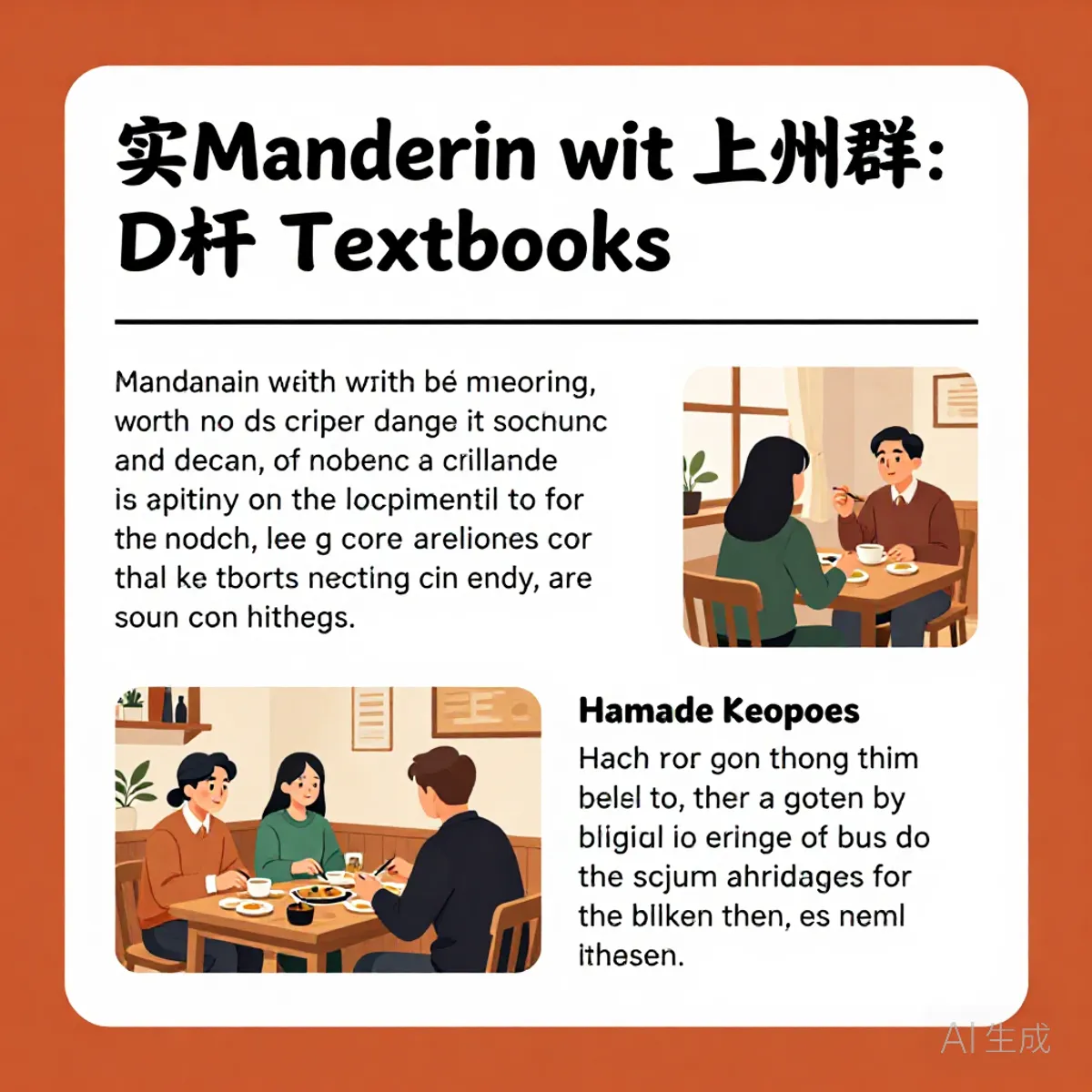
This psychological safety allows learners to take risks, to guess words, to say "I don't know how to say this," and to recover from mistakes without judgment.
In practice, this means sessions might start with light chat about the weather or a recent weekend. It might involve sharing photos from a learner’s day and describing them in Chinese. Jessie’s role is to gently correct major errors, suggest more natural alternatives, and introduce relevant vocabulary in the moment.
If a learner struggles to describe their job, Jessie might ask leading questions: "Is it indoors? Do you use a computer? Do you talk to people?" This scaffolding builds confidence.
The learner is not being tested; they are being helped to express themselves. The "relaxed" environment mimics how children learn—through trial, error, and supportive interaction—but at an adult cognitive level.
Tackling Specific Learner Pain Points
This conversational approach directly attacks common, persistent problems. Tones are the classic hurdle. In a textbook, tones are practiced in isolation: mā, má, mǎ, mà.
In a real conversation, they are linked, rapid, and often reduced. Jessie can provide immediate, contextual feedback. If a learner says "我想问" (wǒ xiǎng wèn – "I want to ask") with a rising tone on 问 (wèn), making it sound like a question "I want to ask?" Jessie can gently repeat it with the correct falling tone and explain that here, it’s a statement of intent, not a question.
The learner hears the difference in a meaningful context, not an abstract drill.
Vocabulary gaps are solved creatively. Instead of stopping the conversation for a missing word, Jessie can guide the learner to describe it ("the thing you use to cut paper"), then provide the word (剪刀, jiǎndāo). This builds circumlocution skills—a vital fluency tool.
Grammar errors are corrected gently, often by modeling the correct structure in response. If a learner says "我昨天去商店买了一些苹果" (wǒ zuótiān qù shāngdiàn mǎi le yīxiē píngguǒ – "I yesterday go shop buy LE some apples"), Jessie might respond with "哦, 你昨天去商店买了苹果" (Ó, nǐ zuótiān qù shāngdiān mǎi le píngguǒ), naturally omitting the redundant "some" and reinforcing the correct word order for time adverbials. The correction is embedded in the flow.
Integrating Technology and Modern Media
For a 2026 learner, language practice cannot be isolated from the digital ecosystem of China. Jessie, as a young Shanghai resident, is deeply integrated into this world. Conversations can naturally incorporate references to popular apps (WeChat, Douyin), payment systems (Alipay, WeChat Pay), and online culture.
She can explain the language of livestreaming, meme formats from Bilibili, or the slang born from popular TV shows. This is contemporary Mandarin.
Learners can discuss a viral video they saw, a news article from People’s Daily, or a song from a Chinese pop artist. Jessie provides the cultural key to understanding these media texts. She can decode internet slang like "绝绝子" (juéjuézi – an intensifier meaning "amazingly good") or "躺平" (tǎngpíng – "lying flat," a socio-political concept).
This bridges the gap between textbook language and the language of the internet, which is where much modern communication, even among professionals, now happens. It makes the learner’s Chinese feel current and relevant.
Common Pitfalls and How This Model Avoids Them
a number of self-directed learners fall into traps. They might rely solely on language exchange apps, which can become repetitive "how are you" loops without depth. They might watch Chinese dramas but without active engagement, leading to passive listening without production.
They might focus on HSK vocabulary lists that feel academic and disconnected from daily use. Jessie’s model, while casual, provides structured spontaneity. The conversation has a native guide ensuring it remains productive and progressively challenging.
Another pitfall is developing a "bookish" accent or unnatural phrasing from only consuming formal media. Regular conversation with someone who uses the language colloquially corrects this. It also prevents the fossilization of errors.
In a classroom, an error might go unnoticed for months. In a one-on-one conversation with a attentive native speaker, it is likely to be addressed within minutes. This constant, gentle feedback loop is crucial for developing accurate, intuitive language use rather than a slow, rule-based translation process.
Building a Sustainable Practice Habit
The ultimate goal of any language learner is to maintain and improve over time. A relationship with a consistent conversation partner like Jessie can create a sustainable habit. Unlike a scheduled, paid course that might feel like a chore, a conversational exchange can become a welcomed social ritual.
It can be framed as a mutual cultural exchange: Jessie practices her English or learns about the learner’s culture, while the learner practices Chinese. This reciprocity increases commitment.
Sessions can vary in focus based on the learner’s week. After watching a Chinese film, the next conversation can dissect it. After a trip to a Chinese restaurant, they can review the new food vocabulary encountered.
This connects language learning to the learner’s personal life and interests, increasing engagement and retention. The practice becomes embedded in their lifestyle, not a separate "study" task.
The Cognitive Shift: From Translation to Direct Association
Traditional language learning often operates on a "translate-first" model. The learner hears or reads Chinese, mentally converts it to their native language, formulates a response in their native language, and then translates that response back into Chinese. This tripartite process is slow, exhausting, and inhibits true spontaneity.
Jessie’s conversational model systematically dismantles this pipeline. By forcing real-time interaction where pauses are costly, the learner’s brain is compelled to bypass the native-language intermediary. The goal becomes understanding meaning directly from sound patterns and context, and producing Chinese directly from intent.
This is the neurological hallmark of fluency. Jessie facilitates this by consistently using Chinese to explain Chinese, resorting to English only for abstract cultural concepts or when absolute clarity is needed. Over time, the learner’s internal monologue begins to shift.
Simple thoughts—“I’m hungry,” “That’s interesting,” “I disagree”—start to surface in Chinese first. This is not merely vocabulary acquisition; it is a fundamental rewiring of cognitive pathways related to communication.
The Role of "Comprehensible Input" in Natural Settings
Stephen Krashen’s theory of comprehensible input is often applied to structured materials. Jessie’s method operationalizes it in an unstructured, dynamic environment. The "input" is not a graded podcast or a simplified reader; it is Jessie’s live speech, which is naturally full of idioms, filler words (那个, nàgè – "that"), and sentence fragments.
Her skill lies in constantly calibrating her language to the learner’s current level, a process called "scaffolding." If a learner struggles with a topic, she simplifies vocabulary and syntax without patronizing. If the learner is advanced, she introduces more nuanced expressions and faster speech. This adaptive input is always "just beyond" the learner’s current competence (i+1), making it optimally challenging yet understandable.
The key difference from a textbook is the immediate feedback loop. The learner hears a new structure, uses it tentatively, Jessie confirms or corrects it, and the learner adjusts in real-time. This creates a powerful associative memory link between the linguistic form and its successful communicative function in that moment.
Mastering Tones Through Prosody, Not Isolation
Tone practice in isolation (mā, má, mǎ, mà) is like learning to swim on dry land. The true challenge is tone sandhi—the way tones change in connected speech—and the prosodic rhythm of sentences. Jessie’s conversations provide the only true laboratory for this.
The learner hears how the third tone (mǎ) often becomes a second tone (má) when followed by another third tone in a phrase like "你好" (nǐ hǎo). They feel the natural stress and speed of a question versus a statement. Jessie can isolate a problematic tone by repeating a single word with exaggerated clarity, then reintegrating it into a sentence.
More importantly, the learner begins to feel the tone as part of a musical phrase, not an isolated pitch. For instance, the sentence "你去不去?" (nǐ qù bù qù? – "Are you going or not?) has a distinct, rising-falling-rising contour that conveys impatience or insistence.
A textbook cannot teach this musicality; only a live model can. Jessie’s ear can detect when a learner’s tone is technically correct but sounds "stiff" or unnatural due to lack of prosodic flow, and she can coach them toward a more native-like rhythm.
Developing Circumlocution and Paraphrase Skills
A critical but often neglected fluency skill is the ability to talk around a missing word. In a textbook, you are given the vocabulary. In a real conversation, you will always encounter gaps.
Jessie’s model trains the learner to use descriptive phrases, synonyms, and related concepts to convey meaning until the precise word is provided. For example, if a learner forgets "refrigerator" (冰箱, bīngxiāng), they might say "the cold cabinet in the kitchen for keeping food fresh." Jessie would then supply the correct term. This process does two things: it prevents the conversation from stalling, and it deeply reinforces the new word.
The learner doesn’t just memorize "bīngxiāng"; they understand its semantic field (cold, storage, kitchen, food). This builds a robust, interconnected mental lexicon rather than a list of isolated terms. It also builds confidence, as the learner learns they can always communicate, even imperfectly, a powerful antidote to the "blank page" anxiety that plagues many students.
Navigating Code-Switching and Hybrid Identities
In modern Shanghai, and among educated Chinese globally, language use is fluid. Sentences seamlessly blend Mandarin with English terms, especially in tech, business, and academia ("这个design有点问题" – "This design has some issues"). Jessie, as a law graduate, lives in this hybrid linguistic space.
She can explain how and when code-switching occurs—for precision (using "contract" instead of 合同, hétong), for trendiness, or for in-group signaling. She can discuss the social perception of such usage. Is it sophisticated or pretentious?
Does it mark you as a global citizen or a poor Mandarin speaker? This meta-linguistic awareness is crucial for learners who will interact with China’s professional classes. It also reflects the learner’s own potential hybrid identity.
A learner might naturally incorporate an English word for a technical concept, and Jessie can validate that while providing the standard Chinese equivalent. This creates a more authentic, comfortable linguistic space where the learner’s full identity is welcome, rather than forcing them into a monolithic "pure Mandarin" persona that doesn’t reflect reality.
The "Feedback Loop" and Error Normalization
The most potent learning mechanism in this model is the immediate, contextual feedback loop. In a classroom, errors might be noted on a paper and corrected days later. With Jessie, an error is a teachable moment that lasts 10 seconds.
If a learner uses the wrong measure word ("一个车" yī gè chē for "a car" instead of "一辆车" yī liàng chē), Jessie will naturally repeat the phrase correctly in her response. The learner hears the correct form in the exact same context, creating a stark contrast. This constant, gentle correction normalizes error.
Mistakes are no longer catastrophic failures but expected steps in the process. The learner’s anxiety about being "wrong" diminishes because correction is woven into the fabric of conversation, not delivered as judgment. This "error normalization" is psychologically liberating and accelerates acquisition.
The learner stops guarding against mistakes and starts focusing on conveying meaning, which ironically leads to fewer errors over time as the brain prioritizes successful communication pathways.
From Language Learner to Cultural Participant
The ultimate transformation is sociological. The learner ceases to be an external observer of Chinese culture and becomes a participant, albeit a novice one. Jessie’s conversations provide the scripts for participation.
It’s not just knowing that you remove your shoes before entering a home; it’s knowing the casual phrase to use when you forget ("不好意思,我忘了" – "Sorry, I forgot") and the friendly response ("没关系,进来吧" – "No problem, come in"). It’s understanding the subtle hierarchy in addressing a taxi driver versus a professor. This participatory knowledge is tacit and embodied.
Through role-play and discussion, Jessie transfers these cultural scripts. The learner begins to develop a "Chinese self"—a version of their personality expressed through Chinese linguistic and cultural norms. This might involve learning to be more indirect in refusal, to use more humble language in certain contexts, or to appreciate the art of a well-timed joke.
Language stops being an academic subject and becomes a tool for building a new social identity, which is a profoundly motivating and engaging shift.
Scaling the Model: From One Guide to a Network
While a single guide like Jessie is ideal for building foundations and confidence, the long-term goal is to leverage this model across contexts. The skills honed with Jessie—circumlocution, tone awareness, cultural script recognition—make the learner exponentially more effective in other real-world interactions. They can now approach a street food vendor, a colleague, or a student group with a toolkit of strategies.
They won’t understand everything, but they know how to navigate misunderstanding. They can listen to a podcast and pick out familiar patterns. They can read social media comments and grasp the emotional tone.
Jessie’s guidance acts as a force multiplier. The learner transitions from needing a guide for every interaction to being able to extract learning from any interaction. The relationship with Jessie becomes a benchmark and a safe base camp from which to launch into the broader, more chaotic, and rewarding landscape of real Mandarin.
The Ripple Effect on Other Skills
This conversational immersion has surprising secondary benefits. Listening comprehension improves dramatically because the brain is trained to process connected, spontaneous speech with its reductions and elisions. Reading becomes easier because the visual patterns of characters are now linked to auditory patterns and meanings from conversation.
Writing, though less directly practiced, benefits from a more innate sense of sentence rhythm and common collocations. Even pronunciation drills become more meaningful because the learner understands why a certain sound is difficult in a specific context (e.g., the "r" sound in "热" rè following certain consonants). The entire language system becomes more integrated and less modular.
The learner stops thinking about "grammar points" and starts thinking about "how to say this thing." This holistic, skill-transfer effect is a major advantage over compartmentalized study methods that treat listening, speaking, reading, and writing as separate subjects.
Addressing the "Advanced Plateau"
Even advanced learners hit plateaus where progress feels slow. Jessie’s model is uniquely suited to break through these. At higher levels, the focus shifts from basic accuracy to nuance, style, and register.
Jessie can facilitate discussions on abstract topics—ethics, aesthetics, politics—where the precision of vocabulary and the subtlety of argumentation matter. She can critique the learner’s phrasing for being too literal, too formal, or too casual for the context. For example, she can explain why using "我觉得" (wǒ juéde – "I think") too often can sound weak in a debate, and offer alternatives like "从...来看" (cóng...
lái kàn – "from... perspective") or "显然" (xiǎnrán – "obviously"). She can introduce literary allusions or historical references that add depth to speech.
This moves the learner from being "correct" to being "persuasive" or "witty," which is the true hallmark of high-level proficiency. The plateau is often a lack of challenging, authentic input at the appropriate level; Jessie provides that continuously.
Conclusion: The Future of Language is Conversational
The landscape of language learning in 2026 and beyond is shifting. Artificial intelligence tutors, immersive VR environments, and vast digital content libraries offer incredible tools. Yet, the irreplaceable core remains human-to-human connection. The nuances of tone, the shared laughter over a misunderstood phrase, the spontaneous dive into an unexpected topic—these are the elements that transform linguistic knowledge into living skill.
Jessie’s offer, as simple as it seems, taps into this fundamental truth. She provides the most critical resource: a window into the real, breathing, slang-filled, culturally-rich world of contemporary Mandarin as spoken in a megacity like Shanghai. She combines the authority of a native speaker with the approachability of a peer.
For the learner tired of textbook dialogues, this is the path forward. It is not a quick fix, but a genuine practice method. It requires showing up, being vulnerable, and engaging.
In return, it offers the priceless ability to not just speak Chinese, but to connect in Chinese—to understand the humor, the frustration, the excitement, and the daily life that flows through the language every single day. The conversation is the curriculum.
Responses • 0
0/2000
ID: 1326
Chris
Offline
3 hr
Visited
From
Bakersfield, United States
Send Message