Qing Dynasty's Most Beloved R
AI Learn Chinese
4 hr • 0 read
A deep dive into personally favored rulers from China's Qing dynasty, exploring their complex legacies through community insights and historical analysis.
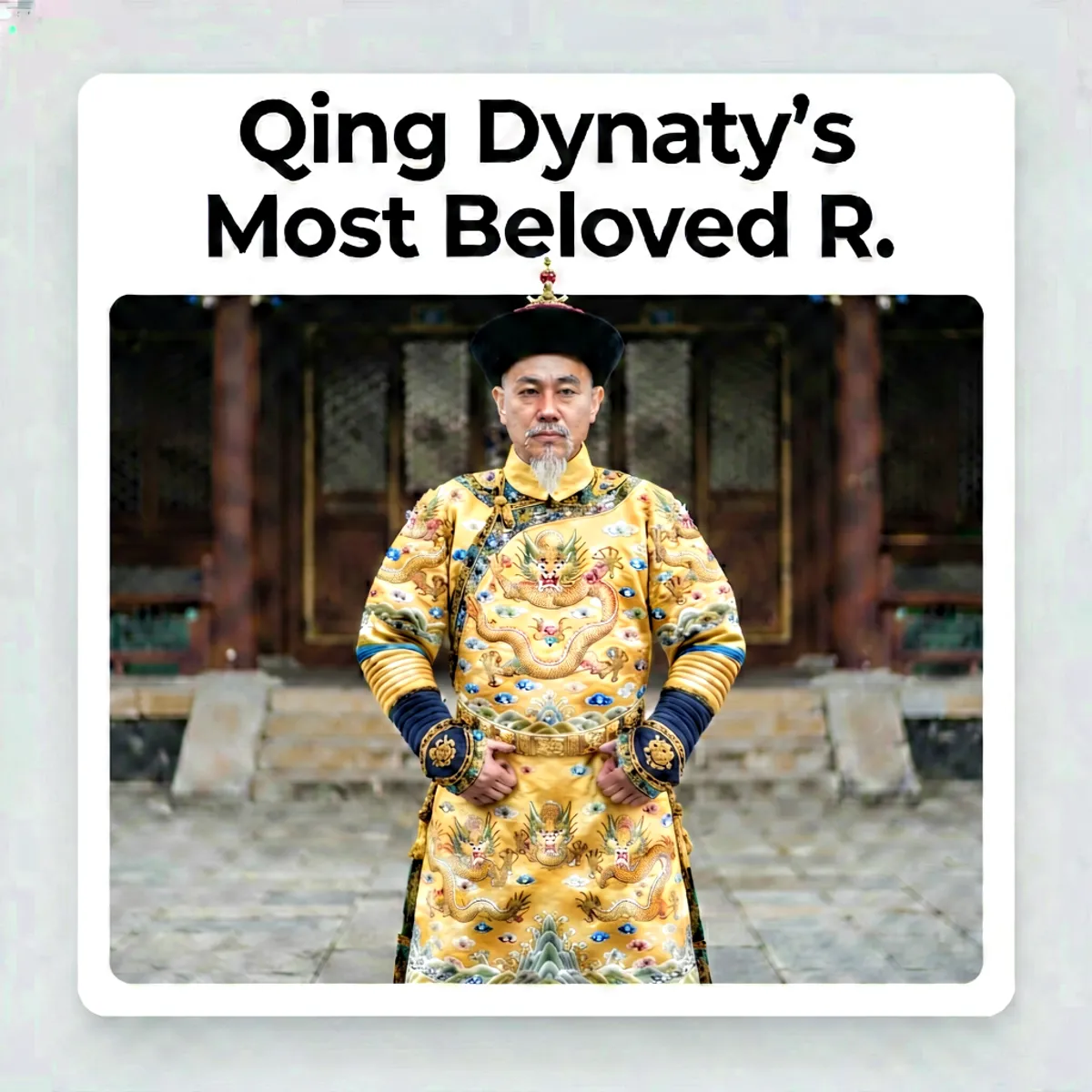
Introduction: The Personal Pulse of History
History often presents us with rankings of "greatest" or "most powerful" monarchs. These lists are built on metrics like territorial expansion, economic output, or military victory. This series has deliberately chosen a different path.
It has asked a simpler, more human question: who is your favourite ruler from a given Chinese era? The word "favourite" is key. It opens the door to the ruler whose story resonates, whose personality intrigues, whose struggles feel relatable, or whose vision captures the imagination, regardless of their ultimate success or failure on the grand scale.
This final installment turns to the Qing dynasty (1644-1912), China's last imperial era. Its story is one of remarkable consolidation, dazzling cultural achievement, and profound internal decay and external shock. The Qing landscape is populated by formidable emperors, astute consorts, and tragic figures navigating a world changing faster than any institution could adapt.
Selecting a favourite here means navigating a long arc from Manchu conquest to republican revolution. The choices reflect not just the ruler's deeds, but what a modern reader values: pragmatism, cultural patronage, resilience in crisis, or even the poignant failure of reform.
The responses from the previous posts in this series have been a masterclass in historical engagement. They highlighted figures overshadowed by giants and offered fresh perspectives on the well-known. The discussions underscored that our "favourites" are often mirrors of our own concerns—about leadership, ethics, and change.
As we examine the Qing, we carry that spirit forward, seeking not the perfect ruler, but the one whose journey feels most compelling to us today. This exploration is a tribute to the complex humanity within the imperial title.
The Founding Consolidators: Nurhaci and Hong Taiji
Before the Qing conquered China proper, they were the Later Jin, a formidable Jurchen (Manchu) state forged in the northeastern steppes. The architects of this state, Nurhaci and his son Hong Taiji, are foundational figures. They are rarely discussed in the same breath as the great Qing emperors who ruled from Beijing, yet their innovations made the dynasty possible. Choosing one as a favourite reveals an appreciation for raw state-building and cultural synthesis over the refined governance of a settled empire.
Nurhaci: The Unifier's Ambition
Nurhaci (1559-1626) began as a minor chieftain. His life's work was the unification of the fragmented Jurchen tribes. He achieved this through a combination of military genius, political cunning, and a revolutionary social reorganization.
His creation of the Eight Banners system was not merely a military reform; it was a total societal framework that integrated military, administrative, and economic functions. It created a loyal, identifiable, and highly mobile core for his state.
His personal drive was legendary, but it had a ruthless edge. The "Seven Grievances" he famously declared against the Ming court in 1618 were a masterful piece of political theater, justifying rebellion. One might favour Nurhaci for his sheer transformative energy.
He took a collection of feuding clans and forged them into a disciplined, expansionist power. His story is the ultimate tale of a founder, full of risk and consequence. His legacy is etched into the very structure of Qing rule for centuries.
Hong Taiji: The Strategic Statesman
If Nurhaci was the sword, Hong Taiji (1592-1643) was the shield and the mind. He succeeded his father in a period of potential disarray and consolidated his power with skill. His favourite status often stems from his strategic brilliance and his crucial adaptation.
He renamed the Jurchen state "Manchu" and the dynasty "Great Qing" in 1636, a deliberate move to project imperial legitimacy beyond tribal confines. He understood that to conquer China, he needed more than banner armies; he needed Han Chinese administrators and legitimacy.
Hong Taiji's establishment of a Chinese-style bureaucracy alongside the banner system was a masterstroke. He recruited captured Ming officials like Fan Wencheng and Ning Wanwo, valuing their expertise. His famous statement, "A state is built on the basis of agriculture," shows his pragmatic focus on governance.
Favouriting Hong Taiji means admiring the architect who prepared the blueprint. He set the conditions for his successors' success, proving that conquest required not just strength, but sophisticated political and administrative integration. His early death in 1643 left the final push to his successors, but his foundations were solid.
Kangxi: The Long Reign of Stability
The Kangxi Emperor (r. 1661-1722) is the archetypal "great emperor" of the Qing, and indeed of Chinese history. His 61-year reign is the longest of any Chinese emperor.
His favourite status is almost universal in popular history, and for good reason. He embodies the Confucian ideal of a sage-ruler: diligent, benevolent, capable, and cultured. His reign represents the consolidation of Qing power and the dawn of a long period of stability and prosperity known as the "High Qing" era.
The Consolidator and Scholar-Emperor
Kangxi ascended the throne as a child and survived the regency of the powerful Oboi faction, emerging to rule in his own right. His early personal involvement in suppressing the Revolt of the Three Feudatories (1673-1681) demonstrated his military commitment. Yet his legacy is equally defined by his embrace of Chinese scholarship.
He commissioned the monumental Kangxi Dictionary, a project that cemented Qing patronage of Confucian learning and won over the Han Chinese literati elite. His personal study with scholars like Gu Yanwu set a precedent for imperial engagement with classical texts.
His personality was marked by remarkable self-discipline and a practical streak. He wrote thousands of edicts, often reviewing reports late into the night. His "Sacred Edict" of 1670, a set of sixteen maxims explaining Confucian morality to the populace, was a tool for social harmony.
Favouriting Kangxi often means favouring the image of a hardworking, learned monarch who prioritized stability and moral governance. He managed the delicate balance between Manchu identity and Han Chinese culture with unparalleled skill, creating a model for his successors.
The Grand Tour of a Ruler
A specific episode that endears many to Kangxi is his series of southern tours (南巡). Starting in 1684, he made six grand inspection tours of the Yangtze Delta, the economic heartland of the empire. These were not mere vacations.
They were political theater, designed to showcase imperial presence, inspect water conservancy projects like the Grand Canal, and meet with local elites. The tours were lavish but purposeful. They demonstrated a ruler physically engaged with his realm's prosperity.
For a modern reader, these tours humanize the emperor—he is not just a distant bureaucrat but a visible, touring head of state, assessing the very projects that sustained his empire.
Yongzheng: The Reformer's Burden
The Yongzheng Emperor (r. 1722-1735) is the indispensable bridge between the founding of the High Qing and its zenith under his son, Qianlong. Yet, he is often a less popular favourite than Kangxi or Qianlong.
His reputation is that of a hardworking, severe, and suspicious micromanager. But, choosing Yongzheng as a favourite reveals an appreciation for gritty, unglamorous administrative reform and the difficult consolidation of imperial power. He was the engine that made the Qianlong era possible.
The Bureaucratic Enforcer
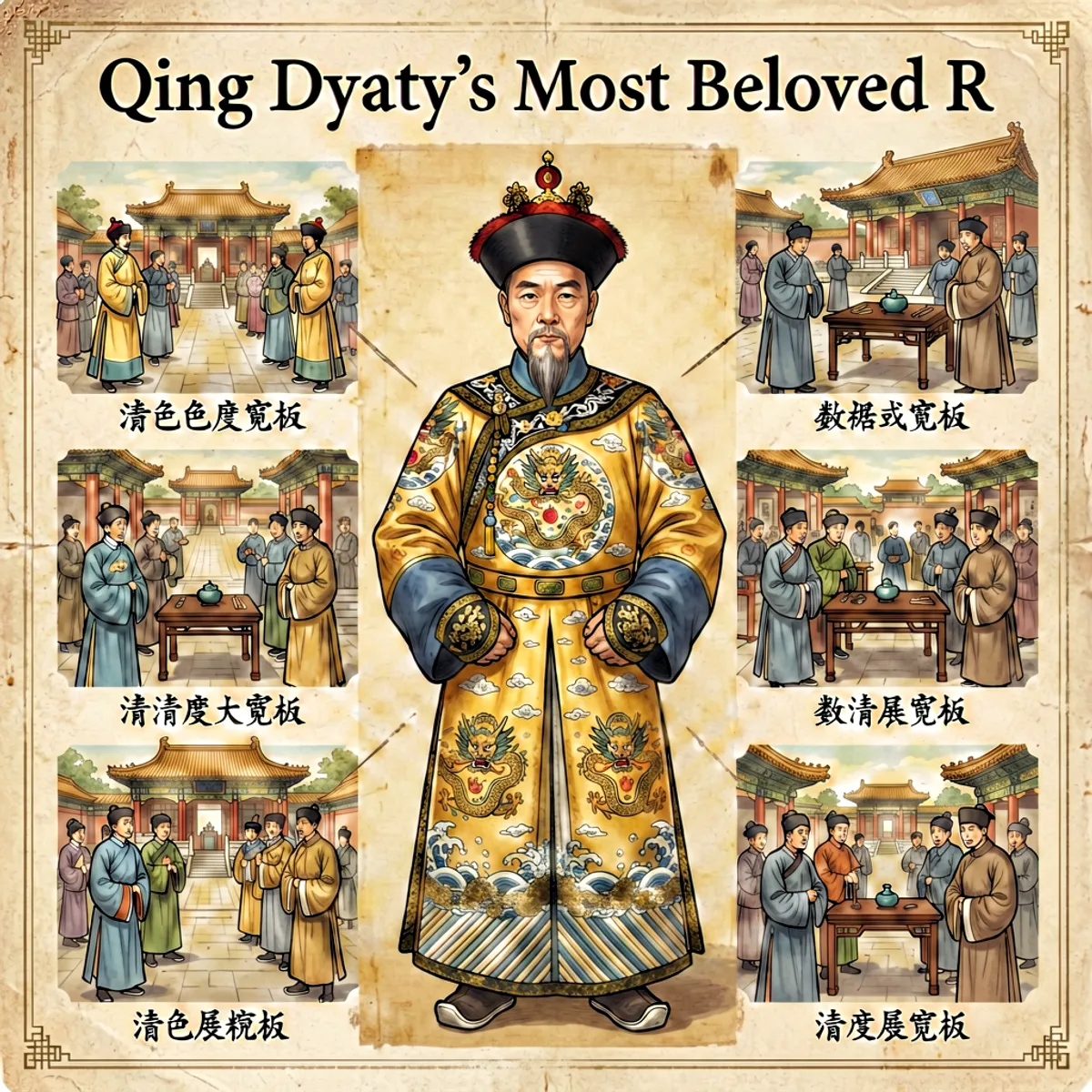
Yongzheng's chief achievement was the radical reform of the central administration and fiscal system. He systematically attacked the corruption and inefficiency that had crept into the system. His most famous reform was the "land and poll tax" (摊丁入亩) consolidation, which simplified tax collection and shifted the burden from the individual to land holdings, reducing the incentive for underreporting. He also fiercely promoted the "Grand Council" (军机处) from a temporary wartime body into the empire's core policy-making engine, centralizing decision-making directly under his control.
His methods were harsh. He used an extensive network of secret reports and informants to monitor officials, creating a climate of fear. His edicts were sharp, personal, and often sarcastic.
To favour Yongzheng is to favour effectiveness over popularity. It is to see the value in the stern, demanding boss who cleans up a bloated operation. His reign was short and intense, focused on shoring up the foundations his father had built.
Without his fiscal tightening and administrative centralization, his son's long, culturally lavish reign might have ended in fiscal crisis much sooner.
The Manchu Ethos vs. Han Comfort
Yongzheng also vigorously promoted Manchu martial values and linguistic purity. He insisted on Manchu language instruction for banner nobles and emphasized archery and horsemanship. This was a direct counterpoint to the sinicization trends of his father's reign.
His treatise, "On the Five Ways to Be a Ruler", argued for a stern, law-based approach, contrasting with the more Confucian, moral-based rule of Kangxi. For those who see the Qing's later military weakness as rooted in early abandonment of Manchu strengths, Yongzheng is the last true Manchu emperor in spirit. His favourite appeal lies in this conscious, sometimes brutal, preservation of a ruling ethnic identity within a vast empire.
Qianlong: The Peak and Its Perils
The Qianlong Emperor (r. 1735-1796) presided over the territorial and cultural apex of the Qing dynasty. His reign was long, prosperous on the surface, and prodigiously cultured.
He is a giant of history, but a deeply controversial one. His favourite status is common, but so is the critique that his reign planted the seeds of later decline. Choosing Qianlong means embracing a figure of immense achievement and staggering complacency, a ruler who presided over a golden age while simultaneously blinding himself to the empire's mounting structural problems.
The Cultural Connoisseur and Collector
Qianlong's personal passion was art and literature. He was an indefatigable collector, amassing what became the imperial collection of over 40,000 paintings and calligraphy works. His seals and poems added layers to artworks he collected.
He commissioned the "Complete Library of the Four Treasuries" (四库全书), the largest collection of books ever assembled in China, though it was also a tool for literary inquisition, suppressing texts deemed hostile to the Qing. His cultural patronage was immense, but it served a dual purpose: glorifying his reign and enforcing orthodoxy.
His architectural legacy is also vast, from the expansion of the Summer Palace (Yiheyuan) to the construction of the Chengde Mountain Resort. These projects showcased wealth and power but strained the treasury. His ten southern tours matched and exceeded his grandfather's, each more lavish than the last.
The favourite Qianlong is the cultured aesthete, the emperor who saw himself as the guardian and pinnacle of Chinese civilization. His self-image as a universal monarch was complete.
The Complacent Autocrat of a Closed Empire
The darker side of Qianlong's reign is his rigid conservatism and failure to engage with the changing world. His later years were marked by extreme suspicion of "barbarian" influences. The "Ten Great Campaigns" expanded Qing territory into Xinjiang and Tibet, but they were costly and of dubious long-term strategic value.
More critically, he rejected British diplomatic overtures, most famously Lord Macartney's embassy in 1793, insisting on the ritual kowtow and viewing European goods as trivial. His famous dismissal of European technology as "of no use" encapsulates the turning point.
His trust in the corrupt favourite Heshen in his old age drained the treasury. By the time he abdicated in 1796 (to avoid out-reigning his grandfather), the empire was already showing severe signs of strain: population pressure, White Lotus rebellion brewing, and a bureaucracy grown sclerotic. To choose Qianlong as a favourite is often to focus on the dazzling cultural peak, perhaps consciously or unconsciously downplaying the ominous fiscal and intellectual stagnation that closed his reign. He is the beautiful, gilded surface of a cracking porcelain.
The Early 19th Century: Crisis and Stubbornness
The reigns following Qianlong—Jiaqing, Daoguang, and Xianfeng—form a grim trilogy of mounting internal rebellion and unprecedented foreign pressure. The Qing state was severely tested. Favourites from this period are rare, as the narrative is largely one of struggle, misjudgment, and tragedy.
Yet, within this downward trajectory, certain figures emerge not as successful rulers, but as symbols of painful, often flawed, adaptation. Their favour comes from a sense of tragic dignity or a belated, insufficient recognition of the need for change.
Jiaqing: The Attempted Corrective
The Jiaqing Emperor (r. 1796-1820) inherited the monstrous corruption of Heshen. His first major act was the arrest and forced suicide of Heshen, a move wildly popular.
He presented himself as a frugal, corrective force. He attempted to crack down on bureaucracy and silver outflow. His favourite appeal is minimal but specific: he tried.
He recognized the problems. But, his efforts were half-hearted and inconsistent. He lacked the iron will of Yongzheng or the political skill to overcome entrenched interests.
The White Lotus Rebellion (1796-1804) raged throughout his reign, a massive, costly peasant uprising that drained the treasury and exposed the empire's vulnerability. Jiaqing is the "almost" emperor—the one who saw the cliff but couldn't steer the ship clear.
Daoguang: The Emperor of the Opium Catastrophe
The Daoguang Emperor (r. 1820-1850) is indelibly linked to the Opium War (1839-1842). His reign is a study in personal frugality clashing with national crisis.
He was personally austere, wearing patched robes, but this did not translate into effective statecraft. His approach to the opium problem wavered between suppression and legalization, ultimately empowering the hardline official Lin Zexu whose actions in Canton triggered the war. Daoguang's famous quote upon hearing of the British naval advance—"I have labored for the empire for twenty years, and this is the result!"—epitomizes a ruler utterly unprepared for the nature of the challenge.
His favourite status, if any, is a morbid one. He represents the tragic, bewildered Confucian ruler facing an incomprehensible new world. He is a man trapped by tradition and protocol, unable to grasp the industrial and imperial logic of the West.
His personal distress is palpable in the archives. To favour Daoguang is to favour the pathos of a system in shock, a ruler who symbolizes the end of the old China's sense of cosmic centrality. The Treaty of Nanking (1842), signed in his name, was a national humiliation he never truly comprehended.
Xianfeng: Flight and Fatalism
The Xianfeng Emperor (r. 1850-1861) fled the capital during the Second Opium War. When Anglo-French forces burned the Old Summer Palace (Yuanmingyuan) in 1860, he was in his "refuge" at the Rehe (Jehol) hunting park.
His flight and subsequent death there a year later are the ultimate symbols of Qing collapse. His reign was a cascade of disasters: the Taiping Heavenly Kingdom rebellion nearly toppled the dynasty, the Nian Rebellion raged in the north, and foreign powers carved out spheres of influence. He was a sickly, despairing man, reportedly saying, "The dynasty is finished." His favourite appeal is non-existent for most; he is a cautionary tale of complete failure.
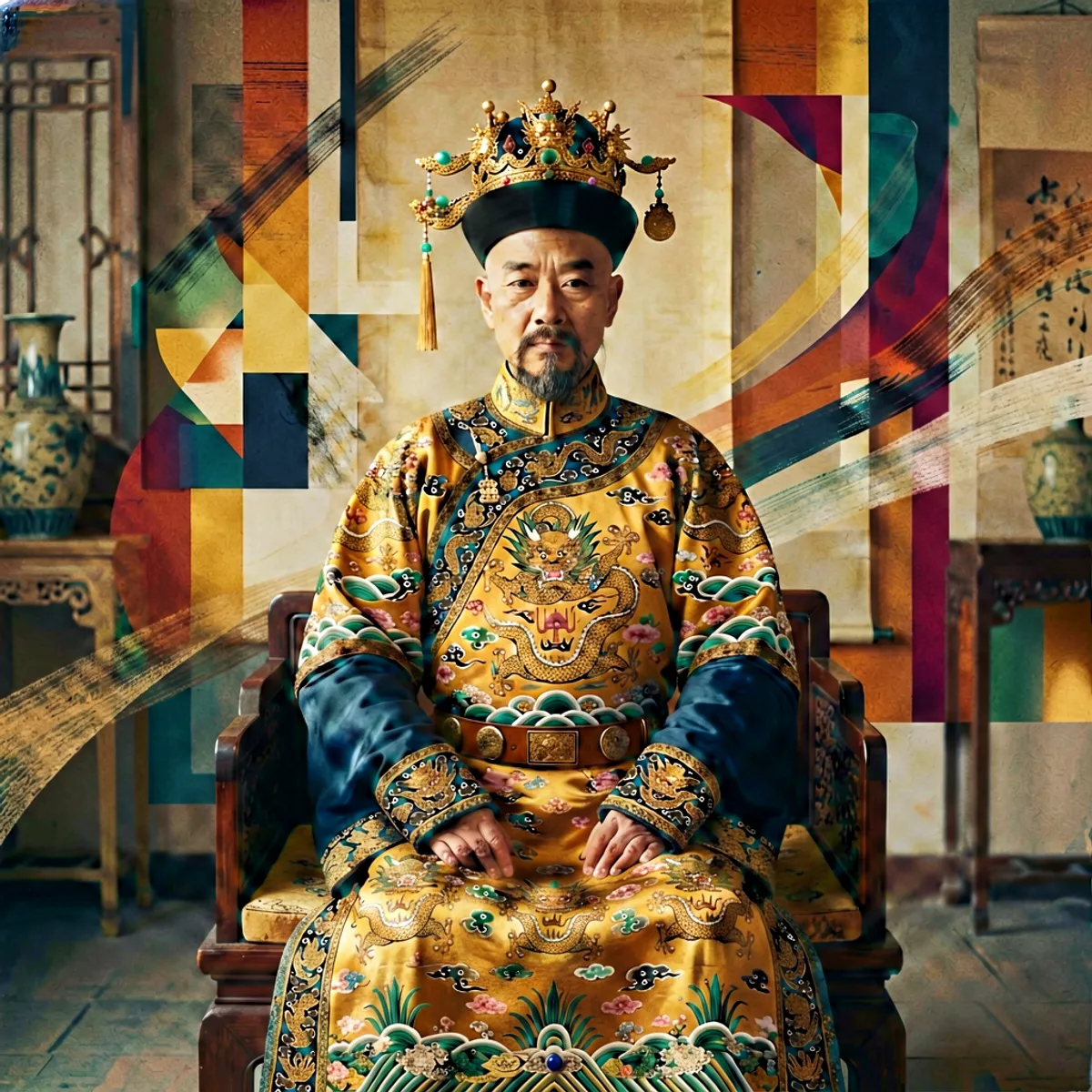
He represents the point where the Qing court's authority and legitimacy shattered completely, both internally and externally.
The Tongzhi Restoration and the "Self-Strengthening" Era
The period after Xianfeng's death saw a remarkable, if ultimately failed, attempt at resuscitation. The Tongzhi Emperor (r. 1861-1875) was a child, so power lay with a regency council headed by his mother, the Empress Dowager Cixi, and his aunt, the Empress Dowager Ci'an.
This era, often called the Tongzhi Restoration, was defined by the "Self-Strengthening Movement" (洋务运动). The goal was "Chinese learning for the essence, Western learning for practical use." The favourite figures here are not the powerless Tongzhi emperor, but the officials who spearheaded this pragmatic, limited modernization.
Prince Gong and the Pioneers of Industry
The architect of early Self-Strengthening was Prince Gong (Yixin), the younger brother of Xianfeng. As head of the Zongli Yamen (the new foreign affairs office), he was the leading advocate for engaging with the West on its own terms. He supported the establishment of modern arsenals, shipyards, and schools. Figures like Li Hongzhang, Zeng Guofan, and Zuo Zongtang became famous for using Western technology to suppress the Taiping and later to build industrial bases like the Jiangnan Arsenal and the Fuzhou Navy Yard.
Favouriting these men means favouring pragmatism over ideology. They were conservative Confucians at heart, yet they recognized the technological gap. Their slogan was "Learn the superior technology of the barbarians to defeat the barbarians." They laid the foundations of China's modern industrial base and a new class of Western-educated officials.
Their tragedy was their inability to reform the political and social systems that underpinned the state. They strengthened the Qing's muscles but ignored the failing organs. Yet, their determined, hands-on approach in the face of overwhelming odds makes them compelling figures of adaptive resilience.
The Late Qing Reformer: The Guangxu Emperor
The Guangxu Emperor (r. 1875-1908) presents the most poignant "what if" of the late Qing. He was emperor in name for 34 years, but for all but the last few, he was utterly dominated by Empress Dowager Cixi. His favourite status is tied to his role as the would-be reformer, the young emperor who briefly broke free to pursue a radical, top-down transformation of the state, only to be crushed by the conservative establishment.
The Student Emperor and the Hundred Days' Reform
Guangxu was raised under Cixi's strict tutelage but was intellectually curious, reading widely on Western history and science. After the humiliation of the First Sino-Japanese War (1894-1895), he became convinced of the need for sweeping reform. In the spring of 1898, with the support of reformers like Kang Youwei and Liang Qichao, he launched the "Hundred Days' Reform". This was an astonishingly ambitious program: to reorganize the education system, streamline the government, modernize the military, and encourage industry and commerce, all based on constitutional models.
The reforms were too fast, too sweeping, and threatened too many entrenched interests, from conservative Manchu nobles to the scholar-gentry bureaucracy. Cixi, fearing loss of power and potential chaos, staged a coup in September 1898, placing the emperor under house arrest. Guangxu was never seen in public again, a virtual prisoner until his death.
To favour Guangxu is to favour the brilliant, tragic reformer. It is to believe that constitutional monarchy was a viable path for China and that his vision, had it been allowed, might have averted the 1911 revolution. His personal story—from hopeful reformer to caged idealist—is one of the most moving in modern Chinese history.
The Power Behind the Throne: Empress Dowager Cixi
No discussion of Qing favourites can ignore Empress Dowager Cixi (1835-1908). She is the most powerful woman in Chinese imperial history, ruling as regent for two emperors (Tongzhi and Guangxu) for nearly half a century. She is a figure of monumental contradiction: she presided over the dynasty's terminal decline yet made repeated, often conservative, attempts to save it.
Her favourite status is fiercely debated. For some, she is the scheming conservative who murdered reform. For others, she is the pragmatic, resilient survivor who kept a crumbling dynasty intact for decades.
The Conservative Survivor or Pragmatic Modernizer?
Cixi's early actions were ruthless. She outmaneuvered rival factions in the Xinyou Coup of 1861 to become regent. She backed the Self-Strengthening Movement, seeing its value for military and industrial strength, but drew the line at political reform.
She supported the crushing of the Hundred Days' Reform and the execution of several leading reformers. Her actions during the Boxer Rebellion (1900) were disastrous; she initially supported the anti-foreign, anti-Christian Boxers, leading to the Eight-Nation Alliance invasion and the sack of Beijing.
But, after this cataclysm, she performed a stunning about-face. In her final years (1901-1908), she became the champion of the "New Policies" (Xinzheng). These reforms went far beyond the Self-Strengthening era: they planned for constitutional government, overhauled the education and legal systems, and began preparing for a parliament.
She sent young Manchus to study abroad. This late conversion suggests a ruler who, when faced with existential threat, could adapt. To favour Cixi is to favour the ultimate political pragmatist.
It is to see a woman who used every tool—conservatism, then reform—to preserve the Qing throne. Her favour comes from her sheer, indomitable will and her complex, evolving response to an impossible situation.
The Puppet and the Revolutionary: Puyi
The last Qing emperor, Puyi (r. 1908-1912), is the ultimate symbol of a dynasty's ghost. He ascended the throne at age two, reigned as a child puppet during the failed 1911 Revolution, and was forced to abdicate in 1912.
His life later included a bizarre stint as the puppet ruler of the Japanese puppet state of Manchukuo in the 1930s. He is not a favourite in the sense of a successful or admirable ruler. Yet, his life story is one of the most fascinating and tragic of the entire dynasty.
The Last Emperor's Strange Journey
Puyi's childhood in the Forbidden City was one of bizarre privilege and extreme isolation, surrounded by eunuchs and rigid protocol. His life was a chain of traumatic separations: from his family, from his throne, from his home. His brief, coerced return to power in Manchukuo was a final humiliation. His later "re-education" in a Chinese prison after World War II and his eventual life as an ordinary gardener in Beijing is a story of profound personal transformation.
Favouriting Puyi is favouring the human story within the historical epoch. He is the living embodiment of the Qing's end. His autobiography, "From Emperor to Citizen", is a remarkable document of psychological survival.
He represents the complete inversion of the imperial mandate—from Son of Heaven to commoner. His favour is not for his rule, which was nonexistent, but for the extraordinary, often painful, journey of a man who was a living relic. He connects the abstract end of empire to a specific, relatable human experience of loss and adaptation.
Conclusion: Why We Choose Our Favourites
The Qing dynasty offers a vast gallery of rulers, from the formidable founders to the tragic last emperor. Our personal favourites from this list say as much about us as about them. They reveal what we value in leadership: the visionary state-builder (Nurhaci), the scholarly stabilizer (Kangxi), the relentless reformer (Yongzheng), the cultured autocrat (Qianlong), the pragmatic survivor (Cixi), or the tragic idealist (Guangxu).
The thread running through all these choices is a move away from simplistic "great man" history. We are drawn to the complexities, the contradictions, and the human stories within the imperial machinery. The Qing, as the final dynasty, forces us to confront the end of an era. Our favourite rulers from this period often sit at the inflection points: the one who consolidated power, the one who reached the peak, the one who saw the need for change but was crushed, or the one who tried to adapt when all seemed lost.
This series, and this final Qing discussion, demonstrates that history is not just a record of events. It is a conversation across time. The act of choosing a favourite is an act of engagement, of finding a point of resonance.
It turns historical figures from distant names into subjects of personal reflection. The Qing dynasty, with its dramatic arc from conquest to collapse, provides a powerful canvas for this deeply human exercise. The favourites we select are our way of connecting with the immense, turbulent, and endlessly fascinating story of China's last empire.
Responses • 0
0/2000
ID: 1326
Chris
Offline
4 hr
Visited
From
Bakersfield, United States
Send Message