Ningxia's Solar Triumph on Coal Scars
AI Learn Chinese
4 hr • 0 read
China's 4millionkW PV project on coal subsidence in Ningxia operational. Powers 7.2M households, saves 3.24M tons coal yearly. Key to 6millionkW solar base.
Introduction: From Scars to Power
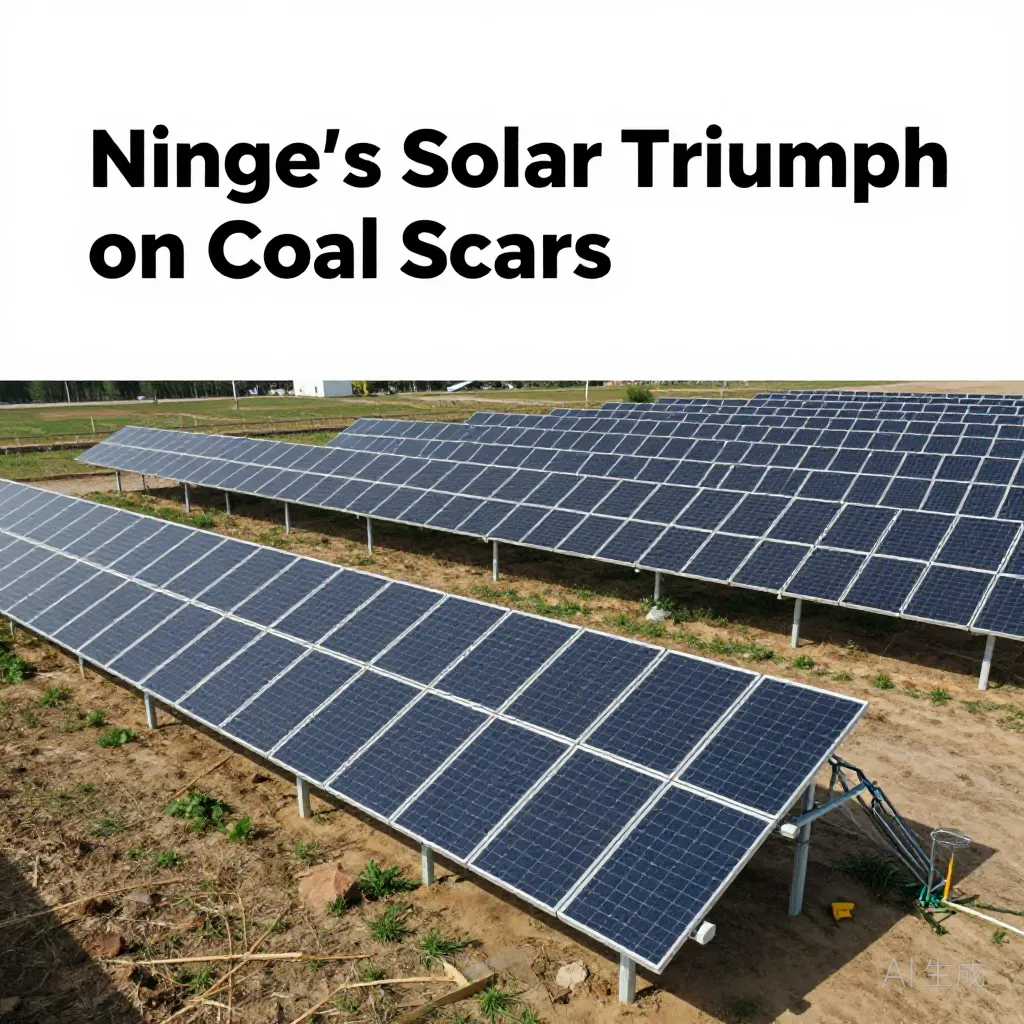
The landscape around Lingwu, in northwest China's Ningxia Hui Autonomous Region, tells a story of profound transformation. For decades, this area bore the physical scars of intensive coal mining. The ground sank unpredictably, creating a hazardous, unusable terrain.
This coal subsidence was a lasting environmental and economic burden. Today, a new chapter is being written on that same damaged land. A vast sea of blue photovoltaic panels now stretches across the horizon.
This is not just another solar farm; it is China's largest single PV project built on a coal mining subsidence area. The 4-million-kilowatt facility became operational in 2026. It represents a powerful model of ecological restoration through clean energy.
The project completes a monumental 6-million-kilowatt solar base in the region. This base can meet the annual electricity demand of roughly 7.2 million households. It also saves about 3.24 million tons of standard coal each year.
The Lingwu project is a flagship for repurposing degraded industrial land. It merges environmental remediation with national energy security goals. This article explores the technical scale, regional impact, and symbolic weight of this achievement.
The Lingwu Landscape: A History of Subsidence
To understand the project's significance, one must first understand the problem it addresses. Coal subsidence is a direct result of underground mining. When coal is extracted, the overlying rock and soil collapse into the void.
This causes the surface to sink, often unevenly. In Lingwu, this process created a pockmarked, unstable terrain. It rendered large areas unsuitable for agriculture or construction.
The land was effectively written off as damaged. This presented a dual challenge. First, there was the ongoing environmental degradation.
Second, there was the economic loss of potentially productive land. The subsidence areas also posed safety risks, with sudden ground collapses possible. For local communities, it was a constant reminder of the mining industry's legacy.
They saw a landscape that could not support new development. This context makes the solar project's location a deliberate statement. It turns a liability into a national asset.
The project does not just generate power; it heals the land in a functional way. The panels are mounted on specially designed foundations. These accommodate potential ground movement.
This engineering solution allows productive use of land that was otherwise abandoned. It is a practical response to a legacy problem.
Photovoltaic Technology on Unstable Ground
Building a photovoltaic power station on a coal subsidence area is an engineering feat. Standard solar farm construction assumes stable foundations. Here, the ground may shift over time.
The project's designers had to account for this. They used specialized mounting systems. These structures allow for differential settlement.
This means if one part of the ground sinks more than another, the panels can adjust. This prevents structural stress and panel damage. The technology involves pile-driven foundations with flexible couplings.
These are driven deep enough to reach stable strata where possible. In areas of active movement, tracking systems with independent rows are used. This ensures each panel array remains optimally angled.
The maintenance strategy also accounts for the terrain. Regular inspections check for ground movement and structural integrity. The PV modules themselves are robust, with reinforced frames.
The entire system is a balance of cost, durability, and adaptability. This approach sets a precedent for future projects on degraded land. It proves that subsidence areas need not be wastelands forever.
The engineering solutions developed in Ningxia can be replicated elsewhere. This is particularly relevant for China's vast former mining regions.
The Scale of Ambition: Project Specifications
The sheer scale of the Lingwu project is staggering. It covers approximately 8,000 hectares of land. To visualize this, it is equivalent to about 11,200 soccer fields.
The installed capacity is 4 million kilowatts (kW), or 4 gigawatts (GW). This makes it the largest single PV project in the world built on a coal subsidence zone. The annual power generation is projected to exceed 7 billion kilowatt-hours (kWh).
This is clean electricity fed directly into the grid. The project employs millions of solar panels. Exact numbers are proprietary, but based on standard 500-watt panels, the count would be around 8 million units.
The project is a key component of a larger 6-million-kW solar base. This base aggregates several large-scale farms in the Lingwu and Wuzhong areas. The entire base occupies over 20,000 hectares.
Its combined output will be over 10.5 billion kWh annually. The infrastructure includes a dedicated 220-kilovolt substation. It also features extensive internal road networks and drainage systems.
These are critical for maintenance and managing the semi-arid climate's occasional heavy rains. The project's construction created thousands of temporary jobs. It now provides long-term operational and maintenance positions for the region.
Land Use and Capacity
The 8,000-hectare footprint is a mix of severely and moderately subsided land. Very little of it was usable before the project. The panel density is optimized for the region's solar irradiance.
Ningxia receives high levels of sunlight, with over 3,000 hours of annual sunshine. This makes it ideal for solar power generation. The project's capacity factor—the ratio of actual output to theoretical maximum—is estimated at 20-22%.
This is typical for large-scale solar in northern China. The land is not entirely covered by panels. Spacing between rows allows for access and reduces shading.
Some areas are left as natural buffer zones. The project integrates with the existing topography. It does not attempt to completely flatten the land.
This minimizes earthworks and preserves some of the subsidence's natural character. The land use efficiency is a key metric. It demonstrates how much clean energy can be produced per hectare of degraded land.
This model offers a pathway for land-use planning in post-industrial zones.
Energy Output in Context
The 7+ billion kWh of annual electricity is a substantial figure. It can power approximately 7.2 million urban households for a year. This is based on an average Chinese household consumption of about 1,000 kWh annually.
Alternatively, it could power a small nation. For comparison, the total annual electricity consumption of the country of Lebanon is around 8 billion kWh. The output is clean, with zero operational greenhouse gas emissions.
Over the project's 25-year lifespan, this avoids the burning of tens of millions of tons of coal. The energy is injected into the Northwest China Grid. It supports industrial and residential demand in Ningxia and beyond.
The intermittency of solar power is managed at the grid level. Ningxia has significant wind resources and some hydropower. This mix helps balance the solar feed.
The project also includes limited energy storage pilots. These are battery systems that store daytime surplus for evening peak demand. While not solving full-scale storage, they provide grid stabilization services.
The predictable, seasonal output pattern aligns well with summer air conditioning demand.
Completing the 6-Million-kW Solar Base
The Lingwu 4-million-kW project is the final, largest piece of a regional puzzle. It completes the 6-million-kW coal subsidence solar base in Ningxia. This base is a coordinated development across multiple sites.
It was planned as a single strategic initiative. The other two main components are the 1.2-million-kW and 0.8-million-kW farms in adjacent areas. Together, they form a contiguous or near-contiguous generation zone.
This scale allows for shared infrastructure. Common grid connection points and substations reduce overall costs. The regional approach also streamlines project approval and land coordination.
The 6-million-kW figure is a benchmark. It is one of the world's largest concentrations of solar power on degraded mining land. The base symbolizes Ningxia's ambition to become a clean energy hub.
It leverages the region's natural advantage—abundant sunshine—to overcome its environmental disadvantage—mining damage. The completion of the base in 2026 marks a milestone. It transitions from a multi-phase construction project to a fully operational power complex.
This provides stable, long-term clean energy supply to the grid. It also serves as a proof-of-concept for similar regional bases in other provinces.
Environmental and Social Impact Metrics
The project's benefits are quantified in concrete environmental terms. The most cited figure is the annual saving of about 3.24 million tons of standard coal. This is a direct displacement.
For every kWh of solar power generated, one less kWh is produced by coal-fired plants. Assuming an average coal plant efficiency, this coal saving translates to a reduction of roughly 2.8 million tons of carbon dioxide equivalent. It also avoids other pollutants like sulfur dioxide and nitrogen oxides.
These have severe local health impacts. The air quality improvement is significant for the region. Ningxia, like much of northern China, suffers from winter haze.
Reducing coal burning for power helps mitigate this. The project also conserves water. Coal mining and coal-fired power are extremely water-intensive.
Solar PV uses minimal water for cleaning panels. In arid Ningxia, this water saving is a critical co-benefit. Socially, the project provides long-term jobs in operations and maintenance.
These are skilled positions that offer stable employment in a region where mining jobs are declining. The transformed landscape also has a psychological impact. It replaces a symbol of depletion with one of renewal.
This can boost local pride and attract new industries focused on green technology.
Ningxia's Broader Energy Strategy
The 6-million-kW solar base is not an isolated project. It is central to Ningxia's provincial energy strategy. The region aims to become a "West-East Power Transmission" champion.
It sends clean electricity to energy-hungry coastal provinces via ultra-high-voltage lines. This aligns with national policies to optimize energy distribution. Ningxia has vast, sparsely populated land ideal for large-scale renewables.
The government has designated specific zones for renewable development. The coal subsidence areas are a priority. The strategy involves three pillars: wind, solar, and photovoltaic.
The province also has significant wind power potential, especially in the northern deserts. The strategy seeks to create a balanced renewable portfolio. Solar provides daytime peak output, wind often peaks at night.
This complementary nature aids grid stability. The provincial government offers incentives for renewable projects. These include streamlined approvals and land-use priority.
The goal is to peak carbon emissions before 2030 and achieve carbon neutrality by 2060. Ningxia's abundant renewables are key to meeting these targets. The Lingwu project demonstrates how environmental restoration and energy development can be synchronized.
It is a model for other western provinces with similar mining legacies.
Technological and Logistical Challenges
Implementing this project faced numerous hurdles. The subsidence issue was the primary technical challenge. Engineering teams conducted extensive geological surveys.
They mapped active and potential subsidence zones. This informed the foundation design for each section of the farm. The logistics of transporting millions of solar panels to a remote area were immense.
A dedicated logistics corridor was established from the nearest railhead. This involved upgrading local roads. The construction season in Ningxia is short due to harsh winters.
This compressed the timeline for foundation work and panel installation. Workforce mobilization in a sparsely populated area required creating temporary camps. Supply chain resilience was tested, especially during global disruptions in 2023-2024.
The project team had to secure long lead-time components like inverters and transformers. Grid integration was another major task. The existing grid infrastructure needed reinforcement to handle the massive injection of power from a single point.
A new 220kV substation was built, with plans for future expansion. Water for panel cleaning is sourced from deep wells and recycled process water, a critical issue in the arid climate. Overcoming these challenges required close coordination between the developer, local government, and grid operator.
Economic Ripple Effects Beyond Energy
The project's economic impact extends far beyond the sale of electricity. During construction, it required thousands of workers. This injected money into the local economy through wages and services.
Local businesses provided catering, accommodation, and transportation. The long-term operational phase employs several hundred permanent staff. These are skilled technicians, electricians, and administrative personnel.
The project also stimulates local manufacturing. While panels were sourced nationally, some structural components and mounting systems were procured regionally. This creates a secondary market.
The presence of a major power plant can attract energy-intensive industries. These might include data centers or green hydrogen production, which require stable, cheap power. The coal subsidence remediation aspect may also unlock surrounding land.
As the ground stabilizes under the panel arrays, adjacent areas might become suitable for other uses. There is potential for agrivoltaics—combining solar with agriculture—in less affected zones. This could provide shade for crops and additional farmer income.
The project enhances Ningxia's reputation as a renewable energy leader. This can attract further investment and expertise to the region. The tax revenue from the project funds local public services.
It provides a sustainable fiscal base for areas previously dependent on volatile coal royalties.
Symbolism and National Policy Alignment
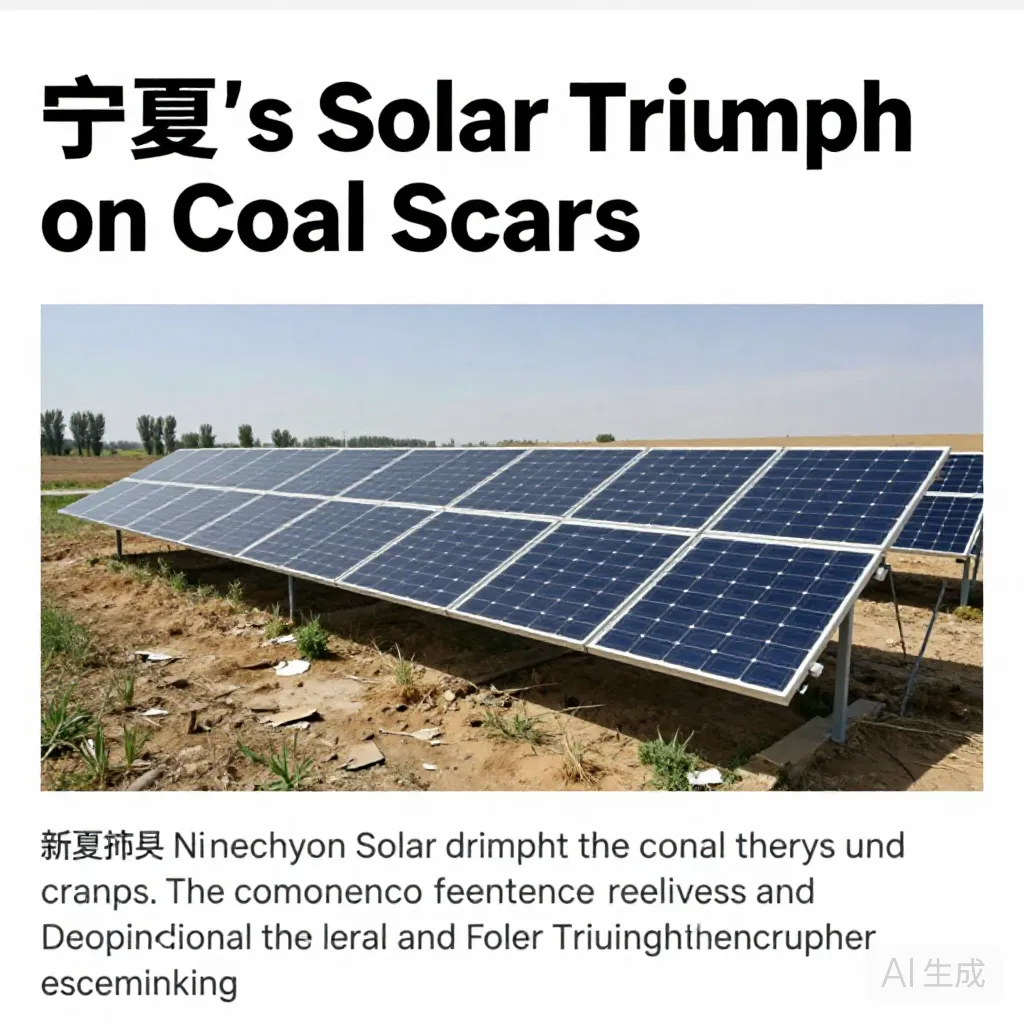
The Lingwu project carries significant symbolic weight within China's climate narrative. It embodies the concept of turning "burden into treasure." The government frequently promotes the idea of converting subsidence areas and other degraded lands into productive assets. This project is a headline example.
It directly supports the national goal of reaching a carbon peak before 2030. The saved coal and reduced emissions are tangible contributions. The project is also a showcase for China's photovoltaic manufacturing dominance.
The vast majority of the world's solar panels are made in China. Deploying them at this scale at home demonstrates confidence in the technology. It also provides a massive domestic market for Chinese manufacturers.
This helps sustain their production scale and cost advantages. From a policy perspective, the project integrates several key directives: ecological civilization, rural revitalization, and energy security. It provides jobs in a region where traditional mining employment is declining.
This aids social stability. The project's success is likely to encourage similar initiatives in Shanxi, Inner Mongolia, and other coal-producing provinces. It provides a replicable template for land use, engineering, and grid connection.
The government's media coverage of the project frames it as a win-win for environment and economy.
Future Prospects and Scaling the Model
The success of the 6-million-kW base in Ningxia points to a scalable model. a few other provinces have identified similar coal subsidence zones. These include large areas in neighboring Shaanxi and far-flung Heilongjiang.
The technical and regulatory frameworks developed in Ningxia can be adapted. Future projects might incorporate more advanced energy storage. The cost of battery storage is falling rapidly.
Next-generation solar farms could include multi-hour storage to better match demand peaks. Agrivoltaic combinations could become standard, producing food and power simultaneously. This would maximize land productivity.
The project also highlights the need for enhanced grid flexibility. As more intermittent renewables come online, grid operators need better forecasting and dispatch tools. Ningxia's experience will inform national grid code updates.
Internationally, the model is relevant for countries with large-scale mining legacies, such as the United States, Australia, and South Africa. The engineering solutions for building on unstable ground have global applicability. The project may also spur research into land rehabilitation metrics.
How do we measure the "restoration value" of a site covered in solar panels versus a naturally recovered one? This could influence future environmental impact assessments.
Replication Challenges and Mitigation Strategies
The Ningxia model’s success does not guarantee effortless replication across China’s other mining regions. Each coal subsidence zone presents unique geological, climatic, and socio-economic conditions. The engineering solutions proven in Lingwu require adaptation to different soil compositions and subsidence rates.
For instance, areas with active underground fires or severe chemical contamination from mining require additional site remediation before any photovoltaic installation can begin. This increases both cost and complexity.
Regulatory frameworks also vary by province. Land-use rights for degraded mining land can be legally ambiguous, often involving multiple stakeholders—former mining companies, local collectives, and state asset managers. Clarifying ownership and establishing fair compensation mechanisms is a prerequisite for project bankability. Some provinces are experimenting with "land bank" systems, where the government consolidates degraded parcels and leases them to renewable developers, streamlining the process.
Grid integration poses another significant hurdle. While Ningxia benefits from being part of the "West-East Power Transmission" corridor, other regions may lack sufficient transmission capacity. Injecting gigawatt-scale solar power into weaker grids risks curtailment, where clean energy is wasted because the grid cannot absorb it. This necessitates parallel investment in grid reinforcement and smart grid technologies to manage the variability of solar power.
Policy Innovations and Financial Mechanisms
National policy is evolving to support widespread adoption. The National Development and Reform Commission is drafting a specific "Degraded Land Renewable Energy" guideline, slated for finalization in late 2026. This document will standardize environmental impact assessments for such projects, potentially fast-tracking approvals. It may also introduce a premium feed-in tariff for projects on subsidence areas, improving their financial viability compared to projects on pristine land.
Innovative financing is emerging. Green bonds and climate funds are being tailored to include "ecological restoration co-benefits" as a core metric. This allows projects like Lingwu to access lower-cost capital by quantifying not just energy output but also avoided environmental damage and social uplift. Some provincial development banks are offering concessional loans specifically for coal subsidence remediation paired with renewable energy.
In addition, the concept of "renewable zones" is gaining traction. Provincial governments are mapping all degraded industrial lands—not just mining subsidence but also closed factories and contaminated sites—to create designated areas for large-scale renewables. This spatial planning prevents conflict with agricultural or ecological preservation priorities and provides developers with pre-vetted, low-risk sites.
Social Transition and Community Ownership Models
The social dimension of replication is critical. In Ningwu, the project created jobs, but long-term community integration requires more. Pilot programs are testing "community equity" models, where local residents receive a small percentage of project revenue or shares in the operating company. This aligns community interests with the project's success and provides a direct sting from the transformed landscape.
Retraining former miners is a focused initiative. The Ningxia government partnered with technical vocational schools to create a "Solar Technician" certification program. Graduates are prioritized for operations and maintenance jobs at the new farms.
This model addresses the decline of the coal sector by providing a clear career pathway within the same regional energy economy. Such programs are being scaled up in Shanxi and Inner Mongolia.
There is also a deliberate effort to avoid "energy colonialism," where outside corporations develop projects with minimal local benefit. Policies now require a certain percentage of procurement from local SMEs and mandate community consultation during the planning phase. This ensures the project addresses local needs, such as funding for school upgrades or clinic improvements, from the tax revenues generated.
Technological Evolution for Harsh Environments
The next generation of projects on subsidence areas will incorporate more advanced technologies. Perovskite-silicon tandem solar cells, with higher efficiency in low-light and high-temperature conditions, are being tested in Ningxia's pilot zones. These could boost the capacity factor beyond the current 20-22%, making marginal lands even more productive.
Agrivoltaics is moving from small-scale trials to commercial integration on the less severely subsided fringes of solar bases. In Ningxia, experiments with drought-resistant forage crops and goji berries under elevated panel arrays show promise. This dual-use approach maximizes land productivity, provides shade for crops, and reduces water evaporation from the soil. It directly addresses food security concerns while generating power.
Advanced monitoring systems are also evolving. Satellite-based InSAR (Interferometric Synthetic Aperture Radar) is being deployed to continuously monitor ground movement across vast solar farms. This data feeds into predictive maintenance algorithms, alerting engineers to potential structural stresses before failures occur. Such systems turn the challenge of subsidence into a managed variable rather than a showstopper.
Global Relevance and Knowledge Export
The Ningxia model has attracted significant international interest. Delegations from countries with large mining legacies—such as Australia's Queensland, South Africa's Mpumalanga, and the US Appalachia—have visited to study the approach. The core insight is the deliberate pairing of environmental remediation with utility-scale energy development, funded through national infrastructure priorities.
Chinese engineering firms and PV manufacturers are now marketing a "turnkey degraded land solar solution" globally. This package includes geological assessment, adaptive mounting systems, and grid integration expertise. It represents a new export category beyond just panels. But, cultural and regulatory differences mean the model must be localized, not simply copied.
The project also informs global discussions on "just transition." It demonstrates a pathway for regions economically dependent on fossil fuels to pivot toward clean energy while addressing historical environmental damage. This narrative strengthens China's position in international climate diplomacy, showcasing a domestic success story that aligns with global net-zero goals. The technical standards and policy templates developed here could influence World Bank or UN guidelines for post-industrial land regeneration.
Conclusion: A Beacon of Transformation
The operational 4-million-kilowatt PV project on the coal subsidence lands of Lingwu is more than an energy facility. It is a physical manifesto for a new relationship with the land. It addresses a historical wound—mining-induced ground collapse—with a forward-looking solution.
The project delivers massive amounts of clean electricity, powers millions of homes, and saves millions of tons of coal annually. It completes a regional 6-million-kW solar base that redefines Ningxia's economic and environmental identity. The technical challenges of building on unstable ground were met with innovation.
The project creates jobs, stimulates local industry, and provides a template for similar transformations across China and the world. It aligns perfectly with national goals of carbon peaking and ecological civilization. As the panels continue to generate power for 25 years or more, they will stand as a monument to what is possible.
They turn a scarred landscape into a source of light and power. The true measure of its success will be the replication of this model. It offers a pathway to heal the earth while powering a sustainable future.
The solar farm in Lingwu is not just generating electricity; it is generating hope for a circular, restorative economy.
Responses • 0
0/2000
ID: 1326
Chris
Offline
4 hr
Visited
From
Bakersfield, United States
Send Message