Missile Depletion in the Iran Conflict
AI Learn Chinese
5 hr • 0 read
US longrange precision missile stocks nearly exhausted after fivemonth Iran war, raising readiness concerns and shifting geopolitical leverage.

Introduction: A Stockpile Nearly Spent
The United States has reportedly expended "virtually all" of its inventory of long-range precision-guided missiles during its five-month war with Iran. This assessment, attributed to three sources familiar with U.S. military logistics data, reveals a critical munitions shortfall.
The primary weapons in question are the Army Tactical Missile System (ATACMS) and the Precision Strike Missile (PrSM). These systems, each costing over one million dollars, form the backbone of the Army's deep-strike capability. Their near-total expenditure in a single, protracted conflict against a regional power like Iran has sent profound shockwaves through defense and strategic planning circles.
This situation presents a dual crisis. First, it exposes a severe vulnerability in U.S. conventional deterrence and warfighting readiness for any future contingency.
Second, it fundamentally alters the strategic calculus in the Middle East, handing Iran a significant, if not decisive, form of leverage. The immediate military implication is a drastic reduction in the U.S. Army's ability to conduct extended-range, high-precision strikes from stand-off distances—a capability that has defined modern American warfare.
The long-term geopolitical implication is a shift in the regional balance of power, at least temporarily, as the United States grapples with reconstituting its depleted arsenal.
Understanding the depth of this problem requires examining several interconnected layers. We must first establish why these specific missiles are so vital to U.S. strategy.
Then, we must confront the stark realities of American industrial capacity to replace them. Next, we analyze how this depletion empowers Iran and constrains U.S. options.
Finally, we consider the strategic choices that led to this point and what the U.S. military might look like in the interim years as production slowly rebuilds stockpiles for a potential 2026 horizon.
The Critical Role of Long-Range Precision Strike
The ATACMS and PrSM: Capabilities and Missions
The Army Tactical Missile System (ATACMS) and its successor, the Precision Strike Missile (PrSM), are not merely longer artillery shells. They are sophisticated, satellite-guided weapons designed to engage high-value targets at ranges far beyond traditional tube or rocket artillery. ATACMS, in service since the 1990s, can strike targets up to 300 kilometers away.
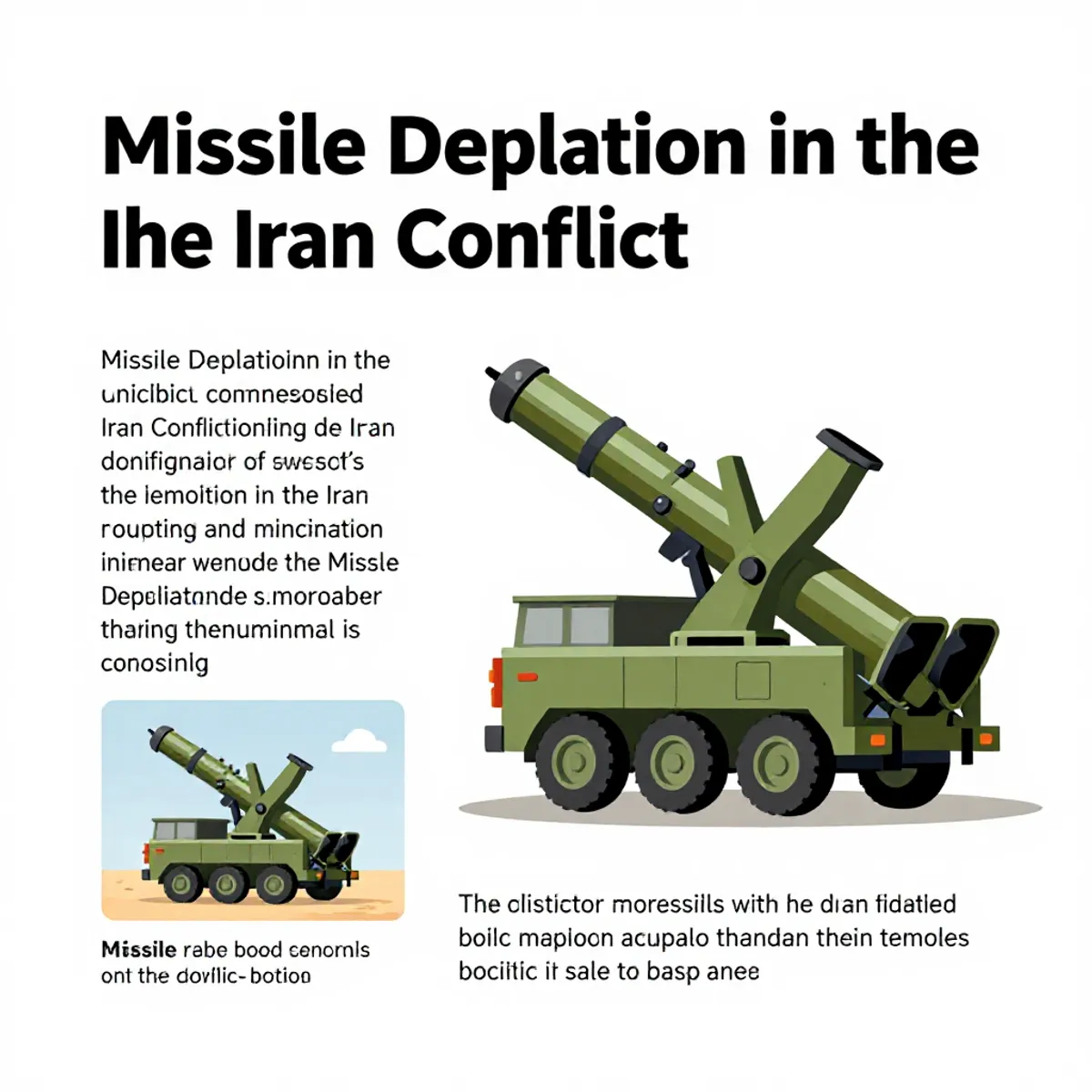
The newer PrSM, currently being fielded, is designed for ranges exceeding 400 kilometers and features improved lethality, network integration, and resistance to jamming. Both are launched from the same family of M270 Multiple Launch Rocket Systems (MLRS) and M142 HIMARS (High Mobility Artillery Rocket System) platforms, which provide the Army with a highly mobile, survivable deep-strike capability.
Their missions are diverse and critical to combined arms warfare. They are used to destroy enemy air defense systems, command and control nodes, supply depots, and critical infrastructure deep behind the front lines. By holding these targets at risk from a distance, ATACMS and PrSM allow friendly forces to operate with reduced threat from counter-battery fire.
They shape the battlefield by paralyzing an adversary's ability to coordinate and sustain operations. In the Ukraine conflict, U.S.-supplied ATACMS provided to Ukrainian forces have been instrumental in striking Russian logistics hubs, aircraft on the ground, and command posts inside Russian territory, demonstrating their potent psychological and physical impact.
The "Safe Distance" and the Cost of Precision
The concept of a "safe distance" is central to their value. These missiles enable commanders to engage targets while keeping their own launch platforms and crews outside the effective range of most enemy artillery and air defenses. This stand-off capability is a force multiplier and a crucial survivability feature.
But, this advantage comes at a premium cost. With a unit cost exceeding one million dollars per missile, they are expensive consumables. In a high-intensity conflict against a peer or near-peer adversary, the expenditure rate would be astronomical.
The five-month Iran war has proven that even against a regional adversary with significant air defense capabilities, the consumption rate can rapidly deplete a carefully accumulated stockpile built over years.
The precision of these weapons is their defining characteristic and their most significant logistical burden. Unlike unguided area-fire artillery, each missile is programmed to hit a specific GPS coordinate. This eliminates the need for massive "shoot-and-scoot" barrages to achieve a single effect, but it also means each shot is a tailored, resource-intensive solution.
The U.S. military has long relied on technological overmatch—the ability to strike accurately from afar to minimize friendly casualties and maximize enemy disruption. The near-total depletion of this toolset against Iran means this cornerstone of American military doctrine has been severely compromised for the foreseeable future.
The Production Dilemma: A Brittle Industrial Base
Legacy Systems and Single-Source Dependence
The exhaustion of ATACMS and PrSM stocks is as much an industrial failure as a military one. The U.S. defense industrial base, optimized for low-rate production of high-tech systems during the post-Cold War era, has struggled to surge output.
For ATACMS, production was historically concentrated at a single facility, with key components sourced from a limited number of subcontractors. When the war with Iran began, the existing production lines were not geared for a major increase in output. The PrSM, intended to eventually replace ATACMS, is itself still in low-rate initial production.
Its production capacity is constrained by the need to perfect its guidance systems and integrate it with newer networks, meaning it could not serve as a ready substitute to replenish ATACMS losses in real time.
This single-source dependence creates a single point of failure. A bottleneck at one subcontractor for a single guidance component can throttle the entire production chain. The five-month war consumed stockpiles that were meant to deter multiple regional threats simultaneously, including not only Iran but also potential contingencies in the Pacific.
The industrial base's inability to rapidly replenish these munitions exposes a fundamental weakness: the U.S. can build the most advanced weapons in the world, but it cannot produce them in the vast quantities required for a sustained, high-intensity conflict against a determined regional power.
The "One Million Dollar Shell" Problem
The high cost per unit exacerbates the production challenge. Each missile represents a significant investment in microelectronics, composite materials, and precision engineering. Scaling production from, for example, 100 missiles per year to 500 or 1,000 is not a simple linear process.
It requires capital investment in tooling, hiring and training a skilled workforce, and securing long-lead materials. These are not quick fixes. The Pentagon's budget requests for missile production have historically been insufficient to build a robust surge capacity.
The war with Iran has made this budgetary shortfall a strategic catastrophe. Rebuilding ATACMS stocks to pre-war levels could take until 2026 or later, even if Congress immediately approved massive funding increases and the industry could ramp up without further delays.
In addition, the focus on precision has arguably come at the expense of volume. While a million-dollar missile can achieve what once required a hundred-thousand-dollar bomb, the sheer number of targets in a major ground war is staggering. The U.S.
military may have traded the ability to sustain a long war of attrition for the ability to win a short, sharp conflict. The Iran war was neither short nor sharp; it was a grinding, five-month campaign that validated the concerns of those who warned about munitions consumption rates. The lesson is clear: without a massive, flexible, and affordable production base for precision munitions, U.S.
strategy is inherently fragile.
Iran's Leverage: The Strategic Upside of American Depletion
From Deterrence to Vulnerability
For Iran, the rapid depletion of U.S. long-range precision stocks is a strategic windfall. For years, the presence of U.S.
forces and their advanced weaponry in the region served as a primary deterrent against Iranian aggression. The implicit threat of devastating, pinpoint strikes from HIMARS and MLRS launchers positioned in neighboring countries or on ships in the Persian Gulf was a constant check on Iranian ambitions. That threat is now severely diminished.
Military planners in Tehran can operate with a significantly reduced fear of immediate, overwhelming precision retaliation for their own actions, whether it be proxy attacks, naval harassment, or ballistic missile launches.
This shift creates a window of opportunity. Iran can now press its advantages more boldly. It can accelerate its nuclear program with less concern about pre-emptive strikes on its facilities, many of which are hardened and buried—precisely the kind of targets ATACMS and PrSM were designed to engage.
Its network of proxy militias across the Middle East can conduct operations with a higher tempo, knowing the U.S. response will be limited by its own depleted strike options. The leverage is not necessarily that Iran will launch a full-scale invasion, but that it can shape the regional environment more aggressively through coercion and proxy warfare, knowing the primary tool for reversing its gains is temporarily unavailable in meaningful quantity.
The Calculus of Coercion and Negotiation
The leverage also extends directly to any diplomatic or negotiation process to end the war. Iran enters any talks from a position of relative strength. It can offer concessions on issues like its nuclear program or regional activities, not from a position of desperation, but from one of confidence.
It knows the U.S. is desperate for a ceasefire partly because it cannot continue the war indefinitely with its current precision munitions stockpile. The ability to inflict costs on Iranian targets has been a key U.S.
bargaining chip; that chip has been spent. This alters the dynamic from "What will you give us to stop the bombing?" to "What will you give us to stabilize the region now that your primary instrument of pressure is depleted?"
In addition, Iran can exploit the public and political pressure in the U.S. to end the war. The knowledge that the U.S.
military is running out of its best weapons creates a narrative of American exhaustion and strategic overreach. Iranian state media will heavily emphasize this point, framing it as a victory of Iranian resilience and a defeat for U.S. power.
This narrative strengthens hardliners in Tehran and weakens U.S. credibility with allies in the region who rely on American security guarantees. The leverage is thus both tangible—reduced military options—and intangible—eroded credibility and a shifted psychological landscape.
The Strategic Choice: Why Were Munitions So Low?
The Pre-War Assumption: Quality Over Quantity
The root of the current crisis lies in a conscious, decades-long strategic choice. Following the Cold War, the U.S. military adopted a "revolution in military affairs" doctrine centered on information dominance and precision strike.
The idea was that a smaller, technologically superior force could defeat a larger, less-advanced adversary. This logic was applied to munitions: invest in exquisite, expensive guided weapons that would reduce the number of sorties needed and minimize casualties. The assumption was that conflicts would be short, decisive, and fought against adversaries with limited air defenses, as in the 1991 Gulf War or the 2003 Iraq invasion.
Stockpiles were sized for these types of campaigns, not for a prolonged war of attrition against a state with a robust, integrated air defense network like Iran.
This approach was also driven by budget constraints. Precision missiles were expensive, so buying fewer of them freed up funds for other priorities: next-generation aircraft, ships, cyber capabilities, and personnel costs. The "total package" of military power was prioritized over the depth of any single component like artillery rockets.
The risk of a long, grinding conflict that consumed munitions at a high rate was underestimated. The wars in Iraq and Afghanistan, while long, did not feature sustained, large-scale use of ATACMS against a peer-level air defense environment, so the flawed assumption went untested.
Intelligence Failures and War Aims
The decision to go to war with Iran itself was predicated on a series of intelligence and political miscalculations. The belief that Iran's regime would quickly collapse or that the Iranian military would fracture under a limited U.S. air campaign proved wildly optimistic.
The war became a protracted struggle, with U.S. forces facing a determined defense and Iranian retaliation across the region. The initial war plans likely called for a massive, short-duration missile campaign to shatter Iranian command and control.
When that didn't happen, the conflict settled into a lower-intensity but still costly stalemate, where ATACMS and PrSM were used repeatedly for interdiction, counter-battery fire, and strikes on time-sensitive targets. The consumption rate, while not as high as in the opening days, never dropped to a sustainable level, steadily draining the pre-war stocks.
The strategic choice, therefore, was not just about munitions procurement. It was about a worldview that believed American technology could bypass the gruesome math of attrition. The Iran war forced that math back onto the table.
The U.S. found itself in a conflict that demanded the very mass of precision fires its procurement strategy had deliberately avoided building. The result is a classic case of preparing to fight the last war (or the desired, quick war) while being forced to fight a different, more demanding one.
The Interim: A Hollowed-Out Capability
What the U.S. Army Can and Cannot Do Now
As of late 2025, with the war in Iran ongoing but at a lower intensity, the U.S. Army's long-range precision strike capability is a hollowed-out force. The remaining ATACMS and PrSM missiles are held in tiny, closely guarded quantities, likely reserved for only the most critical national-level targets or as a final deterrent.
The routine use of these weapons for supporting brigade or division operations has ceased. Commanders must now rely on shorter-range artillery (like the 155mm howitzer), tactical aircraft, and cruise missiles launched from ships or bombers for deep strike. All these alternatives have significant limitations compared to the HIMARS/MLRS combination.
Tactical aircraft require air superiority, which is contested over Iran, and place pilots at risk. Naval cruise missiles (like Tomahawk) are launched from ships that may be too distant or too vulnerable in the Persian Gulf. They are also fewer in number on each platform.
Air Force bomber strikes are potent but represent a strategic-level commitment for a tactical problem. The seamless, responsive, and relatively low-risk deep-strike capability provided by dispersed HIMARS batteries is gone. This forces U.S.
commanders to accept greater risk, slower response times, and potentially higher casualties in any ground operations. It also means U.S. ability to rapidly punish Iranian aggression or support allies and partners in the region is severely degraded.
Implications for Global Posture and Deterrence
The implications extend far beyond the Middle East. The U.S. maintains a global posture, with forward-deployed forces in Europe, the Pacific, and the Korean Peninsula.
All of these theaters have contingency plans that assume a certain level of available long-range precision fires. The depletion of the central stockpile for the Iran war means those plans are now under-resourced. NATO allies in Eastern Europe, who have been clamoring for more ATACMS to bolster their own defenses against Russia, will see their requests delayed.
U.S. forces in the Pacific, already facing a massive Chinese missile arsenal, are told their own deep-strike missiles are tied up in the Middle East.
This creates a dangerous perception of American weakness. Adversaries like Russia, China, and North Korea will note the depletion. They may calculate that the U.S.
is now less capable of opening a second front or reinforcing a theater in crisis. This could incentivize more aggressive behavior in their own regions, believing the U.S. is "maxed out" in Iran.
The erosion of deterrence is a global phenomenon stemming from a regional conflict. The U.S. "pivot to Asia" or "rebalance to Europe" is rendered almost meaningless if the key munitions for those theaters are expended elsewhere.
The strategic cost of the Iran war is therefore measured not just in blood and treasure spent there, but in credibility and capability lost worldwide.
The Long Road to Reconstitution: 2026 and Beyond
The Scale of the Rebuilding Challenge
Reconstituting the lost ATACMS and PrSM stocks is a multi-year endeavor. The first step is an emergency appropriation from Congress to fund a surge in production. This has been requested, but legislative processes are slow, and the sheer cost—billions of dollars to replace thousands of missiles—is politically contentious.
Once funded, the industrial base must expand. This means qualifying new suppliers for components, investing in new assembly lines, and hiring hundreds of skilled workers. These steps alone could take 12 to 18 months.
The actual production run to replace the estimated 1,500+ ATACMS and hundreds of PrSM expended will then take additional years, even at an accelerated rate.
The timeline projected by defense officials is sobering. Significant new deliveries of PrSM to the Army are not expected in quantity until 2026 at the earliest, and these will first go to modernizing existing units, not necessarily rebuilding the strategic reserve. ATACMS production, which was winding down before the war, will need to be restarted, a process that could take even longer due to aging tooling and a diminished supplier base.
The result is that the U.S. Army will operate with a critically low inventory of its primary long-range precision munitions for at least the next three to five years. The "new normal" will be a force that must carefully husband every remaining missile, training with inert rounds or simulated firings, while planning for conflicts that require a depth of fire it no longer possesses.
A New Doctrine of Scarcity?
This prolonged period of scarcity will inevitably force a doctrinal rethink. Military planners will develop new tactics that conserve munitions, perhaps relying more on long-range drones for surveillance and strike, or on electronic warfare to degrade enemy systems without expending a million-dollar missile. There will be a renewed emphasis on "effects-based" planning, where every shot must have a decisive, war-winning impact because there are so few to shoot. This could lead to greater risk aversion or, conversely, to a "use them or lose them" mentality if a new crisis erupts before stocks are replenished, potentially triggering a rapid, unsustainable expenditure.
The experience may also finally force a long-delayed shift toward more affordable, attritable precision weapons. Programs for cheaper, smaller, and more numerous precision-guided munitions—sometimes called "precision in volume"—may receive urgent funding. The lesson of the Iran war is that even precision requires mass to sustain a campaign.
The U.S. may find itself investing in a new generation of lower-cost, network-enabled missiles that can be produced in the tens of thousands, accepting some reduction in individual warhead capability for a vast increase in available rounds. The interim years until 2026 and beyond will be a period of painful adaptation, where the memory of the Iran conflict's munitions shortage shapes every decision, from budget allocations to war plans.
Conclusion: The Permanent Shadow of a Single War
The depletion of ATACMS and PrSM stocks in the war with Iran is more than a logistical footnote. It is a defining event that exposes the fragility of America's post-Cold War military model. The doctrine of exquisite, expensive technology, optimized for short, decisive conflicts, has collided with the reality of protracted, high-intensity warfare against a capable adversary. The consequence is a hollowed-out core capability that will take half a decade to rebuild, if not longer.
This single conflict has handed Iran a significant, if temporary, strategic advantage in the region. It has forced a global reevaluation of U.S. deterrence, as allies and adversaries alike recognize the limits of American power projection.
It has initiated a painful and expensive process of industrial mobilization that the U.S. has not witnessed in decades. The lessons are stark: readiness is not just about having advanced equipment, but about having enough of it to fight and win a sustained campaign.
Industrial capacity is a weapon system. And the assumption of quick victory is a gamble that can bankrupt a nation's military strategy.
As the U.S. military looks toward 2026 and the slow return of its precision strike depth, it will do so with a new and permanent caution. The shadow of the Iran war's missile shortage will hang over every future planning document, every budget justification, and every strategic warning.
The era of taking deep-strike ammunition for granted is over. The price of that assumption has been counted in expended missiles, but its true cost will be measured in the altered strategic landscape of the Middle East and the years of vulnerable American military power that lie ahead.
Responses • 0
0/2000
ID: 1326
Chris
Offline
2 hr
Visited
From
Bakersfield, United States
Send Message