Master Food Orders in China
AI Learn Chinese
8 min • 1 read
Practical Chinese phrases and strategies for ordering food accurately in Chinese restaurants and food courts. Overcome communication barriers with these essential tips.
The Universal Struggle of the Hungry Learner
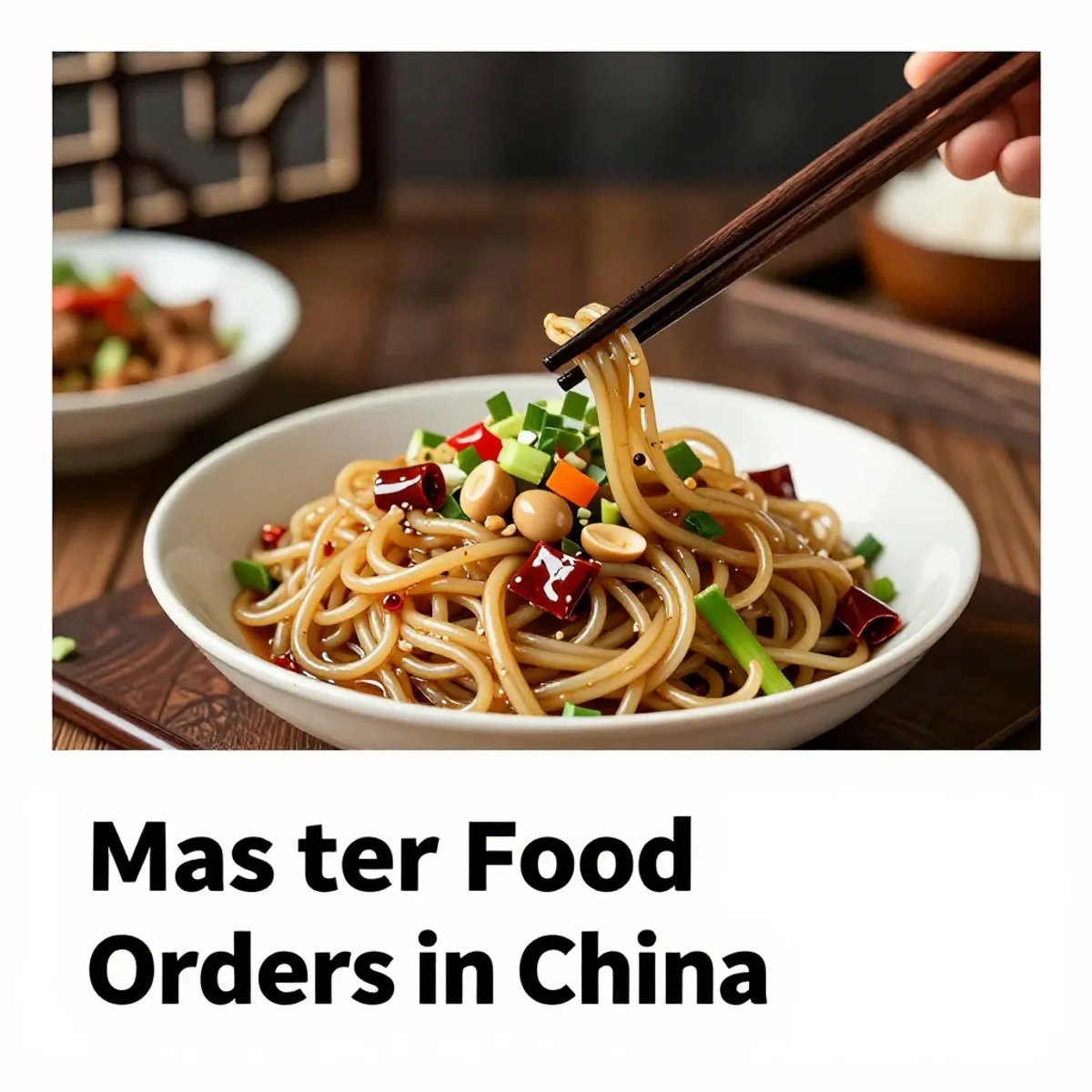
You stand in a bustling Chinese food court, the air thick with the scent of sizzling oil and spices. Your stomach growls, but your confidence is plummeting. You point at a steaming bowl of noodles, manage a shaky 这个 (zhège, this one), and gesture to your wallet.
The vendor smiles, nods, and then fires off a rapid question you don't understand. You panic, nod back, and hope for the best. This cycle of pointing, partial comprehension, and uncertain outcomes is a near-universal rite of passage for low-level Chinese learners in China.
It transforms a simple, daily necessity—eating—into a high-stakes linguistic obstacle course. The core issue isn't just vocabulary; it's the unpredictable nature of the interaction itself. Staff are not just taking your order; they are managing a conversation, clarifying preferences, suggesting additions, and confirming details, all at a speed tailored for a native speaker.
Your 这个 is a powerful tool, but it is a blunt instrument. It ends the selection phase but does nothing for the confirmation phase, where misunderstandings are most likely to occur. This article moves beyond the pointing strategy.
We will build a practical, scenario-based toolkit of phrases and mental frameworks to help you transition from a passive pointer to an active, effective participant in your own meal procurement. The goal is not fluency, but functional clarity—to get what you want, when you want it, with minimal stress.
The Pointing Paradox: Why "This One" Isn't Enough
The instinct to point is absolutely correct and remains a vital part of the process. It efficiently bridges the gap between your mental desire and the physical menu or food display. But, treating 这个 as the entire order is like handing a cashier a random item from a store shelf and expecting a perfect transaction without further dialogue.
In China's food service environment, the vendor's follow-up questions are not idle chatter; they are essential steps in order verification and upselling. They might ask 还要别的吗? (hái yào bié de ma?, Anything else?) to encourage you to add a drink or side dish. They might ask 辣吗? (là ma?, Spicy?) to confirm a default assumption.
They might ask 带走吗? (dài zǒu ma?, To go?) or 在这儿吃吗? (zài zhèr chī ma?, Eat here?) to determine packaging and table service. When you simply say 这个 and then fall silent, you have inadvertently answered "yes" to every potential follow-up by default. You may receive a spicy dish you can't eat, a combo meal you didn't want, or a to-go box when you intended to dine in.
The "point and pay" method outsources all critical decisions to the vendor's assumptions. To gain control, you need to anticipate these common follow-up questions and have prepared, simple responses ready. Your goal is to complete the conversational loop, not just start it.
The Hidden Layers of a Simple Order
Every food transaction in China contains several implicit layers that your 这个 does not address. Understanding these layers is the first step toward constructing a complete order.
First is the item specification. Does that jianbing (crepe) come with egg? With cilantro?
Is the mapo tofu 微辣 (wēi là, mild) or 中辣 (zhōng là, medium)? Pointing selects the base item, but you often need to modify it. Second is the transactional context.
Are you eating in (堂食, tángshí) or taking out (外带, wàidài)? This changes everything from tableware to packaging to potential service charges. Third is the payment method query.
With the dominance of mobile payments, the question 微信还是支付宝? (Wēixìn háishì Zhīfùbào?, WeChat or Alipay?) is now more common than cash inquiries. Finally, there is the upsell or clarification. 要喝点什么吗? (Yào hē diǎnr shénme ma?, Want something to drink?) or 这个是小份的 (zhège shì xiǎo fèn de, This is the small portion) are common.
Your passive approach leaves you vulnerable to all these variables. The solution is a mental checklist: Item, Modification, Dining Method, Payment. You don't need to speak all these elements fluently, but you need to be prepared to address them as they arise, often with single-word or two-word answers.
Building Your Core Phrase Toolkit
You do not need a dictionary. You need a short list of high-impact, versatile phrases that directly counter the most common questions. Think of these as your conversational shields and swords. Memorize these in pairs: the question you expect and your prepared answer.
The Absolute Essentials: Yes, No, and This
These are your foundation. 是 (shì, yes) and 不是 (bù shì, no) are fine, but in rapid-fire ordering, 对 (duì, correct) and 不要 (bù yào, don't want) are more natural. For "this," 这个 (zhège) is for singular items right in front of you.
For referring to something on a menu, 这个菜 (zhège cài, this dish) is better. If you want to change a modifier, use 不要... (bù yào..., don't want...) or 要... (yào..., want...). For example, seeing chili on a dish: 不要辣 (bù yào là, no spicy).
Wanting a drink: 要一杯豆浆 (yào yī bēi dòujiāng, want one cup of soy milk).
Navigating the "Anything Else?" Question
还要别的吗? (Hái yào bié de ma?) is the million-yuan question. It's a trap for the hesitant. Your strategy is a polite but firm 不要了,谢谢 (bù yào le, xièxie, No, thank you) delivered with a slight smile and a closing gesture (like tapping the counter or starting to reach for your wallet).
If you do want something, you must immediately follow your 这个 with the additional item: 这个,还要一杯可乐 (zhège, hái yào yī bēi kělè, This one, and one cola). Do not wait for them to ask. If you are unsure what they are offering, a safe 什么? (shénme?, What?) or 请再说一遍 (qǐng zài shuō yī biàn, Please say it again) is acceptable, but be prepared for a faster repetition.
Specifying Dining Method and Portions
The questions 在这儿吃吗? (zài zhèr chī ma?) and 带走吗? (dài zǒu ma?) require a binary answer. 在这儿吃 (zài zhèr chī, eat here) or 带走 (dài zǒu, take away). For portion sizes, menus might list 大份 (dà fèn, large) and 小份 (xiǎo fèn, small).
If not specified, a common default for rice dishes is a medium portion. To ask, you can point and say 小份 or 大份. In self-service food courts, you often select your own portion, but at counters, be ready to clarify if asked 大份小份? (Dà fèn xiǎo fèn?).
The Payment Protocol
The era of cash questions is fading. Be ready for 微信还是支付宝? (Wēixìn háishì Zhīfùbào?). Simply hold up your phone and say 微信 (Wēixìn) or 支付宝 (Zhīfùbào).
If they ask 扫我还是我扫你? (Sǎo wǒ háishì wǒ sǎo nǐ?, Me scan you or you scan me?), the universal answer is 我扫你 (wǒ sǎo nǐ, I scan you). This means you will open your payment app to show your QR code for them to scan. It is the standard, faster method for vendors.
Have the relevant app open and ready before you reach the counter.
Scenario Deep Dives: Applying the Toolkit
Now let's apply these phrases to specific, common environments. Each setting has a slightly different rhythm and common pitfalls.
Food Court Chaos: Speed and Precision
In a crowded food court with multiple vendors, efficiency is key. The model is: Point + Immediate Specification + Dining Method + Payment. 1.
Identify and Point: point to the exact item you want. If it's a combo, point to the main component first. 2.
State Modifications Immediately: Before they can ask, state your needs. 这个,不要香菜 (zhège, bù yào xiāngcài, This one, no cilantro). 这个,微辣 (zhège, wēi là, This one, mild spice).
3. Preempt the "Anything Else?": If you only want that one item, immediately add 不要别的了 (bù yào bié de le, No other things) as you point. This often short-circuits their standard question.
4. Declare Dining Method: As you hand over money/phone, state 带走 (dài zǒu) or 在这儿吃 (zài zhèr chī). For 在这儿吃, they may hand you a tray and utensils; for 带走, they will bag it.
5. Execute Payment: Be ready with your phone. The interaction should be: Item confirmed -> 微信/支付宝? -> You show code -> 谢谢 (xièxie).
Sit-Down Restaurant: The Extended Interaction
Here, the pace is slower, and interaction is more layered. You will likely have a menu. 1.
Ordering Dishes: Use 我们要 (wǒmen yào, we want) or 给我来 (gěi wǒ lái, get me...) followed by the dish name. 给我们来一个宫保鸡丁和一个西红柿炒蛋 (Gěi wǒmen lái yī gè Gōngbǎo Jīdīng hé yī gè Xīhóngshì chǎo dàn, Get us one Kung Pao Chicken and one Tomato & Egg Stir-fry). 2.
Specifying "How" Dishes: For noodles or soup, they will ask 大碗小碗? (Dà wǎn xiǎo wǎn?, Big bowl small bowl?) or 多糖少糖? (Duō táng shǎo táng?, More sugar less sugar?). Have your preference ready: 小碗 (xiǎo wǎn) or 少糖 (shǎo táng). 3.
The "Anything Else?" Sequence: The server will often come back after you order the mains to ask 还要别的吗? This is your chance for rice, drinks, or vegetables. Have your additions ready. 还要一碗米饭 (Hái yào yī wǎn mǐfàn, Also one bowl of rice).
4. The Check: To ask for the bill, make a writing motion in the air and say 买单 (mǎidān). This is the universal term.
They will bring a slip. You can then ask 可以扫码吗? (Kěyǐ sǎo mǎ ma?, Can I scan [to pay]?) before pulling out your phone.
Cafes and Tea Shops: The Customization Maze
Ordering a milk tea or coffee involves a series of customization questions: sugar level, ice level, toppings. This is where a prepared phrase list is crucial. The common flow is: Drink Type -> Size -> Sugar -> Ice -> Toppings.
- Drink: 一杯奶茶 (yī bēi nǎichá, one cup milk tea) or 一杯美式咖啡 (yī bēi Měishì kāfēi, one cup Americano). - Size: 大杯 (dà bēi) or 中杯 (zhōng bēi). Note: "small" is less common; "medium" is often the default if you don't specify.
- Sugar: 全糖 (quán táng, full sugar), 七分糖 (qī fēn táng, 70% sugar), 半糖 (bàn táng, half sugar), 无糖 (wú táng, no sugar). 三分糖 (sān fēn táng, 30% sugar) is also common. - Ice: 正常冰 (zhèngcháng bīng, regular ice), 少冰 (shǎo bīng, less ice), 去冰 (qù bīng, no ice).
- Toppings: 加珍珠 (jiā zhēnzhū, add pearls), 加椰果 (jiā yēguǒ, add coconut jelly). You must state these in a chain. 一杯大杯奶茶,半糖,少冰,加珍珠 (yī bēi dà bēi nǎichá, bàn táng, shǎo bīng, jiā zhēnzhū, One large cup milk tea, half sugar, less ice, add pearls).
Practice this sequence. It is the single most effective way to get a customized drink correctly.
Technology as Your Silent Interpreter
Your phone is not a crutch; it is a sophisticated tool. Using a dictionary app openly is perfectly acceptable and common. The key is to use it strategically, not as your primary method.
1. The Pre-Order Scan: Before you even approach a counter, look for a QR code menu on the table or wall. Scan it with your phone (WeChat or Alipay's built-in scanner).
These often have pictures and sometimes English. Find your item, note its exact Chinese name or number code. You can then simply state the dish name or number: 我要这个,编号37 (Wǒ yào zhège, biānhào 37, I want this, number 37).
This combines the precision of technology with the social efficiency of speech. 2. The "Please Type" Lifeline: Your current method of handing over your phone with a dictionary page open saying 请打汉字 (qǐng dǎ hànzì, please type Chinese characters) is excellent.
It's polite and clear. To make it even smoother, pre-type the full phrase you anticipate needing. For example, if you always want no spice, have 不要辣 typed and ready.
Just hand over the phone and point to the text. They will read it and confirm with a nod. 3.
Translation Apps in Real-Time: Apps with conversation mode (like Google Translate's conversation feature) can work in a quiet cafe but are impractical in a loud, fast food court. Reserve them for complex interactions, like dietary restrictions (我对花生过敏, wǒ duì huāshēng guòmǐn, I am allergic to peanuts). For everyday ordering, the phrase toolkit is faster and less disruptive.
4. The Image Search: If you see a dish you like at another table, discreetly take a photo. Later, you can use your phone's image search or a food-recognition app to identify it.
Then you know the name for next time. This turns the entire city into your learning environment.
Cultural Context: Reading the Unspoken Rules
Language is more than words; it's context. Understanding a few cultural norms will prevent minor faux pas and smooth your interactions. 1.
The Assumption of Add-Ons: It is standard practice to ask if you want a drink or side dish. This is not pushiness; it's part of the service model. Your simple 不要了 is a perfectly normal and expected response.
Do not feel pressured to say yes. 2. The "No Problem" with Customization: Asking for no cilantro, less sugar, or a specific cooking method is completely normal and expected.
Kitchens are accustomed to it. Your 不要辣 is not a special request; it's a standard order variant. Be clear and polite, but don't apologize for asking.
3. Cash vs. Mobile: While mobile payment is king, having a small amount of cash (100-200 RMB) as a backup is wise for very small vendors, old-school stalls, or if your phone dies. rarely insist on cash if they clearly prefer mobile; just use the phone.
4. The Group Order Dynamic: If dining with others, the server will often take one person's order for the table. Be prepared to collectively decide before they arrive.
The phrase 我们点好了 (wǒmen diǎn hǎo le, We have ordered) signals you are ready. If you need a moment, say 等一下 (děng yīxià, wait a moment). 5.
The Art of the Nod: Vendors often use non-verbal cues. A rapid series of nods while speaking usually means they are confirming details: "This one? Spicy?
To go?" Your job is to match each nod with a verbal or clear non-verbal cue (pointing to "to go" box, shaking head for "no spicy"). Don't just nod back blankly.
From Food Court to Fine Dining: Scaling Your Skills
The principles we've covered scale from the most basic stall to a more formal restaurant. The difference is not in the core phrases, but in the breadth of options and the pace of the exchange.
In a simple noodle stall, your order might be: Point + 小碗 + 不要香菜 + 带走 + 微信. Done in 15 seconds.
In a sit-down Sichuan restaurant, the interaction expands. You will use 我们要 for multiple dishes. You will hear 这个菜比较辣,可以吗? (Zhège cài bǐjiào là, kěyǐ ma?, This dish is quite spicy, is that okay?) and need to answer 可以 (kěyǐ, okay) or 要微辣 (yào wēi là, want it mild). You will use 买单 at the end.
In a high-end or specialty restaurant, the menu may have no pictures, and descriptions are complex. Here, your strategy shifts to pre-research or using the tech tools. Scan the QR code menu beforehand.
Identify 2-3 potential dishes, look up their names and key ingredients. You can then confidently order by name, or even ask a simple 这个是什么? (zhège shì shénme?, What is this?) about a specific dish name on the menu, pointing to it. The staff will then describe it briefly.
The progression is: Stall (Point + 3 words) -> Casual Restaurant (Simple sentences) -> Formal Restaurant (Precision naming + basic Q&A). Your toolkit is designed to get you through the first two levels with ease and give you a fighting chance at the third.
Common Pitfalls and How to Avoid Them
Even with a phrase list, certain traps await the unwary. - The "One" Problem: 这个 means "this one." If you want two of something, you must specify. 两个这个 (liǎng gè zhège, two of this one) is grammatically awkward.
more effective: 要两份宫保鸡丁 (yào liǎng fèn Gōngbǎo Jīdīng, want two portions of Kung Pao Chicken). Remember the measure word 份 (fèn) for dishes, 杯 (bēi) for drinks, 个 (ge) for general items. - The "That" Trap: Avoid pointing and saying 那个 (nàgè, that one) unless it's very clearly separated.
It's ambiguous. Use 这个 for the closest item. - Over-Apologizing: A simple 不好意思 (bù hǎoyìsi, excuse me) to get attention is fine.
But don't sprinkle 对不起 (duìbuqǐ, sorry) throughout the order. You are not causing a great inconvenience; you are conducting a transaction. Confidence, even in broken Chinese, is respected.
- Mishearing Numbers: Food stall vendors speak quickly. 七 (qī, seven) and 一 (yī, one) can sound similar. If you order a drink and they repeat a number, confirm by holding up fingers or asking 是七还是八? (Shì qī háishì bā?, Is it seven or eight?).
- Assuming "No" Means "No Problem": If you ask 可以不要辣吗? (Kěyǐ bù yào là ma?, Can I have no spicy?), a simple 可以 (kěyǐ, okay) is the answer. They are not saying "no problem"; they are saying "okay." Don't misinterpret it as a refusal. - The Silent Treatment: After you pay, if they don't say anything, it doesn't mean they forgot your order.
Just wait quietly nearby. They will call your order number or name. Pointing at your receipt/ticket is a valid way to inquire if it's ready.
The Long-Term View: From Phrases to Fluency
This guide is a survival manual, not a destination. The ultimate goal is to move beyond scripted phrases to genuine conversation. How do you get there?
1. Treat Every Order as a Mini-Lesson: After you successfully order, replay the interaction in your mind. What was the exact question they asked?
What was your answer? Write it down. That's your new vocabulary for next time.
2. Learn the "Why" Behind the Phrase: Understand that 还要别的吗? literally means "Still want other stuff?" It's an open-ended question. Knowing the components helps you recognize variations.
3. Listen for Patterns: The question structures are finite. Once you've heard 大份小份? and 辣不辣? fifty times, you will recognize them instantly.
Your brain will stop translating and start reacting. 4. Add One New Thing Per Week: This week, master drink customization.
Next week, learn to ask for a specific table (靠窗的桌子, kāochuāng de zhuōzi, table by the window). Build incrementally. 5.
Embrace the Mistakes: The vendor who laughs good-naturedly at your butchered tones is giving you a free lesson. Your goal is communication, not perfection. They will adjust their speed and vocabulary for you, which is invaluable immersive training.
Conclusion: Confidence is the Main Ingredient
Ordering food in China as a beginner is not a test of your Chinese ability; it is a practical skill to be acquired, like using a new app or navigating a subway system. The frustration you feel comes from the gap between a simple desire (I am hungry) and a complex social transaction. This guide provides the bridge.
By shifting from passive pointing to active, phrase-based communication, you reclaim control. You stop hoping for the best and start ensuring accuracy. You transform anxiety into a quiet confidence.
The next time you approach a counter, you will not just point and pray. You will point, state your modification, declare your dining method, and be ready with your payment method. You will have a short, clear, and complete exchange.
The food will arrive as you expected. The stress will evaporate. That bowl of noodles will taste better, not just because it's correct, but because you earned it.
Start with one scenario, master the three key phrases for it, and practice. The food court is your classroom, and every successful order is a passing grade. Your journey from 这个 to 我要这个,带走,微信 is the first and most delicious step toward real functionality in China.
Now, go forth and order.
Responses • 0
0/2000
ID: 1326
Chris
Online
From
Bakersfield, United States
Send Message