Master Chinese Through Daily News
AI Learn Chinese
4 hr • 0 read
Learn intermediate Chinese with a daily podcast and vocab site. 小班说新闻 offers real news, culture, and language tools for 2026 learners.

Introduction: Bridging Language and Reality
For intermediate Chinese learners, the gap between textbook Mandarin and the language used in real-world media can feel vast. Textbooks often present sanitized, scripted dialogues that rarely reflect the pace, slang, and complexity of contemporary Chinese news broadcasts, social media discussions, or entertainment shows. This disconnect can stall progress and make achieving fluency seem like a distant goal. The challenge is not just about vocabulary size; it’s about comprehending context, cultural references, and the specific jargon of different domains like politics, technology, and pop culture.
Enter a resource designed specifically to close this gap: a daily podcast and its companion learning platform. This approach moves beyond traditional exercises, embedding language acquisition within the dynamic, ever-changing flow of current events. It operates on a simple yet powerful premise: to understand a language, you must engage with what its speakers are discussing right now. This article explores how this model works, its components, and why it represents a significant shift for dedicated learners aiming for genuine proficiency.
The core idea is immersion through relevance. By focusing on news and cultural topics, the material is inherently engaging and provides a continuous stream of fresh, high-frequency language. This isn’t about learning Chinese in a vacuum; it’s about using Chinese to understand the world. The following sections will detail the podcast’s format, the supporting website’s functionalities, and the combined pedagogical value for the intermediate learner.
The Landscape of Chinese Learning Resources
The market for Chinese language tools is crowded, ranging from rigid classroom settings to gamified apps. a number of resources, however, suffer from a common flaw: a lack of contextual authenticity. They teach about China using simplified language, rather than teaching Chinese through the complex media landscape of China. Learners may build a solid grammatical foundation but struggle when confronted with a actual news anchor or a trending topic on Weibo.
This creates a significant barrier. The language of official statements, economic reports, and celebrity gossip operates on a different plane. It includes specific terminology (术语), set phrases (套话), and references to shared cultural knowledge.
Without guided exposure to this register, an intermediate student might understand every individual character in a news headline but miss the entire implication. A resource that systematically decodes this environment is therefore not just helpful, but essential for advancing beyond an intermediate plateau.
The Podcast: 小班说新闻 – Your Daily Audio Briefing
The podcast, titled 小班说新闻 (Xiǎobān Shuō Xīnwén), translates to “Little Class Says the News.” The name itself suggests an approachable, classroom-like feel without the pressure of a formal academic setting. Its primary mission is to deliver Chinese news and current events in a manner tailored for intermediate learners. This means the host(s) consciously work to clarify complex terms, slow down the pace compared to standard broadcast news, and provide explanations for cultural or historical contexts that a native audience would take for granted.
Each episode is a curated selection of stories. The format typically prioritizes the biggest national and international headlines originating from or concerning China. This ensures learners are engaging with the most impactful and widely discussed topics.
Alongside these major stories, the podcast deliberately includes niche, local, or regional news pieces. This is a crucial differentiator. Major headlines are often covered elsewhere; the inclusion of lesser-reported stories exposes listeners to a wider variety of vocabulary, accents (if featuring interviews), and societal concerns beyond the political and economic mainstream.
In addition, a segment is always dedicated to pop culture and mass media. This covers developments in film, music, television, and digital entertainment. Why is this so important?
Pop culture is a primary vehicle for contemporary slang, neologisms (新词), and youth-oriented language. It’s where the language evolves fastest. Discussing the latest blockbuster movie or viral music video provides a gateway to understanding how Mandarin is used in informal, expressive, and humorous ways—a register rarely found in news desks.
Content Selection and Narrative Style
The editorial process behind story selection is key to the podcast’s value. The goal is not to be a comprehensive news aggregator—that’s impossible and overwhelming for a learner. Instead, it acts as a knowledgeable guide, picking stories that are significant and pedagogically useful.
A story about a new technology policy might be chosen because it introduces key economic and tech terms. A piece on a traditional festival’s modern celebration might be selected to explore cultural vocabulary and changing social practices.
The host’s narrative style is calibrated for comprehension. This involves several techniques: Controlled Pace: The delivery is slower than CCTV news but faster than a language textbook recording, aiming for a “challenging but manageable” listening speed. Strategic Repetition: Key terms and names are often repeated within an episode to reinforce auditory memory.
Paraphrasing and Simplification: Complex sentences are broken down. Instead of simply stating a policy outcome, the host might say, “This means that from now on, companies will need to…”. Explicit Signposting: Phrases like “Now, let’s look at a lighter story…” or “This term, ‘…’, is important here because…” help the listener follow the structure and identify learning points.
This style creates a predictable, supportive listening environment. The listener isn’t left to decipher a rapid-fire professional broadcast alone; they have a guide who is constantly thinking about their comprehension needs. This reduces listening anxiety and allows the brain to focus on absorbing language patterns rather than just scrambling to keep up.
Accessibility and Consumption
The podcast is distributed through all major platforms—Apple Podcasts, Spotify, Google Podcasts, etc.—by searching for 小班说新闻. This universal availability is critical. It means learners can integrate listening into existing routines: during a commute, while exercising, or over breakfast.
The “anywhere” accessibility removes a major friction point; there’s no need to visit a specific, potentially geo-blocked website for each episode. The official RSS feed link serves as a central hub, but the syndication to mainstream apps is what makes habitual listening feasible.
Episodes are typically of a consistent, manageable length, often around 15-25 minutes. This is long enough to cover 3-4 distinct stories in some depth but short enough to maintain focus and fit into a busy schedule. The “daily or near-daily” cadence is another strategic choice.
Language learning thrives on frequency and consistency. A daily dose, even if brief, creates a stronger habit and provides a continuous connection to the “now” of Chinese discourse. Missing one day doesn’t break the chain, as the next episode is soon to follow, maintaining momentum.
The Companion Website: A Structured Learning Ecosystem
Listening is a receptive skill. To convert passive comprehension into active, usable knowledge, a structured follow-up is essential. This is the role of the companion website, xiaobanshuoxinwen.com.
It transforms the ephemeral podcast experience into a persistent, interactive study resource. The site is described as being in beta, which is an important note for users—it signals that features are actively developing, and some bugs or incomplete sections should be expected. This transparency manages user expectations and frames the platform as a living project.
The website’s primary function is vocabulary and comprehension support for each specific podcast episode. While the exact interface in 2026 may evolve, the core concept revolves around providing the transcript and a curated vocabulary list. The transcript is arguably the most valuable component.
It allows the learner to see the exact words and sentences they heard, resolving any auditory ambiguity. They can read along while listening (shadowing), analyze sentence structures they missed, and verify the spelling of new terms.
The vocabulary list is not just a random collection of hard words. It is episode-specific and likely curated by difficulty and relevance. It probably includes: * Core News Terms: Words like 政策 (policy), 经济 (economy), 发展 (development), 报道 (report).
Specific Nouns: Names of people, places, companies, and events unique to that episode’s stories. Key Verbs and Phrases: Action words and common collocations used in journalistic or descriptive contexts. * Cultural Markers: Explanations of idioms, slang, or references to popular culture mentioned.
Interactive Features and Study Tools
Beyond a static list, a robust learning site would incorporate interactive elements. While the specific features of this beta site aren’t detailed, the logical progression for such a platform in 2026 would include: Flashcard Integration: Vocabulary items could be exportable to flashcard systems like Anki or have a built-in spaced repetition system (SRS) for review. Audio Clips for Words: Clickable vocabulary items that play the host’s pronunciation of that specific word from the episode, aiding in associating the written form with the sound in context.
Sentence Breakdowns: For particularly complex sentences from the transcript, the site might offer a grammatical breakdown or a simpler paraphrase. quizzes or Mini-tests: Short, episode-specific comprehension checks to confirm understanding of main points and vocabulary.
The synergy is clear: the podcast provides the contextual, auditory input. The website provides the textual clarification and the tools to internalize the language. One is for exposure and comprehension; the other is for study and retention. This two-pronged attack—listening and reviewing—addresses the full cycle of language acquisition for the intermediate learner.
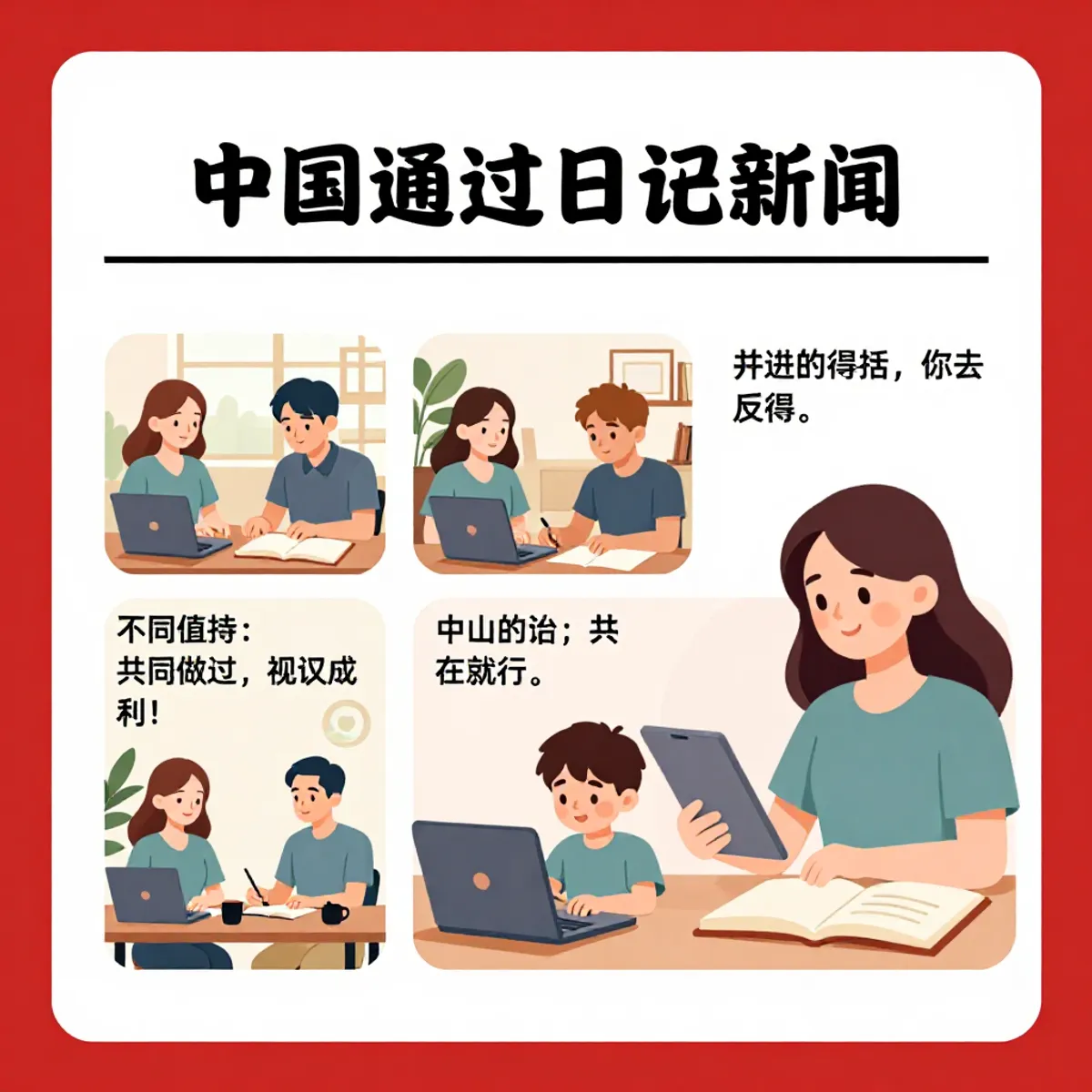
The Pedagogical Value for the Intermediate Learner
Why is this combination particularly potent for someone at an intermediate level? Beginners need foundational grammar and high-frequency vocabulary. Advanced learners can often navigate complex texts with some effort. The intermediate stage, typically corresponding to HSK 3-5, is where learners hit what is often called the “intermediate plateau.” Progress slows because they need to move from learning language about daily life to using language to discuss abstract, specialized, and fast-moving topics like news.
This resource directly attacks that plateau. News and current event language is precisely the domain an intermediate student must conquer to reach advanced proficiency. It forces engagement with: * Abstract Concepts: Policies, trends, economic indicators, diplomatic relations.
Formal and Semi-Formal Registers: The language of reports, statements, and analysis. Rapidly Evolving Lexicon: New words and phrases that enter the language through media coverage (e.g., terms related to new technologies, social phenomena).
The podcast’s learner-focused delivery lowers the initial barrier to entry into this complex linguistic space. The website then provides the scaffolding to build permanent knowledge from that initial exposure. Without the site, the podcast might be a great listening exercise but retention would be low.
Without the podcast, the website would just be a list of decontextualized words. Together, they create a complete micro-learning loop for each episode.
Building Listening Stamina and Comprehension
A key skill for any language learner is listening stamina—the ability to focus on extended speech. Native-speed news is notoriously difficult for intermediates due to its density and speed. 小班说新闻 acts as a “bridge” material.
It’s not quite native speed, but it’s faster and more dense than learner-focused dialogues. Regularly listening to 20-minute episodes trains the brain to maintain concentration on connected speech for longer periods, a crucial skill for real-world interactions, conferences, or simply enjoying native media.
In addition, the consistent format builds predictive skills. After a few episodes, a listener starts to anticipate how a story will be structured: what the headline is, what background might be given, what kind of follow-up questions the host might implicitly address. This predictive parsing is a high-level comprehension strategy. The learner isn’t just decoding words; they are actively engaging with the narrative structure of news reporting, a valuable meta-skill applicable to any L2 listening task.
Cultural Context and Societal Insight
Language is never separate from culture. News is a primary site where cultural values, societal priorities, and government narratives are expressed and contested. By consuming Chinese news daily, the learner does more than study vocabulary; they gain insight into what topics are considered important, how issues are framed, and what language is used to discuss sensitive subjects. This develops cultural competence (文化能力), which is as vital as linguistic competence for true communication.
The pop culture segment is especially valuable for this. It reveals the lighter, trend-driven side of Chinese society. Discussing a popular TV show or a viral internet meme teaches the learner about humor, social commentary, and the interests of younger generations—the same people they might one day converse with.
It balances the often-serious tone of political and economic news with the vibrant, creative energy of the cultural sphere. This holistic view prevents a skewed, purely political understanding of “China” that many foreign learners might otherwise develop.
The host’s role as an explainer is crucial here. They can briefly note, for example, why a certain phrase is politically significant or how a movie trope reflects a broader social anxiety. These asides, which would be absent from a raw news broadcast, are gold for the learner.
They provide the “why” behind the “what,” connecting linguistic forms to cultural meanings. The website can then expand on these points in written form for later review.
Practical Implementation for the Self-Studier
How should an intermediate learner ideally use these two resources? The process should be active, not passive. Here is a suggested workflow:
1.
First Pass – Listening: Listen to a new podcast episode without the transcript. The goal is general comprehension. What are the main stories?
What is the host’s overall tone? Don’t worry about catching every word. 2.
Second Pass – Listening with Transcript: Listen again while following the transcript on the website. This time, identify words and phrases you didn’t understand the first time. Pay attention to how the written sentence connects to the spoken sounds.
3. Vocabulary Extraction: Use the site’s vocabulary list as a starting point, but also add your own unknown words from the transcript. Create your own flashcards for these new terms, ideally with the sentence from the podcast as an example.
4. Focused Review: Study your new vocabulary list. Use the site’s tools (or your own) to drill these words.
Try to use them in your own sentences related to the episode’s topic. 5. Shadowing or Summarization: As a productive practice, try to summarize one of the news stories in your own (still intermediate) Chinese.
Alternatively, practice “shadowing”—trying to repeat after the host phrase by phrase to improve pronunciation and intonation.
This cycle turns a 20-minute podcast into a 45-60 minute deep study session. The consistency of daily episodes means this cycle can become a sustainable habit. Over weeks and months, the cumulative effect is substantial: a vast expansion of topic-specific vocabulary, improved listening comprehension of formal and media registers, and a much richer understanding of contemporary Chinese society.
Adapting to Different Goals
Learners can adapt this model to their specific interests. Someone focused on business might pay extra attention to the economic news segments and vocabulary. A learner interested in entertainment might prioritize the pop culture section and seek out the original media discussed.
The podcast’s broad remit means there’s something for most intermediate interests. The website allows for this specialization by letting the learner drill deeper into the segments they find most relevant or challenging.
For those preparing for exams like the HSK, this resource provides invaluable exposure to vocabulary and text styles that appear in higher-level reading and listening sections. The journalistic style, in particular, is common in exam materials. Regular engagement with this content builds familiarity with that specific genre, making formal test passages feel less alien.
The Beta Factor: Expectations and Community
The creator notes the website is in beta. This is a realistic and honest disclosure. For users, this means two things.
First, they should be prepared for occasional glitches, incomplete features, or design changes. The focus should be on the core content—the transcripts and vocab lists—which are likely stable. Second, and more positively, it means the project is active and responsive.
Beta users often have the opportunity to provide feedback that directly shapes future development. This can create a sense of community and co-creation, which is motivating for learners.
A beta project also reflects a certain ethos: it’s built by someone passionate about the niche, not a large corporation. The creator is likely a fellow language enthusiast or educator who identified this gap and built a tool to fill it. This personal touch can translate into more thoughtful curation and a closer alignment with learner needs than a mass-market product might have.
The Evolving Ecosystem: From Beta to Maturity
The beta designation is a strategic asset, not a disclaimer. It frames the platform as a dynamic, learner-responsive project. This iterative development model means features are shaped by actual user experience.
For instance, if multiple listeners report difficulty with a specific grammatical structure common in official statements, a future episode might explicitly highlight that pattern, or the website could add a dedicated micro-lesson. This creates a virtuous cycle: the resource improves precisely because it is being used, making it increasingly tailored to the intermediate learner's pain points. By 2026, this feedback-driven refinement could result in a highly polished tool that feels less like a static product and more like a personalized learning companion.
Community-Driven Curation and Content Expansion
A key aspect of the beta phase is active community involvement. Learners are often invited to vote on upcoming topics or submit questions about confusing language they've encountered in the wild. This crowdsourcing transforms passive consumers into active participants.
A surge of requests for coverage on tech innovation might lead to a special series on 人工智能 (AI) terminology,plete with explanations of buzzwords like 算法 (algorithm) and 大数据 (big data). Such thematic deep dives, fueled by user curiosity, ensure the content remains not only educational but deeply relevant to the learner's own interests and goals. This collaborative approach builds a sense of shared mission, which is a powerful motivator for sustained study.
Technical Enhancements and Future-Proofing
Looking ahead, the technical infrastructure is poised to leverage 2026's educational technology trends. The beta website may soon incorporate adaptive learning algorithms that analyze a user's quiz performance to recommend specific episodes for review. Imagine a system that notices a learner consistently missing vocabulary related to environmental policy and automatically suggests a past episode on 气候变化 (climate change) for restudy.
Other potential features include integrated speech recognition for pronunciation checks against the host's audio, or a social layer where learners can share their episode summaries for peer feedback. These enhancements would shift the platform from a reactive study aid to a proactive learning coach, all while maintaining its core focus on authentic news content.
Integrating the Resource into a Broader Study Ecosystem
小班说新闻 excels at its narrow focus: delivering comprehensible, contextualized news. But, true fluency requires a multi-faceted approach. This resource should be the centerpiece of a weekly study rotation.
For example, a learner might use it for listening and vocabulary Monday through Wednesday, then dedicate Thursday to writing a short blog post summarizing an episode in their own words, and Friday to discussing the topic with a language partner. The podcast provides the raw material; other activities solidify it. This integration prevents the learning from being one-dimensional and ensures all four language skills are developed.
Bridging to Native Media Consumption
The ultimate benchmark for many learners is consuming native media—mainland TV dramas, popular variety shows, or social media platforms like Weibo—without subtitles. This podcast is a designed bridge. Its deliberate slowdown and explanations mimic the "training wheels" needed to approach native-speed content.
As a learner's comprehension grows over months of daily exposure, they can systematically reduce their reliance on the transcript, then transition to standard news broadcasts like CCTV 新闻联播. The mental models built through 小班说新闻—understanding how a news story is structured, recognizing common journalistic phrases—make that final leap less daunting. By mid-2026, a consistent user should find the jump to unfiltered media a natural progression rather than a cliff.
Cultural Deep Dives Through Thematic Series
While daily episodes cover the headlines, the platform can (and likely does) produce longer-form thematic series that explore cultural phenomena in depth. For instance, a week-long series around the Mid-Autumn Festival might cover not only the historical myths but also modern consumption patterns of 月饼 (mooncakes), the economic impact of the holiday, and the poetry and idioms associated with it. This transforms language learning into a cultural anthropology lesson.
The learner doesn't just memorize the word for "festival" (节日); they understand the social rituals, emotional weight, and commercial ecosystem surrounding it. Such series are invaluable for building the cultural competence that separates a functional speaker from someone who truly understands the nuances of Chinese society.
Measuring Progress and Adjusting Expectations
How does a learner know this method is working? Progress is often subtle. Early signs include recognizing previously unknown vocabulary in new episodes, catching the gist of a story on the first listen, or noticing an improved ability to parse longer sentences.
More concrete metrics can be self-imposed: can you accurately summarize an episode in three sentences after listening? Can you identify the main verb in a complex headline from the transcript? The platform's own quizzes and flashcards provide data points.
It's crucial to adjust expectations; fluency isn't gained in a week. The daily habit compounds. A learner who started in January 2026 should, by June, feel a noticeable decrease in listening anxiety and a significant expansion in their active topic-specific lexicon, particularly in domains like economics or technology that were previously obscure.
Avoiding Common Pitfalls
A pitfall to avoid is over-reliance on the transcript. The goal is to wean off it. A effective strategy is to use the transcript only after a full listen, and then to cover it while listening a third time, forcing the ear to do the work.
Another mistake is treating vocabulary lists as ends in themselves. Words must be recycled in context—through writing summaries or speaking practice—to move from passive recognition to active use. Finally, learners should not neglect the pop culture segments.
They are not frivolous; they are the language in its most creative, fast-moving state. Understanding a reference to a popular web novel or a viral dance challenge provides immediate social currency and demonstrates an understanding of contemporary, not just textbook, Mandarin.
The Long-Term Vision: From Learner to Informed Participant
By consistently using this resource, the intermediate learner undergoes a shift in identity. They move from someone who studies Chinese to someone who uses Chinese to understand a complex world. The daily ritual of listening to 小班说新闻 becomes less of a "language exercise" and more of a genuine window into current affairs.
This psychological shift is critical for maintaining motivation. The language is no longer an abstract academic subject; it is a living tool for accessing information. By the end of 2026, a dedicated user might find themselves reading Chinese news sites directly, forming opinions on issues, and even engaging in discussions online—the true hallmark of intermediate-to-advanced transition.
The podcast and its ecosystem are not just teaching a language; they are inducting the learner into a global community of Chinese speakers.
Conclusion: A Sustainable Path to Advanced Proficiency
The journey from intermediate to advanced Chinese is marked by a shift from learning the language to using the language as a tool for accessing information and entertainment. 小班说新闻 and its companion website are engineered specifically for this shift. They replace the artificial context of the textbook with the dynamic, real-world context of daily news and culture.
The daily podcast ensures constant exposure and builds listening stamina in a manageable way. The website provides the necessary structure to transform that exposure into lasting knowledge.
This model respects the learner’s time and intelligence. It doesn’t promise effortless fluency but provides a clear, consistent, and high-quality method for steady progress. The content is inherently engaging because it’s about the world.
The learner isn’t just studying Chinese; they are using Chinese to stay informed about China and global affairs. This relevance is a powerful motivator. For the intermediate student looking to break through to a higher level of comprehension and expression, integrating a resource like this into a daily study routine in 2026 is not just a good option—it is a strategic necessity.
The language of the present is learned by engaging with the present. This resource delivers exactly that, day after day.
Responses • 0
0/2000
ID: 1326
Chris
Online
From
Bakersfield, United States
Send Message