Mandarin Country: Oklahoma Home in Song
AI Learn Chinese
3 hr • 0 read
A Mandarin country song bridges Chinese heritage and Oklahoma life, using AI to create bilingual music for natural language learning and cultural connection.
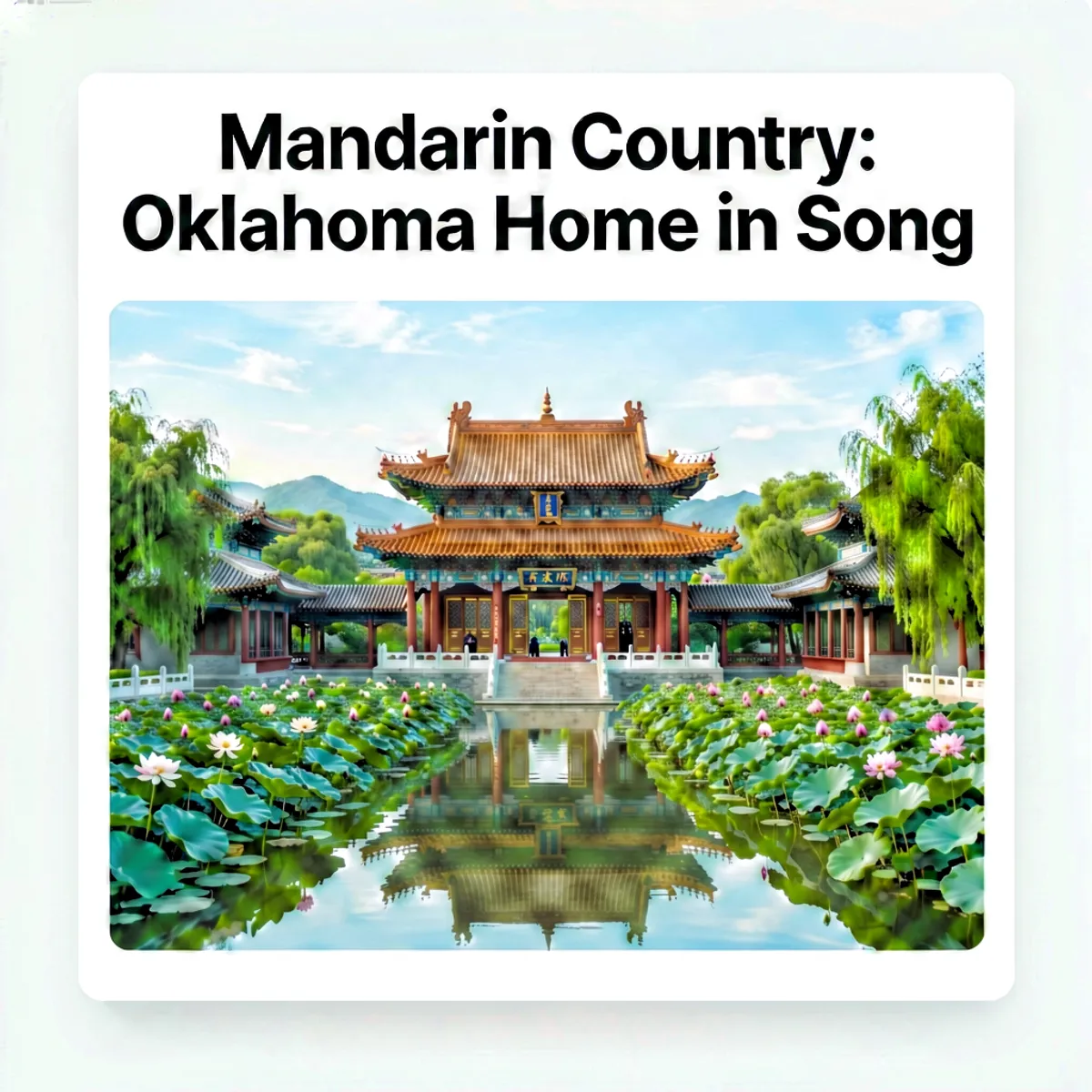
Introduction: A Melody of Two Worlds
A new sound is echoing across the digital landscape, one that blends the heartfelt storytelling of American country music with the melodic tones of Mandarin Chinese. This is not a conventional crossover but a deeply personal project born from a desire to process a family’s unique journey. The creator, experimenting with artificial intelligence for music generation, chose to channel that technology into a specific, poignant narrative.
It is a story of displacement, adaptation, and ultimately, the construction of a new home, all set to a simple acoustic melody. The result is an original song that serves simultaneously as a family portrait, a cultural experiment, and a potential tool for language learners.
The project’s core ambition is multifaceted. On one level, it is an artistic expression of a specific immigrant experience—that of a Chinese man establishing a life in rural Oklahoma. On another, it is a deliberate attempt to use music as a vessel for bilingual education, embedding language learning within an emotionally resonant context.
The submission to an online forum explicitly seeks feedback, particularly from native speakers, on the authenticity of the Mandarin lyrics and pronunciation. This opens a dialogue about representation, technology’s role in art, and the universal themes of love and belonging that transcend linguistic borders.
This article will dissect the layers of this innovative project. We will explore the narrative woven through the lyrics, examine the motivations of its creator, and analyze the role of AI as both a creative partner and a democratizing force. In addition, we will consider the song’s potential efficacy as a language learning tool and its significance within the broader context of cultural representation in music. The journey from a personal family story to a publicly shared piece of bilingual art reveals much about contemporary creativity, technology, and the enduring power of a song to map complex emotional territories.
The Song's Narrative: From Jiangnan to the Prairie
The protagonist of the song is a Chinese man who has left his homeland, implied to be the water towns of Jiangnan, for the vast, open plains of rural Oklahoma. This geographic and cultural shift is the fundamental tension from which the song’s emotions spring. The lyrics do not shy away from the ache of nostalgia; there are references to missing the familiar sights, sounds, and flavors of China.
This longing is a common thread in immigrant narratives, but its expression through the country music idiom—a genre historically rooted in stories of loss, hardship, and homesickness—creates a powerful resonance. The prairie landscape, often a symbol of isolation in country songs, becomes a parallel to the internal feeling of being uprooted.
Yet, the narrative is not one of perpetual sorrow. Its arc moves toward reconciliation and the creation of a new sense of place. This transformation is catalyzed by love and the formation of a family in Oklahoma.
The song charts the protagonist’s gradual realization that "home" is not solely a physical location tied to the past but can be rebuilt through human connection. The chorus likely pivots to celebrate this new-found domestic joy, perhaps using imagery familiar to both cultures—the warmth of a shared meal, the comfort of a shared space. The home in Oklahoma, initially a foreign concept, becomes a sanctuary filled with its own meaningful traditions and memories.
Specific lyric choices are crucial here. A line about missing the "misty rain of my hometown" would contrast sharply with one about "watching the sunset over the wheat fields with you." This juxtaposition is the song’s emotional engine. It avoids a simplistic "America is better" or "China is better" conclusion.
Instead, it presents a hybrid identity where both sets of experiences and affections coexist. The Mandarin language itself becomes a carrier of this dual perspective; singing of Oklahoma plains in Chinese linguistically merges the two worlds, making the Oklahoma landscape a part of the singer’s native emotional vocabulary.
The Protagonist's Journey
The character’s journey is one of quiet adaptation. He is not portrayed as a triumphant hero overcoming immense obstacles but as an ordinary person navigating the subtle, daily realities of cultural difference. The song likely focuses on small, intimate moments rather than grand events.
Perhaps it describes the confusion of a local grocery store, the challenge of understanding regional accents, or the simple act of planting a garden with seeds from a home country. These details ground the story in specificity, moving it beyond a generic immigrant tale to a recognizable human experience of finding one’s footing in an unfamiliar environment.
His initial state is one of quiet observation, feeling like an outsider looking in. The Oklahoma setting is not just a backdrop but an active character—its vast skies, its changing seasons, its particular rhythms of life. The song may use metaphors from the prairie to describe his emotional state: feeling as scattered as tumbleweed, as alone as a lone fence post, or as patient as the enduring land itself. This use of local imagery to express universal feelings is a hallmark of great country songwriting, and applying it to a non-native experience is a clever subversion of the genre’s typical perspective.
The turning point is invariably the formation of his own family. This could be through marriage, partnership, or the birth of children. It is within this new family unit that the foreign land begins to feel familiar.
The songs sung to a child, the recipes cooked together, the holidays celebrated with new rituals—these are the building blocks of a new home. The protagonist’s love for his partner and children becomes the lens through which he re-evaluates his surroundings. The Oklahoma plains are no longer just a place of exile but the very soil in which his new life is taking root.
Nostalgia and Longing
The verses dealing with nostalgia are likely rich with sensory details from China. The Mandarin lyrics here might evoke the smell of street food stalls, the sound of morning market chatter, the feel of humid summer air, or the sight of lanterns during a festival. These are not abstract memories but concrete, tactile experiences that contrast with the often drier, wind-swept sensations of the prairie.
This contrast is not meant to diminish one for the other but to honor the fullness of the protagonist’s emotional reservoir. He carries China within him, a internal landscape that remains vivid.
The sentiment is one of love for a place left behind, a love that is bittersweet because it is tethered to absence. The song might use the Chinese concept of xiang (乡), meaning hometown or native place, which carries deep emotional and cultural weight. Missing xiang is a specific, profound kind of homesickness.
Translating this feeling into a country song framework involves finding equivalent metaphors in the Oklahoma experience—perhaps the feeling of missing a "home place" that exists only in memory and stories. This section of the song is where the bilingual nature is most potent; the Mandarin words for these specific Chinese memories cannot be perfectly translated, preserving their unique cultural texture.
Love as a Bridge
The chorus or the song’s emotional climax centers on love as the active agent that builds a bridge between the two worlds. This is not romantic love alone but the expansive, anchoring love of family. It is the force that allows the protagonist to say, "This place, with you, is also home." The lyrics might directly address his partner or children, thanking them for giving the Oklahoma soil meaning.
The melody here would likely swell, moving from the minor-key melancholy of the verses to a major-key affirmation. This musical shift reinforces the lyrical journey from loss to gain, from past to present.
The bridge between cultures is built through shared daily life. Cooking a meal might combine Oklahoma beef with a Chinese cooking technique. Decorating the home might feature both Chinese calligraphy and local crafts.
The children grow up with a blended cultural vocabulary, understanding both the stories of their father’s homeland and the legends of the American frontier. The song celebrates this hybridity not as a dilution but as a richer, more complex inheritance. The family becomes a living embassy of two cultures, and the love within it is the diplomatic currency that ensures peace and prosperity.
The Creator's Vision: Family as Inspiration
The driving force behind this song is a personal connection to the story being told. The submitter, /u/laowhygirl, indicates the project is inspired by her own family, suggesting the protagonist is based on a real person—likely a father, uncle, or other close relative. This familial root is what elevates the project from a generic thematic exercise to a vulnerable act of storytelling.
There is an authenticity that comes from writing about people you know and love, a desire to honor their experience accurately. This personal stake explains the careful attention to emotional truth, even if the lyrical execution is open to critique.
Her vision extends beyond a single song. She expresses a hope to create "more bilingual songs to help people learn Chinese and English naturally through music." This reveals an educational intent layered within the artistic one. She is not merely writing a song about a bilingual experience; she is consciously crafting a tool for bilingual acquisition.
The choice of country music is significant here. Its typically clear, narrative-driven lyrics and simple chord structures make it an accessible genre for language learners to parse. The story format provides context, which is a critical component of comprehensible input in language learning theory.
The decision to use AI music generation tools is also a pragmatic extension of this vision. It allows a single individual, without a full band or professional production studio, to prototype and produce a complete song. This democratization of music creation means that personal, niche stories—like that of a Chinese family in rural Oklahoma—can be sonically realized without major label investment. The AI becomes an enabler for personal, culturally specific art that might otherwise struggle to find a conventional production pathway.
Personal History Behind the Lyrics
The creator’s own position within this family narrative is key. She is likely a second-generation immigrant or the child of immigrants, growing up in the Oklahoma environment while being connected to Chinese heritage. This places her in a perfect position to observe and articulate the nuances of the "in-between" experience.
Her perspective is that of someone who sees both the parental nostalgia and the child’s seamless integration into the new home. She can recognize the specific moments where cultures clashed or blended in her own upbringing and translate those into song.
This insider-outsider status informs the song’s tone. It is affectionate but not sentimental, specific but not alienating. She knows which details will resonate with those who share a similar background and which will be accessible to a wider audience.
For example, a line about "the smell of ginger and scallions from Dad’s kitchen mixing with the scent of fresh-baked bread from the church potluck" is a detail that paints a vivid, relatable picture for anyone who has experienced cultural blending at a family table. It is these precise, lived-in details that give the song its power and avoid generic immigrant tropes.
Her role as the songwriter also carries a sense of responsibility. She is representing her family’s story to a public audience, including seeking feedback from "native speakers" on the Mandarin sections. This indicates an awareness of the potential for misrepresentation or linguistic inaccuracy, and a desire for the portrayal to be respectful and correct. It turns the project into a collaborative act of cultural translation, where the initial artistic vision is then refined by community input, particularly from those with lived expertise in the language and culture being depicted.
AI as a Collaborative Tool
The use of AI in this context is not about outsourcing creativity but about augmenting it. The creator likely provided the lyrics, the melody idea, and perhaps a chord progression to the AI music model. The AI then generated instrumental tracks, suggested arrangements, or even provided vocal synthesis options.
This creates a loop where the human provides the core emotional and narrative content, and the machine helps find its sonic equivalent. It is a partnership where the AI handles the technical execution of musical ideas, allowing the human to focus on the storytelling.
This approach aligns with a growing trend of artists using AI as a "first draft" or "inspiration" machine. Instead of staring at a blank page, the creator can generate multiple musical variations based on a prompt like "a sad but hopeful Mandarin country song about immigration." From these generated outputs, she can select, edit, and refine, guiding the AI toward her vision. The final product, therefore, is a hybrid: a human story shaped by machine-generated possibilities. This blurs the traditional lines of authorship but places the ultimate artistic intent firmly with the human creator.
The choice of AI tool is also meaningful. If she used a model trained on a vast corpus of Western pop and country music, the resulting track would naturally incorporate those genre conventions—steel guitar, simple drum patterns, storytelling verse structures. The novelty comes from overlaying the Mandarin vocal melody and lyrics onto that familiar sonic scaffold. The AI thus becomes a conduit for genre authenticity, ensuring the "country" part of the equation sounds genuinely country, while the creator handles the "Mandarin" part with personal and linguistic care.
AI in Music: Democratizing Bilingual Art
The integration of AI music generation platforms into this project represents more than just a technical shortcut; it symbolizes a shift in who gets to create and distribute culturally specific art. Traditionally, producing a professional-sounding song required access to recording studios, session musicians, producers, and label distribution networks. These barriers disproportionately affected artists working outside mainstream genres or telling stories from underrepresented communities. AI tools dramatically lower these barriers, allowing a single person with a story and a laptop to produce a complete, shareable song.
For bilingual and cross-cultural projects, this democratization is particularly potent. An artist wanting to blend Mandarin lyrics with a country musical backbone might struggle to find musicians fluent in both idioms or producers who understand the cultural nuances. AI models, trained on millions of songs, can instantly generate backing tracks that adhere to genre conventions.
The artist’s primary challenge shifts from technical production to the artistic and cultural work of lyric writing, melody crafting, and vocal performance. This re-centers the importance of the story and the language, arguably the most human elements of the song.
But, this democratization comes with its own set of complexities. Questions of authenticity arise. Does a song generated with AI assistance carry the same weight as one made with human musicians?
There is also the issue of training data: many AI music models are trained on copyrighted works, raising ethical questions about compensation and consent for the original artists whose styles are being emulated. The creator of this Mandarin country song navigates this by being transparent about the AI’s role and by ensuring the core human elements—the personal story, the Mandarin lyrics—are her own original contribution. The AI is a tool, not the author.
Tools and Techniques
While the specific AI tool isn't named in the summary, the process likely involves a text-to-music or melody-to-arrangement model. The creator would input parameters such as "male vocal, country style, moderate tempo, melancholic yet hopeful mood." The AI would then generate a chord progression, select virtual instruments (acoustic guitar, fiddle, bass, simple drums), and outline a song structure (intro, verse, chorus, bridge, outro). The creator then records the Mandarin vocal on top of this generated bed, adjusting the melody as needed to fit the natural cadence of the language.
The bilingual aspect presents a unique technical challenge. Mandarin is a tonal language, meaning the pitch contour of a syllable can change its meaning. A melody that works for English, a non-tonal language, might distort the intended meaning of a Mandarin word if it forces a pitch change.
A skilled singer or producer must ensure the musical melody respects or at least does not contradict the lexical tones of the lyrics. This is a area where human expertise is irreplaceable by current AI. The creator’s desire for native speaker feedback directly addresses this potential pitfall, seeking to ensure the sung Mandarin remains intelligible and tonally appropriate.
The final production likely involves significant human editing. The raw AI output might be used as a foundation, but the creator probably refined the arrangement, adjusted levels, added subtle human-performed elements (like a real harmonica or a finger-picked guitar part), and mastered the final track. This hybrid workflow—AI generation plus human curation and enhancement—is becoming a standard for independent artists. It allows for a high-fidelity final product that still bears the unmistakable imprint of the human creator’s vision and emotional intent.
Ethical Considerations in AI Art
The use of AI in art generation sparks ongoing debate about creativity, ownership, and value. Critics argue that AI models, by remixing existing human-created works from their training data, produce derivative content that lacks true originality or soul. Proponents counter that AI is simply a powerful new tool in the artist’s toolkit, capable of handling tedious tasks and sparking new ideas.
The creator of this song sidesteps some criticism by being transparent: the song is presented as an experiment, a "hobby" project born from curiosity. Its value is not claimed to be in groundbreaking musical complexity but in its specific cultural and emotional message.
A key ethical point is the use of vocal synthesis. If the Mandarin vocal is generated by an AI voice model rather than sung by a human, the questions of authenticity and emotional connection intensify. A synthesized voice, no matter how lifelike, lacks the human imperfections—the breath, the slight tremble, the emotional crack—that often convey sincerity.
Given the project’s stated goal of seeking feedback on "pronunciation," it heavily implies a human vocal performance. This is crucial. A human voice singing in Mandarin about a personal family story carries an authority and vulnerability that a synthetic voice would fundamentally undermine.
The AI’s role is thus likely confined to the instrumental track.
There is also the question of cultural representation. An AI trained primarily on Western music might generate a "country" track that feels authentic to that genre but could inadvertently create a pastiche that feels disrespectful when paired with non-Western lyrics. The creator’s personal connection and oversight are the safeguards here.
She is not blindly accepting the AI’s output but is using it as a canvas for her specific, culturally hybrid story. The ethical burden is on her to ensure the fusion is done with respect and understanding, which her request for native speaker critique suggests she is earnestly attempting.
Language Learning Through Song
The submitter’s hope to create "bilingual songs to help people learn Chinese and English naturally through music" taps into a well-established pedagogical principle: music enhances memory and makes language acquisition more enjoyable and effective. Songs provide repetitive, contextualized language input. The rhythm and melody act as mnemonic devices, helping learners recall vocabulary and grammatical structures. For tonal languages like Mandarin, song can be particularly powerful because the melody provides a sustained pitch context, potentially helping learners distinguish lexical tones within a flowing musical phrase rather than in isolated, often monotonous, drill recordings.
This specific song offers a built-in bilingual structure. The primary lyrics are in Mandarin, but the inclusion of "English and pinyin subtitles" (as mentioned in the summary) creates a three-way key for learners. They can see the original characters, see the Romanized pronunciation guide (pinyin), and see the English translation.
This allows learners at different levels to engage: beginners can focus on matching pinyin to sound, intermediate learners can connect characters to meaning, and advanced learners can appreciate the lyrical nuance. The emotional narrative of the song provides the "why" behind the vocabulary, making words like "home," "family," "miss," and "love" stick in the mind far more effectively than a textbook definition.
The song’s genre, country, is advantageous for language learning due to its lyrical clarity. Country songwriters pride themselves on storytelling with direct, concrete language. The vocabulary is often about everyday life—homes, land, family, work—which is highly relevant for beginner and intermediate learners.
The sentence structures tend to be straightforward. This contrasts with more complex poetic or rock lyrics that might use heavy metaphor, slang, or abstract concepts. A learner can reasonably expect to understand the gist of a well-written country song after a few listens, especially with subtitles, building confidence and comprehension.
Why Music Works for Acquisition
Cognitive research supports the link between music and language learning. The brain processes music and language in overlapping neural networks, particularly those involved in pattern recognition, memory, and prosody (the rhythm and stress of speech). A catchy tune can lodge itself in the "sticky" part of the brain, replaying the associated language patterns.
This is why advertising jingles are so effective and why many people first learn a language through nursery rhymes or pop songs. The emotional arousal triggered by music—the joy, sadness, or hope in a song’s performance—also enhances memory encoding. We remember better what we feel something about.
In addition, music provides comprehensible input that is slightly above a learner’s current level (the "i+1" concept from linguist Stephen Krashen). The context of the music video, the emotional tone of the performance, and the visual subtitles all provide clues to meaning. A learner might not know every word in a Mandarin verse, but they can infer the meaning of "missing home" from the singer’s wistful expression, the imagery of a distant landscape, and the English translation. This inferencing process is crucial for language acquisition, and music makes it more engaging and less frustrating than a dry reading passage.
The repetitive nature of song structure—repeating choruses, verse patterns—provides the necessary repetition for vocabulary consolidation without the boredom of flashcards. A key phrase like "this is home" or "I miss you" will be heard multiple times in various musical contexts, reinforcing its form and meaning. The song’s narrative arc also provides a coherent context for the vocabulary, helping learners understand how words fit together to tell a complete story, which is more useful than learning isolated sentences.
The Role of Pinyin and Subtitles
Pinyin is the Romanization system for Mandarin, using the Latin alphabet to represent sounds. For beginners, it is an indispensable bridge between their native writing system and Chinese characters. But, pinyin has limitations; it is an approximation and can be misleading for tones.
In a song, where melody can override natural speech tone, pinyin becomes even more crucial for a learner trying to parse what is being sung. The subtitle track showing pinyin allows them to "read along" with the vocal performance, connecting the sound they hear to a familiar alphabetic script.
The simultaneous display of characters, pinyin, and English translation is a powerful tri-modal input. A learner can look at the Chinese character, check its pinyin pronunciation, and confirm its English meaning all at once. This caters to different learning preferences—visual learners can focus on the characters, auditory learners on the song, and analytical learners on the pinyin-meaning link.
The song’s emotional narrative provides a semantic context that makes memorizing the character-pinyin-meaning trio more meaningful. They are not just random vocabulary items; they are the words the protagonist uses to express love for his family and his home.
The quality of the pinyin and translation is paramount. Poor pinyin (using non-standard systems or ignoring tones) or a loose, poetic English translation that doesn't match the Mandarin line-by-line can confuse learners. The submitter’s call for native speaker feedback implicitly includes a request for validation of these textual supports.
Are the pinyin spellings correct? Does the English translation accurately convey the meaning and feeling of the original? These are vital for the song to serve as a reliable learning resource.
The best language learning songs have meticulously crafted, accurate subtitle tracks that respect the integrity of both the source and target languages.
Cultural Representation in Unexpected Genres
The choice of country music as the vehicle for a Mandarin narrative is itself a significant cultural statement. Country music is deeply associated with specific American identities: rural, white, often Southern or Midwestern, rooted in narratives of farming, heartbreak, and small-town life. Placing a Chinese immigrant at the center of this genre challenges its perceived homogeneity.
It argues that the core themes of country music—displacement, longing for home, the importance of family, the dignity of labor—are universal human experiences that transcend ethnicity and geography. The song suggests that a Chinese man’s story of moving to Oklahoma is, in its emotional essence, a country song.
This represents a form of cultural appropriation or, more positively, cultural exchange, depending on execution. If done with respect and understanding, it enriches the genre by expanding its narrative scope. It introduces new melodic and lyrical possibilities.
The sound of a Mandarin vocal melody over a steel guitar is inherently novel and can create a fresh, compelling aesthetic. It also makes a subtle political point about the multicultural reality of modern America, especially in places like rural Oklahoma where immigrant communities are growing. It visually and sonically inserts a non-white face into a musical tradition that has often been critiqued for its lack of diversity.
But, the risk of stereotyping or superficiality is real. The song must avoid using "Chinese" musical elements (like a pentatonic scale or a pipa sample) as a exotic garnish over a standard country track. The fusion should be organic.
The submitter’s approach—keeping the musical backing authentically country while letting the Mandarin language and story provide the innovation—is a safer and potentially more respectful path. The "Chineseness" is in the narrative and the phonetics, not in a tacked-on musical cliché. This respects both the country genre’s integrity and the Chinese story’s specificity.
Challenging Musical Stereotypes
By presenting a Chinese protagonist in a country song, the project directly confronts listeners’ unconscious biases about who "belongs" in certain musical spaces. For an American country music fan, hearing Mandarin might initially create a sense of dissonance, a cognitive clash. But if the song is well-crafted, that dissonance resolves into a recognition of shared humanity.
The emotional arc—missing home, finding love, building a family—is one that any country music fan can relate to, regardless of the language it’s sung in. This can be a powerful tool for breaking down cultural barriers, using the familiar (country music) as a Trojan horse for the less familiar (a Chinese immigrant story).
For Chinese listeners, the song offers a different kind of representation. It shows a Chinese person not in a stereotypical urban Chinatown setting or a martial arts film, but in the vast, open American Midwest, engaging with a quintessentially American art form. It presents a model of successful cultural integration that is not about assimilation but about adding a new layer to one’s identity.
The protagonist is not "becoming American" by abandoning Chinese culture; he is becoming a Chinese person for whom Oklahoma is also home, and he expresses that hybrid identity through country music. This is a nuanced and modern representation of diaspora.
The song also challenges stereotypes about the Mandarin language itself. It is often perceived in the West as complex, formal, or suited only to certain types of music (traditional or pop). Hearing it used to convey a simple, rustic, country story expands perceptions of the language’s expressive range.
It demonstrates that Mandarin can carry the same conversational, down-to-earth tone as English country lyrics. This can be empowering for Chinese language learners who might otherwise feel the language is too formal for everyday emotional expression.
Authenticity vs. Innovation
The central tension in cross-genre, cross-cultural work is the balance between authenticity and innovation. Purists might argue that a "real" country song must be in English, written by someone with a specific cultural background, and performed with certain musical instruments. Similarly, a "real" Chinese song might be expected to use traditional scales or instruments.
This project chooses innovation, but it grounds that innovation in a deeply authentic personal story. The authenticity comes not from musical pedigree but from emotional truth and personal history.
The innovation is in the combination. The Mandarin lyrics tell a story that is personal and specific, which is inherently authentic. The country music framework provides a universally recognized sonic language for storytelling.
The fusion works because both elements are treated with seriousness. The AI-generated music is not a joke or a gimmick; it aims for a sincere country sound. The Mandarin singing is not a novelty act; it is a heartfelt delivery of a family story.
This commitment to sincerity on both sides prevents the project from collapsing into kitsch or parody.
This approach also reflects a contemporary, globalized reality where culture is increasingly hybrid. Few artists today work in a pure vacuum. The most exciting new art often comes from the intersections—the Mandarin country song, the K-pop track with a trap beat, the flamenco jazz fusion.
This project is a small-scale but clear example of that trend. Its value lies in demonstrating that such fusions are not only possible but can be meaningful when rooted in a genuine narrative need. The story demanded a certain sound, and the creator found a way to make that sound, using the tools available, including AI.
Community Response and Native Speaker Feedback
The submitter’s explicit request for feedback, especially from "native speakers" on pronunciation and lyrics, highlights a crucial phase in the life of such a project: community validation. The initial creation is a personal act, but sharing it invites a communal assessment of its success in achieving its goals. For language learners, the verdict of native speakers on pronunciation is the gold standard.
Is the Mandarin intelligible? Are the tones correct enough not to distort meaning? Are there any awkward or unnatural phrasings that betray a non-native hand?
This feedback is invaluable for the creator’s stated goal of helping others learn.
Community response also speaks to the song’s cultural resonance. How do Chinese immigrants or Chinese nationals react to seeing their language and a story reminiscent of their own experience framed in a country song? Is it seen as a respectful homage, an awkward imitation, or a refreshing new perspective?
Similarly, how do country music fans, particularly those from Oklahoma or similar rural areas, react to the narrative? Do they see it as an authentic addition to their genre’s tradition, or as an outsider’s view? These reactions will vary widely, but the spectrum of responses will map the song’s effectiveness in bridging its intended audiences.
The online forum where this was submitted (likely a subreddit related to Chinese language or music) becomes a laboratory for this feedback. Comments might range from detailed linguistic critiques ("the third tone in this word is rendered as a second tone here") to emotional reactions ("this reminds me of my uncle’s story"). The creator’s willingness to post and listen demonstrates a commitment to iterative improvement.
She isn’t just releasing a product; she’s starting a conversation. This participatory element is a hallmark of digital-native art creation, where the boundary between artist and audience is porous.
Reactions from Chinese and American Audiences
Predicting the reaction is complex. From a Chinese native speaker perspective, the primary focus will be on linguistic accuracy. The Mandarin lyrics will be scrutinized for grammar, word choice, and especially pronunciation as sung.
Country music’s vocal style—often a relaxed, conversational twang—might clash with Mandarin’s tonal precision. A native speaker might note if the melody causes tones to flatten or rise incorrectly, potentially changing "mother" (mā) to "hemp" (mǎ). Feedback on the poetic quality of the lyrics will also be key.
Do they use natural Chinese idioms? Is the sentiment expressed in a way that feels genuine to a Chinese emotional vocabulary, or does it feel translated from English?
From an American, particularly Oklahoman or rural audience, the reaction might center on the story’s authenticity within the country genre. Does the narrative feel true to the immigrant experience in the heartland? Is the protagonist’s journey believable?
Some might appreciate the fresh perspective; others might be skeptical of a story about rural life told by someone with an obviously non-rural, possibly urban or international, background. The musical authenticity will also be judged. Does it sound like a credible country song, or does the AI generation leave it feeling sterile or generic?
The fusion itself might be the biggest point of curiosity or contention.
The most positive outcome would be a reaction that acknowledges the song’s minor flaws (perhaps in pronunciation nuance) but celebrates its successful emotional communication. Listeners from both backgrounds might connect with the core story of family and home, even if they critique the technical execution. The song’s power could lie in its ability to make a specific experience feel universal.
A Chinese viewer might see their parent’s story; an Oklahoman might see a neighbor’s story. That empathetic bridge is the highest praise such a project could receive.
The Value of Linguistic Critique
The request for linguistic critique is a sign of maturity and seriousness. It moves the project beyond a cute hobby into a space of genuine cultural and educational contribution. Constructive criticism on Mandarin pronunciation and phrasing is not just about fixing errors; it’s about deepening the song’s impact and utility.
Correct pronunciation ensures the message is delivered clearly to native speakers, respecting their language. Natural phrasing ensures the lyrics resonate emotionally with a Chinese audience, avoiding the stiltedness that can come from direct translation or non-native composition.
For the language learning goal, accurate pronunciation is non-negotiable. Learners will mimic what they hear. If the sung Mandarin has systematic tone errors or unnatural rhythms, the song becomes a tool for teaching incorrect habits.
The creator’s openness to feedback shows she understands this responsibility. She is not just making a song for learners; she wants to make a song that works for learners. This requires the foundational layer—the Mandarin itself—to be solid.
This process also democratizes language expertise. Instead of relying solely on academic textbooks or formal teachers, the project taps into the collective wisdom of online communities where native speakers and advanced learners freely offer corrections and insights. It’s a form of crowdsourced quality control.
The final, refined version of the song, after incorporating feedback, carries the implicit endorsement of a community of speakers. This can lend it a credibility that a solitary creator’s version might lack. It turns the song into a collaborative artifact, shaped by the very audience it aims to serve.
The Future of Bilingual Music Projects
The submitter’s vision extends to creating "more bilingual songs." This single Mandarin country song is therefore a prototype, a proof of concept for a larger series. The future projects will likely follow a similar formula: identify a core human story rooted in cross-cultural life, pair it with a familiar musical genre, leverage AI for instrumental production, and layer carefully crafted bilingual lyrics supported by pinyin, character, and English subtitles. Each new track would center ordinary people’s quiet immigrant tales rather than sensationalized narratives, continuing to prioritize emotional honesty over spectacle.
Expanding the series would also allow the creator to experiment with different genre pairings beyond country music. Future works might blend Mandarin lyrics with folk, blues, or soft rock, matching the musical tone to the story’s mood. One track could follow a Chinese shopkeeper building a life in a small Midwest town; another might trace the bittersweet experience of returning to China after decades abroad, seeing the hometown transformed while carrying unchanged memories. Each new story would preserve the project’s dual mission: artistic storytelling and accessible language learning.
As the series grows, the creator plans to refine her workflow, building on lessons learned from community feedback on this Oklahoma song. She intends to bring native Mandarin speakers into the writing process at an earlier stage, rather than only asking for reviews after a draft is complete. This early collaboration can catch awkward phrasing, tonal conflicts between melody and Mandarin pronunciation, and unnatural poetic choices before recording begins. She may also explore light human performance to complement AI backing tracks, adding live acoustic guitar or harmonica to soften the sometimes synthetic quality of AI-generated music.
There is also potential to expand the educational materials tied to each song, turning individual tracks into a complete supplementary curriculum. Beyond basic subtitles, each release could include downloadable lyric worksheets, tone practice exercises, short discussion prompts about the song’s story, and vocabulary flashcards grouped by theme: home, longing, family, farming, friendship. Learners could move beyond passive listening to active speaking practice, singing along and discussing the immigrant narratives. This turns standalone songs into a cohesive, story-driven language learning library, filling a gap for learners tired of rigid textbook drills.
Still, scaling the project will bring new challenges. Balancing artistic expression with pedagogical utility is a constant tightrope. Simplifying vocabulary for learners can risk flattening the poetic depth of the lyrics; writing rich, nuanced verses may make the material too difficult for beginner listeners. She will also continue navigating ongoing ethical questions around AI music production, remaining transparent about what parts of each track are AI-generated and what is human-written or performed. Cultural representation will remain a central consideration, ensuring future stories avoid stereotypes and honor the lived experiences of the communities portrayed.
On a broader cultural level, this small independent project points toward a growing global creative shift. AI has lowered the barrier for creators everywhere to fuse languages, genres, and cultural traditions without needing major label backing. Bilingual music no longer needs to be limited to mainstream pop crossovers; everyday creators can craft intimate, niche stories that speak to diaspora communities and curious language learners alike.
The legacy of Mandarin Country: Oklahoma Home in Song may not lie in chart success or critical acclaim, but in proving that music can hold two worlds at once. It shows that home does not have to be one single place, and languages do not need to stay confined to fixed musical styles. What began as a tribute to one family’s journey in Oklahoma can open the door for countless other bilingual songs, each telling quiet, heartfelt stories of migration, belonging, and love across cultural divides.
Conclusion
This Mandarin country song is far more than a curious AI music experiment or a one-off bilingual novelty. At its heart, it is a tender family portrait, reimagining the classic country music themes of home and displacement through the lens of a Chinese immigrant building a life on the Oklahoma prairie. By pairing Mandarin storytelling with the simple acoustic sound of country, the creator dismantles assumptions about who belongs within a musical genre and what languages can carry raw, homesick, hopeful emotion.
The project demonstrates AI’s role not as a replacement for human creativity, but as an accessible collaborative tool. It lets an independent creator turn a deeply personal family memory into a finished song, even without a studio or band. Yet the human elements remain irreplaceable: the careful crafting of Mandarin lyrics, the pursuit of native speaker feedback, the sensitivity required to tell a cross-cultural story with respect, and the core emotional truth anchoring every verse and chorus.
Beyond its artistic merit, the work offers a promising blueprint for language education. Leveraging music’s power to boost memory and engagement, the song uses a compelling narrative to teach Mandarin in context, supported by characters, pinyin and English subtitles. Instead of memorizing isolated vocabulary, learners encounter words woven inside a universal story of longing and belonging.
As a cultural artifact, the song invites conversation. It asks listeners to reconsider the boundaries of country music, immigrant identity, and hybrid culture. The protagonist does not abandon his Chinese roots to belong in Oklahoma; he weaves both worlds together, creating a new definition of home rooted in family and love.
Looking forward, this track serves as the foundation for a wider series of bilingual music works. If the creator continues to build upon this prototype, listening closely to community feedback and refining the balance between art and education, this small Oklahoma story may ripple outward. It can connect diaspora families who see their own lives reflected in the lyrics, introduce Mandarin learners to language through song, and remind audiences everywhere that stories of home, loss and love transcend borders, languages and musical genres.
Whether listeners come for the country melody, the bilingual lyrics, the AI creative experiment, or the immigrant narrative, they encounter a simple, powerful truth: home is wherever love puts down roots.
Responses • 0
0/2000
ID: 1326
Chris
Online
From
Bakersfield, United States
Send Message