Lantern Festival and Chinese New Year
Original
Chinese Festival
Nov 29 • 1465 read
The Lantern Festival (Yuan Xiao Jie) takes place on the 15th day of the first full moon of the first lunar month, two weeks after Chinese New Year.
/fit-in/0x0/img/201911/Lantern_Festival-article-1575007319.jpg)
The Lantern Festival (Yuan Xiao Jie) takes place on the 15th day of the first full moon of the first lunar month, two weeks after Chinese New Year. It is celebrated with lantern riddles, dragon dances, round sweet dumplings, lion dances, folk boat dances, eating rice balls and trotting donkey dances. The 1st full moon of the New Year is observed as the first day of spring. Dumplings symbolise family reunion and are a pun in Chinese because the character for ‘reunion’ and ‘round’ are the same. In the past, this holiday was celebrated with the contemplation of the moon, the burning of stubble in the fields, and the consumption of unique liquor. Lantern riddles are written on colourful lanterns, and rewards are offered to those who can solve them. In the past, the lanterns were sometimes quite spectacular.
The Importance of the Lantern Festival
The Chinese New Year is a time for a family reunion, in which the reunion dinner on New Year’s Eve, visits in-laws on the second day and neighbours after that. On the 5th day of the New Year society goes back to normal, and the stores reopen. On the 15th day, everyone, regardless of gender and age, goes out onto the streets to celebrate the Lantern Festival. Although the Lantern Festival symbolises, it is also a time of freedom and socialising. In the old days, women were not allowed to go out of the house, but on Lantern Festival night, they can stroll freely, interacting with men, lighting lanterns and playing games. The romantic and wild stories are why some say the Lantern Festival is the actual Chinese Valentine’s Day, rather than Qixi. Beside social aspects, the Lantern Festival also has religious aspects. It was significant in ancient Chinese paganism, and also modern-day Buddhism and ethnic minority cultures.
History of Lantern Festival
The general consensus is that the Lantern festival began more than 2000 years ago during Western Han dynasty. Emperor Wu selected this day for worship rituals for Taiyi one of the universe’s royals. After Emperor Wu resigns, intense power play and unrest arouse, and then Emperor Wen came into power. After restoring the peace, Emperor Wen made the 15th a national holiday. Every family would light lanterns and candles, and that was known as nao yuan xiao. ‘Nao’ can be interpreted as going wild with excitement or having fun. Emperor Ming of the Eastern Han dynasty was a devoted Buddhist. He was inspired by monks who would light candles for the Buddha. He ordered that the palace and temples to light candles, and for the citizens to hang lanterns. Both events combined and eventually evolved into the Lantern Festival we know today.
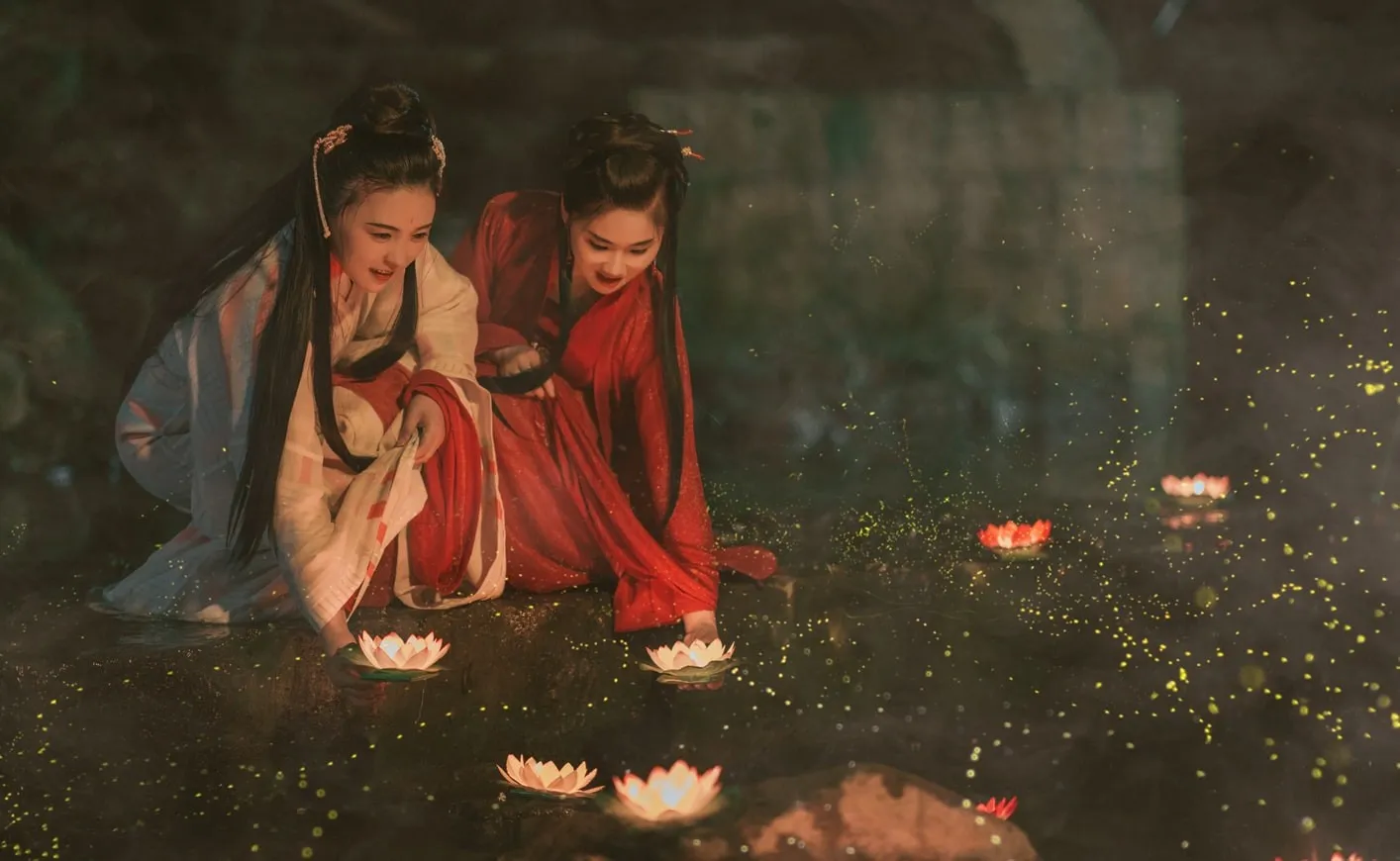
Lantern Festival Celebration
The duration of celebrations varied throughout history. Nowadays, the festival technically isn’t a national holiday, so there aren’t any days off. The best period for Lantern Festival lovers would be the Ming dynasty. It lasted around 1 month, some holidays coincide with the Lantern Festival and are now celebrated together.
Vegetable Stealing Festival
The Miao ethnicity in China celebrates the vegetable Stealing Festival. On this festival day, groups of girls steal Chinese cabbage from someone’s fields. Being caught is totally fine, but it is prohibited to steal from relatives or friends. After stealing, everyone puts the stolen Chinese cabbage together to make a meal. The person who eats the most will be the one to marry first.
Lighting the Lantern
Lanterns are the most important part of the festival, which you can probably tell by the name. In the old days, the Lantern Festival was also called Shang Yuan. It was dedicated to the heavenly palace. In their yeards, people would gather and give offerings to the gods. The lit lantern near the setup symbolised a god’s seat. Throughout history, many differences of lanterns have been created. They can be large as a parade float or small globes that fit in your palm. A significant variation is the Kongming lantern, and they represent success, hope, and happiness. In the old days, people used these lanterns to signify they were safe after an attack, now, they are used for wishes. Also known as the sky lantern (tiān dēng), it sounds similar to tiān ding, which means ‘adding children’. Lanterns would be gifted to wedding couple or couples without children to pass on the blessings. A pair of small lanterns would be given to pregnant women to wish safety and health on both child and mother. Some regions also burn lanterns to define their future child gender from the shape of the ashes.
Lantern Riddles
People in ancient China would often get together with some friends, drink wine and write poetry. Plays on words and riddles were a favourite pastime. Lantern riddles are riddles that were written on the lanterns that are displayed during the Chinese Lantern Festival. The full name name of Lantern Riddles are ‘Riddles written on lanterns’. During this festival, people write riddles on the lanterns. They require you to be smart and think outside the box. According to many love stories, you can catch the attention of your crush through this game.
Dragon dance
The history of Dragon dance as old as the history of Chinese culture itself. Dragon dances feature huge dragons made of cloth, coloured paper, and small battery-lit lanterns shaped like shrimp and fishes strung together with pieces of cloth. To the deafening sounds of drums and gongs, the ‘dragon’ dances up and down the streets while strings of fireworks and firecrackers are set off. There are special moves, and dances need to be well coordinated. There are professional dragon dancing competitions.
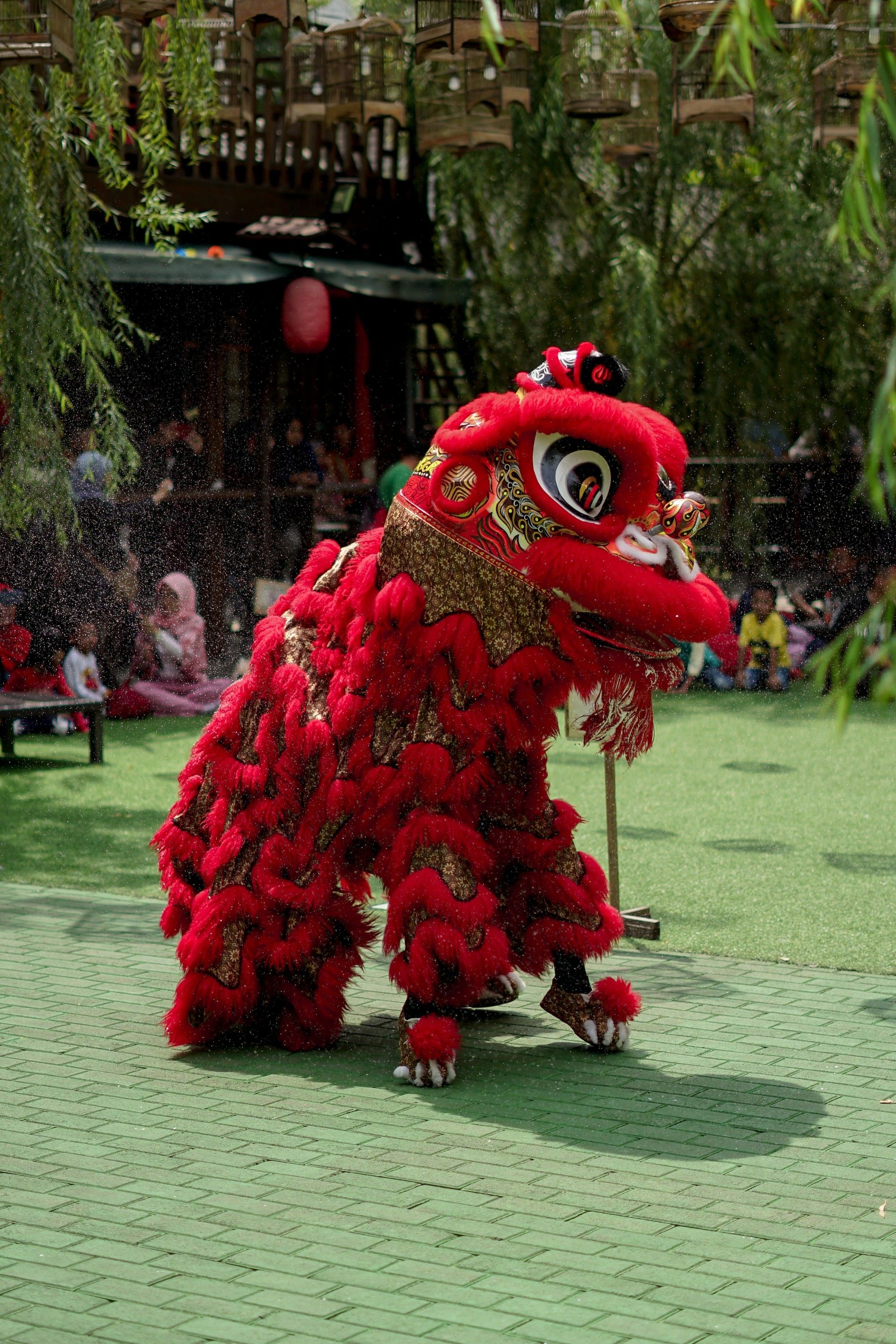
Lion dance
Traditionally, the lion dance performed on significant occasions such as during Chinese New Year for good luck as it is considered that the lion is an auspicious animal. The lion symbolises wisdom, superiority, and power in Chinese culture. Chinese people perform lion dances on big occasions or Chinese festivals to bring good fortune and chase away evil spirits. It is one of the most important tradition at the spring festival, and it is performed on the Chinese New Year to bring good luck and prosperity in the coming year. Also, the lion dance is a way to bring happiness and create a festive atmosphere. The lion dance performed in a lion costume, along with the music of beating drums, and resounding gongs, lion dances copy a lion’s various movements or demonstrate martial arts agility, depending on the style. Two dancers in lion costume perform lion dances, rather like a pantomime horse. The performers demonstrate the lion body; the one behind is the back, and hind legs and one in front is the head and front limbs. Performers legs are dressed the same colour as the lion body, and sometimes the costume extends to shoes the shape and colour of the lion’s paws.
Boat and trotting dance
Boat dancers are men or women disguised as women who wear boat-shaped props around their waist that have pieces of silk that hand down and cover their legs. While singing, the dancers copy boat movements while a boatman follows them. The trotting donkey dance is alike to the boat dance, but the props and story are different. The women in this dancewear donkey prop around their waists and pretend they are carrying child in their arms. A man follows behind the ‘donkey’ with a whip. The ‘donkey’ sometimes goes slow sometimes fast, and sometimes falls in a pit while the man works up a big sweat wrestling and struggling with the animal.
Eating Rice Ball
Traditionally, the food for Lantern festival is a glutinous rice ball filled with sesame paste, sweet red bean paste, or peanut butter and round in shape. It is called ‘Tangyuan’ and ‘Yuanxiao’ in southern and northern China respectively. Also, there are varies ways to make it both in southern and northern China. Meaning of happiness and family reunion may be felt from the round shape and name of the rice balls.
Watching firework
In addition to magnificent lighted lantern, at night fireworks form a grand scene. Many families saved some fireworks from the Spring Festival and set them off during the Lantern Festival. Even some local government organise a fireworks party. On the night when the first full moon enters the New Year, Chinese people become happy by the inspiring fireworks and bright moon in the sky. Despite being a night of revelry, the Lantern Festival is also a night for families. Before Chinese New Year finally ends, the family should reunite again. Take a break from the celebrations and relax with your family. Reconnect under the moon. Enjoy firework shows and performances while eating a bowl of yuan xiao.
Responses • 0
0/2000
ID: 322
Matthias
Offline
2 day
Visited
From
Orlando, United States
Send Message