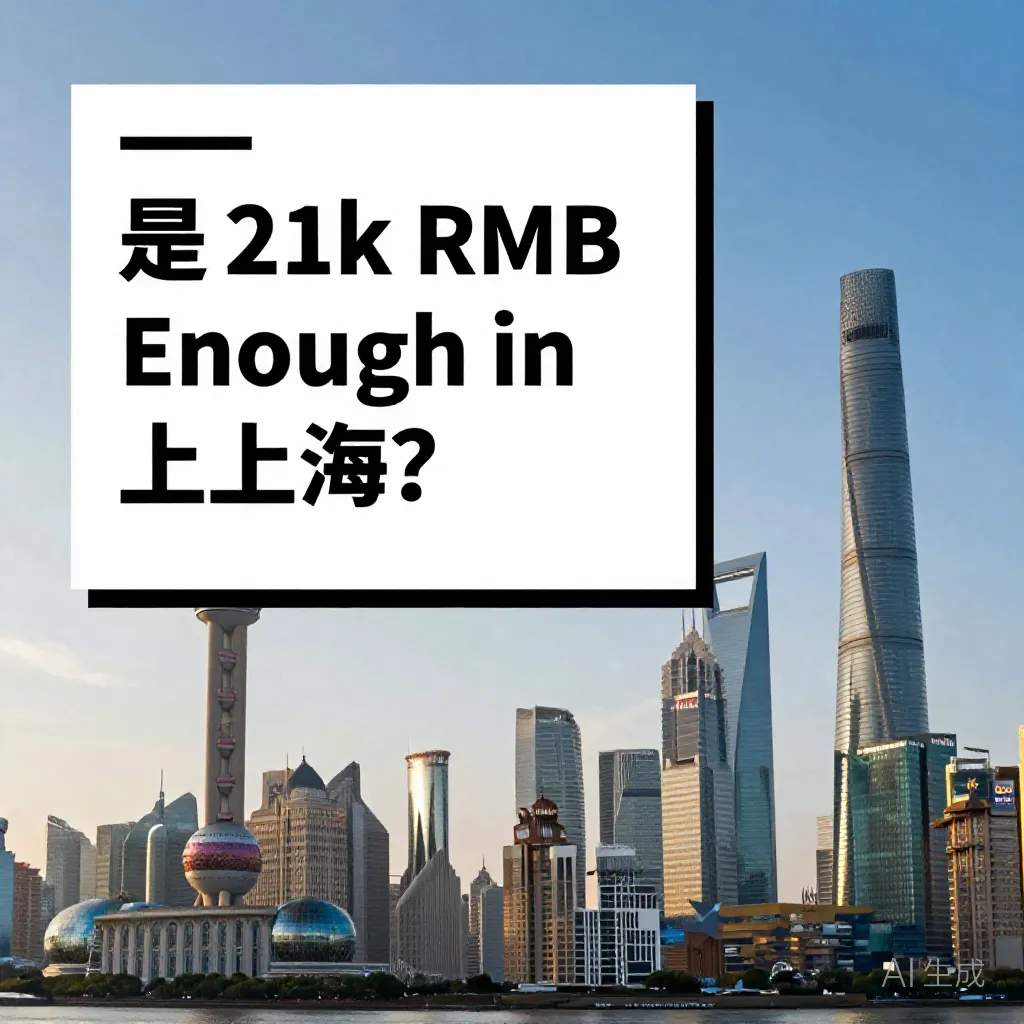
Is 21k RMB Enough in Shanghai?
AI Learn Chinese
6 hr • 0 read
Moving from Tokyo to Shanghai? We break down if a 21,000 RMB monthly budget allows for a comfortable life in 2026, with detailed cost comparisons and realistic scenarios.
Introduction: A Tokyo Resident's Shanghai Budget Question
So, you're planning a move from Tokyo to Shanghai next year. That's an exciting cross-cultural leap. Your core question is sharp and practical: is a monthly budget of 21,000 RMB (or slightly more) sufficient to live well in Shanghai?
You've done the currency conversion from your current yen-based expenses, which is a smart first step. But the answer isn't a simple yes or no. It depends entirely on your lifestyle expectations, your priorities, and your ability to navigate a new city's economic landscape. This article will serve as your detailed financial compass, translating that single budget number into a lived experience.
We will unpack housing, food, transport, and hidden costs, directly comparing them to Tokyo's familiar price tags where helpful. The goal is to move you from a state of uncertainty to one of informed readiness.
Your starting point is a significant advantage. Living in Tokyo, one of the world's most expensive metropolises, means you already understand high-cost urban living. The mental model of budget allocation for rent, transport, and groceries is there.
The challenge is recalibrating that model for Shanghai's unique structure. Some costs will shock you as lower, others may surprise you as comparable or even higher. We will assume your 21k+ RMB is your total net budget for all personal living expenses, excluding any employer-provided housing or stipends.
This is your standalone number to make work. Let's begin with the largest and most variable line item: where you will sleep.
The Foundation: Housing Costs and Rental Realities
Housing will consume the largest slice of your 21,000 RMB pie, typically 30% to 50% in major Chinese cities. For a single person, this means securing a one-bedroom apartment in a decent neighborhood or a studio in a prime location. The math is your first crucial test.
In Tokyo, a modest one-bedroom outside the absolute city center might cost 80,000 to 120,000 yen monthly. Converting that naive expectation to Shanghai is a trap. The rental markets operate on different fundamentals regarding deposits, agency fees, and district valuation.
Understanding the Shanghai Rental Market Structure
The Shanghai rental market is fast-paced and often requires significant upfront cash. Unlike Tokyo's standardized shikikin (key money) and reikin (deposit), Shanghai commonly demands a "two-month deposit plus one month's rent" upfront, plus a commission to the agent (usually 50% of one month's rent). For an 8,000 RMB/month apartment, you need 24,000 RMB for deposit, 8,000 RMB for first month, and 4,000 RMB for the agent fee.
That's 36,000 RMB just to get the keys. Your 21k monthly budget must accommodate this initial hurdle from savings. Key money in this context is non-negotiable and a major barrier to entry.
District choice dictates price more than in Tokyo. Central districts like Jing'an, Xuhui, or Huangpu command premiums. A decent one-bedroom in these areas starts at 9,000 RMB and can easily reach 15,000 RMB for a modern building.
Moving slightly out, to places like Putuo, Yangpu, or parts of Pudong, drops prices to the 6,000-8,000 RMB range for similar sized units. The trade-off is commute time. Your Tokyo experience with 30-45 minute commutes is normal; in Shanghai, a 60-minute metro ride from the suburbs is common.
You must decide: pay more for central convenience, or save on rent for a longer commute.
The "Hutang" Option: Urban Villages for Budget Savvy
For the budget-conscious newcomer, the hutang (urban villages) present a unique Shanghai phenomenon. These are dense, older residential enclaves, often slated for redevelopment, offering extremely cheap rentals. You can find a private studio or a shared apartment with a private room for 2,500-4,500 RMB monthly.
The cost savings are immense, freeing up your budget for everything else. But, the trade-offs are substantial: smaller spaces, older facilities, shared bathrooms in some cases, and a less polished living environment. For someone trying to make 21k stretch while exploring the city, a hutang room for the first six months is a pragmatic, if rustic, strategy.
It’s the equivalent of a Tokyo danchi (public housing) in spirit, but with a more informal, transient feel.
Utility Deposits and Setup Costs
Beyond rent, you must budget for utilities and setup. Electricity, water, gas, and internet are typically tenant-paid. For a single person, expect 300-600 RMB monthly, depending on air-conditioning use (a non-negotiable summer expense).
Internet is around 100-200 RMB for a solid fiber connection. Crucially, utility companies often require a deposit, usually 200-500 RMB per service, refundable upon moving out. This is another upfront cost.
The total "move-in capital" needed—first month, deposit, agent fee, utility deposits—can easily hit 40,000 RMB even for a mid-range apartment. Your planning must account for this lump sum before your first 21k monthly cycle even begins.
Daily Necessities: Groceries, Dining, and the Cost of Eating
With housing sorted, your daily consumption defines your quality of life. Here, Shanghai can feel like a bargain compared to Tokyo, but only if you shop and eat like a local. The cost of imported goods and Western-style dining will shock you with their similarity to, or even exceeding, Tokyo prices. A successful budget is about strategic localization of your consumption habits.
Grocery Shopping: Local Markets vs. Imported Supermarkets
Fresh produce at local wet markets (chaoshi) is remarkably affordable. A kilogram of tomatoes, a bundle of greens, or a fish from the stall costs a fraction of what you'd pay at a Seiyu or Aeon in Tokyo. Mastering the local market is your single best money-saving skill.
You can easily feed yourself fresh, healthy meals for 1,500-2,500 RMB monthly if you cook at home. This is where the 21k budget gets breathing room. But, the moment you step into a City'super, Ole', or even a Japanese supermarket like Lawson's (which exists in Shanghai), prices align with Tokyo's.
Imported cheese, quality Australian beef, and specific Japanese condiments carry a heavy premium. Your grocery strategy must be binary: 80% local market, 20% imported for treats.
Dining Out: From Street Food to Fine Dining
Shanghai's dining scene is a spectrum. On the ultra-affordable end, street food and casual local eateries are legendary. A bowl of xiaolongbao (soup dumplings) can be 15 RMB, a plate of fried noodles 20 RMB, a full lunch set at a worker's restaurant 25 RMB.
You can eat out for every meal and spend under 4,000 RMB monthly if you avoid tourist traps and upscale malls. This is a massive advantage over Tokyo, where a casual meal rarely drops below 800 yen. For socializing, a meal at a mid-range restaurant (think a nice Sichuan or Shanghainese place) costs 80-150 RMB per person.
A craft beer in a bar is 30-50 RMB. Compared to Tokyo's izakaya prices, this is still generally cheaper, but it adds up quickly if your lifestyle is "eating out with colleagues four times a week." Your 21k budget can support a vibrant social life here, but it requires conscious choices.
The Coffee and Convenience Store Trap
A daily habit from Tokyo might be your budget's silent killer: the convenience store coffee and snack. A coffee at a FamilyMart or Lawson in Shanghai is about 15-25 RMB, similar to Japan. But if you're used to grabbing a sandwich and a drink daily, that's 40 RMB x 30 days = 1,200 RMB.
That's a significant chunk of your discretionary fund. Switching to making coffee at home and packing lunches is a non-negotiable adjustment for making 21k work comfortably. The convenience store is for emergencies, not routine.
Navigating the City: Transport Costs and Commutes
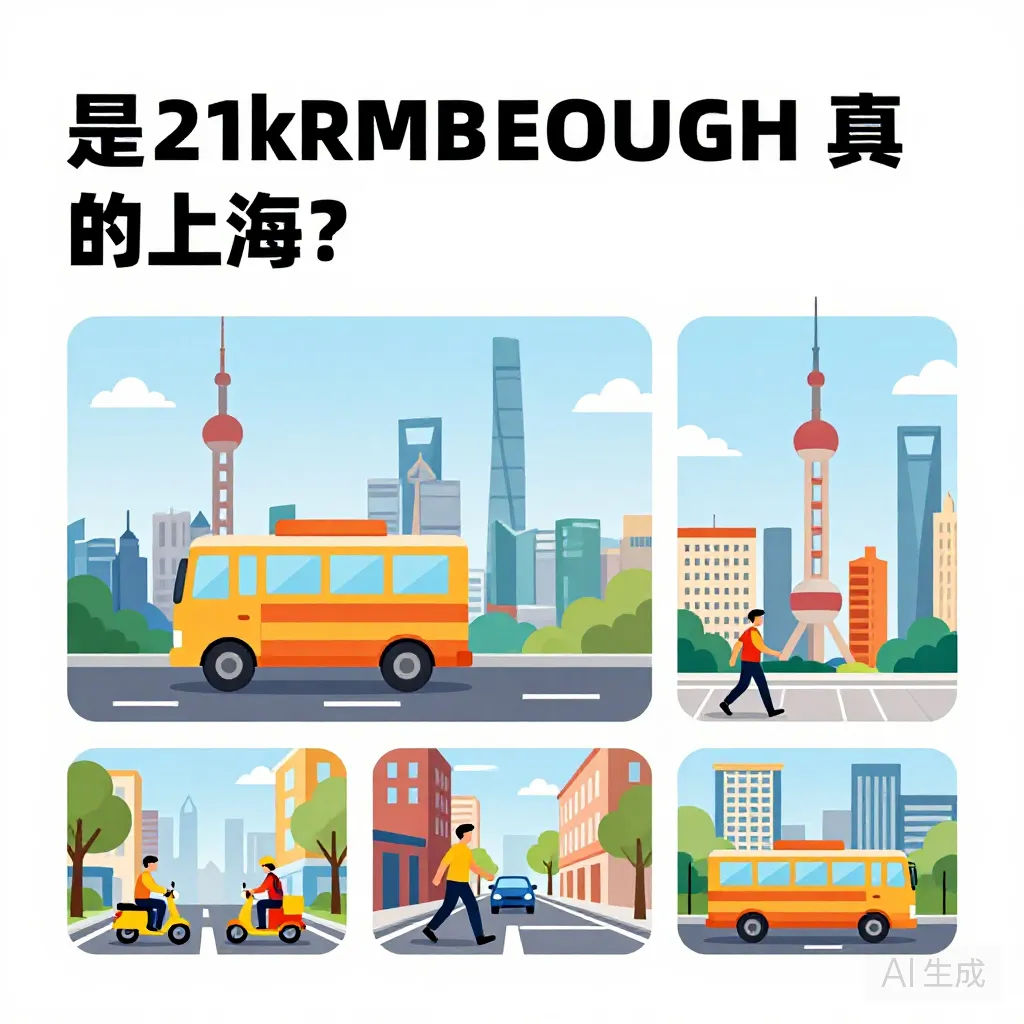
Tokyo's public transport is famously efficient but expensive. Shanghai's metro is both efficient and staggeringly cheap by comparison. This is a major area of savings.
A single metro ride, regardless of distance within the city, costs 3-9 RMB based on distance. A monthly unlimited pass for a single line is around 100 RMB. Even with a 10km commute, your daily round trip might be 12 RMB.
That's 360 RMB monthly. In Tokyo, a similar commute on the Yamanote Line would be over 300 yen one-way, totaling well over 15,000 yen (750+ RMB) monthly. This difference is profound.
Your transport budget can be minuscule if you rely solely on the metro and buses.
The Didi and Taxi Consideration
But, life isn't always metro-convenient. For late nights, bad weather, or trips to less-connected areas, you'll use ride-hailing apps. Didi is the dominant player.
A 20-minute Didi ride in the city center costs 30-60 RMB. Using it occasionally (say, 8 times a month) adds 400 RMB. Taxis are slightly cheaper but harder to hail.
The key is moderation. If your lifestyle defaults to taxis for convenience, your transport cost will balloon and eat into your housing or dining budget. The Tokyo mindset of "just taking the train" needs to be even stronger in Shanghai due to the extreme cost advantage of the metro.
Biking and Walking: The Free Option
Shanghai is a remarkably walkable city in its core districts. a number of expats living in Jing'an or the French Concession choose to walk or bike to work. The city has extensive bike-sharing systems (Mobike, Meituan) costing 1.5 RMB per 30-minute ride.
If your home and work are within 3km, this can be your primary, almost free, transport. The weather is a factor—summers are hot and humid, winters damp and cold. But for half the year, biking/walking is a viable, healthy, and cost-zero option that further stretches your 21k.
This is a lifestyle choice that directly impacts your bottom line.
Healthcare, Insurance, and the Safety Net
Japan's national health insurance system is comprehensive and relatively low-cost. Shanghai's system for foreigners is more complex and requires proactive management. This is a critical, often overlooked, component of your monthly budget that cannot be ignored. Healthcare costs in China are lower than in the US, but without proper insurance, a single emergency can devastate your finances.
Public vs. Private Healthcare Facilities
Shanghai has world-class public hospitals (like Ruijin, Zhongshan) and expensive international clinics (like Parkway Health). Public hospitals are very affordable with insurance but involve long waits, language barriers, and chaotic processes. A general consultation at a public hospital with insurance might cost 50-200 RMB out-of-pocket.
Without insurance, it could be 500-1,000 RMB. For serious illness or injury, costs without insurance rise into the tens of thousands quickly. International clinics offer Western-style service and English-speaking doctors but charge US/European rates.
A simple check-up is 1,000+ RMB. Your 21k budget cannot withstand an uninsured visit to an international clinic.
Securing Your Health Coverage
If your employment in Shanghai does not provide comprehensive international health insurance, you must purchase a private plan. A robust expat health insurance plan for a 30-year-old in China can cost 1,000-2,500 RMB monthly. This is a mandatory line item in your budget.
It is not optional. Factor this in immediately. Also, you should have a small emergency medical fund of 5,000-10,000 RMB in savings, separate from your monthly 21k, to cover deductibles or co-pays.
The peace of mind this provides is worth the allocation. Do not assume the public system will be easy or cheap without navigating its bureaucracy first.
Lifestyle, Entertainment, and Socializing on a Budget
This is where "living well" is defined. Your 21k must cover not just survival but a life you enjoy. Shanghai offers incredible depth of experience, from free park activities to high-end cocktail bars.
The key is curating your entertainment portfolio to match your budget. Unlike Tokyo, where a movie ticket is 1,800 yen and a casual drink out is a given, Shanghai has more tiered options.
Free and Low-Cost Cultural Activities
Shanghai excels at free or very cheap cultural access. The city's museums (Shanghai Museum, Natural History Museum) are either free or cost 20-50 RMB. The iconic Bund promenade, the French Concession's tree-lined streets, and the ancient gardens like Yuyuan are free to explore.
Community events, art openings in M50, and lectures at bookstores like Muji Books are often free. This allows for a rich, intellectually stimulating social life without a high price tag. You can spend weekends immersed in culture for under 200 RMB total, including transport and a coffee.
This is a stark contrast to Tokyo, where many cultural attractions have a standard 1,000+ yen entry fee.
The Cost of Socializing: Drinks, Meals, and Hobbies
A night out with friends defines your social budget. A beer in a local bar is 30-50 RMB. A cocktail in a nicer venue is 60-100 RMB.
A shared meal at a good restaurant is 100-150 RMB per person. If you go out twice a week with this pattern, your monthly entertainment/social budget hits 1,200-2,000 RMB easily. This is sustainable within 21k, but it's a conscious choice.
Hobbies also vary wildly. Joining a gym (like a Pure Yoga or local fitness center) is 300-800 RMB monthly. A yoga class drop-in is 80-150 RMB.
Playing badminton at a community center is 30 RMB per session. These are all comparable or cheaper than Tokyo equivalents. The danger is not the core cost, but the accumulation of small, frequent treats that add up to a "lifestyle creep" that breaks the budget.
The Hidden Costs: Taxes, Fees, and Financial Buffers
Your 21k is your take-home pay, right? In China, the personal income tax (IIT) system is progressive and deducted at source by your employer. Your employer should provide a breakdown.
For a monthly salary of, say, 25,000 RMB gross, your net might be around 21,000 RMB after IIT and social insurance contributions (pension, medical, unemployment). This is a critical point: your 21k+¥ is likely your net figure. You must confirm this.
If 21k is your gross salary, your net will be lower, and the budget becomes much tighter. often plan based on the net amount that hits your bank account.
Social Insurance and Housing Fund
Employers in China must contribute to a social insurance pool (pension, medical, unemployment, work injury, maternity) and a housing provident fund (gongjijin). As an employee, you contribute a percentage of your salary (usually around 10-11% combined) to these. This is a pre-tax deduction.
It's not disposable income, but it's a forced savings and benefit system. The housing fund is particularly useful—you can use it to pay rent or for a future home down payment at favorable rates. While it reduces your monthly cash flow, it's a long-term benefit.
Understand your payslip. Your 21k net is after these deductions.
The Emergency Buffer and Unexpected Expenses
Life happens. A flight home for a family emergency, a broken phone, a required professional certification, or a sudden visa renewal fee. These are not monthly but must be planned for.
Financial advisors recommend a buffer of 3-6 months' living expenses in an accessible savings account. For a 21k/month budget, that's 63,000-126,000 RMB. This is a long-term goal, but you must start building it immediately from your surplus.
Your first year's budget should aim to save at least 5,000 RMB monthly, if possible, to build this shield. Without it, any unexpected event forces you into debt or drastic cuts, undermining your "living well" premise.
Income Considerations: Is 21k a Competitive Salary?
This brings us to the source of the 21k: your employment. Is this a good salary for an expat professional in Shanghai in 2026? The answer depends on your industry, experience, and whether the package includes housing or other benefits.
For a mid-level professional in tech, finance, or marketing with 3-5 years of experience, a gross salary of 25,000-35,000 RMB (net ~21k-28k) is common. For a junior role or in a less lucrative industry, 21k net might be on the higher end. You must research your specific field on platforms like Liepin, Zhaopin, and expat forums.
The key is to understand your total compensation. If your 21k is net and includes no housing allowance, it is a tight-but-manageable budget for a single person. If it includes a company apartment, it becomes very comfortable.
If you are supporting a family, it is insufficient. Clarity on your package is step zero.
The Freelancer and Entrepreneur Variable
If your 21k is not from a traditional employer but from freelance work, consulting, or a startup, the calculation changes. You now bear the full burden of social insurance (you must pay it yourself), health insurance, and taxes. Your "business expenses" (co-working space, software, travel) also come from this pool.
In this scenario, 21k net is a volatile number. You must price your services to cover all these overheads and still leave a livable personal draw. a number of freelancers in Shanghai aim for a personal draw of 15,000-18,000 RMB to ensure business sustainability.
Your 21k target is ambitious but possible with disciplined financial management and a steady client roster.
Strategic Budgeting: Making 21k Work in Practice
Assuming your 21k is confirmed net income and you are single, here is a sample, realistic budget allocation that prioritizes comfort without extravagance. This is a template to adapt. Rent (including utilities estimate): 7,000 RMB (for a decent studio in Putuo or a shared apt in Jing'an).
Groceries & Home Cooking: 2,500 RMB. Transport (Metro + occasional Didi): 500 RMB. Health Insurance: 1,500 RMB.
Phone/Internet: 300 RMB. Social Life & Dining Out: 2,500 RMB. Miscellaneous & Shopping: 1,500 RMB.
Savings/Buffer: 5,200 RMB. This totals 21,000 RMB. Notice the savings line is robust.
This is the "live well" scenario—you have a pleasant home, eat well mostly at home, socialize regularly, and build a safety net. If your rent is 9,000 RMB due to a central location, you must cut 2,000 RMB from other categories, likely from social life and savings, to balance. The trade-off is clear.
Leveraging Technology to Track and Optimize
Use budgeting apps. Alipay and WeChat Pay automatically categorize your spending. Review your weekly expenditures.
Identify the "leaks"—that daily coffee, the unplanned online shopping spree, the expensive group dinner you felt pressured to join. Shanghai's digital payment ecosystem makes spending frictionless, which is dangerous for a budget. You must impose friction through conscious review.
Set a weekly "fun money" limit in cash or a separate digital wallet. Automate a transfer to your savings account on payday before you have a chance to spend it. This "pay yourself first" strategy is essential.
The Power of the "No" and Local Integration
Learning to say "no" to social invitations that blow your budget is a skill. Suggest cheaper alternatives: a picnic in the park instead of a brunch, a house party instead of a bar. Integrate locally.
Make friends with Chinese colleagues who understand affordable local spots. They will know the best xiaochi (snacks) and the cheapest hútòng (alleyway) eateries. This integration is not just cultural; it's financial.
The expat bubble is expensive. Your goal is to live in Shanghai, not just around it. This mindset shift is the ultimate tool for making 21k feel abundant.
Conclusion: From Uncertainty to Informed Action
So, is 21,000 RMB enough to live well in Shanghai? The definitive answer is: yes, but with significant and deliberate conditions. It is enough for a single person who secures housing outside the ultra-prime central districts, cooks at home frequently, utilizes the superb and cheap public transport, has employer-provided or self-purchased health insurance, and maintains a disciplined approach to discretionary spending on socializing and shopping.
It will not support a luxury lifestyle of daily imported groceries, constant taxi rides, and dinners in French Concession bistros. Your Tokyo experience helps you understand urban costs, but you must discard any assumptions about rental deposits, the affordability of local food, and the sheer cheapness of metro travel.
The transition requires upfront capital for housing deposits and a mental shift towards localization of consumption. The 21k budget, managed well, provides a comfortable, even adventurous, life in one of the world's most dynamic cities. It allows for travel within China, for exploring the country's vast culinary landscape, and for saving a meaningful amount each month.
The uncertainty you feel now is a sign of prudent planning. By using this breakdown as a checklist—securing housing, getting insurance, understanding your net pay, and building a buffer—you transform that uncertainty into a actionable plan. Shanghai in 2026 can be yours on this budget, provided you move with both excitement and a sharpened pencil.
Your next step is to research specific districts on platforms like Anjuke and Lianjia, get exact insurance quotes, and have that frank conversation with your future employer about your net compensation. The numbers are in your favor if you navigate them wisely.
Responses • 0
0/2000
ID: 1326
Chris
Online
From
Bakersfield, United States
Send Message