Correct
车到山前必有路
/ chē dào shān qián bì yǒu lù /
Strokes
Collocation
1
既然车到山前必有路
2
但车到山前必有路
3
认为车到山前必有路
4
俗话说,车到山前必有路
Definition
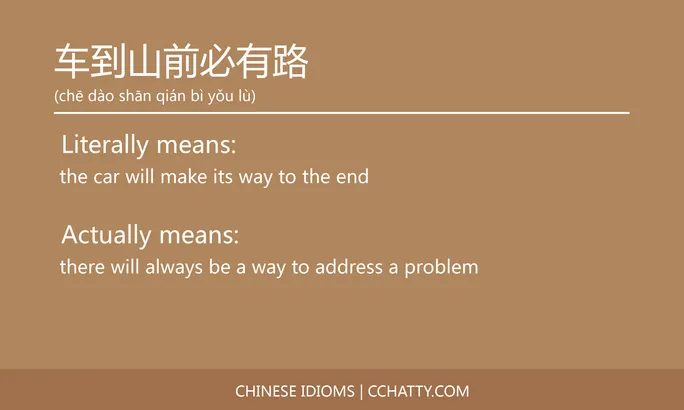
车到山前必有路
Literally means:
the car will make its way to the end
Actually means:
we will cross the bridge when we come to it; problems will take care of themselves
When the car is near the mountain, eventually the driver shall find way to get over.
It figuratively means that there will always be a way to address a problem. It is often used to comfort others.
车到了山的面前一定会找到路的。
比喻碰到事情时总有对付的办法。多用于安慰别人。
Example
Used as minor sentence, predicate or object. (作小句、谓语、宾语)
1
Chēdàoshānqiánbìyǒulù
车到山前必有路
,
zījīn
资金
zǒngshì
总是
kěyǐ
可以
zhǎodào
找到
de
的
。
Yàoshi
要是
yínháng
银行
bù
不
gěi
给
wǒmen
我们
dàikuǎn
贷款
,
wǒmen
我们
hái
还
kěyǐ
可以
dào
到
mínjiān
民间
qù
去
jiè
借
qián
钱
ma
嘛
。
There must be a way before the car d'ad, and money can always be found. If the bank doesn't lend us a loan, we can borrow money from the private sector.
2
Jǐnguǎn
尽管
zhǎo
找
gōngzuò
工作
quèshí
确实
hěn
很
nán
难
,
dànshì
但是
chēdàoshānqiánbìyǒulù
车到山前必有路
,
zhǐyào
只要
nǐ
你
bùyào
不要
guòfèn
过分
tiāoti
挑剔
,
gōngzuò
工作
háishi
还是
kěyǐ
可以
zhǎodào
找到
de
的
。
Although it is really difficult to find a job, but the car to the mountain must have a way, as long as you do not be too picky, the job can still be found.
3
Yǒu
有
zhǒng
种
guāndiǎn
观点
rènwéi
认为
chēdàoshānqiánbìyǒulù
车到山前必有路
,
zhǔzhāng
主张
zuò
做
jìhuà
计划
、
lì
立
xiàngmù
项目
bùbì
不必
bǎ
把
huánjìng
环境
wèntí
问题
xiǎng
想
de
得
nàme
那么
zhōuquán
周全
,
dào
到
shíhòu
时候
zìrán
自然
huì
会
yǒu
有
bànfǎ
办法
。
Qíshí
其实
,
zhèzhǒng
这种
duǎnshì
短视
xíngwéi
行为
yàobude
要不得
。
There is a view that the car to the mountains before there must be a way, advocating that planning, projects do not have to think so well about environmental issues, then naturally there will be a way. In fact, this kind of short-sighted behavior must not.