Correct
胆小鬼
/ dǎn xiǎo guǐ /
Strokes
Collocation
1
大家笑他是胆小鬼
2
他是胆小鬼
Definition
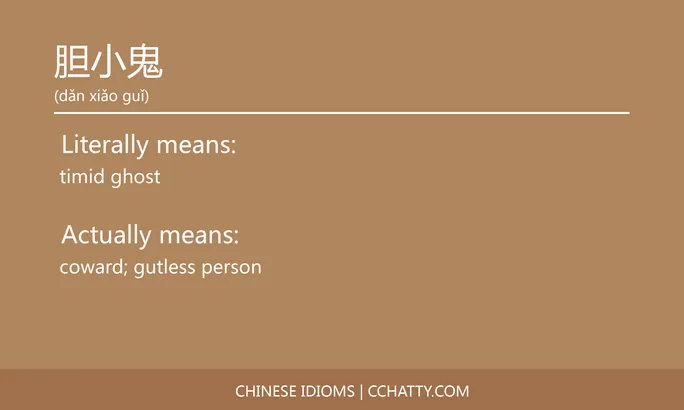
胆小鬼
Literally means:
timid ghost
Actually means:
It is used to describe a person who is timid or lacks courage, and it connotes a sense of contempt. It is often used as a swear word. Derogatory.
称呼胆子小的人,表示看不起。常用来骂人。具有贬义色彩。
Example
Used as object. (作宾语)
1
Tā
他
shì
是
gè
个
tānshēngpàsǐ
贪生怕死
de
的
dǎnxiǎoguǐ
胆小鬼
,
qiāng
枪
hái
还
méiyǒu
没有
xiǎng
响
jiù
就
táo
逃
de
得
wúyǐngwúzōng
无影无踪
。
He was a coward who was greedy for fear of death, and the gun had not been fired and he had escaped without a trace.
2
Xiǎowáng
小王
zuòshì
做事
jǐnshèn
谨慎
shì
是
duì
对
de
的
,
nǐmen
你们
bù
不
néng
能
shuō
说
tā
他
shì
是
gè
个
dǎnxiǎoguǐ
胆小鬼
。
Xiao Wang is right to be careful, you can't say he's a coward.
3
Tā
他
bù
不
gǎn
敢
zài
在
hēiyè
黑夜
lǐ
里
zǒulù
走路
,
dàjiā
大家
dōu
都
xiào
笑
tā
他
shì
是
dǎnxiǎoguǐ
胆小鬼
。
He was afraid to walk in the dark, and everyone laughed that he was a coward.