Correct
断线风筝
/ duàn xiàn fēng zhēng /
Strokes
Collocation
1
像是断线风筝
2
就如断线风筝
3
做了断线风筝
Definition
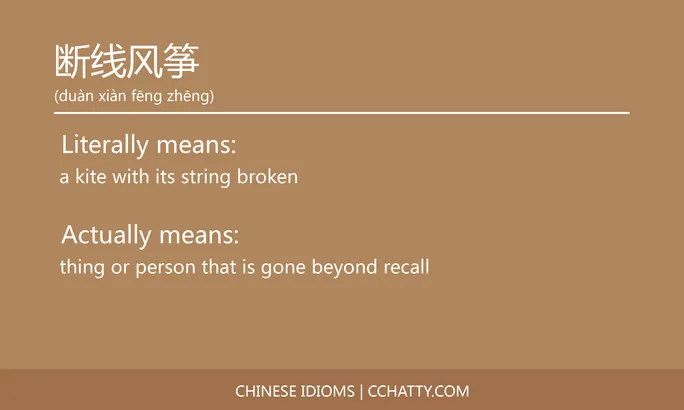
断线风筝
Literally means:
a kite with its string broken
Actually means:
thing or person that is gone beyond recall
Literally it refers to a kite with its bring broken. It figuratively means a person or thing that is gone forever. It also describes something that is swaying and unsettled.
线断了的风筝。比喻一去不回来的人或东西。也形容飘摇不定,没有着落。
Example
Used as obiect. (作宾语)
1
Rú
如
duànxiànfēngzhēng
断线风筝
,
shénme
什么
shíhou
时候
néng
能
zài
再
jiàndào
见到
tā
他
,
shuí
谁
yě
也
bù
不
zhīdào
知道
。
If you break the kite, when you can see him again, no one knows.
2
Rúguǒ
如果
nǐ
你
zuò
做
liǎo
了
duànxiànfēngzhēng
断线风筝
,
kěnéng
可能
juéde
觉得
zìyóuzìzai
自由自在
,
dànshì
但是
méiyǒu
没有
xìshéng
细绳
de
的
qiānyǐn
牵引
,
dàotóulái
到头来
bìdìng
必定
huì
会
míshī
迷失
fāngxiàng
方向
。
If you make a broken kite, you may feel free, but without string traction, you will lose your way in the end.
3
Tā
他
líjiā
离家
chūzǒu
出走
yǐhòu
以后
,
jiù
就
xiàng
像
duànxiànfēngzhēng
断线风筝
,
dàochù
到处
piāobó
漂泊
,
bùzhī
不知
héchù
何处
shì
是
guīsù
归宿
。
After he left home, like a broken kite, wandering around, I do not know where to end.