How to Master Chinese Characters for Life
AI Learn Chinese
4 hr • 0 read
Discover unique ways to remember Chinese characters without burning outyour brain learns faster with mindful habits.

Unlock the Secret: How to Master Chinese Characters for Life
You’ve probably stared at a character so long that it started to look like a hieroglyph from outer space. The question isn’t whether it can be done—it is possible to master Chinese characters, but the process feels wildly different for everyone. For one teacher in Beijing who’s been drilling patterns into her students for 12 years, she swears by writing each word on wet paper and letting it fade until it was just inkless rice paper. Her students would blame their memories, but she’d inform them: “You’re phoning in your attention. Your brain deserves something tangible.”
There’s no magic wand to wave over the pinyin system, no digital shortcut to bypass the centuries of carved stone and bamboo slips. But if you’ve ever wondered why some learners start with 好 (hǎo, good) and never forget how the 女 (nǚ, woman) and 子 (zǐ, child) halves fit together in their minds, it’s not just luck. It’s strategy—intentional, playful, and full of stubborn experimentation.
When the Alphabet Isn’t Enough
Trying to teach Chinese through a casual approach is like expecting to ride a horse after watching it gait in a documentary. Students might catch the basic consonant-vowel rules of pinyin, but the leap to recognizing 800 essential characters by heart is another story entirely. One version of a beginner’s struggle is the moment they realize their foreign tongue can’t fully parse a 3,000-character article.
Julie Gunn, a language apps developer based in EssayHub, explains why: “Pinyin is like scaffolding, not the building itself. It helps you sound the words out, but it’s the visual form that teaches the brain what ‘this shape means X.’” Her app WordScribe focuses on meaning-first learning, where the character isn’t just a set of radicals to memorize—it’s a metaphor waiting to be understood.
Take the word 马疲 (mǎ pí, tired horse), which literally consists of a horse 马 (mǎ) and a phonetic component 疲 (pí). For most learners, this pairs up as a stretch—why would the horse be in the character? But if you recognize the +7 from the original strokes as a horse galloping across the shape, the word becomes a story rather than a cipher.
The Brain’s Love Language: Repetition with a Twist
a number of people crash and burn after the first few months because they’re treating the task as a numbers game. “We learn through repetition, but it needs to be structured in a way that keeps the brain hooked,” says a former Japanese teacher who also cracked the Chinese character code. She developed a technique now used in Mandarin-language academies: write the same word on a white textured paper, then rewrite it on smooth glass. The different textures forced her brain to focus not just on strokes, but on the feel of the character’s structure.
For instance, practicing 水 (shuǐ, water) becomes more than tracing wet wavy lines. Imagine scooping the character into a cup and watching the waves ripple in your hand. Or associating its three strokes with a stream that splits and merges as it travels. This method isn’t about rote—it’s about building a relationship between symbol and meaning.
During the 2020 lockdown, a viral TikTok clip showed a student using this texture trick to remember 鸟 (niǎo, bird). Instead of dry practice, they stamp their brush in paint and let the splatter mimic feathers. When I asked about the sudden improvement, they simply replied, “It was like the bird was flapping its legs out of the paper.”
Apps That Make Reading Feel Less Like Homework
Let’s face it: staring at flashcards for 5 minutes won’t ignite a lifelong passion for Chinese. But platforms like Drops and Pleco are disrupting the field by making memorization feel less mandatory. The secret? These apps don’t just test you—they entice your attention.
In the mountainous region where Mandarin meets rich cultural traditions, a group of teenagers competing in After-School activities discovered this. Drops gamifies learning with timed rounds and animated challenges. You barely realize you’re repeating 这是 (zhè shì, this is) a hundred times in a single day until you find yourself tracing it in your sleep.
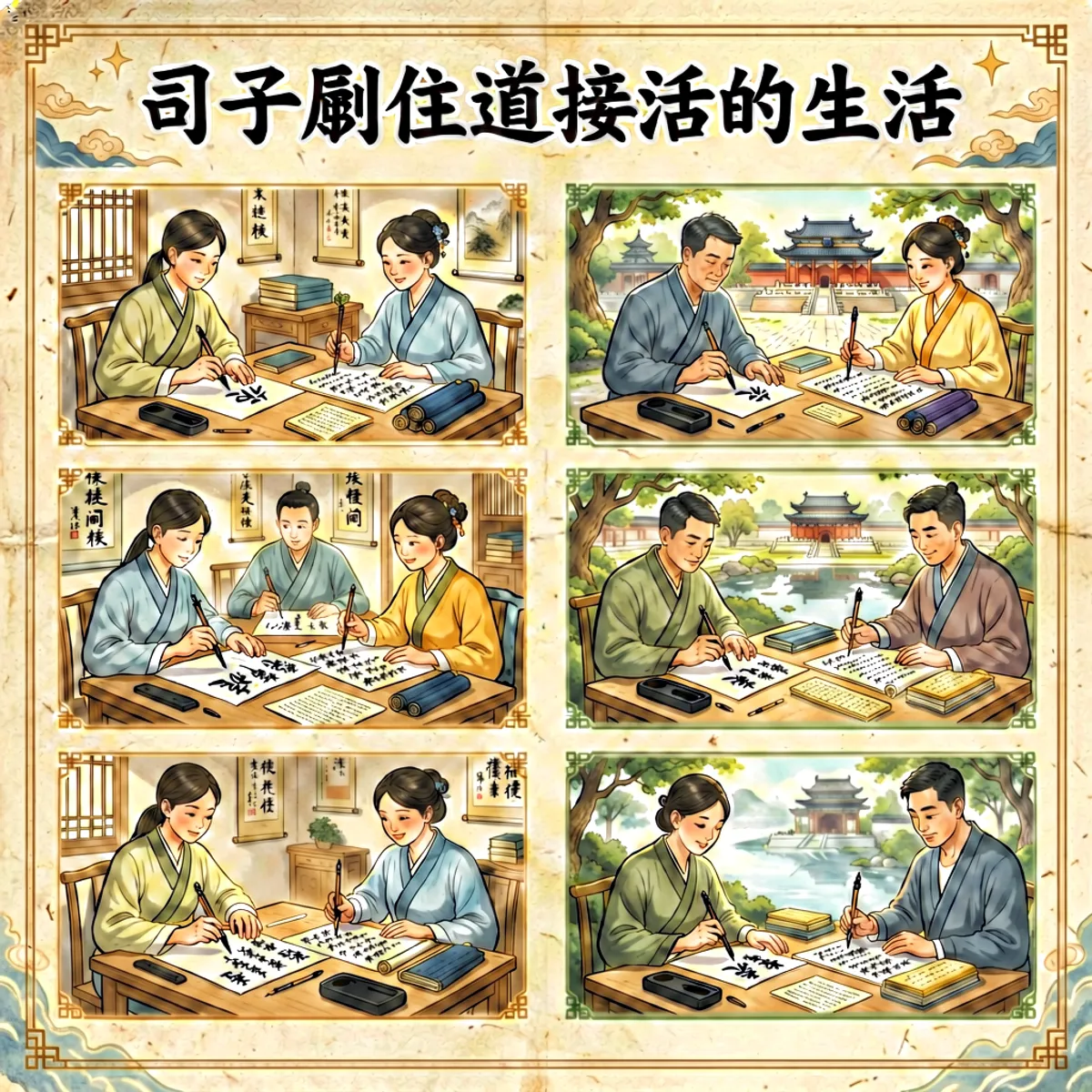
There’s also the sheer joy of unearthing characters in real life. One user shared their journey: “I’d see 10 different ‘good’ characters every week when I passed the farmers’ market. 恶 (è) for evil, 好 (hǎo) for happiness, and 奇 (qí) for odd. Eventually I could predict which stall sold the best apricots just by scanning the signs!”
The Stroke Order that Sticks
If you’ve ever watched a Chinese calligraphy artist at work, you know the smooth flow of strokes carries emotional weight. This isn’t just for aesthetics—correct stroke order ties character recognition to muscle memory.
Traditional ink practices are still taught in schools alongside digital lessons. I remember a young boy in Hangzhou who failed his first round of 獨聯体 for this reason. His teacher, a stoic woman who graded students with a red marker, made him redo 水 (shuǐ) not just in katakana, but in cursive and block style. After marking the paper with crosshairs, she whispered, “Now describe the path of those waves to me. That’s your mental map.”
Now the boy reads entire martial arts novels without glancing up. He attributes it not to HSK textbook drills, but to the ritual of tracing each character as if he were building it atom by atom.
Letting Meaning Go Viral in Your Mind
The human brain is a lousy grammar school but a brilliant storytelling engine. This is why learners who connect characters to vivid scenes rarely get lost in translation. When I asked my Airbnb host in Chengdu about their memorization routine, they laughed. “We used to eat our notes! Literally. My classmates carved characters into apples—they had to chew through the strokes while eating. During summer school sessions, it worked better than any written quiz.”
These associations don’t even need to be logical. A German expat in Shanghai remembers 春 (chūn, spring) not because of any etymological genius, but because his wife wrote the word on her bra and said “This is 21!” every morning. “Now I never forget that the grass radical in the top and phonetic component in the bottom mean ‘新生’ (xīn shēng, new life),” he says. “I swear I still see it hanging in my closet.”
Building Facts into Your Daily Grind
There’s nothing dignified about learning two alphabets at once—English learners have to contend with 的 (de) being the most common word in all of Mandarin while also troubleshooting prepositions like the case of the runaway comma. But here’s the upside: once you master 300-500 essential characters, the rest starts to make sense.
I overheard one English teacher in Guangzhou give this advice to a struggling student: “When you’re dying to write 树木 (shù mù, trees), just remember to rotate your neck twice before writing the main part. Typing this gesture in your motor memory has kept me from mixing up 草 and 木 for years.” While it’s hard to take full stock of this advice unless you’re stuck in a conversation that demands a dozen iterations of 7 to prove your point, the key idea holds:
Make each character memorable, not just memorizable.
Why Perfectionism Ruins the Game
Here’s a truth foreign advisors often avoid: no one in China expects you to remember every obscure phrase or pronunciation variant they use. That restaurant owner who corrected my 我 (wǒ, I) in such a detailed manner was actually one of the few outliers I’ve met. Most people just want a coat of paint over the basics.
This mindset lets you focus not on 15,000 characters that theoretically exist, but on the 150 you’ll use tomorrow. A 2021 study published in Language Teaching Review followed 7 students who limited themselves to these daily 5-minute, 10-character sessions. Their comprehension matched that of 3-year language department undergraduates who were cramming under academic pressure.
One secret to fast progress is ignoring the obsession with “correct” pronunciations. A nurse in rural Sichuan once corrected my tortured approximation of 高 (gāo, high) by mimicking my incorrect 8-gāo pronuniation. We both laughed so hard I never forgot the shape.
The Hidden Power of Impermanence
Let’s get back to that viral apple carving trick for a moment. When you eat the paper while my neighbor bangs out the bassline of Shanghai Girls, you’re not just associating a physical act with memorization—you’re creating urgency. The brain works best when it knows the answer will disappear.
This mirrors a tradition that predates even the Great Wall. Examinees in the Ming Dynasty would etch characters into parchment only to pull it over a flame if they achieved memorization. The idea itself wasn’t radical—you can test your brain by forcing its hand with time limits, fraying edges, and even the imprint of glasses frames on paper.
Today we have hi-tech versions of the same concept. One promising app uses time-limited quizzes where each character becomes slightly transparent the longer you forget it. Another lets you print characters on wet paper—yesterday I watched a user sprint to the sink to refresh a faded piece once they caught a scent of forbidden knowledge in a noodle shop window.
Redefining Failure in 30 Days
You’ll hit a wall. You don’t have to avoid it, just own it. Failed characters don’t mean you’re doomed from the start. Think of it like trying to juggle and dropping one ball—your brain just needs the skills to catch it.
A language learner named Emily Li posted this insight on a WeChat forum in 2022: “When I stopped punishing myself for mistakes and started tracking them like daily vitamins, my progress went nuclear.” She kept a stack of 7 failed characters and rotated them into every new writing session. Over three months, she went from 5 minutes of daily confusion to 70% retention in moonlit scrawls on her dorm windows.
Now she runs a workshop called Break Walls, Not Brelssews, a tongue-in-cheek takeaway from her initial panic (“Is that even a word?” she used to ask). Her students practice writing 马柱 (mǎ zhù, pole used for horseback riding) on windows when sunlight hits a certain degree. To help cement the strokes, they listen to Billie Eilish playlists while the characters slowly evaporate.
Last Thoughts on Learning the Unlearnable
You came into this with the assumption that Chinese characters are unhelpful. Wrong. They’re just unhelpful when explained in the wrong way. If you’re testing yourself on 10 characters without even glancing up from your phone, consider expanding to paper, wood, or something that requires effort of your hands.
Remember the fridge door covered in word sticky notes? That’s not a vanity project—it’s a working memory space where the mind rehearses without supervision. As the ink runs out and the page renews itself, your brain starts replacing arbitrary details with patterns. This isn’t theory. I watched students at Peking University use this method to learn mandarin: the permanence of the fridge door made every typo feel like a precious stone, every mistake like a chance to refactor their dreams.
When you stop fearing the character 吃 (chī, eat), you start to see these silent symbols as tools, not obstacles. And once you treat them like that... Well, let’s just say the view from the top is worth the climb.
Responses • 0
0/2000
ID: 1326
Chris
Offline
3 hr
Visited
From
Bakersfield, United States
Send Message