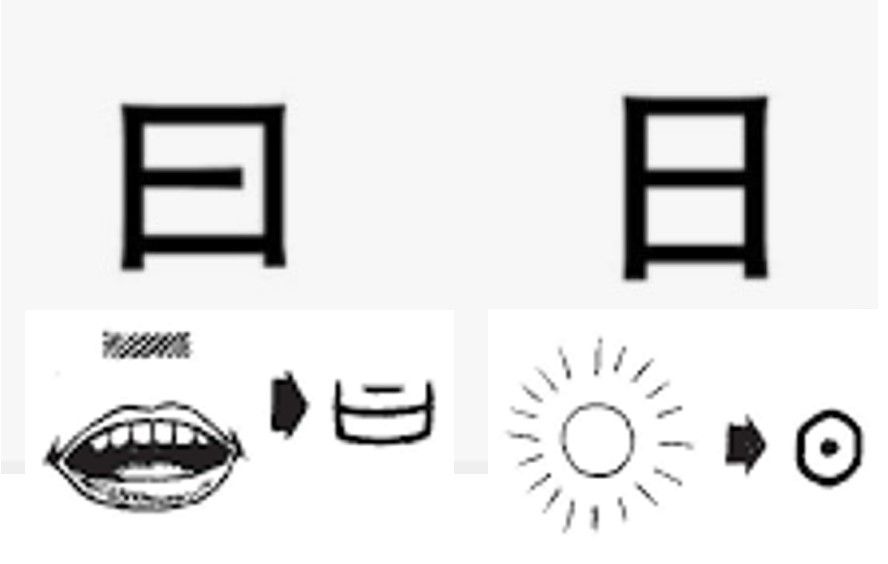
Actually it's not that important to distinguish 日 and 曰, even for we Chinese. It's not used in Chinese speaking widely nowadays.
But we can see from the shape of the two characters, 日 is the narrow one and 曰 is the wide one.
We often say 曰 in ancient Chinese,such as 子曰 in 《论语》(The Analects of Confucius)means ‘Confucius said’.(In Chinese Confucius' name is 孔子, so here the 子 stands for Confucius; 曰 means to say something.)
In a word, if you want to speak Chinese or sometimes use the language to communicate or even for your work, it's not that important to distinguish the two characters. It's necessary for you to take a deep insight only if you do some deep study on Chinese literature.
But we can see from the shape of the two characters, 日 is the narrow one and 曰 is the wide one.
We often say 曰 in ancient Chinese,such as 子曰 in 《论语》(The Analects of Confucius)means ‘Confucius said’.(In Chinese Confucius' name is 孔子, so here the 子 stands for Confucius; 曰 means to say something.)
In a word, if you want to speak Chinese or sometimes use the language to communicate or even for your work, it's not that important to distinguish the two characters. It's necessary for you to take a deep insight only if you do some deep study on Chinese literature.