How LGBTQ GNC International Students Thrive in China
AI Learn Chinese
4 hr • 0 read
Explore Chinas reception of LGBTQ and gender nonconforming international students: deep dive into campus culture, societal attitudes, plus practical 2026 advice for thriving.
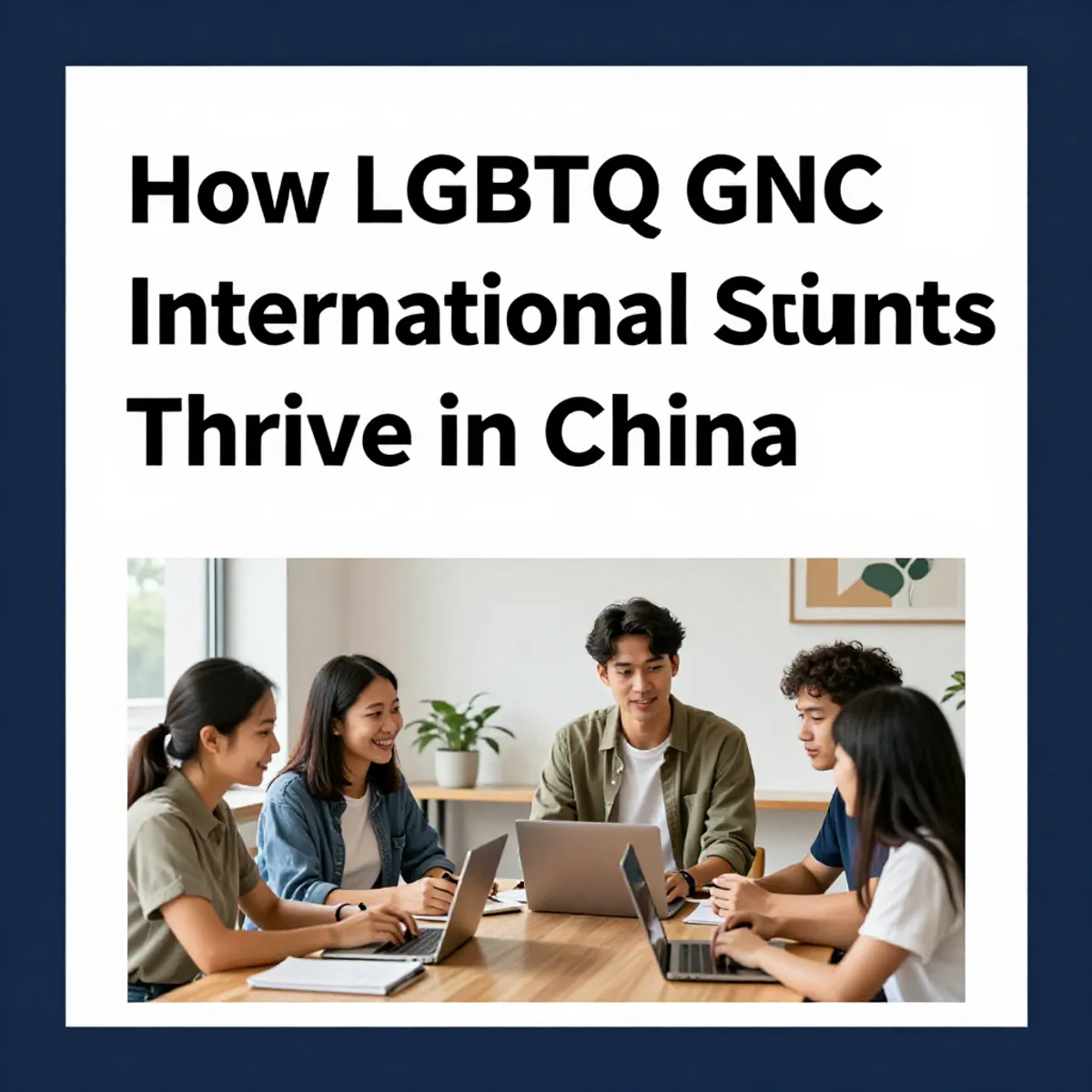
Introduction: The Question of Belonging
Arriving in China as an international student is a transformative experience filled with discovery. For those who do not fit the "traditional" mold—whether in gender presentation, sexual identity, or overall demeanor—a fundamental question arises: will I be safe, accepted, or treated with hostility? This concern, voiced by a masculine-presenting lesbian, touches a nerve for many exploring study abroad options.
China presents a complex tapestry of ancient tradition and rapid modernization. Its reception of "non-traditional" students is not a simple yes or no answer but a nuanced landscape shaped by location, institution, and individual demeanor. This article provides a clear, structured analysis of that landscape, moving from broad societal contexts to the specific realities of university campuses and daily life.
The goal is to equip prospective students with the knowledge to navigate this environment confidently and safely in 2026.
Understanding "Non-Traditional" in China's Context
Defining the Terms
The phrase "non-traditional student" requires precise unpacking within the Chinese context. It primarily refers to individuals whose gender expression—such as masculine presentation for women or feminine presentation for men—deviates from local norms. It also encompasses open LGBTQ+ identification, which remains a sensitive topic.
Critically, Chinese societal perceptions often conflate or separate gender presentation (how one looks and acts) from sexual orientation (who one is attracted to). A masculine-presenting woman may be assumed to be a man (a common social mistake) or questioned about her identity, while her actual sexuality may be a secondary or irrelevant concern to strangers. Understanding this distinction is the first step in assessing personal risk and strategy.
Gender Presentation vs. Sexual Identity
In daily interactions, gender presentation is the most immediately visible and commented-upon factor. For a foreign student, being consistently mistaken for a man due to a masculine style is a frequent social hurdle. This stems from a cultural tendency toward binary, visual categorization.
Sexual identity, like being a lesbian, may become a point of discussion only within closer social circles or if deliberately disclosed. The initial social friction is therefore less about whom you love and more about whom you appear to be. This dynamic allows for a tactical approach: one can often navigate public spaces by managing presentation without addressing deeper identity, a luxury not always available in Western countries where identity labels are more central to social discourse.
Historical and Cultural Underpinnings
China's current attitudes are rooted in a long history of philosophical and social frameworks. Confucianism emphasized strict social roles and family hierarchies, creating a legacy that values conformity and collective harmony. This historical weight makes overt, individualistic deviation—like flamboyant gender nonconformity—naturally conspicuous.
But, the past four decades of economic reform and global engagement have introduced powerful counter-currents. Urban centers, in particular, have absorbed Western media, fashion, and ideas about diversity. This creates a generational and geographical schism.
Older generations and smaller communities may hold deeply traditional views, while younger, urban Chinese often exhibit greater exposure and, if not full acceptance, then at least a degree of indifference or curiosity toward foreign differences.
Societal Landscapes: Urban-Rural Divides
Metropolitan Openness: Beijing and Shanghai
Major Chinese metropolises like Beijing and Shanghai operate on a different social plane. Their sheer size, density, and international character foster a "mind your own business" ethos in crowded public spaces. Here, non-traditional presentation is more likely to be met with a glance or a double-take than with confrontation.
These cities host vibrant, if often discreet, LGBTQ+ communities with dedicated bars, online groups, and annual events. The atmosphere is one of pragmatic tolerance. People are generally pre-occupied with their own lives.
A foreign student with an androgynous or masculine style will blend into the eclectic fashion scene of these cities far more easily than in a small town. The risk of open hostility is statistically lower, though not absent.
Case Study: Shanghai's LGBTQ+ Scene
Shanghai provides a concrete example. Neighborhoods like the former French Concession are filled with diverse styles. A butch lesbian in tailored suits or a person in gender-neutral streetwear will attract minimal attention.
The city is home to established LGBTQ+ organizations that sometimes host public discussions and film screenings, indicating a level of organized, if cautious, community building. For international students, this translates to accessible social networks and a relative sense of anonymity. The primary social challenge here is not overt danger but the potential for erasure or the assumption that one's non-conformity is merely a "foreign" eccentricity, not a core identity to be respected.
Conservative Heartlands: Smaller Cities and Rural Areas
Venturing outside the tier-one cities dramatically changes the calculus. In smaller cities and rural provinces, community scrutiny is intense. It is commonly thought everyone, and deviation from the norm is a topic of sustained gossip and potential familial pressure.
Here, a foreign student with a masculine presentation will be treated with pronounced caution and curiosity. Questions from students, teachers, or neighbors may be direct and personal, framed as concern or confusion. "Why do you dress like a boy?" is a common, if blunt, inquiry.
While physical violence is rare, the psychological toll of constant othering and the inability to blend in can be significant. Social integration becomes a concerted effort, and students must weigh the cultural immersion benefits against the potential for isolation and stress.
Risks and Realities Outside Major Hubs
The risks in these areas are primarily social and emotional, not typically legal. Hostility is more likely to manifest as persistent questioning, exclusion from informal social circles, or being the perpetual subject of local curiosity. For a lesbian student, the concept of same-sex attraction may be poorly understood or dismissed as a "Western disease." The advice for such settings is extreme discretion or a rapid relocation to a more open university environment if possible. The lesson is clear: geographic location within China is the single greatest variable determining daily experience for a non-traditional international student.
University Havens of Inclusion
Institutional Policies and Support Systems
Chinese universities, especially those with dedicated international programs, are increasingly aware of their global reputation and the need to support diverse students. a number of have formal non-discrimination policies that, while often vague on sexual orientation and gender identity, provide a foundational framework. International student offices are typically the first line of support.
Their staff are accustomed to handling cultural adjustment issues and can be valuable allies. The key is selecting an institution with a demonstrable commitment to international student welfare and a sizable, diverse foreign student body, which naturally creates a buffer against local cultural norms.
Duke Kunshan University as a Model
Duke Kunshan University (DKU) exemplifies the modern, inclusive model. As a Sino-American joint venture, it imports Western institutional values, including explicit commitments to diversity, equity, and inclusion. Its campus culture is intensely international, with students and faculty from dozens of countries.
In such an environment, gender expression and sexual identity are normalized components of a global community. A masculine-presenting student at DKU would likely find not just tolerance but active acceptance and peer groups with similar experiences. The university's policies, counseling services, and student clubs provide structured support that is largely absent from more traditional Chinese universities.
For prospective students, targeting institutions like DKU is the single most effective strategy for ensuring a safe and affirming academic experience in 2026.
Student-Led Communities and Clubs
Beyond official policy, the vibrancy of student life is crucial. Most major universities have international student associations and, increasingly, unofficial LGBTQ+ or ally groups. These clubs, often operating with a degree of discretion, are lifelines.
They provide social spaces, advice, and a sense of belonging. For a non-traditional student, proactively seeking out these groups during orientation or via social media is essential. Connecting with senior international students—particularly those from Western countries or other progressive backgrounds—can yield priceless, ground-level intelligence on which professors are supportive, which dormitories are safest, and how to navigate local social scenes.
This organic, peer-driven support network often matters more than any top-down university policy.
Legal Frameworks and Gaps
Current Anti-Discrimination Laws
China's legal system does not offer explicit, comprehensive protections for LGBTQ+ individuals. There is no national law prohibiting discrimination based on sexual orientation or gender identity in employment, housing, or public accommodations. The legal framework is largely silent on these issues.
But, this does not mean the law is an active tool of persecution. The state's primary focus is on maintaining social stability, not policing private lives. Consequently, the legal environment is one of non-interference rather than active protection.
For an international student, this means the law is unlikely to be used against them for their identity or presentation, but it also cannot be invoked for protection in cases of discrimination or harassment. Legal recourse, therefore, is extremely limited.
The 2026 Draft Regulations and Their Limits
Progress is glacial but observable. In 2026, discussions around a draft national anti-discrimination law continued to include debates about including sexual orientation and gender identity. These remain contentious.
Some local governments and state-owned enterprises have begun implementing their own non-discrimination policies that mention "sexual orientation," signaling a trickle-down effect from international business practices. For students, this means that while the constitution guarantees equality, the specific mechanisms to enforce it for their situation are absent. The legal reality is a gap between aspirational international standards and domestic statutory law.
Students must not assume legal protections exist and should instead rely on institutional policies and social strategies.
Enforcement and Real-World Application
Even where policies exist on paper, enforcement is inconsistent and dependent on local officialdom. A university administration's response to a reported incident of discrimination can vary wildly based on the individual dean's attitudes and the institution's desire to avoid negative publicity with foreign partners. Reporting an issue to Chinese authorities as an international student is a high-stakes move that could lead to bureaucratic inertia or unwanted attention.
The practical takeaway is that prevention and community reliance are far more effective than reactive legal measures. Choosing the right university environment is the primary legal-adjacent strategy, as reputable international programs have more to lose from scandal and are thus more likely to handle issues discreetly and seriously.
Personal Narratives and Daily Realities
Voices from the Ground: Student Testimonials
First-hand accounts are invaluable. A recent graduate from a Beijing university, a masculine-presenting lesbian from Canada, described her experience as a "mixed bag of profound loneliness and unexpected solidarity." She noted that while strangers on the subway often stared, her international dormitory became a sanctuary. Her Chinese classmates were often politely curious but rarely hostile, their questions framed as academic curiosity about "Western culture." Another student at a university in Chengdu recounted being mistaken for a man daily but finding it less stressful because her close friends quickly corrected others and defended her. The common thread is that direct, personal connections dramatically mitigate the friction of public misperception.
A Masculine-Presenting Student's Experience
One detailed narrative from 2025 highlights a key tactic: strategic disclosure. A student initially presented very masculinely but, after facing repeated and exhausting misgendering in administrative offices, subtly incorporated a few traditionally feminine accessories (a specific pair of earrings, a softer hairstyle). This small shift reduced daily friction without forcing her to abandon her core identity.
She emphasized that this was a personal compromise for comfort, not a surrender. Her story underscores that survival often involves a spectrum of presentation adjustments, a reality that can feel like a burden but is a common immigrant experience across many dimensions, not just gender.
Navigating Public Spaces and Social Interactions
Daily life in China involves a series of micro-interactions where presentation is parsed. Using public restrooms is a perennial source of anxiety. The sensible, widely adopted strategy is to use the stall corresponding to one's legal passport gender to avoid immediate conflict, even if it feels incongruent.
In shops, restaurants, and taxis, a confident, neutral demeanor is best. If corrected or questioned, a simple, flat "I'm a woman" in Mandarin, delivered without elaboration, usually ends the exchange. Prolonged discussion invites more probing.
The goal is to mute unnecessary conflict, not to educate strangers. With peers and friends, however, one can be more open; the social contract changes in private settings.
Handling Misgendering and Stares
The constant mistaken identity can be emotionally taxing. The recommended psychological approach is to reframe it as the other person's cultural limitation, not a reflection of one's self. Developing a sense of humorous detachment helps.
Some students create a private joke out of the most absurd misgendering incidents. More importantly, they cultivate a "home base"—a small group of accepting friends, online communities, or fellow international students—where they can be their full selves without explanation. This compartmentalization is a critical skill for maintaining mental health while studying in a culture with different gender paradigms.
Practical Strategies for a Positive Experience
Pre-Departure Preparation and Mindset
The most crucial advice begins before boarding the plane. Research is non-negotiable. Prospective students must dig beyond university brochures.
They should seek out current and former international students on platforms like LinkedIn or specific university forums, asking direct questions about campus climate for LGBTQ+ or gender-nonconforming individuals. The choice of university is the most significant decision. Prioritize institutions in Beijing, Shanghai, or other large cities with strong international student offices and visible diversity initiatives.
A realistic mindset is also vital: anticipate moments of friction, plan for them, and do not expect China to mirror the progressive attitudes of your home country. This is not pessimism but pragmatic preparation.
Researching Your University's Environment
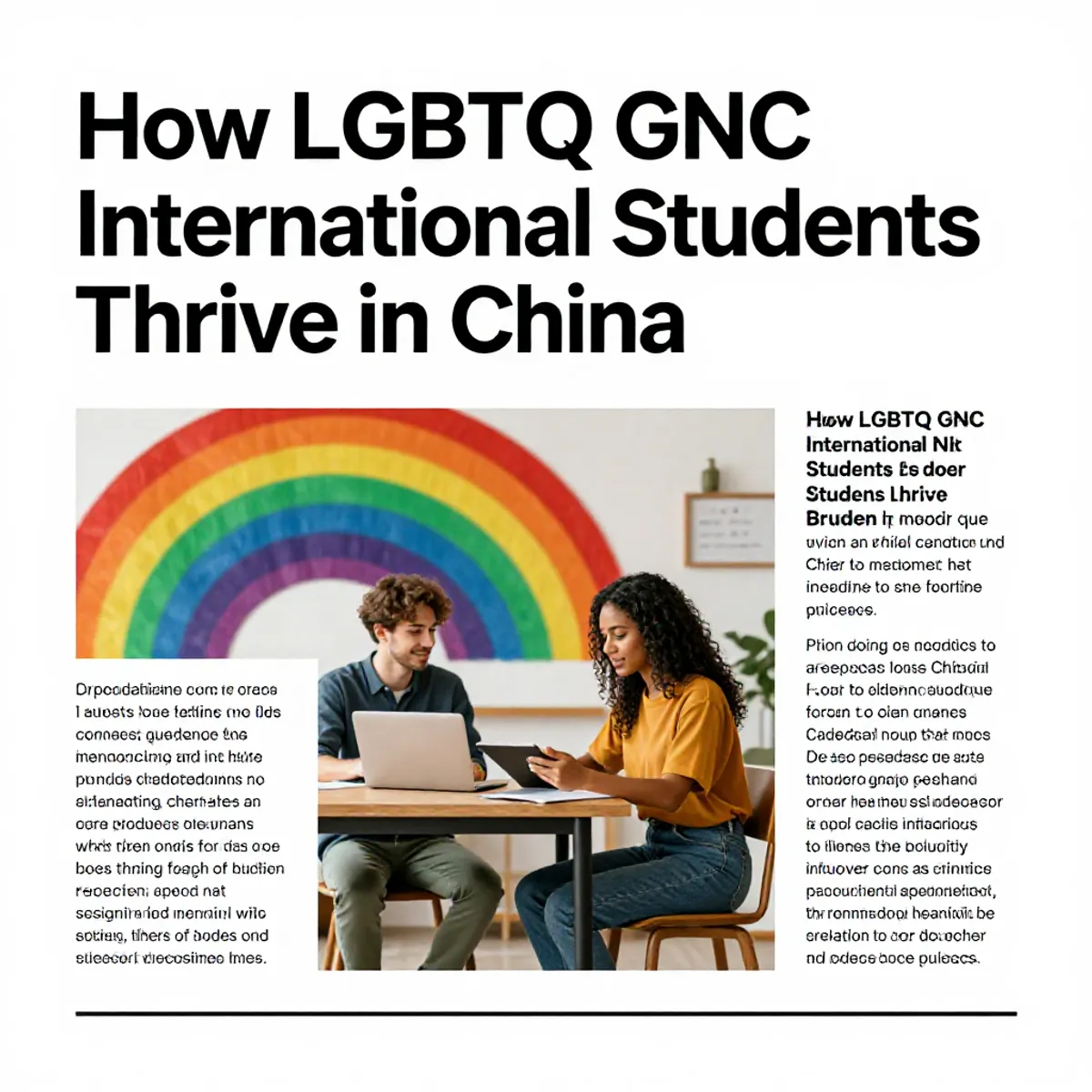
Look for specific indicators. Does the university have a pride month celebration or an official LGBTQ+ student group? What is the ratio of international to domestic students in your program?
Are there faculty members known for research in gender studies? Contact the international student advisor and ask pointed questions about support services for all students. Their response—whether evasive, generic, or specific—will be a telling indicator.
This due diligence filters out institutions where you might face institutional neglect and points you toward those with a framework for inclusion, even if social attitudes among domestic students vary.
Building a Support Network
Upon arrival, network aggressively but selectively. Your first allies are other international students, who share the outsider perspective. Attend all international student orientation events.
Seek out student clubs related to your interests (arts, activism, tech) as they often attract more open-minded domestic peers. Be mindful in forming close friendships with domestic Chinese students; initial caution is wise. Gauge their attitudes through conversations about broader social topics before disclosing personal identity.
Online, join expat and LGBTQ+ groups for China (e.g., specific WeChat or Facebook groups). These are invaluable for real-time advice, from finding a friendly hairdresser to navigating a specific administrative hurdle. A robust support network is your primary shield against isolation.
Connecting with Allies and Communities
Look for allyship in unexpected places. A sympathetic professor, a progressive dormitory manager, or a senior student leader can become a powerful advocate. Disclosing your identity to such individuals should be a calculated decision based on accumulated trust.
In addition, connect with China's own LGBTQ+ movement. While cautious, it exists. Organizations like the Beijing LGBT Center (if operational in your city) offer resources and community.
Engaging with local activists provides a deeper understanding of the domestic struggle and can foster powerful solidarity.
Academic Navigation: Professors and Classroom Dynamics
The classroom presents a unique microcosm of China's cultural negotiations. For a non-traditional student, the professor's attitude becomes a critical variable. In more progressive university departments—often those with international faculty or in fields like media, arts, or social sciences—discourse on identity can be surprisingly open. A professor might use Western case studies or invite discussions on global diversity trends, creating a temporary safe space for nuanced conversation.
But, in more traditional disciplines, the curriculum itself may reflect a heteronormative, binary framework. Group projects require careful partner selection; some domestic students may avoid working with a visibly non-conforming peer due to shyness, discomfort, or fear of social contagion. The strategic approach involves proactive communication.
During initial meetings, a calm, professional demeanor that subtly signals competence and confidence can preempt stereotyping. If a professor consistently misgenders you, a private, polite correction after class—framed as a simple preference—is often the most effective remedy. The goal is to establish your academic credibility first, allowing your identity to become a secondary, respected characteristic rather than a primary point of curiosity or friction.
Managing Presentation in Academic Settings
The "strategic disclosure" principle applies acutely to seminars and presentations. A student might choose attire that balances personal expression with a clear professional intent for a major presentation. This is not about hiding but about controlling the narrative.
The focus must remain on your intellectual contribution. If questions arise about your appearance from peers, deflecting with humor or a brief, matter-of-fact explanation ("I've always dressed this way, it's comfortable") and returning to the topic at hand asserts ownership of the academic space. Remember, in the Chinese educational context, respect for the teacher and the scholarly pursuit is a powerful cultural value you can leverage.
Your consistent demonstration of seriousness in your studies builds a protective layer of respect that can buffer against superficial judgments about your gender presentation.
Intersectional Considerations: Race, Nationality, and Gender
The foreign student's identity is a compound one. Your non-Chinese nationality provides a significant, often under-acknowledged, shield. Chinese society frequently interprets foreign behavior through a lens of exoticism or cultural difference.
A masculine-presenting white woman may be seen as embodying a "Western" style rather than challenging Chinese gender norms directly. This "foreigner exemption" can reduce personal hostility, as your deviation is categorized as an amusing foreign quirk rather than a local moral threat.
But, this intersects complexly with race and nationality. A Black or brown non-traditional student may face a compounded othering, where racial stereotypes overlay gender nonconformity. The "exotic" label can feel dehumanizing.
In addition, students from countries with less global cultural cachet may find their identity questioned not just as gender nonconformity but as evidence of their nation's "backwardness" in the eyes of some Chinese peers. Navigating this requires a dual awareness: leveraging your foreign status as a buffer while preparing for the specific ways race and national origin can amplify misunderstanding. Building alliances with other international students from diverse backgrounds becomes even more crucial, as you share a common, albeit differently nuanced, experience of being perpetually "other."
Mental Health and Resilience Building
The psychological toll of constant micro-aggressions—stares, misgendering, invasive questions—should not be underestimated. The "mind your own business" norm in megacities provides a buffer, but it is a cold one. The lack of a widely understood vocabulary for your identity in Mandarin can make explaining your experience feel impossible, leading to a sense of profound isolation. Proactive mental health maintenance is not a luxury but a necessity.
a number of top-tier universities with international programs offer counseling services with English-speaking therapists. Utilizing these resources is a sign of strength, not weakness. For those without access, digital mental health platforms serving expatriates in China can be a lifeline.
Cultivating practices that separate your self-worth from the gaze of strangers is vital. This might involve curating social media feeds to connect with global LGBTQ+ communities, engaging in hobbies that affirm your identity in low-stakes environments, or maintaining a journal to process daily encounters. The concept of compartmentalization—having a "China self" that navigates public pragmatism and a "full self" expressed in safe spaces—is a common, healthy coping mechanism.
Recognize that the emotional labor you are performing is significant. Grant yourself grace on days when the weight feels heavy, and prioritize connecting with your support network without fail.
Long-Term Perspective: Growth and Advocacy
Studying in China is a finite period. Frame it as a chapter of resilience-building. The skills you hone here—navigating ambiguity, reading social landscapes, communicating across vast cultural gaps, maintaining self-integrity under scrutiny—are transferable assets. You will emerge with a profound understanding of your own capacity and a firsthand view of a society in breathtaking flux.
For those inclined toward advocacy, your presence itself is a form of quiet education. By existing consistently and calmly in shared spaces—libraries, cafés, campuses—you challenge monolithic perceptions simply by being. Sharing your story, when safe and appropriate, with trusted Chinese friends can plant seeds of understanding that may germinate years later.
You are not just a student; you are a cultural bridge. The experience may be taxing, but for many, the perspective it grants on the construction of identity and the diversity of human social organization is an unparalleled intellectual and personal reward. You learn to thrive not in spite of the complexity, but within it.
Conclusion: A Nuanced Welcome
The experience of a "non-traditional" international student in China is defined by nuance, not by a monolithic verdict of hostility or acceptance. The foundational truth is that location and institution are paramount. A student at Duke Kunshan University in a vibrant metropolis will have a drastically different daily reality than one at a regional teachers' college.
Societal attitudes are a patchwork of urban indifference, rural curiosity, and generational shift. The legal system offers no specific shield but also no specific weapon against you. The onus of creating a safe and fulfilling experience falls largely on the student's own preparation, resilience, and strategic community-building.
This is not a call for fear, but for informed agency. With deliberate choices—selecting the right university, building a careful support network, and developing personal strategies for public interaction—a non-traditional student can not only study in China but thrive, contributing to and learning from one of the world's most dynamic societies. The welcome is not universal, but for those who plan wisely, it can be profoundly warm.
Responses • 0
0/2000
ID: 1326
Chris
Offline
3 hr
Visited
From
Bakersfield, United States
Send Message